
10 Small Garden Ideas You Can Create On A Tiny Budget

If you’re working with a small garden and a modest budget, you absolutely can still have a space that feels charming and personal. You don’t need expensive landscaping or designer furniture to make a big difference. A few clever, low-cost touches can transform even the tiniest yard, patio, or side strip into a place you actually want to sit and enjoy.
In this post, you’ll find ten easy, budget-friendly ideas designed especially for small gardens. Most use everyday materials, simple tools, or things you might already have at home. Mix and match the projects, and you’ll end up with a cozy outdoor corner that reflects your style without draining your wallet.
Quick List
- Create A Vertical Pallet Garden Wall
- Style A Mismatched Container Garden
- Lay A Simple Gravel And Paver Corner
- Add Solar String Lights And Lanterns
- Build A Tiered Herb Ladder
- Make A Crate Bench With Planters
- Paint And Reuse Tin Can Planters
- Design A Mini Wildlife Corner
- Use Rail And Hanging Planters
- Mark Out A No-Dig Flower Strip
1. Create A Vertical Pallet Garden Wall
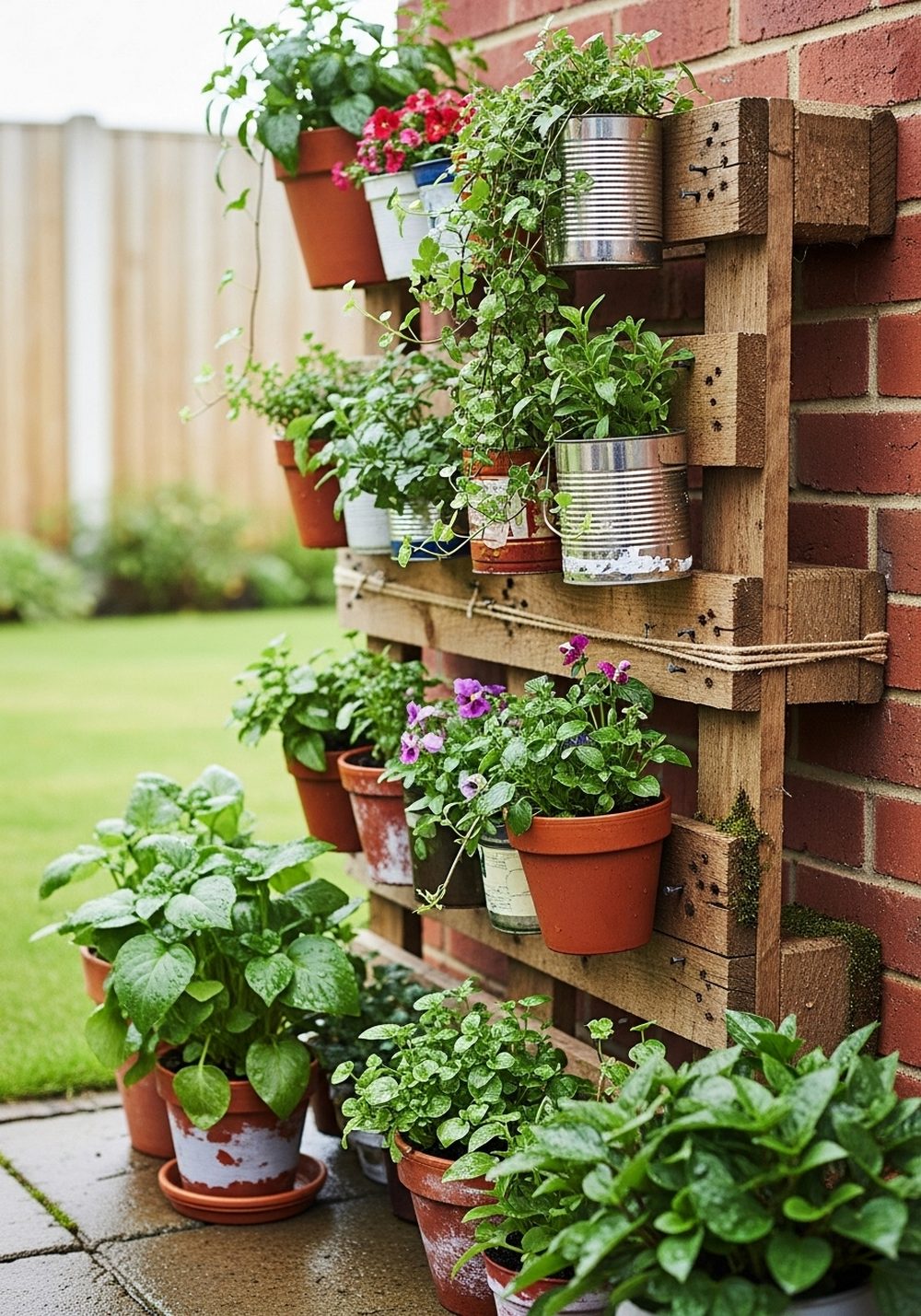
A vertical pallet garden wall is perfect when floor space is limited but you still want lots of plants. Lean or fix a reclaimed pallet against a fence or wall, then tuck small pots or lined gaps with soil into the slats. Fill them with herbs, trailing plants, and flowers to create a living backdrop that hides bare surfaces. It adds height, color, and texture, while keeping the ground clear for a chair or small table.
- Best For: Narrow side yards, courtyard gardens, or tiny patios with blank walls.
- Budget Tip: Ask local stores for free pallets and use inexpensive plastic pots or recycled containers.
- Styling Idea: Paint the pallet in a soft neutral or muted pastel to match your outdoor cushions.
- Practical Note: Secure the pallet firmly and keep heavier pots on the lower slats for stability.
- Care & Maintenance: Choose drought-tolerant plants if you can’t water every day.
2. Style A Mismatched Container Garden
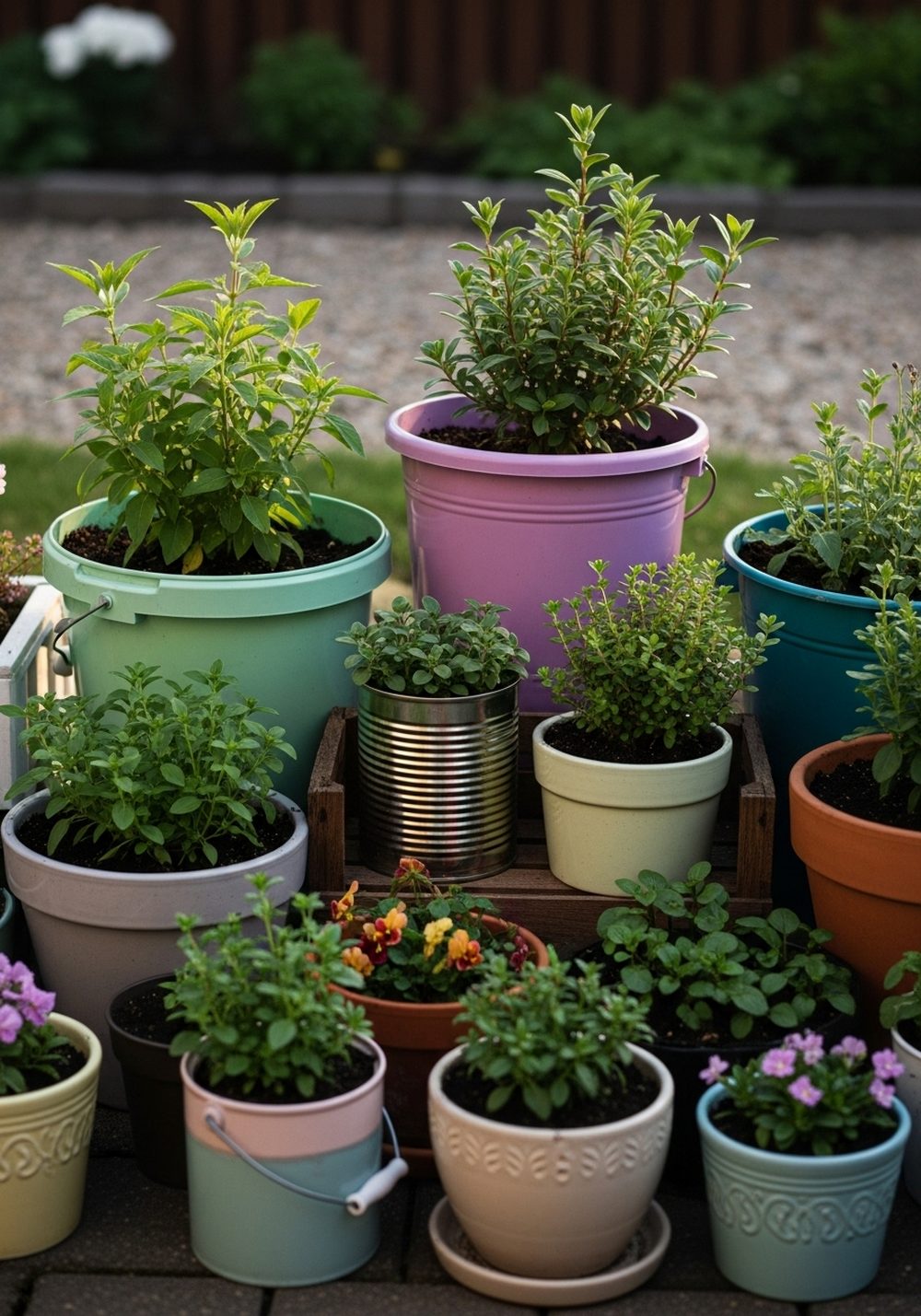
You don’t need matching pots to create a beautiful small garden. Gather whatever containers you already own—buckets, old bowls, baskets with liners, plastic pots—and group them tightly together. The cluster effect feels intentional and lush, especially when you mix heights and plant textures. Place taller containers at the back, medium ones in the middle, and small ones at the front to create a layered mini “border” on your paving or tiny patch of soil.
- Best For: Renters and anyone who wants a portable, flexible garden layout.
- Budget Tip: Upcycle containers from charity shops, discount stores, or your recycling pile.
- Styling Idea: Stick to two or three main colors for pots so the mismatched shapes still look coordinated.
- Practical Note: Put saucers or trays underneath to protect balconies or patios from water stains.
- Extra Idea: Add one statement pot or plant in the middle to anchor the whole group.
3. Lay A Simple Gravel And Paver Corner

Turning a messy patch of soil into a neat little seating corner doesn’t have to be expensive. Mark a small rectangle, lay weed-suppressing fabric or cardboard, then pour a layer of affordable gravel over the top. Add a few basic concrete pavers as a path or “stepping stones” to a simple chair and side table. The clean, bright surface instantly makes the area look designed, not forgotten, and it helps keep mud at bay.
- Best For: Damp, worn patches of lawn or awkward corners that don’t grow grass well.
- Budget Tip: Use leftover pavers or check local listings for cheap or free materials.
- Styling Idea: Choose pale gravel to reflect light and make your small garden feel bigger.
- Practical Note: Edge the gravel with bricks or stones to stop it spreading into the lawn.
- Care & Maintenance: Top up gravel occasionally and pull any weeds that make it through.
4. Add Solar String Lights And Lanterns
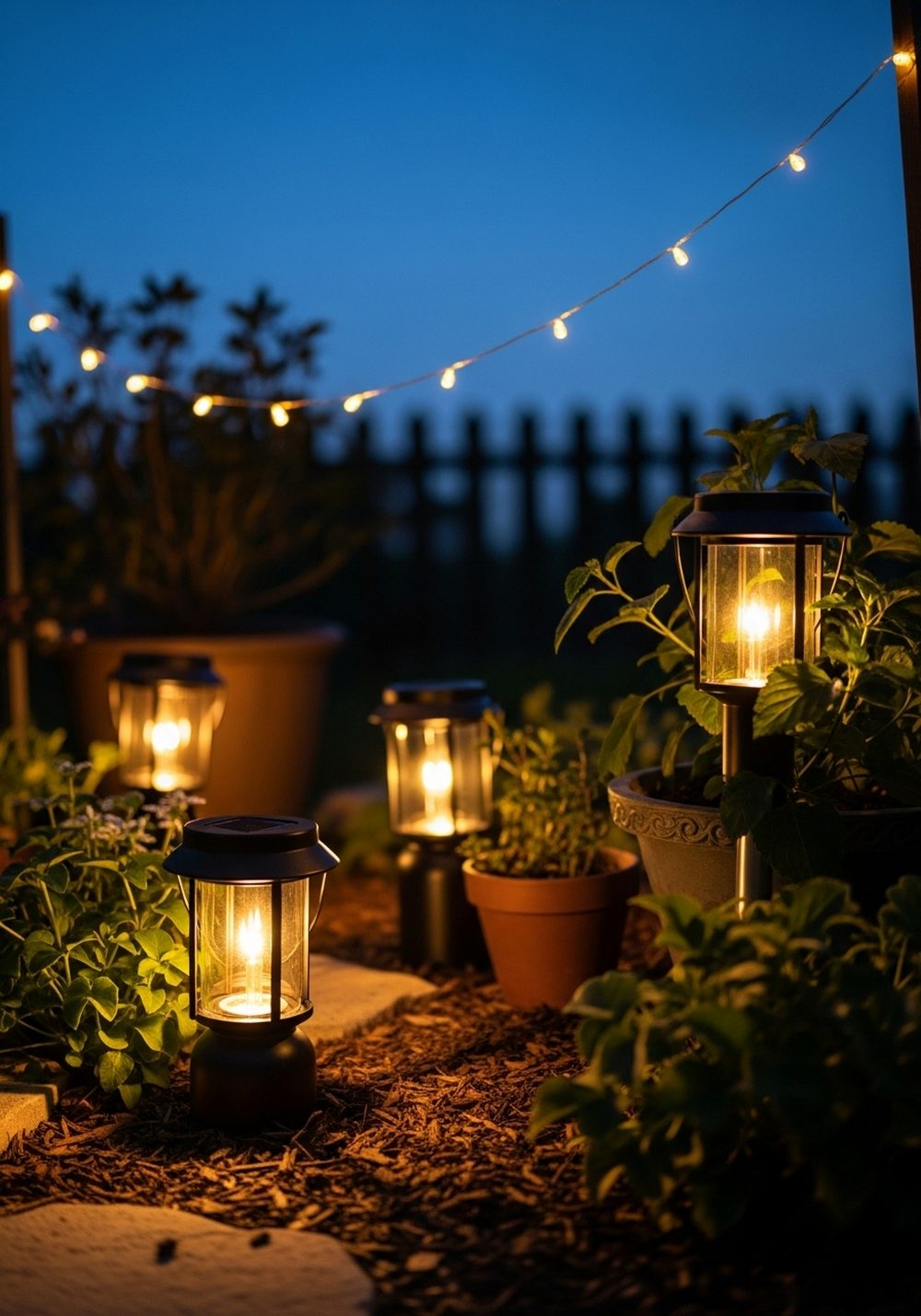
Small gardens feel magical at night with just a few warm lights. Drape solar string lights along fences, around a pergola, or between hooks, then tuck small solar lanterns among your pots or along a path. Because they’re solar-powered and movable, there’s no wiring to worry about and no extra electricity bills. The soft glow makes even a plain corner feel like an inviting outdoor room, perfect for evening tea or a quiet breath of fresh air.
- Best For: Busy people who want instant atmosphere with almost no maintenance.
- Budget Tip: Start with a single set of string lights and add more pieces over time.
- Styling Idea: Choose warm white tones for a cozy, café-style mood rather than harsh blue light.
- Practical Note: Place solar panels where they get maximum sun for a brighter, longer glow.
5. Build A Tiered Herb Ladder

A simple wooden ladder or step-ladder can become a compact herb garden in minutes. Place it against a wall and arrange pots on each rung, keeping sun-lovers at the top and shade-tolerant plants below. This vertical setup uses almost no floor space, but gives you a generous harvest of basil, thyme, mint, and more. It also adds a charming, cottage-style feature to your garden, with layers of green at eye level.
- Best For: Small patios, tiny yards, and kitchens that open onto a little outdoor space.
- Budget Tip: Use an old ladder or build a basic one from inexpensive timber offcuts.
- Styling Idea: Stick to simple clay or metal pots so the herbs remain the star of the show.
- Practical Note: Secure the ladder so it can’t tip, especially in windy spots.
- Care & Maintenance: Trim herbs regularly to keep them bushy and productive.
6. Make A Crate Bench With Planters
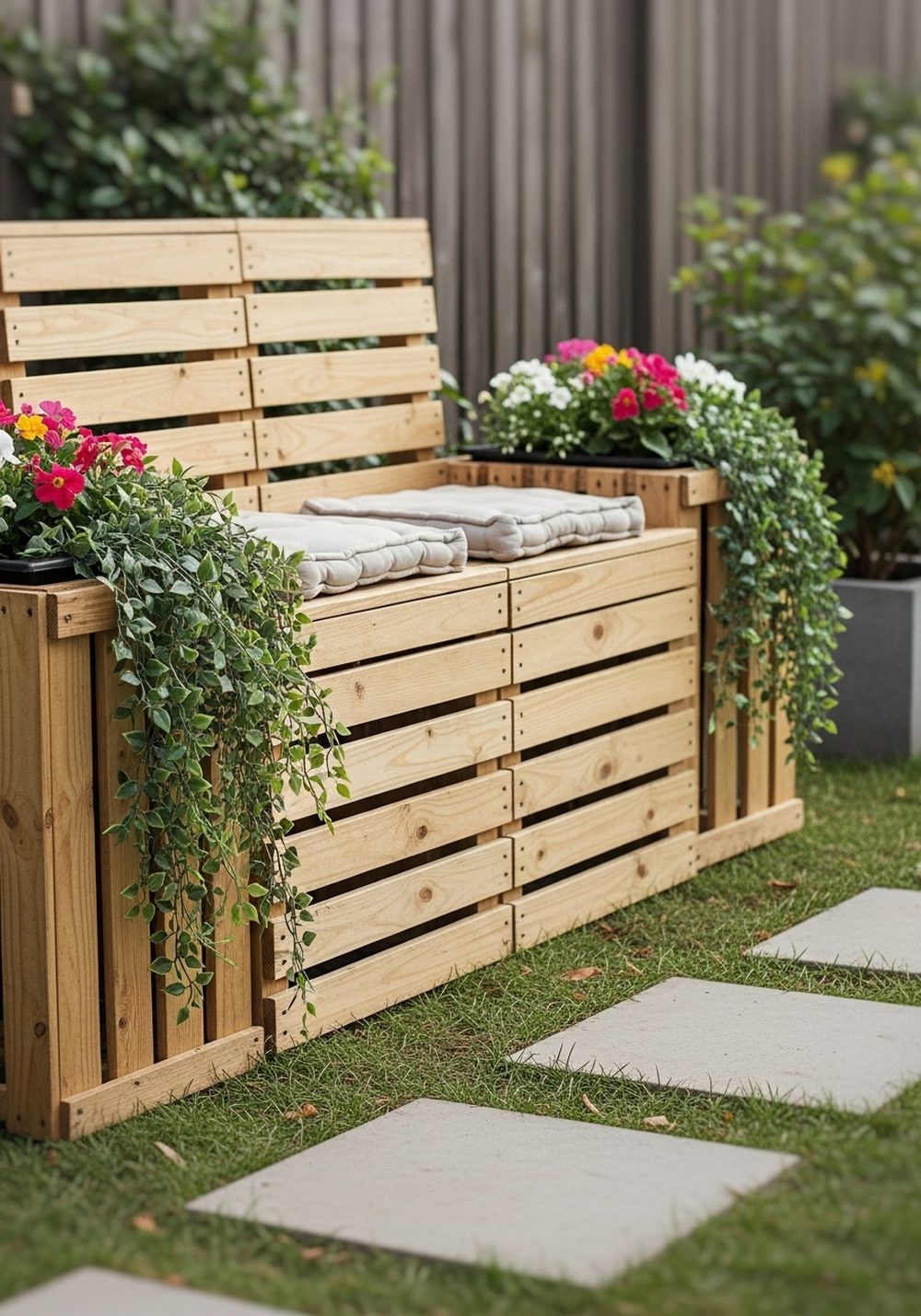
Wooden crates are incredibly useful in small gardens. Flip a couple of sturdy crates on their sides, push them together, and add a simple board or cushion on top to create a mini bench. Use the open ends as storage or line them and fill with soil for built-in planters. This little bench offers seating and greenery in one piece, making it ideal where every inch counts. It also brings a relaxed, handmade feel to your outdoor space.
- Best For: Tiny patios or balconies where you need storage, seating, and plants all in one.
- Budget Tip: Look for secondhand crates or inexpensive pine boxes and seal them with outdoor varnish.
- Styling Idea: Add a neutral cushion and one patterned outdoor pillow for a cozy, casual look.
- Practical Note: Place the bench on a flat, level surface so it feels stable and safe.
7. Paint And Reuse Tin Can Planters
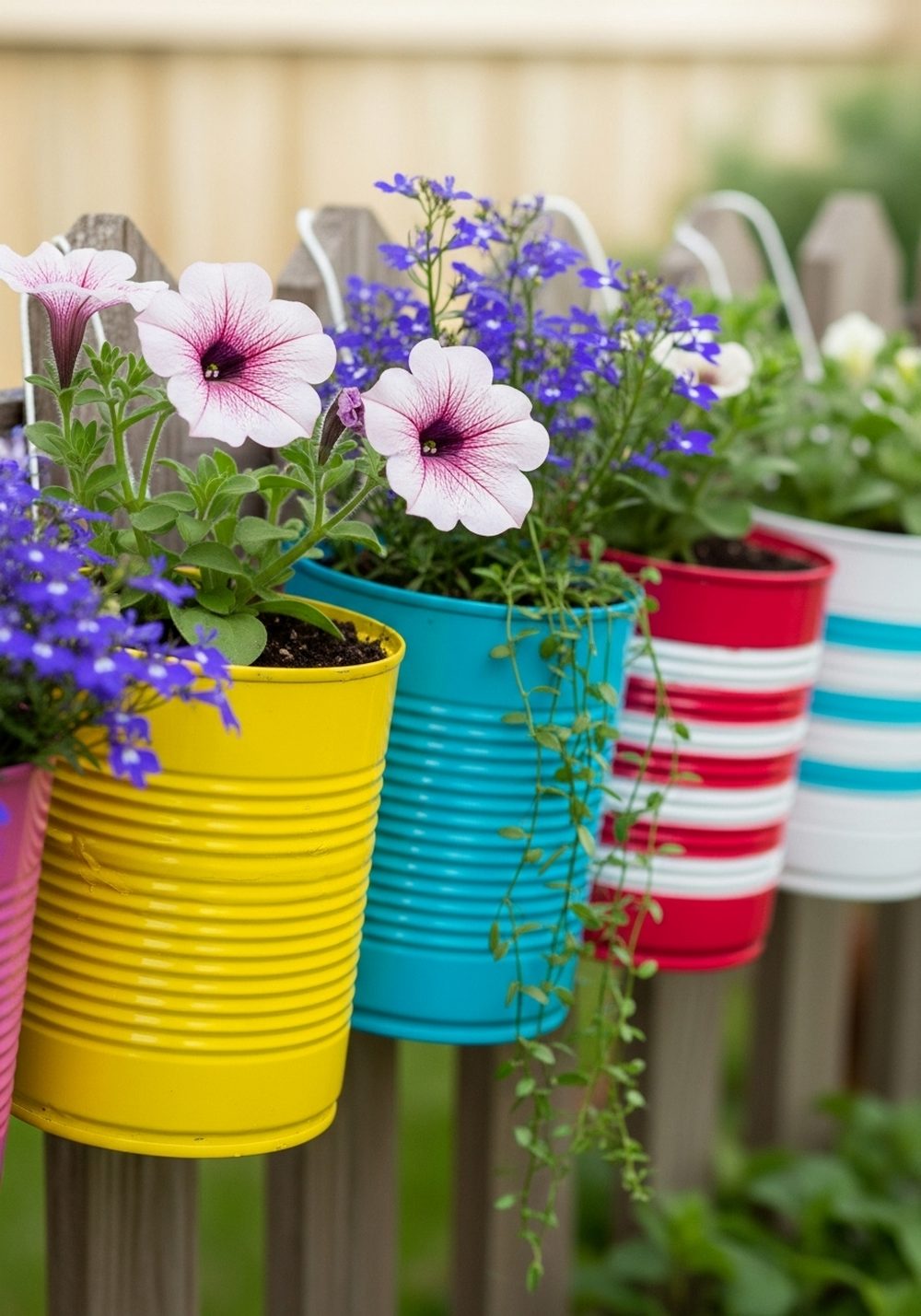
Tin cans are almost free and perfect for adding height and color to a small garden. Clean them, gently smooth any sharp edges, punch drainage holes in the base, then paint them in bright shades or simple stripes. Once dry, plant them with trailing flowers or herbs and hang them on a fence or rail using wire, twine, or hooks. The repeated shapes and colors create cheerful, eye-catching decor even in the tiniest outdoor corner.
- Best For: Fences, balcony rails, or walls that need a bit of life and color.
- Budget Tip: Use leftover wall paint or tester pots instead of buying special craft paints.
- Styling Idea: Pick a simple color palette—perhaps all blues, or a rainbow of pastels—for a unified look.
- Practical Note: Don’t overfill with soil; keep them light so fixings can safely support them.
- Care & Maintenance: Refresh the paint every year or two if it starts to chip.
8. Design A Mini Wildlife Corner
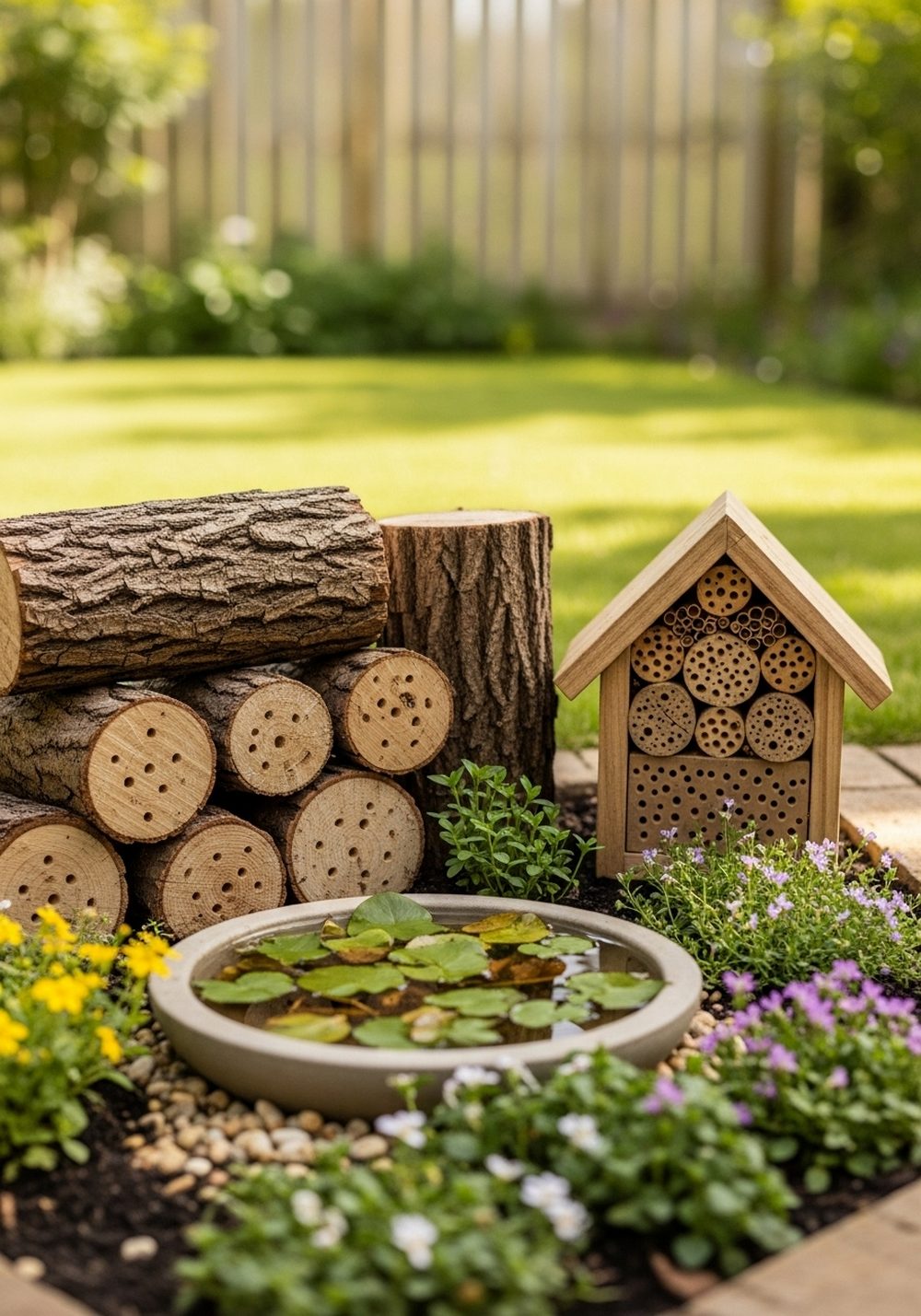
Even the smallest garden can welcome wildlife, and it doesn’t have to be expensive or messy. Choose a tiny corner and add a shallow dish of water, a few log or twig piles, and one or two nectar-rich flowering plants. You can make a simple bee hotel from drilled pieces of scrap wood or bundled hollow stems. This little zone quietly supports bees, ladybirds, and birds, while adding a natural, slightly wild focal point to balance your neater areas.
- Best For: Gardeners who like nature, but don’t want a fully “wild” garden everywhere.
- Budget Tip: Use found materials—fallen branches, old bricks, leftover wood—to build structure.
- Styling Idea: Frame the corner with a neat edge of stones so it looks intentional, not neglected.
- Practical Note: Keep the water dish topped up and clean so it’s safe for visitors.
9. Use Rail And Hanging Planters
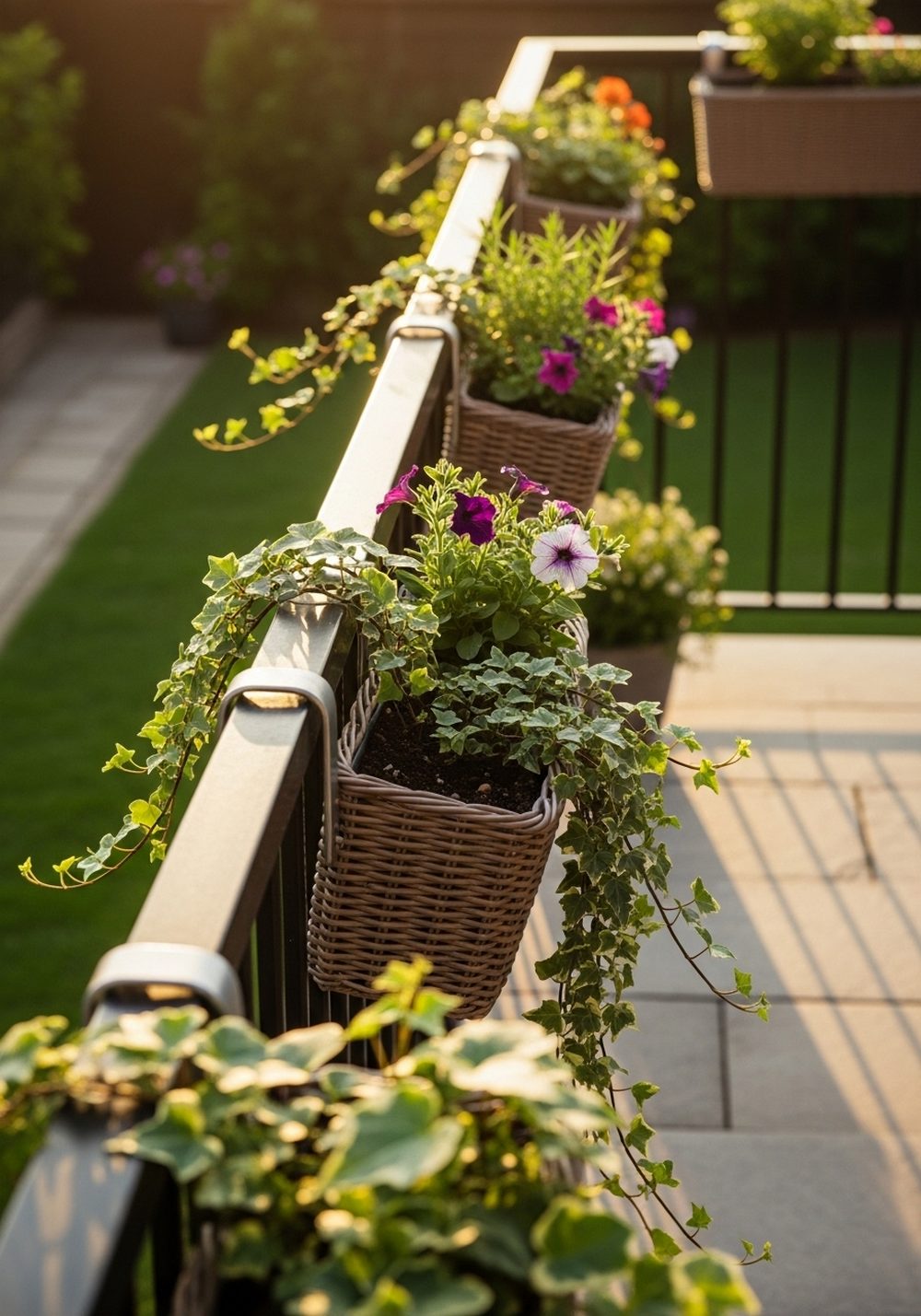
When ground space is scarce, move upwards. Rail planters and hanging baskets let you grow flowers and herbs along balcony rails, fences, and walls, freeing the floor for seating or storage. Choose compact, trailing plants that spill over the edges for a soft, lush look without taking up much room. Together, the floating greenery creates a layered, garden-like feel, even if your “garden” is just a small patch of paving.
- Best For: Balconies, roof terraces, and very small courtyards.
- Budget Tip: Start with just two rail planters and reuse plastic pots inside them to save money.
- Styling Idea: Repeat the same plant mix in each planter for a simple, stylish rhythm.
- Practical Note: Check rail strength and secure fixings, especially on higher floors.
- Care & Maintenance: Water more often—containers at height can dry out quickly.
10. Mark Out A No-Dig Flower Strip
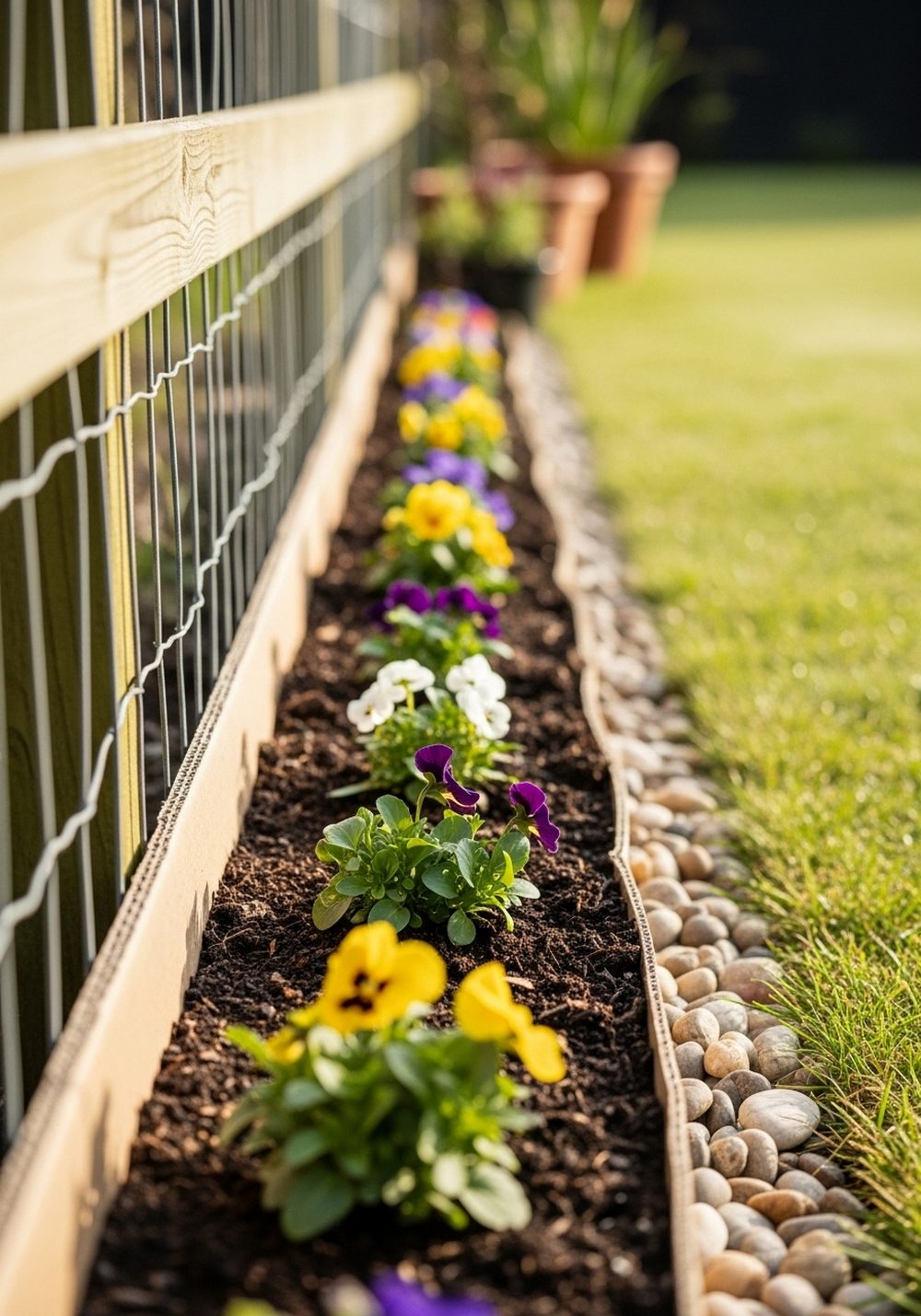
If you have a narrow edge along a fence or path, you can turn it into a flower strip without heavy digging. Lay cardboard over the grass or soil, wet it, and cover with compost or soil mix. Add a border of stones or bricks, then plant small, easy flowers and groundcovers straight through the top layer. The cardboard helps smother existing growth while the plants fill in, creating a simple, pretty bed on a tight budget.
- Best For: New gardeners who are nervous about digging or changing the garden permanently.
- Budget Tip: Use free cardboard and buy just a few starter plants, letting them spread over time.
- Styling Idea: Stick to one color theme, like pinks and whites, for a soft, cohesive strip.
- Practical Note: Water regularly at first so roots can get through the new layers.
Conclusion
Small gardens can be some of the most rewarding spaces to decorate, because every tweak is noticeable. With simple, affordable ideas like pallet planters, gravel corners, recycled containers, and solar lights, you can turn a plain patch into a cozy retreat. Start with one or two projects that feel manageable, then add more as your confidence grows. Before long, your budget-friendly little garden will feel like your favorite room in the whole house.
FAQs
Q1. How can I decorate a small garden on a really tight budget?
Focus on using what you already have: tins, jars, old furniture, and leftover paint can all become planters and features. Start with easy projects like tin can planters, a mismatched container cluster, or a no-dig flower strip. Add plants slowly as money allows, and rely on seeds and cuttings from friends to grow your collection.
Q2. Are these ideas suitable for renters who can’t make permanent changes?
Yes. Most of the ideas here are moveable and low-impact, like container gardens, pallet walls that lean instead of fixing, rail planters, and crate benches. Stick to items that don’t need drilling into walls or changing the ground permanently. When you move, you can simply take your containers, lights, and small features with you.
Q3. What are the lowest-maintenance decor options for a small garden?
Solar lights, gravel corners, and sturdy container plantings with drought-tolerant plants are all low-maintenance. Choose hardy shrubs, herbs, or perennials instead of thirsty annuals. Keep things simple—fewer, larger containers are often easier to care for than many tiny pots. A small wildlife corner can also largely look after itself once established.
Q4. I only have a tiny balcony. Which ideas will work for me?
Rail planters, hanging baskets, a mini herb ladder, and painted tin can planters are ideal for balconies. They use vertical space and railings rather than floor area. Add one small chair or stool and a string of solar lights to create a cozy, outdoor “room” feel without overcrowding the space.
Q5. How do I mix plants and decor without making the garden feel cluttered?
Start with a simple color palette for pots, cushions, and lights, then let the plants provide most of the color. Group containers in clusters rather than scattering them everywhere, and keep at least one clear area for sitting. Repeating the same plants or pot style helps the space feel calm and deliberate instead of busy.
Q6. What’s the easiest idea for a complete beginner?
A mismatched container garden is very beginner-friendly. You just gather pots, add good compost, and plant a few reliable plants like herbs, hardy geraniums, or marigolds. Place them together in a sunny spot and water regularly. It’s a flexible setup, so if something doesn’t thrive, you can swap it out without redoing the whole garden.


