10 DIY Tire Planter Ideas For A Fun, Playful Garden Look
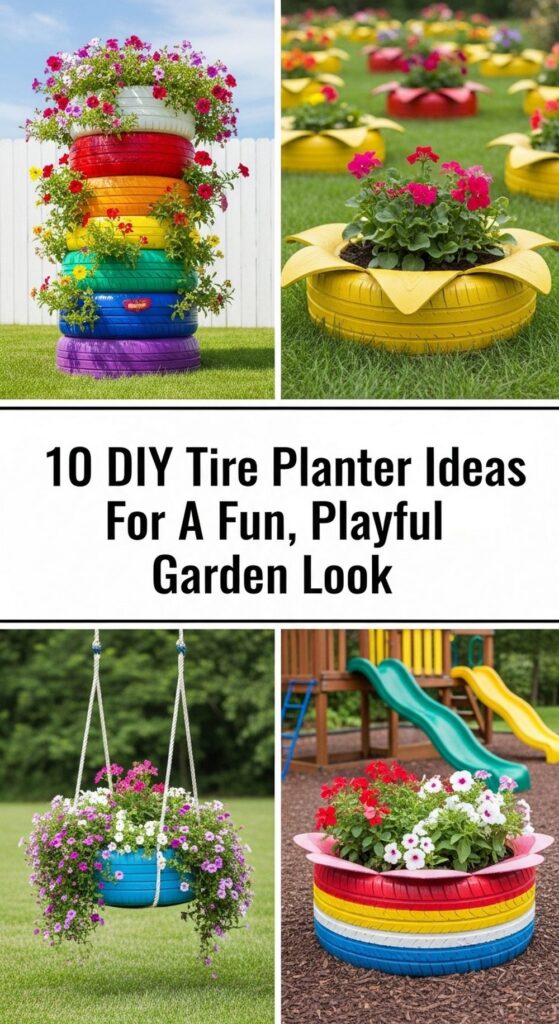
Old tires don’t have to sit in a corner collecting dust. With a bit of paint, soil, and creativity, they can turn into some of the most eye-catching planters in your garden. Whether you have a big backyard, a small patio, or just a tiny side yard, tire planters are a clever way to add color, height, and personality without spending much.
This post is for home gardeners, renters, and families who want playful, budget-friendly decor. You’ll find easy DIY tire planter ideas that brighten paths, walls, and corners, and help your space feel more welcoming and fun. Grab a spare tire, a brush, and let’s turn your garden into a joyful, upcycled retreat.
Quick List
- Bright Rainbow Stacked Tire Planter Tower
- Hanging Tire Flower Wreath On A Fence
- Tiered Tire Herb Garden By The Kitchen Door
- Tire Planter Border Along A Garden Path
- Painted Animal-Shaped Tire Planters For Kids’ Corner
- Half-Buried Tire Planters For A Wavy Flower Bed
- Tire Planter Fairy Garden Scene
- Vertical Tire Planter Wall For Small Spaces
- Tire Planter Vegetable Patch In A Sunny Spot
- Tire Planter Table With Flowers In The Center
1. Bright Rainbow Stacked Tire Planter Tower
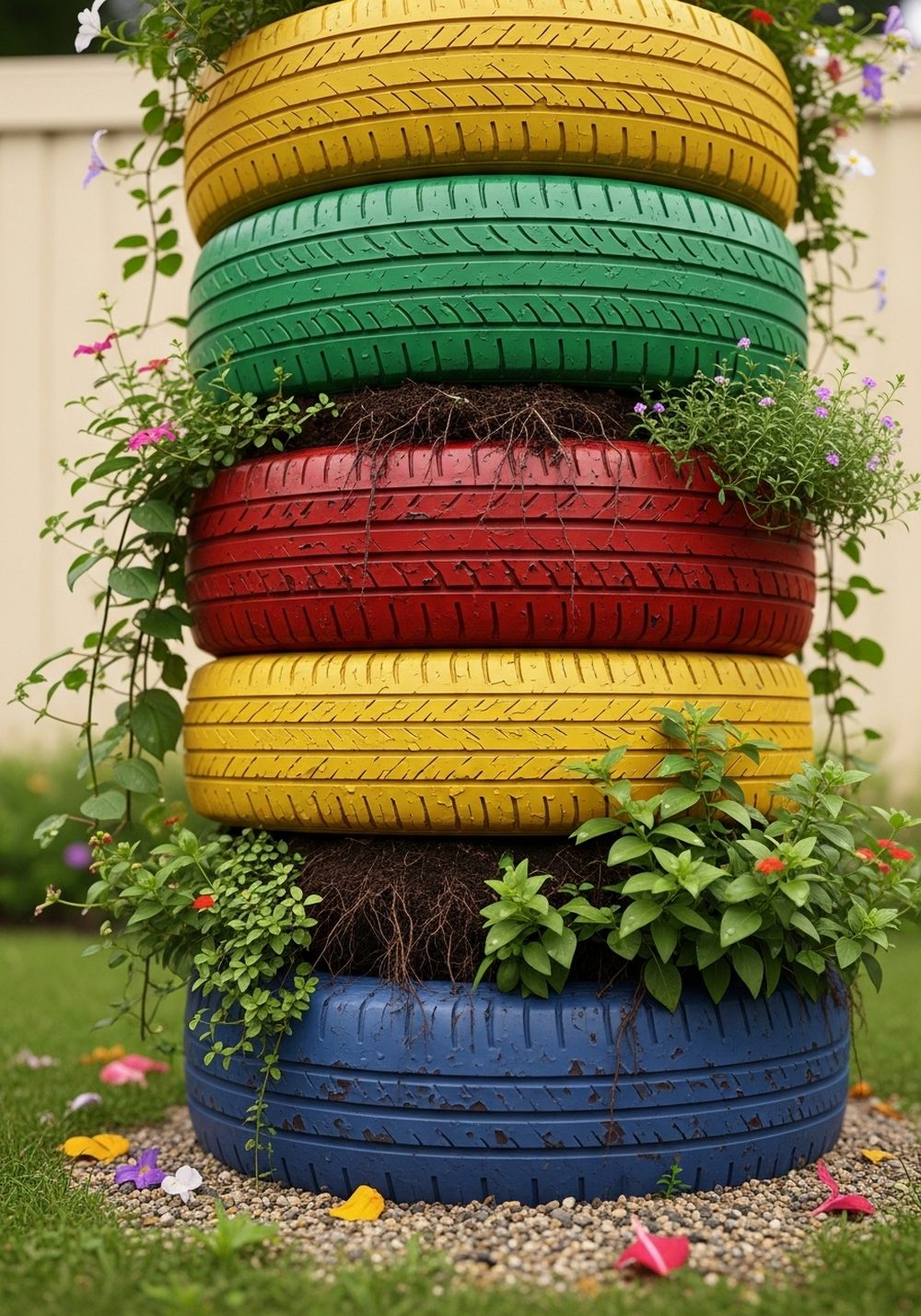
Stacked tire towers are an instant mood-lifter and a brilliant way to add height to a flat garden. Clean your tires, drill drainage holes, then paint each tire a different bright color. Once dry, stack them safely, filling each ring with soil and planting trailing flowers at the edges and taller plants in the center. Position your rainbow tower where you want a bold focal point, like the end of a path or beside a dull fence, to create a happy, playful feature.
- Best For: Small gardens that need vertical interest or a standout focal point.
- Budget Tip: Use leftover paint and free or secondhand tires to keep costs low.
- Styling Idea: Stick to one color family (like pastels or neons) for a more coordinated look.
- Practical Note: Anchor the bottom tire and avoid stacking too high for safety and stability.
2. Hanging Tire Flower Wreath On A Fence
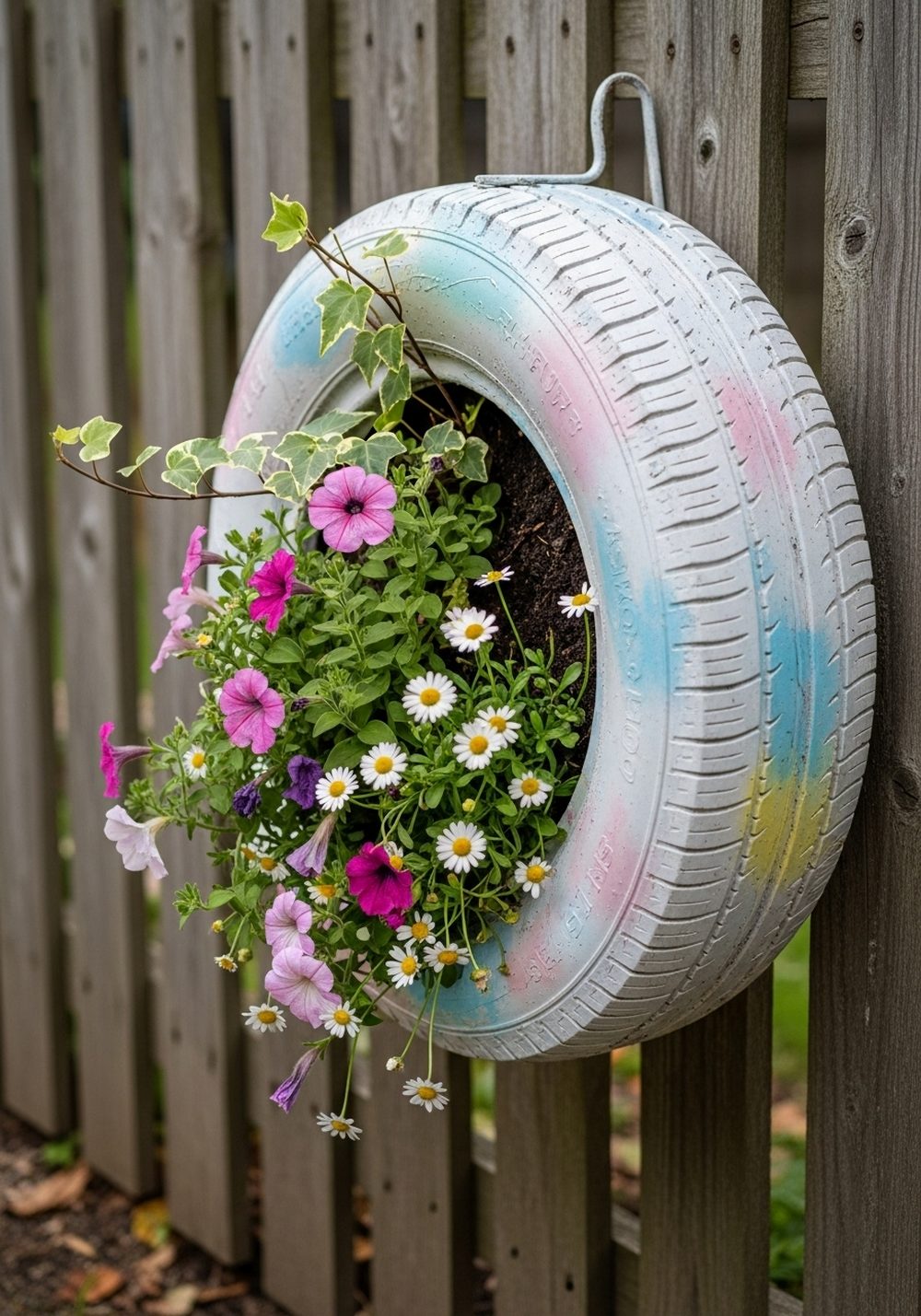
Turn a plain fence into a feature wall by hanging a tire like a giant floral wreath. Paint the tire in a soft neutral or pastel shade, then mount it vertically using sturdy brackets or hooks. Line the bottom half inside with landscape fabric or a shallow liner, fill with soil, and tuck in trailing plants and blooms that spill out like a cascading bouquet. This simple idea instantly softens hard fencing and adds height without taking up floor space.
- Best For: Narrow side yards, rental fences, or small patios.
- Budget Tip: Use one tire and a few hardy trailing plants for a low-cost project that still makes impact.
- Styling Idea: Match the tire color to your outdoor cushions or door for a pulled-together look.
- Practical Note: Make sure the mounting hardware is strong and fixed to solid posts or studs.
3. Tiered Tire Herb Garden By The Kitchen Door
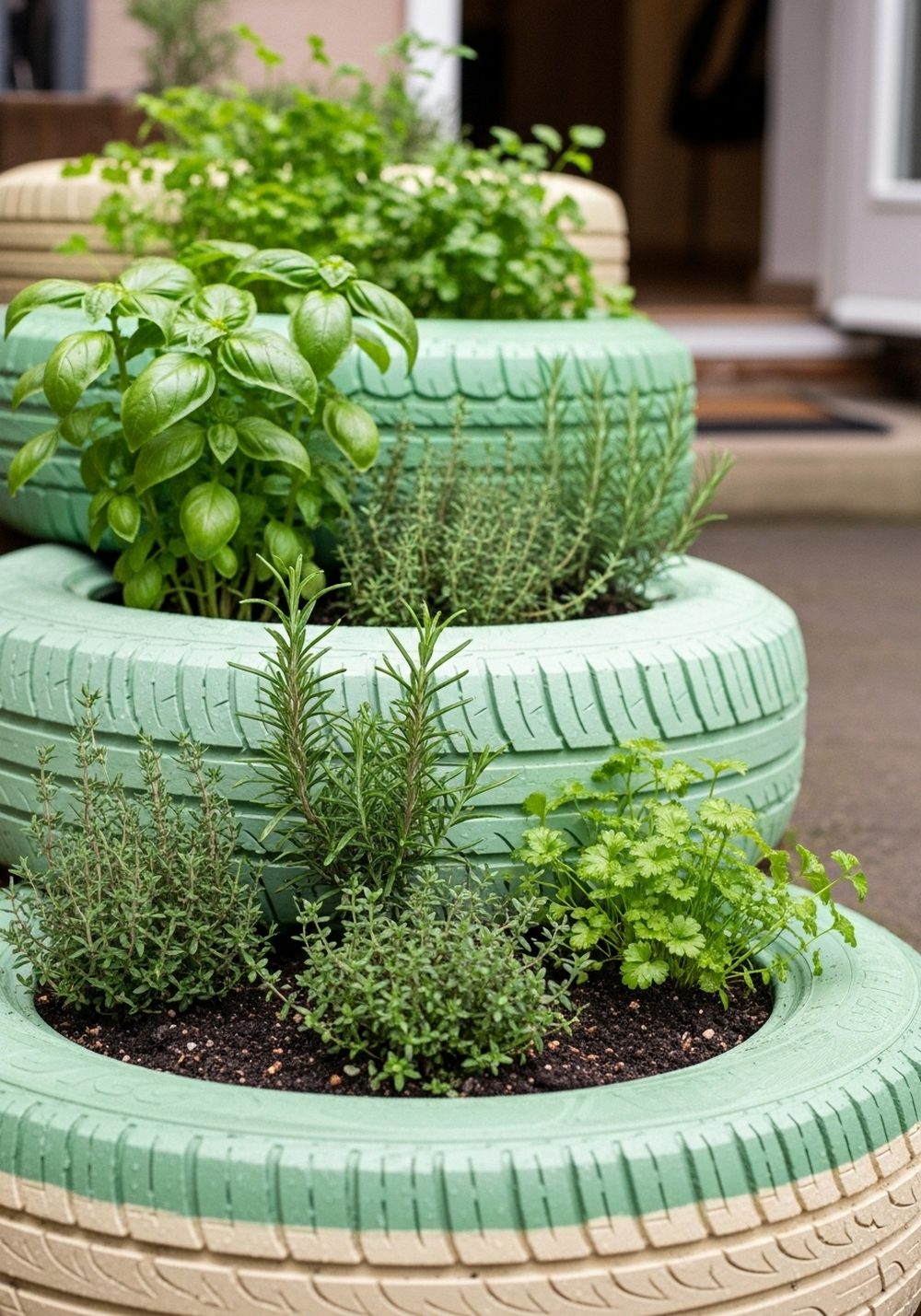
Create a compact herb garden using tires stacked in tiers near your back door. Arrange one tire flat on the ground, then stack one or two smaller tires off-center on top, filling each level with good-quality compost. Plant herbs you reach for often—basil, thyme, mint, or chives—placing taller ones at the top and trailing varieties around the edges. Having a tiered tire planter right by the kitchen means fresh flavors are always just a few steps away.
- Best For: Cooks who love fresh herbs but have limited ground space.
- Budget Tip: Start with just one or two tiers and add more tires as you collect them.
- Styling Idea: Use muted greens and creams for a softer, rustic kitchen-garden feel.
- Care & Maintenance: Trim herbs regularly to keep them from getting leggy and to encourage bushy growth.
4. Tire Planter Border Along A Garden Path
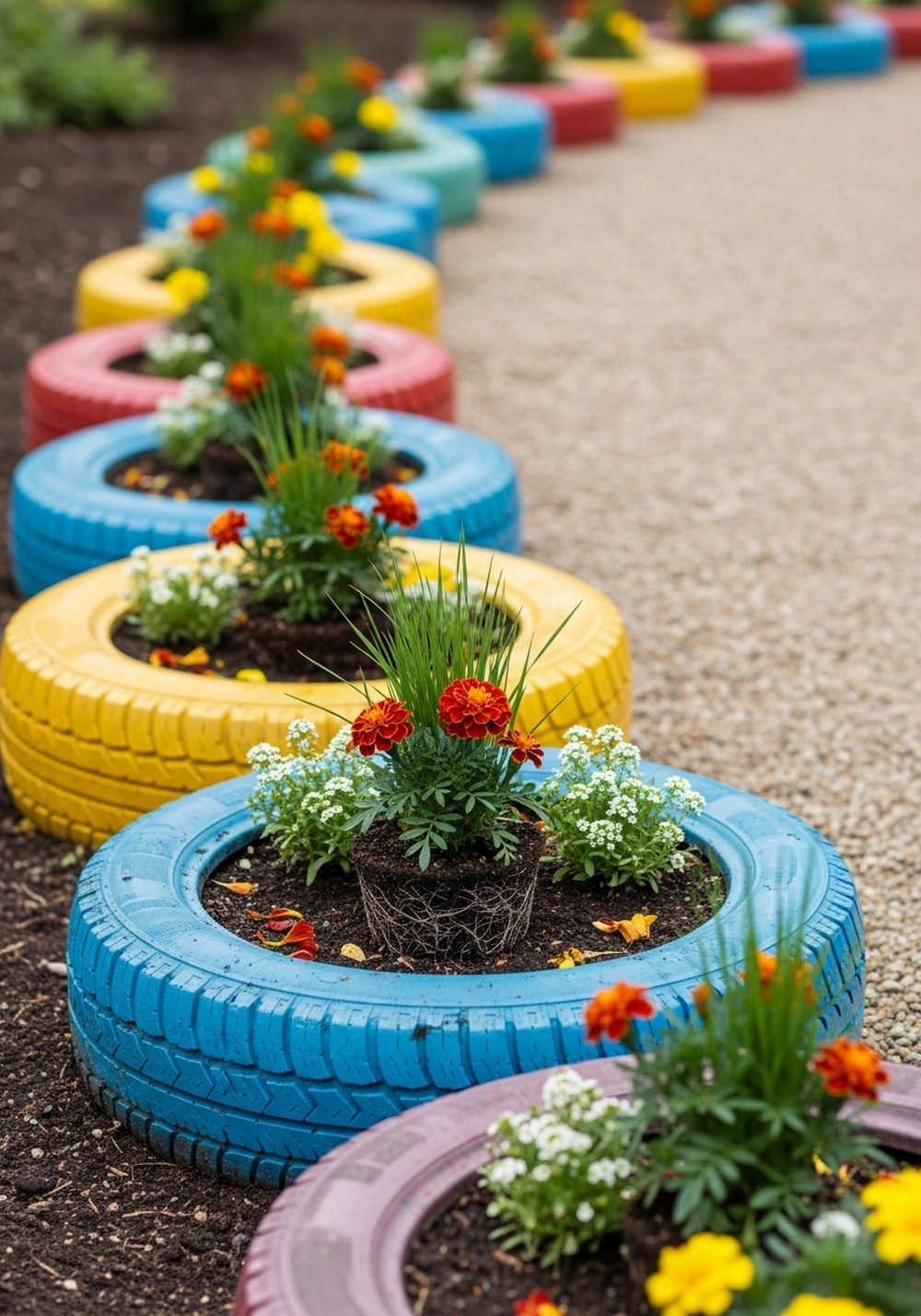
Use tires to edge a path and turn a simple walkway into a colorful garden feature. Cut tires in half or use low-profile ones, paint them, and bury the bottoms slightly along the path edge to keep them stable. Fill each tire section with soil and plant low-growing flowers or groundcovers that spill gently over the sides. This creates a cheerful, wavy line of color that guides the eye and makes even a short path feel special and inviting.
- Best For: Garden paths, driveway edges, or leading to a shed or play area.
- Budget Tip: Skip fancy edging stones and rely on found tires and inexpensive bedding plants.
- Styling Idea: Alternate two or three colors for a playful stripe effect.
- Practical Note: Keep plants low so they don’t block the walkway or get trampled.
5. Painted Animal-Shaped Tire Planters For Kids’ Corner
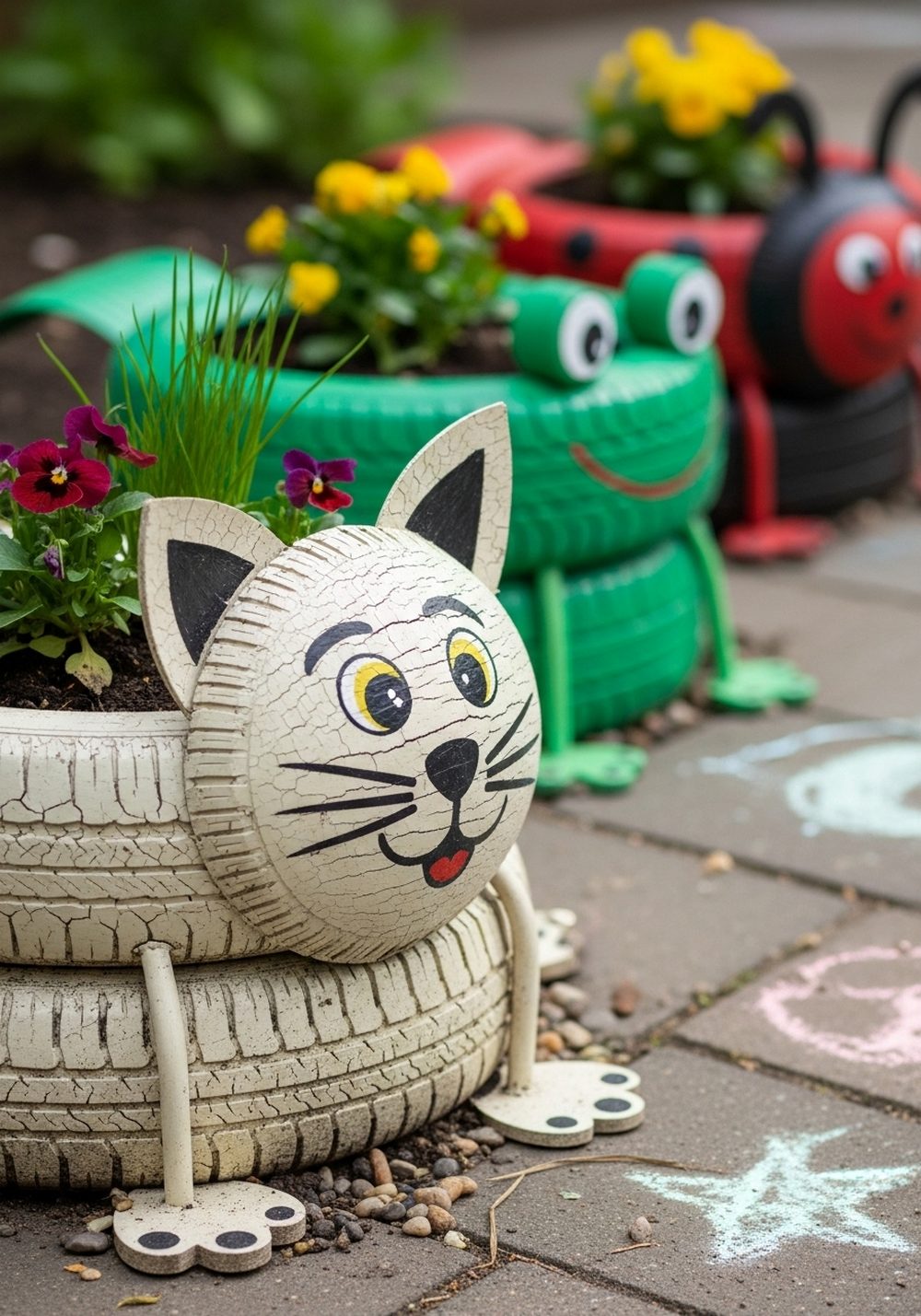
If you have children, animal-shaped tire planters are a fun way to get them excited about gardening. Use one or two tires per animal, painting them as ladybugs, frogs, cats, or bumblebees. Add simple details like ears, eyes, and legs using scrap wood or metal, then fill the tires with soil and bright, easy-care flowers. Place these planters in a dedicated kids’ corner with a few stepping stones or a tiny bench to create a playful mini garden they can help care for.
- Best For: Family gardens, school yards, or any playful outdoor area.
- Budget Tip: Use leftover paints and recycled offcuts for the animal details.
- Styling Idea: Choose bold, cartoon-like colors to keep the look fun and clearly “kid zone.”
- Care & Maintenance: Pick tough plants that can handle a bit of overwatering or enthusiastic attention.
6. Half-Buried Tire Planters For A Wavy Flower Bed
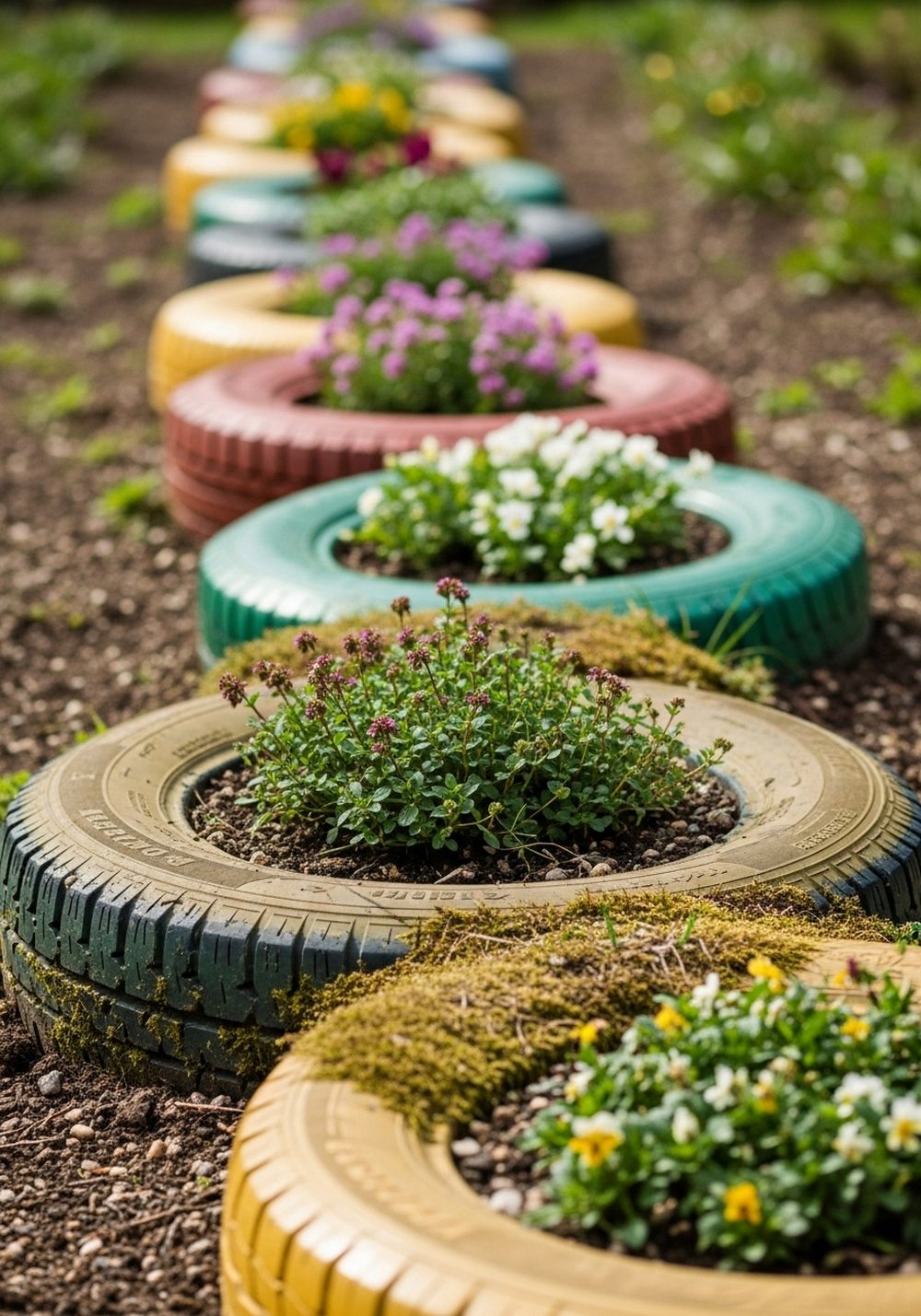
Half-buried tire planters create a soft, rolling effect that feels playful and organic. Slice tires in half if needed, paint them in earthy or slightly muted tones, and dig them into the soil so only the top arc shows. Fill with soil and plant low flowers, ornamental grasses, or cascading groundcovers. Lined up in a curving pattern, they look like waves of color moving through the garden and can help define beds without harsh straight lines.
- Best For: Sloped areas, awkward corners, or the front edge of large beds.
- Budget Tip: Leave some tires unpainted for a more natural, low-cost look.
- Styling Idea: Combine two or three plant types that contrast in height and texture for interest.
- Practical Note: Plan your curve before digging so the line looks intentional and flowing.
7. Tire Planter Fairy Garden Scene
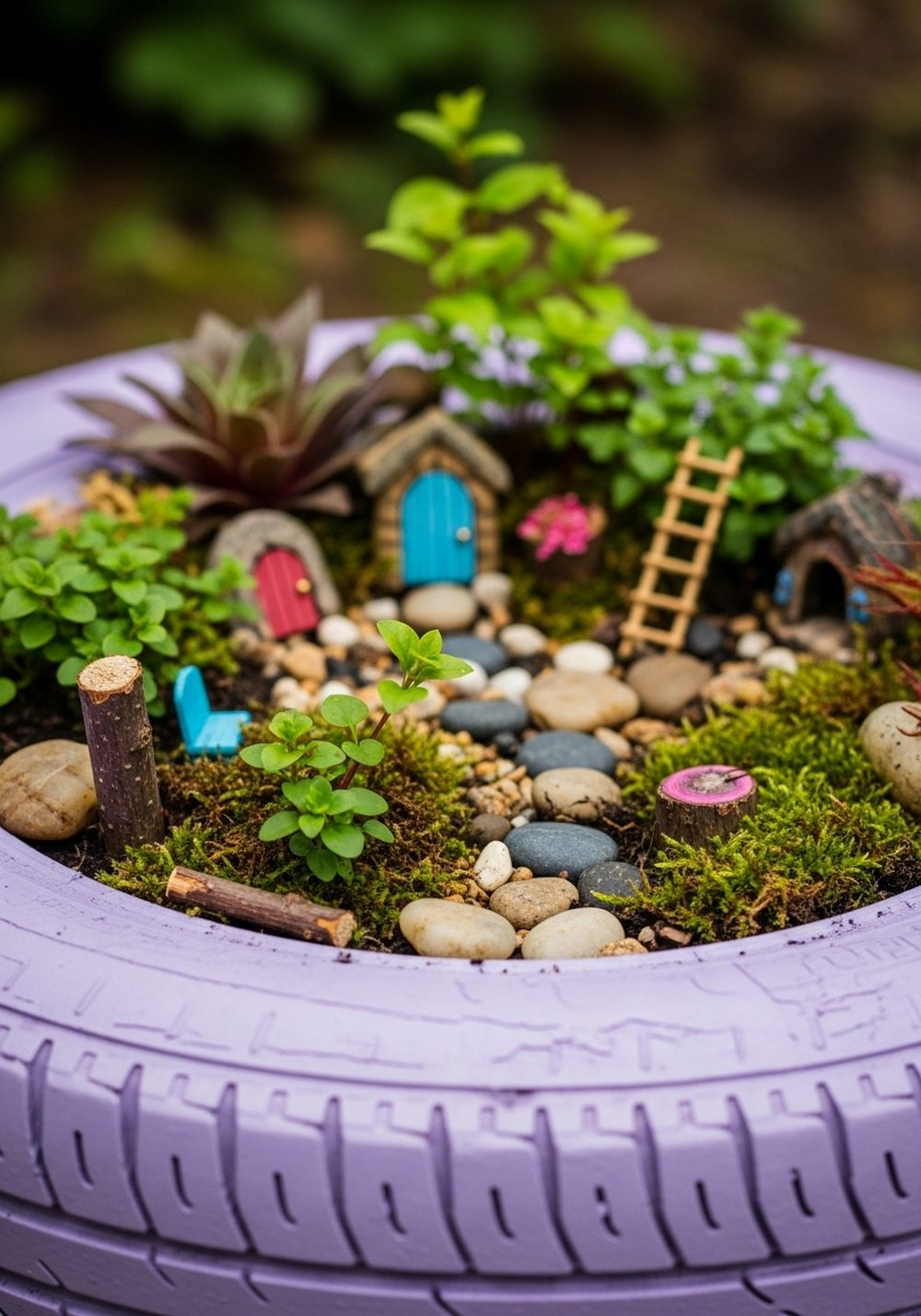
Transform a single tire into a magical fairy garden that delights kids and adults alike. Paint the tire in a soft pastel shade and place it flat on the ground, then fill it with soil, moss, tiny groundcovers, and small flowering plants. Add miniature houses, doors, paths made from pebbles, and a tiny bench or bridge. Set it at child height so little ones can peek inside and make up stories—this charming focal point adds whimsy and makes your garden feel like a storybook setting.
- Best For: Shady corners near patios, play spaces, or under a tree.
- Budget Tip: Make your own fairy accessories from twigs, stones, and small recycled items.
- Styling Idea: Keep the color palette soft and natural to enhance the miniature woodland feel.
- Care & Maintenance: Choose plants that stay small so they don’t quickly overwhelm the fairy details.
8. Vertical Tire Planter Wall For Small Spaces
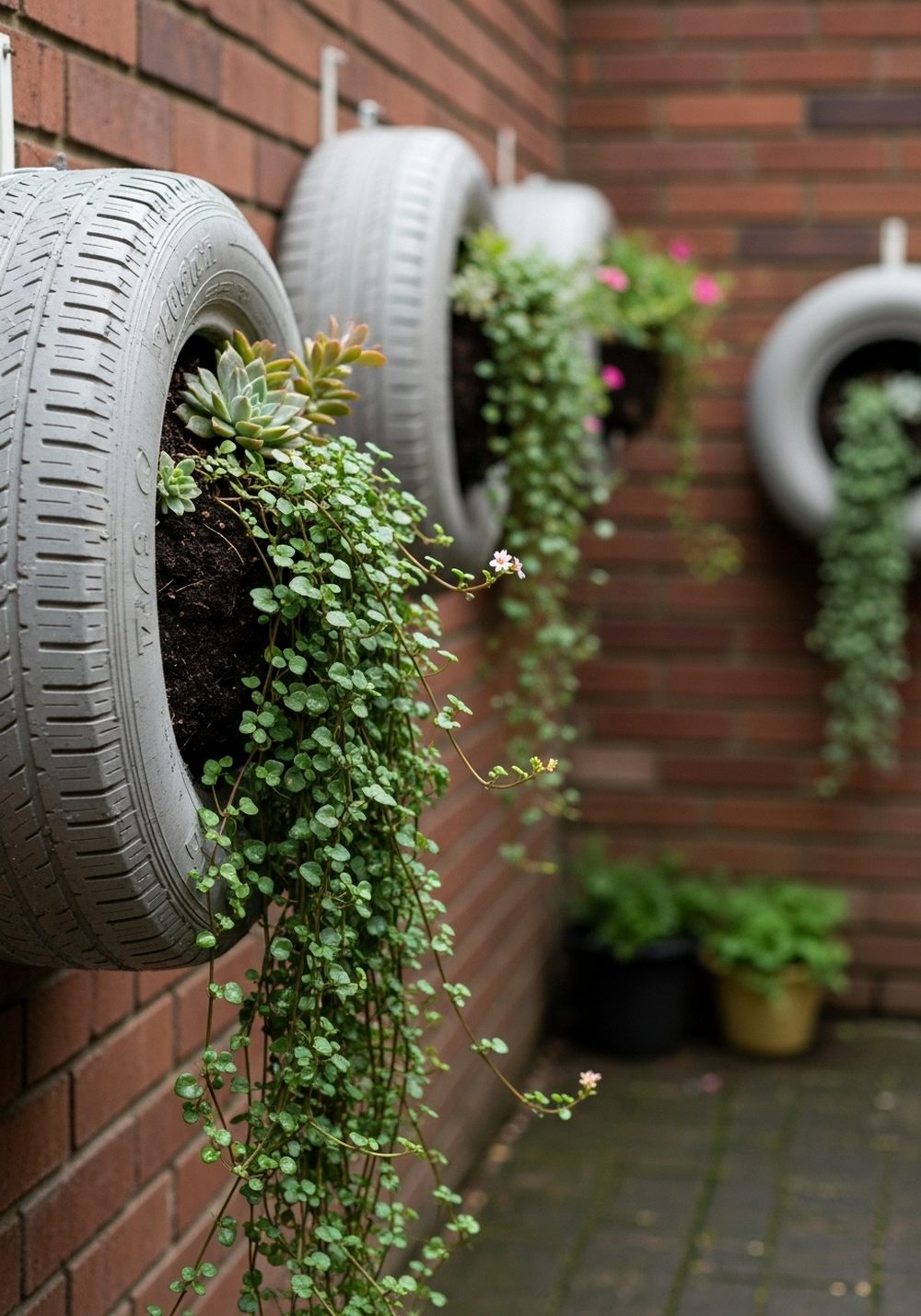
A vertical tire wall is perfect when you’re short on floor space but big on creativity. Secure tires to a sturdy fence or wall, spaced so they don’t crowd each other. Paint them in coordinated tones—neutrals for a modern look, or brights for a playful vibe—then line the bottoms with fabric, fill with soil, and plant trailing flowers, herbs, or succulents. This creates a living wall effect that adds texture, color, and softness to otherwise blank surfaces.
- Best For: Balconies, small courtyards, or narrow side passages.
- Budget Tip: Start with just two or three tires and expand your wall over time.
- Styling Idea: Mix different plant shapes—trailing, upright, and rosette—for a rich, layered look.
- Practical Note: Make sure the wall or fence can safely carry the weight of wet soil and plants.
9. Tire Planter Vegetable Patch In A Sunny Spot
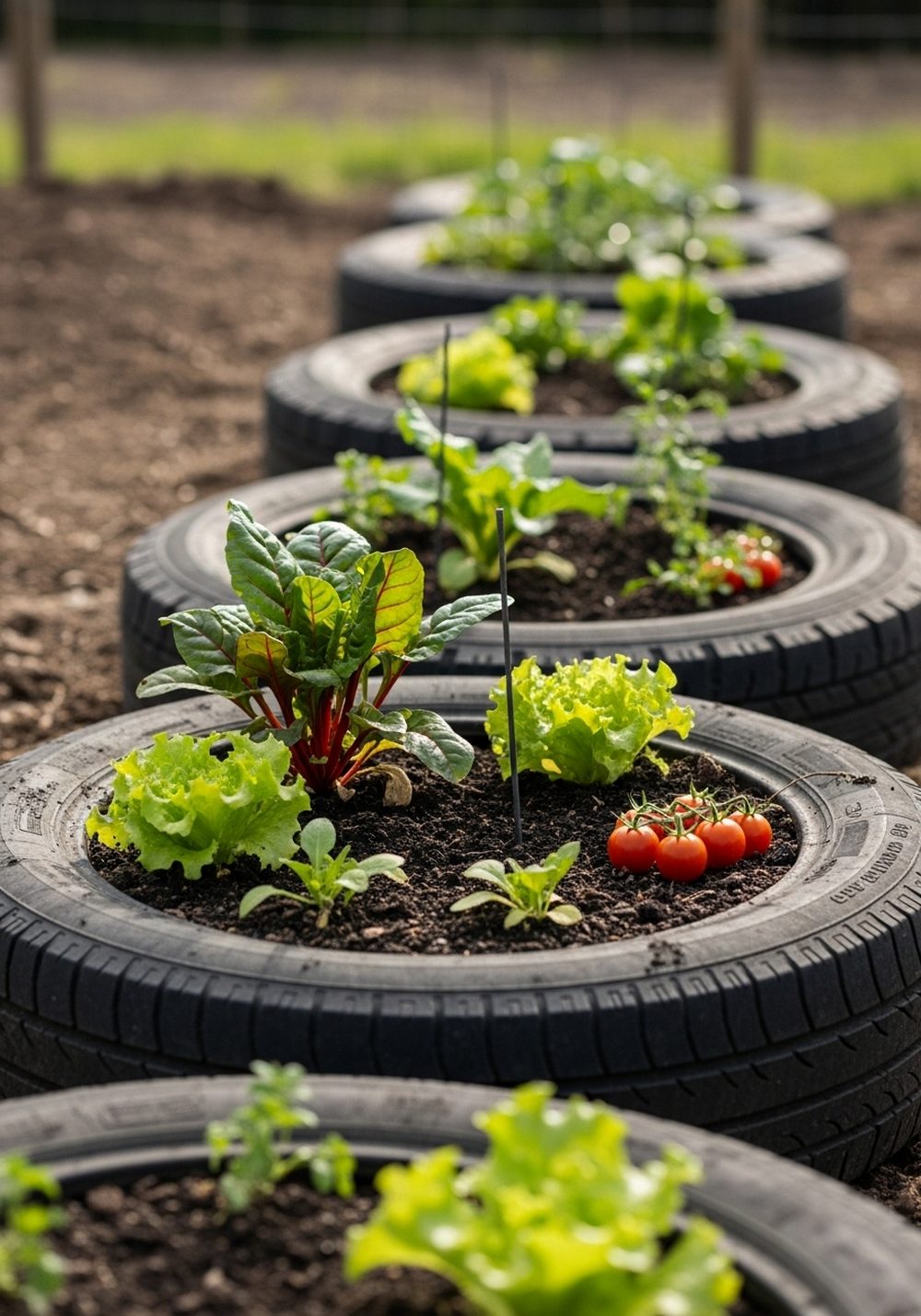
Tires make excellent mini raised beds for vegetables, especially in small gardens or poor soil. Lay tires flat on a cleared, sunny patch, line them if needed, and fill them with nutrient-rich compost. Plant different crops in each tire—salad greens in one, tomatoes in another, herbs in a third—to create a tidy, easy-to-manage vegetable garden. The dark rubber also helps warm the soil, giving plants a little extra boost in cooler seasons.
- Best For: Beginner vegetable gardeners or anyone with compact outdoor space.
- Budget Tip: Focus on easy, high-yield crops like lettuce, herbs, and bush beans.
- Styling Idea: Paint the outer rims in one coordinated color to keep the area looking neat and intentional.
- Care & Maintenance: Water regularly; tire planters can dry out more quickly than in-ground beds.
10. Tire Planter Table With Flowers In The Center
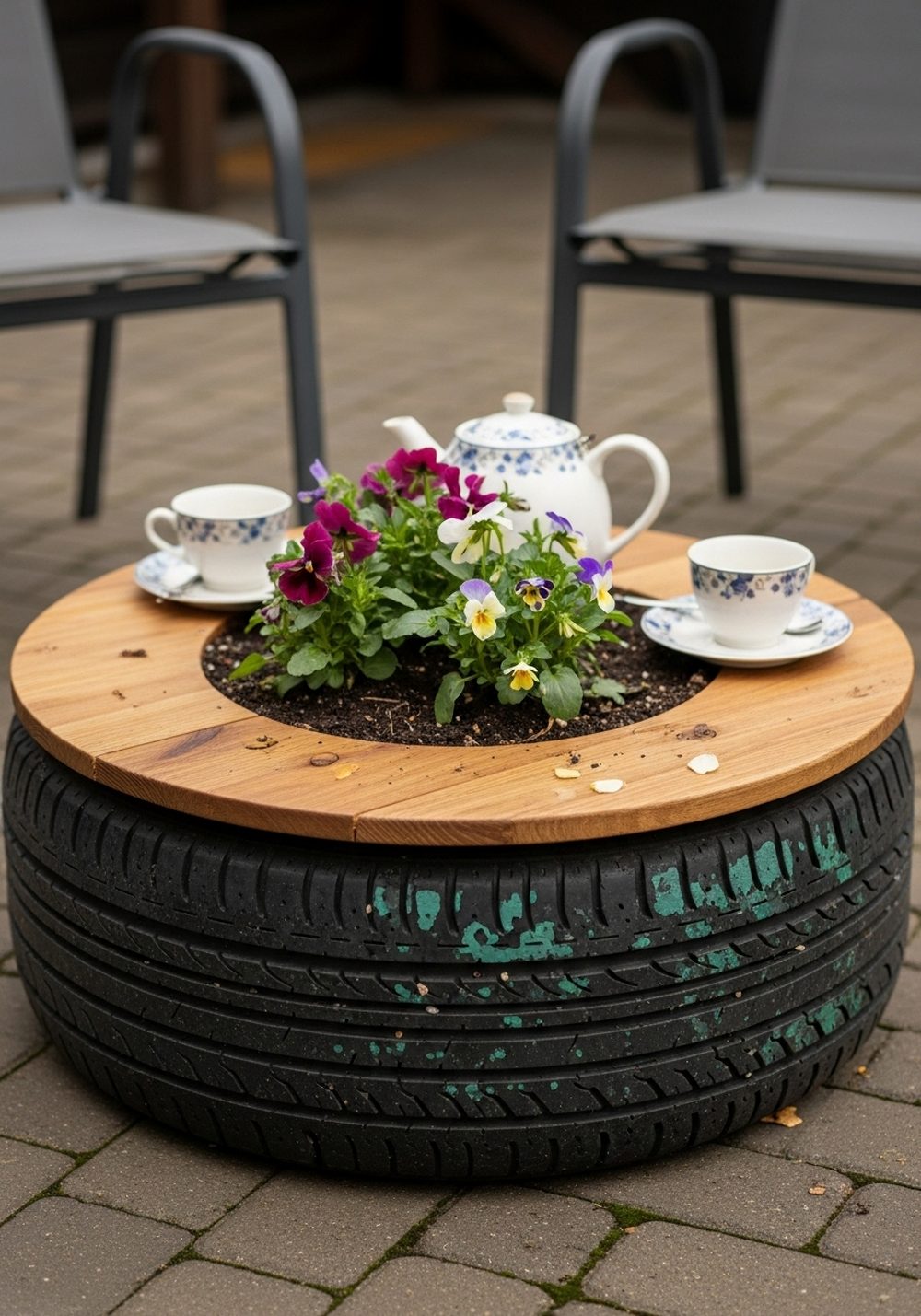
Combine decor and function by turning a tire planter into a low garden table. Place a tire flat, fill the center with soil, and plant a mix of compact flowers and foliage. Then add a round wooden or metal ring around the outer edge to create a little ledge for drinks or a book. Set this near outdoor chairs as a charming coffee table that feels alive and seasonal, making your seating area more welcoming and unique.
- Best For: Patios, decks, and cozy seating corners.
- Budget Tip: Use reclaimed wood for the tabletop ring and a single tire to keep costs minimal.
- Styling Idea: Choose flowers that match your outdoor cushions or rug for a coordinated lounge zone.
Conclusion
Tire planters are proof that you don’t need fancy materials to create a garden full of charm and personality. With some paint, plants, and a free afternoon, you can turn scrap rubber into playful borders, bold towers, and cozy corners that make your outdoor space feel special. Start with one simple project, see how it transforms your garden, and then gradually add more. Before long, your upcycled tire creations will be the happiest spots in your yard.
FAQs
1. Are tire planters safe for growing vegetables and herbs?
Many gardeners use tire planters for edibles without issues, especially when the tires are older and fully weathered. If you’re concerned, line the inside with heavy-duty plastic or landscape fabric before adding soil so roots don’t sit directly against the rubber. Always use fresh, good-quality compost and avoid very high heat spots to keep plants comfortable.
2. How can I make tire planters look stylish instead of messy?
Choose a simple color scheme and repeat it across your tire projects—neutrals, pastels, or a set of bold brights. Group planters in threes or fives and stick to a few plant varieties in each tire rather than mixing too many. Keeping edges neat, wiping away paint drips, and topping soil with mulch or pebbles all help your tire planters look intentional and polished.
3. What paint should I use on old tires for outdoor decor?
Use an exterior-grade paint suitable for rubber or a good-quality outdoor acrylic. First clean the tires thoroughly with soapy water and let them dry, then apply a primer if recommended on the paint tin. Two thin coats of paint usually give better, longer-lasting coverage than one thick coat. Avoid painting in very hot or very humid conditions to prevent peeling.
4. Are tire planters okay for renters who can’t make permanent changes?
Yes, most tire planter ideas are perfect for renters because they sit on the surface and can move with you. Choose freestanding designs like stackable towers, single fairy gardens, or tire tables rather than anything that needs to be bolted into walls or fences. When you move out, simply empty the soil, rinse the tires, and take them along to your next garden.
5. How do I stop tire planters from filling with water?
Drainage is essential. Drill holes in the bottom of each tire, or, if you’re hanging them, in the lowest point of the inner wall. Raise ground-level tires slightly on bricks or gravel so water can escape easily. Use a free-draining potting mix and avoid blocking holes with plastic liners or saucers that trap water.
6. What’s the easiest tire planter idea for beginners?
The easiest project is a single painted tire laid flat and filled with flowers or herbs. You only need one tire, a bit of paint, drainage holes, and soil. Once you’ve tried that and seen how simple it is, you can build up to taller stacks, borders, or decorative animal shapes with more confidence.