10 Charming Pallet Garden Beds for Herbs and Flowers
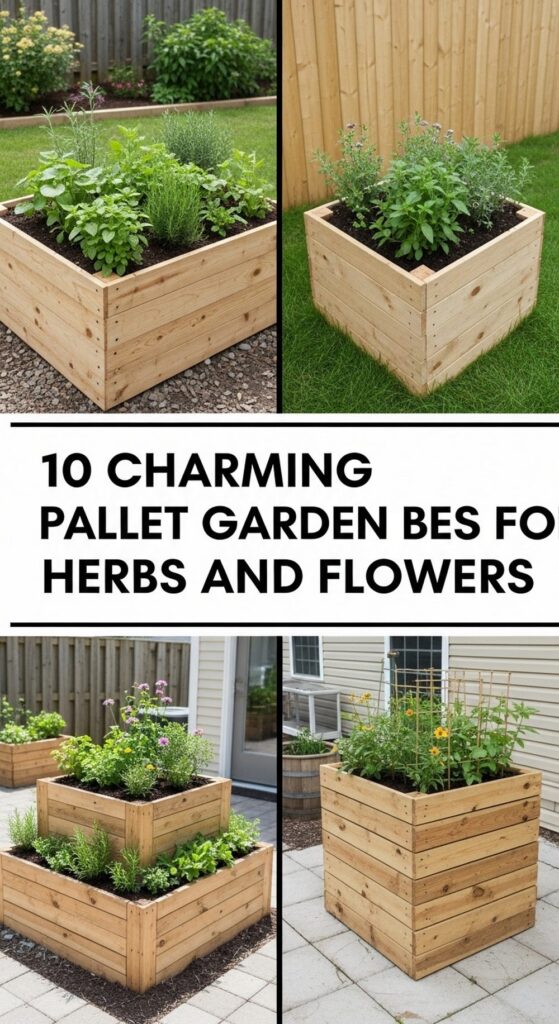
If you love the idea of raised beds but don’t love the price tag, pallet garden beds are a brilliantly budget-friendly solution. They’re easy to build, surprisingly stylish, and perfect for growing herbs and flowers in even the smallest outdoor spaces.
Whether you have a roomy backyard, a tiny side yard, or a paved patio, you can turn simple pallets into charming planters with loads of character. In this guide, you’ll find ten creative pallet bed ideas with practical tips on layout, styling, and plant choices so you can create a welcoming, personal garden that looks good and works hard for you.
Quick List
- Rustic Flat Pallet Herb Bed By The Patio
- Vertical Pallet Pocket Garden For Herbs And Blooms
- Pallet Ladder Tiered Bed For Cascading Flowers
- U-Shaped Pallet Raised Bed For Mixed Planting
- Narrow Pallet Border Bed Along A Fence
- Pallet Box Bed For Fragrant Kitchen Herbs
- Painted Pallet Bed For Color-Coordinated Flowers
- Pallet Corner Bed To Soften Hard Edges
- Rolling Pallet Planter Bed For Flexible Layouts
- Mini Pallet Beds For Kids’ Herb And Flower Patches
1. Rustic Flat Pallet Herb Bed By The Patio
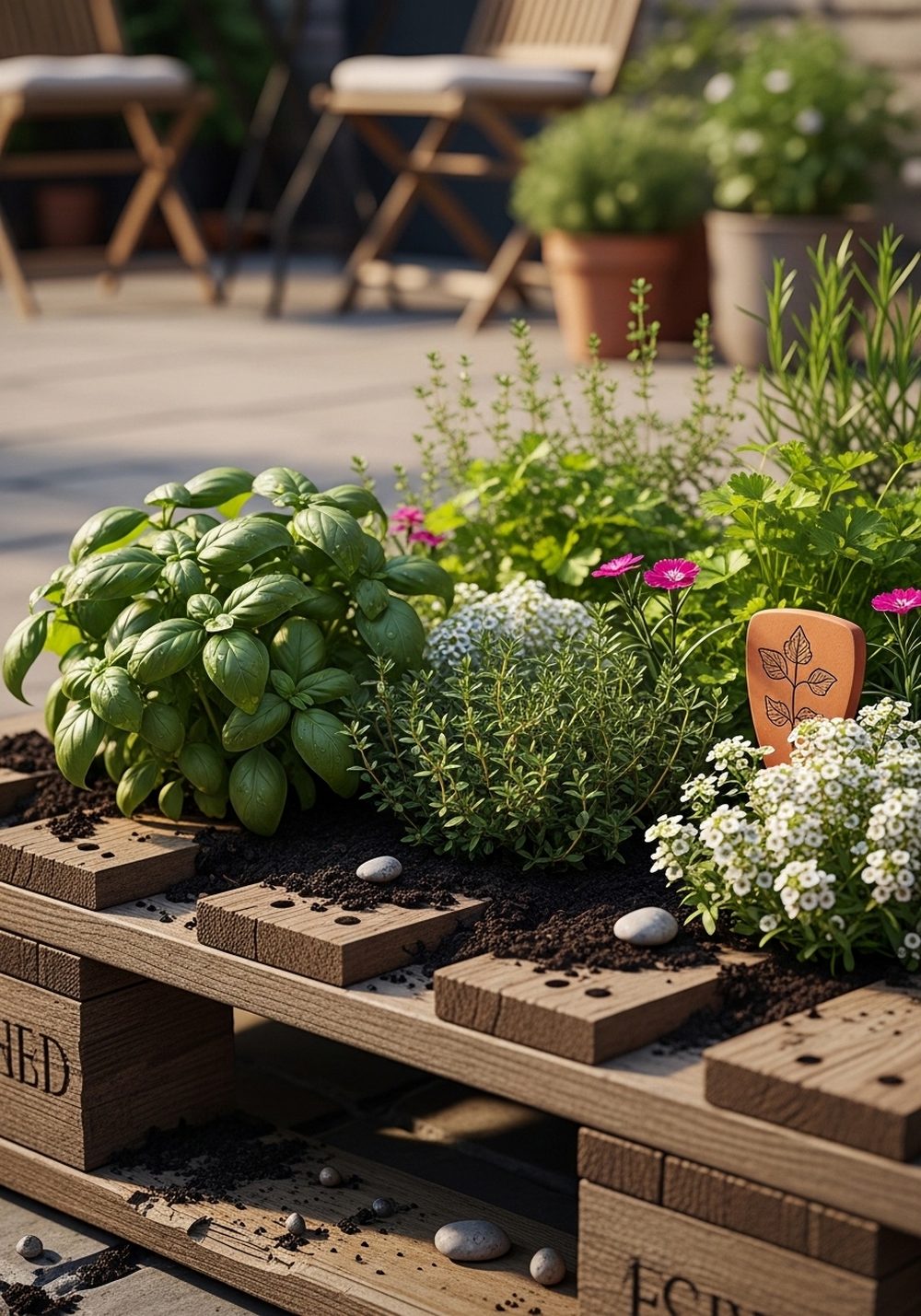
Lay a sturdy pallet flat on the ground, line it with landscape fabric, and fill the gaps with good-quality soil to create a simple, rustic herb bed right beside your patio. Plant a mix of low-growing herbs and small flowering plants so the pallet looks full and lush without blocking your seating area. The wood adds warmth and texture, while the neat rows of green and blooms frame your outdoor space beautifully and stay easy to reach when you’re cooking or relaxing outside.
- Best For: Patios, courtyards, and renters who want something low and easy to move if needed.
- Budget Tip: Look for free or low-cost pallets from local shops and reuse leftover soil and cuttings.
- Styling Idea: Keep it cottage-style with terracotta pots nearby and simple wooden herb markers.
- Practical Note: Place it where you can reach it from all sides so watering and harvesting stay simple.
2. Vertical Pallet Pocket Garden For Herbs And Blooms
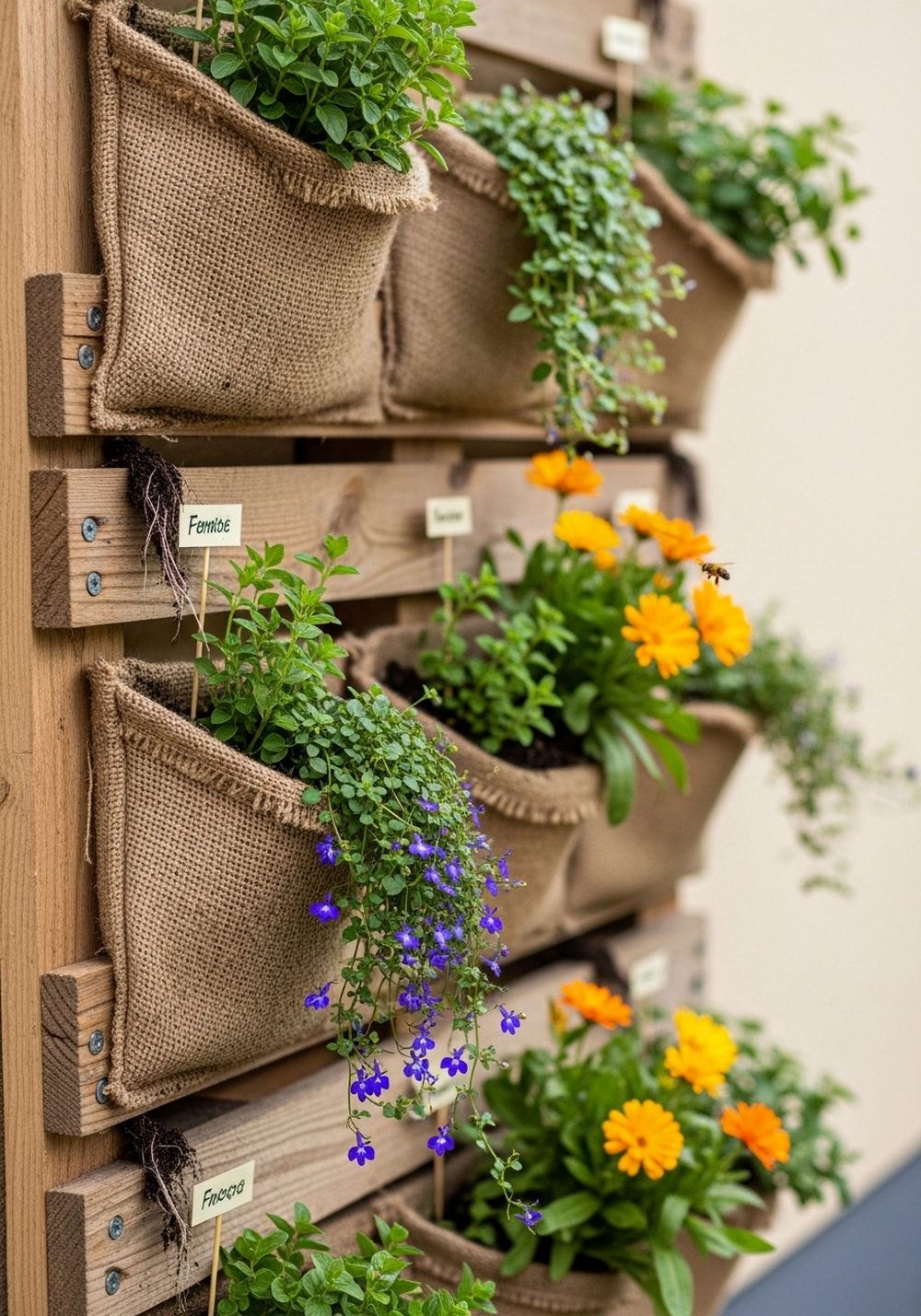
Turn a pallet on its side and create pockets with landscape fabric or burlap behind each slat to make a vertical garden full of herbs and flowers. Once filled with soil, the pockets can hold shallow-rooted herbs like thyme, oregano, and chives, combined with trailing flowers to soften the structure. Lean or fix the pallet against a wall or fence, and you suddenly have a living artwork that saves floor space and brings color and scent up to eye level.
- Best For: Small patios, balconies with strong walls, or narrow side yards.
- Budget Tip: Use recycled fabric or old grow bags cut to size to create pockets.
- Styling Idea: Keep herbs on the lower rows and bright flowers at eye level for instant visual impact.
- Care & Maintenance: Water slowly from the top so the moisture can trickle down without washing soil out.
3. Pallet Ladder Tiered Bed For Cascading Flowers
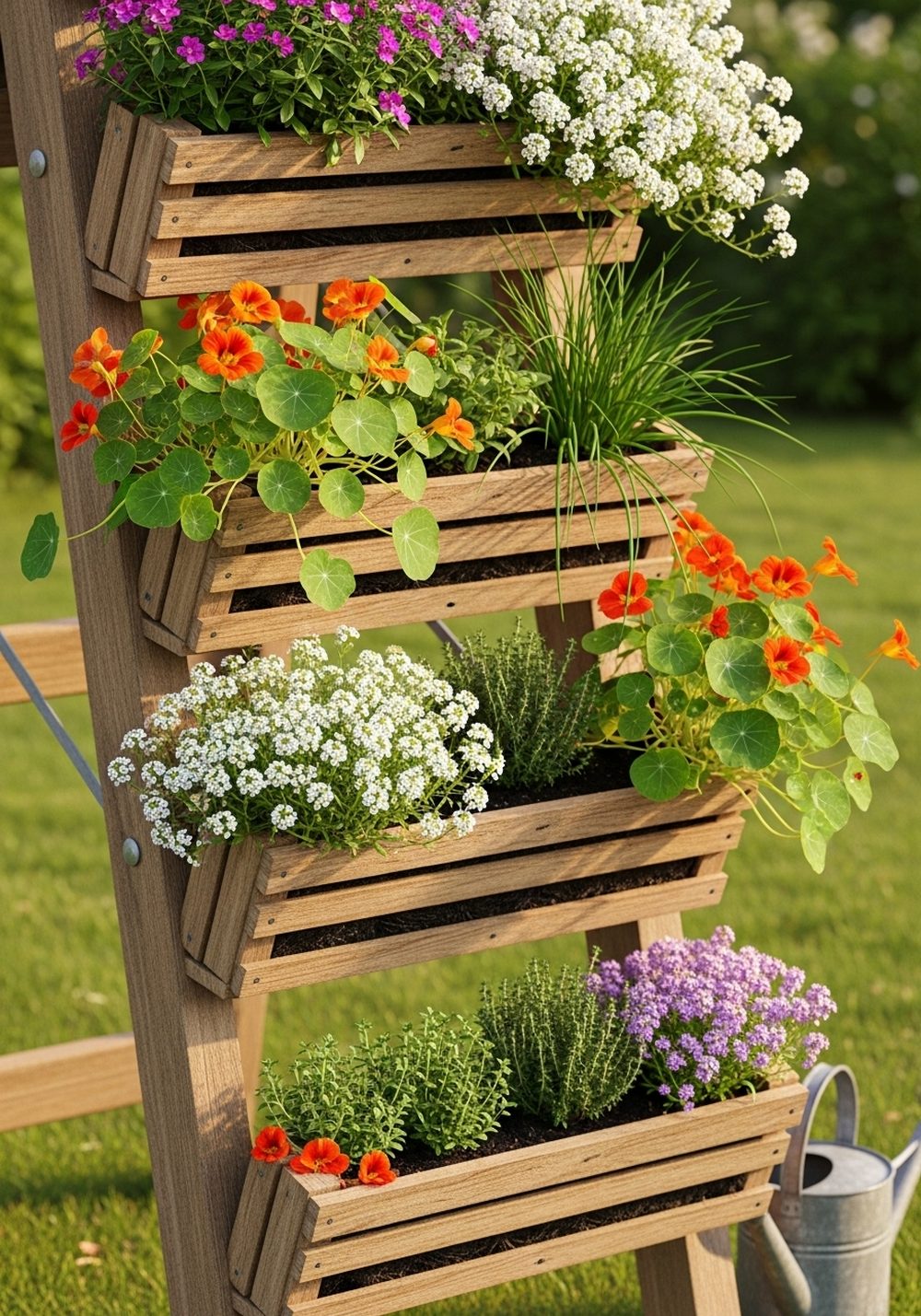
Combine two or three pallets to create a ladder-style set of tiered beds, stacking shallow pallet boxes at different heights. Each level can host a mix of trailing flowers and compact herbs, so plants cascade gently over the edges. The staggered layers add height and drama, turning a plain corner into a lush, stepped display. This tiered effect looks especially pretty when viewed from a seating area or window, giving you layers of color and texture to enjoy.
- Best For: Corners that need a focal point or sloping areas where a flat bed is tricky.
- Budget Tip: Build the tiers gradually, adding one new level each season as your budget allows.
- Styling Idea: Use one color family of flowers (all pinks or all blues) with green herbs to keep it cohesive.
- Practical Note: Plant thirstier herbs on the lower levels where runoff collects, and drought-tolerant plants higher up.
4. U-Shaped Pallet Raised Bed For Mixed Planting
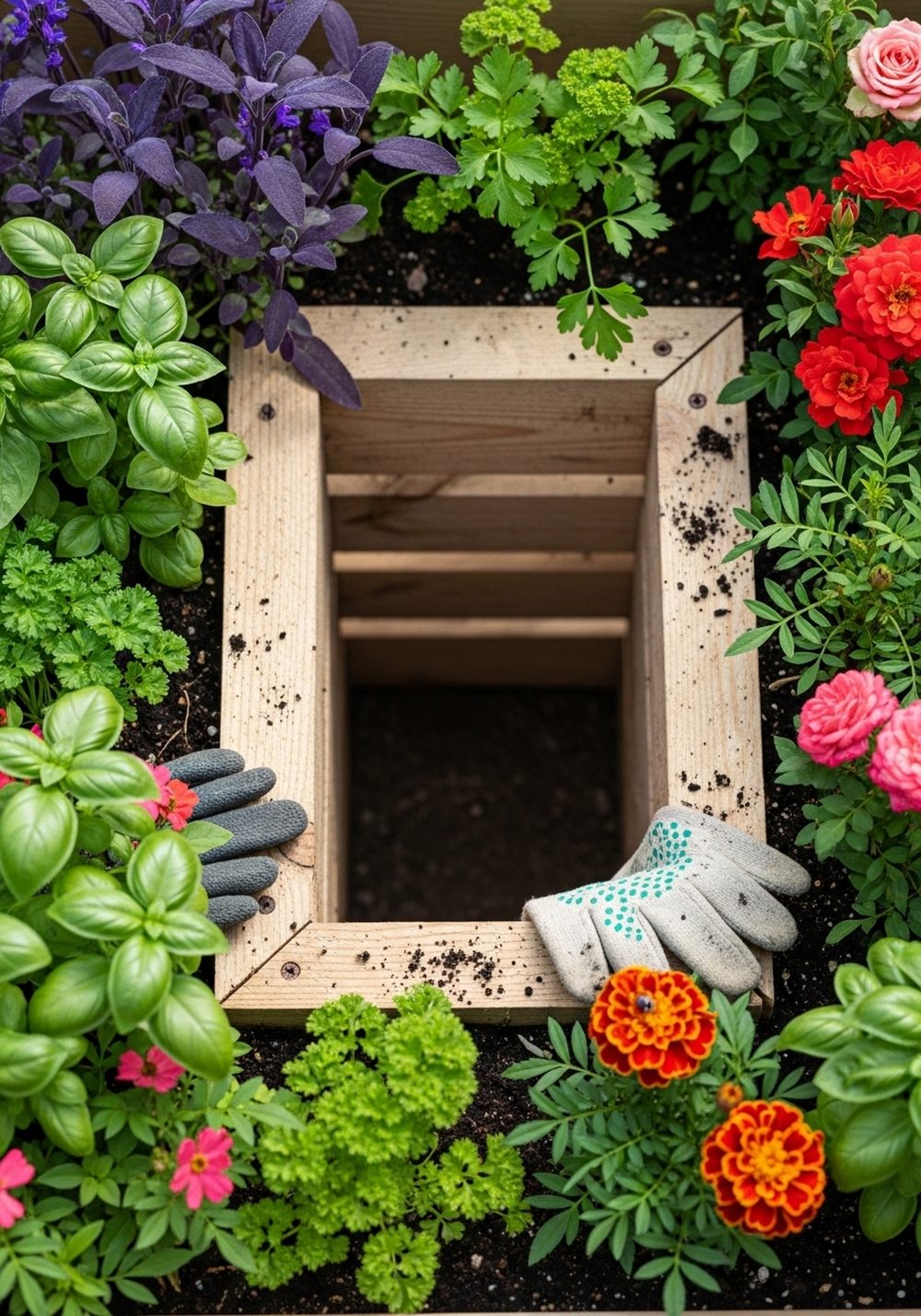
Arrange pallets into a U shape and line them to create a generous raised bed with a comfortable working space in the middle. Fill it with a mix of herbs, edible flowers, and ornamental blooms so every side has something lovely and useful to offer. The U shape makes it easy to reach the center without stepping on soil, and the wooden sides give clear edges that look tidy and intentional. It feels like a tiny garden room, especially if you add a low stool or stepping stone in the middle.
- Best For: Medium-sized gardens where you want a big impact without a permanent brick or timber bed.
- Budget Tip: Start with fewer pallets and extend the U over time as you find more materials.
- Styling Idea: Plant taller herbs and flowers at the back of each arm and lower ones at the front for a layered look.
- Care & Maintenance: Refresh the top layer of compost each year to keep plants productive and soil healthy.
5. Narrow Pallet Border Bed Along A Fence
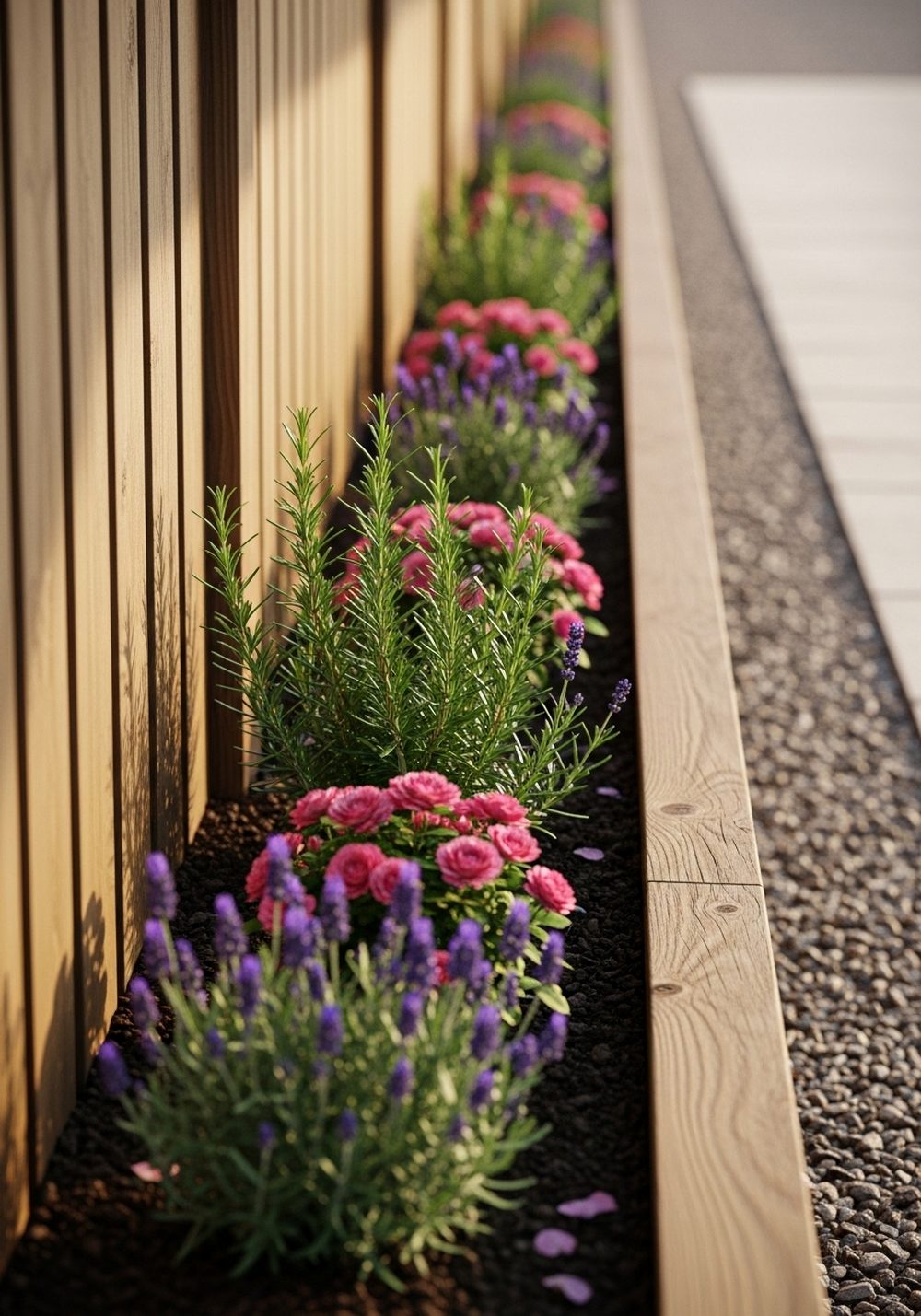
Use narrow pallets or cut wider ones down to build slim raised beds that run in a straight line along a fence. This instantly softens a hard boundary and makes the most of a forgotten strip of soil or paving. Plant in repeating groups of herbs and flowering plants to create rhythm: think lavender, rosemary, and a run of bright annuals between. The long line draws the eye and makes your garden feel more designed without taking up much floor space.
- Best For: Long, skinny gardens, side passages, and blank fence lines.
- Budget Tip: Space plants a bit further apart and let them fill out over the season.
- Styling Idea: Choose one main flower color and one accent color so the border looks intentional, not busy.
- Practical Note: Keep taller plants away from gate hinges and access points so nothing gets knocked or crushed.
6. Pallet Box Bed For Fragrant Kitchen Herbs
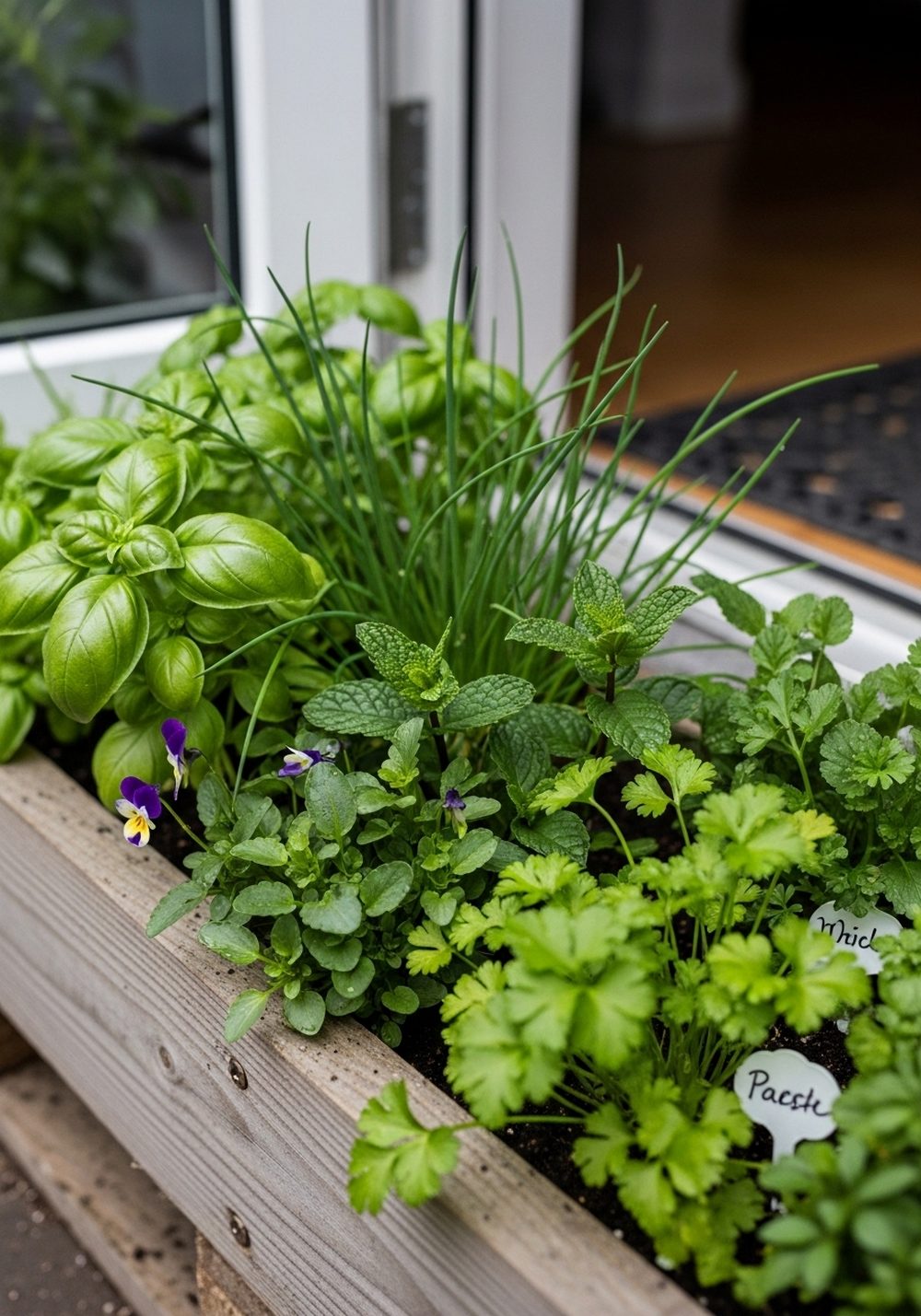
Build a simple rectangular box using pallet boards and place it close to your back door or kitchen window, where you can reach it in seconds. Plant it densely with the herbs you use most: basil, parsley, mint in a contained corner, and maybe a few edible flowers like nasturtiums or violas. The compact shape looks neat, and the mix of scents makes every trip outside feel a bit special. Because it’s small, you can easily give it extra care and keep it looking lush.
- Best For: Home cooks who want herbs within arm’s reach of the kitchen.
- Budget Tip: Start with small herb seedlings or rooted supermarket cuttings instead of larger, pricier plants.
- Styling Idea: Add simple white or slate plant labels to give it a smart, kitchen-garden look.
- Care & Maintenance: Pinch out herb tips regularly to encourage bushier growth and prevent legginess.
7. Painted Pallet Bed For Color-Coordinated Flowers
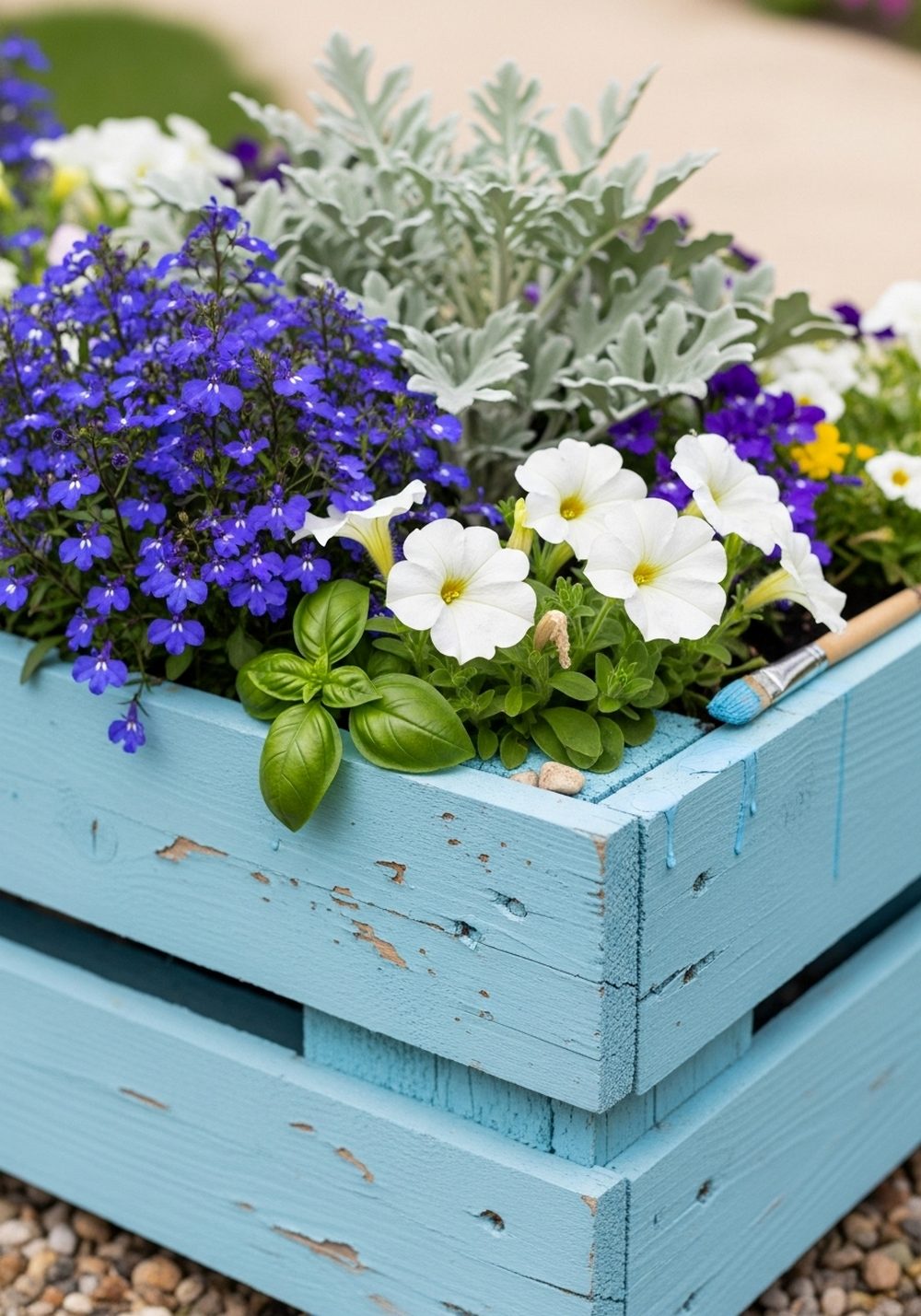
Transform a standard pallet bed with a coat of exterior paint in your chosen shade, then fill it with flowers and foliage that echo or contrast with that color. A pale blue bed with cool-toned blooms, or a charcoal-grey bed with hot oranges and yellows, can feel very modern and intentional. The painted wood acts almost like a frame around your planting, making even simple flowers look like part of a styled display. This is a lovely way to tie your garden decor into your furniture or house trim.
- Best For: Patios and seating areas where you see the bed up close.
- Budget Tip: Use leftover paint from other projects and mix different tints for a soft, layered effect.
- Styling Idea: Stick to two or three flower colors so the painted pallet remains the star.
- Practical Note: Choose exterior-grade paint and let it dry fully before filling to protect the wood and plants.
8. Pallet Corner Bed To Soften Hard Edges
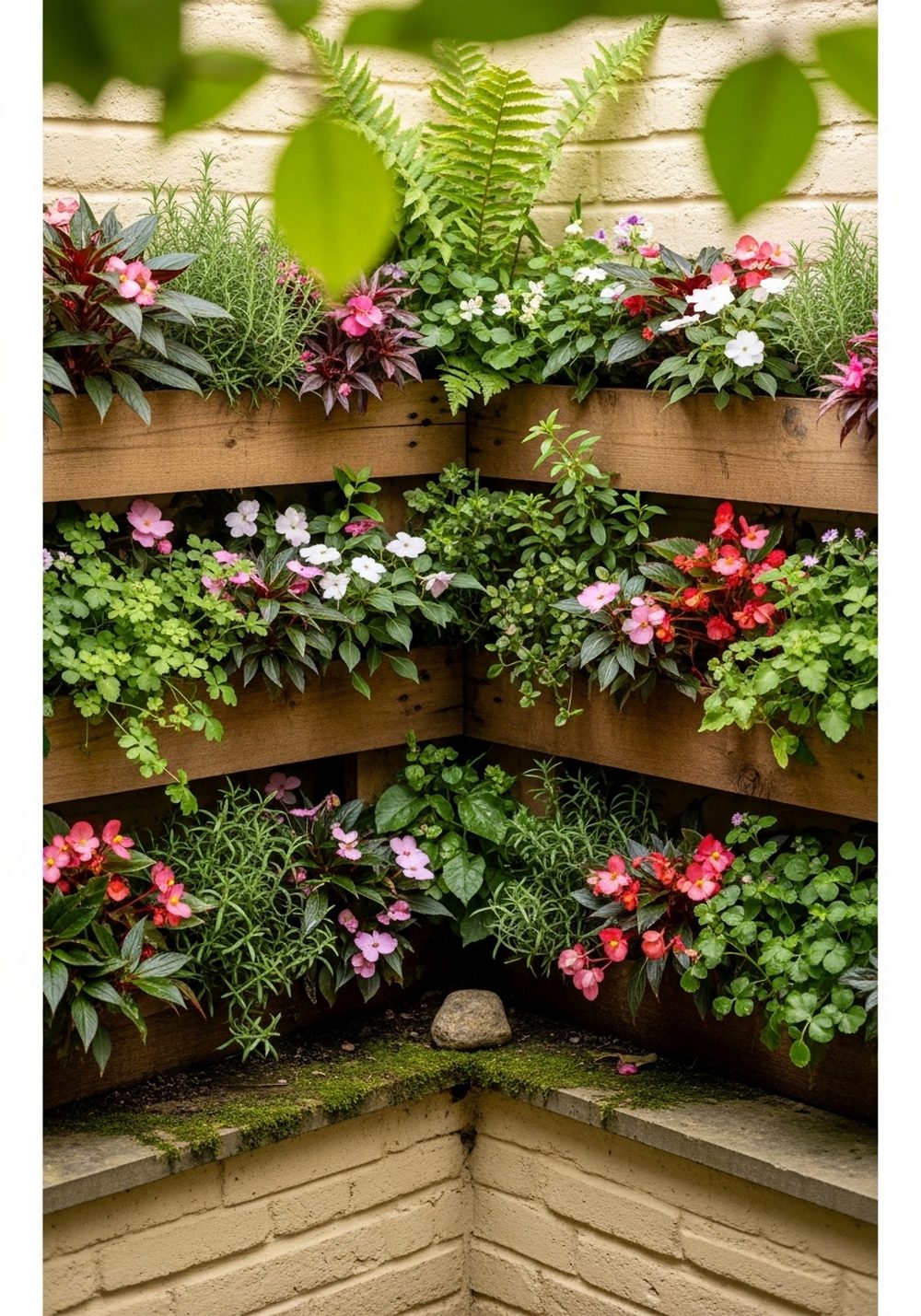
Cut and assemble pallets into a triangular or curved shape that nestles neatly into a corner, whether that’s where two fences meet or where patio and wall join. Fill it with plants that like similar conditions, such as shade-loving blooms and herbs in a cooler corner, or sun-lovers in a bright one. The planted corner stops the space feeling harsh and boxed-in, and the wooden edges create a gentle transition between wall and floor. Add a couple of larger feature plants at the back to anchor the design.
- Best For: Awkward corners that feel empty or a bit stark.
- Budget Tip: Divide and replant existing perennials from elsewhere in your garden to fill the new bed.
- Styling Idea: Use plants with different leaf shapes and textures to keep a mostly-green corner visually interesting.
- Practical Note: Leave a little gap from the wall for drainage and to prevent damp issues.
9. Rolling Pallet Planter Bed For Flexible Layouts
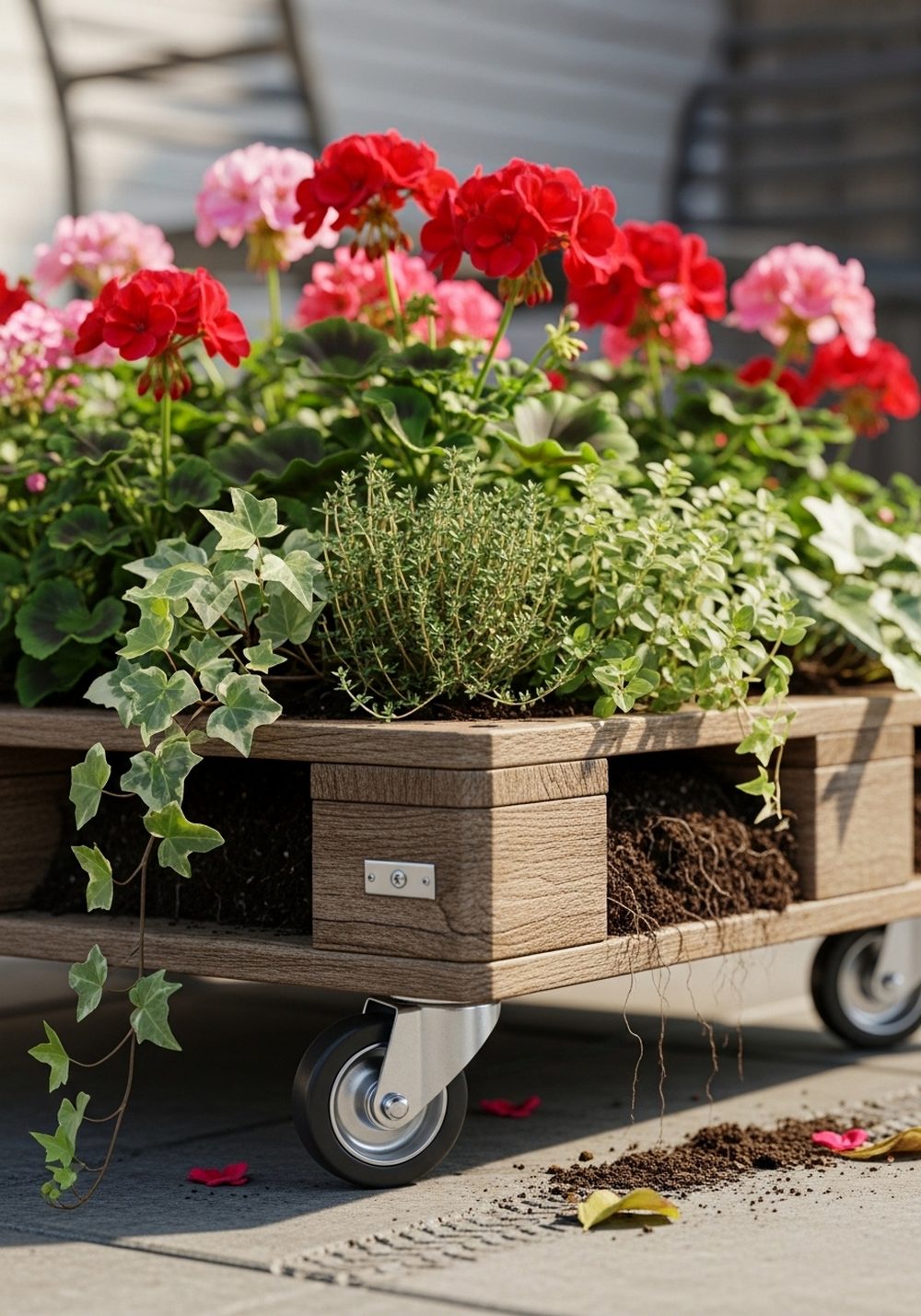
Attach caster wheels to the bottom of a low pallet box and you’ve got a movable garden bed that can follow the sun or be rolled aside when you need extra space. Plant a mix of herbs and flowering plants that can handle some movement, and keep the soil level a little below the edge so nothing spills out when you roll it. This idea is especially handy on paved areas because it breaks up hard surfaces without committing to a fixed layout.
- Best For: Patios, roof terraces, or renters who may need to rearrange or move.
- Budget Tip: Source second-hand castors from old furniture to keep costs down.
- Styling Idea: Create a theme bed, such as all Mediterranean herbs with warm-toned flowers.
- Practical Note: Make sure the wheels can lock so the bed stays put in wind or on slight slopes.
10. Mini Pallet Beds For Kids’ Herb And Flower Patches
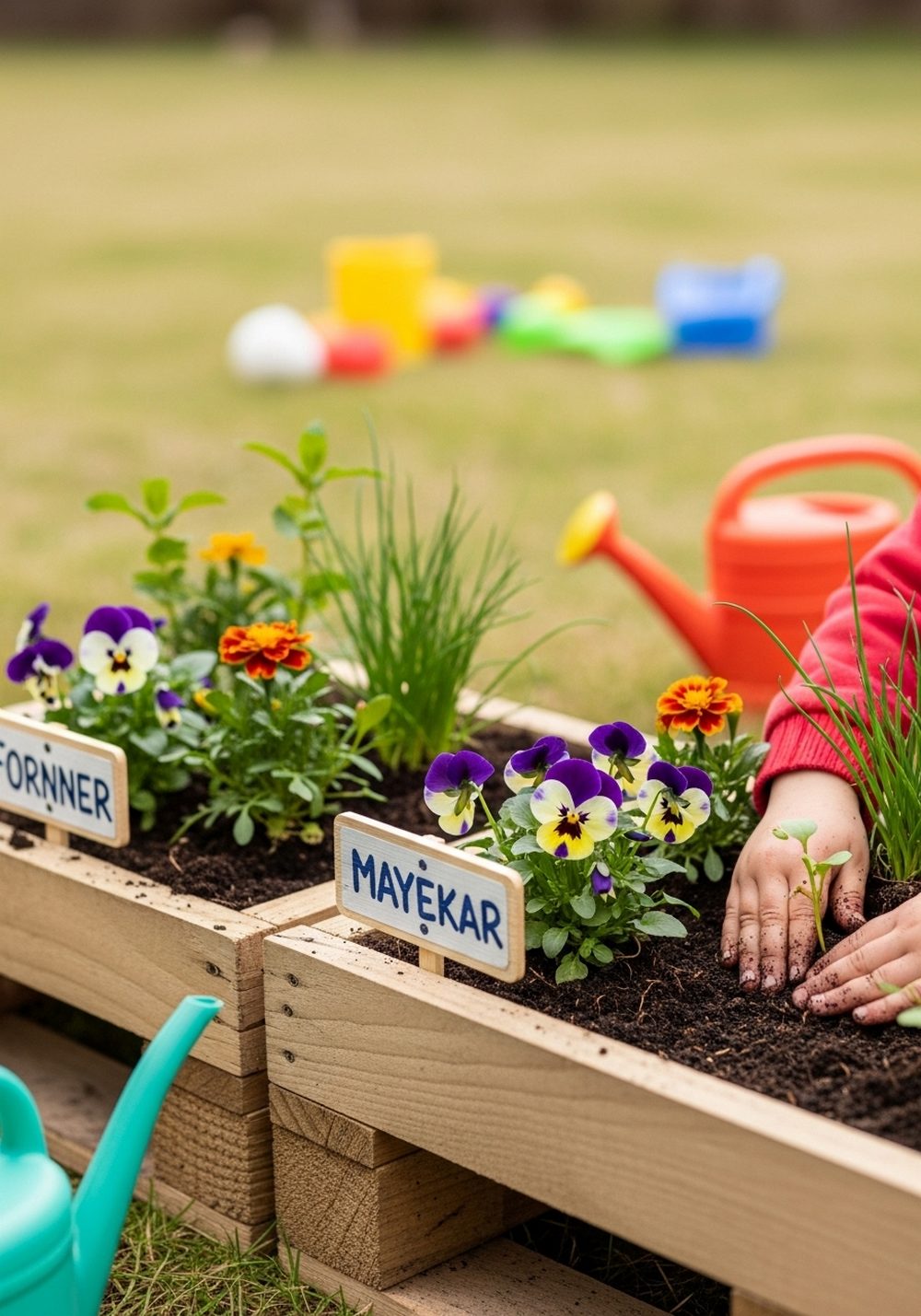
Turn small sections of pallet into child-sized beds, each labelled with a name or fun sign so kids feel ownership of their patch. Fill the beds with forgiving, fast-growing plants like mint (in a corner), chives, marigolds, and pansies that can handle enthusiastic watering and picking. The low height and defined edges make it easy for little gardeners to reach and understand where they can dig. As their plants flourish, they see the magic of gardening up close while your main beds stay tidy.
- Best For: Families who want to involve children in gardening in a controlled way.
- Budget Tip: Let kids sow seeds rather than buying many plants; it’s cheaper and more exciting to watch.
- Styling Idea: Encourage kids to paint the pallet edges in their favourite colors for a playful look.
- Care & Maintenance: Teach simple tasks like gentle watering and deadheading so they help keep beds looking good.
Conclusion
Pallet garden beds are a friendly way to turn plain wood and a few bags of soil into something truly beautiful and useful. With a bit of creativity, you can grow herbs and flowers in spaces that might otherwise stay bare or boring. Start with one simple pallet bed, then add more shapes, colors, and heights as your confidence grows. Before long, your outdoor area will feel more like a charming, personal garden than just a place to pass through.
FAQs
1. Are pallet garden beds safe for growing herbs and vegetables?
Yes, they can be, as long as you choose pallets that are in good condition and have been heat-treated rather than chemically treated. Avoid pallets with strong chemical smells, stains, or very rough damage. If in doubt, line the inside with thick plastic or landscape fabric so your soil isn’t directly in contact with the wood.
2. How can I build a pallet garden bed on a very small budget?
Look for free pallets from local shops, warehouses, or community groups, and always ask before taking any. Use soil from existing beds mixed with compost, and start with seeds or small plugs instead of fully grown plants. Many gardeners are happy to share cuttings or divided perennials, which can quickly fill a new pallet bed.
3. Are pallet beds suitable for renters who can’t make permanent changes?
Definitely. Freestanding pallet beds, especially the flat, box, and rolling designs, sit on top of the ground or paving and don’t need digging or fixing to walls. When it’s time to move, you can empty the soil into bags or other beds and take the pallet structure with you, leaving the space much as you found it.
4. What’s the easiest pallet garden idea for beginners?
A flat pallet herb bed or a simple pallet box near the back door is usually the easiest place to start. There’s minimal cutting, and you’re basically creating a shallow raised bed with clear sections. Choose forgiving herbs like mint (in a contained spot), parsley, chives, and hardy flowers to build your confidence before trying more complex shapes.
5. How do I stop pallet beds from rotting quickly outdoors?
Use pallets that are in good condition to begin with, and, if possible, raise them slightly off bare soil using bricks or pavers. You can apply an exterior wood treatment or paint to exposed surfaces, avoiding the inner planting area. Good drainage and airflow help too, so make sure water isn’t constantly pooling around the base of your pallet bed.
6. Can I mix herbs and flowers in the same pallet bed without harming the plants?
Yes, many herbs and flowers grow happily together, especially if they like the same sun and water conditions. Just avoid very vigorous herbs, like mint, taking over delicate flowers by giving them their own corner or planting them in buried pots. Combining the two adds more color, interest, and pollinators to your pallet beds while still keeping things practical for the kitchen.