10 Cinder Block Succulent Wall Ideas for Small Gardens
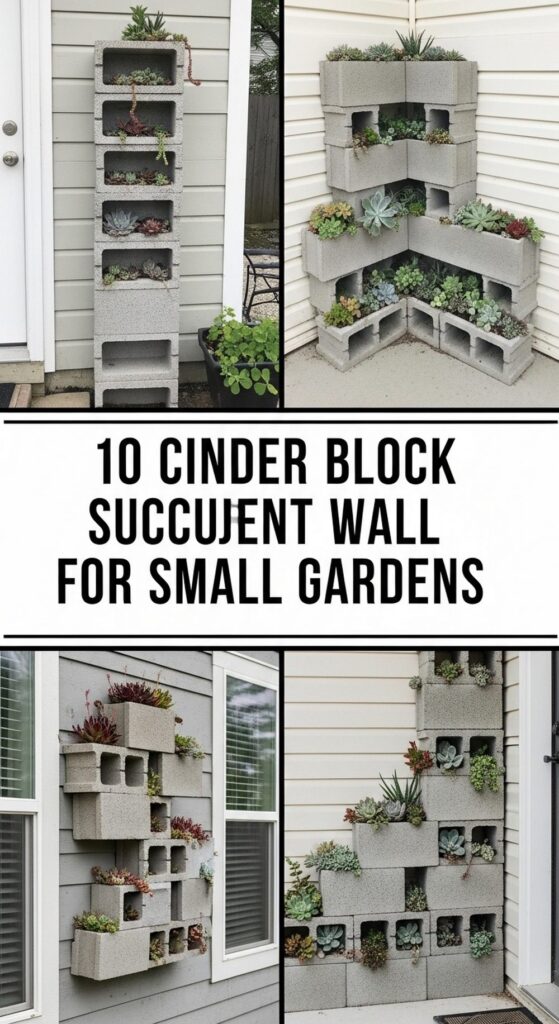
If you love succulents but feel like you’ve run out of floor space, a cinder block wall might be your new best friend. These simple building blocks are cheap, easy to stack, and perfect for creating vertical planters in tiny gardens, courtyards, or balconies.
In this post, you’ll find ten creative ways to turn ordinary cinder blocks into beautiful succulent walls. Every idea is designed with small spaces and normal budgets in mind, with plenty of ways to tweak colors, layout, and height. By the end, you’ll have practical inspiration to build a wall that adds greenery, texture, and personality without stealing precious square footage.
Quick List
- Staggered Cinder Block Succulent Wall
- Corner L-Shaped Cinder Block Tower
- Painted Pastel Cinder Block Succulent Grid
- Slim Balcony Cinder Block Rail Wall
- Rustic Cinder Block And Wood Shelf Wall
- Vertical Cinder Block Herb And Succulent Mix
- Black And White Modern Cinder Block Wall
- Tiered Cinder Block Wall Around A Seating Nook
- Mini Cinder Block Wall For Tiny Courtyards
- Cinder Block Screen Wall For Privacy
1. Staggered Cinder Block Succulent Wall
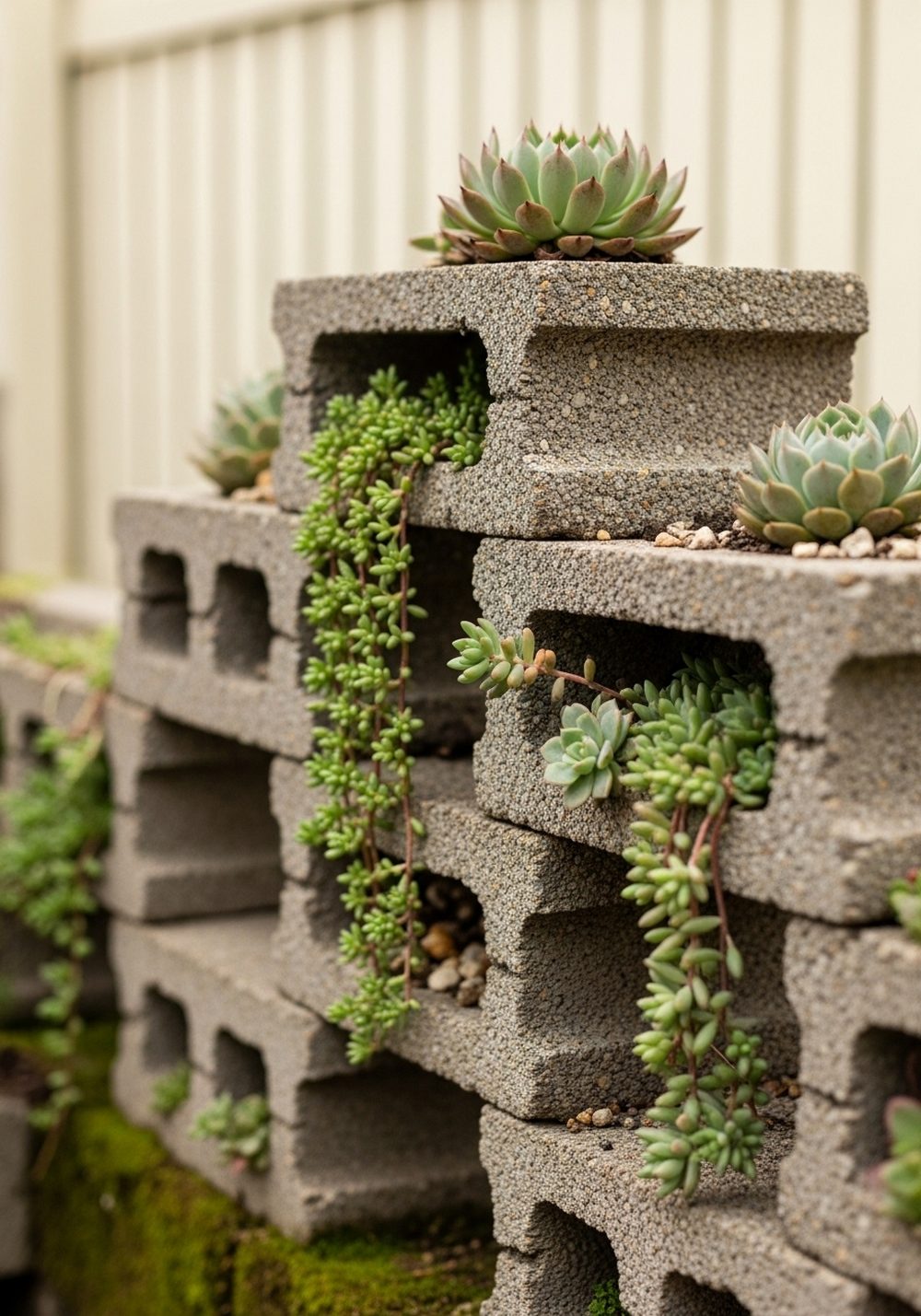
Stack cinder blocks in a staggered, offset pattern to form a sturdy mini wall that doubles as a vertical succulent garden. By turning some blocks so their holes face outward, you create ready-made pockets for soil and plants while the solid parts support the structure behind. This layout feels playful and sculptural, with trailing sedums and rosettes spilling over the edges. It’s perfect against a fence or boundary wall where you want height, texture, and a lush look without deep planting beds.
- Best For: Narrow side yards or tight fences where you want vertical greenery.
- Budget Tip: Start with a low wall and add more blocks and plants over time.
- Styling Idea: Mix grey blocks with just a few painted ones for a gentle, modern accent.
- Practical Note: Use construction adhesive between layers for extra stability outdoors.
- Care & Maintenance: Choose drought-tolerant succulents and water deeply but infrequently.
2. Corner L-Shaped Cinder Block Tower
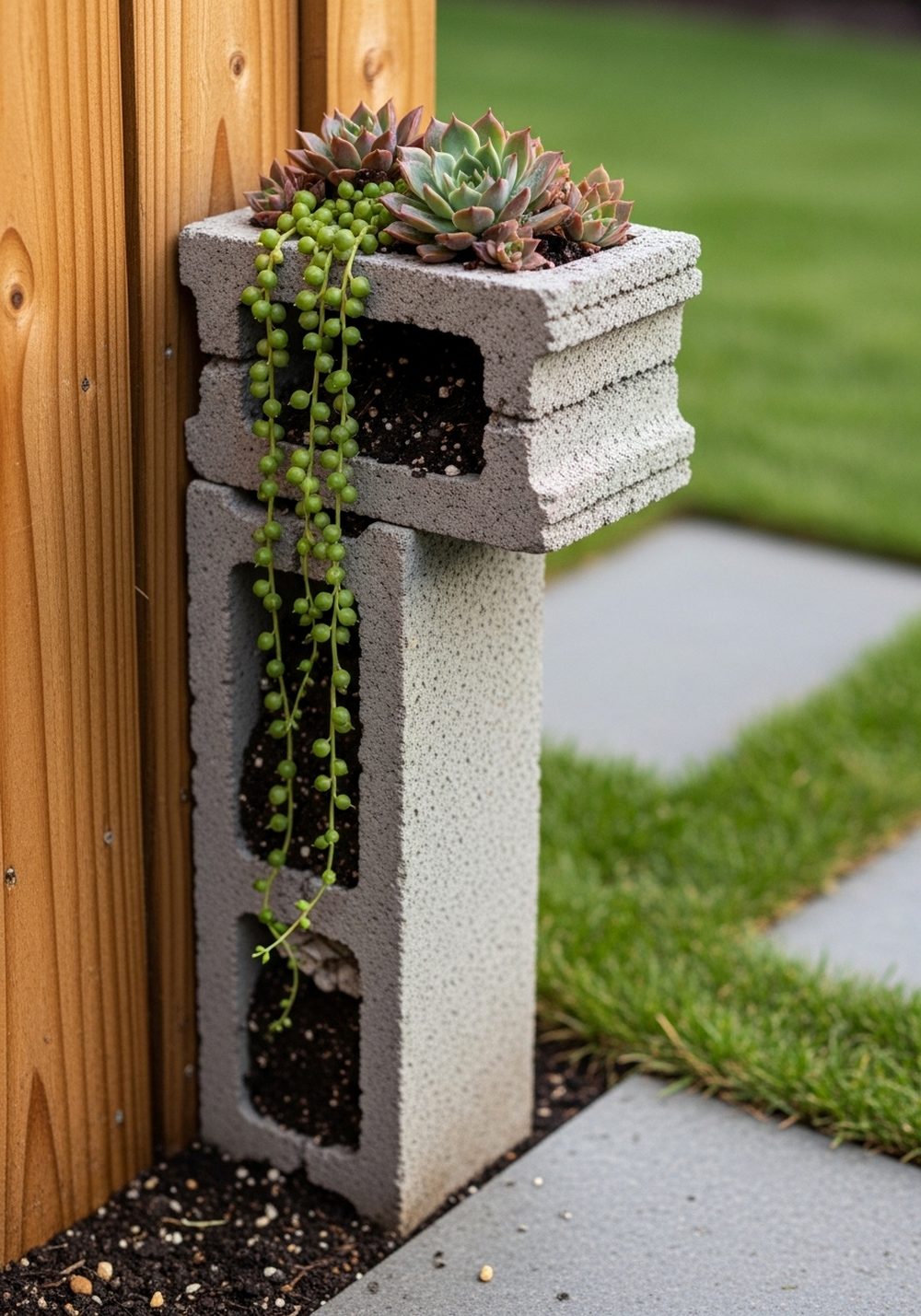
Turn an underused corner into a bold feature by building an L-shaped tower of cinder blocks. Two arms of blocks meet at a right angle, wrapping the corner and creating multiple planting pockets at different heights. This shape instantly adds structure to a small garden and makes the most of an awkward space. Plant cascading succulents on the upper levels and compact varieties near the base for a full, layered look that feels like a living sculpture.
- Best For: Small gardens with bare corners or posts to disguise.
- Budget Tip: Build one arm first, then extend into an L as you can afford more blocks.
- Styling Idea: Keep blocks natural and add color using bright cushions or pots nearby.
- Practical Note: Ensure the base is level (gravel or pavers) to stop the tower leaning.
- Extra Idea: Tuck solar stake lights around the base for nighttime glow.
3. Painted Pastel Cinder Block Succulent Grid
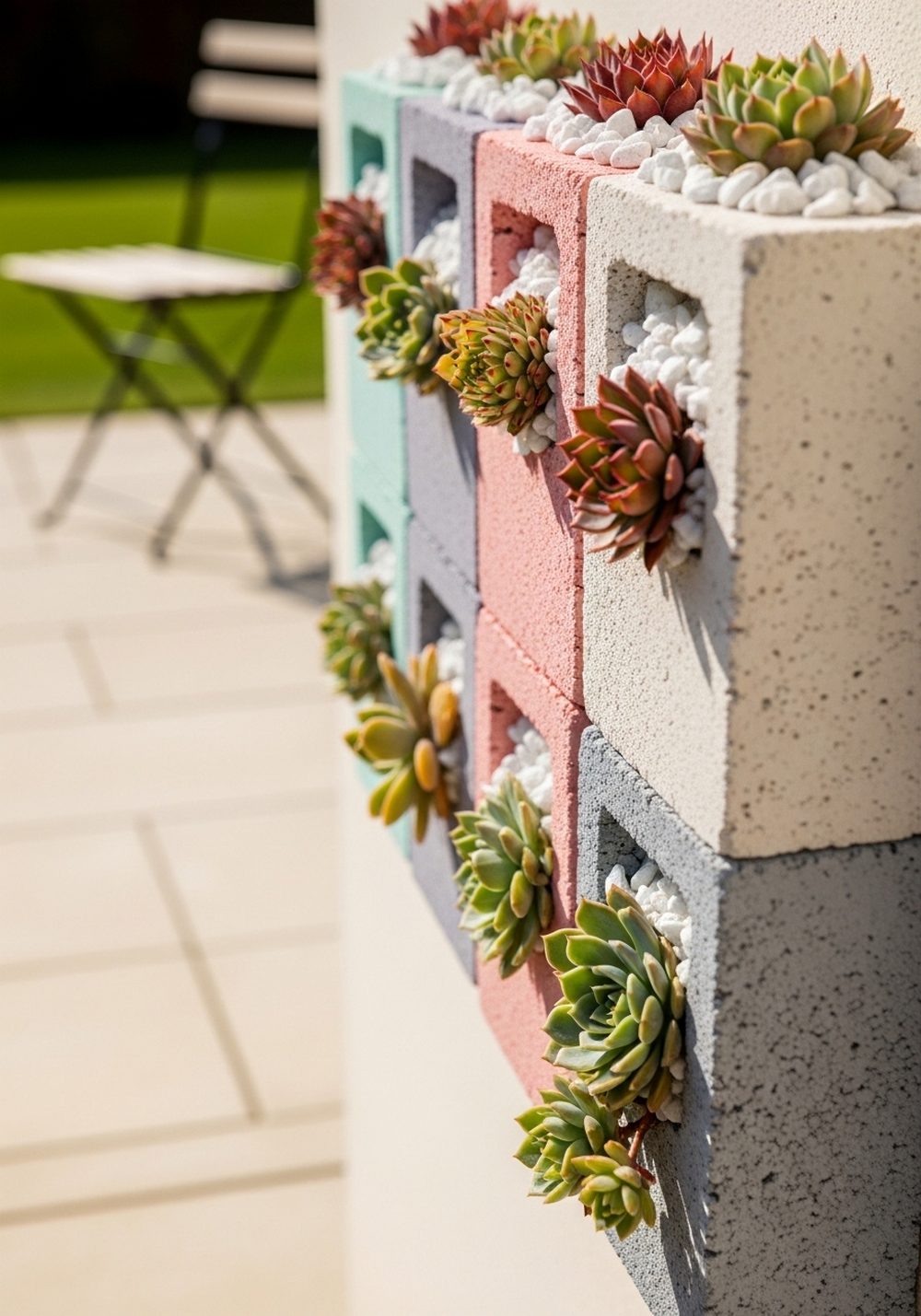
For a softer, playful look, create a neat grid of cinder blocks and paint each one in complementary pastel shades. Stack them against a wall in simple rows, turning the cavities outward to form a tidy checkerboard of succulent pockets. The contrast between the gentle colors and the varied greens of the plants feels fresh and cheerful, especially in small gardens that need a lift. This idea is a great way to introduce color without relying on flowering plants.
- Best For: Courtyards, patio walls, or kids’ play gardens needing a fun accent.
- Budget Tip: Use leftover sample paints and second-hand blocks to keep costs low.
- Styling Idea: Stick to three or four pastel colors so the wall looks cohesive, not busy.
- Care & Maintenance: Choose smaller succulents that won’t quickly outgrow the cavities.
- Practical Note: Use exterior paint and seal edges where water might sit.
4. Slim Balcony Cinder Block Rail Wall
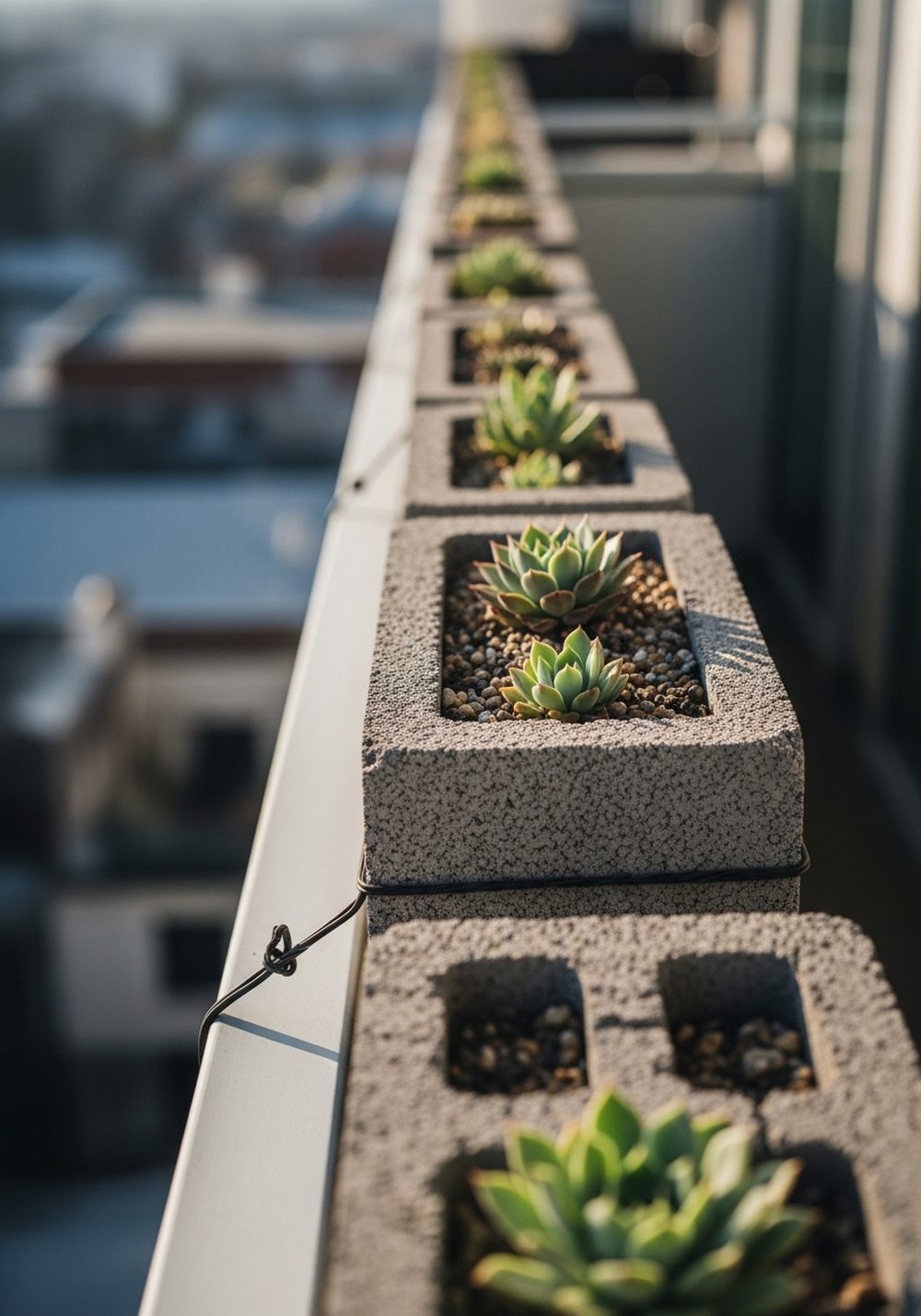
On a narrow balcony, floor space is precious, so run a slim row of cinder blocks along the railing instead. Secure the blocks to the rail or floor, turning the openings outward to hold succulents in shallow pockets. This creates a low, linear wall of plants that softens harsh metal rails and brings greenery up to eye level while you sit. Because the footprint is tiny, you still have room for a small table or chair.
- Best For: Apartment balconies and terraces with limited width.
- Budget Tip: Use fewer blocks but pack them with cuttings you propagate yourself.
- Styling Idea: Keep everything neutral and let the varied shapes and colors of succulents shine.
- Practical Note: Check building rules and secure blocks well to prevent shifting in wind.
- Care & Maintenance: Add a thin layer of gravel on top of soil to reduce mess when watering.
5. Rustic Cinder Block And Wood Shelf Wall
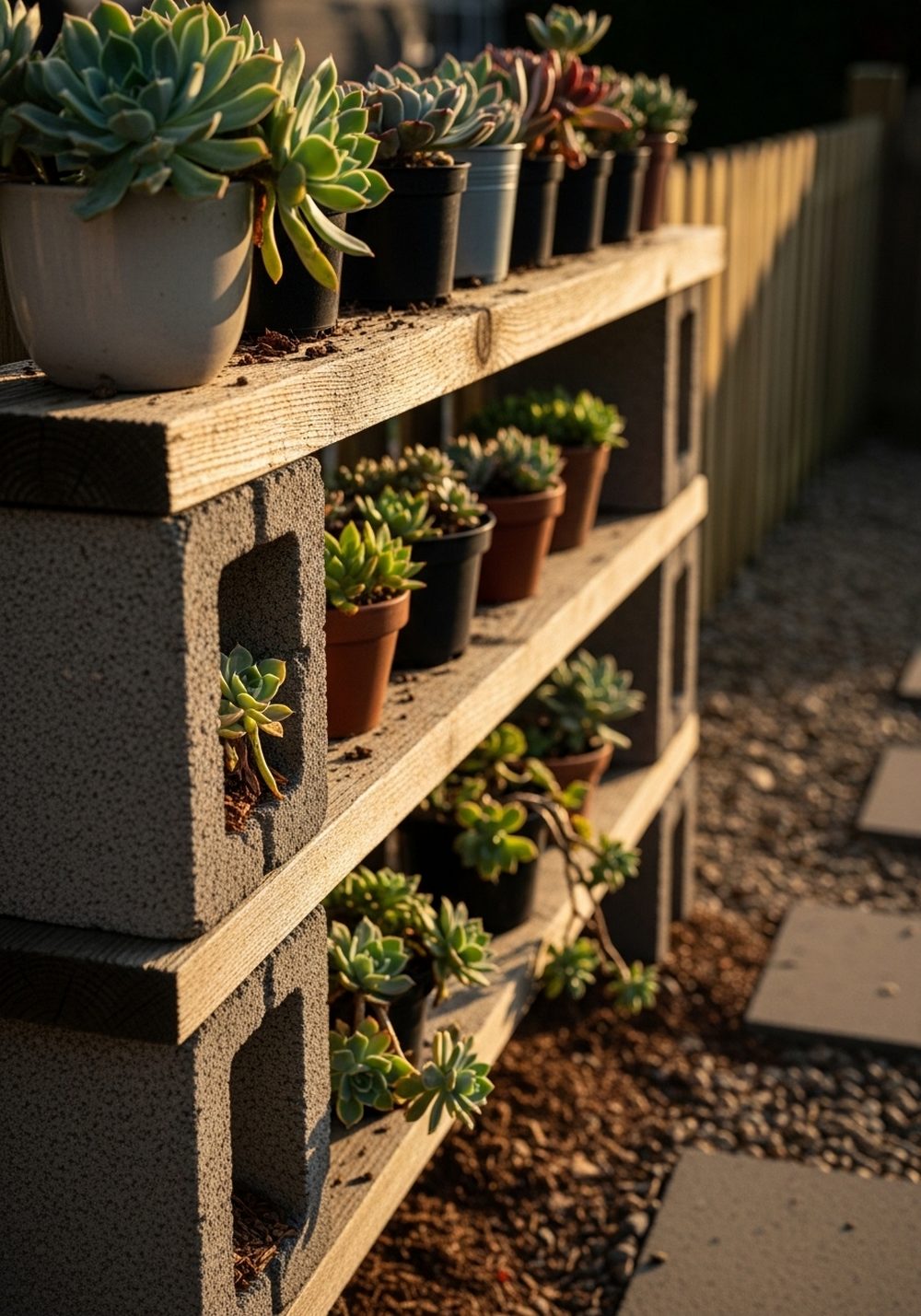
Combine cinder blocks with reclaimed wooden planks to create a rustic shelf wall lined with succulents. Stand the blocks vertically as side supports and slip planks through the holes, forming sturdy shelves without any tools. You can plant directly into some block cavities while lining the shelves with small terracotta pots. This mix of materials adds warmth and texture, making even a plain fence feel like a curated, garden-style display.
- Best For: Small patios or decks where a fence or wall needs dressing up.
- Budget Tip: Use pallets or offcut timber for the shelves to save money.
- Styling Idea: Go for terracotta, raw wood, and unpainted blocks for a warm, farmhouse feel.
- Practical Note: Make sure the lowest block layer sits on firm, level ground.
- Extra Idea: Add a few lanterns or candles among the pots for evening ambience.
6. Vertical Cinder Block Herb And Succulent Mix
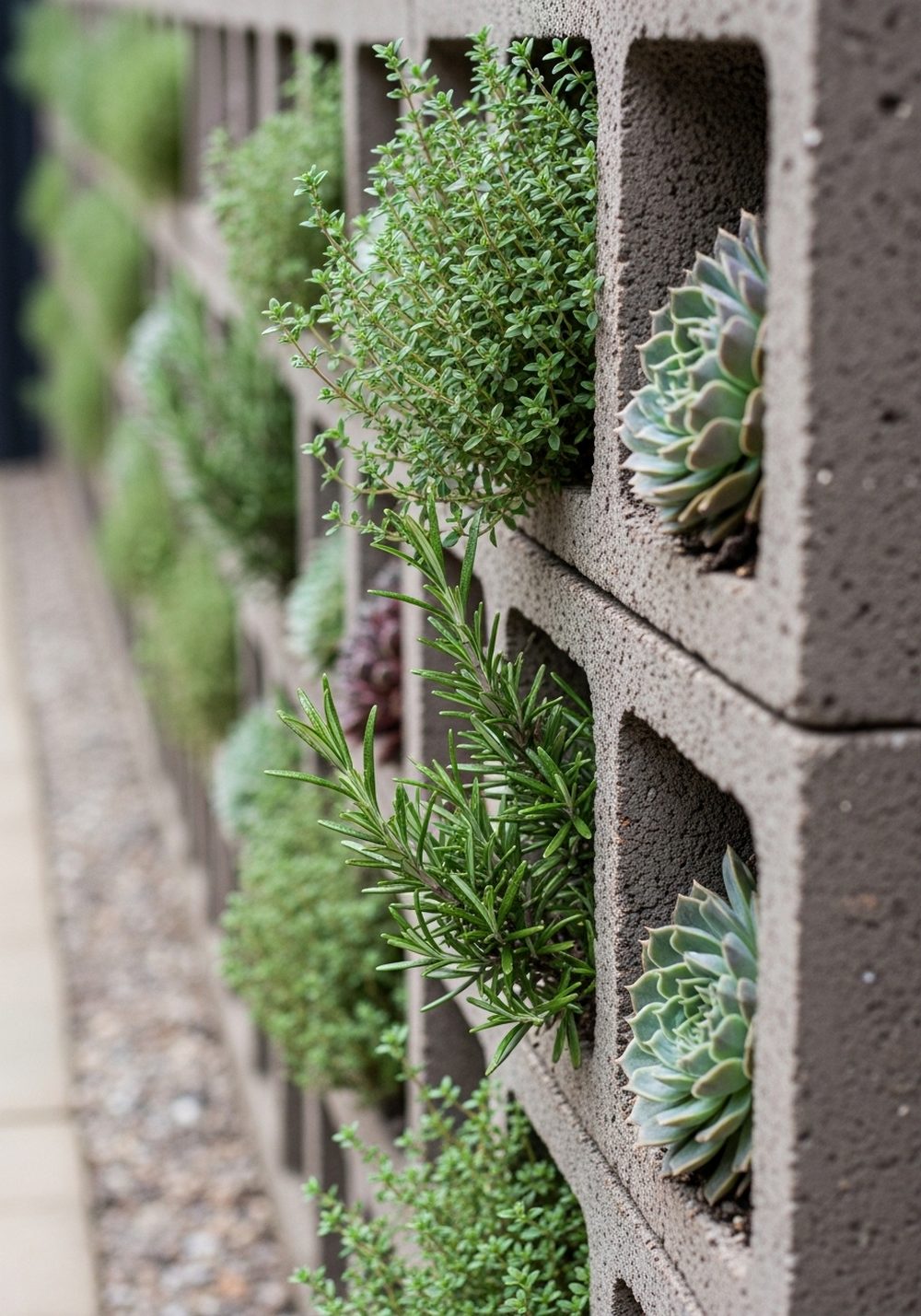
Why choose between herbs and succulents when you can have both? Stack a slim vertical wall of cinder blocks and alternate herbs and succulents in the cavities. Hardy herbs like thyme and rosemary can handle drier conditions alongside tougher succulents. The mix of textures and scents makes this wall feel full of life without taking much room. It’s especially handy near a small outdoor dining area, where you can snip herbs and enjoy the greenery at the same time.
- Best For: Small patios or kitchen doors where you cook and dine outdoors.
- Budget Tip: Start with herb seedlings and succulent cuttings instead of mature plants.
- Styling Idea: Keep blocks natural and use matching gravel in each cavity for a tidy look.
- Practical Note: Place thirstier herbs towards the bottom where water naturally collects.
- Care & Maintenance: Trim herbs regularly to keep them compact and avoid shading succulents.
7. Black And White Modern Cinder Block Wall
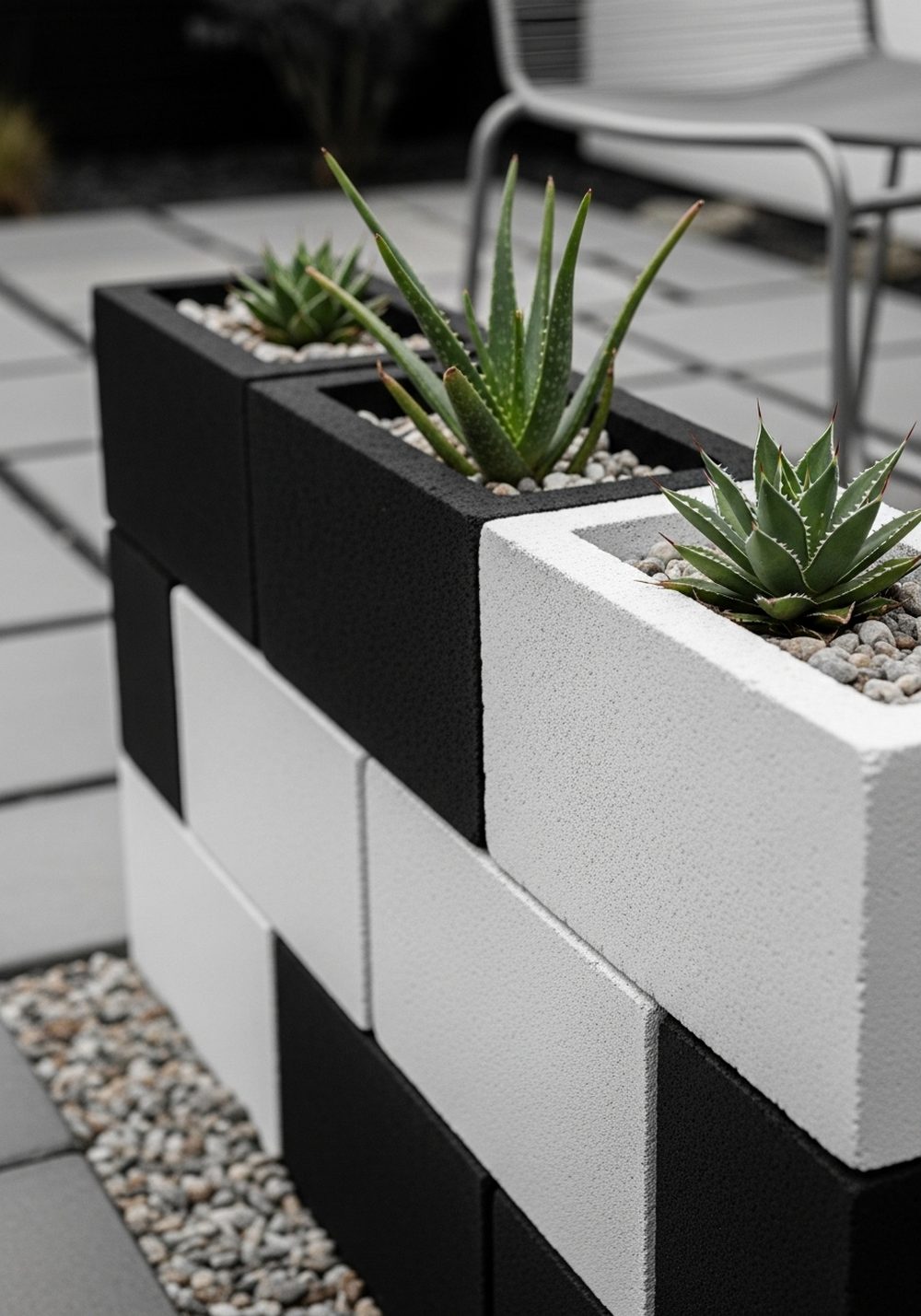
If your garden style leans modern, paint your cinder blocks in crisp black and white and stack them into a simple, graphic wall. Alternate painted faces to create a bold pattern, then tuck structured succulents like small aloes, gasterias, or agave pups into the cavities. The clean palette lets the geometric leaf shapes become the star. This design pairs beautifully with sleek paving and metal furniture and can instantly update a tired small space.
- Best For: Contemporary courtyards and minimalist patios.
- Budget Tip: Use basic masonry paint and a single brush; the geometric effect comes from placement, not costly products.
- Styling Idea: Repeat the black-and-white theme in cushions, planters, or outdoor rugs.
- Practical Note: Allow paint to cure fully before planting to avoid chemical smells.
- Care & Maintenance: Wipe painted surfaces occasionally to remove dust and keep the sharp look.
8. Tiered Cinder Block Wall Around A Seating Nook
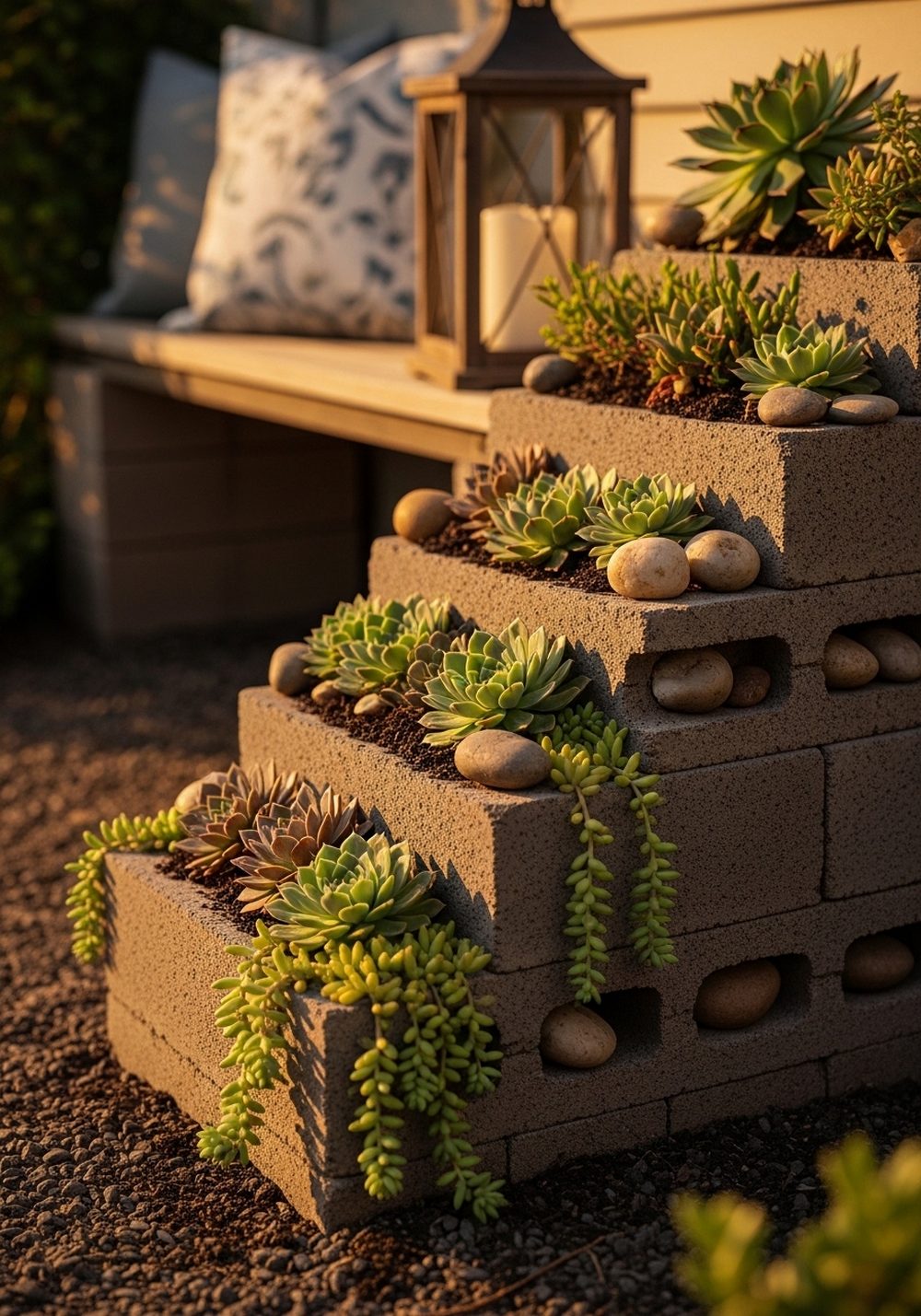
Build a low, tiered wall of cinder blocks to wrap around a small bench or chair, creating a cosy succulent “hug” around your seating nook. By stepping the blocks back as you go up, you form shelves of different depths and heights, perfect for trailing and upright varieties. This design adds both a sense of enclosure and lush greenery without needing big borders. It’s ideal for making a tiny patio feel like a dedicated retreat.
- Best For: Compact patios or corners where you want a dedicated relaxation spot.
- Budget Tip: Start with one side of the nook and slowly extend the wall as you collect more plants.
- Styling Idea: Add outdoor cushions and a throw that echo the soft greens and greys of your succulents.
- Practical Note: Keep the inner side of the wall slightly lower so it doesn’t block seating comfort.
- Extra Idea: Nestle a few solar lanterns among the top tier for nighttime coziness.
9. Mini Cinder Block Wall For Tiny Courtyards
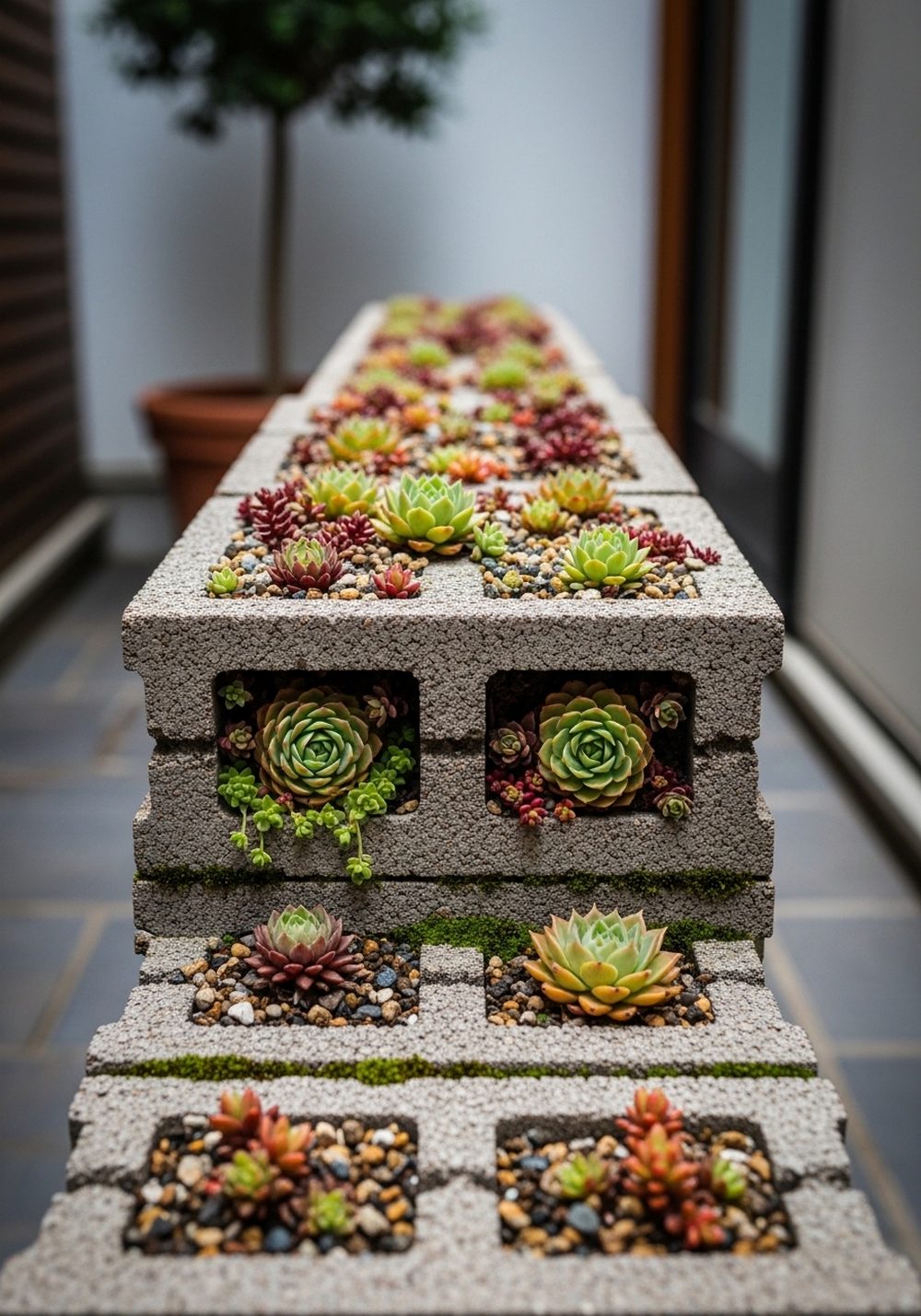
In a very small courtyard, even a low row of five or six blocks can become a charming succulent wall. Stack a few blocks two or three high, turn their cavities outwards, and fill them with a mix of tiny, slow-growing succulents. This miniature wall frames the space, softens any hard surfaces, and gives you a focal point to look at from indoors. It’s a simple project that can be built, planted, and enjoyed in a single afternoon.
- Best For: Pocket courtyards, narrow light wells, or side returns.
- Budget Tip: Use free or cheap second-hand blocks and propagate succulents from friends.
- Styling Idea: Add small river stones or crushed shells on top of the soil for a finished look.
- Practical Note: Place the wall where it gets enough light but doesn’t block doorways.
- Care & Maintenance: Choose slow-growing varieties to reduce repotting and trimming.
10. Cinder Block Screen Wall For Privacy
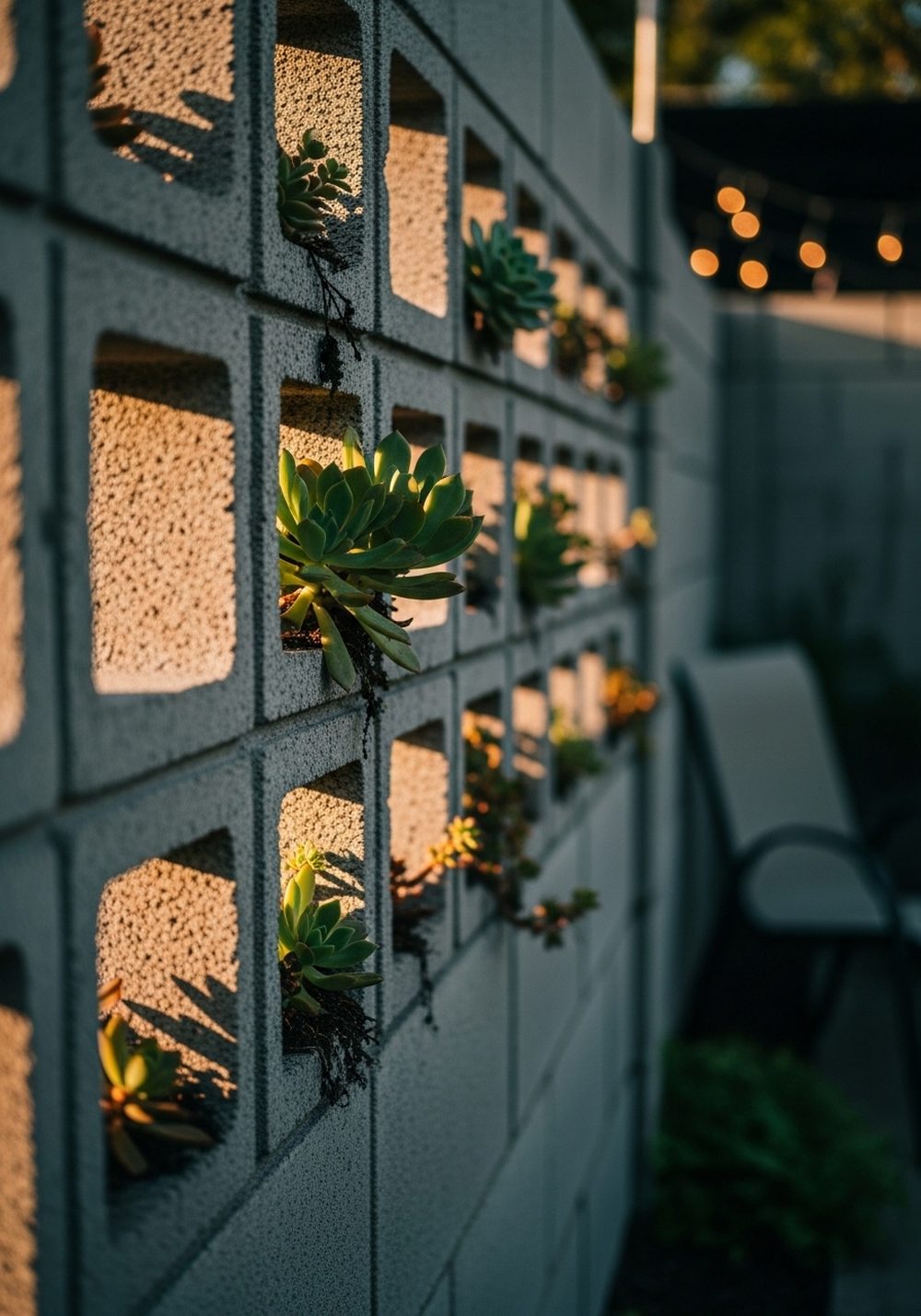
Create a light, airy privacy screen by stacking cinder blocks with intentional gaps between them and planting succulents in selected cavities. The blocks act as both planter and screen, letting dappled light filter through while hiding unwanted views. Succulents peeking through the openings soften the grid and add organic shapes to contrast with the strong lines. This idea is wonderful along a boundary or between your seating area and a neighbour’s space.
- Best For: Small gardens or patios needing privacy without a solid fence.
- Budget Tip: Keep the screen low to save on blocks and still gain a sense of separation.
- Styling Idea: Stick to a simple grey block with green succulents for a calm, architectural feel.
- Practical Note: Anchor the base well and consider adding rebar if you build higher.
- Care & Maintenance: Rotate plants occasionally if one side gets more sun than the other.
Conclusion
Cinder blocks and succulents are a surprisingly perfect match for small gardens, balconies, and courtyards. With a few simple stacks and some thoughtful planting, you can turn plain walls and corners into living features that feel stylish, personal, and lush. Start with one small section—a mini wall, a corner tower, or a slim rail planter—and build from there as your confidence grows. Over time, your vertical succulent wall can become the standout piece in your compact outdoor oasis.
FAQs
1. Can I build a cinder block succulent wall on a very small budget?
Yes. Cinder blocks are usually inexpensive, and you can often find them second-hand. Start with a small section, use cuttings from existing succulents or swap with friends, and expand slowly. Simple touches like gravel topdressing and a bit of paint can make it look polished without spending much.
2. Are cinder block walls suitable for renters who need non-permanent decor?
They can be, as long as you don’t mortar them in place. Dry-stacked blocks that sit on pavers or gravel can be dismantled and moved when you leave. Avoid drilling into walls or railings; instead, build free-standing structures that simply rest against existing surfaces.
3. Will succulents survive in shallow cinder block cavities?
Many succulents actually prefer shallow, well-drained conditions. Use a gritty, free-draining mix and choose varieties known for toughness, like sedum, echeveria, and haworthia. Make sure excess water can escape and avoid overwatering, especially in cooler seasons.
4. How do I stop a cinder block wall from looking too industrial?
Soften the look with texture and color. You can paint some blocks, add wood shelves, or mix in terracotta pots. Trailing plants help break up straight lines, and gravel, pebbles, or moss between blocks add a more natural feel. Cushions, lanterns, and outdoor rugs nearby also help make the area cozy.
5. What’s the easiest cinder block succulent idea for beginners?
A low, straight row of blocks with cavities turned upwards is the simplest starting point. You only need a level base, a few blocks, potting mix, and hardy succulents. Once you’re comfortable with watering and plant care, you can experiment with taller stacks, corners, or painted designs.
6. Can I mix other plants with succulents in the same cinder block wall?
Yes, as long as you consider their water needs. Herbs like thyme and rosemary can work well with succulents because they prefer similar conditions. Avoid pairing very thirsty plants in the same cavities, and place water-loving plants lower down where more moisture collects.