10 Adorable Hanging Colander Planter Ideas Using Scrap Chain
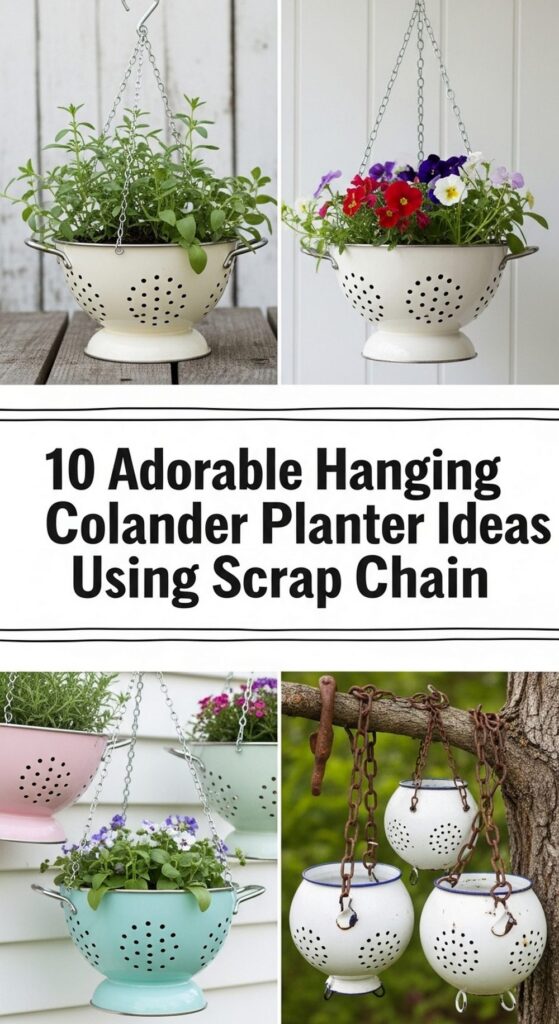
If you have an old colander and a few scraps of chain lying around, you’re already halfway to a charming hanging planter. These adorable projects are perfect for home gardeners, renters, and anyone who loves simple, budget-friendly outdoor decor with a crafty twist.
In this guide, you’ll find ten creative ways to turn humble colanders and leftover chain into eye-catching hanging planters. From sunny porch baskets to cozy night-time fairy-light displays, each idea shows you how to style, hang, and plant your colander safely. Pick one or two to start, and watch your garden, balcony, or front porch instantly feel more personal, playful, and welcoming.
Quick List
- Sunny Porch Colander Flower Baskets
- Vintage Enamel Colander Herb Hangers
- Tiered Colander Chandelier Planter
- Rainbow Painted Colander Row
- Farmhouse Galvanized Colander Duo
- Boho Beaded Chain Colander Planter
- Balcony Rail Colander Planter Trio
- Shade-Loving Fern Colander Baskets
- Kids’ Doodle Colander Planter Project
- Fairy-Light Colander Night Garden
1. Sunny Porch Colander Flower Baskets
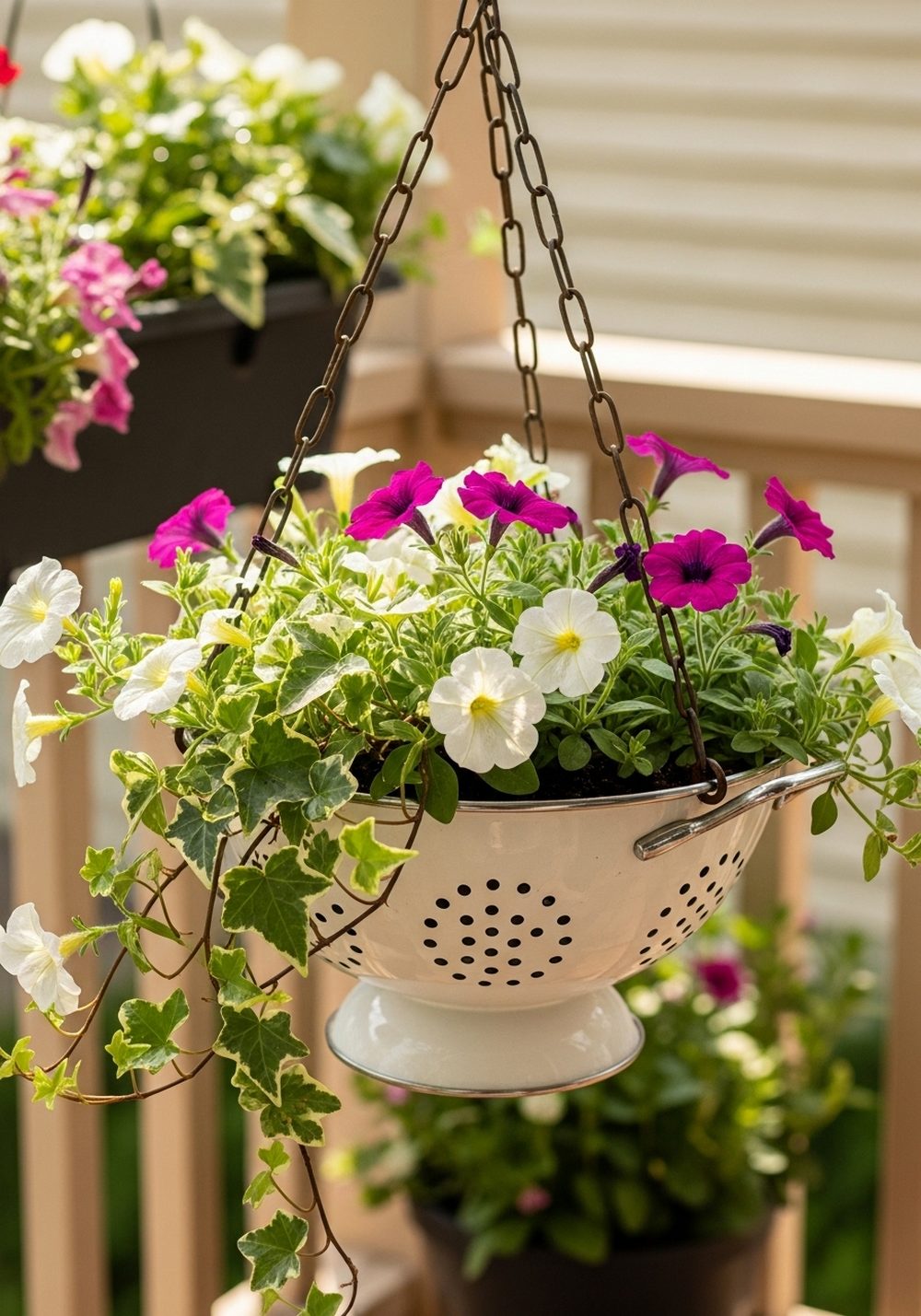
Turn a tired metal colander into a cheerful hanging flower basket for your porch. Attach three equal lengths of scrap chain to the colander rim using S-hooks or small carabiners, then gather the chains together at the top with one strong hook. Line the colander with a bit of burlap or coffee filters, add potting mix, and plant trailing flowers like petunias or calibrachoa. When it hangs at eye level, the holes become pretty little windows for stems, roots, and water to drain, giving a soft cottage feel right by your front door.
- Best For: Front porches, pergolas, and covered entries that get plenty of sun.
- Budget Tip: Use an old kitchen colander and leftover chain from previous projects or thrift finds.
- Styling Idea: Stick to one color family for flowers, like all pinks or all purples, for a calm, polished look.
- Practical Note: Hang at a height where you can still reach to water without needing a ladder.
- Care & Maintenance: Deadhead spent blooms regularly so the flowers keep coming all season.
2. Vintage Enamel Colander Herb Hangers
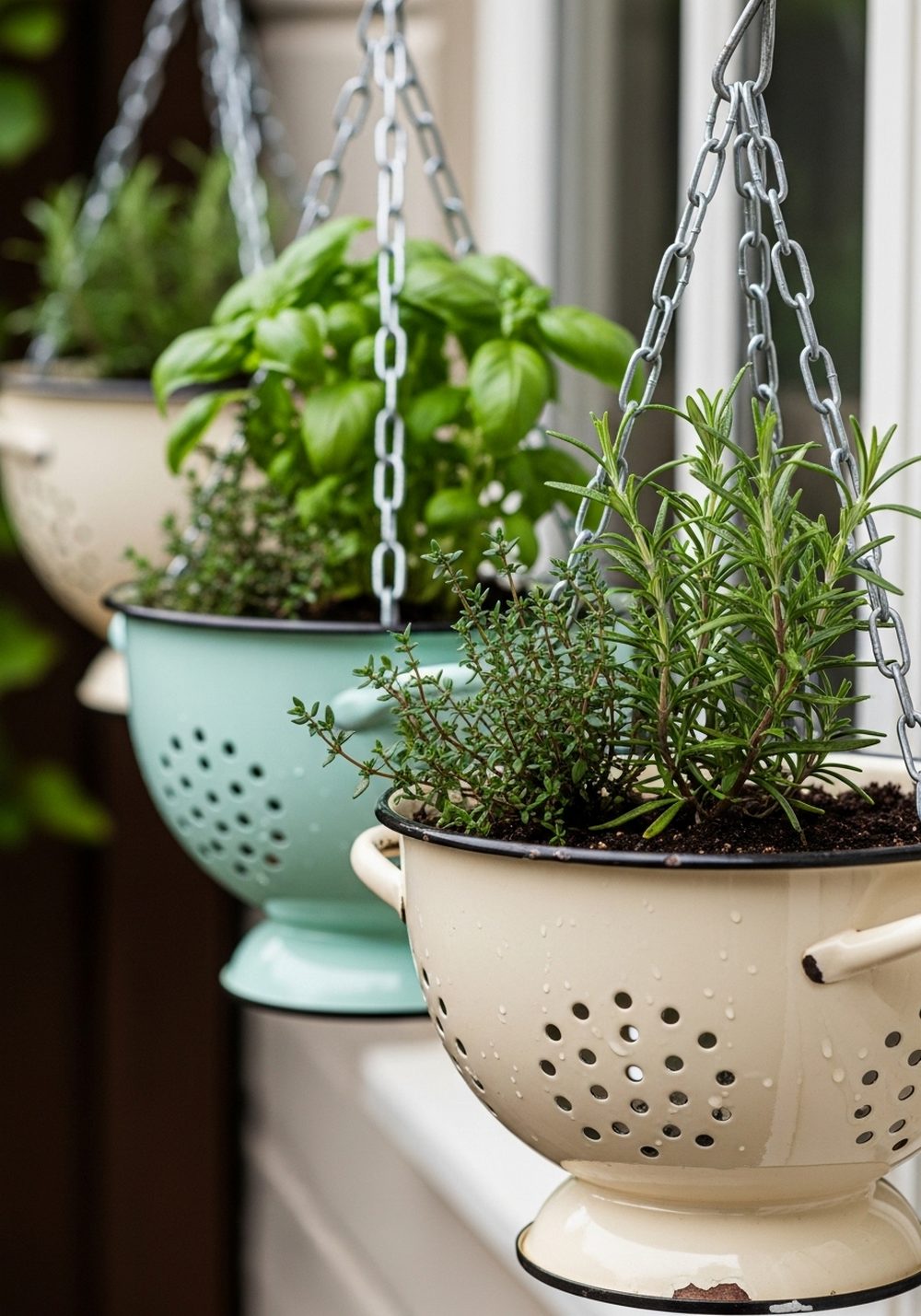
Those old enamel colanders with chips and faded colors are perfect for a set of hanging herb planters. Rinse the colander, add a thin layer of gravel for drainage, then fill with a light potting mix. Attach scrap chain to the handles or the rim, making sure each connection is secure, and hang near a sunny kitchen window or back door. Plant compact herbs like thyme, basil, or mint, and enjoy brushing your hands through the foliage for instant fragrance every time you step outside.
- Best For: Gardeners who love to cook and want herbs within easy reach.
- Budget Tip: Look for enamel colanders at thrift shops and use salvaged chain from old hanging baskets.
- Styling Idea: Mix pastel enamel colanders with classic white to get a vintage cottage look.
- Practical Note: Make sure your hook is anchored into a beam or solid wall plug, as soil can be surprisingly heavy.
- Care & Maintenance: Water lightly but often; colanders drain quickly so herbs won’t sit in soggy soil.
3. Tiered Colander Chandelier Planter
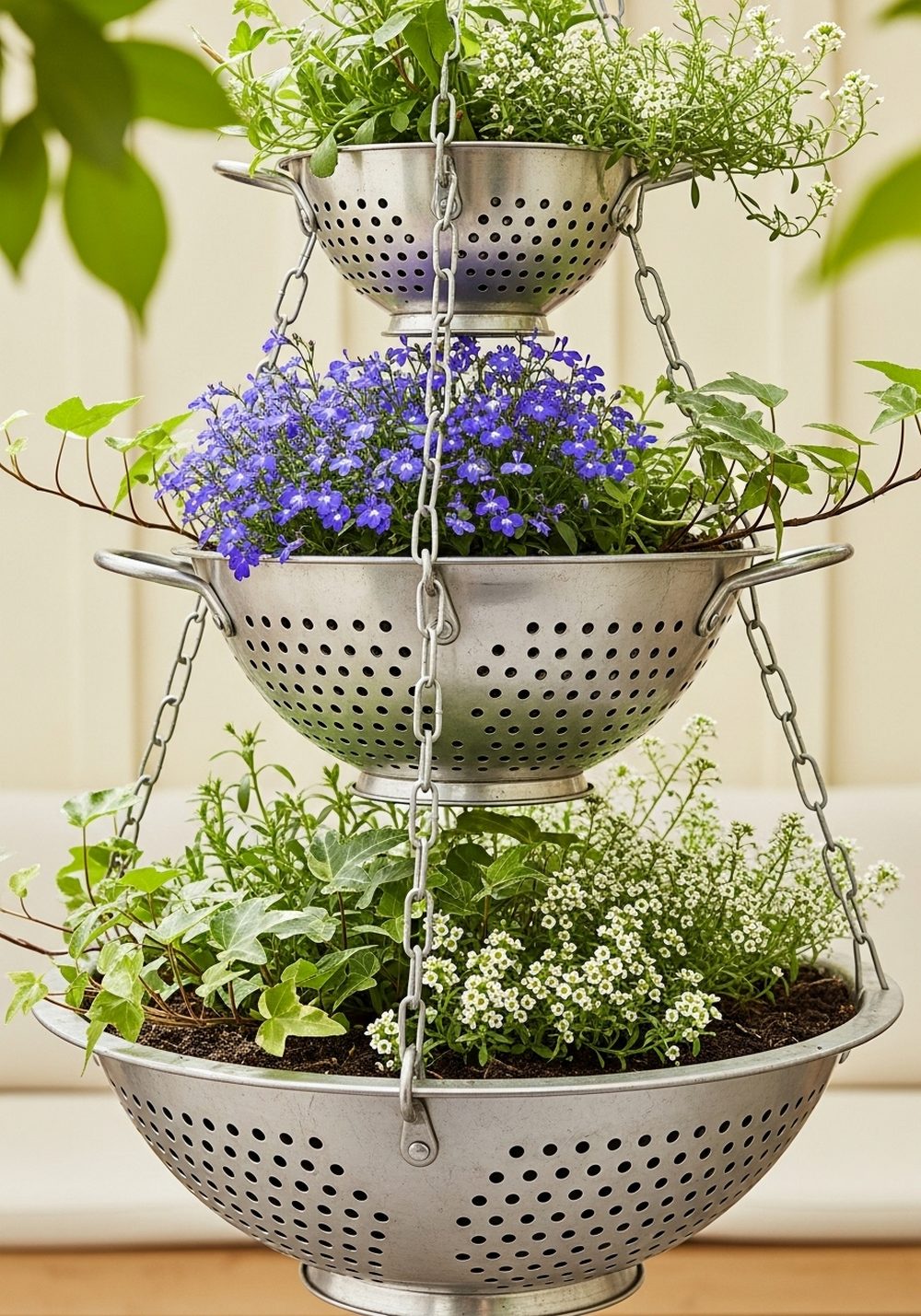
Create a show-stopping “chandelier” by stacking three colanders at different levels using scrap chain. Start with the largest at the bottom and the smallest at the top, attaching them with short chain lengths so they hang neatly above one another. Fill each tier with trailing plants and soft fillers, like ivy, lobelia, and alyssum, to cascade down in layers. Hung over a seating corner or patio table, this dramatic piece adds height, lush greenery, and a hint of whimsy without taking up any floor space.
- Best For: Patios, pergolas, and spaces where you want a focal point from above.
- Budget Tip: Mix different second-hand colanders and leftover chain; the mismatch feels charming.
- Styling Idea: Use mostly white or soft pastel flowers to keep the tiered look from feeling too busy.
- Practical Note: Check that the top hook and beam can handle the extra weight of three planted colanders.
- Extra Idea: Add a single trailing plant that travels through all tiers for a more connected, waterfall effect.
4. Rainbow Painted Colander Row
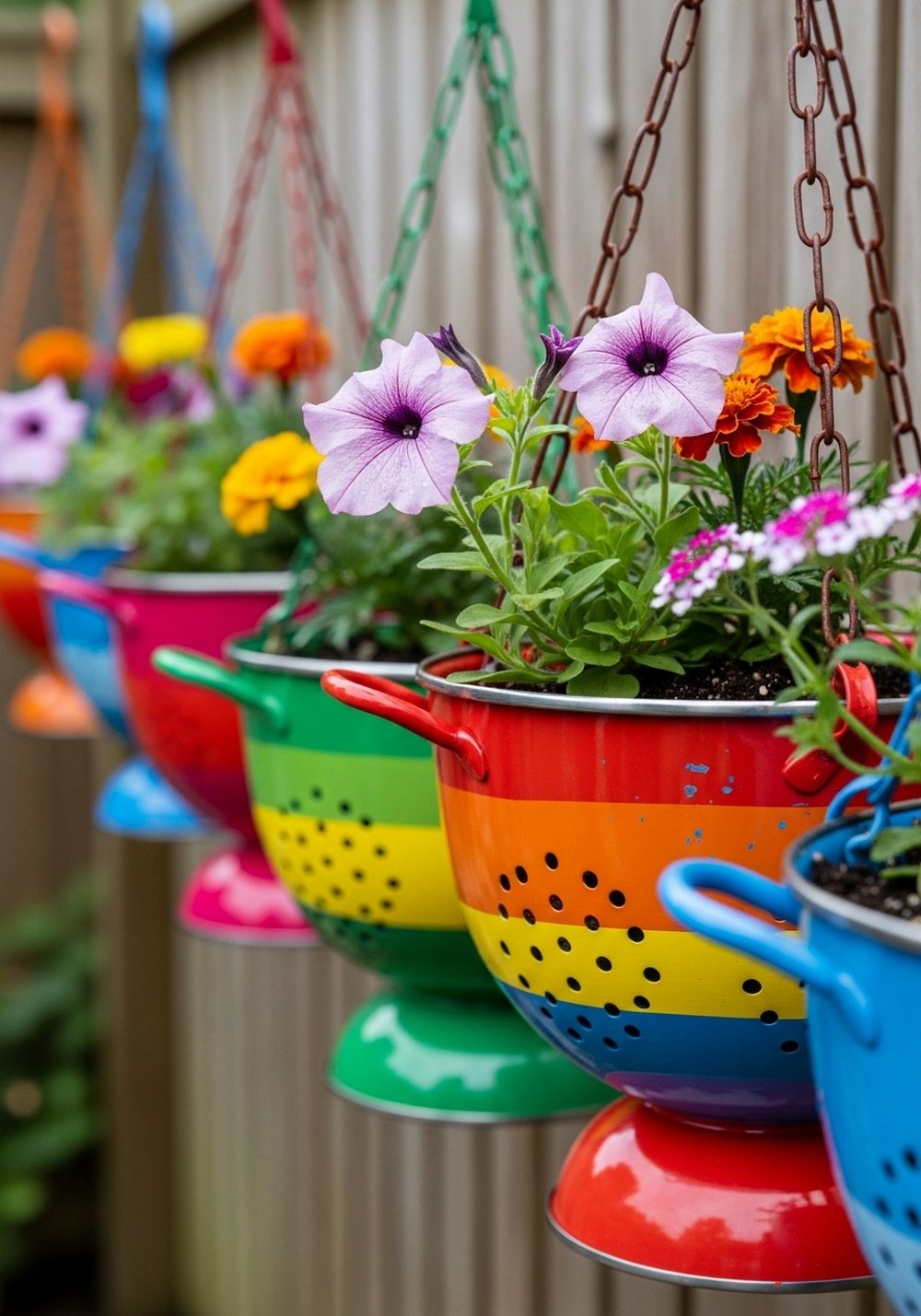
If you love color, turn several old colanders into a bright rainbow row along a fence or wall. Clean and lightly sand them, then spray or brush-paint each colander in a different bold shade. Once dry, attach scrap chains and hang them in a straight or staggered line. Plant sun-loving annuals like marigolds, verbena, and petunias that contrast with each colander’s color. The result is a happy band of hanging planters that instantly lifts the mood of even the plainest fence.
- Best For: Bare fences, garage walls, or long balcony rails needing a fun focal line.
- Budget Tip: Use leftover paint from other projects and pick up cheap colanders at yard sales.
- Styling Idea: Follow the rainbow order or choose a repeating pattern of three favorite colors.
- Practical Note: Leave enough space between each planter so the plants have room to spill and grow.
- Care & Maintenance: Choose drought-tolerant flowers if you’re likely to forget a watering now and then.
5. Farmhouse Galvanized Colander Duo
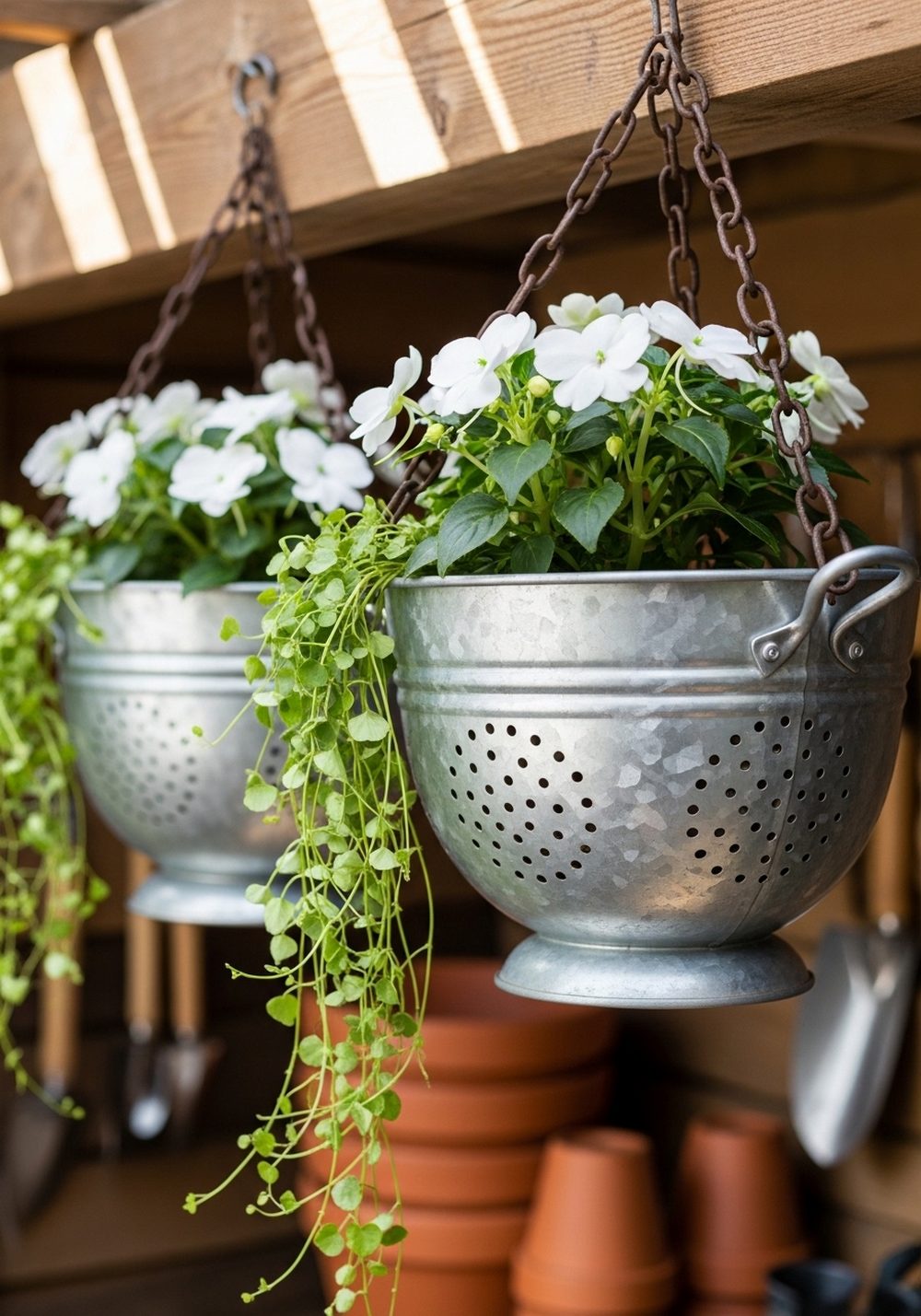
For a subtle, rustic look, hunt down two galvanized metal colanders and hang them as a pair near your back door or potting bench. The cool, matte metal works beautifully with soft white flowers and silvery foliage like dusty miller or dichondra. Attach sturdy scrap chains to the colander rims, then hang them at slightly different heights for a relaxed, farmhouse feel. The mix of metal, greenery, and weathered wood behind them instantly makes the corner feel more styled without shouting for attention.
- Best For: Neutral, rustic, or farmhouse-style gardens and patios.
- Budget Tip: Reuse chains from old hanging baskets; galvanized colanders often turn up cheaply at markets.
- Styling Idea: Keep flowers white or soft pastel, and pair with wood, jute, and terracotta around the area.
- Practical Note: Galvanized metal can warm up in full sun, so choose plants that don’t mind heat.
- Care & Maintenance: Wipe colanders occasionally to keep their soft metallic sheen visible under the foliage.
6. Boho Beaded Chain Colander Planter
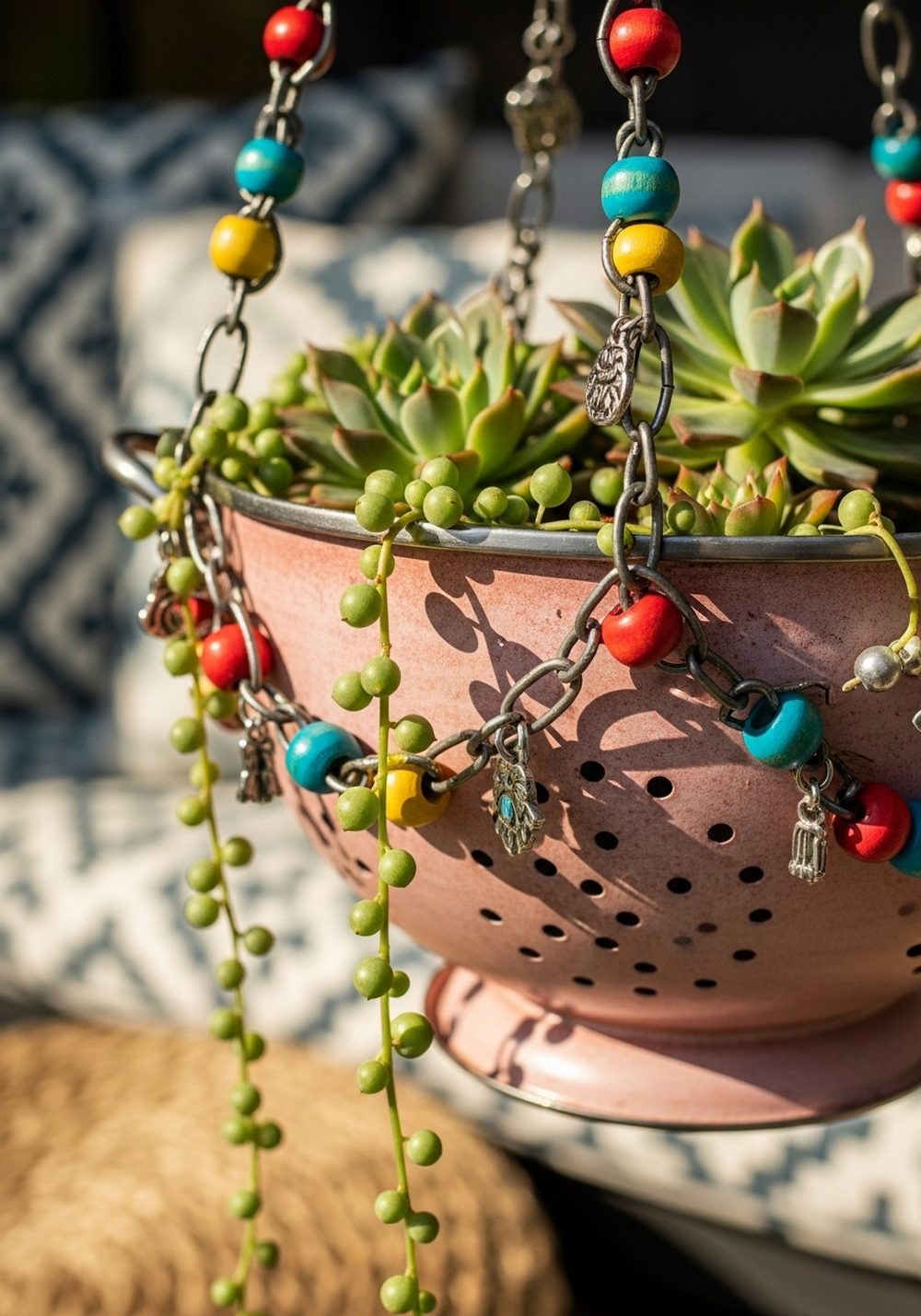
Give your scrap chain a boho makeover by threading beads, charms, and even small shells between the links before attaching it to a colander. Paint the colander in earthy tones like terracotta, mustard, or sage, and plant it with drought-friendly succulents and string-of-pearls. When hung over a rug and cushion-filled corner, the mixed textures of beads, chain, and plants create a relaxed, festival-like vibe. The colander’s holes let natural light peek through, adding tiny spots of brightness around the planter.
- Best For: Cosy boho corners, chill-out patios, and small seating nooks.
- Budget Tip: Use beads from broken jewelry and old craft stashes instead of buying new.
- Styling Idea: Layer this planter with lanterns, woven baskets, and patterned cushions for a complete look.
- Practical Note: Succulents prefer gritty, well-drained soil; the colander’s drainage is perfect for them.
- Care & Maintenance: Water sparingly and protect from heavy rain if your succulents dislike constant moisture.
7. Balcony Rail Colander Planter Trio
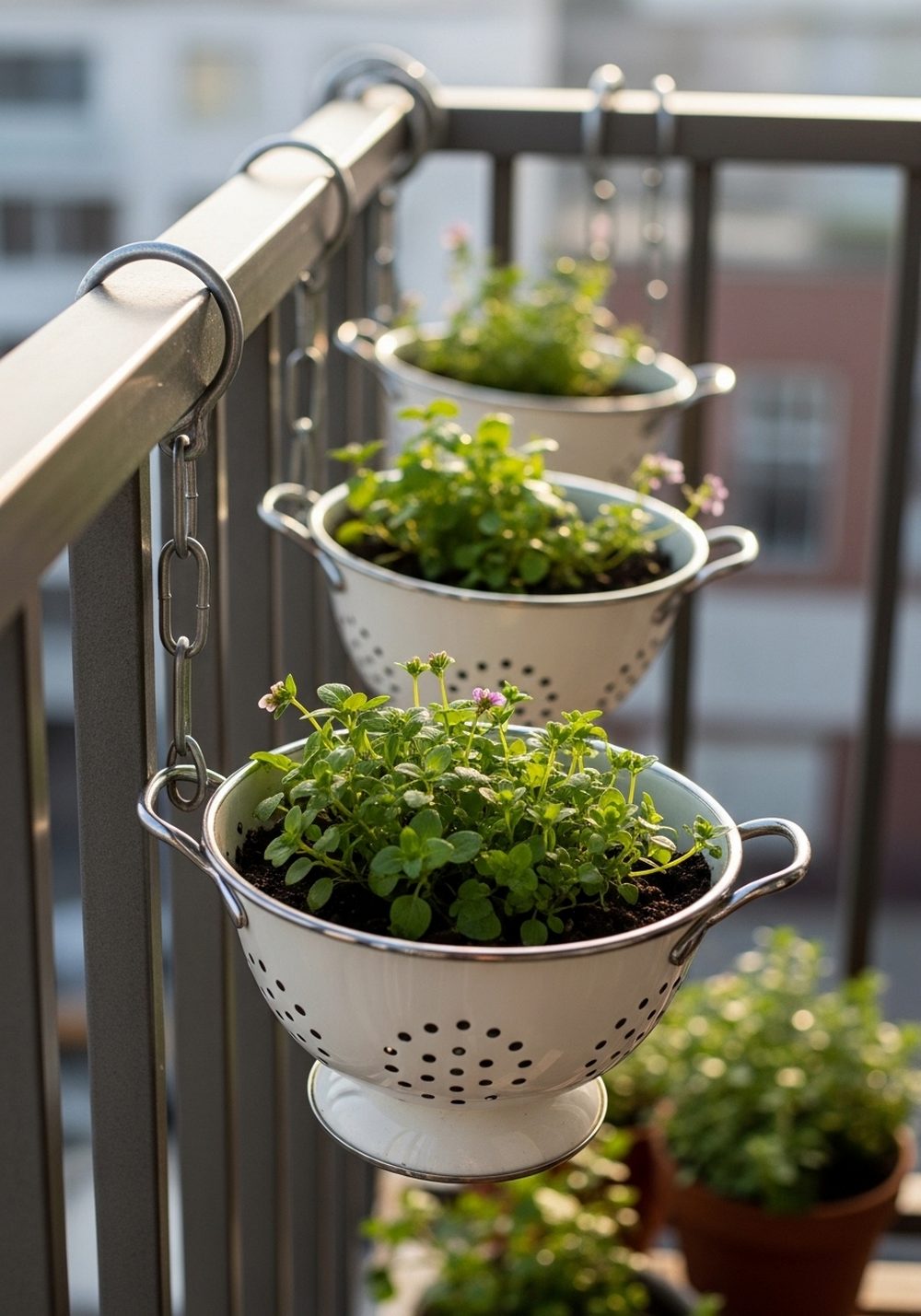
Even a tiny balcony can host a trio of hanging colander planters hooked over the railing. Use short lengths of scrap chain or straight S-hooks clipped through the colander handles, so they sit just below the rail and don’t swing too wildly. Plant compact herbs or low-growing flowers that won’t take over the space, and enjoy the soft green edge they create. From inside, you’ll see a pleasant line of foliage through the window; from outside, the planters feel like a natural extension of the rail.
- Best For: Small balconies, upper-level flats, and renters who need non-permanent decor.
- Budget Tip: Start with just one or two colanders and add more as you find them second hand.
- Styling Idea: Use matching colanders for a neat, modern look, or mix shapes for a more relaxed style.
- Practical Note: Avoid very heavy plants and soil mixes; weight is important on balcony rails.
- Care & Maintenance: Check fixings regularly and remove planters during storms or high winds.
8. Shade-Loving Fern Colander Baskets
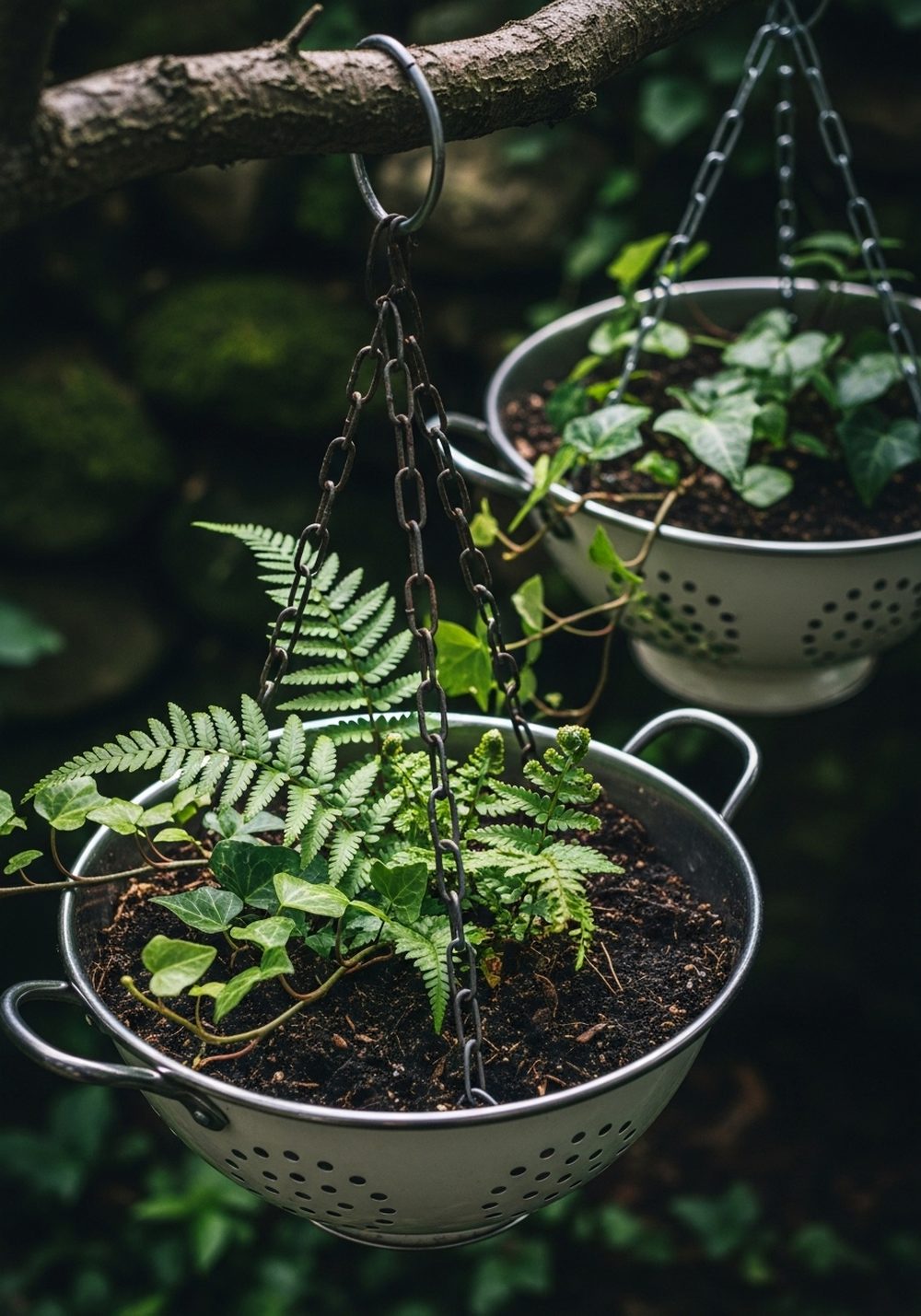
Shady spots often look flat, but hanging fern-filled colanders can turn them into cool, lush retreats. Use deeper colanders so there’s enough soil for fern roots, and attach longer pieces of scrap chain to hang them from tree branches, pergolas, or porch ceilings. The delicate fronds spilling through the holes give a soft, green curtain effect. Combined with mossy stones or hostas below, this creates a layered woodland feel that’s soothing on hot days and delightfully textural all year round.
- Best For: Shady corners under trees, north-facing porches, and cool, sheltered spots.
- Budget Tip: Divide existing ferns from your garden or a friend’s instead of buying new plants.
- Styling Idea: Pair with stone pots, wooden benches, and simple lanterns for a natural woodland mood.
- Practical Note: Ensure branches or beams are sturdy enough before hanging anything from them.
- Care & Maintenance: Keep soil evenly moist; ferns dislike drying out completely between waterings.
9. Kids’ Doodle Colander Planter Project
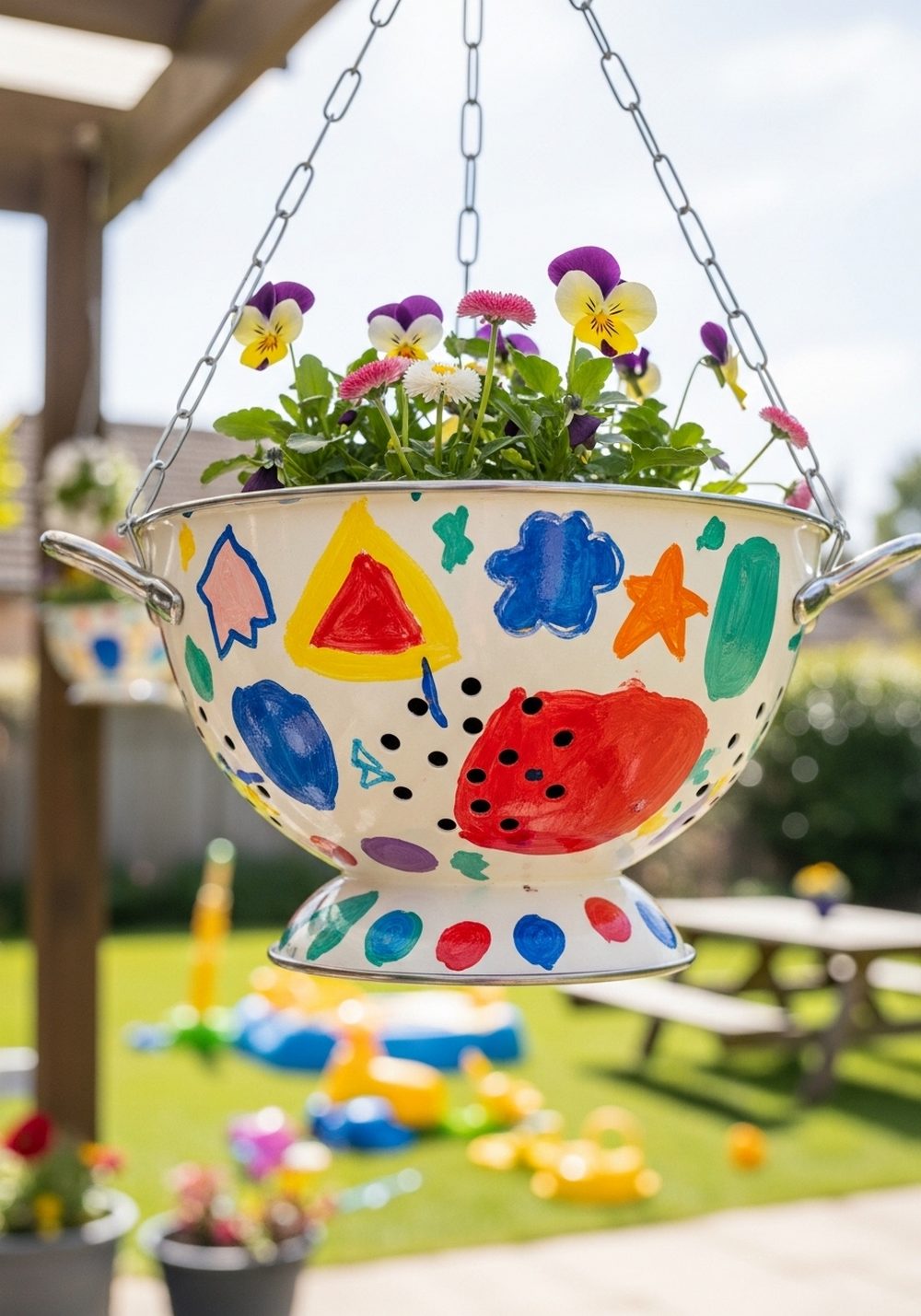
Turn colander planters into a family art activity by letting children decorate them first. Spread out newspaper, provide outdoor paint or paint pens, and let kids draw flowers, stars, or crazy patterns all over the colander. Once dry, attach scrap chains and fill with bright, hardy flowers like pansies or mini daisies. Hang the finished planter somewhere they can proudly point out. It’s a lovely way to get kids interested in gardening and gives your space a playful, homespun touch.
- Best For: Family gardens, schoolyard corners, or grandparents’ patios.
- Budget Tip: Use whatever paints and chains you already have, and choose inexpensive, robust plants.
- Styling Idea: Cluster several kid-decorated colanders together for a joyful burst of color and pattern.
- Practical Note: Protect the painting area and old clothes—this project can get delightfully messy.
- Care & Maintenance: Let kids help with watering and deadheading so they can see their project thrive.
10. Fairy-Light Colander Night Garden
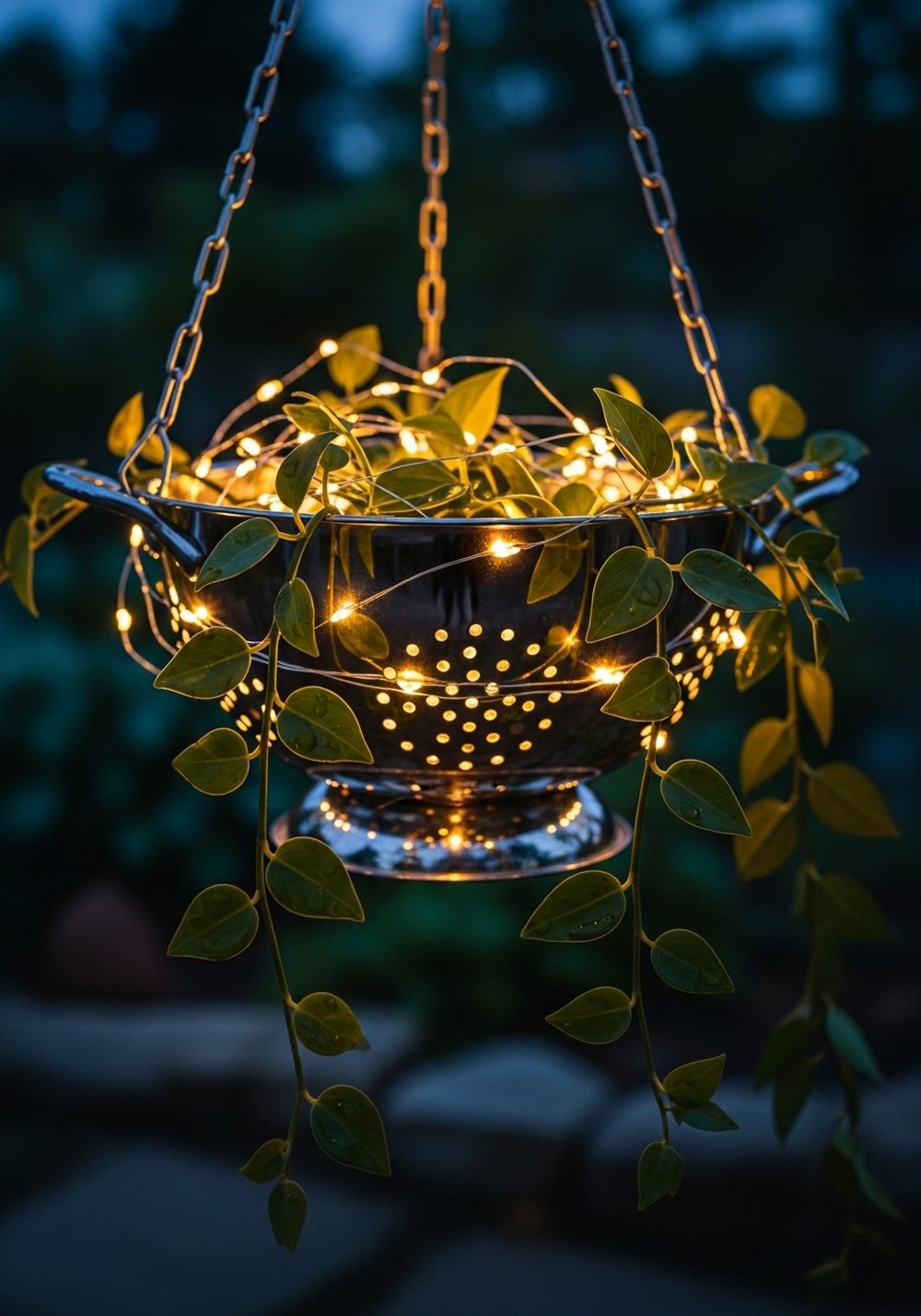
For evening magic, wrap a length of outdoor fairy lights around a hanging colander planter, feeding some of the lights through the colander holes. Scrap chains give a slightly industrial edge, which contrasts beautifully with the soft, warm glow at night. Plant trailing greenery inside so leaves catch the light and cast pretty shadows below. Hang this near a seating area or along a path to create a gentle, twinkling landmark that invites you to sit, talk, and stay outside a little longer.
- Best For: Night-time patios, pergola seating areas, and intimate garden corners.
- Budget Tip: Reuse fairy lights from holidays and combine them with an old colander you already own.
- Styling Idea: Keep plants mostly green and let the lights be the main highlight for a calm, dreamy vibe.
- Practical Note: Always use outdoor-rated lights and keep plugs protected from rain.
- Care & Maintenance: Check cords and connections regularly, and bring lights in during extreme weather.
Conclusion
Hanging colander planters are proof that you don’t need fancy materials to create charming, personal garden decor. With a few old colanders, some scrap chain, and a bit of imagination, you can add color, height, and character to porches, balconies, and quiet corners. Start with just one simple idea—a sunny flower basket or a herb hanger—and then build from there. Over time, these adorable creations will knit your outdoor spaces together and make them feel truly yours.
FAQs
1. Are hanging colander planters safe to use with scrap chain?
Yes, as long as both the colander and the chain are sturdy and in good condition. Always check for weak or rusted links and make sure your hook or screw is anchored into a solid beam or wall plug. Test the weight gently before filling with soil and plants, and recheck connections every few weeks.
2. How can I make these colander planters on a very small budget?
Start by using items you already own: an old colander, leftover chain, and spare paint or beads. Ask friends or family if they have unused kitchen colanders or chain offcuts. Choose inexpensive, hardy plants such as marigolds, petunias, or herbs, and plant fewer at first—plants will fill out as they grow.
3. Are hanging colander planters suitable for renters?
Absolutely. You can hang them from removable hooks, over balcony rails, or on freestanding frames instead of drilling into walls. When it’s time to move, simply unhook the chain, empty the soil, and take your planters with you. Just avoid exceeding weight limits on balcony railings and always follow building rules.
4. What plants work best in colander planters?
Any plant that enjoys good drainage is a great match—think trailing flowers, herbs, succulents, ferns, and ivy. For sunny spots, choose petunias, calibrachoa, or herbs like thyme and basil. For shade, pick ferns, impatiens, or hosta divisions. Just match the plant’s light preference to where you plan to hang the colander.
5. How do I stop soil from falling through the holes?
Line the inside of the colander with a layer of burlap, an old dishcloth, coffee filters, or a piece of weed membrane before adding soil. This keeps soil in place while still allowing water to drain freely. Over time, roots and moisture help everything settle, and any tiny bits of soil that escape will wash away easily.
6. How often should I water hanging colander planters?
Hanging planters dry out faster than ground-level beds because they’re exposed on all sides. In warm weather, you may need to water daily, especially for thirsty flowers and herbs. Check by sticking a finger into the soil; if the top couple of centimeters feel dry, it’s time to water thoroughly until moisture runs from the holes.