10 Easy Cinder Block Succulent Walls for Outdoor Spaces
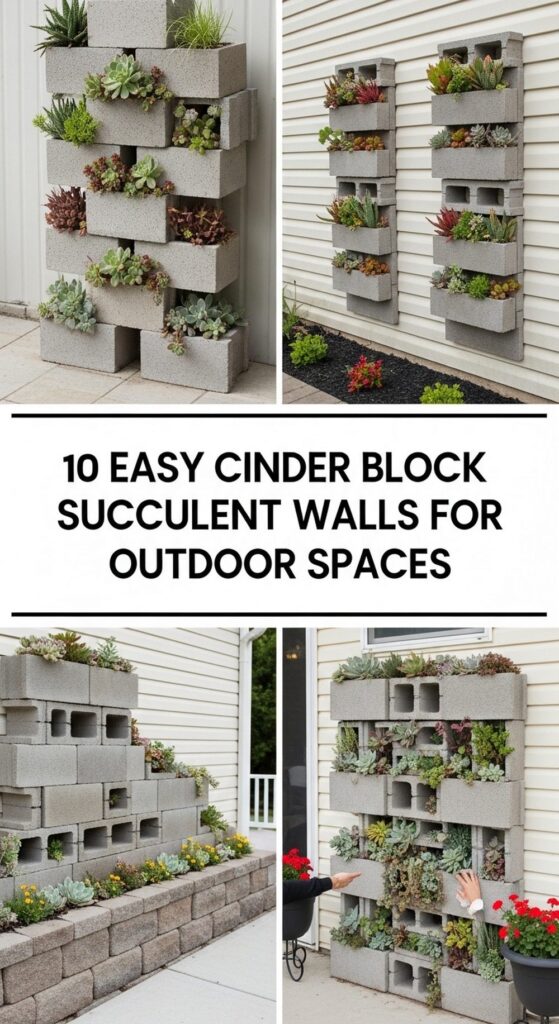
If you love the look of vertical gardens but don’t want anything complicated, a cinder block succulent wall is a brilliant shortcut. These simple, stackable blocks are cheap, strong, and easy to arrange, even if you’re new to DIY.
In this post, you’ll find ten easy ways to turn plain concrete blocks into eye-catching succulent walls for patios, balconies, side yards, and front entries. Each idea is designed for normal budgets and basic tools, with straightforward steps you can copy in an afternoon. Whether you rent, own, or garden in a small space, these ideas will help you add height, color, and personality to your outdoor space without fuss.
Quick List
Simple Patio Cinder Block Succulent Wall
Pastel-Painted Cinder Block Succulent Feature Wall
Staggered Privacy Screen Succulent Wall
L-Shaped Corner Cinder Block Succulent Wall
Compact Balcony Cinder Block Succulent Tower
Modern Monochrome Succulent Wall With Gravel Base
Rustic Wood-And-Cinder Block Succulent Wall
Stair-Step Succulent Wall Along A Slope
Outdoor Kitchen Backsplash Succulent Wall
Front Entry Cinder Block Succulent Welcome Wall
Simple Patio Cinder Block Succulent Wall
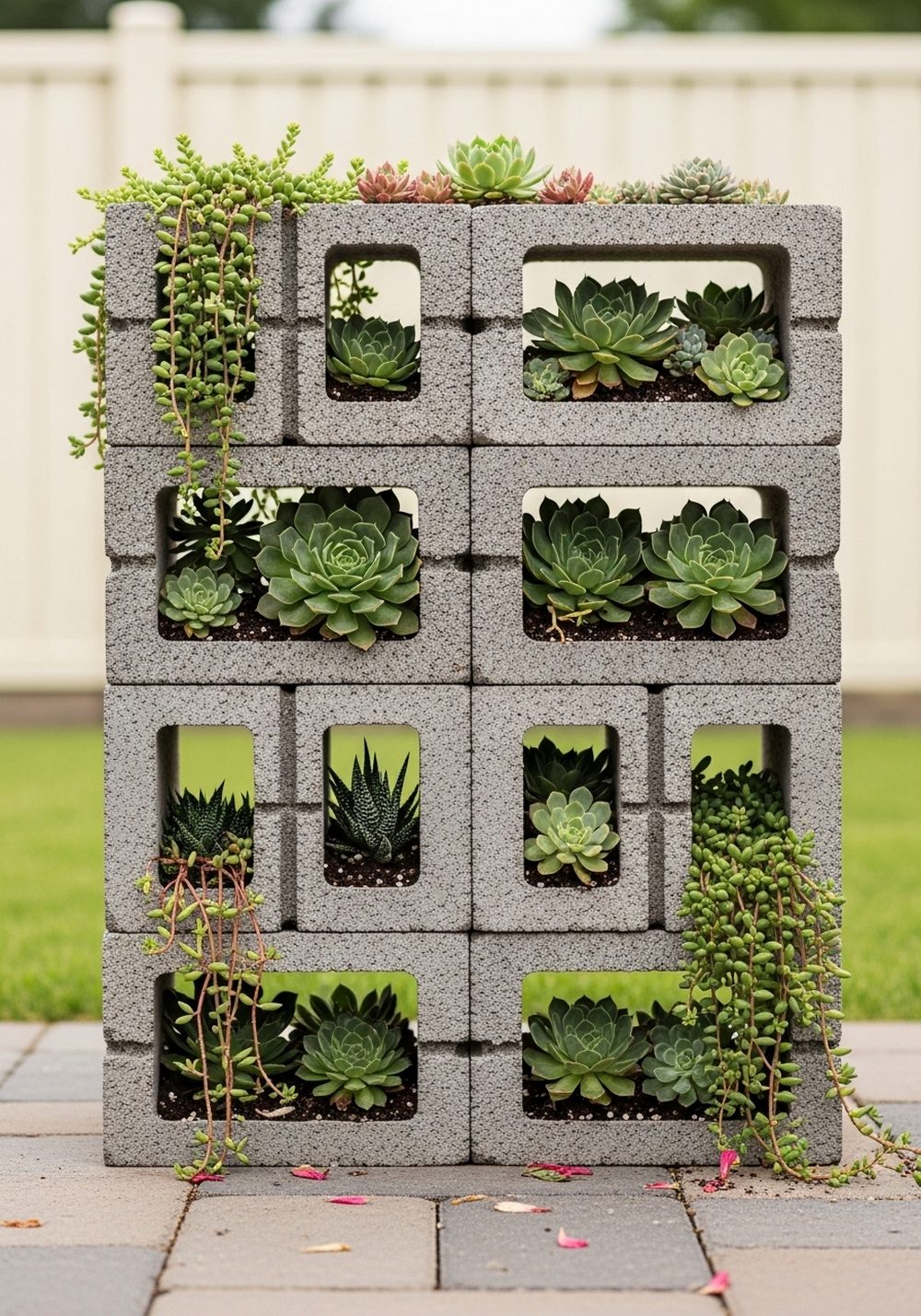
A basic cinder block succulent wall is one of the easiest ways to add impact to a plain patio. Stack blocks two or three high with the holes facing out, staggering joints for stability. Line the openings with landscape fabric if you like, then fill with gritty cactus mix and tuck in mixed succulents. The rough concrete makes the colors pop, and the vertical height draws the eye upward without taking much floor space. It’s simple, sturdy, and easy to adjust as your plants grow.
- Best For: Small patios and side yards that need a single strong focal point.
- Budget Tip: Use second-hand blocks and propagate succulents from cuttings to save money.
- Styling Idea: Add a simple outdoor rug and one chair beside the wall for a minimal, modern corner.
- Practical Note: Build on a flat, stable base like pavers or compacted gravel so the wall doesn’t shift.
- Care & Maintenance: Water lightly and infrequently; succulents in concrete dry out faster than in big pots.
Pastel-Painted Cinder Block Succulent Feature Wall
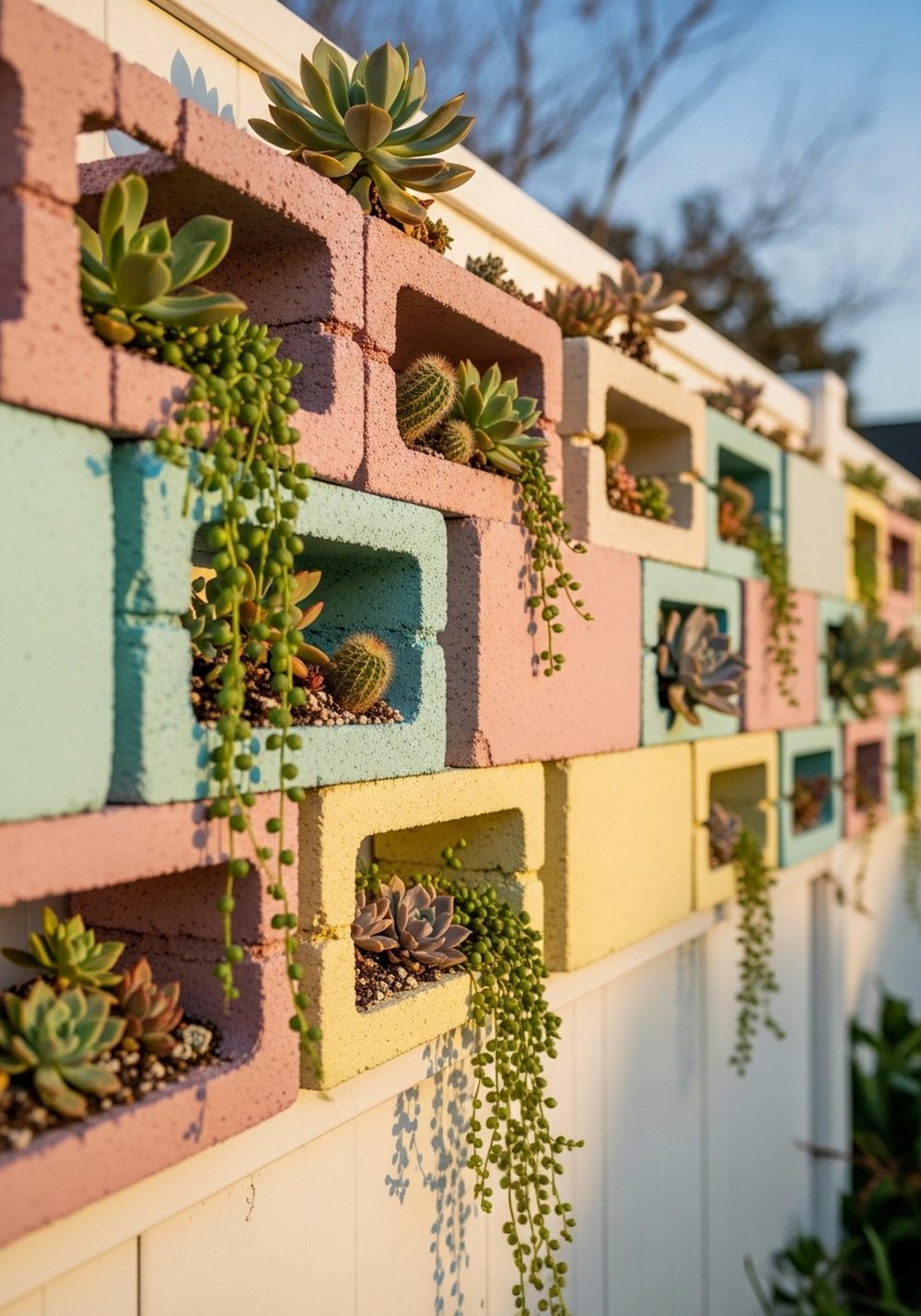
If you want something cheerful and playful, try painting your cinder blocks before stacking them into a succulent wall. Choose two to four soft pastel shades and roll on exterior paint, letting the natural concrete texture show through. Once dry, assemble your wall and plant each opening with colorful rosette succulents and trailing varieties that soften the edges. The color contrast between gentle pastels, fresh greens, and the plants’ natural shapes turns a very basic material into a fun feature wall.
- Best For: Family gardens, cottage-style patios, or renters who want a happy, informal look.
- Budget Tip: Buy sample pots of paint and just coat the front faces of the blocks.
- Styling Idea: Echo your pastel colors in cushions, plant labels, or a nearby watering can.
- Practical Note: Use exterior paint or masonry paint so it lasts outdoors in sun and rain.
- Extra Idea: Leave a few blocks unpainted to create a mix of raw and pastel surfaces.
Staggered Privacy Screen Succulent Wall
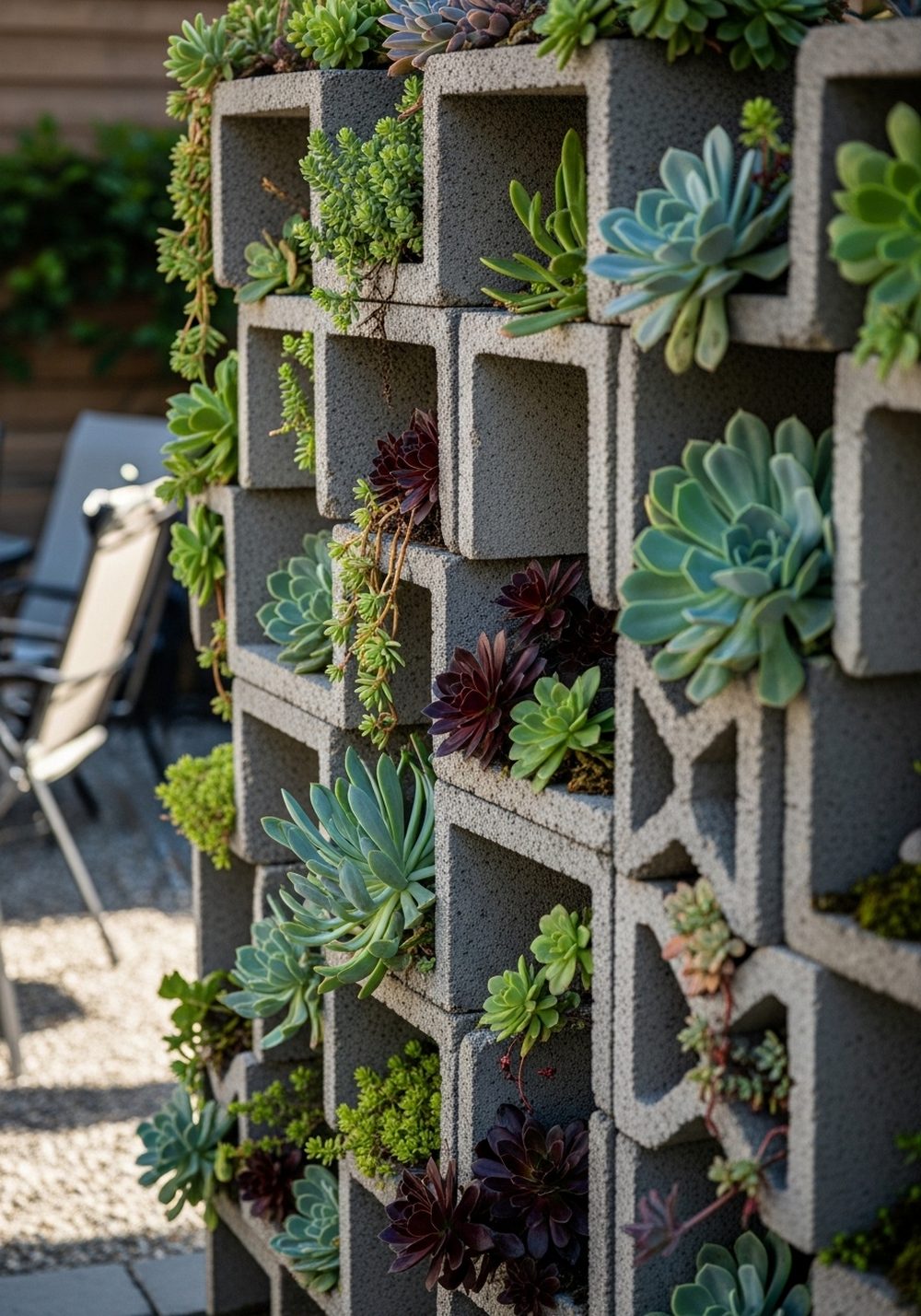
For a bit more privacy without a solid fence, a staggered cinder block succulent wall works beautifully. Stack the blocks in a zigzag pattern, turning some sideways to create pockets and small peek-through gaps. Plant the openings with dense, low-growing succulents so the wall feels lush while still letting air and dappled light pass through. This creates a semi-screen between seating areas or along a patio edge, giving you a sense of enclosure without feeling boxed in.
- Best For: Patios that face neighboring windows or shared courtyards.
- Budget Tip: Build the screen in sections over time, adding more blocks and plants as your budget allows.
- Styling Idea: Keep the blocks raw gray and pair with simple black metal furniture for a modern look.
- Practical Note: Stack no higher than you’re comfortable with and consider rebar or adhesive for extra stability.
- Care & Maintenance: Rotate and prune plants so they don’t become too heavy in the upper rows.
L-Shaped Corner Cinder Block Succulent Wall
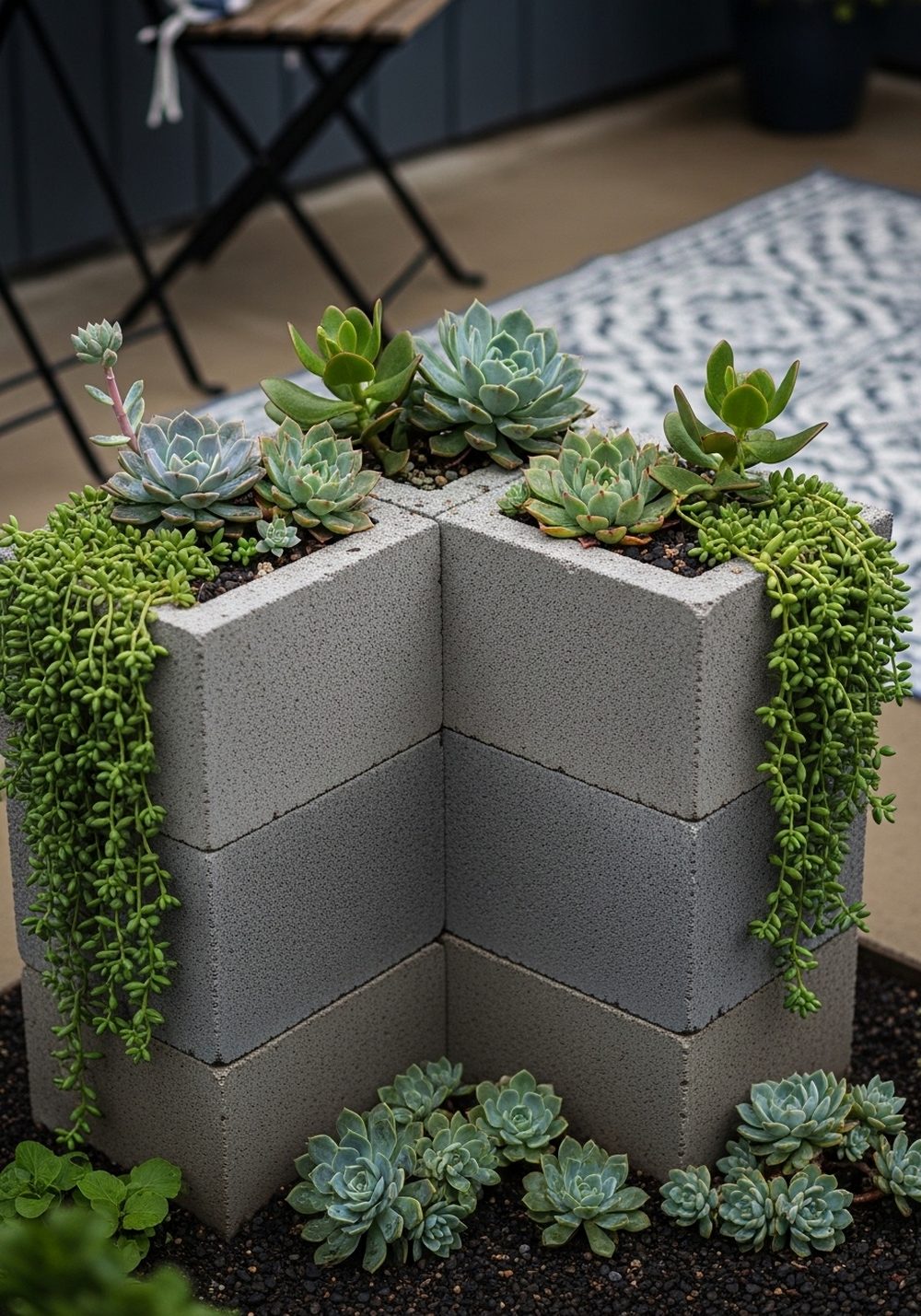
An L-shaped succulent wall transforms an unused corner into a cozy nook. Arrange cinder blocks along two adjacent edges, two or three blocks high, meeting in the corner to form a low embrace of plants. Fill the openings with a mix of upright and trailing succulents so the greenery spills gently toward the center. Add a small chair or bench inside the “L,” and suddenly that forgotten corner becomes a snug, plant-framed seating area that feels welcoming and intentional.
- Best For: Bare patio corners, small concrete yards, and balcony corners.
- Budget Tip: Start with a single layer and add height later as you find more blocks and plants.
- Styling Idea: Add a lantern or small side table in the corner to finish the look.
- Practical Note: Keep the inner edges slightly back from chair legs so you don’t bump the blocks.
- Care &
Compact Balcony Cinder Block Succulent Tower
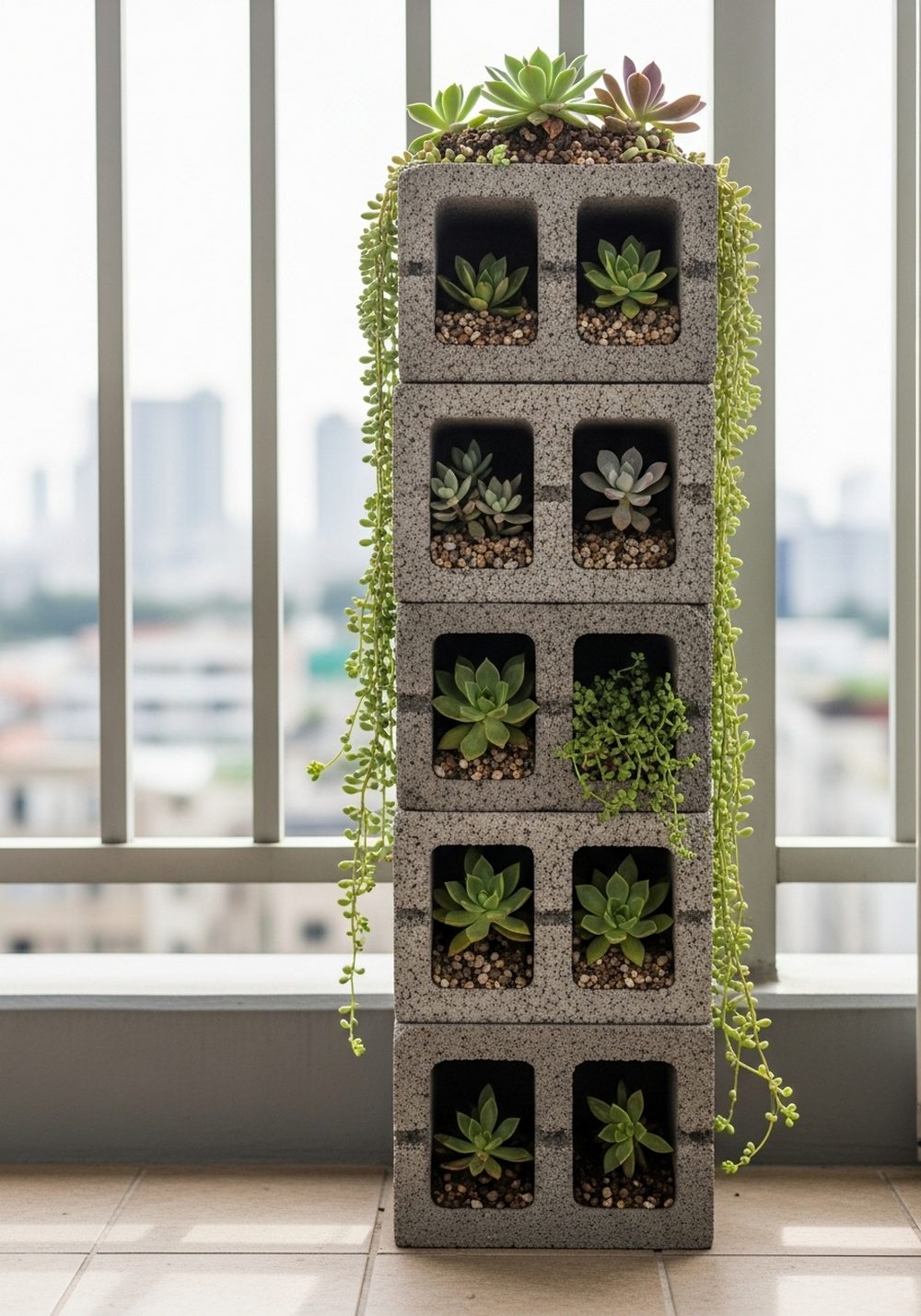
On a balcony, floor space is precious, so think vertical. A compact cinder block succulent tower can be just one or two blocks per layer, stacked three or four layers high against the railing. Turn some blocks sideways so the openings face your seating area and others toward the light. Plant small succulents suited to containers, and use gravel on top to keep soil in place. The slender footprint leaves room to move while still giving you a lush, layered display at eye level.
- Best For: Apartment balconies, small terraces, and renters with limited space.
- Budget Tip: Use fewer blocks but more tiers; small succulents are inexpensive and easy to multiply.
- Styling Idea: Choose one color of balcony pots and rail planters to match the simple tower.
- Practical Note: Keep the tower low enough that wind isn’t a problem and secure the bottom row firmly.
- Care & Maintenance: Check drainage; excess water needs a tray or mat to protect balcony surfaces.
Modern Monochrome Succulent Wall With Gravel Base
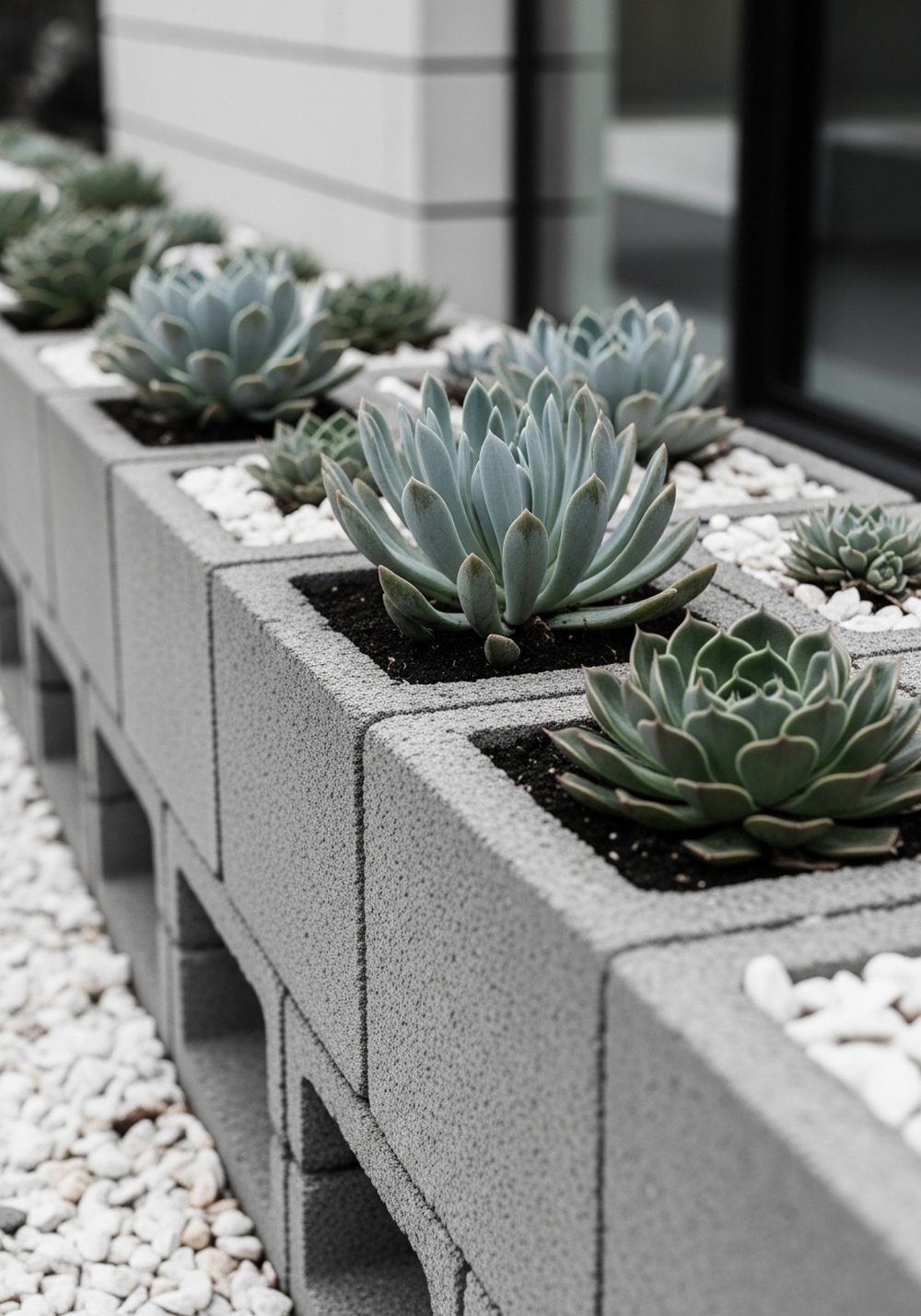
For a sleek, modern vibe, skip the colors and lean into neutrals. Stack unpainted cinder blocks in a tidy grid over a bed of pale gravel, keeping the lines crisp and symmetrical. Plant the openings only with blue-green and deep green succulents for a restrained palette, using dark soil and maybe black gravel topdress to make the plants stand out. The contrast of sharp concrete edges, soft foliage, and clean gravel creates a calm, architectural look that feels surprisingly high-end.
- Best For: Contemporary homes, minimalist courtyards, and small urban patios.
- Budget Tip: Focus on a small but perfectly arranged wall rather than a large one; quality over quantity.
- Styling Idea: Add a simple metal chair and one sculptural pot in the same monochrome palette.
- Practical Note: Lay weed barrier under the gravel to keep the base looking tidy long-term.
- Care & Maintenance: Remove fallen leaves regularly so the clean lines and gravel stay sharp.
Rustic Wood-And-Cinder Block Succulent Wall
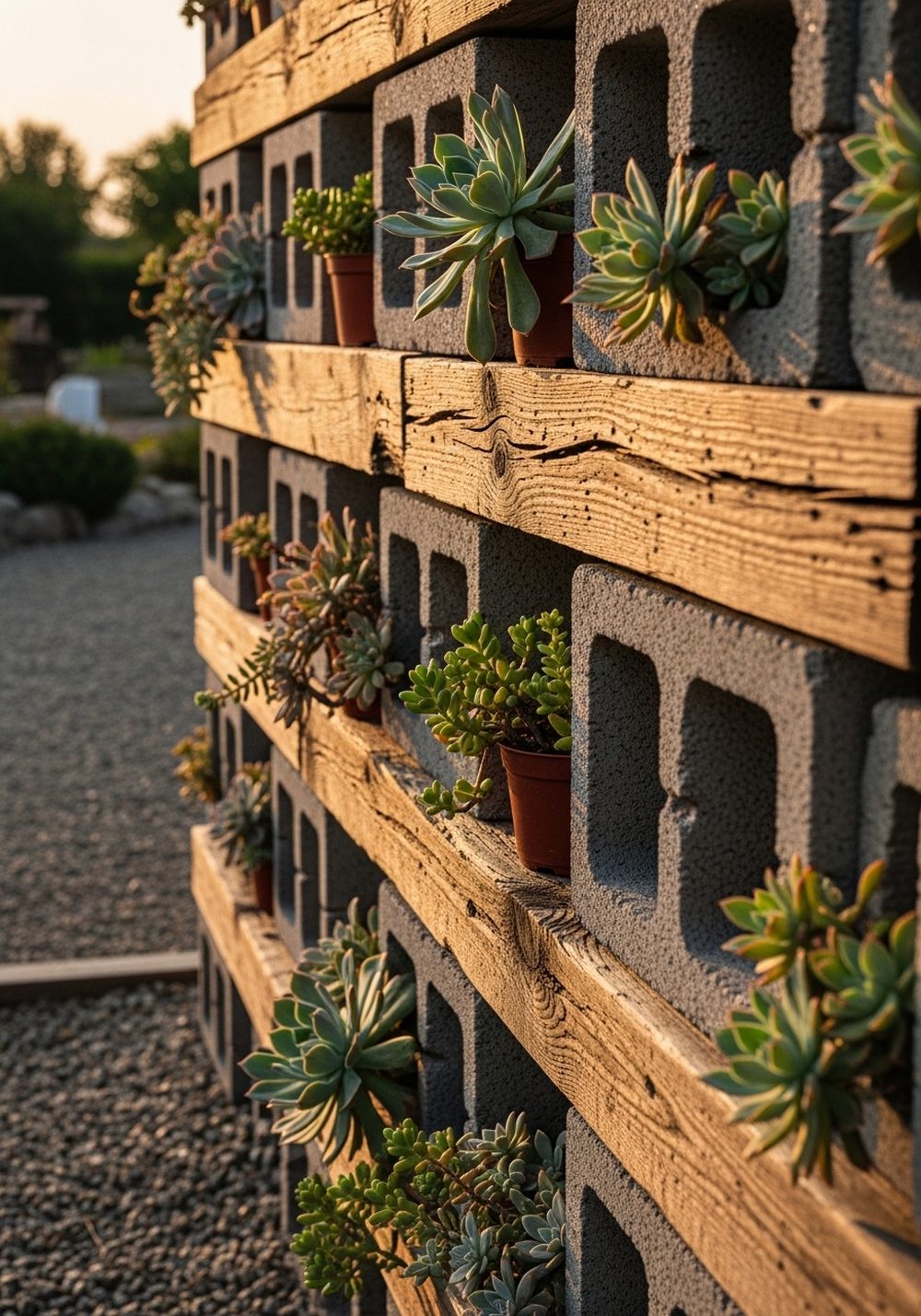
If you love a warm, rustic style, pair your cinder blocks with reclaimed wood. Stack the blocks in short columns and slide weathered wooden planks through the central holes to form shelves. Some blocks face out and hold succulents, while the planks support extra pots and decor. The mix of rough concrete, aged timber, and fleshy plants feels relaxed and handcrafted, perfect for cottage, boho, or farmhouse-inspired spaces. It’s also easy to adjust and expand as you collect more timber and plants.
- Best For: Cottage gardens, relaxed patios, and side yards with a bit of character.
- Budget Tip: Look for free or cheap offcuts and pallets to use as shelves.
- Styling Idea: Add terracotta pots, lanterns, or enamel jugs to the wooden shelves for layered charm.
- Practical Note: Make sure the wood is thick enough not to bow under the weight of pots.
- Care & Maintenance: Seal the wood if you want it to last longer, or let it weather for a rustic look.
Stair-Step Succulent Wall Along A Slope
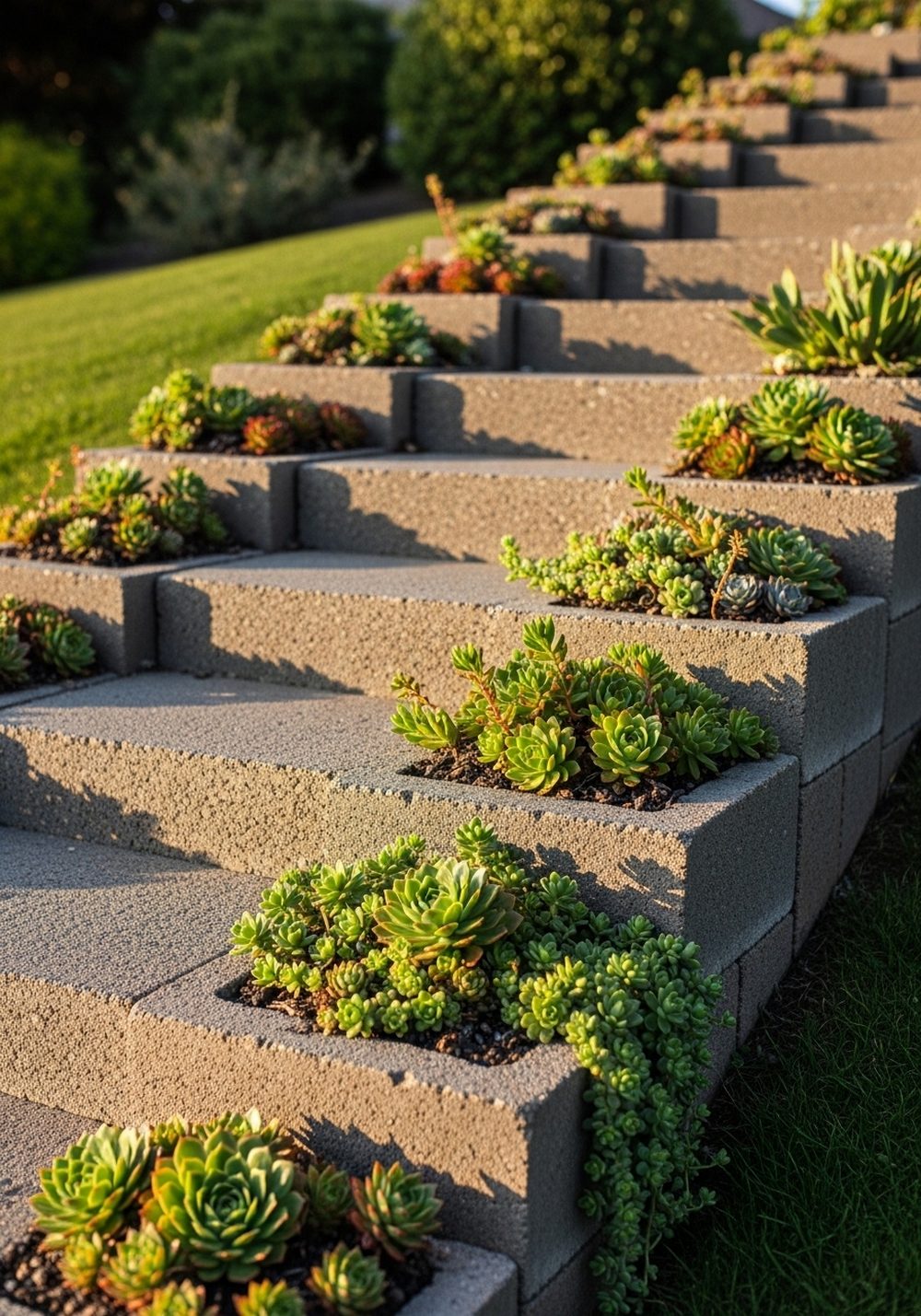
If your garden has a gentle slope, turn it into a stair-step succulent wall. Lay cinder blocks in stepped rows, each slightly higher than the last, following the natural rise of the ground. Fill each opening with gritty soil and plant a mix of low succulents and trailers that spill over the step below. This not only stabilises the slope a bit but also turns a tricky area into a pretty, layered display that looks good from below and above.
- Best For: Sloped gardens, side yards, or awkward banks that are hard to mow.
- Budget Tip: Use blocks mainly along the front edge and backfill with soil or rubble behind.
- Styling Idea: Mix in stone stepping-stones or logs to guide the eye up the slope.
- Practical Note: Compact the soil behind each step so it doesn’t wash out in heavy rain.
- Care & Maintenance: Choose hardy, drought-tolerant succulents to cope with extra drainage on slopes.
Outdoor Kitchen Backsplash Succulent Wall
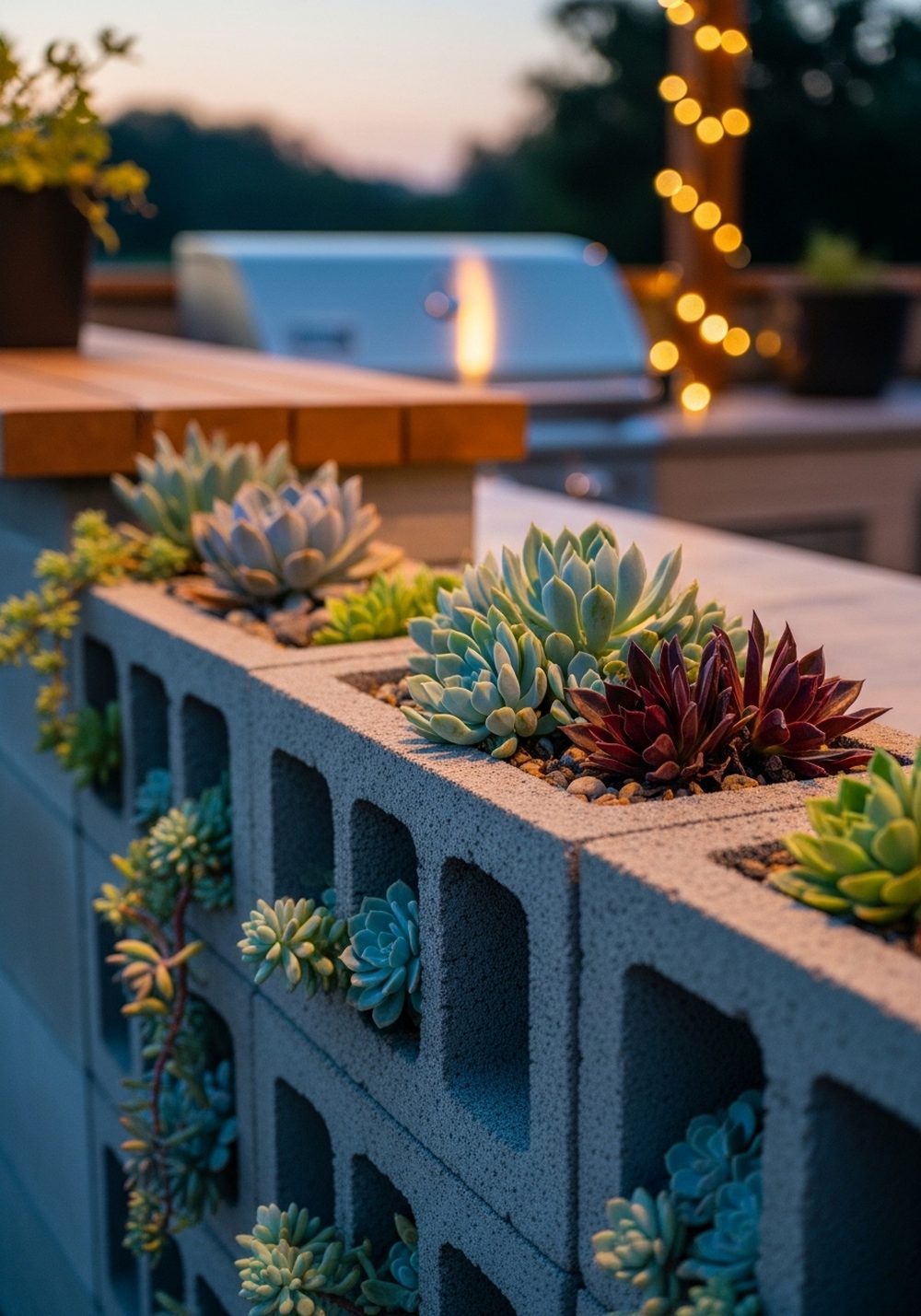
A low cinder block succulent wall behind your outdoor kitchen can act as a living backsplash and backdrop. Stack the blocks one or two layers high along the back of the counter, with openings facing you as you cook and serve. Fill with compact succulents that won’t drop messy leaves into food prep areas, and topdress with gravel for a finished look. When lit by evening string lights, the block wall adds softness, texture, and greenery to a space that can otherwise feel very hard and built-in.
- Best For: Outdoor kitchens, grill zones, and bar areas that need a bit of green.
- Budget Tip: Focus only on the visible section behind the counter, not the whole wall.
- Styling Idea: Match your gravel color to the countertop or paving for a joined-up design.
- Practical Note: Keep plants away from direct flame or heat from the grill.
- Care & Maintenance: Choose varieties that stay compact and are easy to brush clean if dust or grease settles.
Front Entry Cinder Block Succulent Welcome Wall
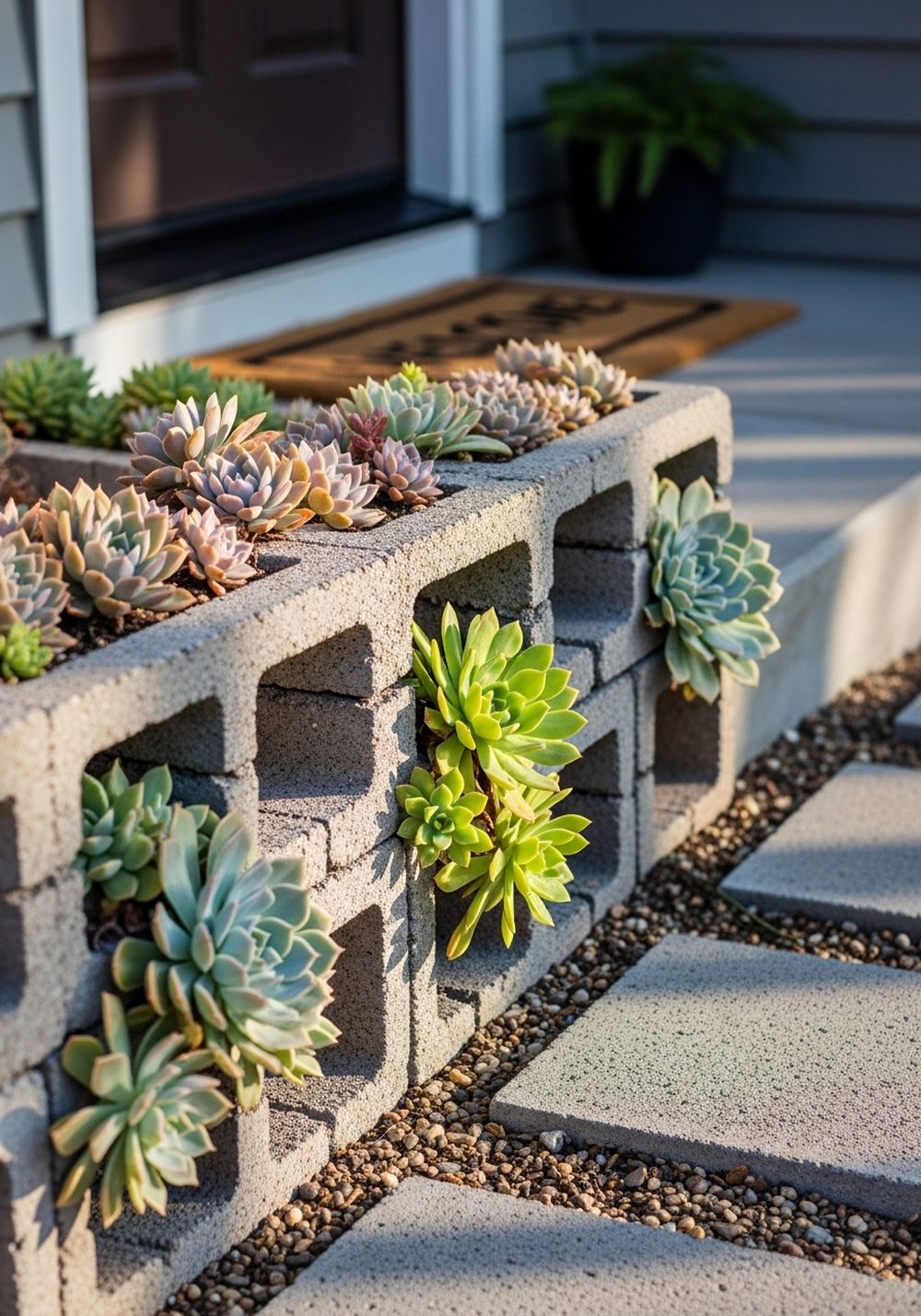
A small cinder block succulent wall by the front door instantly feels like a friendly welcome. Build a low, wide arrangement of blocks beside the entry, with the holes facing the path so guests see the plants up close. Fill with soft, inviting succulents in pale greens, blues, and hints of pink, and top with fine gravel for a polished finish. Add a doormat, maybe a lantern, and suddenly the whole entry feels put-together and personal without needing expensive pots.
- Best For: Front stoops, porches, and narrow entry paths.
- Budget Tip: Keep the wall short but wide; lower height uses fewer blocks while still making an impact.
- Styling Idea: Coordinate plant colors with your door paint or house trim for a cohesive look.
- Practical Note: Leave enough clearance for door swings and foot traffic.
- Care & Maintenance: Choose varieties that handle reflected heat if your entry gets strong sun.
Conclusion
Cinder blocks and succulents might sound simple, but together they can completely change the mood of your outdoor space. By stacking, painting, and pairing blocks with other materials, you can add height, texture, and greenery almost anywhere, from tiny balconies to front entries. Start with one small wall or tower, learn how your plants behave, and then expand as your confidence grows. With a few careful choices, your once-plain patio or path can become a stylish, living backdrop you’ll love coming home to.
FAQs
Q1. How can I build a cinder block succulent wall on a small budget?
Start small and think vertically. Use a few blocks stacked two or three high, and fill them with succulents grown from cuttings or shared by friends. Skip fancy finishes at first; raw concrete looks great with gravel and simple outdoor furniture. You can always paint blocks or add more layers later as your budget allows.
Q2. Are cinder block succulent walls suitable for renters?
Yes, they can be very renter-friendly because they’re not usually fixed to the ground. Build on top of pavers, a mat, or a gravel base so you don’t damage the surface, and avoid permanent adhesives if you need to move the blocks. When it’s time to leave, you can disassemble the wall, take the plants with you, and leave the space as you found it.
Q3. Will succulents survive in shallow cinder block openings?
Succulents are well suited to small, shallow spaces because they store water in their leaves. Use a gritty cactus mix and choose varieties known to handle full sun and good drainage. Water thoroughly but infrequently, and add gravel on top to slow evaporation. In very hot climates, give the wall a bit of afternoon shade to prevent scorching.
Q4. What can I do to make a cinder block succulent wall more weather-resistant?
Use exterior-grade or masonry materials, and build on a stable, well-drained base so the blocks don’t sit in standing water. If you paint, choose outdoor paint and seal any wood elements. In colder climates with hard frosts, consider planting in removable liners or small pots slipped into the openings so you can move tender plants indoors over winter.
Q5. Are these walls a good idea for very small balconies?
They can be, as long as you keep them compact and stable. A narrow tower or a short L-shape against the railing usually works better than a wide, heavy wall. Check any weight limits for your balcony, use lightweight potting mix, and keep the structure low enough to handle wind. It’s often best to start with just two or three blocks and see how they fit.
Q6. How do I safely mix decor and plants in these succulent walls?
Keep decorative items like lanterns, candles, and lights slightly away from the plant pockets, especially anything that produces heat. Use battery lights or solar string lights instead of open flames for safety. Make sure decor doesn’t block airflow or trap moisture around the plants. Aim for a balance where decor frames the wall while the succulents remain the main stars.