10 Bright Cinder Block Succulent Walls to Copy

If you love bold color and low-maintenance plants, bright cinder block succulent walls are about to become your new obsession. They turn plain concrete into living artwork, and they work just as well on a tiny balcony as they do in a full-sized backyard.
In this post, you’ll find ten copy-ready ideas that show you how to stack, paint, and plant cinder blocks into cheerful succulent walls. Most of them are budget-friendly, renter-conscious, and easy enough for beginners. Pick your favorite palette, grab a few blocks and succulents, and you’ll have a vibrant feature that instantly makes your outdoor space feel more stylish and personalized.
Quick List
- Rainbow Gradient Cinder Block Succulent Wall
- Sunny Yellow Patio Succulent Wall
- Pastel Ombre Balcony Succulent Wall
- Tropical Color-Pop Privacy Wall
- Monochrome White Modern Succulent Wall
- Neon Accent Industrial Succulent Wall
- Stair-Step Corner Succulent Feature
- Double-Sided Succulent Divider Wall
- Mini Entryway Cinder Block Succulent Wall
- Mixed Wood-And-Block Succulent Feature Wall
1. Rainbow Gradient Cinder Block Succulent Wall
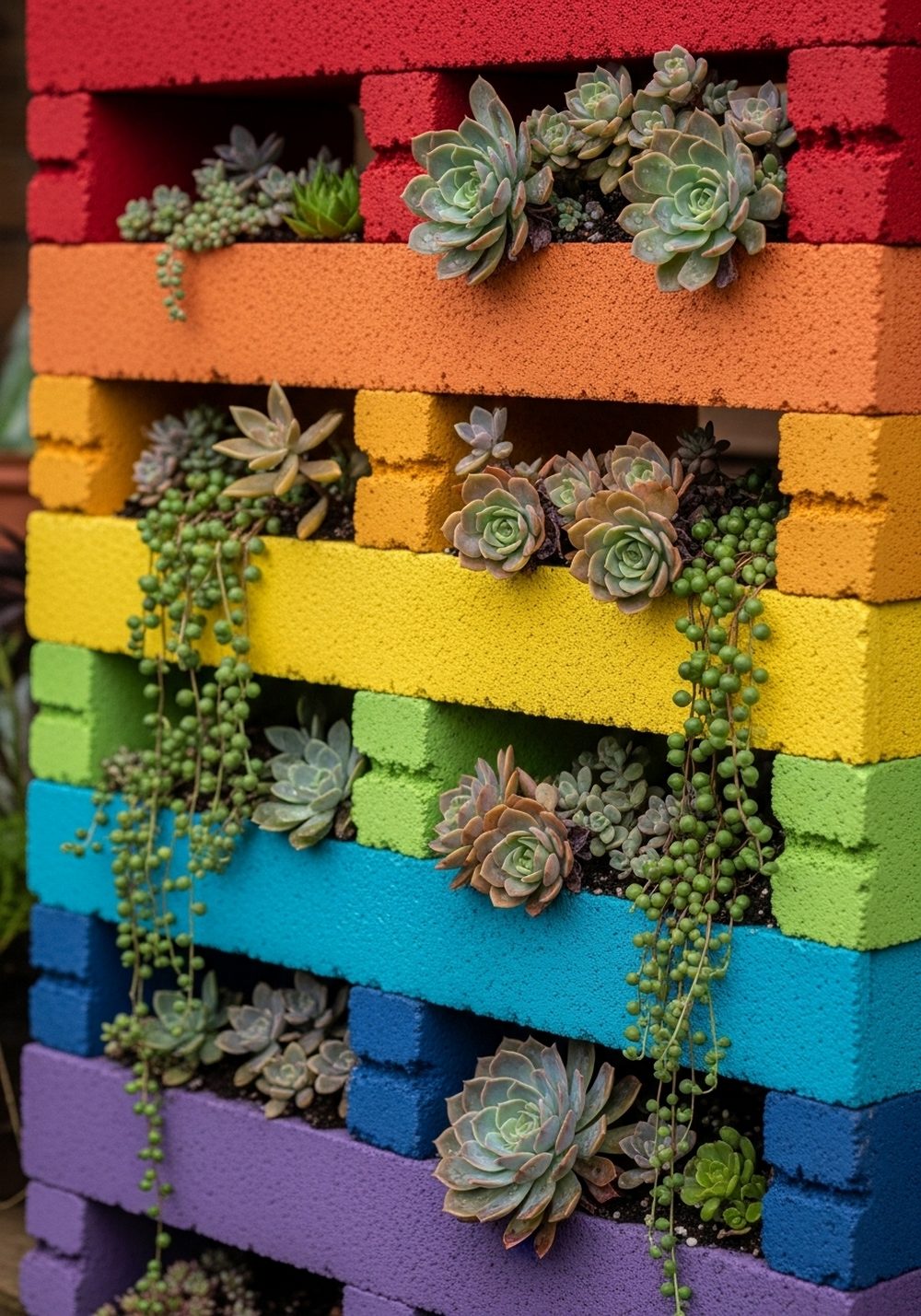
Turn a dull wall into a rainbow by painting stacked cinder blocks in a soft gradient from red all the way to violet. Arrange the blocks in a sturdy grid against a fence or wall, leaving the open cores facing out as planters. Fill them with a mix of colorful succulents—blue echeveria, red-tipped sedum, and lime-green rosettes—to echo the painted hues. The effect is a cheerful, almost mural-like feature that glows in daylight and adds instant personality to any garden corner.
- Best For: Blank fences, boring side yards, or the back of a garage wall.
- Budget Tip: Start with three or four colors and add more shades over time as your collection grows.
- Styling Idea: Keep pots, chairs, and accessories neutral so the rainbow wall stays the star.
- Practical Note: Use masonry adhesive between layers and check that the surface is level before stacking.
- Care & Maintenance: Choose sun-loving, drought-tolerant succulents if your wall faces full sun.
2. Sunny Yellow Patio Succulent Wall
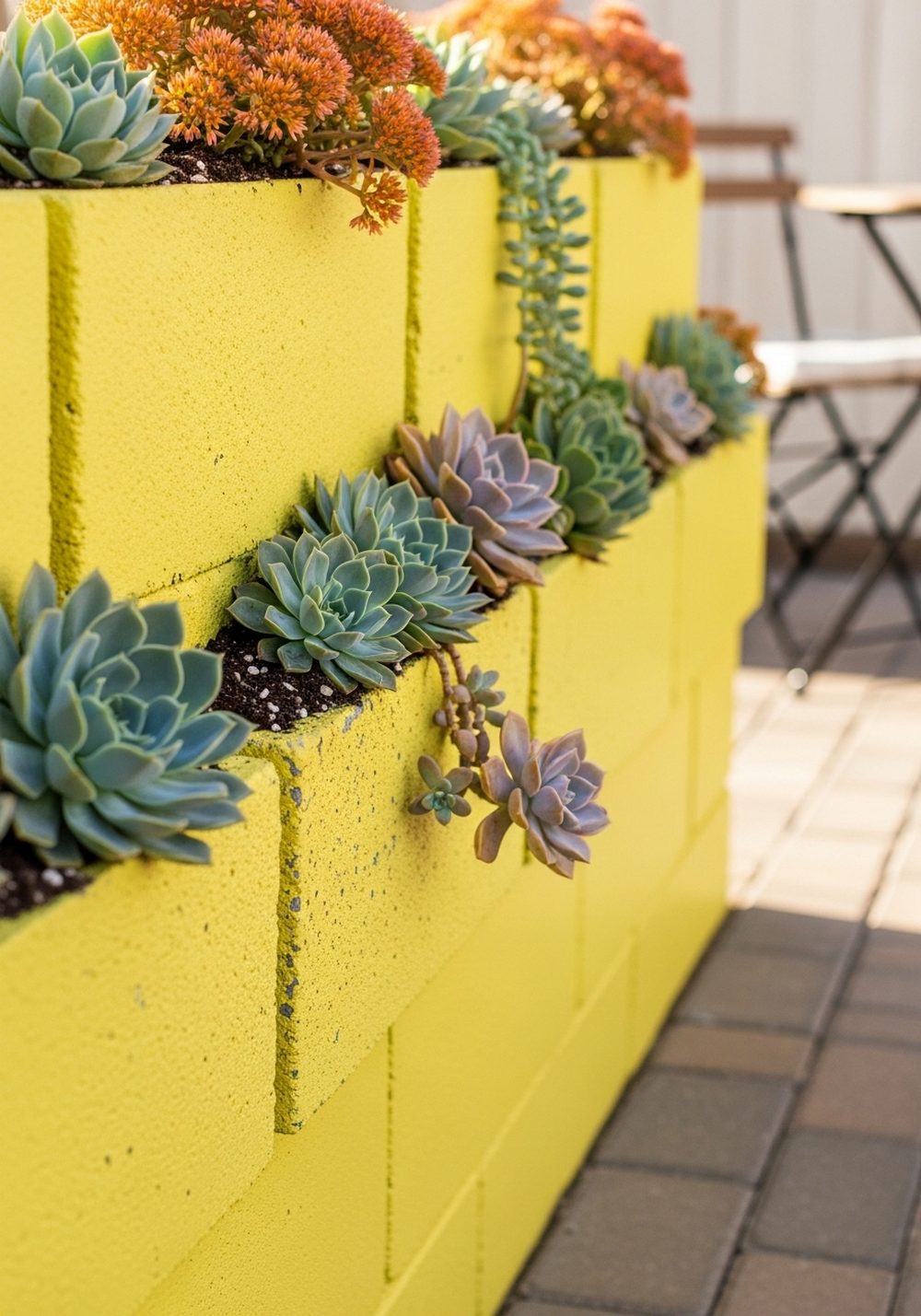
A wall of sunny yellow blocks instantly warms up a small patio. Paint all your cinder blocks in a mix of pale lemon and deeper mustard, then stack them in a staggered pattern along one edge of the space. Plant blue-green and silvery succulents in the pockets to balance the warmth of the paint. Add a small café table and chair beside it, and your everyday coffee spot suddenly feels like a cheerful courtyard. The strong yellow reads bright even on cloudy days.
- Best For: Patios that feel shaded, grey, or a bit lifeless.
- Budget Tip: Use one shade of yellow and dry-brush a second tone over the edges for depth.
- Styling Idea: Add a striped outdoor rug and a couple of patterned cushions that pick up the yellow tones.
- Practical Note: Seal the paint with an exterior clear coat to help prevent fading.
3. Pastel Ombre Balcony Succulent Wall
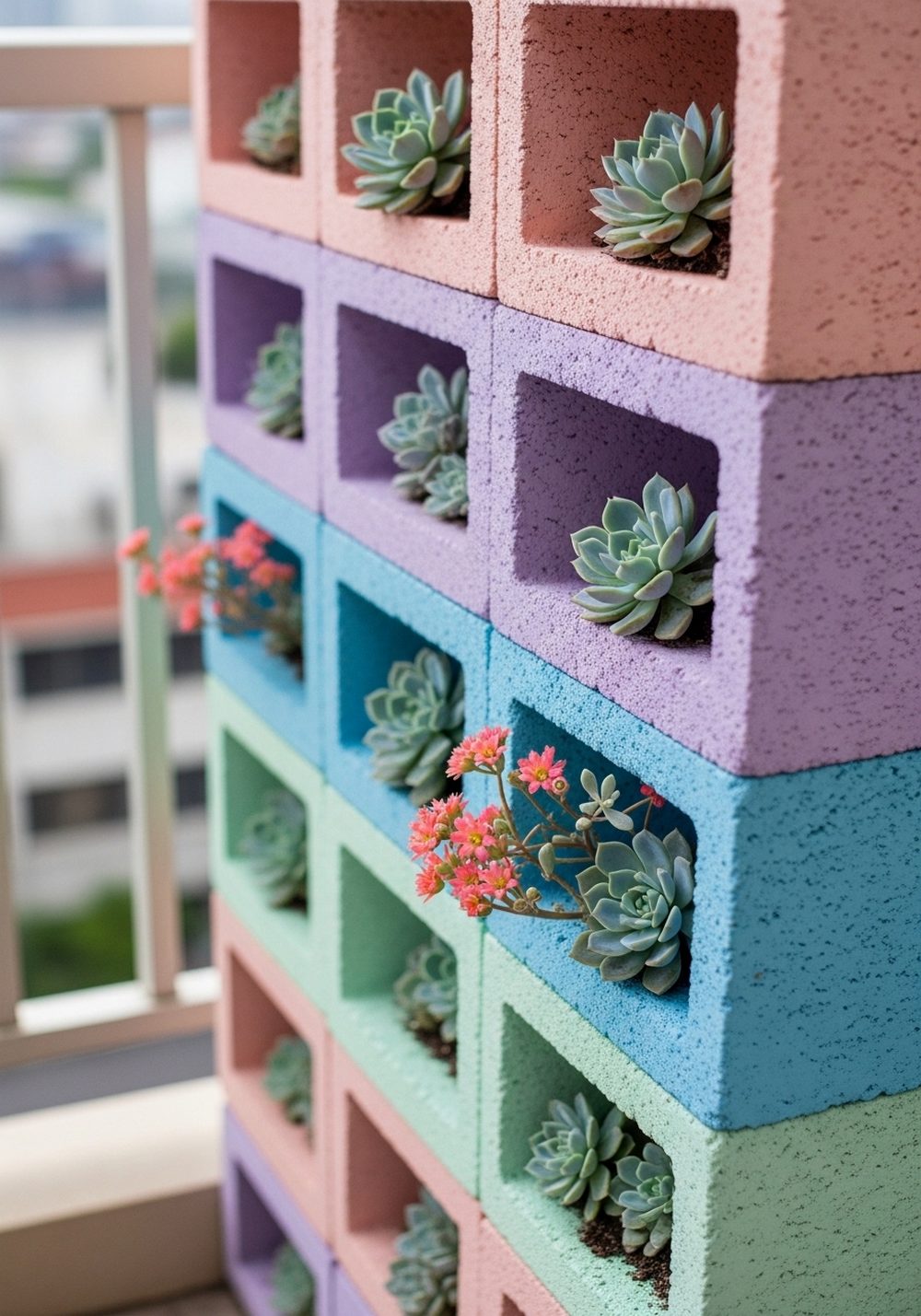
For a softer look in a small space, try a pastel ombre wall on your balcony. Paint blocks in pale pink, lilac, mint, and baby blue, and stack them low against the balcony railing so they don’t block the view. Fill the openings with tiny succulents and trailing varieties that spill gently over the edges. The result feels light, dreamy, and not at all heavy, which is perfect when you’re working with a compact outdoor nook.
- Best For: Renters and small balconies where you want color without clutter.
- Budget Tip: Buy white exterior paint and tint small portions with craft paints to create pastels.
- Styling Idea: Pair with soft cushions, a knitted throw, and fairy lights for a gentle, romantic mood.
- Practical Note: Keep the wall no higher than rail level and place saucers or trays under the lowest row to catch drips.
4. Tropical Color-Pop Privacy Wall
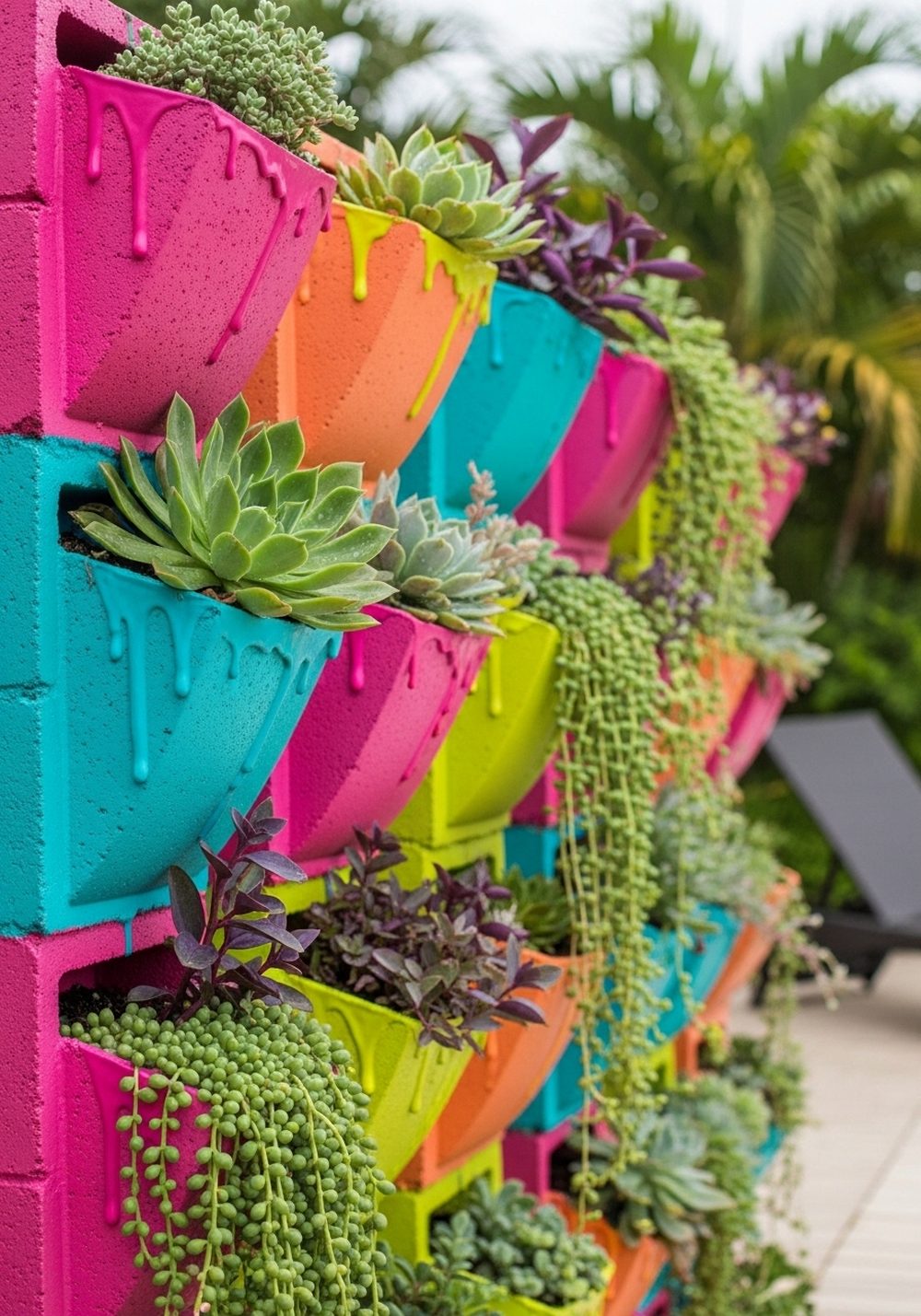
If you need privacy and drama, turn a cinder block wall into a tropical screen. Paint each block in bold colors—teal, coral, lime, and hot pink—and stack them to create a tall divider between you and neighboring windows. Plant each pocket with lush, bright succulents and a few trailing plants so the wall looks like a living tapestry. Add a pair of loungers and an umbrella in coordinating shades, and your garden suddenly feels like a resort corner.
- Best For: Overlooked patios or decks that need screening.
- Budget Tip: Limit yourself to three standout colors and repeat them in a pattern for a cohesive look.
- Styling Idea: Mix in bamboo lanterns and tropical-print cushions to complete the holiday vibe.
- Practical Note: Anchor the structure securely, especially if it’s tall or in a windy area.
- Care & Maintenance: Check that larger trailing plants don’t overshadow slower-growing succulents.
5. Monochrome White Modern Succulent Wall

For a clean, gallery-style statement, paint all your cinder blocks matte white and let the succulents provide the color. Stack the blocks in a neat grid along a straight wall, keeping lines crisp and symmetrical. Plant strong, sculptural succulents in shades of green, blue, and burgundy so they stand out sharply against the white. This style works beautifully in modern courtyards or alongside black metal furniture, where the contrast feels deliberate and refined.
- Best For: Minimalist gardens, modern townhouses, and small inner courtyards.
- Budget Tip: Use inexpensive masonry blocks and spend a bit more on high-quality white paint and a sealer.
- Styling Idea: Add black, charcoal, or natural-wood pots around the base for a simple, monochrome palette.
- Practical Note: White shows dirt, so give the surface a gentle wipe every few weeks.
6. Neon Accent Industrial Succulent Wall
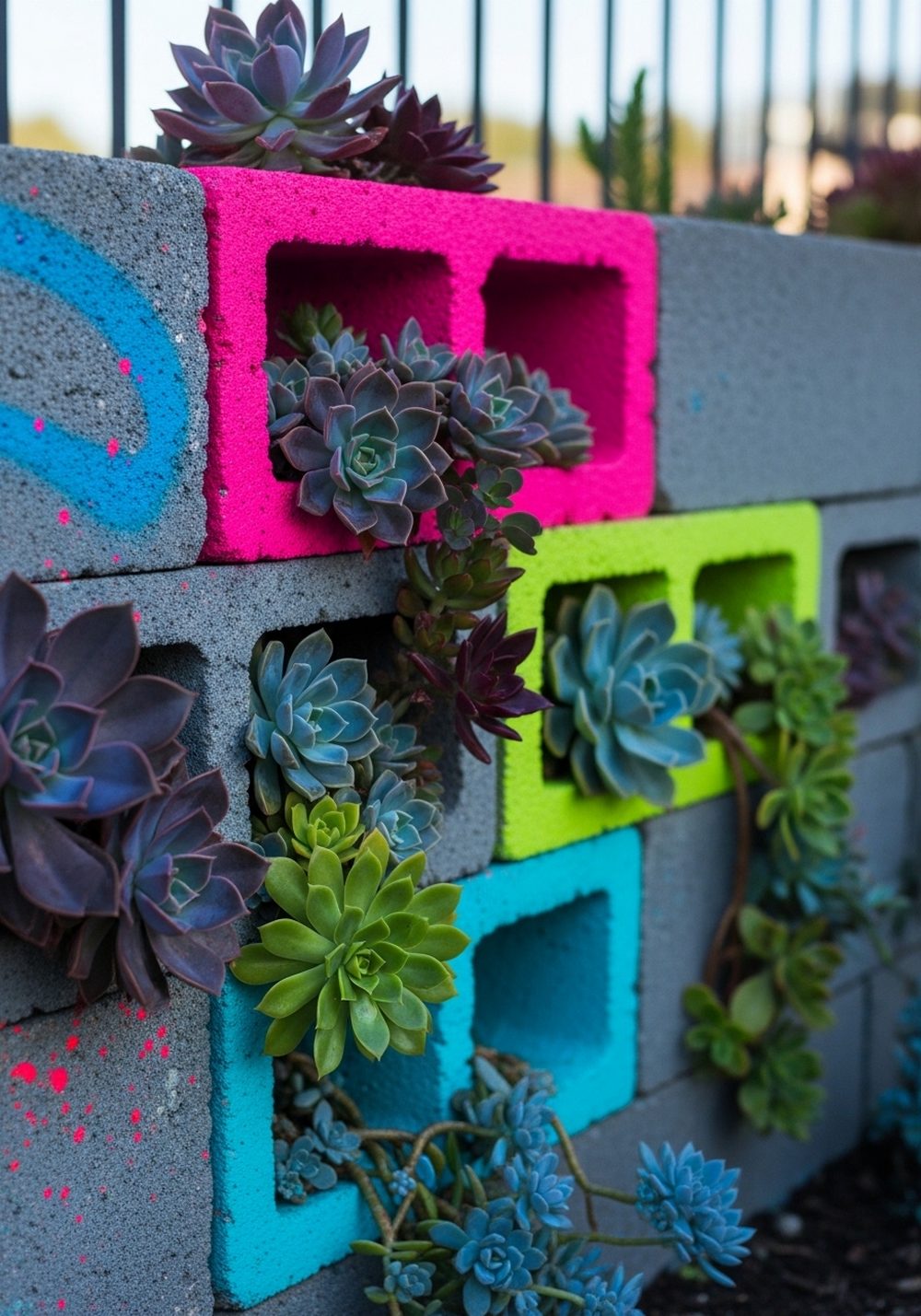
If your space leans urban or edgy, embrace it with a neon accent wall. Leave some of the blocks raw grey, then paint others in sharp neon shades—electric pink, lime, or bright turquoise—in random positions. Stack the blocks against a fence or brick wall, and plant moody-colored succulents with dark blues and purples for contrast. The mix of industrial concrete, neon flashes, and lush plants feels modern and bold, especially in a narrow side yard or city courtyard.
- Best For: Urban gardens, side passages, and rooftops with lots of hard surfaces.
- Budget Tip: Only paint a third of the blocks in neon to save paint and keep the look balanced.
- Styling Idea: Pair with metal chairs, string lights, and maybe a galvanised watering can as decor.
- Practical Note: Test neon colors on a spare block first, as they often look brighter outside than expected.
7. Stair-Step Corner Succulent Feature
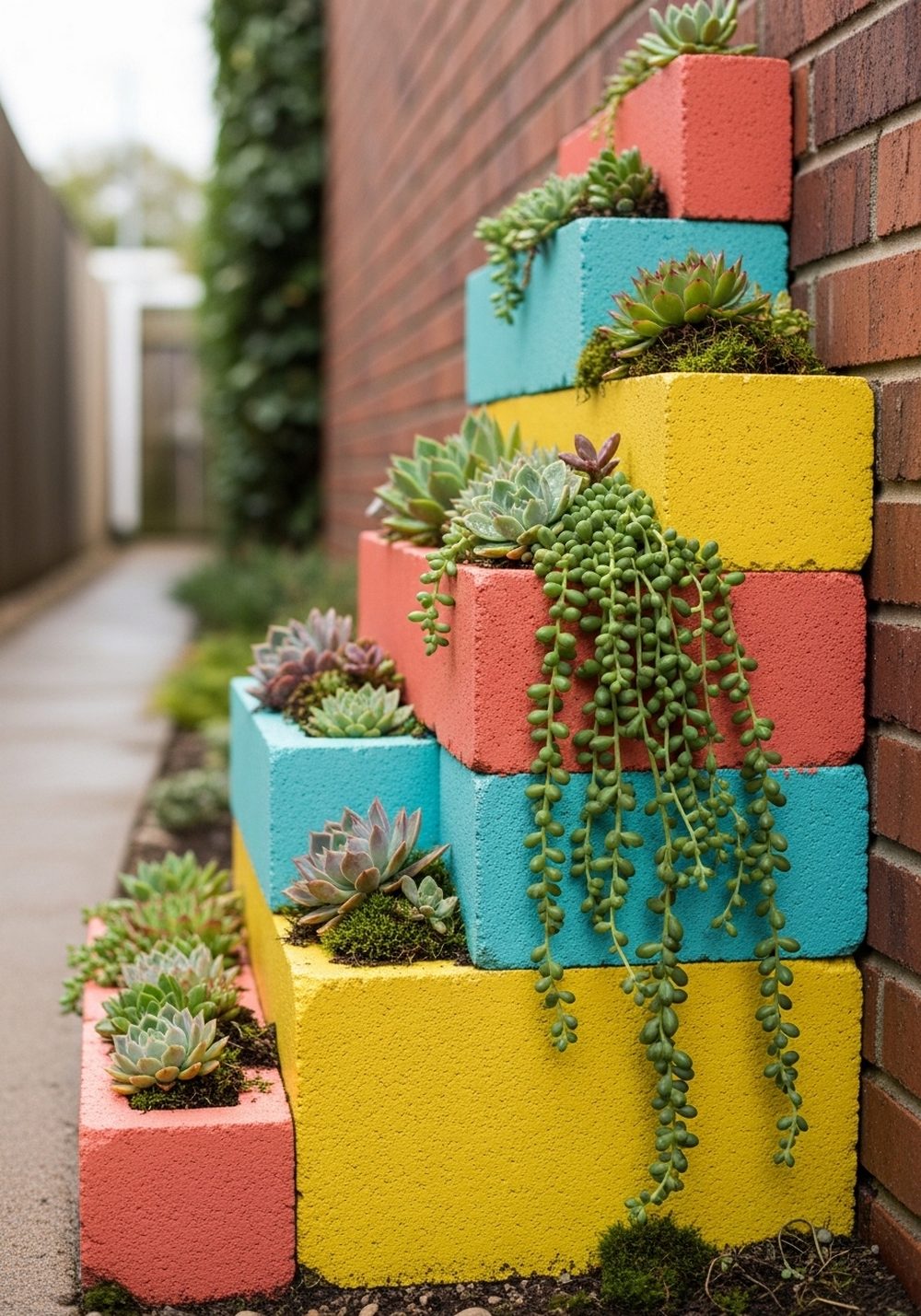
Use cinder blocks to build a stair-step feature in an unused corner. Stack them in a pyramid or staircase shape, with each “step” offering new planting pockets. Paint each level a different bright color—coral at the bottom, aqua in the middle, yellow on top—so your eye climbs upwards with the plants. Fill the openings with trailing succulents on the upper steps and compact rosettes lower down for a layered, cascading look that brings depth to an otherwise flat corner.
- Best For: Awkward corners, side yards, and the end of a path that needs a focal point.
- Budget Tip: Use leftover paint from other projects and mix colors for unique shades.
- Styling Idea: Place a lantern or small statue at the top step to finish the composition.
- Practical Note: Make sure the base row is fully level and use adhesive between layers for stability.
8. Double-Sided Succulent Divider Wall
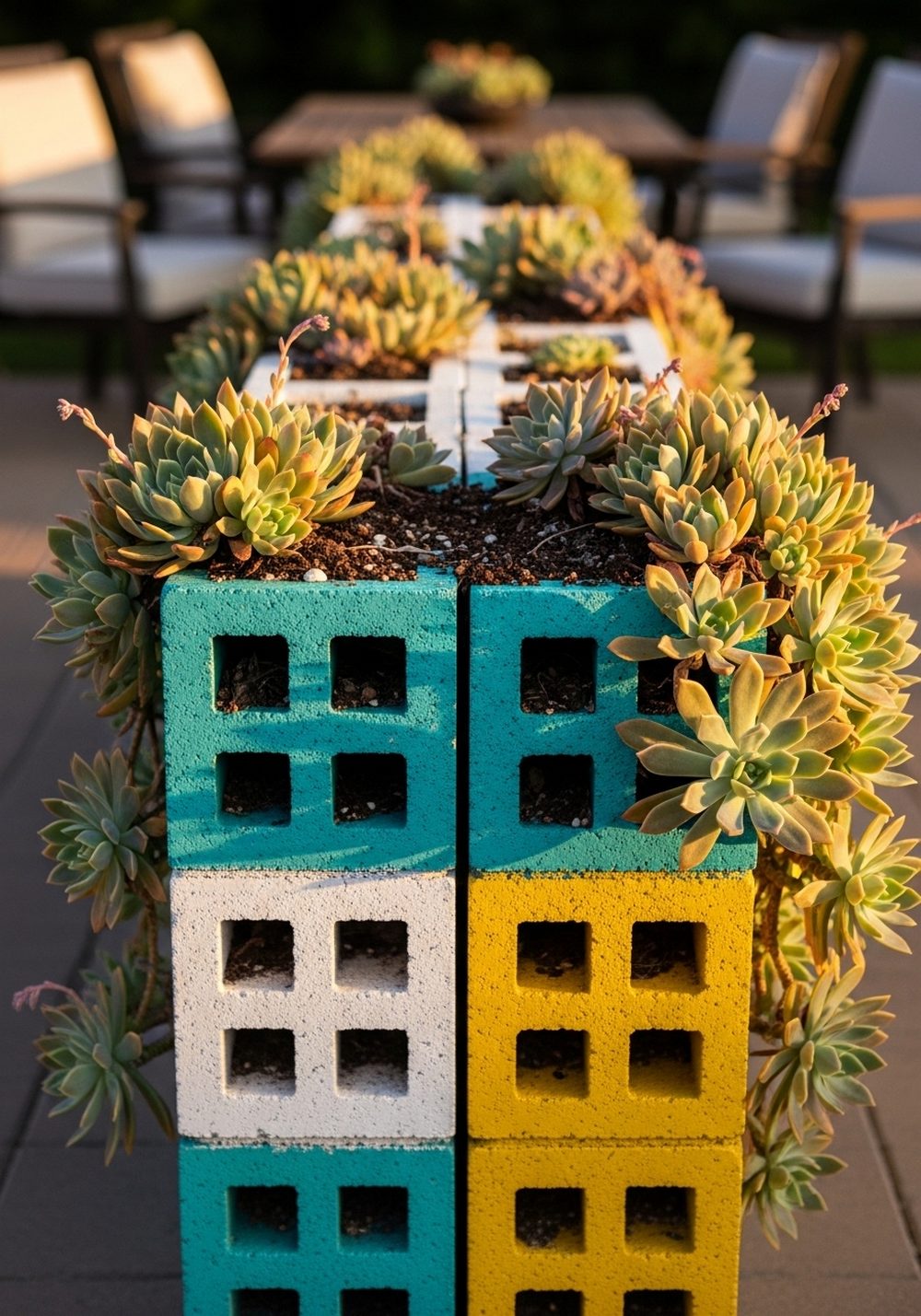
Create a living divider that looks great from both sides by stacking cinder blocks in a back-to-back grid, leaving openings accessible on each side. Paint the blocks in a repeating pattern of teal, white, and sunshine yellow to keep it bright but ordered. Plant different succulents on each side so the lounge area and dining area each have their own look, while still sharing the same structure. It’s a clever way to define zones without building a solid, heavy wall.
- Best For: Larger patios and gardens where you want separate “rooms.”
- Budget Tip: Build the divider only waist-high to save blocks and soil, then add tall potted plants behind it for extra height.
- Styling Idea: Match table linens and cushions to one or two of the wall colors for a pulled-together feel.
- Practical Note: Leave gaps for light and airflow so the area doesn’t feel boxed in.
9. Mini Entryway Cinder Block Succulent Wall

Even a tiny front path can handle a bright cinder block feature. Stack just two or three rows of painted blocks along the edge of your entry, using bold reds, oranges, and yellows to create a small but mighty welcome wall. Plant low-growing succulents and a few trailing stems that soften the structure without blocking the walkway. The burst of color and texture by the gate or front steps makes your home feel more inviting before anyone even reaches the door.
- Best For: Narrow front gardens, small porches, and side entrances.
- Budget Tip: Focus on one small section near the gate instead of running the wall the full length.
- Styling Idea: Add a simple welcome mat and a matching painted house number for a coordinated look.
- Practical Note: Keep the wall low and set back slightly so it doesn’t intrude on the walking path.
10. Mixed Wood-And-Block Succulent Feature Wall
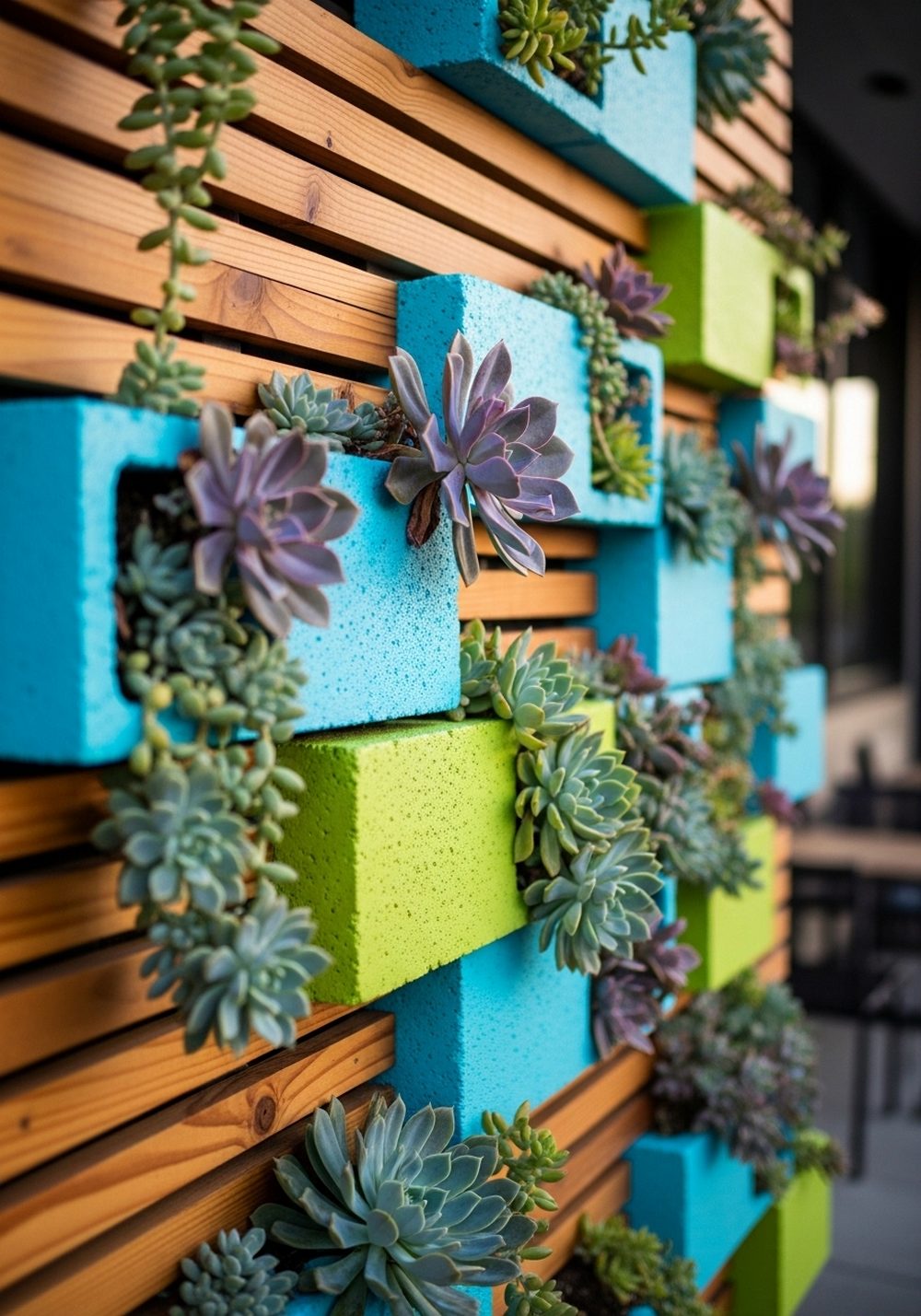
Combine warm wood and bright blocks for a statement feature. Build a simple frame from timber posts and horizontal slats, then stack painted cinder blocks—turquoise, lime, and white—between sections of wood so the materials weave together. Plant the block openings with succulents in coordinating tones, and let some trailing varieties spill down over the timber. The contrast of natural wood grain with painted concrete and living plants feels rich and layered, giving your garden a polished, custom-built look.
- Best For: Main entertaining areas where you want a big focal point.
- Budget Tip: Use pressure-treated construction offcuts and standard blocks, investing mainly in good exterior paint.
- Styling Idea: Echo the wood tone in your furniture and decking so everything feels connected.
- Practical Note: Seal both the wood and blocks to protect them from weather, and check fixings regularly.
Conclusion
Bright cinder block succulent walls are an easy way to turn plain concrete into living art, no matter how big or small your outdoor space is. With paint, a few sturdy blocks, and tough little succulents, you can build everything from a tiny entry feature to a full privacy wall. Start with one simple idea that suits your space and budget, then add more blocks, colors, and plants over time. Soon, your garden will feel bolder, more personal, and full of character.
FAQs
Q1. Can I create a cinder block succulent wall on a small budget?
Yes. Buy plain cinder blocks from a hardware store, start with a small section, and use one or two paint colors instead of many. Choose easy-to-find succulents and propagate cuttings from friends or your own plants to fill more pockets over time.
Q2. Are these walls suitable for renters who can’t build permanent structures?
They can be. Instead of cementing blocks in place, stack them on a level surface and use masonry adhesive sparingly so they can be dismantled later. Keep the structure low and freestanding, and avoid drilling into walls or balconies without permission.
Q3. How do I make sure the wall is safe and stable?
Always build on a flat, solid surface and start with a wide base row. Stagger the joints like bricks, and use masonry adhesive between layers for extra stability. If your wall is tall, position it against a fence or wall and secure it with brackets where allowed.
Q4. What kind of succulents work best for these walls?
Choose compact, drought-tolerant varieties that don’t need deep soil: small echeveria, sedum, haworthia, and string-of-pearls work well. Match the plant choice to your light conditions—sun-loving types for bright spots and more shade-tolerant varieties for low-light corners.
Q5. How do I stop the paint from peeling or fading outdoors?
Use exterior-grade paint suitable for masonry, and let each coat dry fully before stacking the blocks. Once the color is how you like it, apply a clear exterior sealer. Avoid constantly moving or scraping pots and tools along the painted surfaces to keep them looking fresh.
Q6. How often do cinder block succulent walls need maintenance?
They’re fairly low-maintenance. Check the plants every week or two, remove any dead leaves, and water sparingly, allowing soil to dry between waterings. Inspect the structure after storms, top up soil if it settles, and give the blocks an occasional wipe or rinse to remove dust and cobwebs.