10 Easy Rainbow Garden Ideas for a Fun Colorful Garden

If you love color but feel stuck with plain green plants and basic pots, a rainbow garden is a joyful way to brighten things up. These ideas are perfect for home gardeners, renters, and anyone with a patio, balcony, or backyard that needs a little fun.
In this post, you’ll find simple, low-effort rainbow garden decor ideas you can create with paint, pots, lights, and clever planting. Most can be done on a small budget and scaled up over time. By the end, you’ll know exactly how to turn an ordinary outdoor space into a playful, colorful garden that feels happy, personal, and full of life.
Quick List
- Create A Rainbow Cluster Of Colorful Pots
- Plant A Color-Blocked Rainbow Flower Border
- Lay A Rainbow Stepping Stone Pathway
- Paint A Rainbow Fence Or Garden Trellis
- Build A Rainbow Pallet Vertical Garden
- Design A Rainbow Veggie And Herb Patch
- Hang A Collection Of Rainbow Hanging Baskets
- Add Rainbow Lanterns And String Lights
- Shape A Rainbow Swirl Bed With Mulch Or Gravel
- Style A Rainbow Kids’ Corner With Painted Furniture
1. Create A Rainbow Cluster Of Colorful Pots

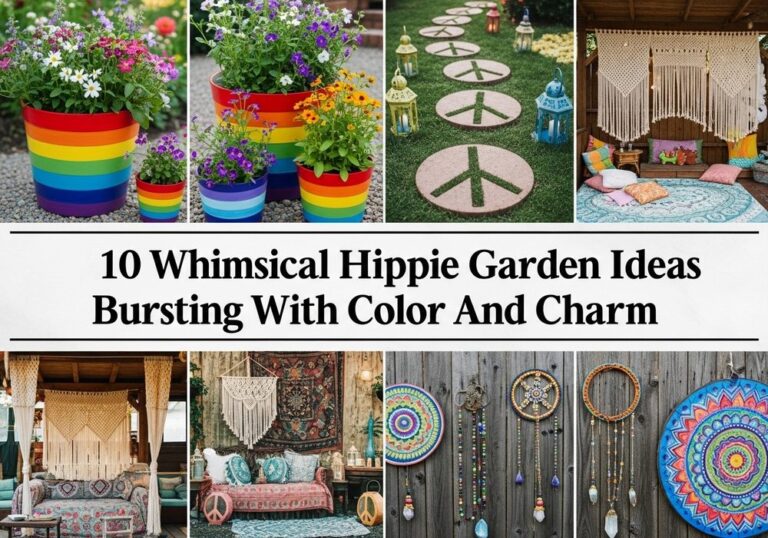
Gather a group of plain pots and give them a simple makeover with outdoor paint in classic rainbow shades. Cluster them together near your front door, on a balcony, or beside a garden bench so the color feels intentional and bold. Fill them with easy green plants or a mix of flowers and herbs. The rainbow effect works even if the plants themselves are mostly green, because the pots do all the visual heavy lifting.
- Best For: Small patios, balconies, or front steps where you want instant impact.
- Budget Tip: Use thrifted pots and tester paint pots rather than buying everything new.
- Styling Idea: Keep the shapes simple and mix matte and gloss finishes for subtle texture.
- Practical Note: Group pots closely to make watering easier and reduce drying out.
- Extra Idea: Add one neutral pot (white or terracotta) to give the rainbow some breathing space.
2. Plant A Color-Blocked Rainbow Flower Border

Instead of random planting, create a flower border arranged in sections of red, orange, yellow, green, blue, and purple. Choose hardy, easy plants in each color, and plant them in chunky blocks rather than scattered dots. Even with a small strip of soil, this creates a strong rainbow stripe that looks cheerful from a distance. It works beautifully along a fence, path, or the edge of a lawn and instantly makes your garden feel designed, not accidental.
- Best For: Long narrow beds, fence lines, and front garden borders.
- Budget Tip: Start with three or four colors and gradually fill in the rest of the rainbow.
- Styling Idea: Keep plant shapes similar so the color is the star, not the form.
- Care & Maintenance: Choose reliable, low-maintenance perennials for the main structure.
- Extra Idea: Add a simple low edging to frame the border and stop soil spilling onto paths.
3. Lay A Rainbow Stepping Stone Pathway

Turn a simple garden path into a playful feature with rainbow stepping stones. Paint plain concrete or stone pavers in bright colors and lay them in a sequence that leads through the lawn or between beds. The color gives direction and energy, and kids especially love following the path. Because the stones sit on the ground, the look stays neat and contained, while the rainbow hues lift the whole garden around them.
- Best For: Lawns, side return paths, and informal cottage-style gardens.
- Budget Tip: Use second-hand pavers and leftover paints, sealing them with outdoor varnish.
- Styling Idea: Keep the grass closely trimmed around each stone so the colors really pop.
- Practical Note: Make sure surfaces are non-slip and laid flat for safe walking.
- Care & Maintenance: Touch up the paint every year or two if it starts to fade.
4. Paint A Rainbow Fence Or Garden Trellis

A tired fence or trellis is the perfect blank canvas for rainbow color. Paint vertical panels or slats in a gradient from red through to purple, or create a repeating pattern of stripes along the length. Add climbing plants in green and white to soften the look so it feels joyful rather than overwhelming. This idea works just as well on a small section of fence behind a seating area as it does along an entire boundary.
- Best For: Dull boundaries, rented gardens with permission to paint, or small courtyards.
- Budget Tip: Focus the rainbow only behind your main seating spot to save on paint.
- Styling Idea: Pair the rainbow fence with neutral furniture and cushions so the colors shine.
- Practical Note: Use exterior wood paint or stain designed to withstand weather.
- Extra Idea: Add simple hooks along the fence for hanging small pots or lanterns.
5. Build A Rainbow Pallet Vertical Garden

A recycled pallet becomes a colorful vertical garden when you paint each board a different rainbow hue and tuck plants into pockets or attached pots. Lean it against a wall or secure it to a fence for safety. This adds both height and color without taking up floor space, making it ideal for small gardens and balconies. Fill it with trailing plants, herbs, or hardy succulents for a lush look that feels like living artwork.
- Best For: Tiny patios, balconies, or bare walls that need a feature.
- Budget Tip: Look for free pallets locally and use inexpensive sample pots of paint.
- Styling Idea: Keep plant varieties simple so the rainbow boards remain the main focus.
- Practical Note: Line planting pockets with landscape fabric to hold soil in place.
- Care & Maintenance: Water from the top and let it drain down through the layers.
6. Design A Rainbow Veggie And Herb Patch

Combine practical growing with rainbow style by arranging veggies and herbs in colorful lines or blocks. Think red lettuces or beet stems, orange flowers like calendula, yellow chard, rich green herbs, blue-green cabbages, and purple basil. Even in a small raised bed, the effect is playful and surprisingly elegant. You get a productive patch that still feels decorative, and the shifting shades look beautiful throughout the season.
- Best For: Kitchen gardens, raised beds, or allotments where you want beauty and harvest.
- Budget Tip: Grow from seed where possible; many colorful varieties are inexpensive.
- Styling Idea: Use simple wooden edging so the rainbow planting looks neat and intentional.
- Practical Note: Check each plant’s sun and water needs so they suit the same bed.
- Care & Maintenance: Succession sow to keep color-filled crops coming as you harvest.
7. Hang A Collection Of Rainbow Hanging Baskets

A row or cluster of hanging baskets in rainbow colors creates a festive, floating display. Paint or wrap the baskets in different shades, then plant them with trailing ivy, petunias, or simple green foliage. Hang them along a pergola, porch, or sturdy wall bracket so they form a bright line of color above eye level. This lifts the rainbow effect into the air and makes even a small space feel taller and more dynamic.
- Best For: Porches, pergolas, and balcony railings with good light.
- Budget Tip: Reuse old baskets and line them with fresh compost instead of buying new.
- Styling Idea: Keep the flowers mostly white or soft-toned so the basket colors stand out.
- Practical Note: Use secure hooks and chains, especially in windy locations.
- Care & Maintenance: Water regularly and add slow-release feed to keep plants lush.
8. Add Rainbow Lanterns And String Lights

Rainbow lanterns and soft string lights instantly turn a garden into a party-ready space, even if the planting is simple. Hang lanterns in different rainbow shades from branches, pergolas, or hooks, and weave neutral or warm-white string lights around them. By day, the lantern colors bring charm; by evening, they glow softly and create a magical atmosphere. This is a great non-permanent option, especially if you’re renting or like to change things seasonally.
- Best For: Evening seating areas, decks, patios, and rented spaces.
- Budget Tip: Choose solar lanterns and lights to avoid extra wiring costs.
- Styling Idea: Pair rainbow lanterns with plain cushions and throws so the look isn’t too busy.
- Practical Note: Check that lights are suitable for outdoor use and secure cables neatly.
- Care & Maintenance: Store delicate lanterns indoors over winter to extend their life.
9. Shape A Rainbow Swirl Bed With Mulch Or Gravel

If you like bold patterns, create a round or curved bed filled with colored mulch or gravel arranged in a rainbow swirl. Each band of color curves around a central plant, rock, or simple ornament, forming a striking design that looks good year-round. Add low greenery at the edges to soften the look. This idea suits sunny or tricky spots where plants struggle, because the color comes from the materials instead of flowers.
- Best For: Front gardens, focal points, or dry, difficult areas.
- Budget Tip: Use smaller sections of colored material and fill the rest with natural stone.
- Styling Idea: Keep the surrounding area calm and green to balance the bold swirl.
- Practical Note: Lay weed membrane underneath to reduce maintenance.
- Care & Maintenance: Rake occasionally to keep the surface tidy and top up color as needed.
10. Style A Rainbow Kids’ Corner With Painted Furniture

Create a special rainbow corner for children by painting a small outdoor table, chairs, and planters in bright rainbow shades. Arrange them together on a patch of grass or patio, and add a few easy-care plants in matching pots. This becomes a cheerful spot for drawing, reading, or snack time, and it adds a playful burst of color to the garden. Even if you don’t have kids, a rainbow seating corner can bring a sense of fun and creativity.
- Best For: Family gardens, small patios, or shared courtyards.
- Budget Tip: Upcycle old indoor furniture with weatherproof paint instead of buying new.
- Styling Idea: Choose one pattern (stripes, color blocks, or dipped legs) and repeat it for cohesion.
- Practical Note: Use non-toxic, outdoor-safe paint and sand any rough edges first.
- Care & Maintenance: Recoat high-use surfaces every couple of years to keep colors fresh.
Conclusion
A rainbow garden doesn’t have to be complicated or expensive; it’s really just about using color with intention. By painting pots, fences, and furniture, arranging plants in simple bands, and adding playful lights and details, you can turn any outdoor space into a bright, welcoming retreat. Start with one small idea, live with it for a while, and then add another. Before long, your garden will feel like a cheerful, colorful extension of your personality.
FAQs
1. How can I create a rainbow garden on a very small budget?
Start with paint, because it gives the biggest impact for the least money. Upcycle old pots, pallets, or furniture with a few sample pots of outdoor paint, and group them together for a strong rainbow effect. Then add budget-friendly plants like seedlings, cuttings from friends, or hardy perennials that will come back each year.
2. Are these rainbow garden ideas suitable for renters?
Yes, many of them are renter-friendly. Focus on movable items like painted pots, hanging baskets, lanterns, and vertical pallet gardens that lean rather than screw into walls. Rainbow stepping stones can be lifted again, and furniture-based ideas can come with you when you move, leaving the permanent garden unchanged.
3. What are the easiest rainbow ideas for complete beginners?
The simplest starting points are rainbow pots, hanging baskets, and lanterns. You’re mostly painting or placing items, rather than redesigning whole beds. Choose tough, low-maintenance plants such as basic herbs, ivy, or hardy flowering bedding, and let the decor carry most of the color while you build your gardening confidence.
4. How do I make sure my rainbow decor doesn’t look messy or childish?
Keep the rest of your space fairly calm and coordinated. Use one main rainbow feature in each area (for example, a fence or a pot cluster), then pair it with neutral furniture and simple plant choices. Repeating the same colors or stripe pattern in a couple of places also helps the design look intentional rather than random.
5. Will bright rainbow colors fade quickly outdoors?
Outdoor conditions will fade color over time, but you can slow this down. Use good-quality exterior paint or stain, and consider adding a clear sealant on top of painted surfaces like pots and stepping stones. Position the most vivid pieces where they get some shade in the hottest part of the day, and plan on light touch-ups every year or two to keep everything looking fresh.