15 Recycled Bathtub Raised Garden Bed Ideas
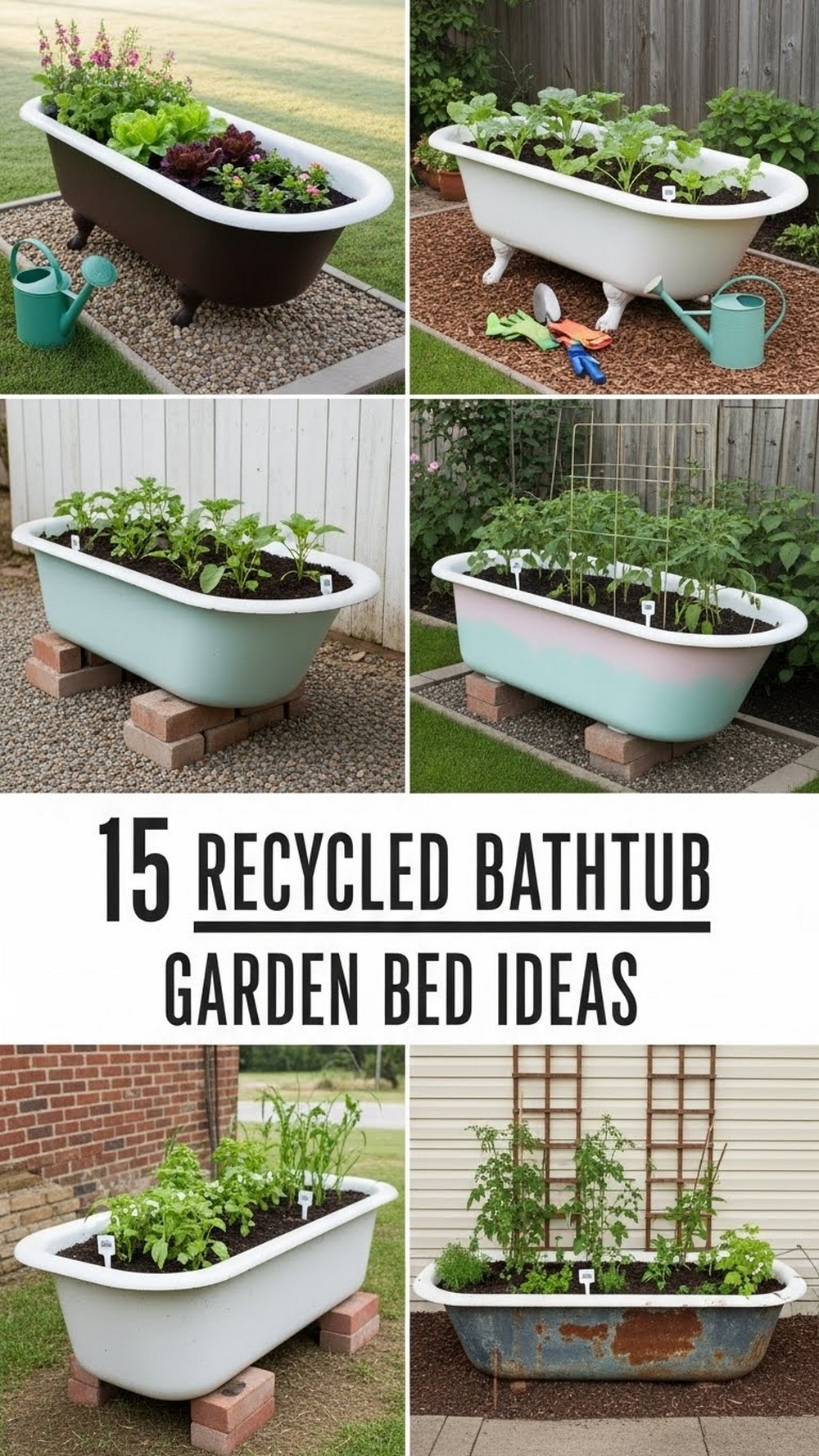
An old bathtub might look like pure junk at first glance, but in the garden it’s basically a ready-made raised bed with built-in sides and loads of character. Cast iron or enamel tubs are deep, sturdy, and surprisingly stylish once they’re scrubbed up and filled with plants.
In this post, you’ll find fifteen creative ways to turn recycled bathtubs into raised beds for flowers, herbs, veggies, and wildlife-friendly planting. Whether you garden on a tiny courtyard, a family lawn, or a farmhouse plot, these ideas will show you how to add height, structure, and personality while keeping things practical, productive, and budget-friendly.
Quick List
Quick List Of Garden Decor Ideas
- Cottage Clawfoot Flower Tub Border
- Family Veggie Patch Bathtub Bed
- Kitchen Herb Spa-Style Bathtub Garden
- Pollinator “Bee Bath” Wildflower Tub
- Kids’ Pick-Your-Own Salad Bathtub
- Rustic Farmhouse Potato & Root Veg Tub
- Modern White Patio Bathtub Planter
- Trellised Bathtub Tomato & Bean Wall Bed
- Bathtub Pond-Edge Bog & Iris Garden
- Wheelchair-Friendly Bathtub Raised Bed Station
- Tiny Courtyard Bathtub Cutting Flower Garden
- Twin Bathtub Berry & Rhubarb Corner
- Bathtub Cold Frame Spring Starter Bed
- Succulent & Gravel Mediterranean Bath
- Bathtub Kitchen Door Herb & Flower Mix Bed
Cottage Clawfoot Flower Tub Border

Set a clawfoot tub along a path or fence and pack it with cottage-style blooms like geraniums, foxgloves, snapdragons, and trailing lobelia. The pretty legs and curved enamel sides instantly become a focal point, while the flowers soften every hard edge. A tub works nicely where the soil is poor or full of roots, because you’re essentially placing a complete “mini border” on top of problem ground.
- Best For: Front gardens and side paths that need charm without heavy digging.
- Budget Tip: Fill the bottom third with broken bricks or rubble, then top with good compost.
- Styling Idea: Paint the outside in a soft pastel that echoes your door or shutters.
- Practical Note: Drill drainage holes through the base if it doesn’t already leak.
- Care & Maintenance: Refresh planting seasonally and touch up paint as it weathers.
Family Veggie Patch Bathtub Bed
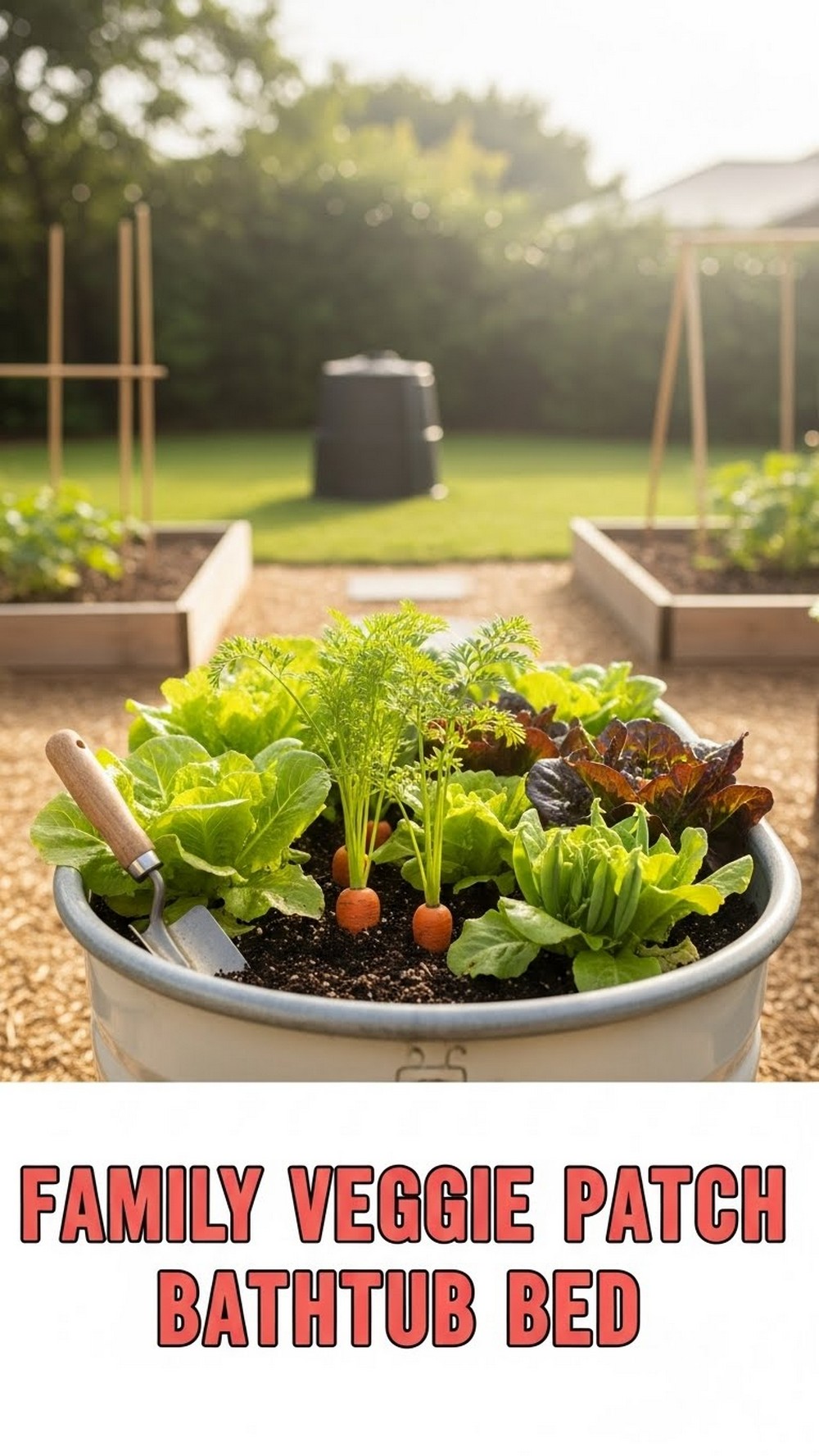
Place an old tub in the sunniest part of your yard and turn it into a compact family veg bed. Fill with rich soil and plant easy crops like lettuce, spring onions, bush beans, and dwarf tomatoes. The raised sides keep everything tidy, make weeding easier, and deter some pests. Kids love the clear boundary—“everything in the bath is ours to pick”—and you can grow a surprising amount in that small footprint.
- Best For: Small backyards and renters who want a movable veg patch.
- Budget Tip: Use homemade compost and mix in bagged soil only near the top.
- Styling Idea: Hang simple wooden labels from the rim so rows are clearly marked.
- Practical Note: Position the plug hole over gravel or a drainage trench so water can escape.
- Care & Maintenance: Rotate crops each season and top up soil yearly.
Kitchen Herb Spa-Style Bathtub Garden
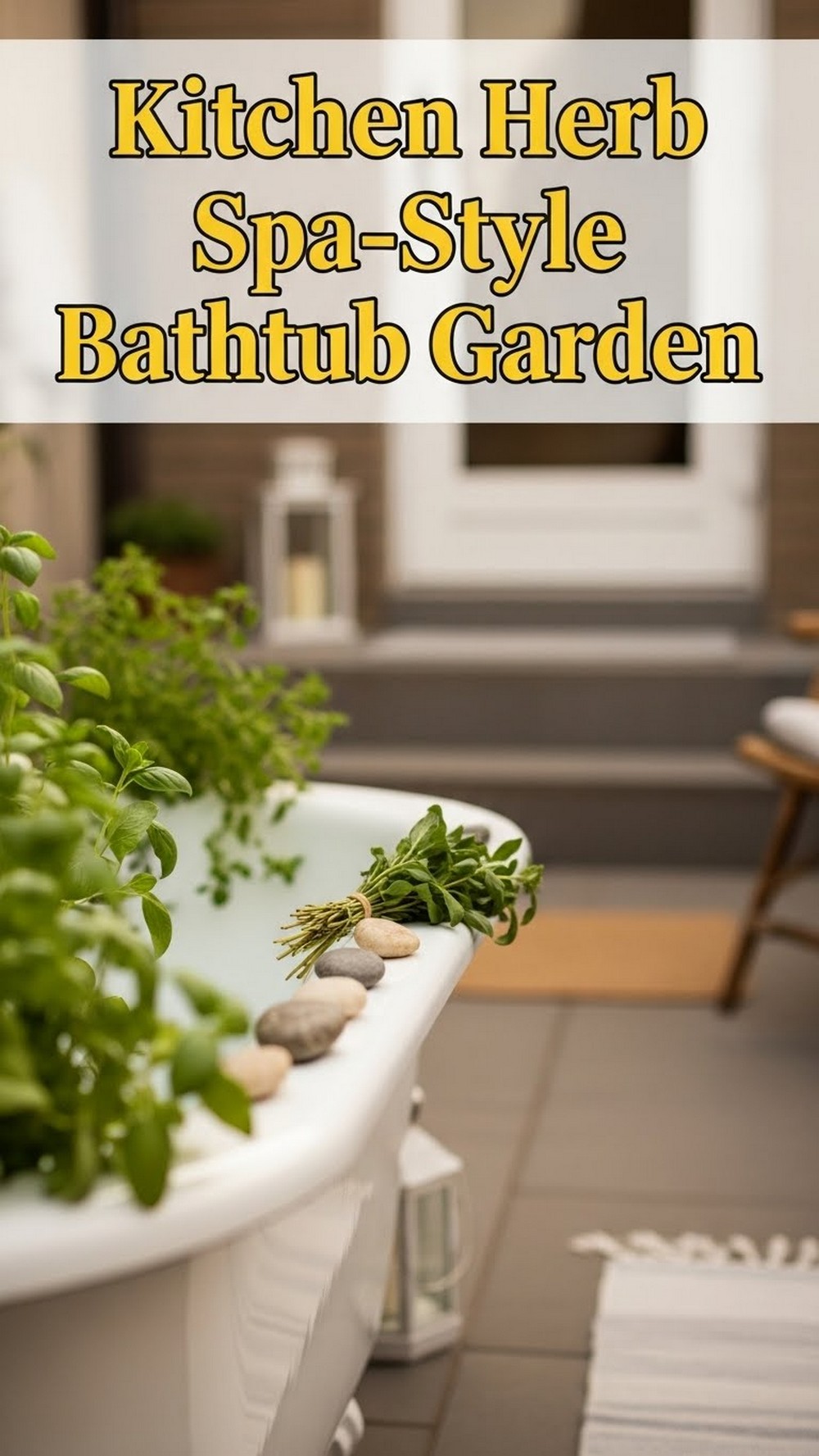
For herbs you can snip in your slippers, park a bathtub near the back door. Plant rosemary, thyme, basil, chives, and mint (in sunk pots to contain it), then dress the surface with smooth pebbles or shells for a spa-like feel. You get that lovely lush look of mixed greens right where you cook, and the raised height means no muddy knees when you’re grabbing a handful for dinner.
- Best For: Busy home cooks who want herbs within arm’s reach of the kitchen.
- Budget Tip: Start with a few staple herbs and fill gaps with cheap annual flowers like calendula.
- Styling Idea: Add a single lantern or candle on the tub corner for evening atmosphere.
- Practical Note: Keep thirsty herbs nearest the door where you’ll see and remember to water them.
- Care & Maintenance: Replace tired herbs every couple of years and divide crowded clumps.
Pollinator “Bee Bath” Wildflower Tub
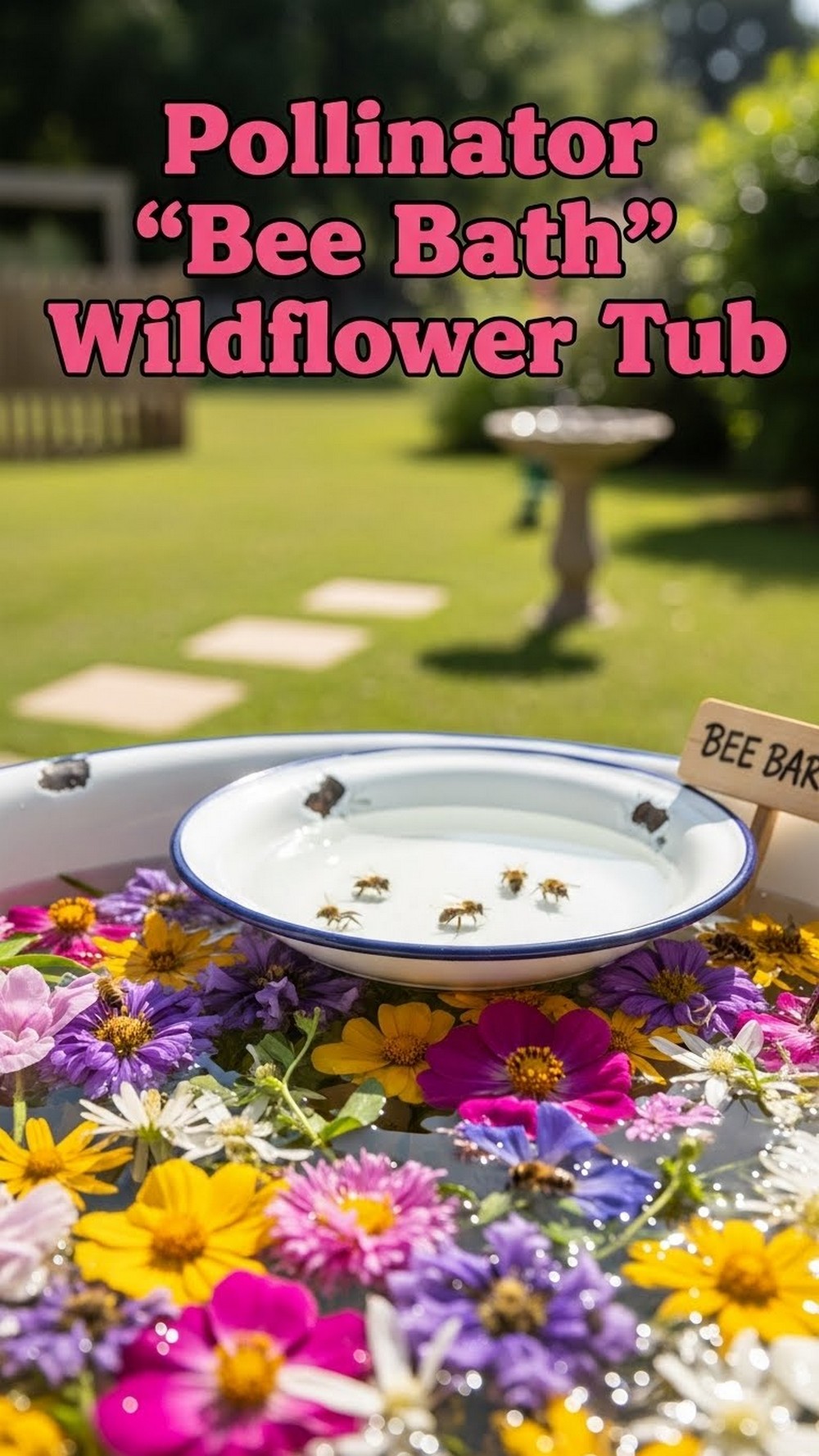
Turn a tub into a buzzing, fluttering island for pollinators by filling it with wildflower mix and a few structural perennials. Include a shallow water dish or pebbled “bee bar” on the rim so insects can safely drink. As the flowers take off, the tub becomes a moving cloud of color and wings, perfect for livening up a dull lawn edge or fence line.
- Best For: Sunny, open spots where you can watch the activity from a window or seat.
- Budget Tip: Use packets of native wildflower seed instead of buying lots of individual plants.
- Styling Idea: Add a small hand-painted sign—“Bee Bath” or “Pollinator Bar”—to explain the feature.
- Practical Note: Choose nectar-rich varieties suited to your climate and avoid pesticides nearby.
- Care & Maintenance: Cut back and reseed annually if needed to keep the mix diverse.
Kids’ Pick-Your-Own Salad Bathtub
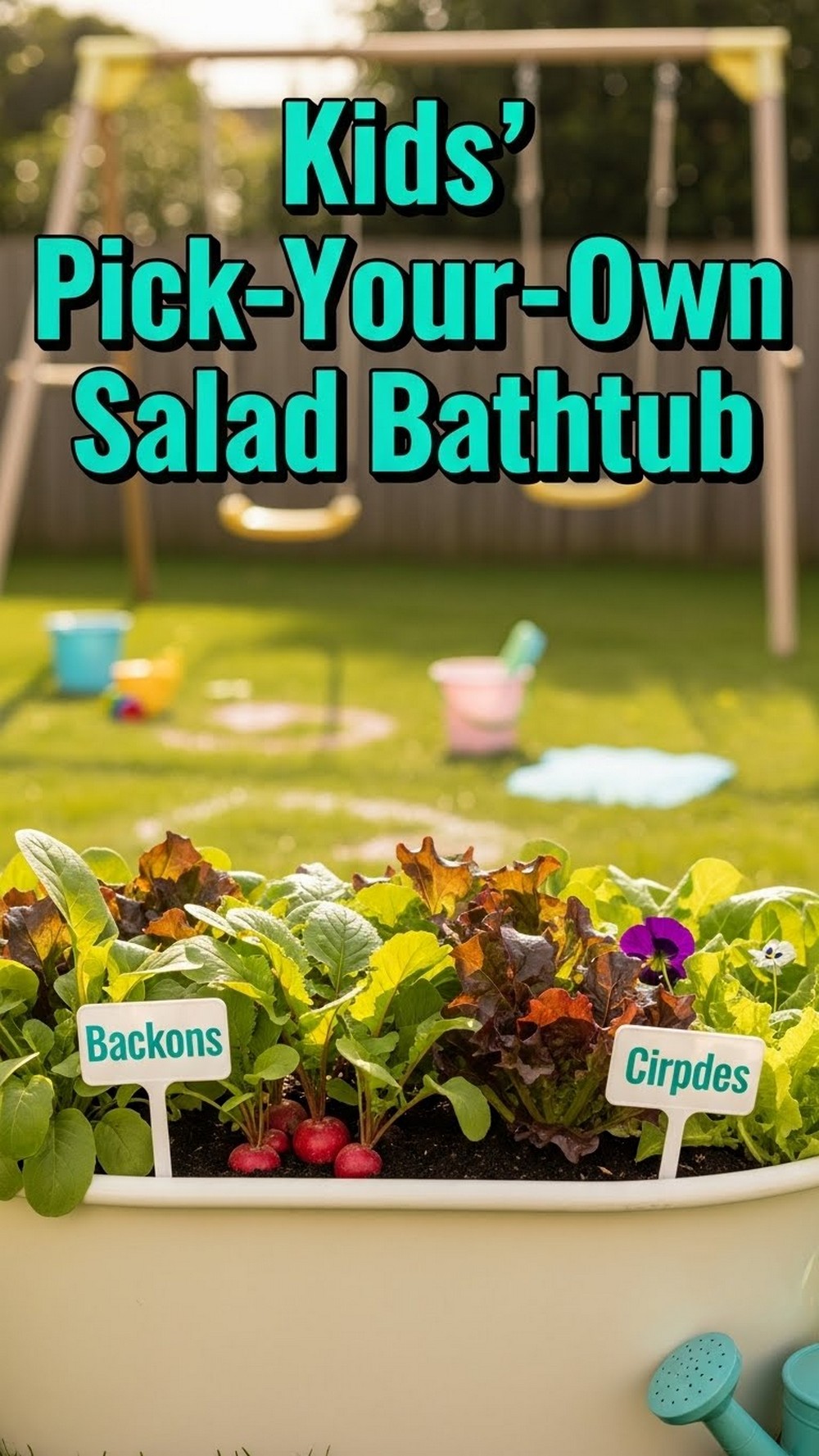
A salad-themed tub is a brilliant way to get children interested in growing and eating greens. Fill it with loose-leaf lettuces, rocket, radishes, tiny carrots, and edible flowers like nasturtiums. Let kids decorate the outside with weatherproof paint, then give them “harvesting rights” to snip leaves for sandwiches and dinners. Because it’s raised, slugs have a slightly harder time reaching the buffet.
- Best For: Family gardens and school or community plots.
- Budget Tip: Sow mixed salad seed densely instead of buying lots of seedlings.
- Styling Idea: Let each child paint their name or a small salad doodle on one side.
- Practical Note: Keep the tub close to a path so little legs aren’t trampling beds to reach it.
- Care & Maintenance: Re-sow small patches regularly for a continuous harvest.
Rustic Farmhouse Potato & Root Veg Tub

Deep tubs are tailor-made for potatoes and other root veg. Add a layer of coarse material at the bottom, then soil, then your seed potatoes. As they grow, keep topping up with soil or straw to encourage more tubers along the stems. Add a fringe of beetroot, carrots, or parsnips around the edge. At harvest, you get that satisfying moment of tipping or digging out a whole bathtub of food.
- Best For: Sunny corners near a shed, barn, or back fence.
- Budget Tip: Use home-saved potatoes from healthy plants or inexpensive seed tubers.
- Styling Idea: Pair the tub with a wooden crate labeled “Harvest” to store your haul.
- Practical Note: Make sure the tub is strong enough to handle the weight of wet soil and tubers.
- Care & Maintenance: Water deeply and consistently; uneven moisture can split roots.
Modern White Patio Bathtub Planter

If your style is more clean lines than country cottage, try a simple white tub with a restrained planting scheme. Think ornamental grasses, lavender, or a single type of shrub repeated for structure. Place it on a paved patio as a standalone feature or divider. The smooth white curves echo modern planters but with more personality and a nice “design joke” factor.
- Best For: Contemporary patios, courtyards, and outdoor living spaces.
- Budget Tip: Stick to one plant type bought in bulk rather than many different specimens.
- Styling Idea: Pair with neutral outdoor furniture and one accent color in cushions or pots.
- Practical Note: Level the tub carefully so it doesn’t look wonky next to straight paving lines.
- Care & Maintenance: Choose drought-tolerant plants if you don’t want to water daily.
Trellised Bathtub Tomato & Bean Wall Bed
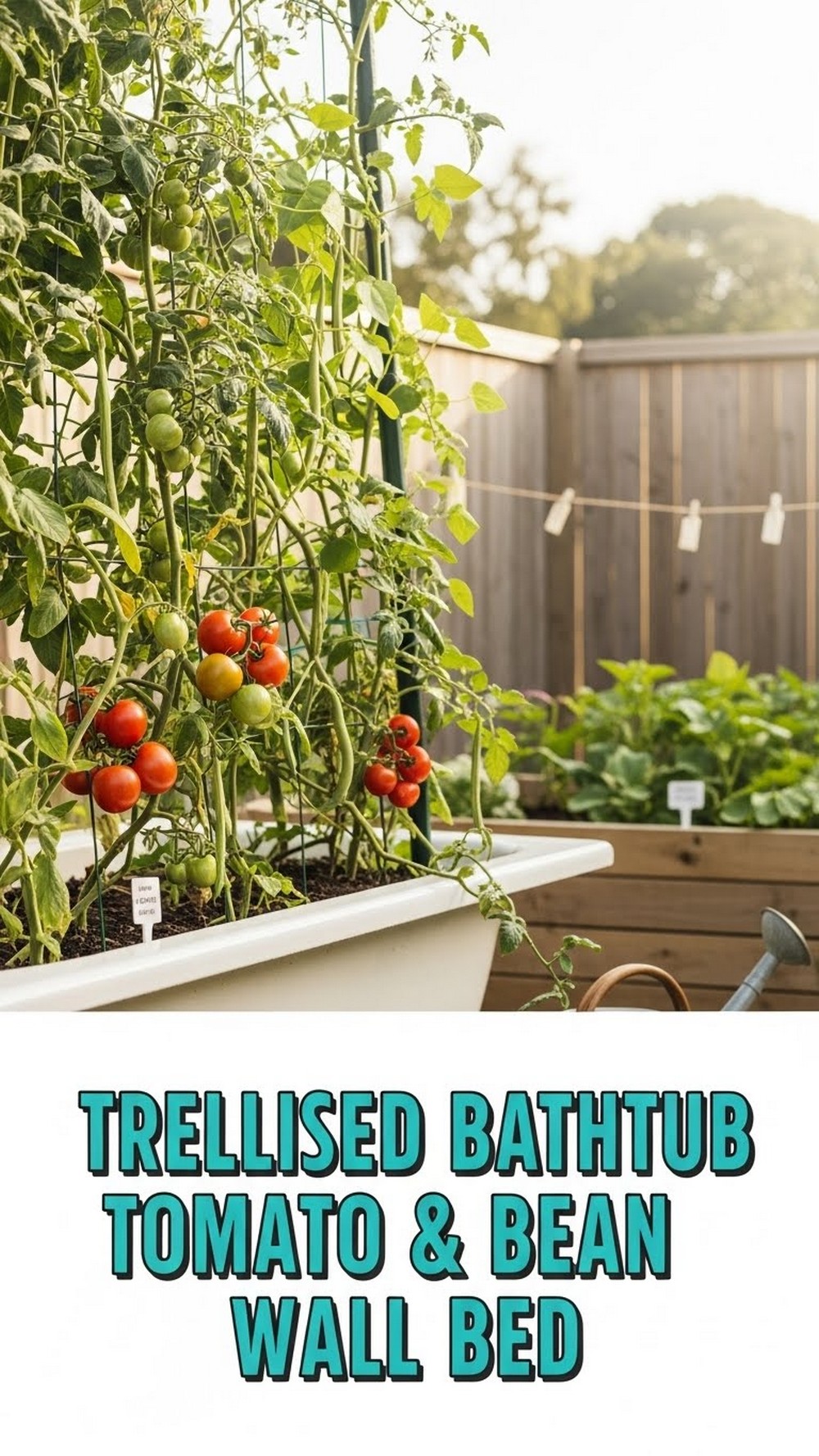
Push a tub up against a fence or trellis and turn it into a vertical veg wall. Plant tomatoes, climbing beans, or cucumbers in the tub and train them up strings or mesh behind. The bath becomes the neat base of a living screen that hides ugly boundaries and gives you armfuls of produce. It’s especially useful where soil is shallow, poor, or full of roots.
- Best For: Narrow side yards and ugly fence lines.
- Budget Tip: Use twine or old string as supports rather than buying fancy trellis.
- Styling Idea: Add a row of small marigolds along the front edge for color and companion planting.
- Practical Note: Anchor the trellis well; fruit-laden vines can be heavy in late summer.
- Care & Maintenance: Feed regularly and tie stems in as they grow to keep everything tidy.
Bathtub Pond-Edge Bog & Iris Garden
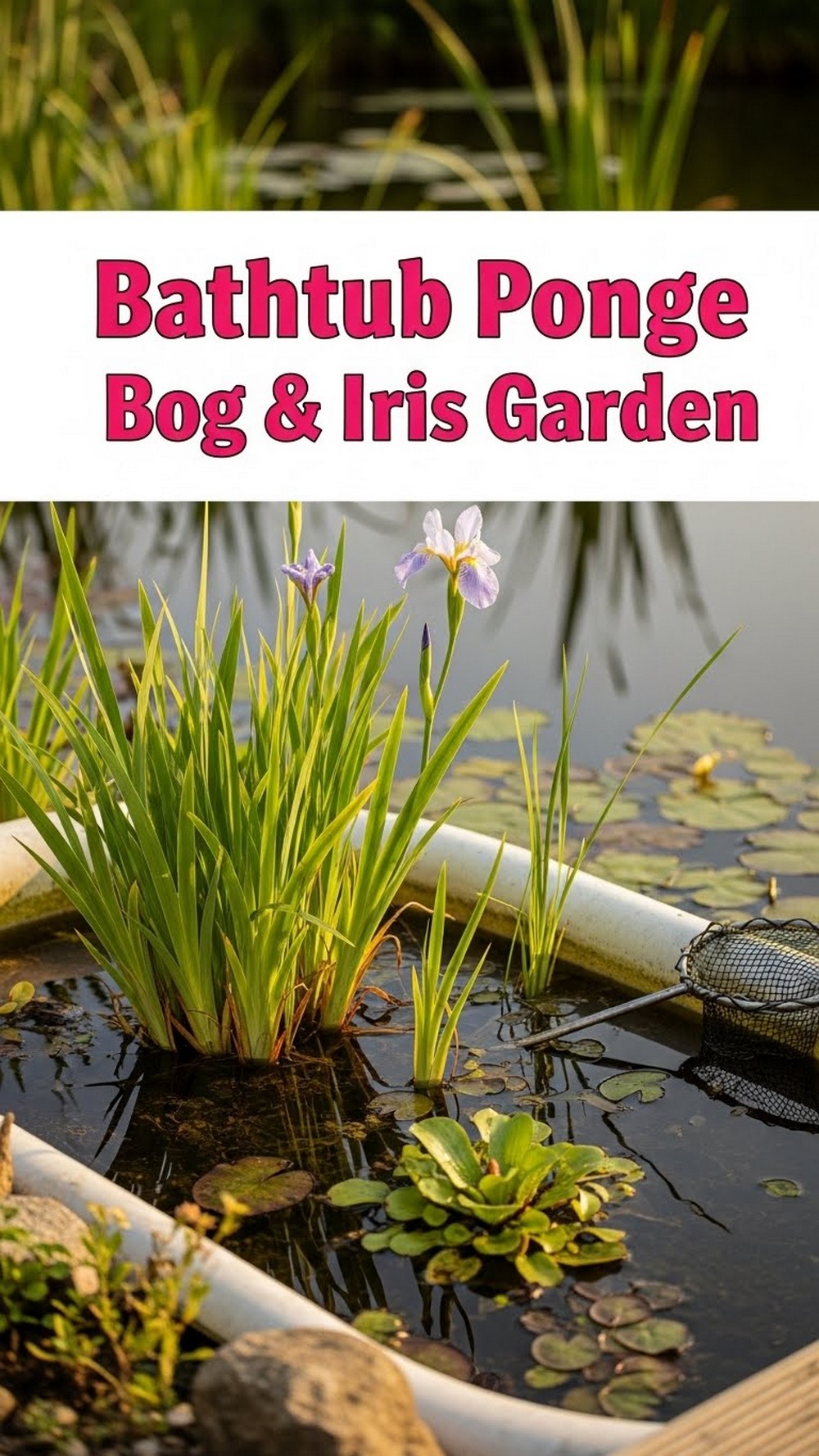
Near a real pond or water feature, a bathtub makes a great controlled bog garden. Block or partially block the plug, add a moisture-retentive soil mix, and plant irises, marsh marigolds, and other damp-loving plants. Keep the soil consistently moist so the bath reads as a lush, almost wild fringe to the water without risk of plants escaping into the main pond.
- Best For: Pond margins or low areas that already stay quite damp.
- Budget Tip: Swap divisions of bog plants with other gardeners instead of buying full-price pots.
- Styling Idea: Sink the tub slightly and hide the rims with stones or bark to blend it in.
- Practical Note: Don’t let it fill completely with standing water unless plants are truly aquatic.
- Care & Maintenance: Trim back old foliage and keep an eye out for mosquito larvae in warm weather.
Wheelchair-Friendly Bathtub Raised Bed Station
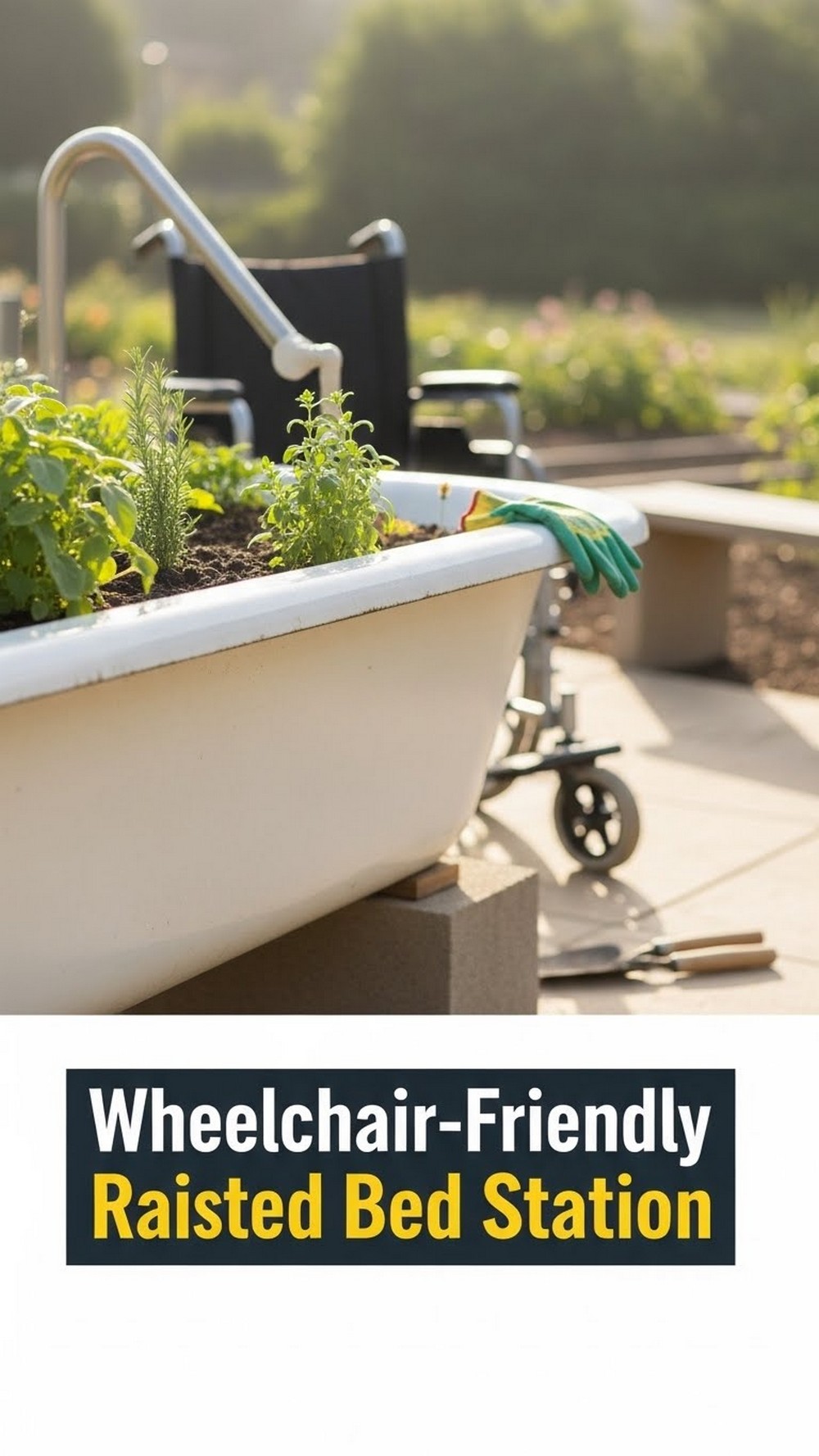
By lifting a tub onto sturdy blocks or a brick base, you can create a growing space that’s accessible from a wheelchair or garden stool. Aim for a height where arms can rest comfortably on the rim. Plant herbs, strawberries, or compact veg that are easy to reach and harvest. Add a smooth, hard surface path around at least one side so wheels roll easily right up to the bed.
- Best For: Inclusive gardens, older gardeners, and anyone with limited mobility.
- Budget Tip: Use reclaimed bricks or concrete blocks to raise the tub instead of custom carpentry.
- Styling Idea: Paint the base and tub in the same color so it reads as one intentional feature.
- Practical Note: Check weight and stability carefully; heavy tubs need solid foundations.
- Care & Maintenance: Keep tools and watering cans within arm’s reach on a nearby shelf or hook.
Tiny Courtyard Bathtub Cutting Flower Garden
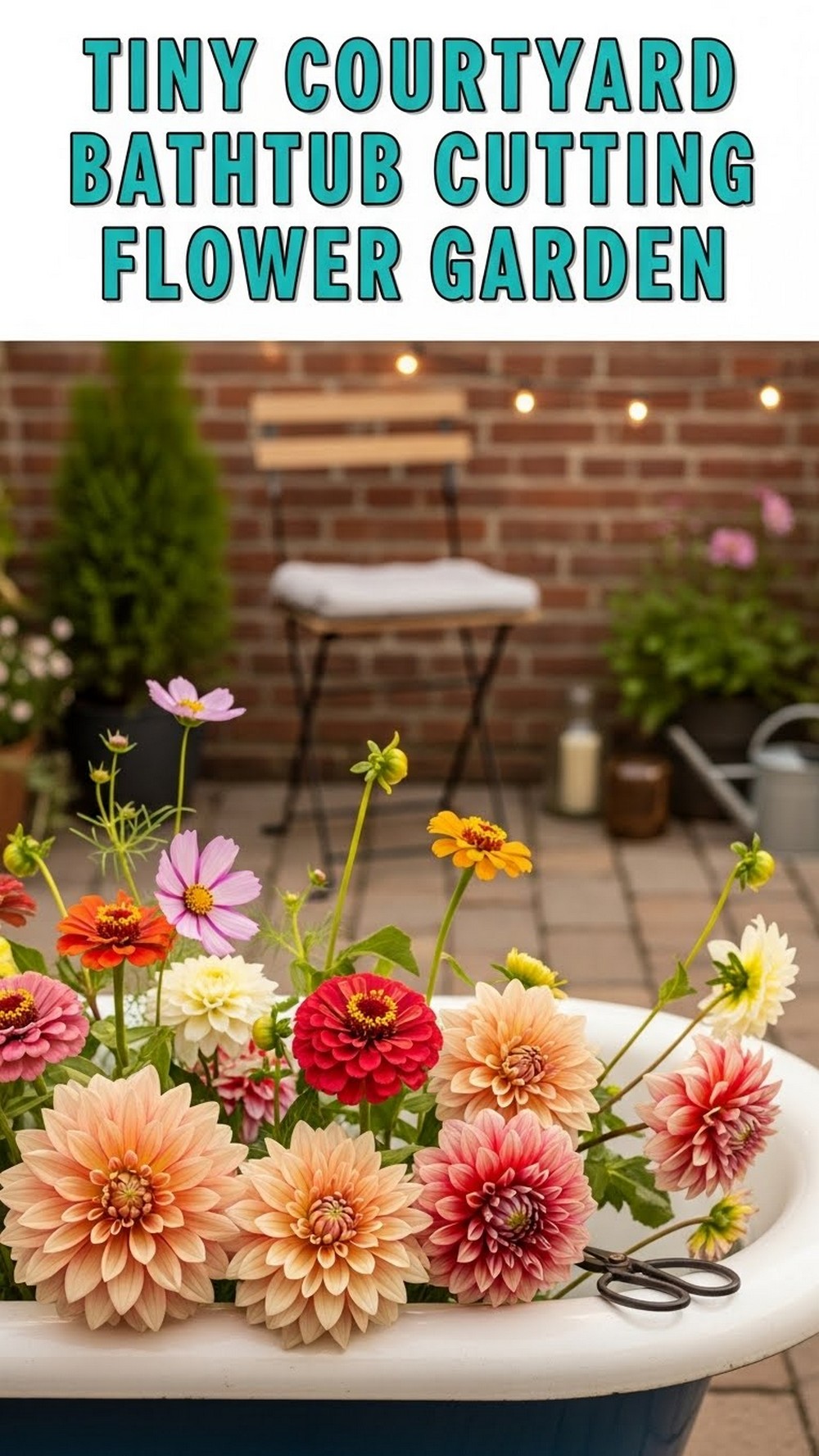
In a small courtyard, one tub filled with cutting flowers can supply vases all season. Plant tall stems like cosmos, dahlias, and snapdragons toward the back, with shorter fillers like calendula and sweet alyssum at the front. The deep tub gives roots plenty of room, and you can cut generously without leaving bare patches in the main beds.
- Best For: Courtyards, paved yards, and renters’ outdoor rooms.
- Budget Tip: Grow most of your flowers from seed in modules and transplant into the tub.
- Styling Idea: Keep your color palette limited—maybe all pinks and whites—for a chic look.
- Practical Note: Position a small bucket or trug beside the tub to collect cut stems easily.
- Care & Maintenance: Deadhead often to keep blooms coming and stake taller varieties.
Twin Bathtub Berry & Rhubarb Corner
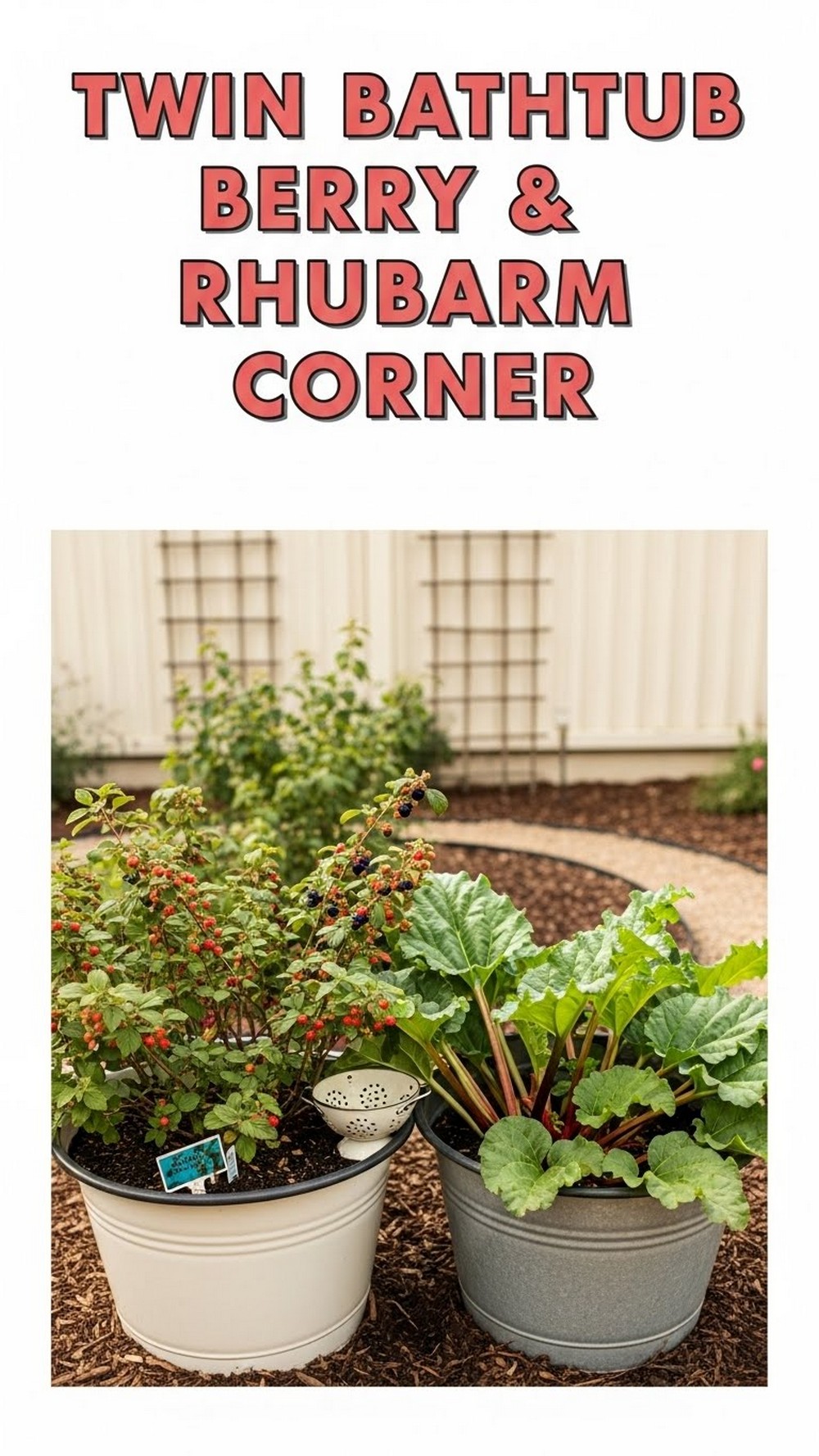
Use two tubs together to anchor an otherwise dull corner. Plant one with soft fruit like gooseberries, currants, or bush blueberries, and the other with rhubarb and companion flowers. The tubs lift the plants away from heavy soil and make fruit picking easier, while the repeated shape looks intentional, almost like a built-in feature.
- Best For: Corners that don’t justify full hard landscaping but need structure.
- Budget Tip: Start with young bare-root plants; they’re cheaper and establish well in tubs.
- Styling Idea: Paint both tubs the same color and add matching mulch (bark or gravel) around them.
- Practical Note: Check that fruit varieties you choose are happy in containers.
- Care & Maintenance: Feed annually and top up compost; fruit and rhubarb are hungry crops.
Bathtub Cold Frame Spring Starter Bed

With a simple hinged window or clear polycarbonate lid, an old tub becomes a brilliant cold frame. Fill with rich soil or use it to hold pots and trays, then close the lid on chilly nights to protect seedlings. The sides trap warmth, and the raised height keeps tender plants out of reach of some pests. It’s especially handy for starting early salads and hardy annuals.
- Best For: Gardeners who like an early start on the growing season.
- Budget Tip: Use an old window or shower screen as the lid, with prop sticks to vent.
- Styling Idea: Paint the tub a soft green so it blends nicely into the veg patch.
- Practical Note: Vent on sunny days to avoid cooking your seedlings.
- Care & Maintenance: Check hinges and glass regularly and replace any sharp or broken sections.
Succulent & Gravel Mediterranean Bath
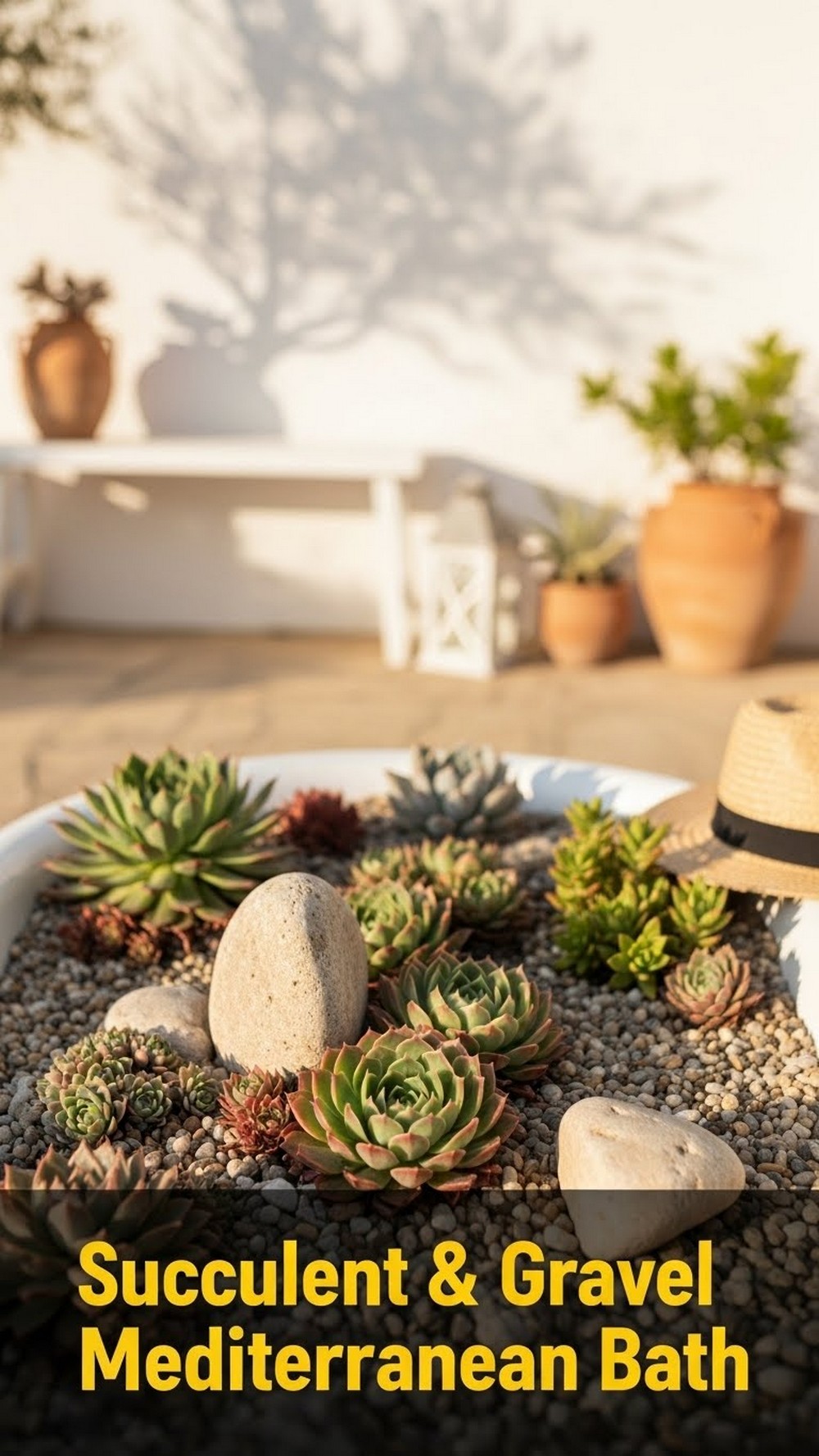
If you garden somewhere hot and dry (or just love that look), turn a tub into a low-water Mediterranean bed. Fill mostly with rubble and free-draining mix, then plant hardy succulents, sedums, and drought-loving herbs like oregano. Finish with a gravel mulch. The bath becomes a sun-baked mini landscape that thrives on neglect and looks good almost all year.
- Best For: Sunny, south-facing patios and gravel gardens.
- Budget Tip: Propagate succulents from friends’ plants instead of buying big specimens.
- Styling Idea: Surround the tub with a ring of matching gravel to extend the look.
- Practical Note: Ensure very good drainage—more holes and a thick drainage layer are essential.
- Care & Maintenance: Water sparingly and protect tender plants from winter wet in cold climates.
Bathtub Kitchen Door Herb & Flower Mix Bed
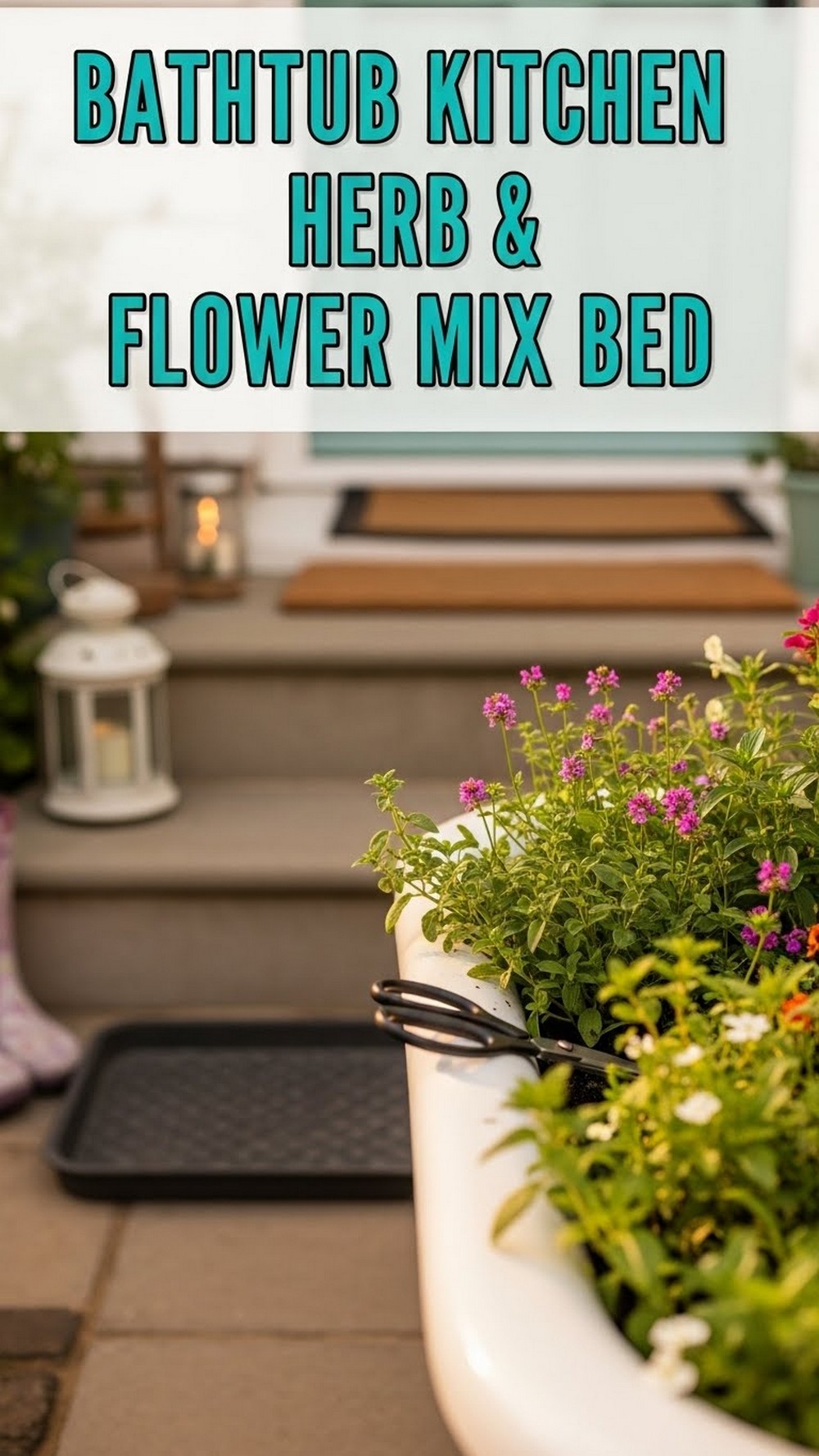
Place a tub just outside your kitchen door and fill it with a cheerful mix of herbs and flowers. Think chives, parsley, and sage alongside calendula, marigolds, and small daisies. This gives you instant picking for both cooking and little posies on the table. Because it’s right by the door, you’ll naturally keep an eye on it, making watering and tidying feel effortless.
- Best For: Back steps, utility doors, or mudroom exits.
- Budget Tip: Use supermarket herb pots split and replanted to get started cheaply.
- Styling Idea: Add a simple welcome sign or string of fairy lights along the back edge.
- Practical Note: Keep the tub slightly to one side so it doesn’t block the doorway.
- Care & Maintenance: Snip regularly to prevent herbs going woody and flowers going to seed too fast.
Conclusion
Recycled bathtubs are one of the easiest ways to add ready-made raised beds, strong shapes, and a bit of humor to your garden. From cottage flowers and kids’ salad tubs to sleek modern planters and accessible beds, they work in more spaces than you’d expect. Start with one old bath in a sunny spot, drill a few drainage holes, and see how it transforms that corner. Once you fall in love with the look, you might find yourself hunting for a second tub.
FAQs
1. Do I need to drill drainage holes in a bathtub used as a raised bed?
Yes, unless it already leaks. Without drainage, roots can sit in water and rot. Drill several holes in the base (and sometimes the lower sides) using a metal or masonry bit, then raise the tub slightly on bricks so excess water can escape freely.
2. How do I reduce the amount of soil needed to fill a bathtub?
Start with a layer of coarse material in the bottom—broken bricks, stones, old upside-down pots, or logs. Then add cheaper topsoil, and finally a layer of good-quality compost or potting mix near the surface where roots will feed. This saves money and improves drainage.
3. Are old bathtubs safe for growing food?
Most enamel and cast-iron tubs are widely used for veg beds. If you’re unsure about coatings, line the inside with a heavy-duty pond liner or geotextile fabric and make drainage holes through both. Always use fresh, clean soil and avoid tubs with flaking, unknown paints on the inside.
4. How can I move a heavy bathtub into position?
Bathtubs are very heavy, especially cast iron, so never try to move one alone. Use a dolly, planks as ramps, and at least one helper. Position the empty tub first, level and secure it, then fill with soil. If you’re on a balcony or deck, get professional advice about weight limits before using a tub.
5. What plants work best in bathtub raised beds?
Almost anything that likes container growing: herbs, salad greens, dwarf tomatoes, beans, root veg, cutting flowers, succulents, or pollinator mixes. Just match plants to your light and climate. In hot spots, choose tougher, drought-tolerant species; in cooler or shadier spots, go for leafy crops and shade-tolerant flowers.
6. Are bathtub beds suitable for renters?
They can be, as long as weight and access are sensible. A freestanding tub on a ground-level patio or lawn can be moved by a few people if you empty it first. Avoid permanently sinking or mortaring it in place if you know you’ll want to take it with you when you move.