12 Recycled Kitchen Sink Garden Planter Ideas
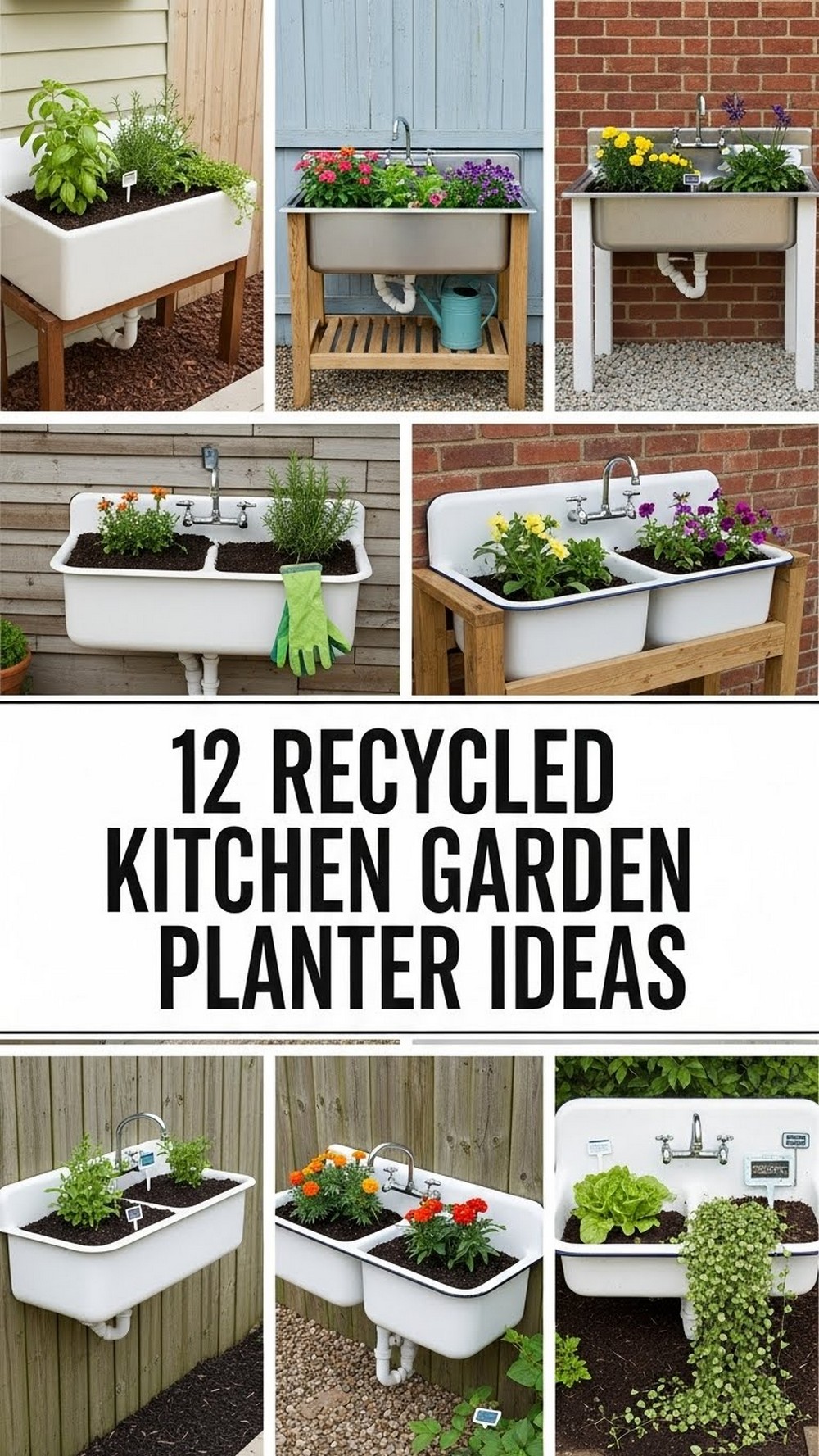
An old kitchen sink might look like scrap metal, but in the garden it’s basically a ready-made planter just waiting for soil and seedlings. Sinks are sturdy, shallow-but-deep-enough, and often come with handy extras like drainboards and tap holes you can turn into clever features.
In this post, you’ll find twelve creative ways to reuse sinks as planters for herbs, salads, flowers, wildlife-friendly corners, and even tiny water gardens. Whether you’ve got a balcony rail, a shady nook, or a big family backyard, these ideas will help you turn tired fixtures into beautiful, useful containers that bring character and greenery to your outdoor space.
Quick List
- Farmhouse Apron-Front Herb Sink Planter
- Double-Basin Salad Sink Garden
- Vintage Enamel Sink Flower Trough
- Wall-Mounted Sink Pollinator Bloom Bar
- Tiny Balcony Rail Kitchen Sink Planter
- Sink-On-Stand Back Door Herb Bar
- Drainboard Sink Cascading Succulent Garden
- Patio Sink And Tap Mini Water Garden
- Rustic Sink Veggie & Root Planter
- Recessed Sink Bog & Fern Corner Planter
- Kids’ Mud-Kitchen Sink Fairy Planter
- Wheel-Friendly Sink Raised Bed Station
Farmhouse Apron-Front Herb Sink Planter
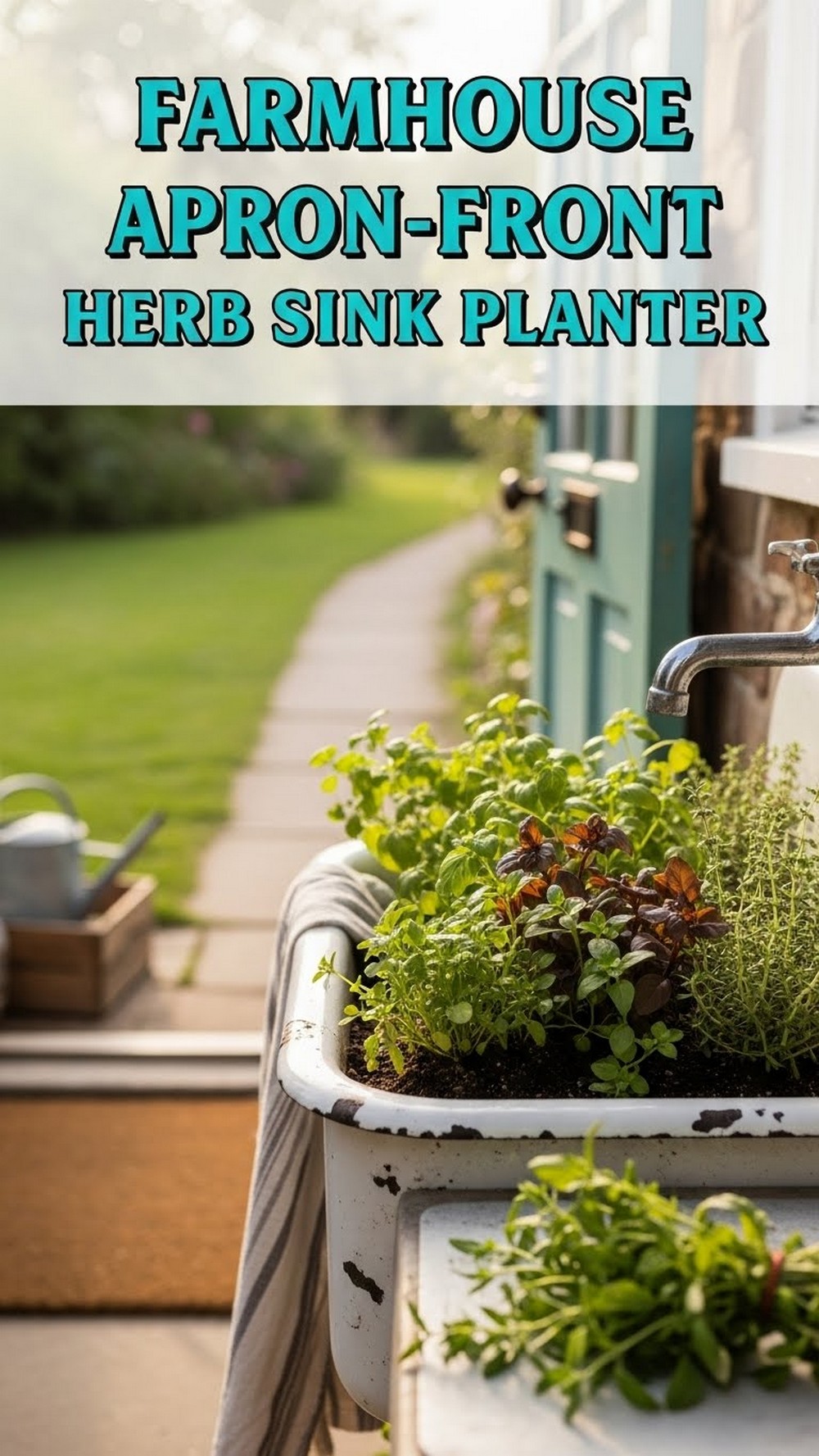
Give a chunky old apron-front sink a new life right outside the back door. Prop it on bricks or a simple frame so the front edge shows, then fill it with good potting mix and your favourite kitchen herbs. The deep bowl gives roots plenty of room, and the chunky front lip looks lovely against brick, stone, or timber. Every time you step outside for a handful of thyme or basil, you’ll see that classic farmhouse shape framing lush green.
- Best For: Back steps, kitchen doors, and cottage-style gardens.
- Budget Tip: Split supermarket herb pots into smaller clumps to fill the sink cheaply.
- Styling Idea: Paint the outer sides a soft cream or sage green to enhance the farmhouse feel.
- Practical Note: Make sure drainage holes are clear and raise the sink slightly off the ground.
- Care & Maintenance: Trim herbs regularly to keep them bushy and stop them getting woody.
Double-Basin Salad Sink Garden
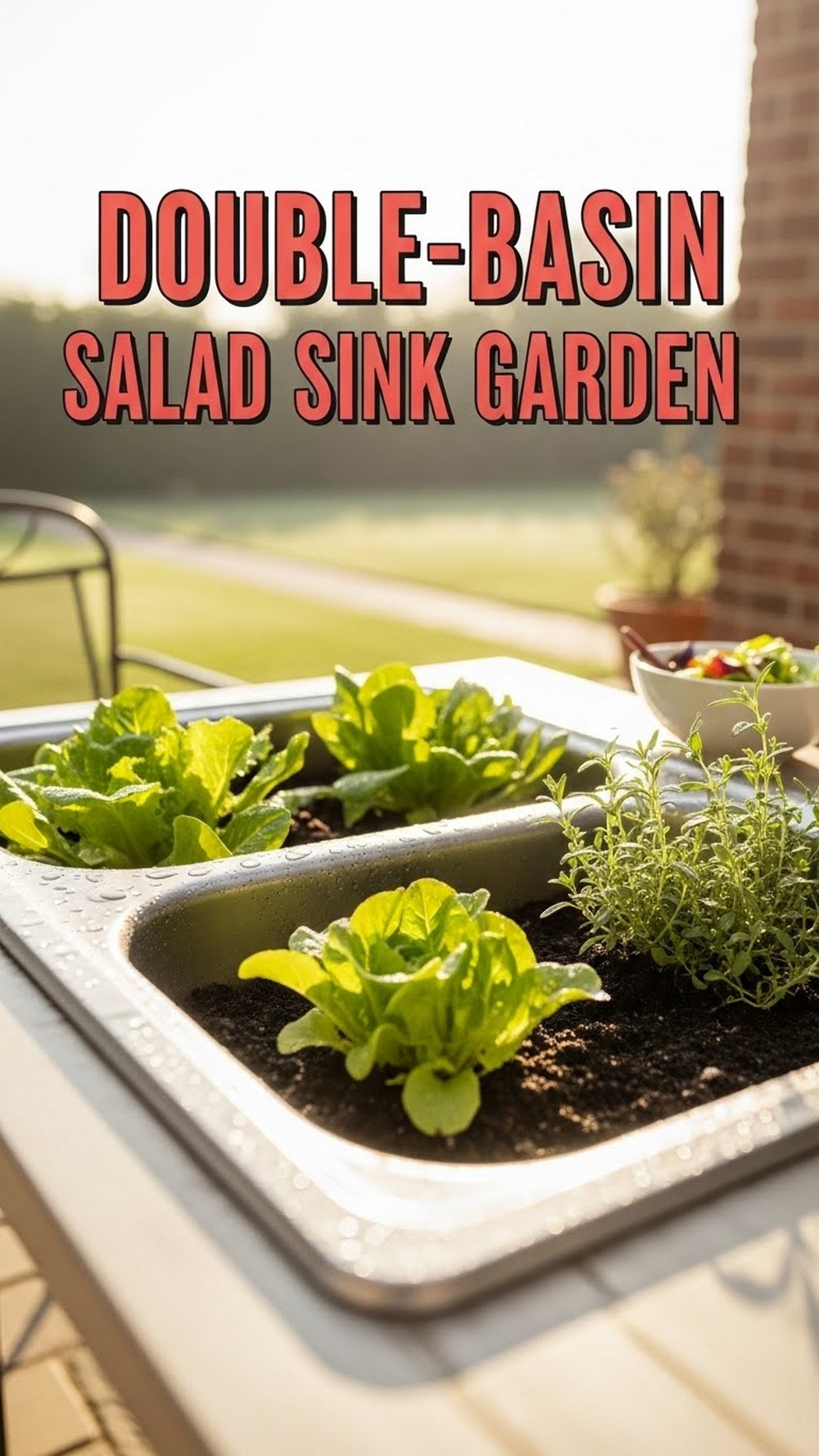
Double-basin sinks are perfect for “two gardens in one” planting. Use one side for cut-and-come-again salad leaves and the other for herbs or edible flowers like nasturtiums. Set the sink on a sturdy stand or stack of blocks at a comfortable height, then tuck it into a sunny spot. The neat separation makes it easy to manage different watering needs and keeps your salad bar feeling organised.
- Best For: Small patios and courtyards where space has to work hard.
- Budget Tip: Fill the bottom of each basin with upturned pots or rubble to save on soil.
- Styling Idea: Add simple wooden labels that bridge across both basins like mini signposts.
- Practical Note: Position the plug holes over gravel or a bed so excess water drains safely.
- Care & Maintenance: Re-sow salad seed frequently so you always have young leaves coming on.
Vintage Enamel Sink Flower Trough
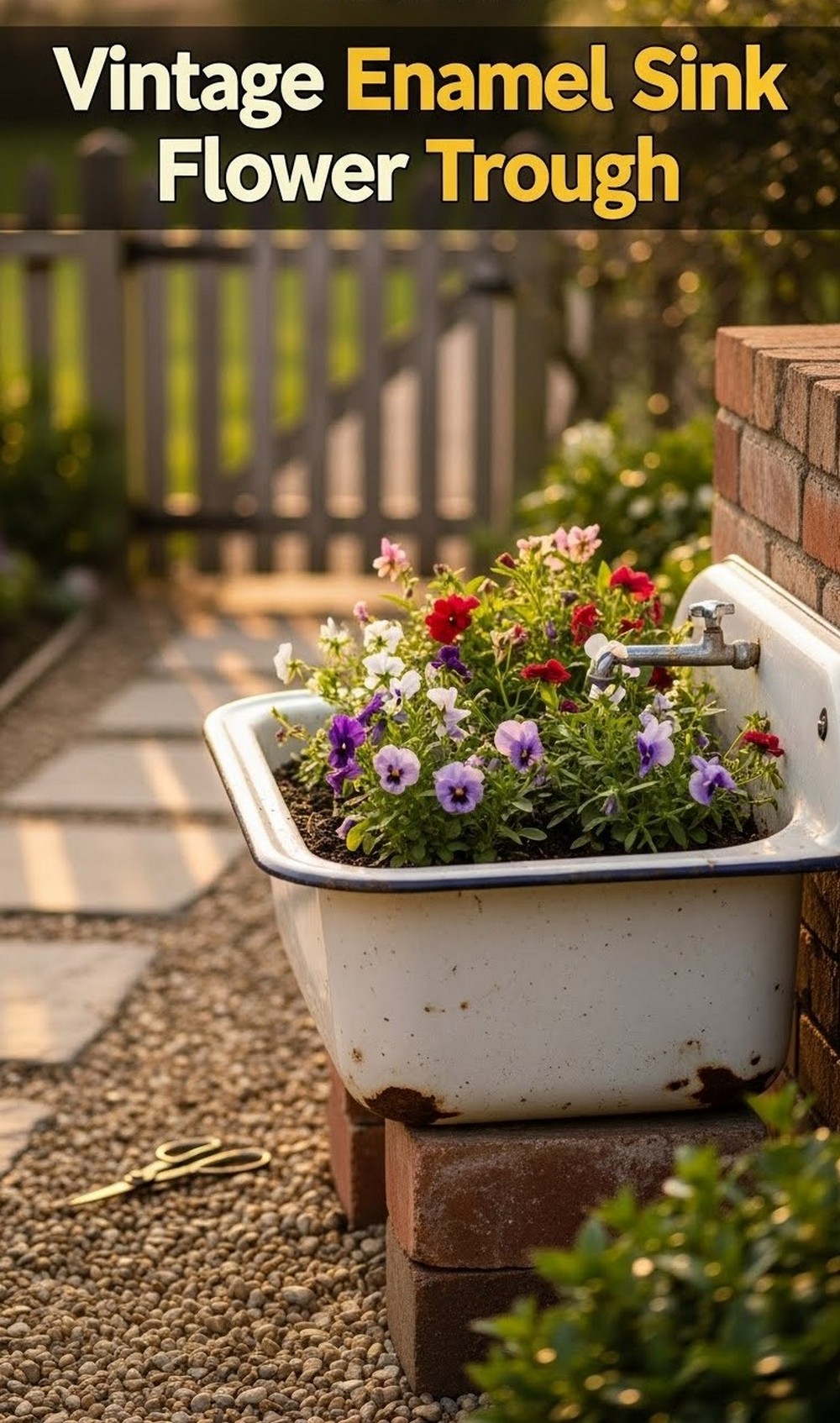
A chipped enamel sink makes a beautiful alternative to a standard window box or trough. Stand it on bricks or a low wall and plant with cottage-style flowers—think violas, geraniums, trailing lobelia, and sweet alyssum. The worn edges and subtle rust marks add instant character, especially against a picket fence or under a window. From the street, it looks like a little burst of color framed in vintage white.
- Best For: Front gardens, under windows, or along paths.
- Budget Tip: Use multipacks of bedding plants and mix colors to get a full look for less.
- Styling Idea: Echo flower colors in a nearby door wreath or cushions on a porch bench.
- Practical Note: If the enamel is very flaky, line inside with landscape fabric before adding soil.
- Care & Maintenance: Deadhead regularly so the sink stays bright and blooming.
Wall-Mounted Sink Pollinator Bloom Bar
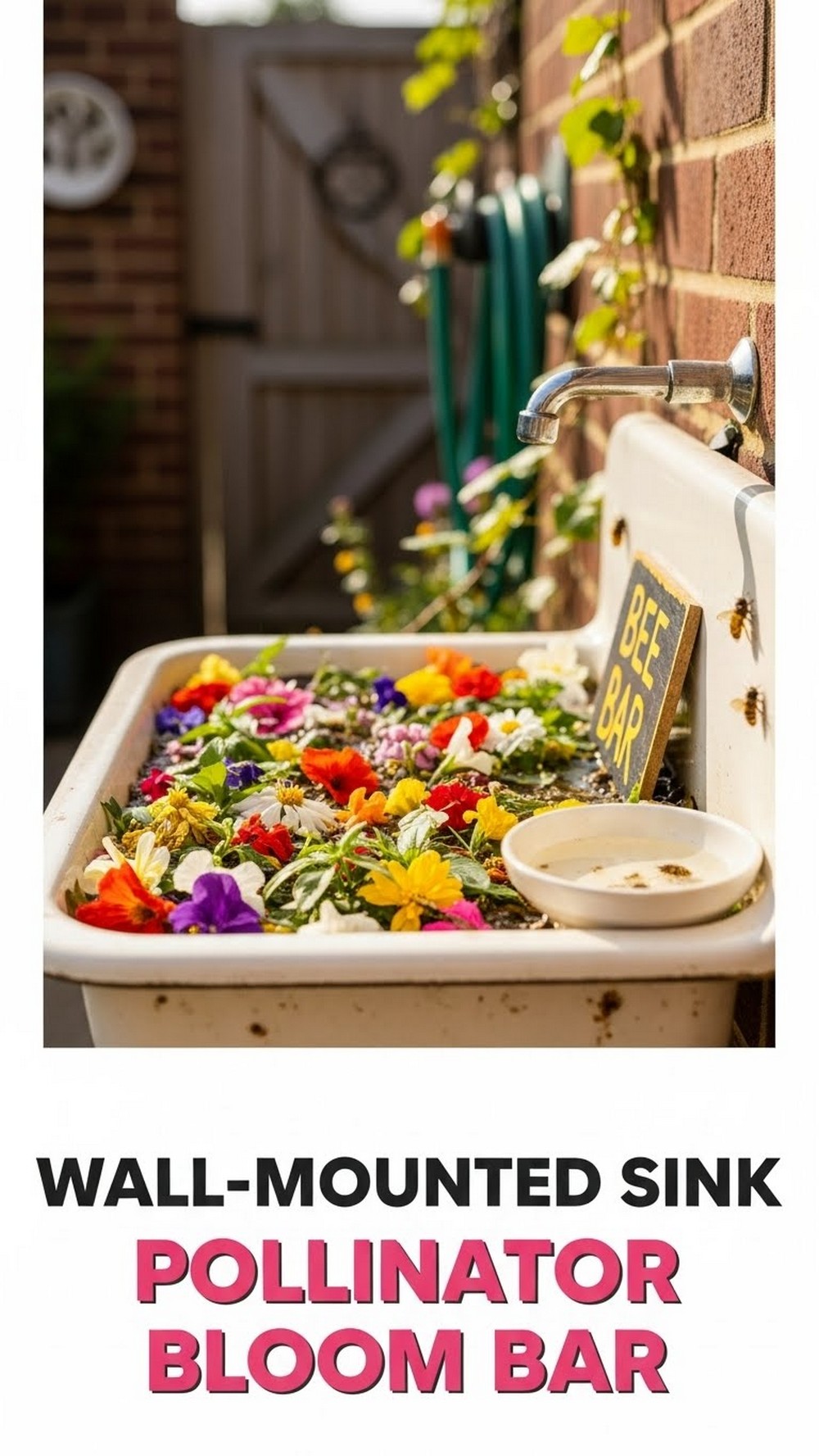
If you’ve got a spare bit of wall or fence, fix an old wall-hung sink at about waist height and turn it into a mini pollinator bar. Fill it with nectar-rich flowers and a few small stones or dishes for insects to drink safely. The raised position puts blooms right at eye level for you and at perfect cruising height for bees and butterflies. It’s a lovely way to add color where ground space is tight.
- Best For: Narrow side passages and bare garage or shed walls.
- Budget Tip: Sow pollinator-friendly seeds directly into the sink rather than buying lots of plants.
- Styling Idea: Paint a simple sign above or below explaining it’s a “Bee Bar” or “Butterfly Café”.
- Practical Note: Use strong fixings—soil plus water makes a surprising amount of weight.
- Care & Maintenance: Top up soil and compost each year and refresh tired plants.
Tiny Balcony Rail Kitchen Sink Planter
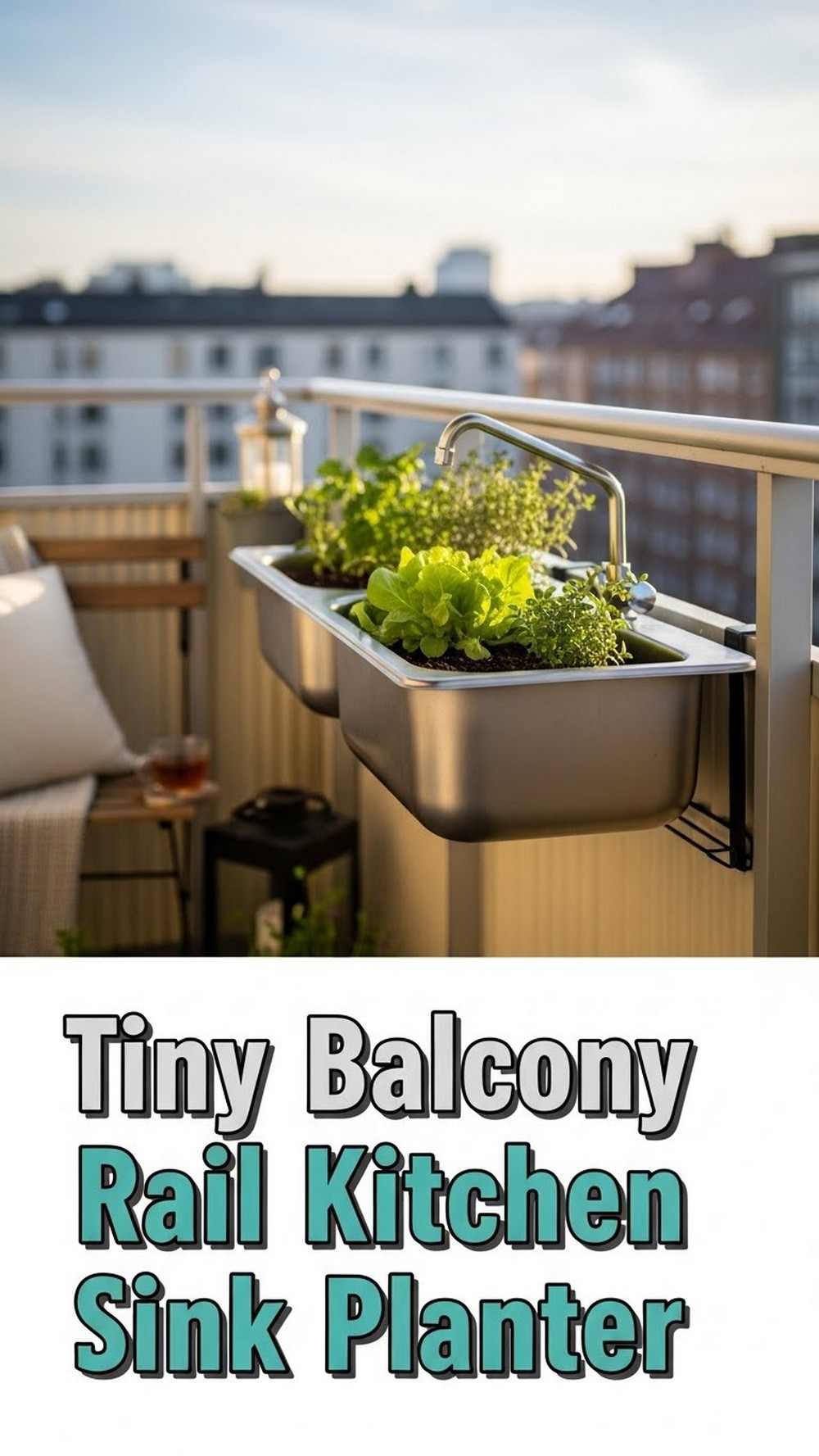
On a balcony, a compact sink planter gives you a proper “bed” without needing floor space. Create a simple bracket or frame that lets the sink sit securely on the inside of the railing, then fill with shallow-rooted crops like rocket, baby spinach, and herbs. You can lean out from your chair and harvest fresh leaves, and the metal sides help keep everything contained in breezy conditions.
- Best For: Apartments and small urban balconies.
- Budget Tip: Start with just a few herbs and a packet of mixed salad seed.
- Styling Idea: Pair the sink with a tiny café table and chair for a proper balcony breakfast nook.
- Practical Note: Always check rail strength and any building rules before hanging anything.
- Care & Maintenance: Water often—balcony planters dry quickly in wind and sun.
Sink-On-Stand Back Door Herb Bar
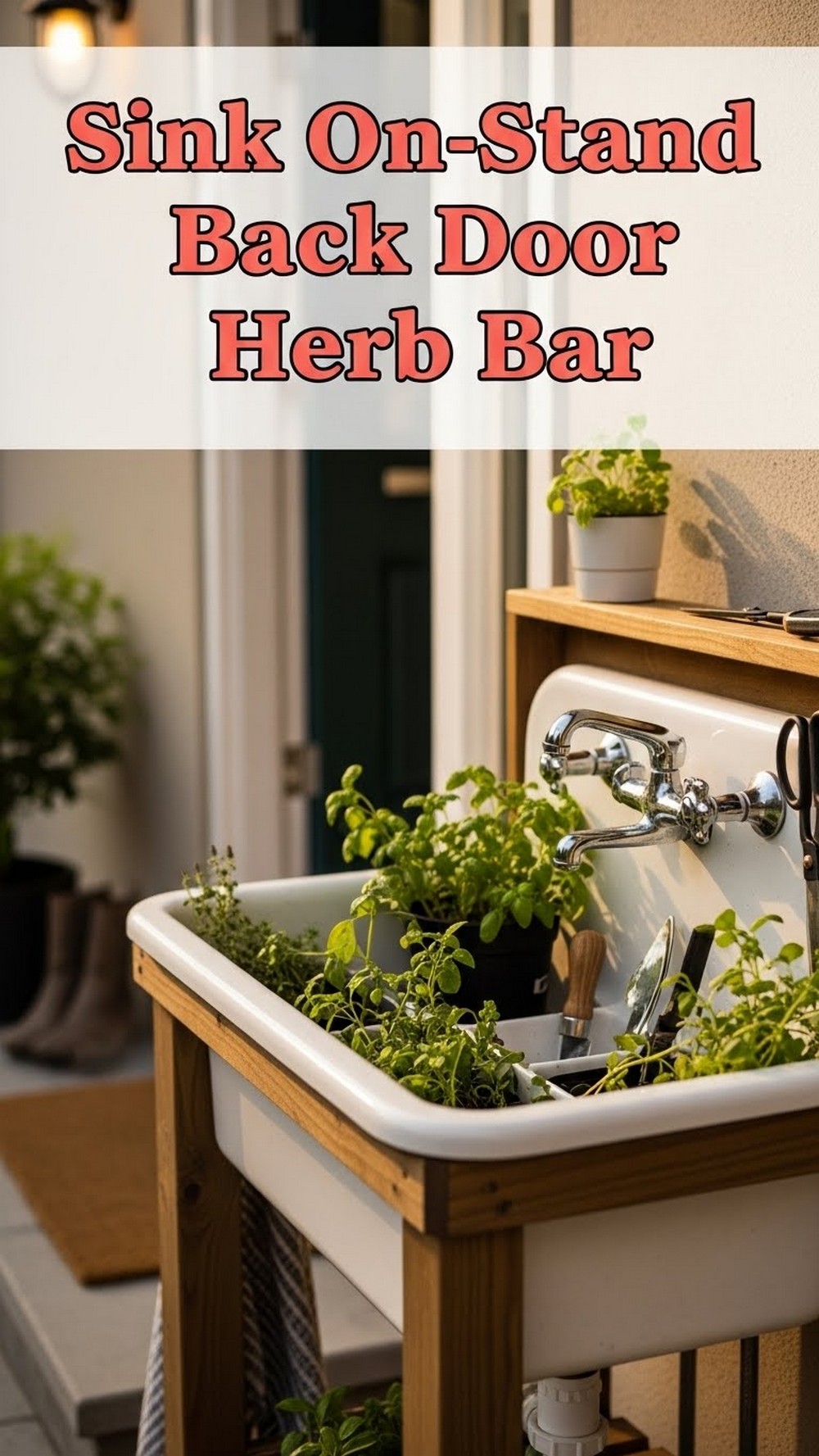
Turn an old sink and a simple DIY stand into a “herb bar” by your back door. Build or reuse a narrow wooden frame, pop the sink in the top, and store tools or pots on a shelf below. Plant the sink with herbs, strawberries, or mini veg. It becomes your go-to spot for snips, watering cans, and a quick handful of parsley, all in one tidy, raised station.
- Best For: Small patios and utility door areas that need taming.
- Budget Tip: Use reclaimed timber or an old table base instead of buying new wood.
- Styling Idea: Hang a few hooks from the stand for scissors, twine, and hand tools.
- Practical Note: Treat wood with exterior sealant to handle splashes and weather.
- Care & Maintenance: Wipe the stand occasionally and replace any soft boards over time.
Drainboard Sink Cascading Succulent Garden
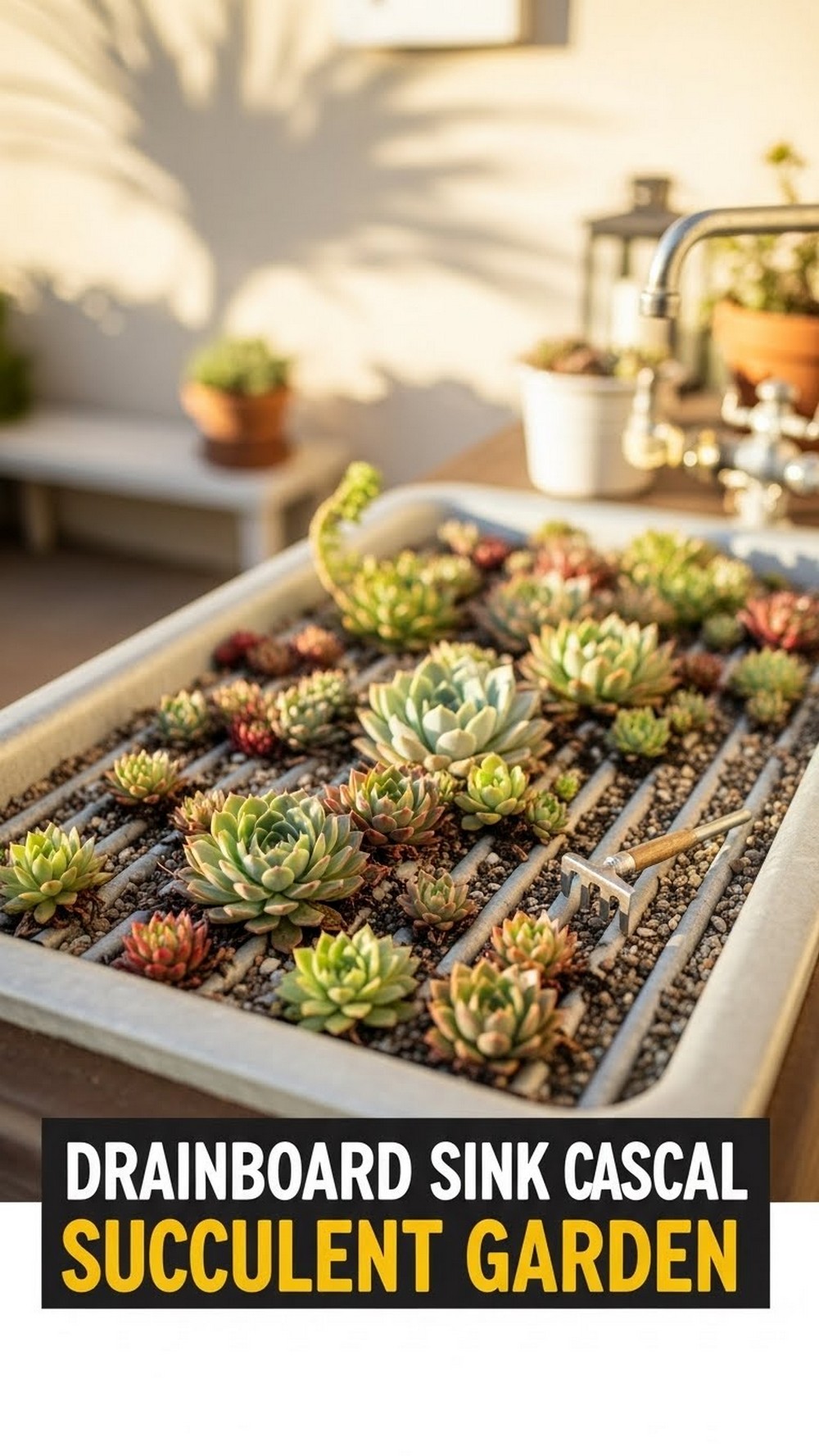
Older sinks with drainboards are brilliant for creating a mini “rocky slope” for succulents. Fill both the basin and the grooves with gritty mix, then tuck in rosettes, sedums, and trailing varieties that can spill over the edge. The pattern of lines under the plants adds a subtle structure, and the whole piece reads like a tiny, sun-baked hillside in miniature.
- Best For: Hot, sunny patios and low-maintenance gardens.
- Budget Tip: Propagate succulents from cuttings instead of buying full-sized plants.
- Styling Idea: Surround the sink with gravel in a matching shade to extend the landscape.
- Practical Note: Add extra drainage holes and a thick drainage layer so roots never sit in water.
- Care & Maintenance: Water sparingly and protect tender varieties from winter frost if needed.
Patio Sink And Tap Mini Water Garden
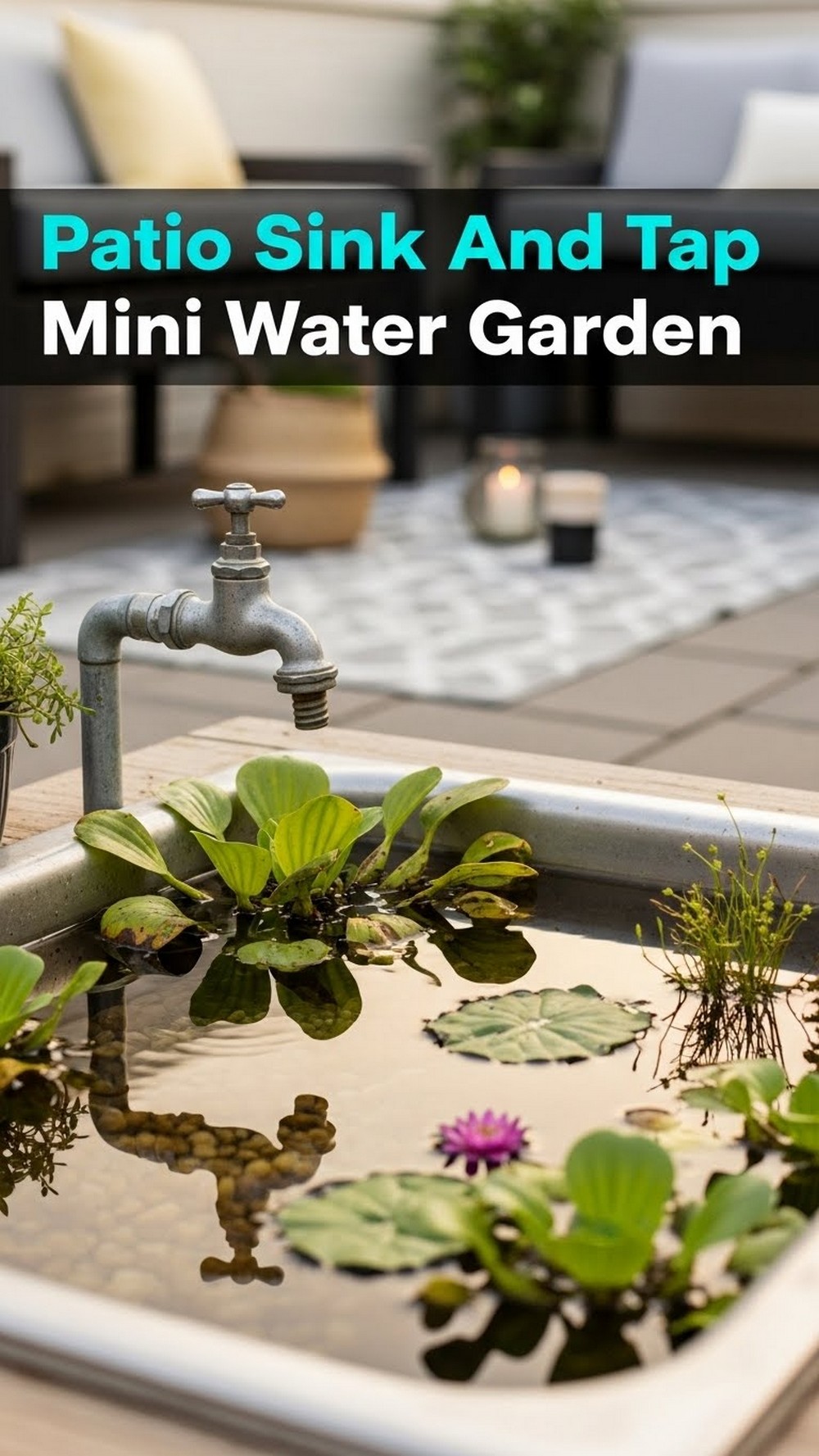
Keep the tap attached and turn your old sink into a tiny water feature. Block the plug slightly so water stays shallow, add pebbles, a few oxygenating plants, and perhaps a small solar pump if you like gentle movement. You can plant marginal-loving herbs or flowers around the rim in baskets. It brings the sound and shimmer of water to a courtyard without needing a full pond.
- Best For: Courtyards, patios, and small seating areas.
- Budget Tip: Use pebbles and rocks you already have and swap cuttings of water plants with friends.
- Styling Idea: Place a candle lantern or small statue next to the sink to complete the vignette.
- Practical Note: Keep the water shallow and safe if children visit, or use mesh just under the surface.
- Care & Maintenance: Top up water in hot weather and scoop out fallen leaves regularly.
Rustic Sink Veggie & Root Planter
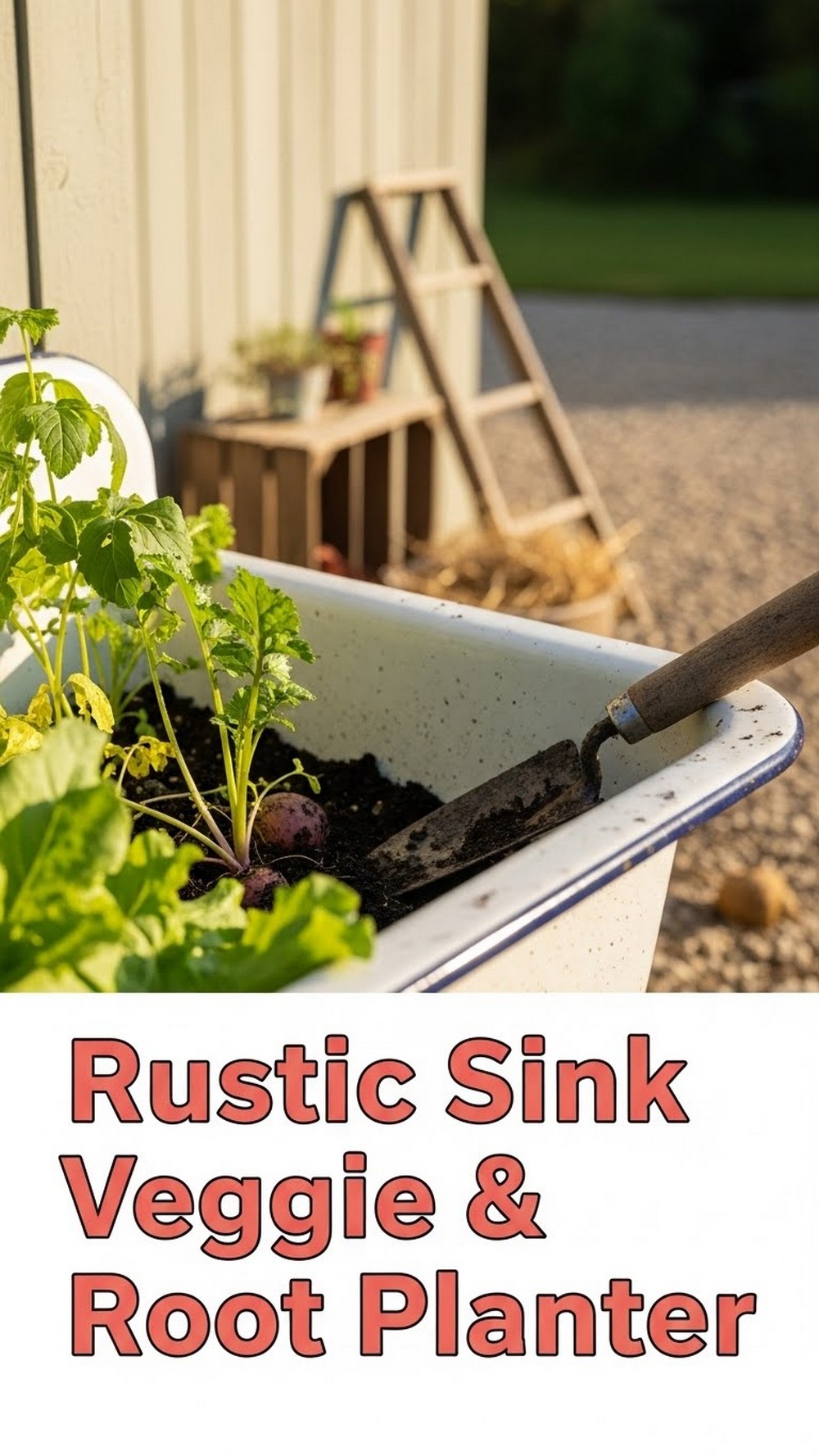
A deep, slightly battered sink is perfect for compact crops like dwarf beans, chard, and baby carrots. Set it on bricks or low blocks in a sunny patch and fill with rich soil. The confined space makes it easier to protect plants with a cloche or fleece tunnel if needed, and the raised height keeps everything neat. It’s a great option on rocky ground where digging a traditional bed is a chore.
- Best For: Rustic backyards, allotments, and working veg patches.
- Budget Tip: Fill the lower half with rough topsoil or old compost and save fresh mix for the top.
- Styling Idea: Lean a handwritten wooden label or old enamel sign against the side.
- Practical Note: Check that the sink can handle the weight when fully filled—support underneath if needed.
- Care & Maintenance: Rotate what you grow each season to keep soil healthy.
Recessed Sink Bog & Fern Corner Planter
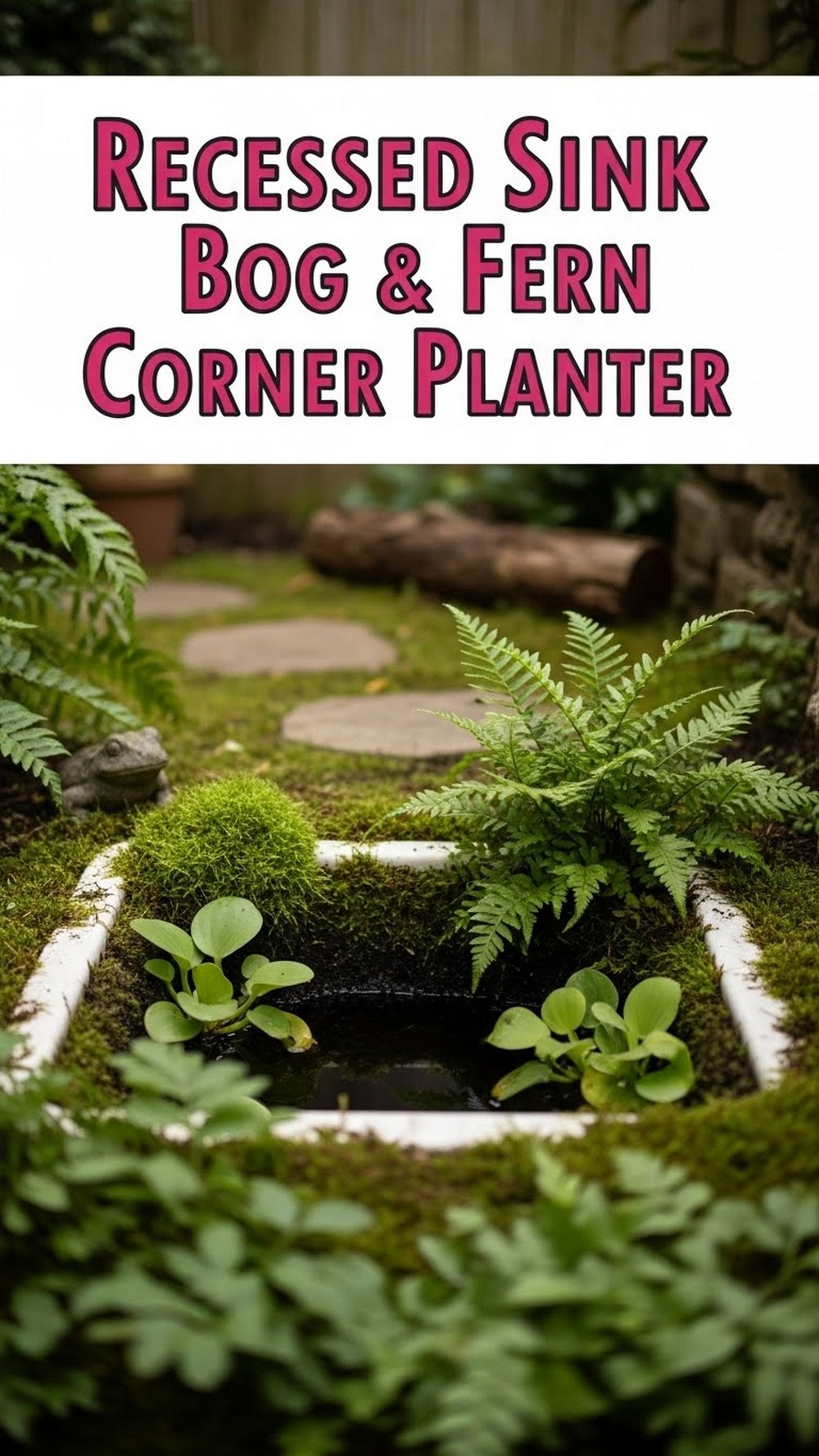
If you’ve got a damp, shady corner, partially bury a sink there to create a controlled bog and fern bed. Poke a few drainage holes in the sides near the top so water doesn’t overflow, fill with moisture-loving compost, and plant ferns, hostas, and boggy favourites. Sinking the bowl slightly into the soil helps it blend in while still keeping everything contained and easy to manage.
- Best For: Shady, awkward corners where other plants sulk.
- Budget Tip: Divide existing ferns and hostas instead of buying new.
- Styling Idea: Edge the sink with stones or logs so it looks like a natural basin.
- Practical Note: Avoid placing it under heavy drip lines where water might flood the whole area.
- Care & Maintenance: Keep the soil consistently moist but not stagnant, and remove slug hideouts.
Kids’ Mud-Kitchen Sink Fairy Planter
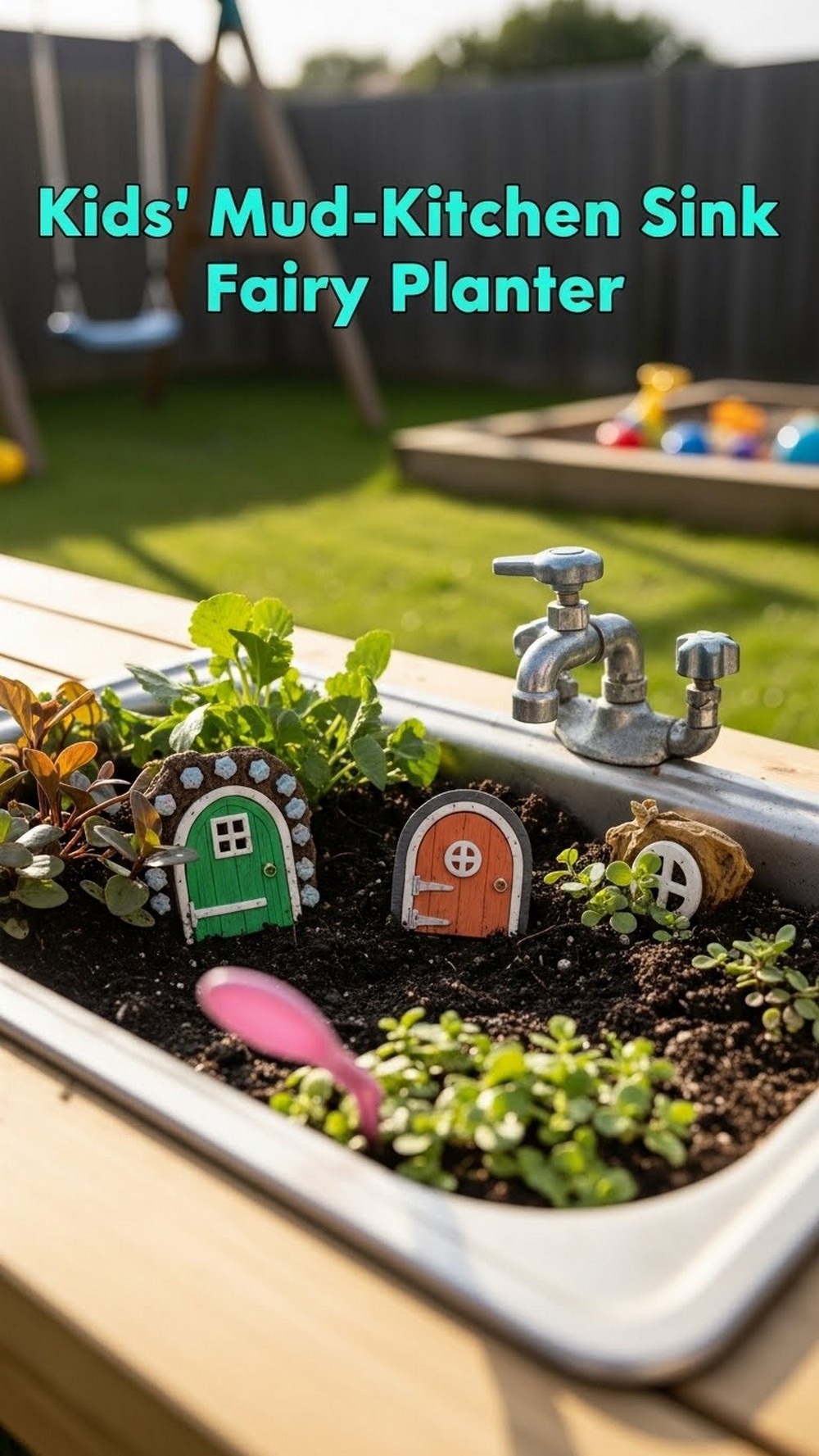
When the kids outgrow their mud kitchen, convert the sink into a fairy garden planter. Fill the bowl with soil, low-growing plants, and tiny fairy furniture. The surrounding “worktop” becomes space for miniature pots, ladders, and pretend bakes. It keeps the play structure useful and turns a scruffy corner into something charming that both children and adults enjoy spotting.
- Best For: Family gardens and play corners.
- Budget Tip: Use broken toys, bottle caps, and painted pebbles as fairy accessories.
- Styling Idea: Let kids paint the outside of the sink with stars, flowers, or fairy doors.
- Practical Note: Ensure the structure is still stable and sand any sharp edges before reusing.
- Care & Maintenance: Refresh plants and props each season as they get battered by play and weather.
Wheel-Friendly Sink Raised Bed Station
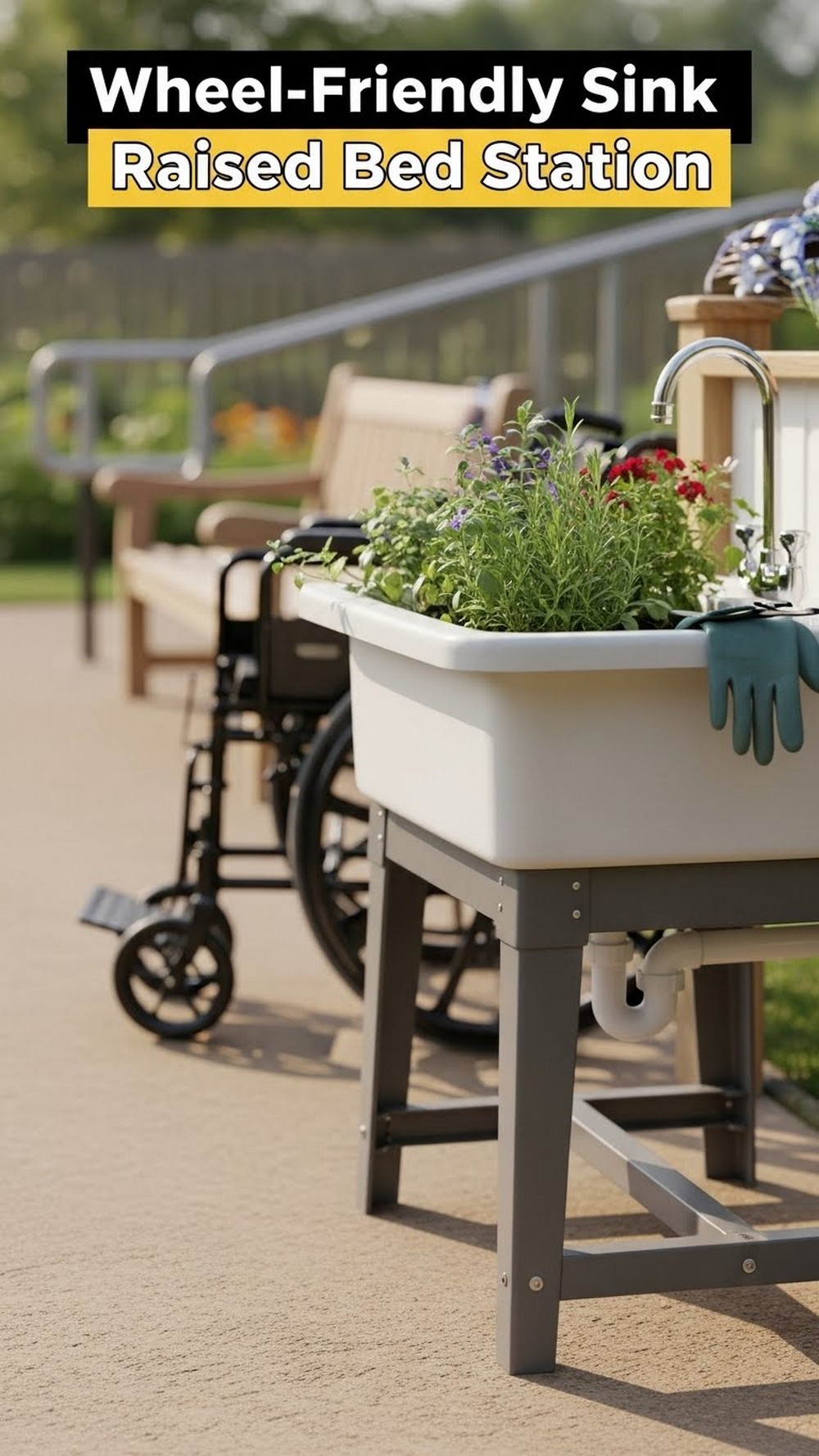
Mounted at the right height on a sturdy open frame, a sink makes a brilliant accessible raised planter. Place it beside a smooth, level path so a wheelchair or garden stool can roll right up. Fill with a mix of herbs, strawberries, and low flowers to create a sensory bed that smells and looks wonderful. The defined edges and shallow depth make planting and maintenance easier for anyone who prefers not to bend or kneel.
- Best For: Inclusive gardens, older gardeners, and people with limited mobility.
- Budget Tip: Use reclaimed steel frames or old table bases, checking they’re strong enough first.
- Styling Idea: Paint the frame and sink exterior in a single cheerful color to tie it together.
- Practical Note: Double-check stability and weight-bearing before filling with soil.
- Care & Maintenance: Keep favourite tools and a small watering can stored on a nearby shelf.
Conclusion
Recycled kitchen sinks are far too useful to head straight to the tip. With a bit of imagination, they become herb bars, salad beds, pollinator stations, fairy gardens, and even tiny water features that add real character to small and large spaces alike. Start with one sink in the spot you use most—by the back door, on a balcony, or beside your favourite chair—and plant it with something you’ll enjoy seeing and picking every day.
FAQs
1. Do I need to add extra drainage to a sink planter?
Usually, yes. Many old sinks only have a single plug hole, which can clog easily. Drill a few more drainage holes in the base (and sometimes along the lower sides) using the correct bit for metal or ceramic. Raise the sink slightly on bricks or blocks so water can run out freely.
2. What soil mix works best in recycled sinks?
Treat them like large containers: use a good-quality potting mix or a blend of garden soil, compost, and a bit of grit for drainage. For hungry crops like veg and flowers, add slow-release fertiliser or compost each season. For succulents and Mediterranean herbs, use a much sandier, free-draining mix.
3. Are metal sinks safe for growing food?
Most stainless steel and enamel-coated sinks are fine for growing edibles. If the surface is very damaged or you’re unsure about old coatings, line the inside with heavy-duty landscape fabric or a pond liner, poke drainage holes through both, and then add fresh soil. That keeps roots away from any questionable surfaces.
4. Can I use sink planters in a rental garden or balcony?
Definitely. Sinks are fully portable once emptied, and many of these ideas sit on stands or brackets instead of being built in. On balconies, always check weight limits and fixings. If you keep structures freestanding or attached only to movable stands, you can take the whole mini garden with you when you move.
5. What plants are best for shallow sink planters?
Shallow-rooted plants like herbs, salad leaves, strawberries, dwarf flowers, succulents, and many annuals do well. Deeper sinks can handle root veg and small shrubs. Just match the plant’s root depth and water needs to the depth of the basin and how hot or windy your spot gets.
6. How do I keep recycled sink planters looking tidy over time?
Choose a simple color scheme for paint and plants, trim overgrown foliage, and remove dead leaves regularly. Once a year, scrape off any moss you don’t want, top up the soil with compost, and touch up exterior paint if it’s flaking more than you like. A quick seasonal refresh keeps the “charming” patina from turning into “just scruffy.”