10 Deep Pallet Raised Beds For Root Vegetables
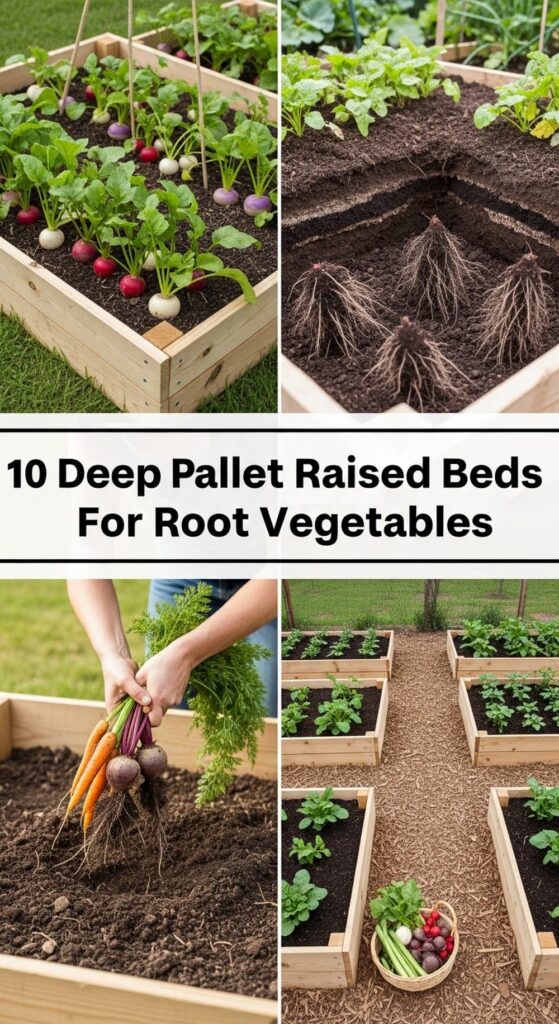
If you love carrots, beets, radishes, and parsnips but your soil is too shallow or stony, deep pallet raised beds can completely change the game. With a few sturdy reclaimed pallets and some basic tools, you can build generous soil depth that lets roots grow straight, strong, and delicious.
This guide walks you through ten practical, good-looking pallet bed ideas designed especially for root vegetables. You’ll find options for patios, small spaces, rental gardens, and more permanent plots, plus tips for styling, budgeting, and simple upkeep. Start with one deep pallet bed, learn how it behaves through a season, and then build your way towards a productive and beautiful root garden.
Quick List
- Double-Height Pallet Box For Straight Carrots
- U-Shaped Pallet Root Bed Around A Seating Nook
- Narrow Deep Pallet Trough For Small Spaces
- Tiered Pallet Potato And Beet Tower
- Deep Pallet Bed With Clear Cold Frame Lid
- Rustic Pallet Deep Bed With Gravel Paths
- L-Shaped Patio Pallet Root Bed
- Waist-High Pallet Bed On Legs
- Pallet Deep Bed With Back Trellis
- Painted Pallet Deep Root Bed Row
1. Double-Height Pallet Box For Straight Carrots
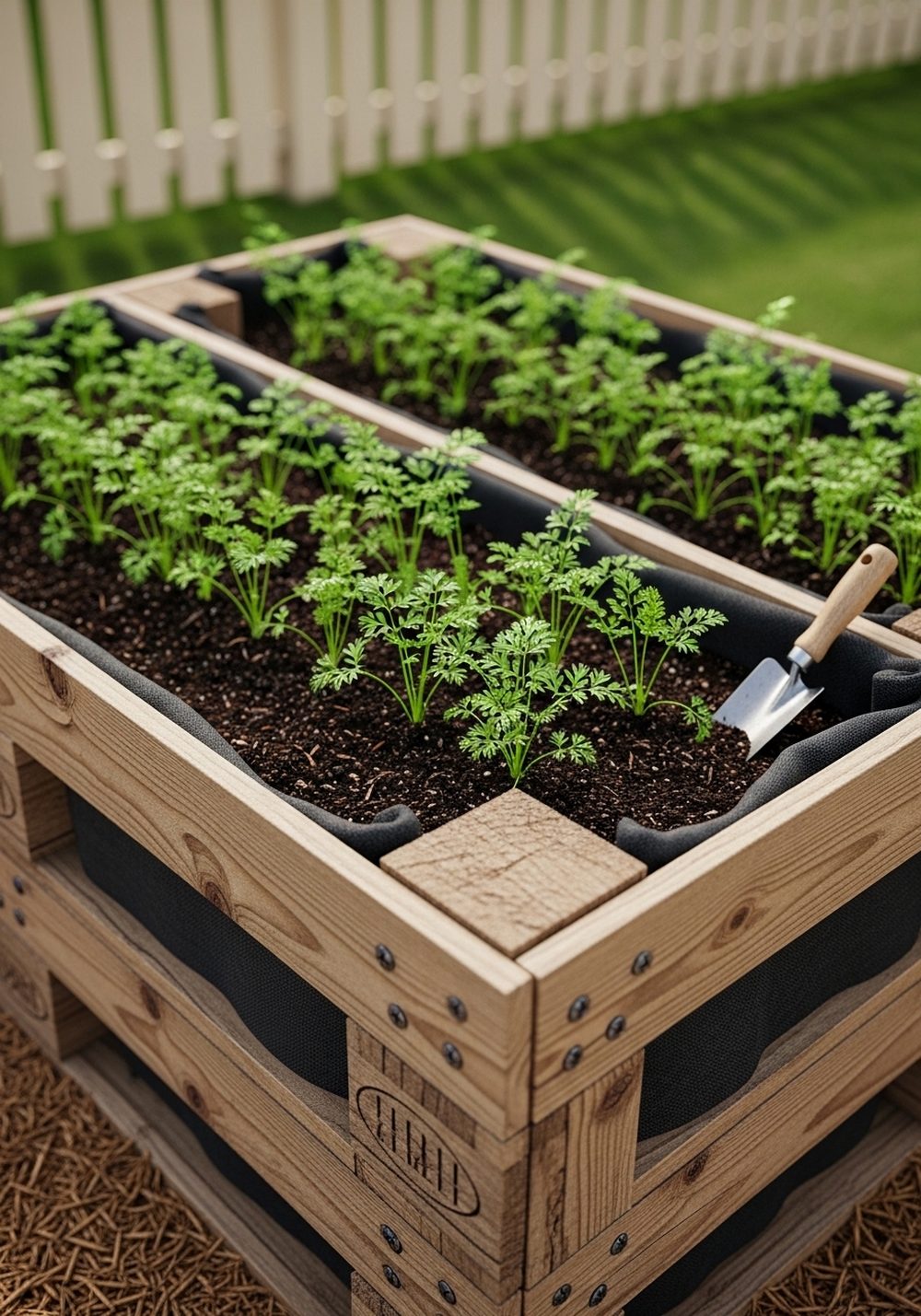
Stacking two pallet frames on top of each other creates a simple, deep box that’s perfect for straight, long carrots and parsnips. Line the inside with landscape fabric or cardboard, then fill with a mix of topsoil, compost, and a little sand for drainage. The taller sides help keep soil from spilling out and give a tidy, chunky look that suits both rustic and modern gardens. Place it where it catches full sun, and you’ll have a compact, highly productive root bed.
- Best For: Small gardens that need depth without taking up much ground space.
- Budget Tip: Use reclaimed pallets and fill gradually, adding compost over time as it settles.
- Styling Idea: Stain or oil the pallet wood to match nearby furniture or fencing.
- Practical Note: Check that pallets are heat-treated, not chemically treated, before using.
- Care & Maintenance: Top up with fresh compost each spring to maintain depth and fertility.
2. U-Shaped Pallet Root Bed Around A Seating Nook
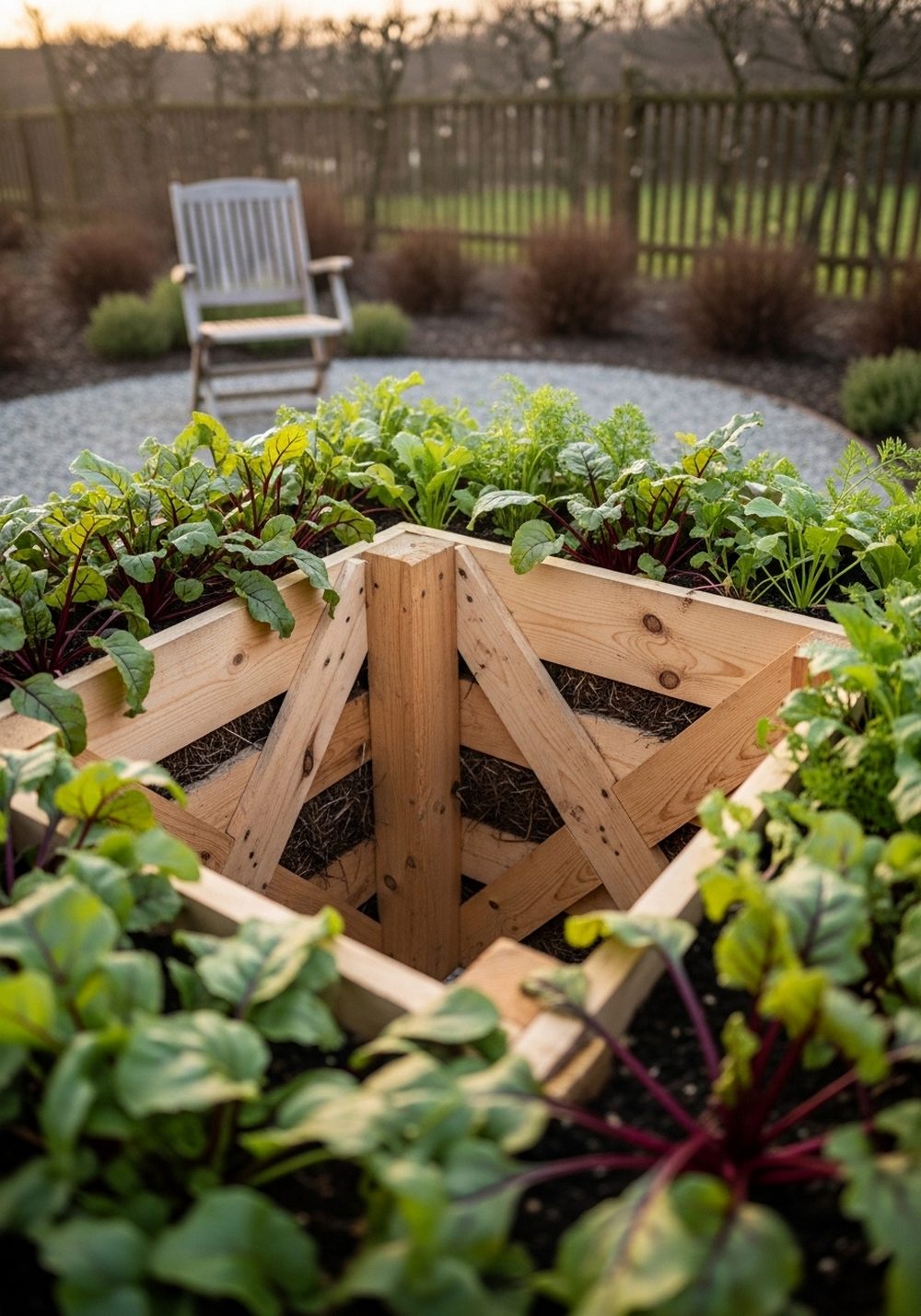
A U-shaped pallet bed wraps your root garden around a small seating area, giving you a productive and cozy corner at once. Use pallet sections to form three sides of a large U, leaving space in the middle for a chair or bench on gravel or pavers. The depth allows carrots, beets, and turnips to grow happily, while the surrounding foliage makes the seat feel sheltered and green. It’s a lovely layout for chatting, sipping coffee, or supervising kids while you thin seedlings.
- Best For: Bigger backyards where you want a “garden room” feeling.
- Budget Tip: Start with one side, then add the other two arms as you source more pallets.
- Styling Idea: Add a simple wooden or metal chair with outdoor cushions to soften the look.
- Practical Note: Keep at least 60–80 cm of space for the seating gap so it’s easy to get in and out.
- Extra Idea: Hang small solar lanterns on stakes behind the bed for evening glow.
3. Narrow Deep Pallet Trough For Small Spaces
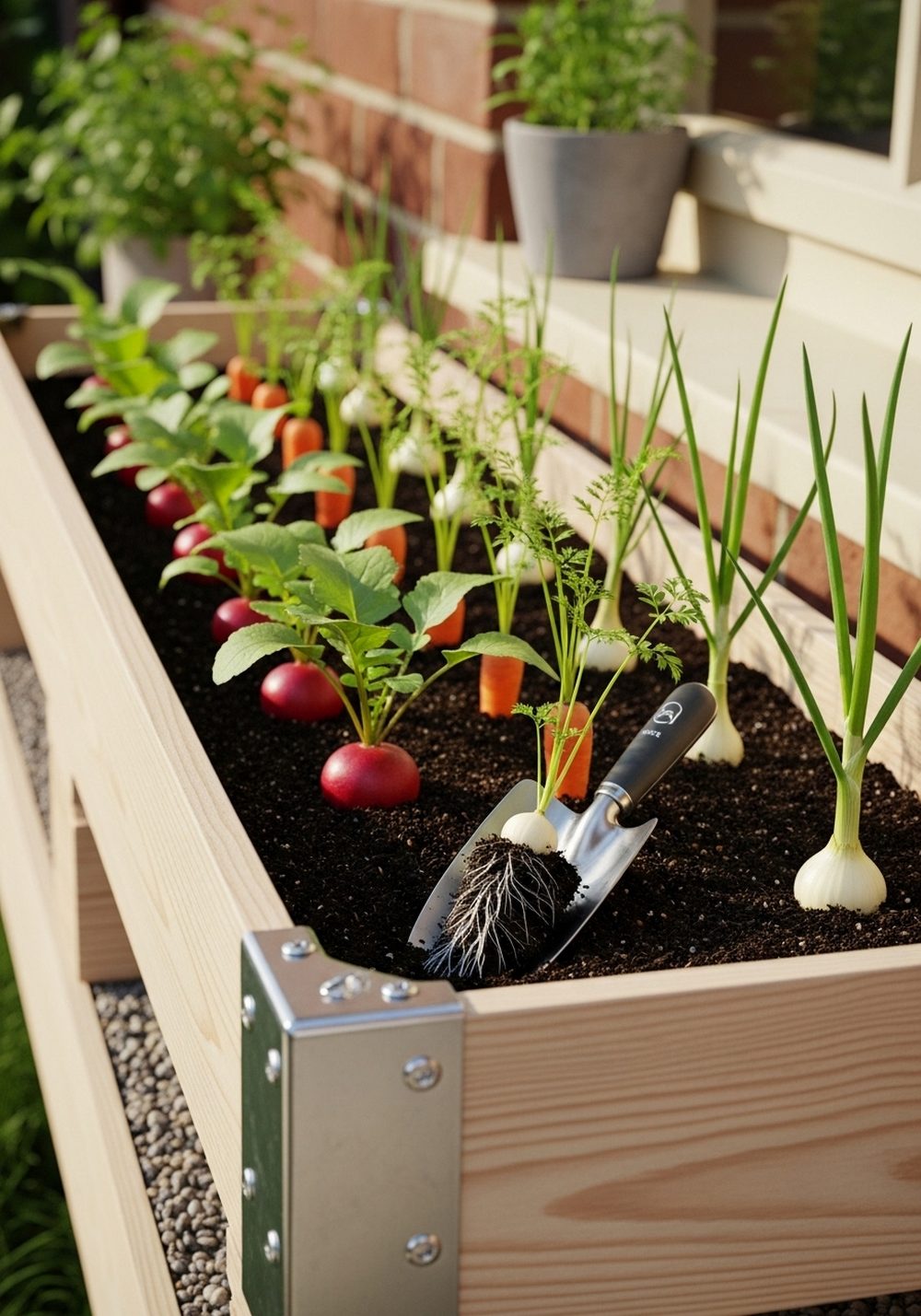
If you only have a slim strip along a wall or fence, a narrow trough-style pallet bed lets you grow surprisingly many roots in very little width. Build a long, deep rectangle just wide enough for one or two rows of root crops, and line the back with boards or leftover pallet slats to stop soil escaping. This creates a clean, architectural line that looks neat beside pathways, sheds, or garage walls while giving roots the depth they need to fatten up.
- Best For: Side yards, alleyways, and tiny gardens.
- Budget Tip: Use off-cuts from pallets to reinforce corners instead of buying brackets.
- Styling Idea: Keep the wood natural and pair with black mulch or slate for a modern look.
- Practical Note: Leave enough walking space between the trough and any wall or boundary.
- Care & Maintenance: Water deeply but less often, as long, narrow beds can dry out quickly.
4. Tiered Pallet Potato And Beet Tower
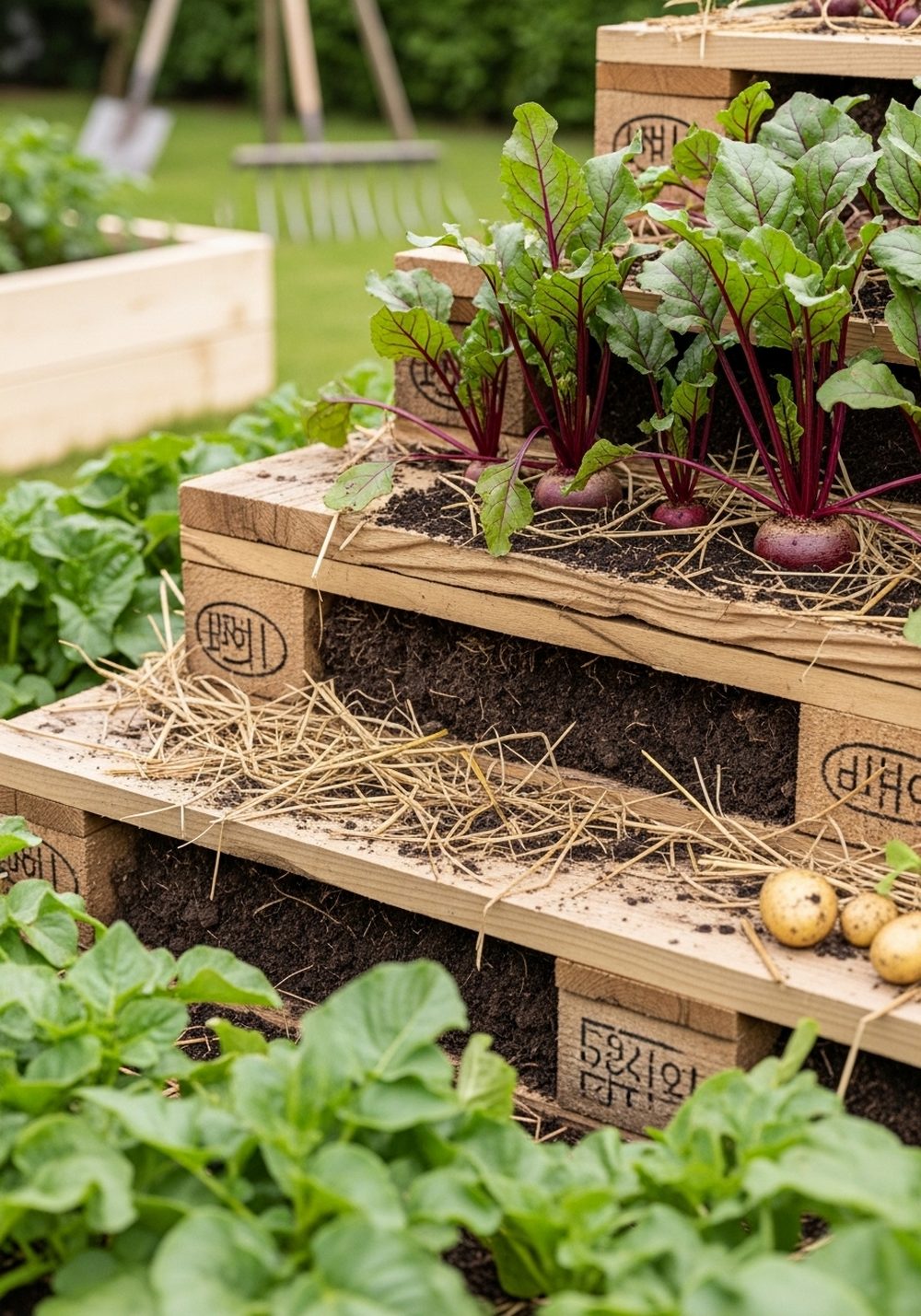
A tiered tower made from cut pallet sections stacked in stepped layers gives you depth at the bottom and extra surface area at the top. Plant potatoes in the lowest, deepest level, then beets, turnips, or radishes in the upper, shallower tiers. As the foliage spills down the sides, the whole structure looks lush and full, almost like a living sculpture. This design is especially eye-catching in a central spot, making root vegetables a real feature instead of something you hide in the back.
- Best For: Gardeners wanting a bold focal point with lots of harvest in a small footprint.
- Budget Tip: Use leftover pallet boards for the inner tiers rather than buying new lumber.
- Styling Idea: Edge the base with river stones or bricks to frame the tower.
- Practical Note: Anchor the bottom tier securely so the tower doesn’t lean as soil settles.
- Care & Maintenance: Mulch heavily to keep moisture in, especially for potatoes.
5. Deep Pallet Bed With Clear Cold Frame Lid
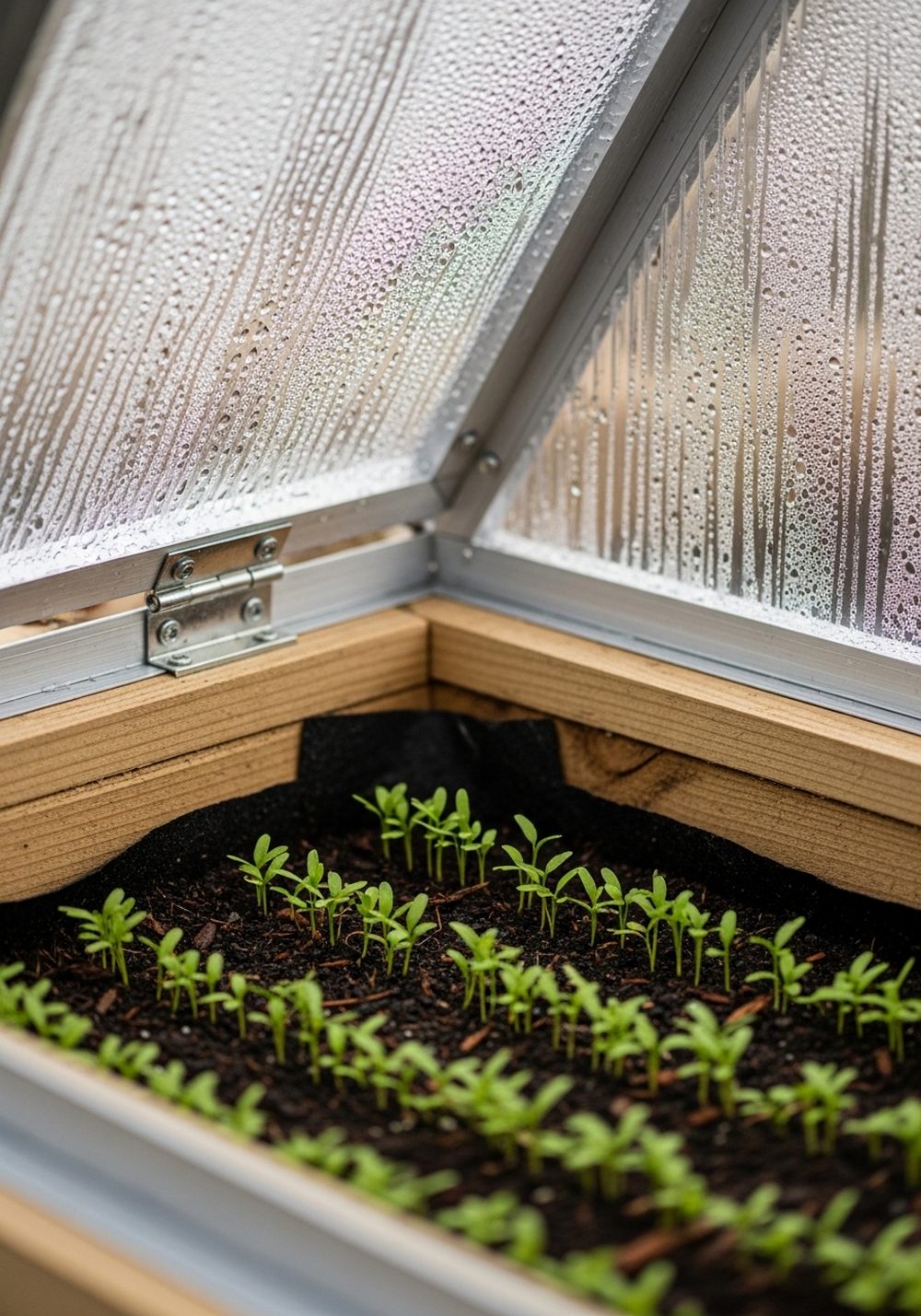
Combining a deep pallet bed with a simple clear lid turns it into a cold frame that stretches your root-growing season. Build a sturdy pallet box, then add a lightweight frame with clear polycarbonate or recycled windows hinged along one side. This protects early carrot and beet seedlings from cold snaps while still letting in plenty of light. On sunnier days, prop the lid open slightly to prevent overheating and enjoy the greenhouse-like look of a miniature root house.
- Best For: Cooler climates or impatient gardeners who want a head start in spring.
- Budget Tip: Use reclaimed windows or greenhouse panels instead of buying new glazing.
- Styling Idea: Paint the lid frame a soft grey or sage green for a classic potting-shed feel.
- Practical Note: Add simple stays or chains so the lid doesn’t slam shut in wind.
- Care & Maintenance: Wipe the lid occasionally to remove algae or dust and keep light levels high.
6. Rustic Pallet Deep Bed With Gravel Paths
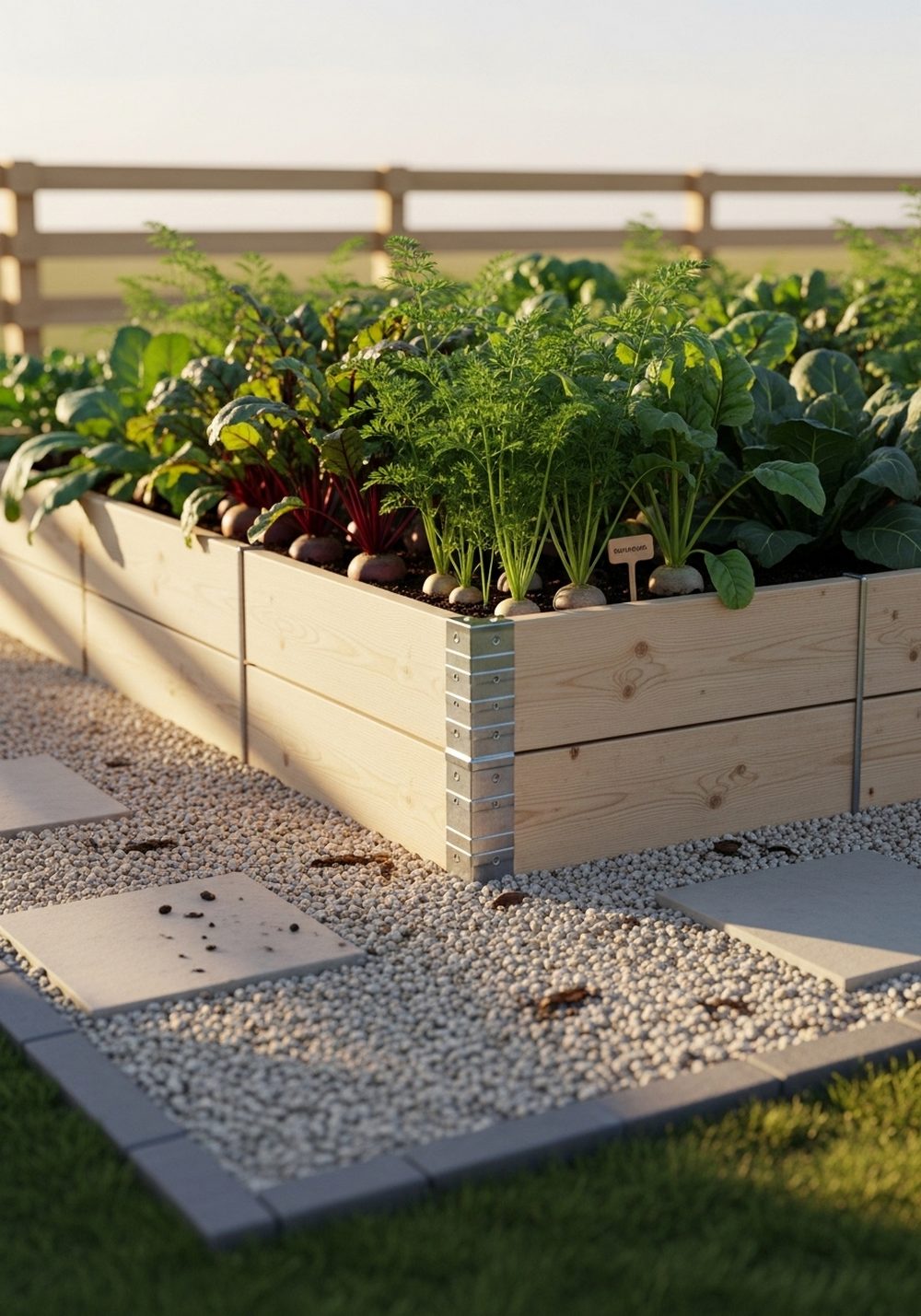
A single large pallet bed surrounded by neat gravel paths gives a kitchen-garden feel that’s both practical and pretty. Build a deep rectangular bed from pallets, then lay weed fabric and spread pale gravel all around to frame it. The contrast between the clean gravel and the deep green root foliage makes everything look intentional, even if the bed itself is simple. Gravel paths also make it easy to harvest after rain without getting muddy feet.
- Best For: Ground-level gardens where you want tidy access around one main bed.
- Budget Tip: Use inexpensive crushed stone or recycled gravel rather than premium decorative types.
- Styling Idea: Add a few simple stepping stones or reclaimed bricks through the gravel for character.
- Practical Note: Install edging between gravel and lawn to stop stones migrating.
- Care & Maintenance: Rake gravel occasionally and top up where it thins out.
7. L-Shaped Patio Pallet Root Bed
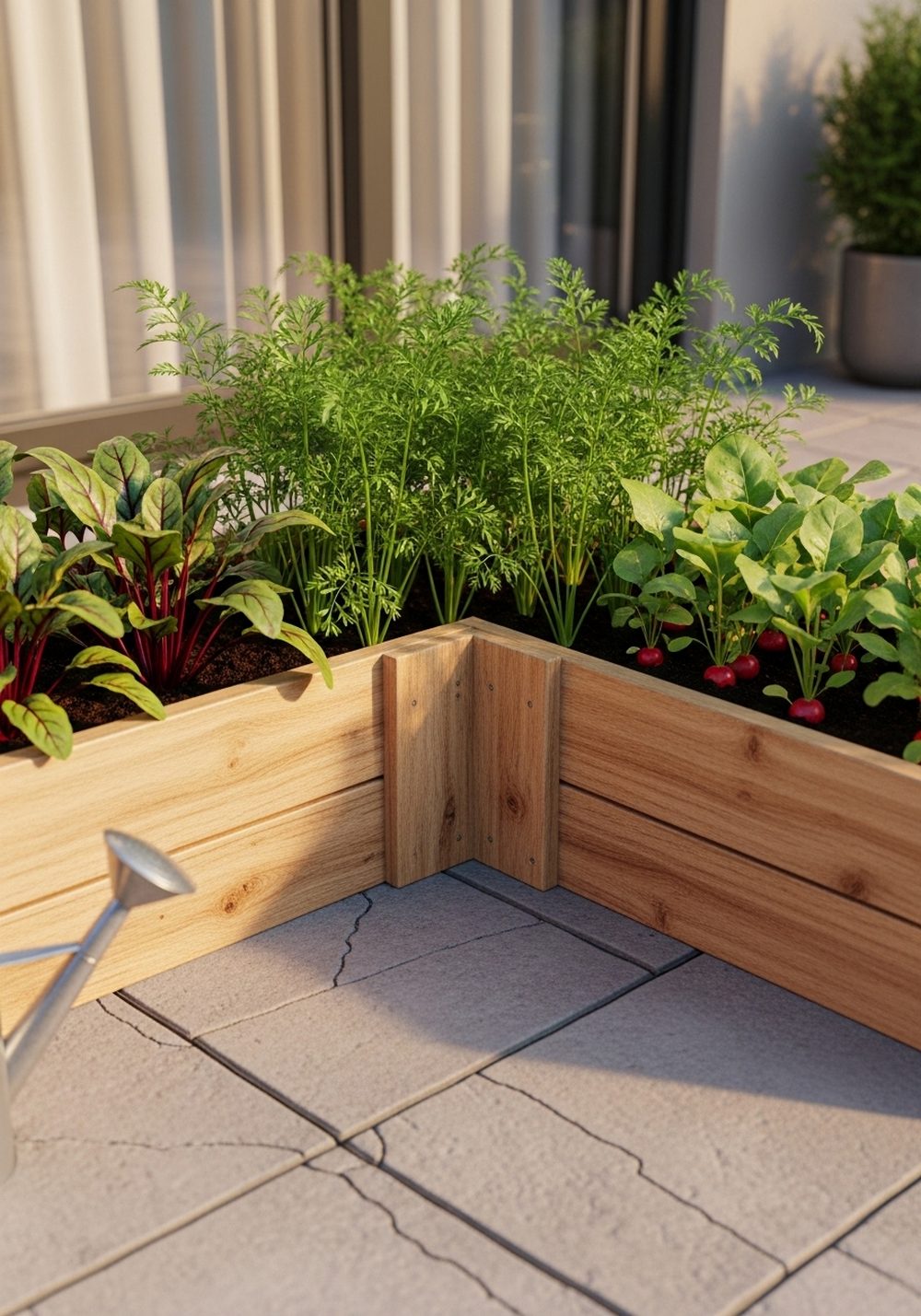
An L-shaped pallet bed hugs the corner of a patio or deck, making the most of an overlooked space. Build two deep pallet boxes and join them neatly at right angles so they wrap a seating area, giving you a generous root bed without stealing the main floor area. The leafy tops of carrots, beets, and radishes soften the hard lines of paving or decking and make the patio feel more enclosed and intimate, especially when you’re sitting at the corner.
- Best For: Patios, decks, and courtyard gardens.
- Budget Tip: Reuse existing paving as the base—no need for extra foundation materials.
- Styling Idea: Match the pallet stain to your deck or outdoor table to unify the space.
- Practical Note: Keep at least one side of the L accessible for easy harvesting and soil work.
- Extra Idea: Tuck a few low herbs around the edges for fragrance when you brush past.
8. Waist-High Pallet Bed On Legs
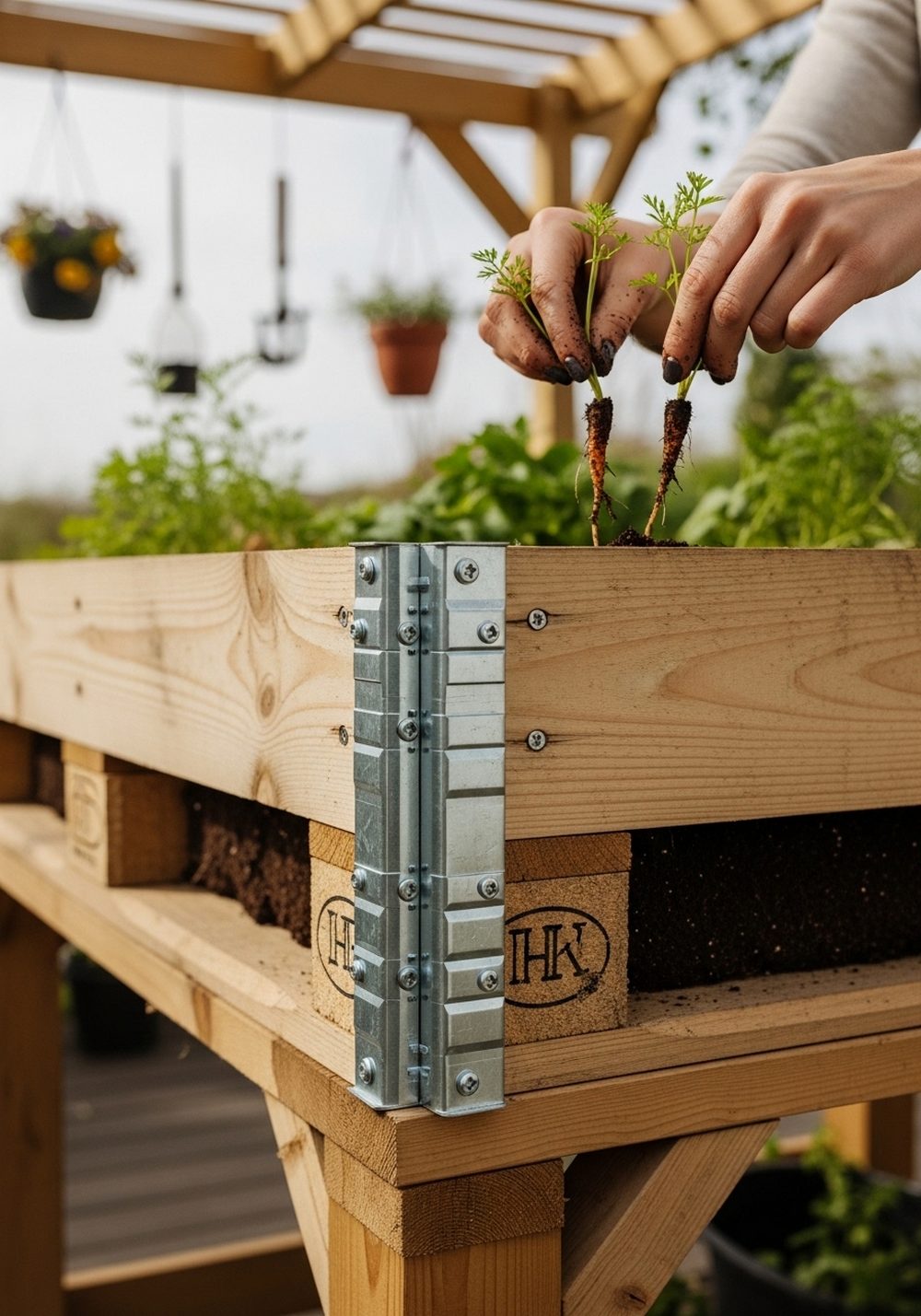
Raising a deep pallet bed on legs brings your root garden up to waist height, which is much kinder on backs and knees. Build a strong box from pallets, then fix it securely to stout legs or a simple frame, making sure it can handle the weight of soil. This design suits courtyards, balconies, or anyone with mobility issues, and it looks smart and intentional—more like a piece of outdoor furniture than a rough raised bed. Fill it with a lighter mix of compost and soil to reduce weight.
- Best For: Gardeners who need accessible growing height or have hard surfaces only.
- Budget Tip: Use reclaimed posts or cut-down pallet runners as legs instead of buying new timber.
- Styling Idea: Add hooks on the sides for tools or a small shelf below for pots.
- Practical Note: Check local weight limits if placing on a balcony or deck.
- Care & Maintenance: Line the inside well to protect the wood and extend its life.
9. Pallet Deep Bed With Back Trellis
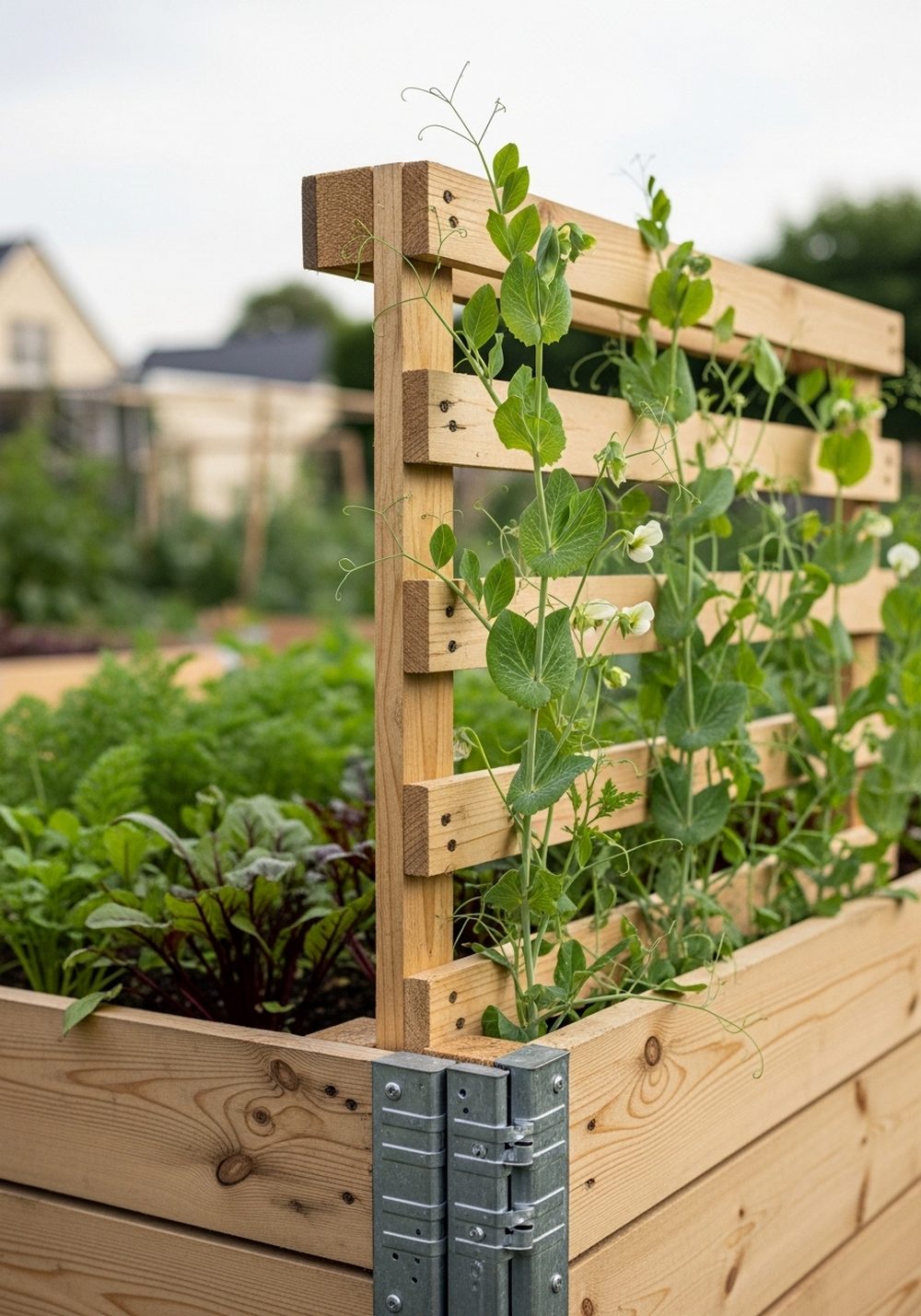
Attaching a pallet trellis to the back of a deep bed lets you grow vertical crops above your root patch, making the area feel lush and layered. Fix upright pallet slats or a full pallet panel behind the bed, then plant peas, beans, or sweet peas to climb while carrots, beets, and radishes fill the soil below. The trellis backdrop frames the bed, turning it into a living screen that can hide fences, bins, or neighboring walls while you harvest your roots underneath.
- Best For: Narrow gardens that need height as well as depth.
- Budget Tip: Use one old pallet as the trellis itself rather than buying lattice.
- Styling Idea: Weave jute string in a grid across the slats for a softer, cottage-garden feel.
- Practical Note: Anchor the trellis firmly and consider wind direction to avoid strain in storms.
- Care & Maintenance: Rotate trellis crops each year to keep soil nutrients balanced.
10. Painted Pallet Deep Root Bed Row
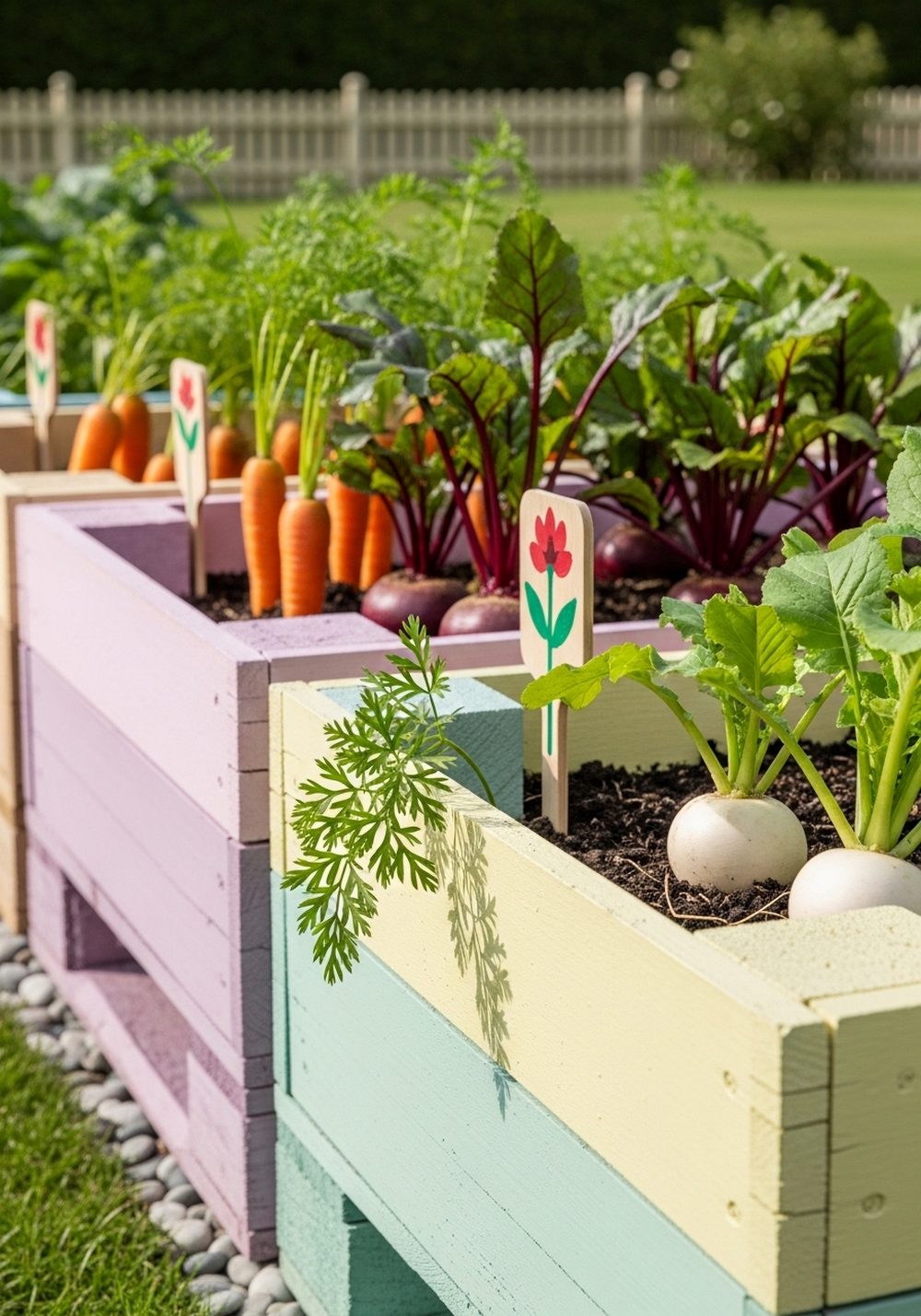
If you have room for several beds, painting each deep pallet box in a different soft color turns your root patch into a cheerful, decorative feature. Choose breathable outdoor paint in muted pastels—sage, duck-egg, cream, soft terracotta—so the colors complement foliage rather than competing with it. Dedicate one bed to orange carrots, another to beets, another to colorful carrots and radishes, and label them with simple wooden markers. From the house or patio, the row looks both tidy and joyful.
- Best For: Front-yard veggie beds or visible spots you see from windows.
- Budget Tip: Use leftover paint from other projects and keep colors light to hide imperfections.
- Styling Idea: Coordinate bed colors with nearby planters, doors, or shutters.
- Practical Note: Paint only the outside to reduce paint contact with soil.
- Care & Maintenance: Touch up scuffs every year or two to keep the beds looking fresh.
Conclusion
Deep pallet raised beds let you turn rough ground, patios, and awkward corners into productive root-vegetable goldmines, all while adding structure and style to your garden. Whether you choose a simple narrow trough or a painted row of beds, each design gives you the soil depth and good looks that roots love. Start with one idea that suits your space and budget, see how it performs over a season, and then build out a little root-growing corner you’re genuinely proud to show off.
FAQs
1. Are pallet raised beds safe for growing vegetables?
They can be, as long as you choose pallets that are heat-treated (usually marked “HT”) rather than chemically treated. Avoid pallets that look heavily stained, oily, or mysterious in origin. Line the inside with landscape fabric or thick cardboard to create a barrier between soil and wood, and focus on using the pallets mainly as an outer frame.
2. How deep does a pallet bed need to be for root vegetables?
Most carrots, beets, and turnips are happiest with at least 30–40 cm of loose, stone-free soil. Longer varieties or parsnips may appreciate even more. If your pallets are shallow, stack them or add extra boards to increase depth. The key is loose, well-draining soil that roots can push through without hitting compacted layers.
3. Can I build pallet raised beds on a paved patio or balcony?
Yes, as long as you consider weight and drainage. Use a lighter soil mix with plenty of compost and check that the surface and structure can handle the load. Raise the bed on small blocks or feet so water can drain underneath, and avoid letting water pool around the pallet wood to reduce rot.
4. How can I make pallet raised beds look more decorative?
You can sand rough edges, stain or paint the outer boards, and add small touches like matching plant markers, gravel edging, or a trellis behind the bed. Coordinating colors with your furniture, doors, or pots instantly makes the beds feel intentional. Even simple details like tidy paths and mulched soil give a more polished look.
5. What’s the cheapest way to fill deep pallet beds?
Layering is your friend. Start with coarse materials at the bottom—sticks, small branches, or chopped-up cardboard—then add a mix of garden soil and compost on top. You can fill partway one year and top up with more compost as it settles. Over time, the lower layers break down and improve the soil while saving you money on bulk compost.