10 Pallet Raised Garden Beds You Can Build
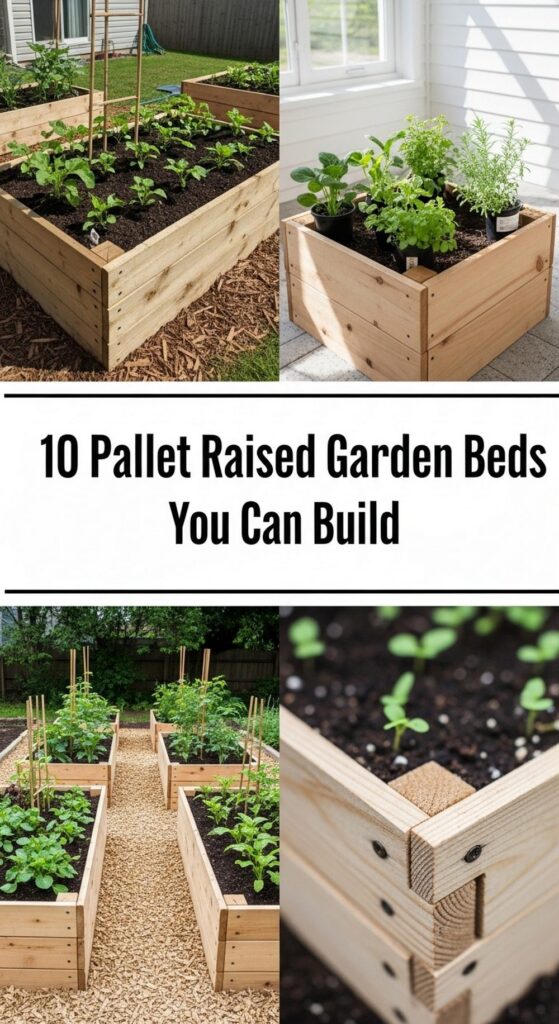
If you love the idea of raised garden beds but not the price tag, pallet wood might be your new best friend. With a few basic tools and a free or cheap pallet or two, you can create beautiful, sturdy beds that make growing veggies, herbs, and flowers much easier on your back and your budget.
In this guide, you’ll find 10 pallet raised garden bed ideas you can realistically build, even as a beginner. We’ll cover different shapes and sizes, small-space solutions, and clever extras like trellises and seating edges. Pick the style that fits your yard, balcony, or patio, and turn those humble boards into a garden you’re proud of.
Quick List
- Classic Single-Level Pallet Raised Bed
- U-Shaped Pallet Vegetable Bed
- Tiered Pallet Herb Pyramid
- L-Shaped Corner Pallet Bed
- Pallet Raised Bed With Trellis Back
- Narrow Pallet Salad Trough Bed
- Mobile Pallet Raised Bed On Casters
- Deep Pallet Bed For Root Crops
- Pallet Flower Border Raised Bed
- Pallet Raised Bed With Built-In Seating Edge
1. Classic Single-Level Pallet Raised Bed
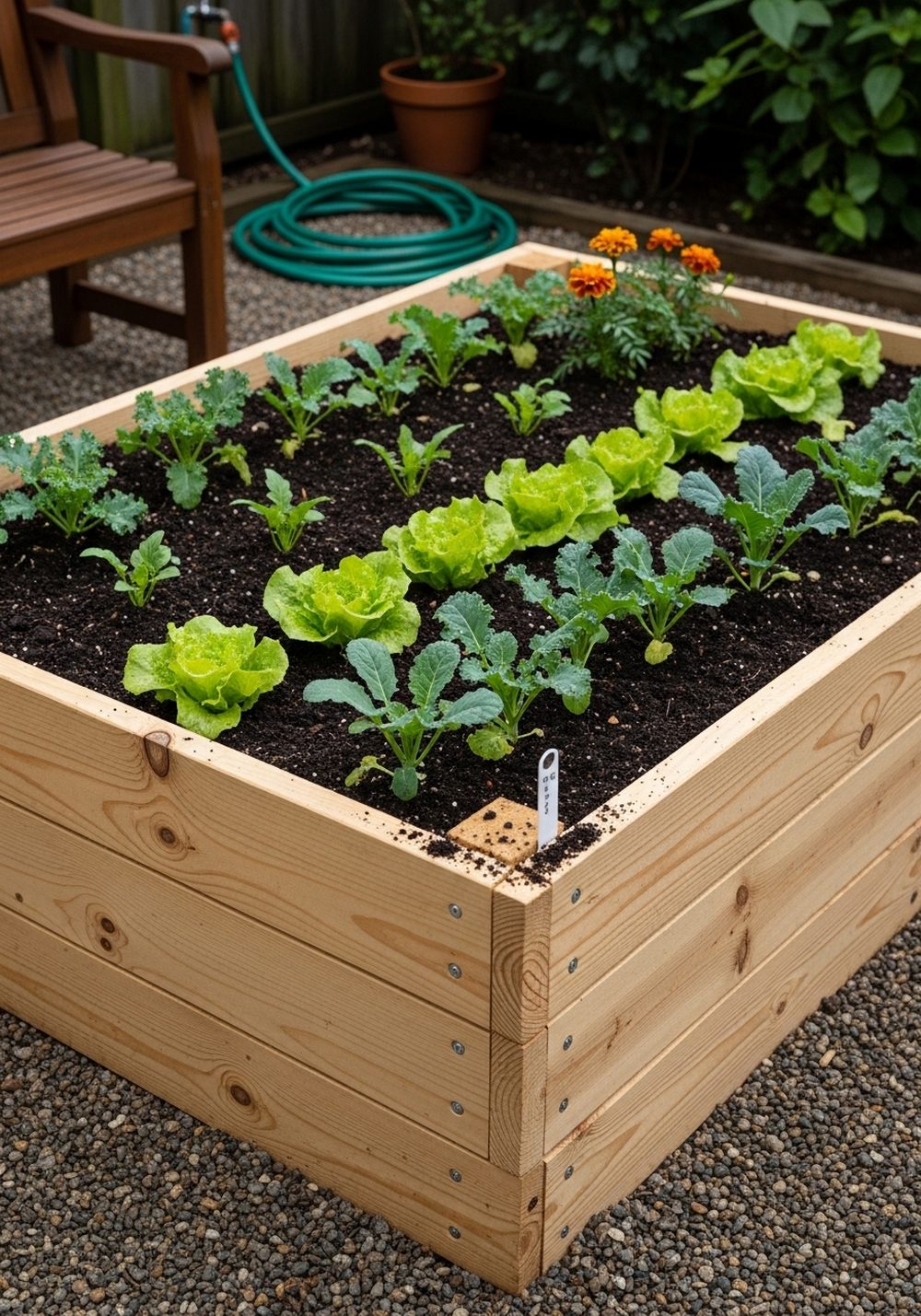
A classic single-level pallet bed is the easiest place to start. Cut or dismantle one or two pallets and use the boards to create a simple rectangle, about 1–2 boards high. Screw the corners together, line the inside with landscape fabric if you like, then fill with good-quality soil and compost. The clean, low frame neatly holds everything in place, gives your garden a more intentional look, and instantly makes weeding and watering more manageable.
- Best For: Beginners, small backyards, and renters who want something simple and tidy.
- Budget Tip: Use free pallets and leftover screws; splurge only on soil and compost.
- Styling Idea: Stain or paint the exterior to match your fence or outdoor furniture.
- Practical Note: Choose heat-treated pallets (look for the “HT” stamp) and avoid chemically treated wood.
2. U-Shaped Pallet Vegetable Bed
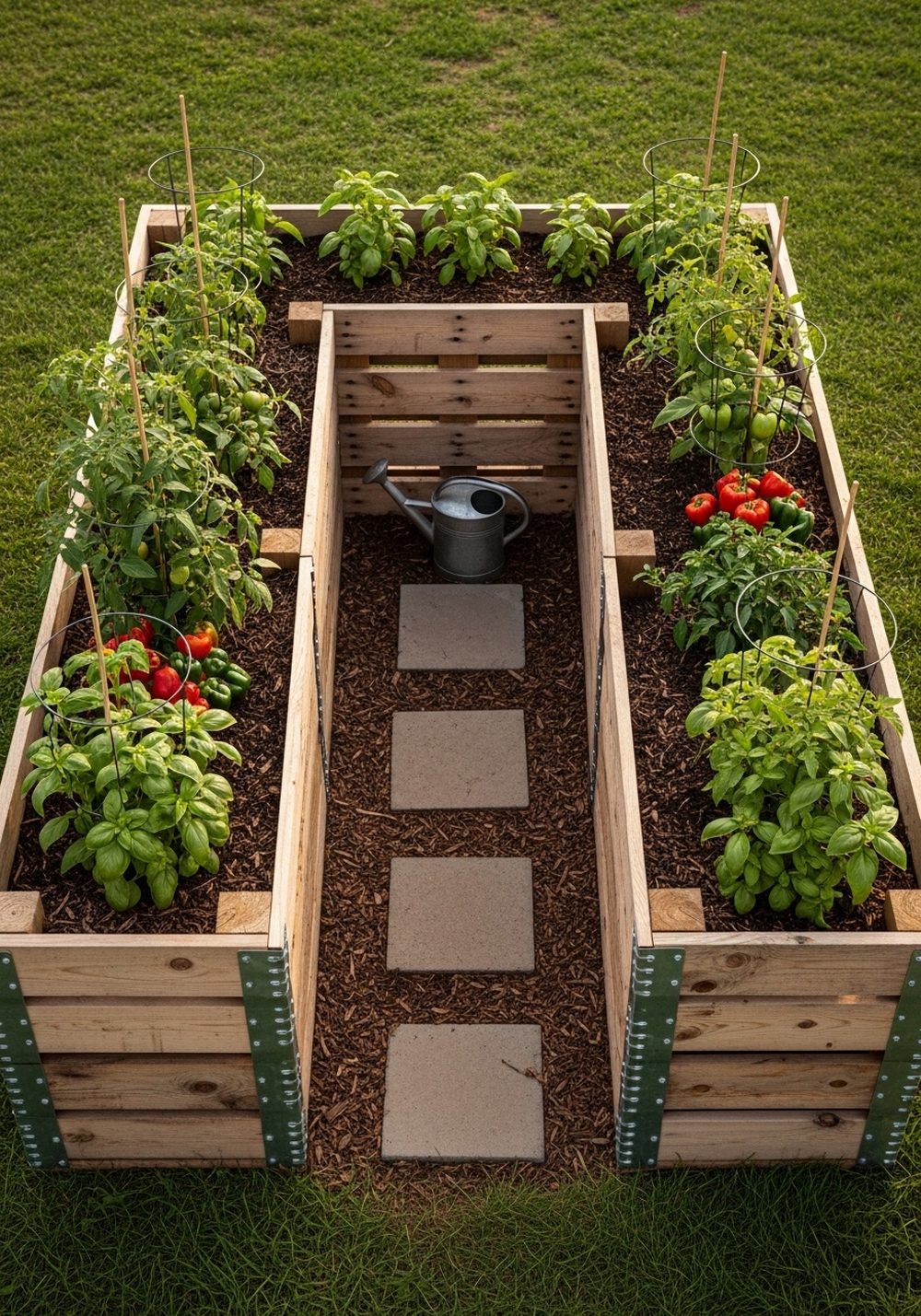
A U-shaped pallet bed creates a mini kitchen garden with a walk-in feel, ideal for serious veggie lovers. Build three rectangular pallet boxes and arrange them in a U so you can step into the center and reach every plant without trampling soil. This shape looks impressive but is just a clever combination of basic rectangles. It frames your space beautifully and makes tending tomatoes, peppers, and leafy greens feel easier and more enjoyable.
- Best For: Larger yards and gardeners who grow a lot of vegetables.
- Budget Tip: Build one section at a time and expand into a U as you find more pallets.
- Styling Idea: Add stepping stones or mulch in the center for a neat, finished look.
- Practical Note: Keep the arms of the U narrow enough that you can comfortably reach the middle.
3. Tiered Pallet Herb Pyramid
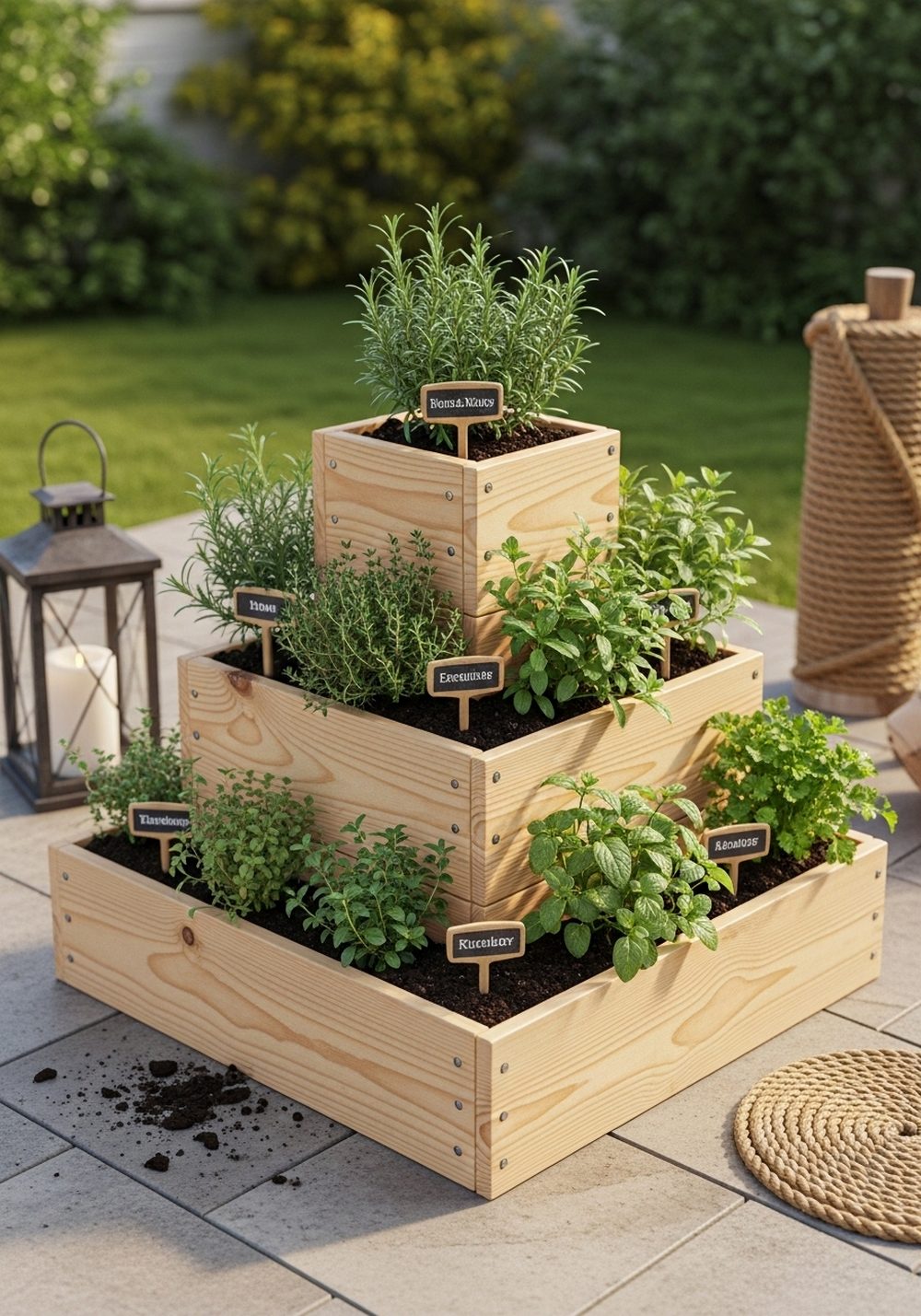
A tiered pallet herb pyramid uses height to give you loads of planting space in a small footprint. Cut pallet boards to create several rectangles, each slightly smaller than the one below, then stack them to make tiers. Plant trailing herbs like thyme on the edges and taller herbs like rosemary and sage in the middle. The layered effect is eye-catching, adds vertical interest to a patio, and keeps herbs right at hand for cooking.
- Best For: Patios, courtyards, and small gardens that need height and character.
- Budget Tip: Use off-cuts and odd-length boards; herbs are cheap to buy or easy from cuttings.
- Styling Idea: Paint each tier a different pastel, or keep natural wood for a rustic look.
- Practical Note: Place thirstier herbs on lower tiers where water collects more easily.
4. L-Shaped Corner Pallet Bed
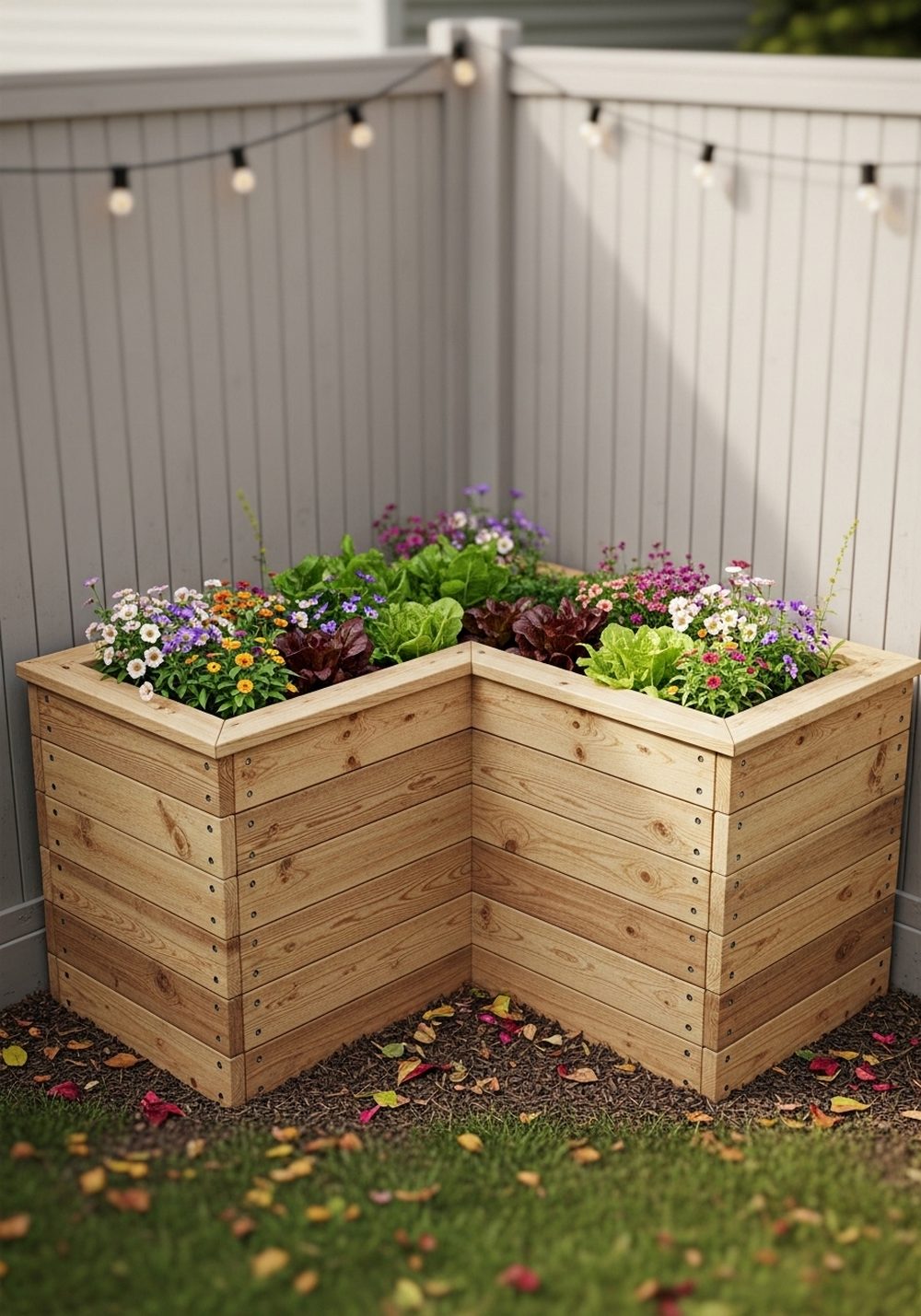
An L-shaped pallet bed makes excellent use of a neglected corner. Build two rectangular raised beds and join them at a right angle, pushing them into a sunny fence or wall corner. This layout naturally frames the space, softening hard lines and giving you a generous planting area for mixed flowers and edibles. It feels like a small garden “room” and instantly makes the corner look designed instead of forgotten.
- Best For: Corner spots along fences or walls that feel bare or wasted.
- Budget Tip: Start with one arm of the L, then add the second when you have more pallets.
- Styling Idea: Hang a few wall planters or fairy lights above to turn it into a cozy feature.
- Practical Note: Leave enough room along the back or inside corner to step in for maintenance.
5. Pallet Raised Bed With Trellis Back
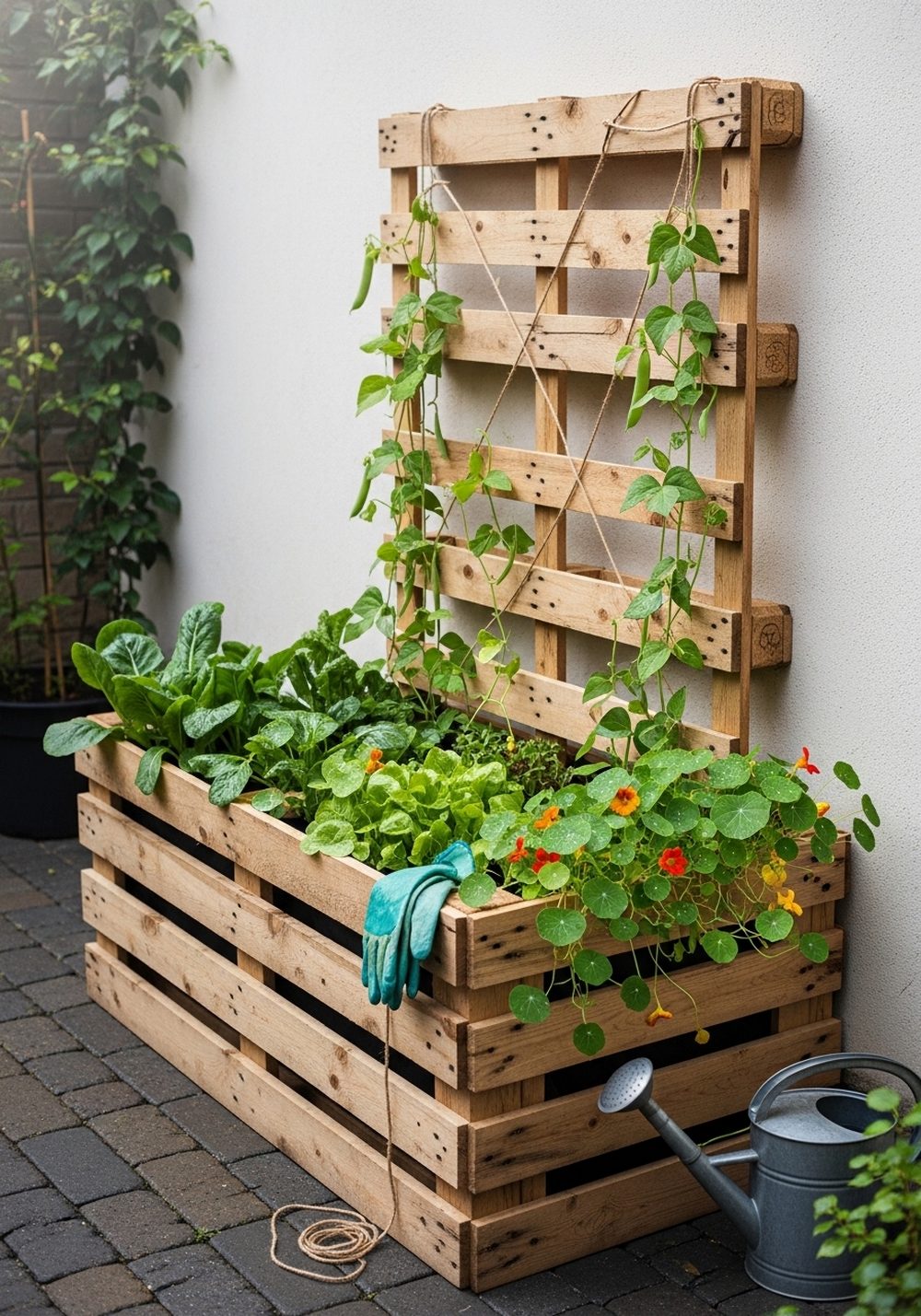
Adding a pallet trellis transforms a simple raised bed into a vertical garden showpiece. Build a standard pallet box, then bolt an intact pallet upright to the back, reinforcing it with diagonal supports if needed. Grow beans, peas, cucumbers, or flowering climbers up the slats while the front of the bed holds leafy greens or flowers. The tall backdrop adds height and makes a lovely focal point against a wall or fence.
- Best For: Growing climbers in small yards, along fences, or on patios.
- Budget Tip: Use a slightly rougher pallet for the trellis and save smoother boards for the box.
- Styling Idea: String jute twine between slats or add small hooks to guide climbing plants.
- Practical Note: Secure the upright pallet firmly and, if possible, anchor it to a wall for safety.
6. Narrow Pallet Salad Trough Bed
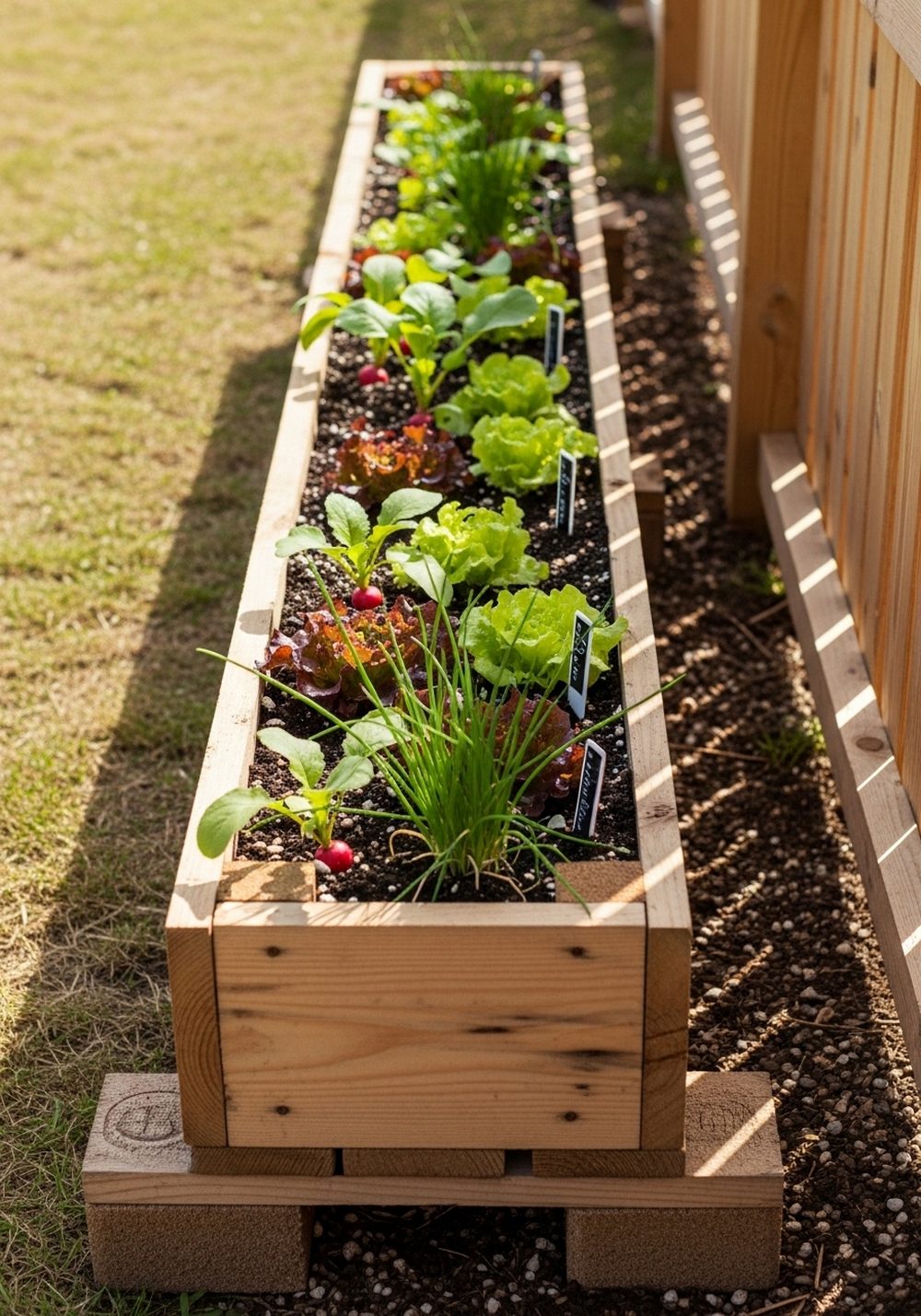
A narrow pallet salad trough is perfect when you have just a slim strip of space to work with. Build a long, skinny box from pallet boards and raise it slightly off the ground on pallet blocks or bricks. Fill it with rich soil and sow cut-and-come-again lettuces, radishes, rocket, and chives. The result is a tidy living salad bar that looks pretty and keeps your greens off the cold ground and away from muddy splashes.
- Best For: Along fences, against walls, or beside garden paths in small yards.
- Budget Tip: Use shorter off-cuts for the ends and reserve the longest boards for the sides.
- Styling Idea: Use matching wooden plant labels and arrange lettuces in bands of color.
- Practical Note: Because it’s shallow and narrow, water more frequently in hot weather.
7. Mobile Pallet Raised Bed On Casters
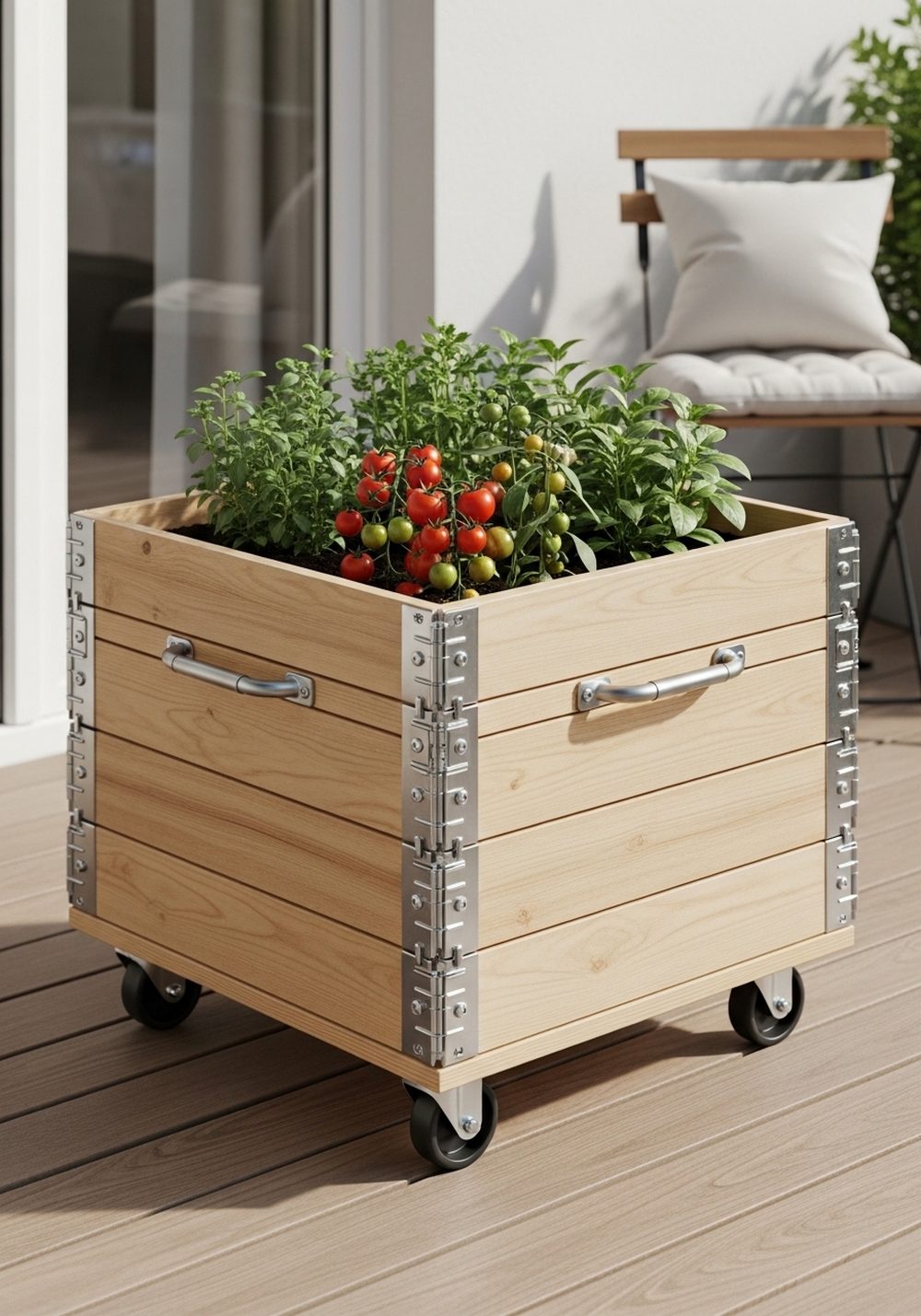
A mobile pallet bed on casters is ideal if your only sunny spot moves throughout the day. Build a robust pallet box and attach heavy-duty, lockable caster wheels to the base. Fill it with herbs or compact vegetables and roll it to follow the sun across a patio or deck. It also makes cleaning the area easier and can be tucked away when you need more open space for entertaining.
- Best For: Patios, decks, and renters who can’t commit to fixed beds.
- Budget Tip: Look for second-hand casters or salvage them from old furniture.
- Styling Idea: Add metal handles to the sides for an industrial look and easier moving.
- Practical Note: Don’t make it too large; once filled with soil, it will be heavy to push.
8. Deep Pallet Bed For Root Crops
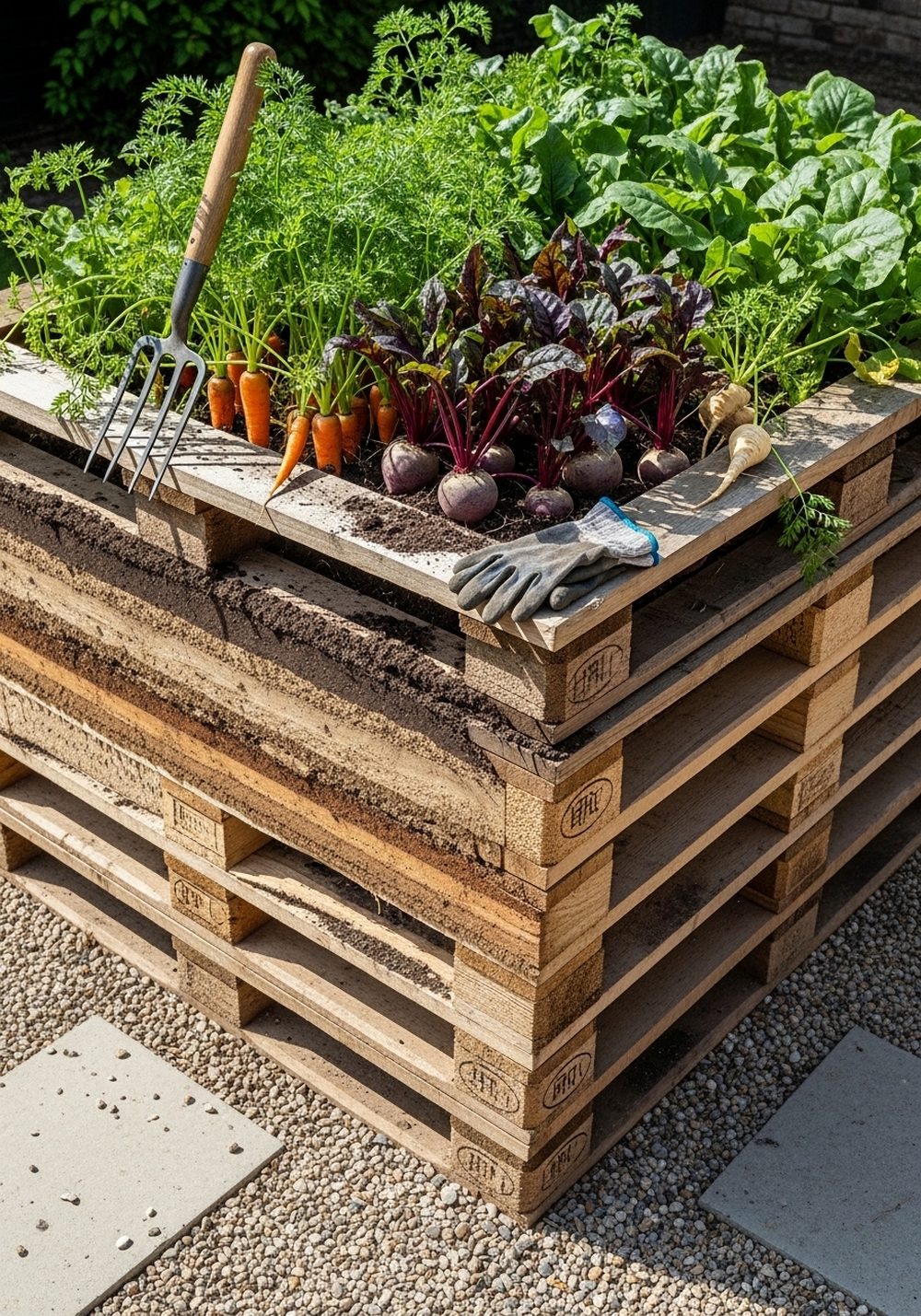
Root crops need more depth, and pallet boards let you build it cheaply. Stack two or even three boards high on each side to create a deeper box, securing the corners well with internal stakes and screws. Fill with a loose, stone-free mix of soil and compost, then plant carrots, beetroot, parsnips, or even potatoes. A deeper bed looks substantial and professional, while the raised height makes thinning and harvesting much more comfortable.
- Best For: Gardeners who love root vegetables and have slightly more space.
- Budget Tip: Use the thicker, block-like parts of pallets as internal corner posts.
- Styling Idea: Edge the top with a smooth “cap” board to make it look finished and refined.
- Practical Note: Avoid using rubble or stones inside; roots need fine, loose soil to grow straight.
9. Pallet Flower Border Raised Bed
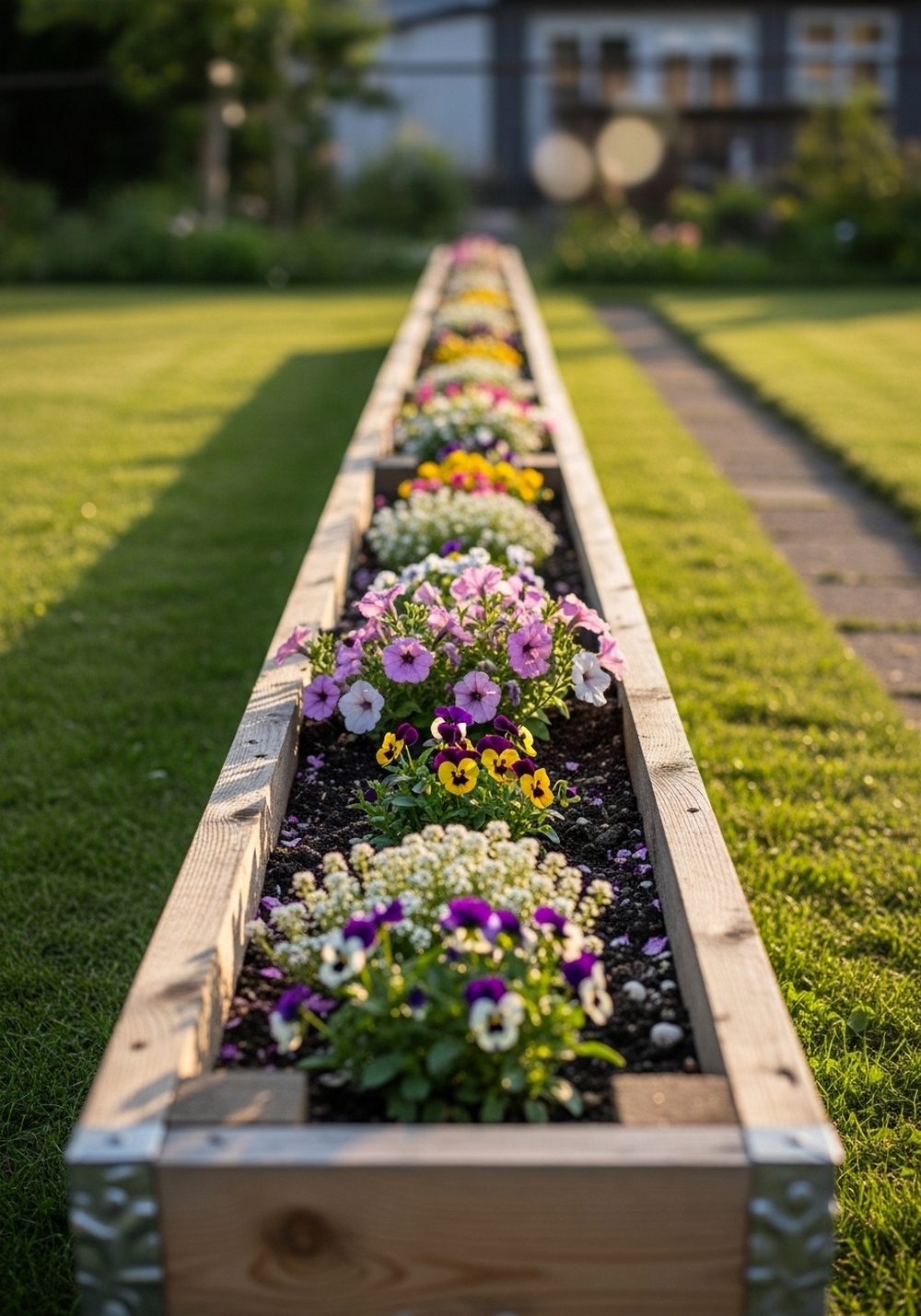
A long pallet raised bed along a lawn edge acts like an instant flower border without needing to dig up half the yard. Build one or more matching long boxes and place them in a straight line, then fill with cheerful annuals and trailing plants that spill over the sides. The wooden frame gives a clean boundary between lawn and flowers, making mowing easier and giving your garden that “planned” feel with very little fuss.
- Best For: Framing lawns, driveways, or paths with color.
- Budget Tip: Plant inexpensive annuals and fill gaps with self-seeding varieties.
- Styling Idea: Stick to one color palette, like purples and whites, for a calm, cohesive look.
- Practical Note: Make sure the bed is level so water doesn’t pool at one end.
10. Pallet Raised Bed With Built-In Seating Edge
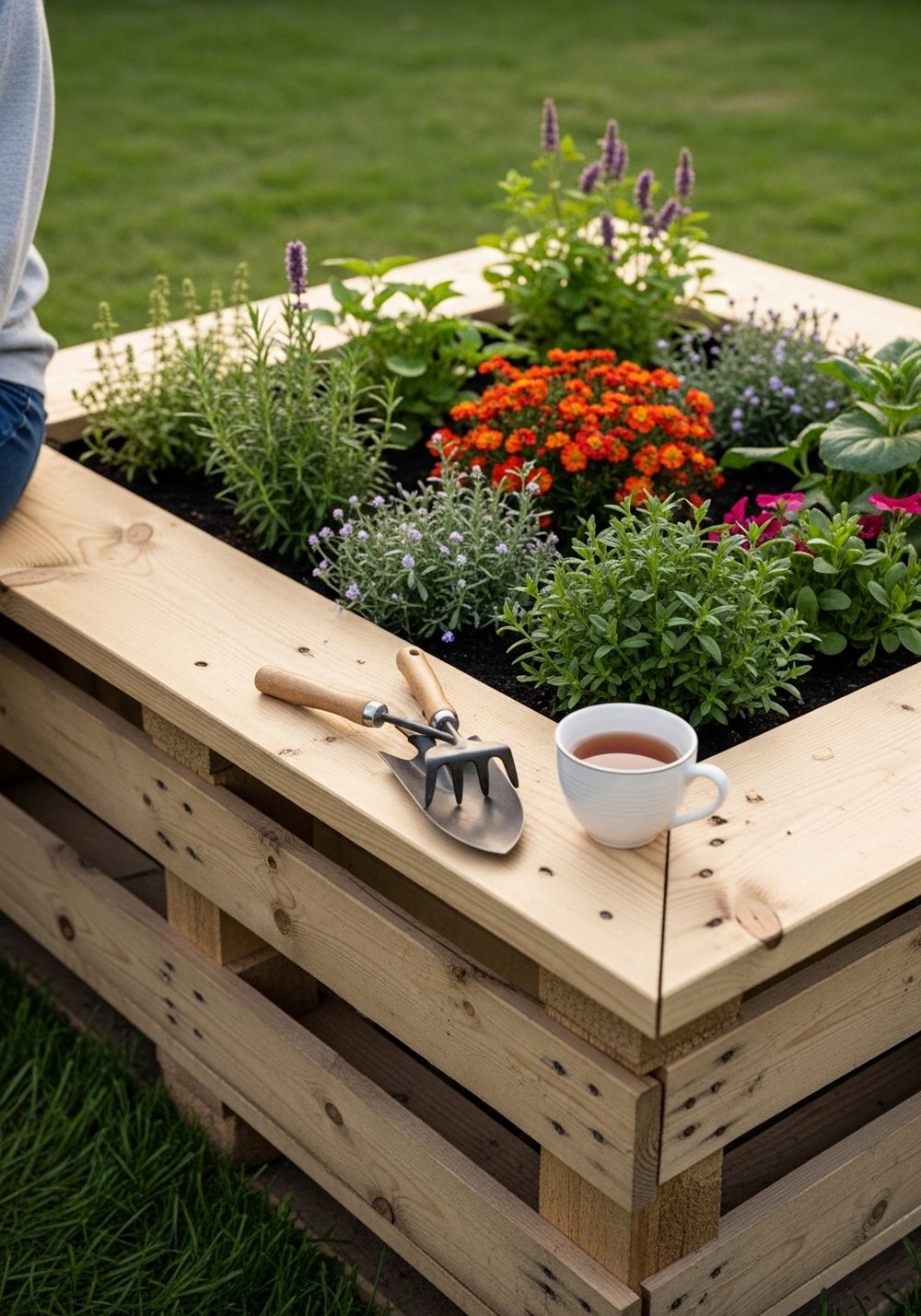
A pallet bed with a wide seating edge turns your garden into a more social, welcoming space. Build a sturdy raised bed, then screw on wider, smoother boards around the top to form a ledge wide enough to sit or set a mug of tea. Plant scented herbs, flowers, or strawberries so you can sit and enjoy them up close. It looks like custom garden furniture but can be built mostly from reclaimed pallet wood.
- Best For: Family gardens, social spaces, and spots near patios.
- Budget Tip: Use your best, smoothest boards just for the top ledge and sand them well.
- Styling Idea: Add outdoor cushions or a throw nearby to encourage lingering and conversation.
- Practical Note: Round off sharp corners and sand thoroughly to avoid splinters when sitting.
Conclusion
Pallet raised beds are a brilliant way to upgrade your garden without spending a fortune. With a few basic tools and some thoughtful planning, those rough boards can become neat vegetable plots, pretty borders, and even seating. Start with one simple bed that suits your space, get comfortable with the process, and then build on your success. Before long, you’ll have a garden that looks intentional, welcoming, and completely your own.
FAQs
1. Are pallet raised beds safe for growing food?
Yes, they can be, as long as you choose the right pallets. Look for heat-treated pallets marked “HT” and avoid any that are stained, oily, or marked with chemical treatment codes. If you’re unsure, line the inside of the bed with a thick plastic or pond liner (with drainage holes) before adding soil.
2. How can I build pallet raised beds on a small budget?
Use free pallets from local businesses, community groups, or online listings, and prioritize spending on quality soil and compost. Start with one small bed and gradually add more as you find materials. Reuse old screws, paint, and off-cuts wherever possible to keep costs down.
3. Can I use pallet raised beds if I’m renting?
Absolutely. Build freestanding beds that sit on top of gravel, grass, or paving without being fixed to the ground. Mobile pallet beds on casters are especially renter-friendly because you can move them easily and take them with you when you move.
4. What’s the easiest pallet raised bed for beginners?
A simple single-level rectangle is the best starting point. It uses straightforward cuts, basic screws, and only one or two pallets. Once you’re comfortable with that, you can try adding height, corners, or extras like trellises and seating edges.
5. How do I protect pallet wood from the weather?
Sand the wood lightly and treat it with an exterior-grade, non-toxic wood preservative, stain, or paint. Focus on the outside surfaces and top edges that get the most sun and rain. Elevating the bed slightly on bricks or blocks also helps prevent the base from sitting in water.
6. Will pallet raised beds work in very small spaces or balconies?
Yes, they can. Choose narrower designs like salad troughs, tiered herb pyramids, or mobile pallet boxes on wheels. Keep them shallow and compact so they’re easy to move and don’t overwhelm the space, and pair them with lightweight containers if you need more growing room.