10 Budget-Friendly Warm, Weathered Upcycle Decor Ideas For Your Garden

If you love the look of sun-faded wood, chipped paint, and pieces with a story, this post is for you. These ideas are perfect for home gardeners, renters, and small-space owners who want a laid-back, lived-in garden without spending a fortune.
We’ll walk through simple upcycling projects that turn everyday “junk” into warm, weathered garden decor. Expect pallet seating, crate planters, vintage finds, and clever ways to reuse old cans, bottles, and fabrics. Each idea focuses on atmosphere—soft light, cozy corners, and charming patina—so your outdoor space feels more personal, welcoming, and relaxed, even if your budget is tight.
Quick List
- Weathered Wooden Crate Planter Towers
- Rusty Tin Can Lantern Strings
- Vintage Ladder Herb Shelf
- Pallet Lounge With Faded Cushions
- Distressed Window Frame Wall Planter
- Tea Tins & Mismatched Mugs Flower Row
- Reclaimed Brick Path With Bottle-Edge Border
- Weathered Watering Can Fountain Feature
- Upcycled Fabric Scrap Bunting Shade
- Stacked Antique Drawer Planter Corner
1. Weathered Wooden Crate Planter Towers
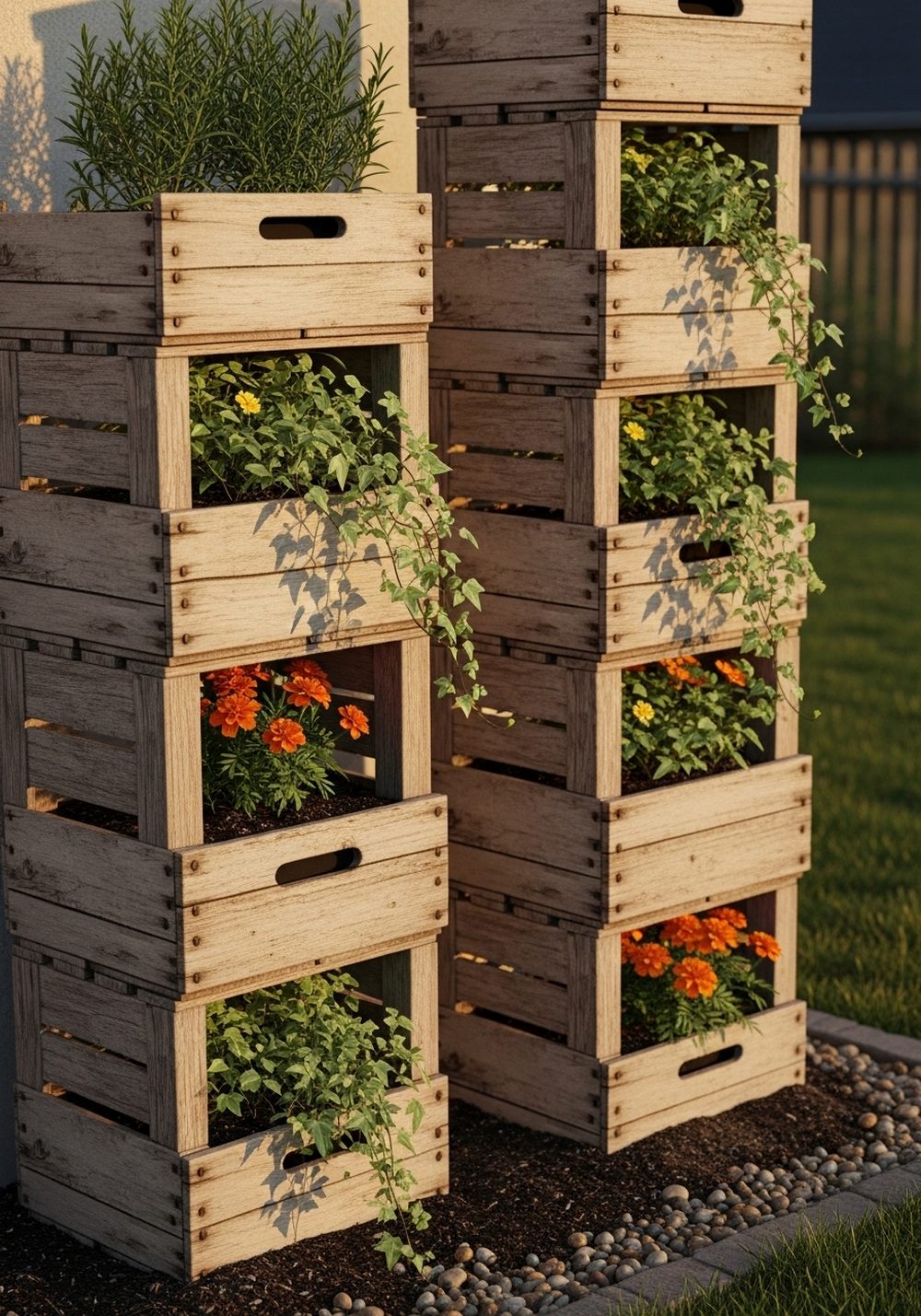
Stack old wooden crates into simple towers to create instant height and character in your garden. Lay some crates flat, stand others on their sides, and fill them with herbs, trailing plants, or bright seasonal flowers. The worn wood, faded paint, and visible grain add a rustic, sun-baked feel that looks like it’s been there for years. Place your towers by a wall, fence, or doorway to frame an entrance and make a tired corner look intentionally styled.
- Best For: Small patios, balconies, or blank fence lines that need vertical interest.
- Budget Tip: Ask local shops for unwanted fruit or wine crates and repair them with a few screws.
- Styling Idea: Whitewash or lightly sand crates for a soft, coastal-weathered look.
- Practical Note: Line the bottoms with weed fabric or plastic with drainage holes to protect the wood.
2. Rusty Tin Can Lantern Strings

Turn empty tin cans into charming lanterns that look magical after dusk. Clean the cans, punch simple patterns into the sides using a nail and hammer, then thread them onto wire or string and add tealights or small LED candles inside. As the light shines through the holes, it casts twinkling patterns over brick, gravel, and plants, helping your garden feel warm and lived-in. The slight rust and scratches just add to the weathered charm.
- Best For: Evening seating areas, pergolas, and along fences or balcony rails.
- Budget Tip: Save food cans over a few weeks and use basic tools you already own.
- Styling Idea: Mix plain metal cans with a few painted in muted terracotta, cream, or sage.
- Practical Note: If using real candles, hang them away from flammable plants and always supervise.
3. Vintage Ladder Herb Shelf
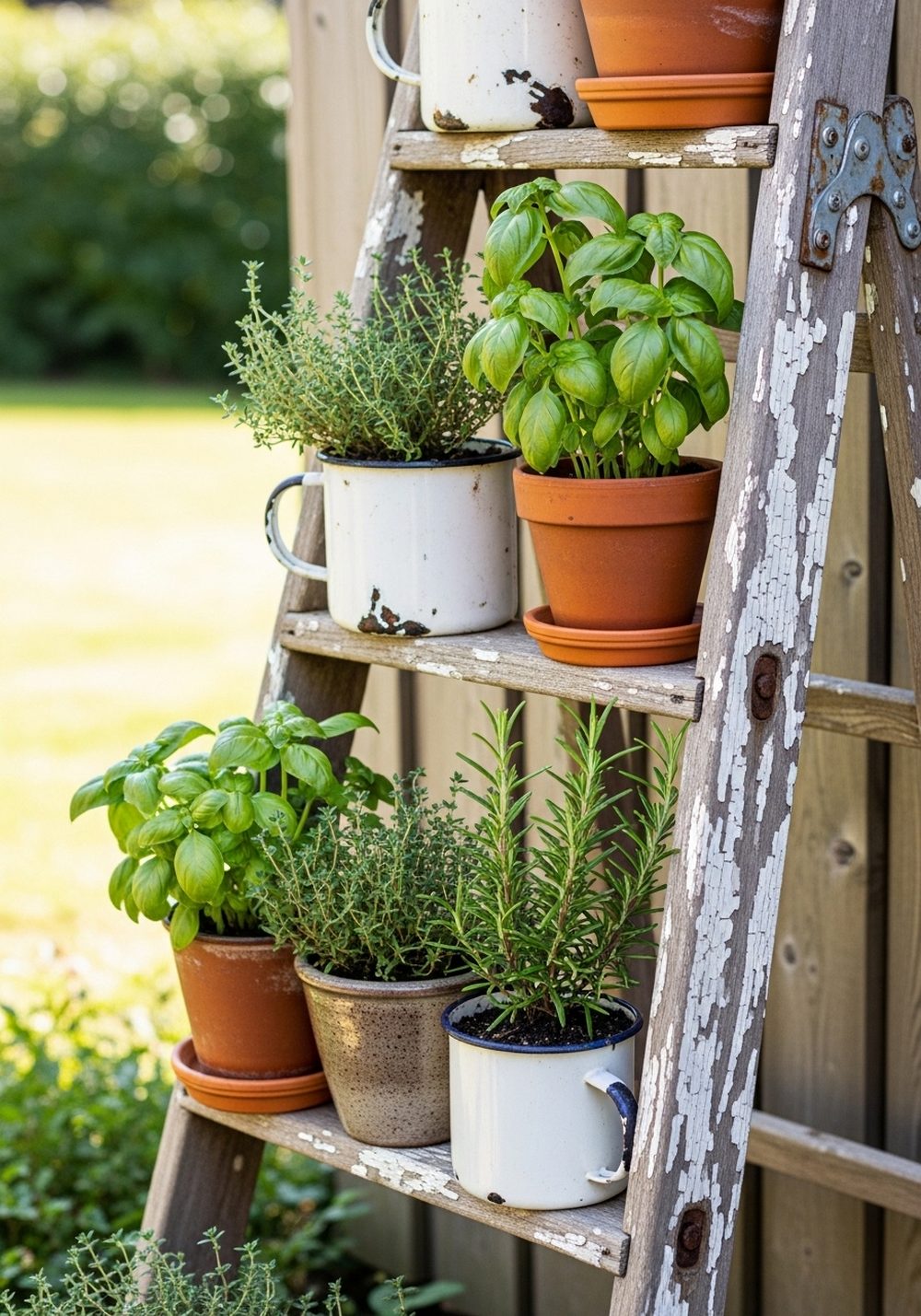
An old wooden ladder can become a beautiful herb display with almost no building work. Simply lean it securely against a wall or fence, then place pots and jars on each rung. Weathered wood, peeling paint, and rusty metal parts contrast with lush green leaves and give that “found in a cottage garden” feeling. Plant your most-used herbs—basil, thyme, mint—where you can reach them easily, and let a few trailing plants spill down the sides for softness.
- Best For: Narrow side yards, balconies, or spaces where you can’t install shelves.
- Budget Tip: Search second-hand markets, online listings, or family sheds for old ladders.
- Styling Idea: Use mismatched terracotta pots, tins, and jars for a collected-over-time look.
- Practical Note: Anchor the ladder with hooks or brackets so it can’t slip or blow over.
4. Pallet Lounge With Faded Cushions
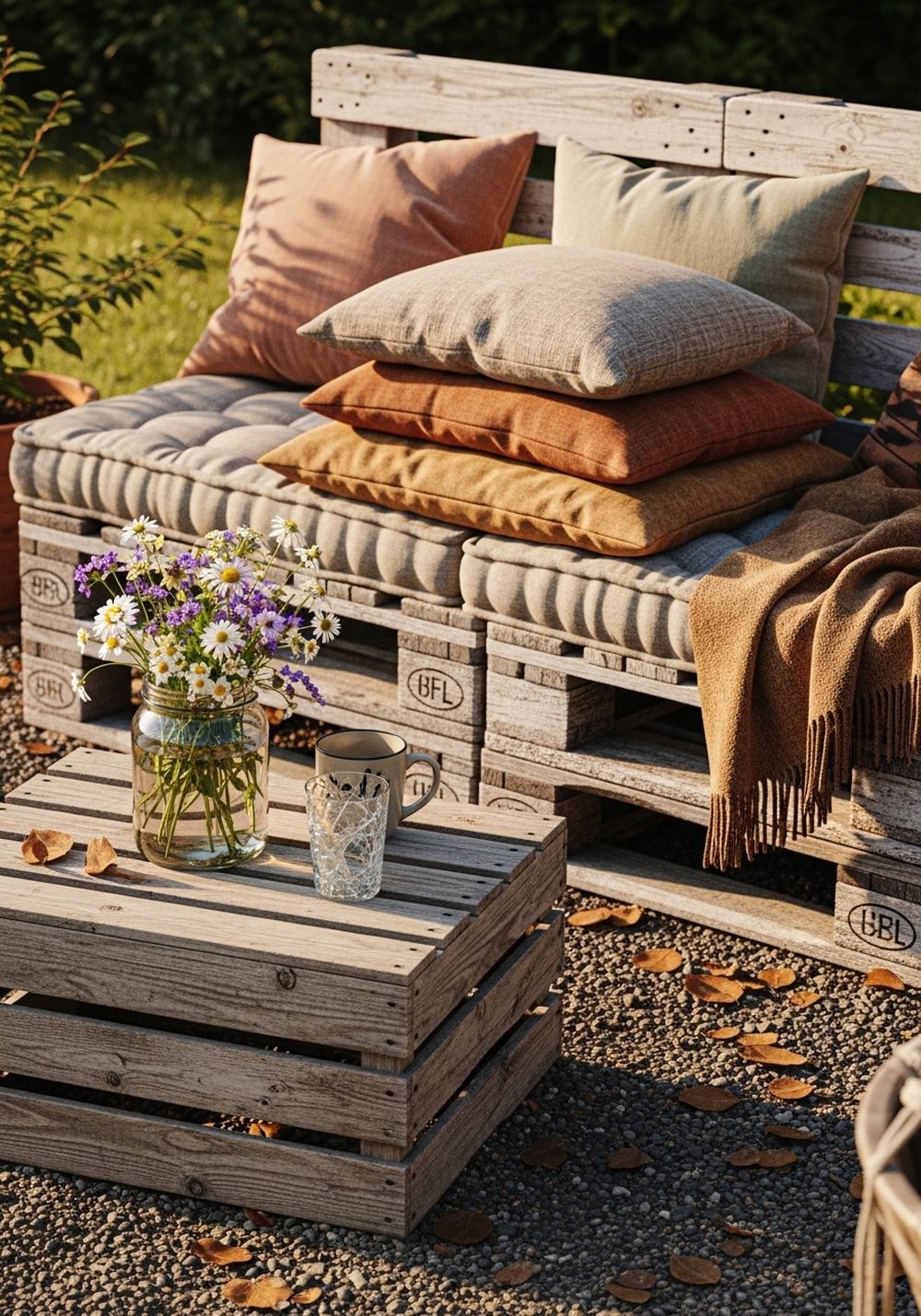
Build a relaxed garden lounge from stacked pallets, then soften it with sun-faded cushions and throws. The rough, weathered boards give a laid-back beach shack vibe, while the fabric adds comfort and color. Add a crate or stump as a side table for drinks and lanterns. Over time, the wood and textiles will both weather, making the space feel more and more like your favorite outdoor living room. It’s casual, cozy, and perfect for lazy evenings or morning coffee.
- Best For: Patios, decks, and roof terraces where you need flexible seating.
- Budget Tip: Source pallets free or cheap from local businesses, sanding any rough edges.
- Styling Idea: Stick to earthy tones—rust, sand, olive—for a warm, sun-worn palette.
- Care & Maintenance: Store cushions inside or in a waterproof box to prolong their life.
5. Distressed Window Frame Wall Planter

Hang an old wooden window frame on a wall or fence and turn it into a shabby-chic vertical planter. Replace missing glass with small pots, jars, or little wooden shelves, planting trailing flowers or succulents that spill through the “panes.” Cracked paint and exposed wood grain give the frame a charming, timeworn look that instantly upgrades a blank wall. It feels like a window into a secret garden and takes up almost no floor space.
- Best For: Renters, small courtyards, and plain garage or shed walls.
- Budget Tip: Hunt for discarded frames at salvage yards or building sites with permission.
- Styling Idea: Leave the frame as-is for a raw look, or give it a light sanding and soft pastel wash.
- Practical Note: Use strong fixings and consider the weight of wet soil and pots when hanging.
6. Tea Tins & Mismatched Mugs Flower Row

Line up old tea tins and mismatched mugs along a windowsill, shelf, or narrow wall ledge and turn them into a charming row of mini planters. Their faded labels, tiny chips, and hairline cracks look lovely against fresh green foliage and tiny blooms. Plant low-growing flowers, herbs, or succulents and let them spill slightly over the edges. This simple touch can dress up a dull ledge, balcony rail, or stair, giving a sweet, café-style finish for almost no cost.
- Best For: Balconies, railings, windowsills, and narrow ledges.
- Budget Tip: Use old tins and mugs you already have, or pick them up cheaply at thrift shops.
- Styling Idea: Mix florals, stripes, and plain colors in similar warm tones for a soft, cohesive look.
- Practical Note: Drill a small drainage hole where possible or add a layer of gravel at the bottom.
7. Reclaimed Brick Path With Bottle-Edge Border
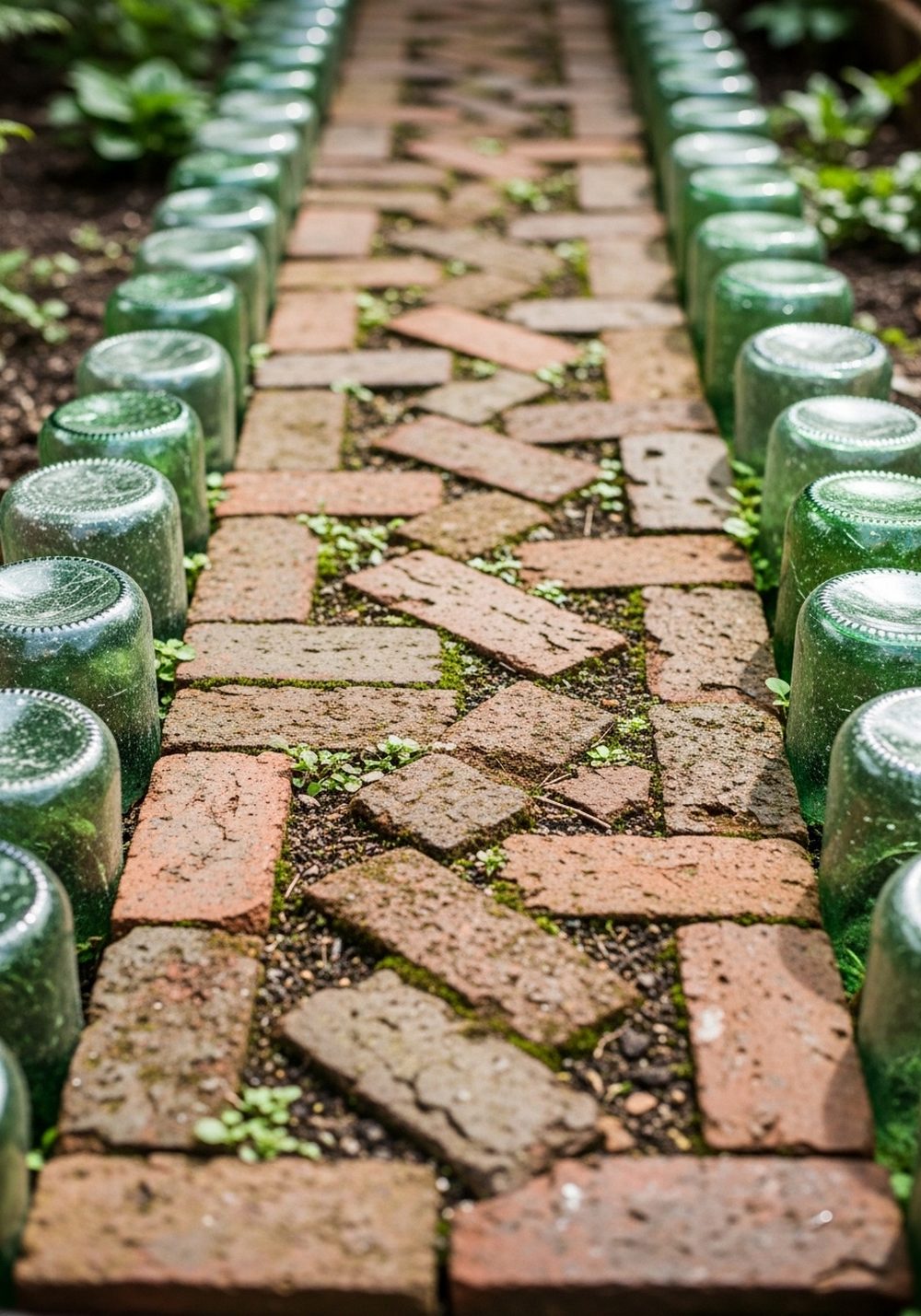
Create a short garden path from reclaimed bricks, then edge it with upturned glass bottles for a unique, weathered look. The old bricks, with moss and chips, instantly add age and structure, while the bottles catch light and add subtle sparkle as you walk. You don’t need a long path—even a small stepping route between beds or from door to bench can make the space feel more designed. Over time, the materials will blend in and look like they’ve always been there.
- Best For: Leading to a seating area, shed, or favorite corner of the garden.
- Budget Tip: Use leftover bricks from projects and rinse bottles you’d normally recycle.
- Styling Idea: Choose bottles in shades of green and brown for a warm, earthy border.
- Practical Note: Make sure bottles are securely buried and not sharp at the top.
8. Weathered Watering Can Fountain Feature
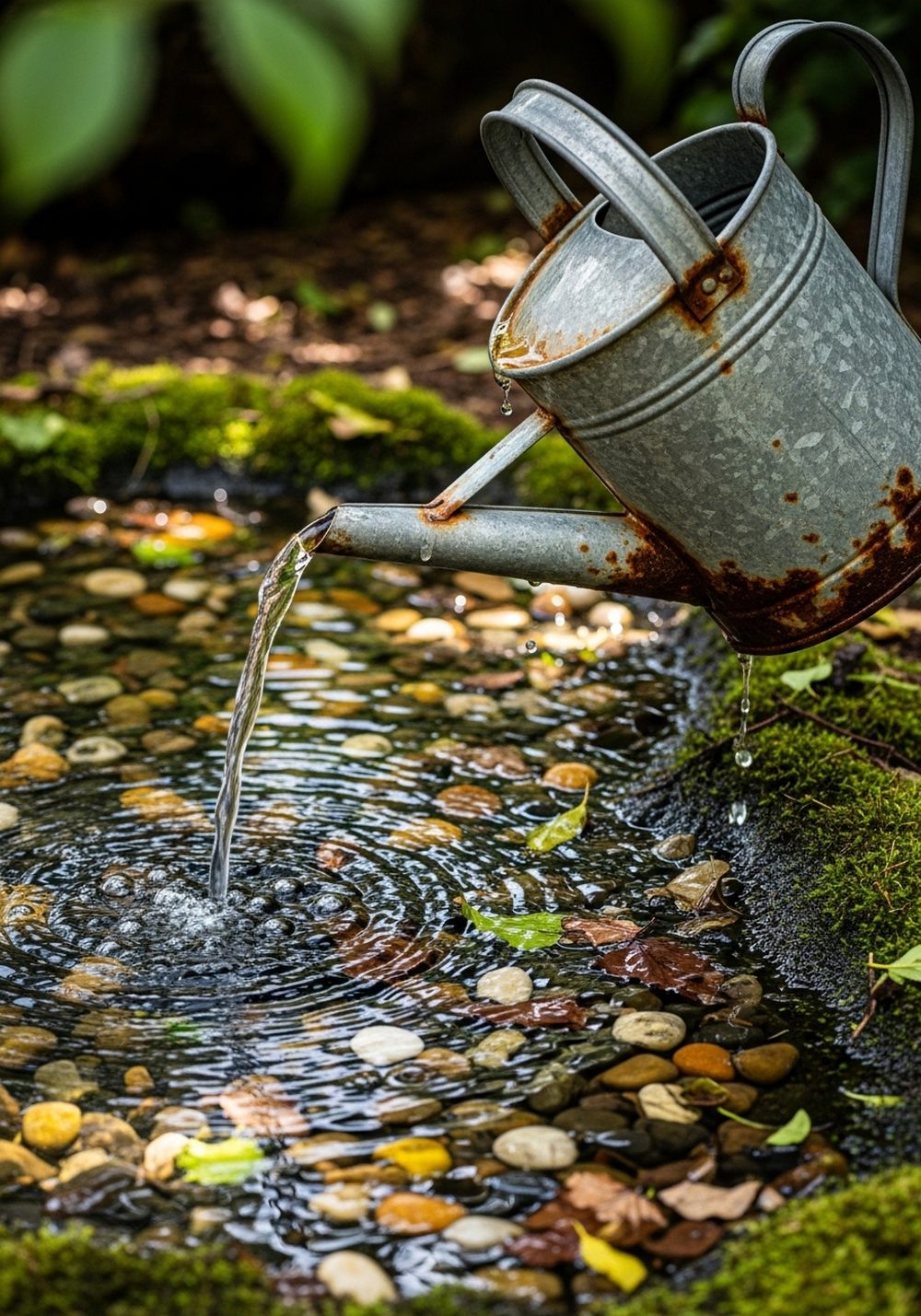
Transform a battered old metal watering can into a simple fountain that adds movement and sound to your garden. Sit the can on a stacked crate or stones, feed a small pump through the back, and let water pour from the spout into a shallow basin filled with pebbles. The rust and dents make the can look like a much-loved tool that’s retired into a new role. The trickle of water and glint of metal in sunlight feel soothing and timeless.
- Best For: Near seating areas where you can enjoy the sound of water.
- Budget Tip: Use a basic small pump and a second-hand can; the wear and tear is a bonus.
- Styling Idea: Surround the basin with moss, low groundcovers, or small ferns for a natural look.
- Care & Maintenance: Clean the pump and top up water regularly, especially in hot weather.
9. Upcycled Fabric Scrap Bunting Shade

Sew or tie fabric scraps into strings of bunting and stretch them across your garden seating area. Old shirts, sheets, and tea towels become fluttering triangles or rectangles that soften harsh sun and add color overhead. As the fabrics fade slightly in the weather, they take on a gentle, nostalgic feel that suits cottage-style gardens and relaxed patios. It’s a playful way to introduce pattern and warmth without spending much or committing to permanent fixtures.
- Best For: Patios, children’s play areas, or over a pallet lounge.
- Budget Tip: Cut bunting from worn-out clothes and linens instead of buying new fabric.
- Styling Idea: Stick to warm, sun-washed tones—mustard, blush, denim blue—for a cohesive look.
- Practical Note: Take bunting down in storms to prevent damage and tangling.
10. Stacked Antique Drawer Planter Corner

Rescue old drawers from broken dressers and stack them to make a layered planter feature. Angle them slightly, fill with soil, and plant a mix of trailing and upright plants so that each level spills into the next. The cracked varnish, worn handles, and scuffed edges give instant character, turning an unused corner into a story-filled focal point. As plants grow and the wood continues to weather, the whole piece merges beautifully with the garden around it.
- Best For: Awkward corners, beside sheds, or at the end of a path.
- Budget Tip: Look for damaged furniture offered cheaply or free and reuse only the drawers.
- Styling Idea: Mix flowers, grasses, and herbs for varied height, color, and texture.
- Care & Maintenance: Drill drainage holes and consider lining drawers to slow wood rot.
Conclusion
With a few pallets, crates, tins, bottles, and fabric scraps, you can give your garden a warm, weathered personality that feels both relaxed and intentional. None of these ideas require a big budget or expert skills—just a willingness to reuse what you already have. Start with one corner, one crate tower, or one string of lanterns, then build from there. Over time, your outdoor space will tell the story of everything you’ve lovingly upcycled.
FAQs
Q1. How can I decorate my garden on a very small budget?
Focus on reusing what you already have—crates, tins, jars, pallets, old clothes, and furniture pieces. Simple projects like crate planters, tin can lanterns, and fabric bunting cost little but make a big visual difference. Add plants gradually, starting with cheap seedlings or cuttings from friends.
Q2. Are these upcycled decor ideas suitable for renters?
Yes. Many of these ideas are non-permanent and movable, like ladder shelves, crate towers, pallet seating, bunting, and drawer planters. Avoid drilling into walls if your landlord doesn’t allow it; instead, lean items securely and use freestanding pieces that you can take with you when you move.
Q3. How do I make sure upcycled items survive the weather?
Choose materials that naturally cope with sun and rain, such as solid wood, metal, and thick glass. You can add a clear outdoor sealant to wooden items, and bring fabrics and cushions inside during bad weather. Accept that some fading and wear will happen—that’s part of the warm, weathered charm.
Q4. What are the best ideas for a very small balcony?
Try vertical and ledge-based projects: a vintage ladder herb shelf, tea tins and mugs along a rail or windowsill, and a single crate tower with trailing plants. Add one or two lanterns or a short string of tin can lights. Keep the footprint small but use walls and railings to add height and atmosphere.
Q5. Is it safe to mix plants and decor like bottles, metal, and fabrics?
Yes, as long as you avoid sharp edges and secure everything well. Smooth any rough metal or glass edges, bury bottles firmly, and place heavy items where they can’t topple. Keep candles away from fabrics and dry plants. With a little care, your decor can be both beautiful and safe for people, pets, and wildlife.