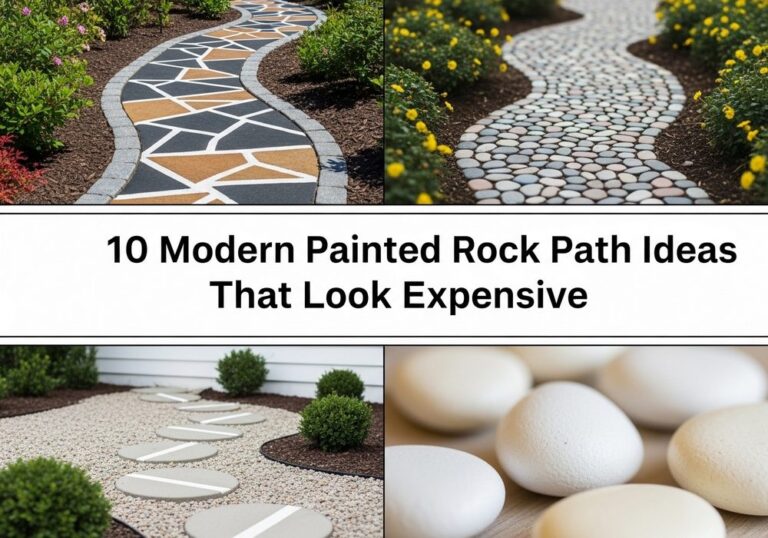
10 Budget Pallet Raised Beds That Look Expensive
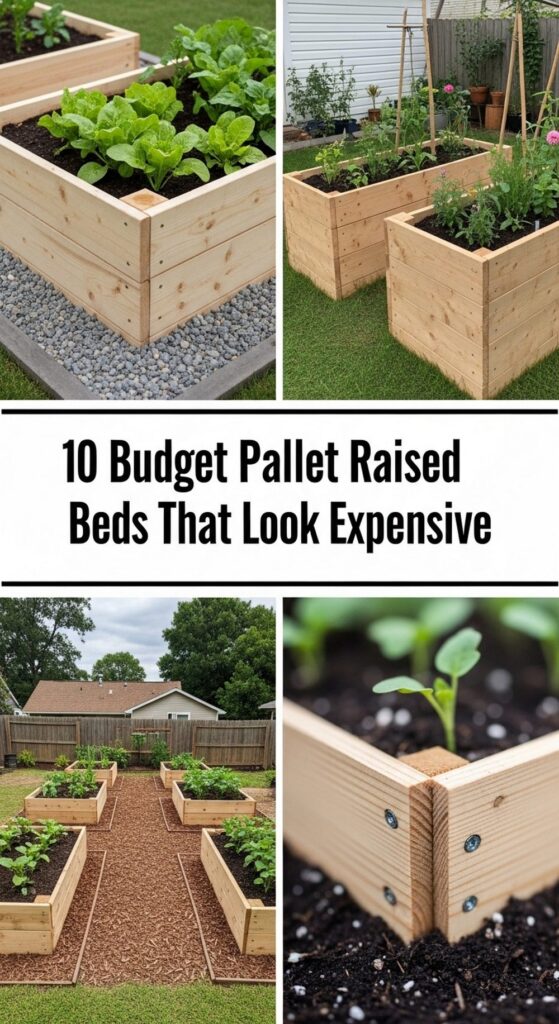
If you’ve been eyeing those sleek, high-end planter boxes but your budget says “maybe next year,” pallet wood is about to become your new best friend. With a bit of sanding, paint, and creative layout, simple pallets can turn into raised beds that look like custom-built landscaping.
This guide shares ten pallet raised bed ideas that feel designer, not DIY-in-a-rush. You’ll find smart tricks for paint, edging, layout, and lighting so your garden looks polished without a big spend. Whether you have a small patio, a rental yard, or a full-sized garden, these ideas will help you build planters that look far more expensive than they actually are.
Quick List
- Sleek Charcoal Pallet Raised Bed With Gravel Frame
- Whitewashed Pallet Herb Bed In A Perfect Grid
- Double-Height Pallet Bed For A High-End Planter Look
- L-Shaped Corner Pallet Planter That Feels Built-In
- Pallet Raised Bed With A Wide Seating Ledge
- Modern Slatted Pallet Bed With Hidden Corners
- Matching Pallet Kitchen Garden Beds With Simple Labels
- Pallet Flower Bed With Chic Herringbone Top Trim
- Tall Trellis Pallet Bed For Dramatic Vertical Greenery
- Softly Lit Pallet Raised Beds For Evening Garden Glow
1. Sleek Charcoal Pallet Raised Bed With Gravel Frame
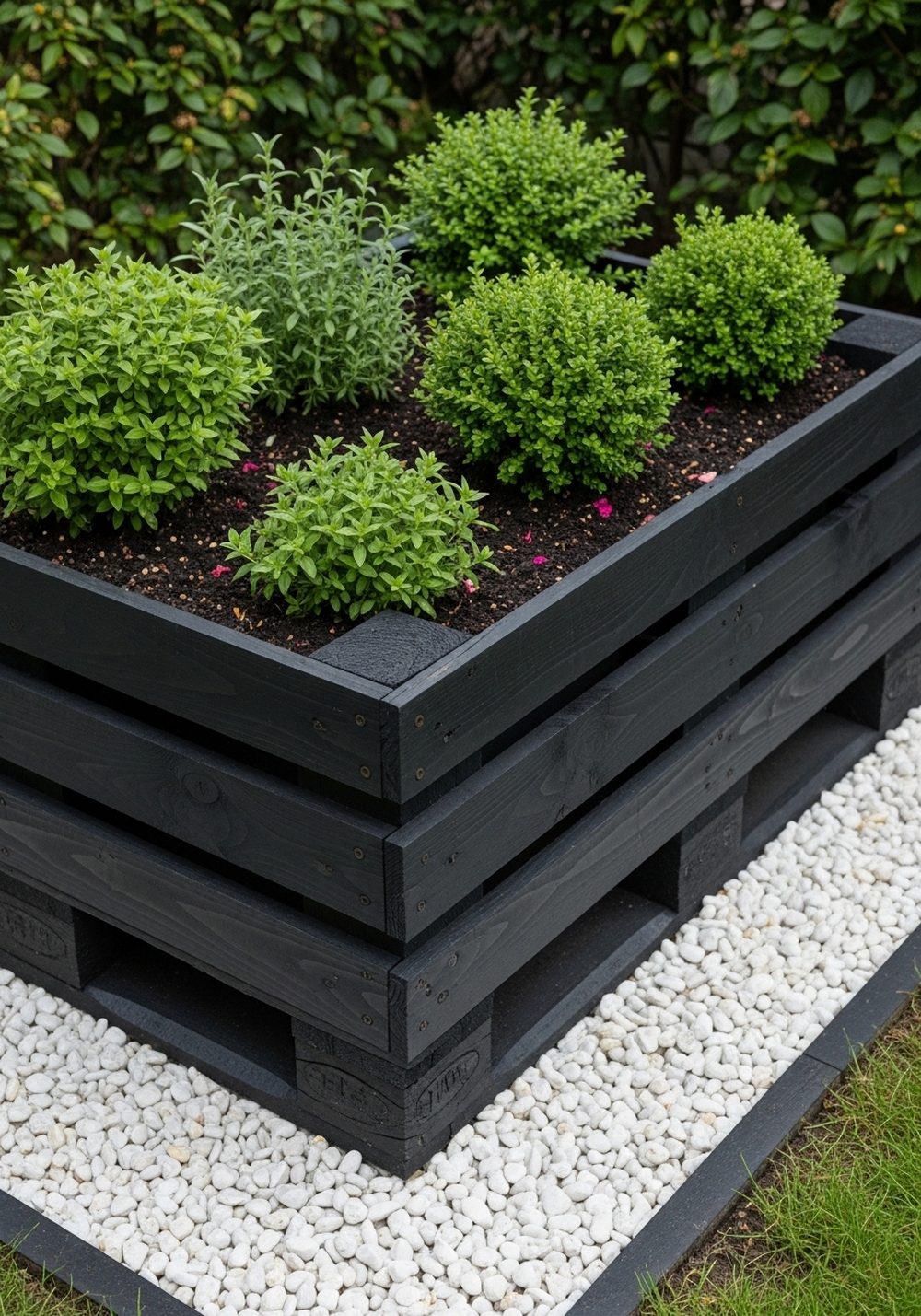
Painted a deep charcoal, a simple pallet raised bed instantly jumps from “recycled” to “designer.” Build a basic rectangular box from pallet boards, sand the surfaces smooth, then coat the outside in an outdoor-grade dark paint or stain. Set the bed slightly above ground and surround it with a frame of pale gravel, using simple edging to keep the stones in line. The contrast between dark wood, light gravel, and rich green plants feels intentionally styled and much more expensive than it is.
- Best For: Modern gardens, patios, and small courtyards.
- Budget Tip: Use leftover masonry sand or small local gravel instead of specialty bagged stone.
- Styling Idea: Pair with black lanterns or matte black plant pots for a cohesive look.
- Practical Note: Line the inside with weed fabric or plastic to protect the wood.
- Care & Maintenance: Top up gravel once a year where foot traffic scatters it.
2. Whitewashed Pallet Herb Bed In A Perfect Grid
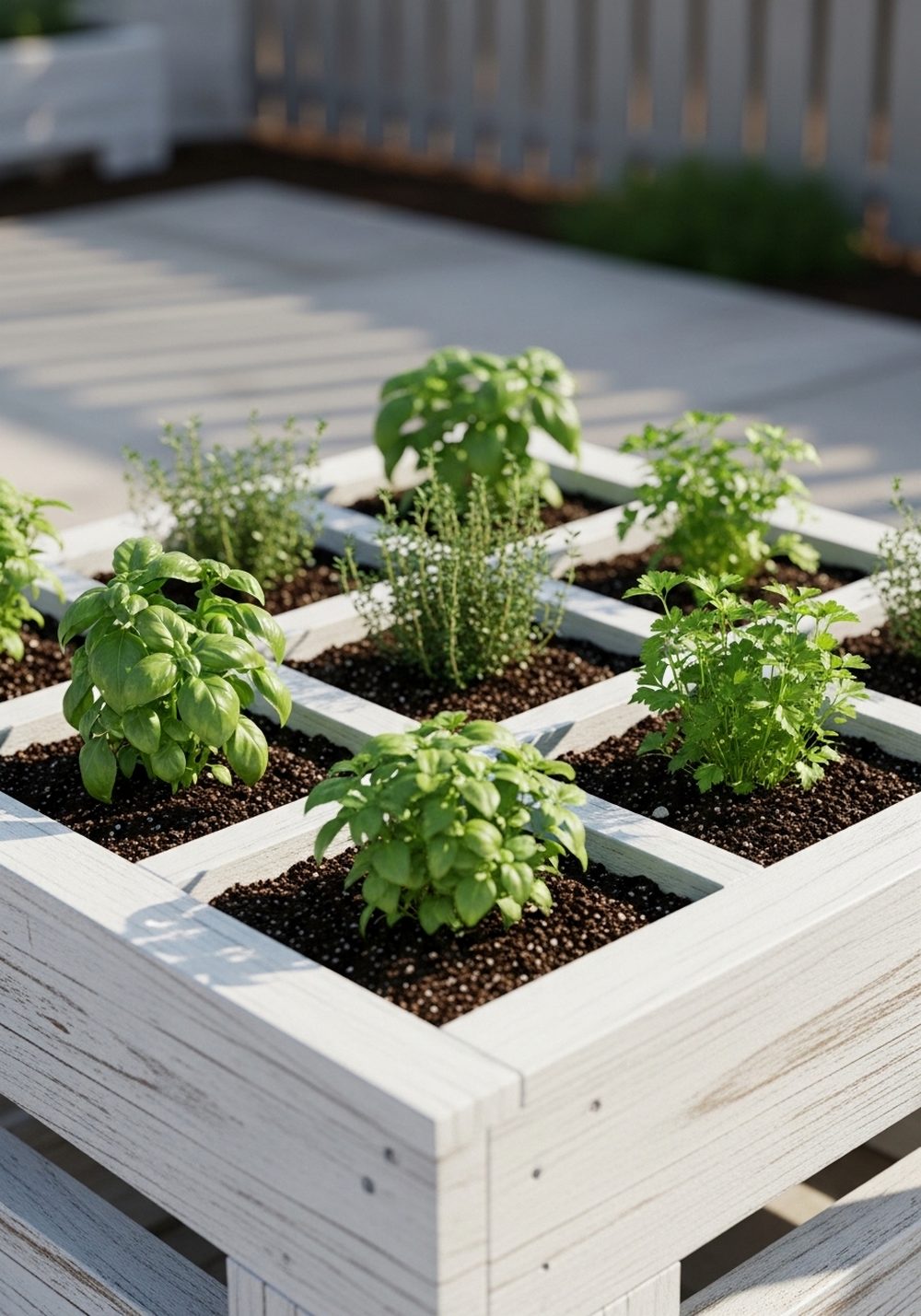
Turn a pallet into a charming “French potager” by dividing your raised bed into a neat grid. Build a shallow pallet box, then add thin wooden strips across the top to create square planting sections. Whitewash the entire exterior and grid strips with diluted paint for a soft, chalky finish that still shows the grain. Fill each square with a different herb or salad leaf for a beautiful, orderly pattern. The crisp grid, repeated plants, and bright white finish look chic and carefully designed.
- Best For: Herb gardens near the kitchen door or balcony edges.
- Budget Tip: Mix leftover white paint with water for a cheap whitewash effect.
- Styling Idea: Keep plant choices simple and repeat colors for a calm, curated look.
- Practical Note: Label each square so you remember what you planted where.
- Care & Maintenance: Trim herbs regularly to keep the grid tidy and lush.
3. Double-Height Pallet Bed For A High-End Planter Look
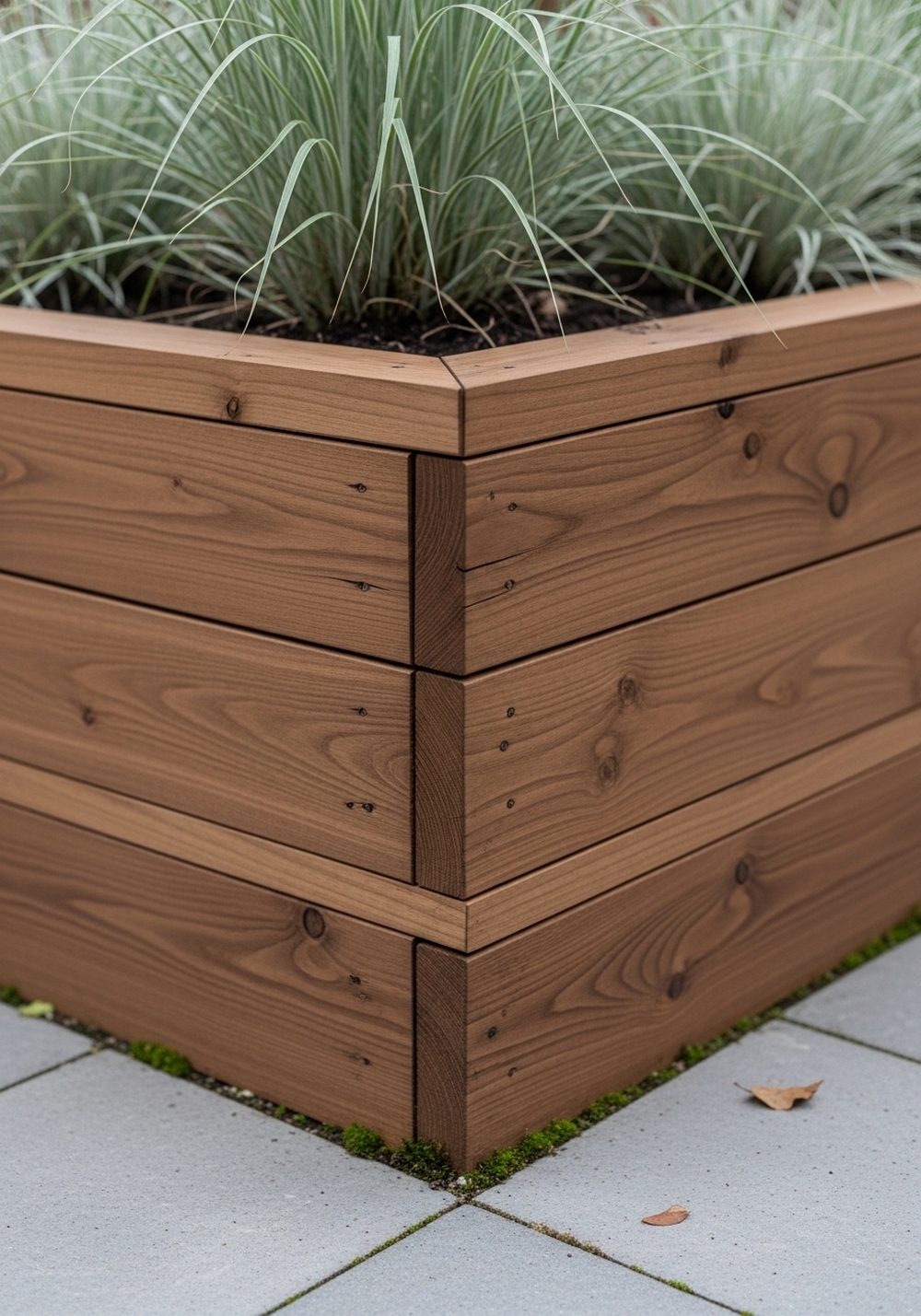
Stacking two pallet frames instantly gives height and drama, similar to pricey tall planters. Build one standard pallet raised bed, then build a second slightly smaller one and secure it on top, stepping the layers back a few centimeters for a tiered effect. Stain both layers in a rich, warm tone, and plant taller grasses or shrubs in the back, with lower plants at the front. The eye sees a substantial, weighty structure that feels custom-made rather than improvised.
- Best For: Creating a focal point or screening an ugly view.
- Budget Tip: Use off-cuts and imperfect boards on the hidden inner sides.
- Styling Idea: Choose plants in just one or two colors for an elegant look.
- Practical Note: Make sure the base is sturdy and level before stacking.
- Care & Maintenance: Check the joins each season and re-stain every couple of years.
4. L-Shaped Corner Pallet Planter That Feels Built-In
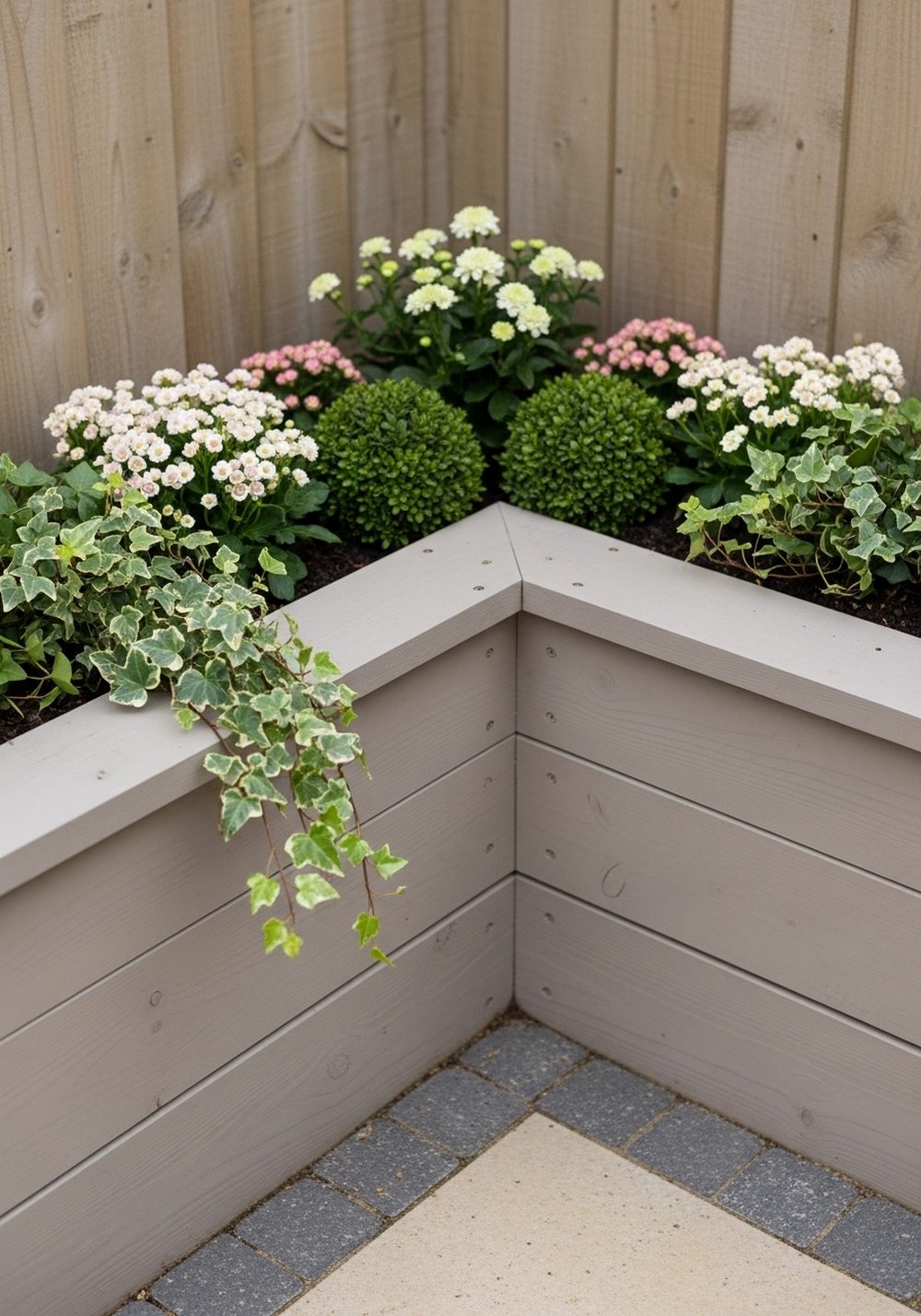
An L-shaped raised bed makes any corner feel intentional, like a built-in feature from a landscape designer. Construct two pallet boxes and join them at a right angle, then paint them in a neutral shade that matches your fence or wall. Plant one arm with taller shrubs and grasses, and keep the other arm lower with herbs or flowers. The shape hugs the corner, softening hard edges while making the whole area look “planned” rather than patched together.
- Best For: Dead corners, along fences, or where two walls meet.
- Budget Tip: Hide rougher boards at the back where they won’t be seen.
- Styling Idea: Match the paint to your fence for a calm, unified backdrop.
- Practical Note: Leave enough space in front for seating or a small table.
- Care & Maintenance: Refresh the paint on sun-exposed sides first to save time.
5. Pallet Raised Bed With A Wide Seating Ledge
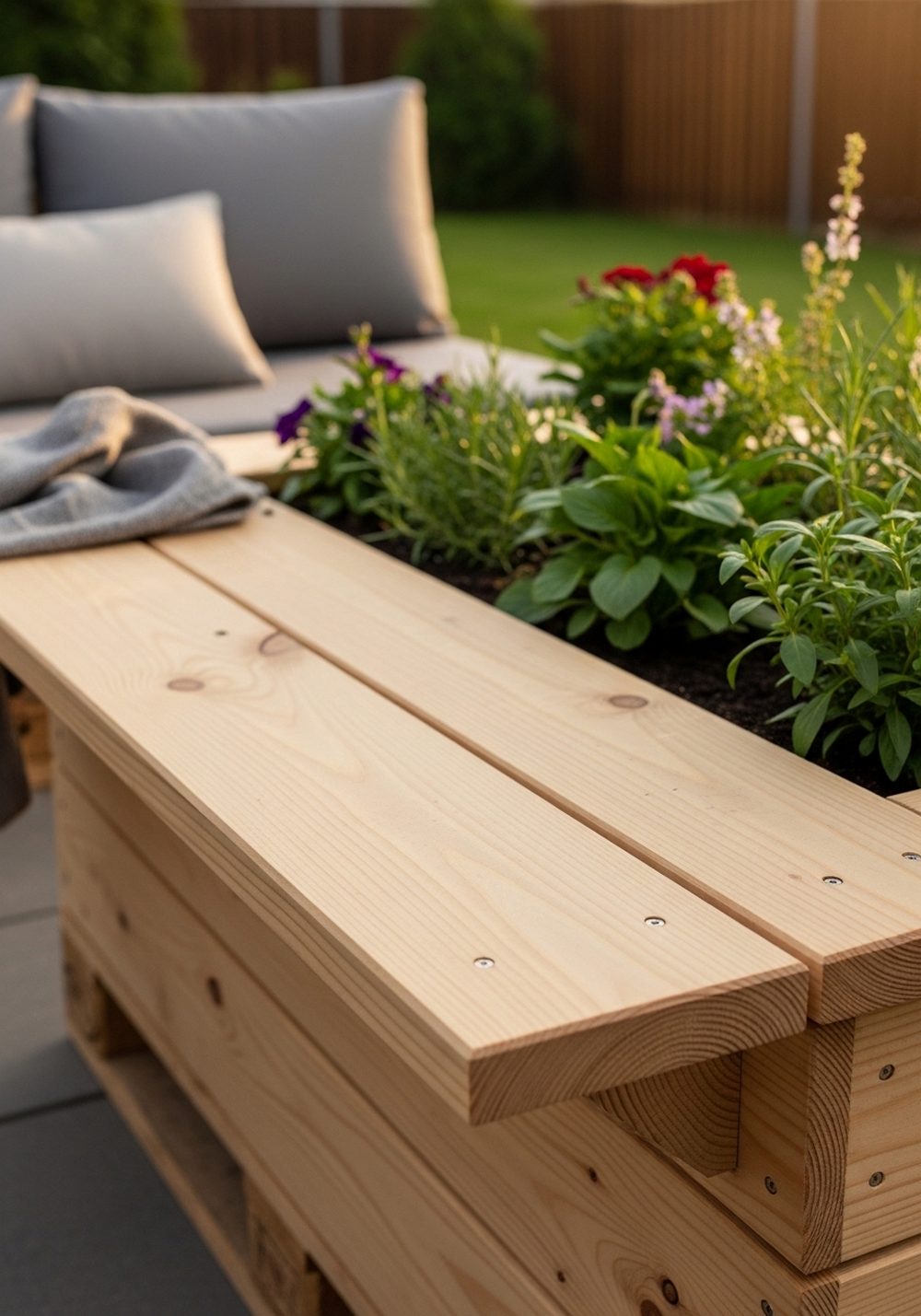
Add a wide top ledge and your pallet raised bed becomes a casual bench as well as a planter. Secure smooth planks (or the best pallet boards you have) horizontally along the top edge, making them deep enough to sit on comfortably. Sand thoroughly and finish with an outdoor oil or stain so they feel like proper furniture. Plant soft, fragrant plants like lavender or mint inside the bed to make sitting there a treat. The dual-purpose design feels clever and high-end.
- Best For: Small gardens where seating space is limited.
- Budget Tip: Use reclaimed boards from an old table or shelf for the seat.
- Styling Idea: Add a couple of outdoor cushions in neutral tones for a lounge feel.
- Practical Note: Secure the bed firmly so it doesn’t shift when people sit.
- Care & Maintenance: Re-oil the ledge annually to keep it smooth and weather resistant.
6. Modern Slatted Pallet Bed With Hidden Corners
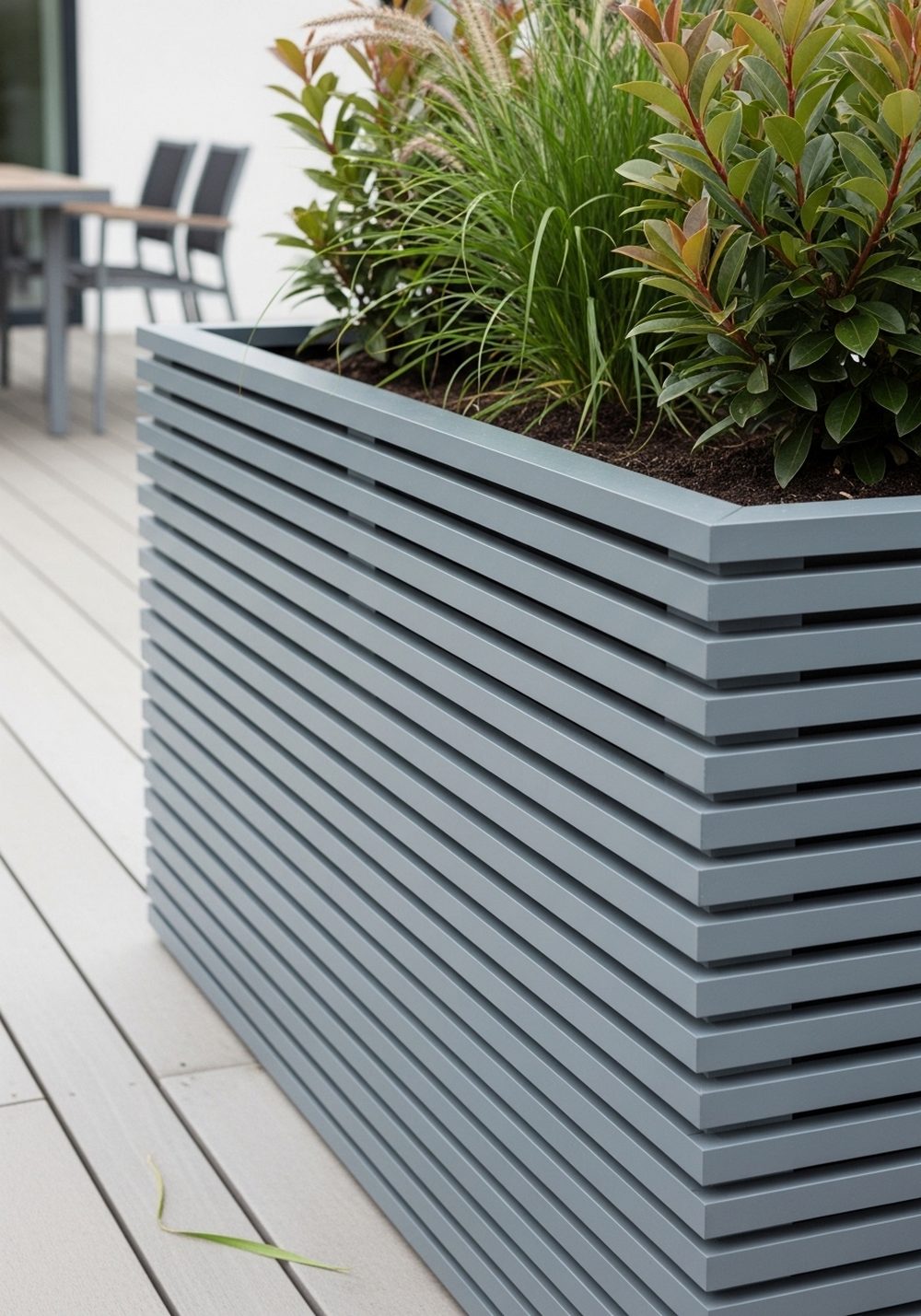
By cladding your pallet bed with horizontal slats, you can hide all the rough edges and create a sleek, modern box. Build the basic bed, then cut narrow, evenly sized strips from pallet boards and nail or screw them over the frame with small gaps between each strip. Paint everything a cool grey or soft black. The repeating lines and clean planes look like a designer planter you’d see in a showroom, not something built from scrap wood.
- Best For: Contemporary patios and decks.
- Budget Tip: Use wood filler only on the most visible cracks; leave the rest for character.
- Styling Idea: Pair with simple grasses and one architectural plant for a minimalist vibe.
- Practical Note: Pre-drill holes to prevent the narrow slats from splitting.
- Care & Maintenance: Touch up paint where slats get scuffed by shoes or tools.
7. Matching Pallet Kitchen Garden Beds With Simple Labels
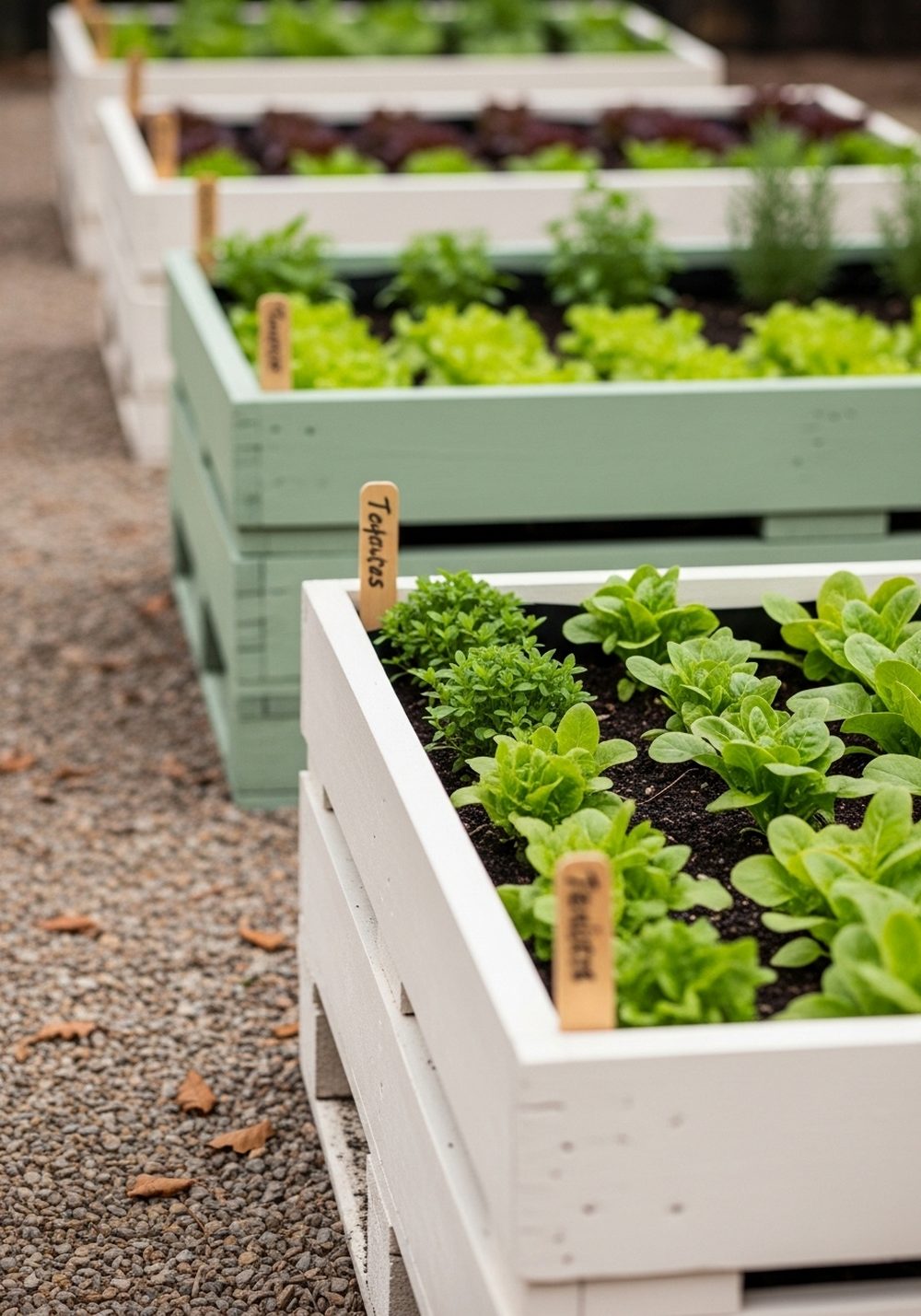
Several small pallet beds lined up together look instantly “designed,” even if they’re very simple builds. Make two or three identical rectangular boxes, all the same height, and paint them in a soft, muted color. Fill each with one category of plants—herbs, salads, or root crops—and add matching wooden labels for a tidy feel. This sense of repetition and order is what makes professional kitchen gardens so beautiful, and you can copy it on a tiny budget.
- Best For: Long narrow gardens or along a sunny fence.
- Budget Tip: Keep the design identical so you can cut all boards in the same sizes.
- Styling Idea: Stick to one paint color but vary plant heights for interest.
- Practical Note: Leave clear walking paths between beds so they’re easy to tend.
- Care & Maintenance: Repaint all the beds together every few years for a “freshly installed” look.
8. Pallet Flower Bed With Chic Herringbone Top Trim
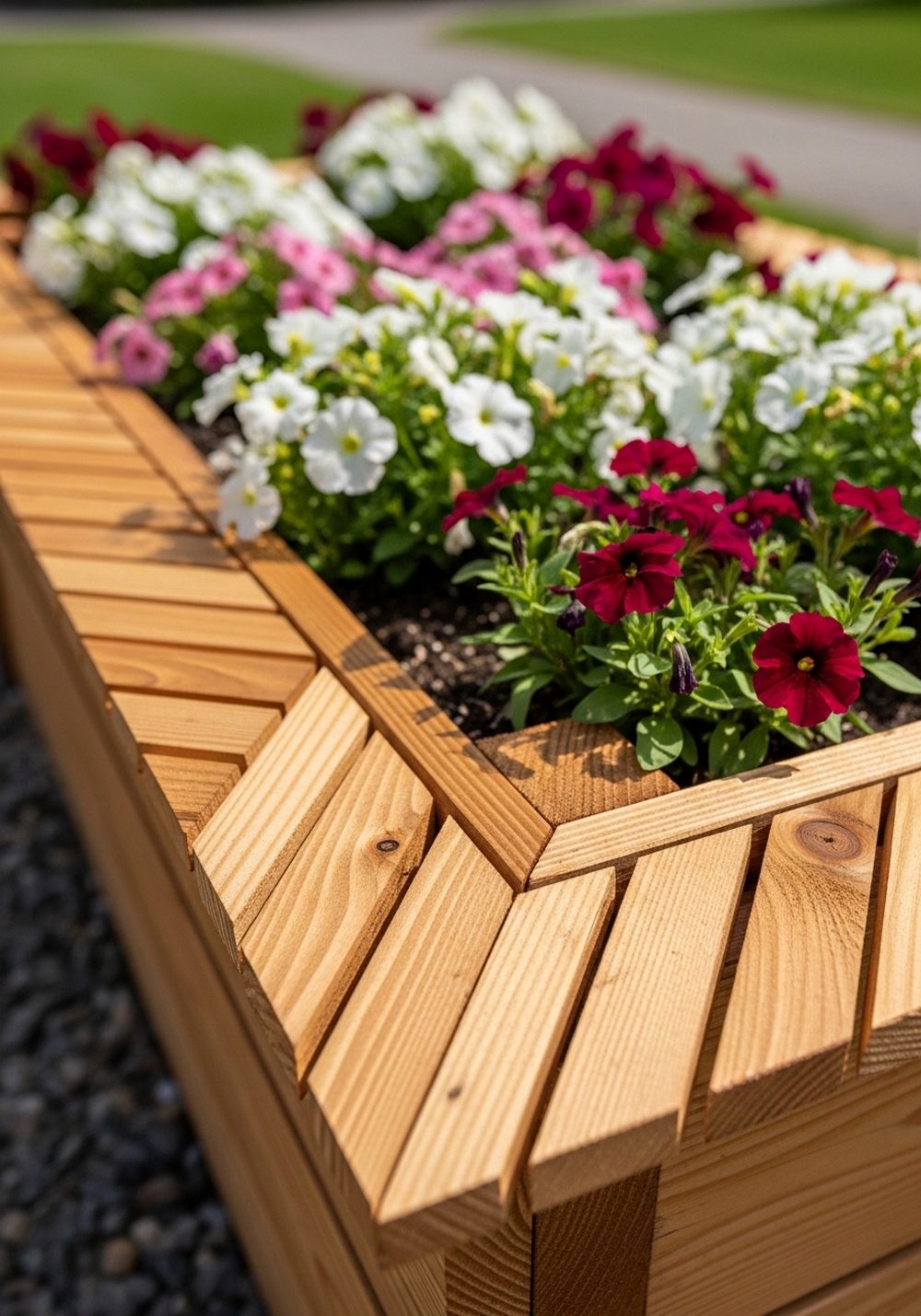
A simple pattern can make a huge difference. Create a narrow trim around the top of your pallet bed by cutting short pieces of pallet wood and arranging them in a herringbone pattern. Secure them tightly, sand the edges, and stain them in a rich tone that contrasts with the main body of the bed. When you pack the planter with tumbling flowers and textured foliage, that patterned top reads as a stylish detail you’d expect from a high-end garden designer.
- Best For: Flower-focused beds near patios or front doors.
- Budget Tip: Use the best-looking scraps for the trim and plainer boards for the sides.
- Styling Idea: Choose flowers in just two or three colors so the pattern still stands out.
- Practical Note: Seal the trim with outdoor varnish to protect all the cut ends.
- Care & Maintenance: Check for lifting pieces each spring and re-secure if needed.
9. Tall Trellis Pallet Bed For Dramatic Vertical Greenery
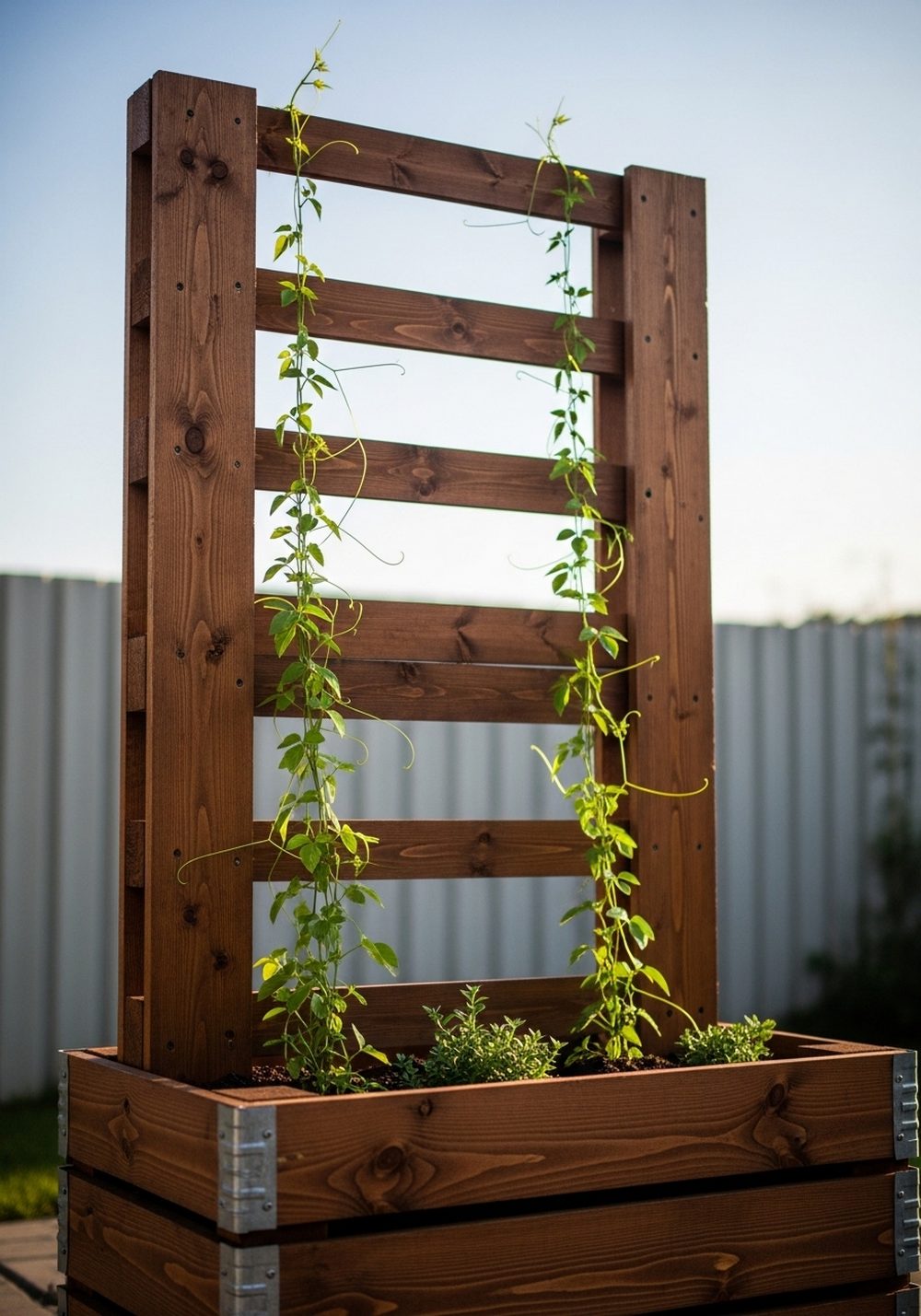
Adding a trellis to a pallet raised bed gives height, privacy, and a dramatic “green wall” effect. Build your bed as usual, then attach a tall frame using upright pallet planks and cross slats. Plant climbers like beans, sweet peas, or flowering vines at the back, and fill the front with low-growing herbs or flowers. As the plants grow, the trellis slowly disappears under leaves and blooms, making the whole structure look like an intentional, luxurious vertical feature.
- Best For: Screening bins, fences, or neighboring windows.
- Budget Tip: Use mismatched boards on the back of the trellis where they won’t show.
- Styling Idea: Paint the trellis black or dark green so foliage really pops.
- Practical Note: Anchor the trellis securely to prevent wind damage.
- Care & Maintenance: Tie in new growth regularly for a dense, lush look.
10. Softly Lit Pallet Raised Beds For Evening Garden Glow
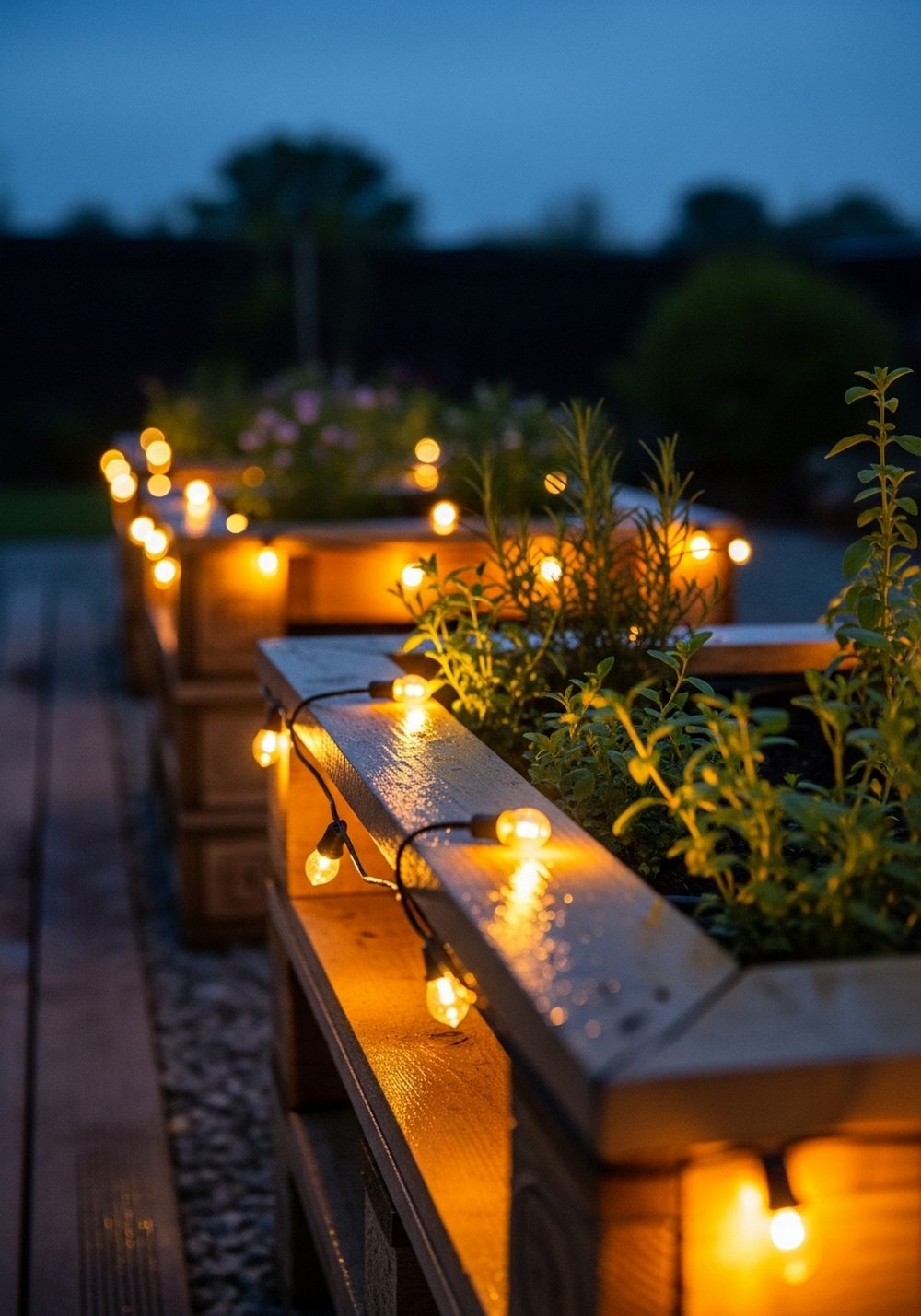
Lighting is one of the quickest ways to make cheap materials look expensive. Run warm white string lights or low-voltage strip lights along the top or underside of your pallet raised beds, taking care to hide cables where possible. At dusk, the glow along the edges of the wood makes the planters look like part of a designed outdoor room. The light bounces off leaves, gravel, and decking, adding layers of softness and a cozy, resort-style feel without needing any structural changes.
- Best For: Entertaining areas, patios, and balcony gardens.
- Budget Tip: Start with one bed and a single string of lights, then expand later.
- Styling Idea: Keep to warm white lighting only for a sophisticated atmosphere.
- Practical Note: Use outdoor-rated lights and fixings, and route cables safely.
- Care & Maintenance: Check connections each season and replace failed bulbs promptly.
Conclusion
You don’t need designer planters or a huge budget to make your garden look polished and expensive. With a few smart upgrades—paint, trim, layout, and lighting—humble pallets can become the stars of your outdoor space. Start by choosing one raised bed idea that fits your space and skill level, then build from there as your confidence grows. Before long, your “scrap wood” planters will look like they came straight from a high-end garden catalog.
FAQs
1. Can I really make pallet raised beds look high-end on a small budget?
Yes. The trick is focusing on simple upgrades that give a professional finish: sanding, cohesive paint or stain, neat edging, and tidy planting. Gravel borders, repeated shapes, and good lighting are all low-cost ways to instantly elevate the look. Think more about design choices than expensive materials.
2. Are pallet raised beds safe for growing vegetables and herbs?
They can be, but you should be picky about the pallets you use. Look for heat-treated pallets rather than chemically treated ones, and avoid any wood that looks stained, oily, or suspicious. Lining the inside with a food-safe plastic or geotextile fabric adds a barrier between soil and wood, which many gardeners prefer.
3. What if I’m renting and can’t build anything permanent?
Most pallet raised beds are freestanding, so they’re perfect for renters. Build them in manageable sizes that two people can lift, and place them on top of weed fabric, gravel, or deck boards without fixing them down. When you move, you can empty the soil, take the beds apart or move them as they are, and leave the garden tidy.
4. How do I keep pallet raised beds looking smart over time?
Use a good primer and exterior paint or stain from the start, and plan on a light refresh every couple of years. Brush off dirt, lightly sand any rough patches, and recoat only the most visible sides if you’re short on time. Keeping edges weed-free and topping up gravel or mulch regularly also makes the beds look freshly installed.
5. What’s the easiest “expensive-looking” upgrade for beginners?
If you’re new to DIY, start with paint and gravel. Build a simple pallet bed, give it a couple of coats of a rich, solid color, and surround it with a shallow strip of pale gravel. The strong contrast and neat edges instantly create that designer feel without needing complicated joinery or detailed woodworking skills.