20 Cottagecore Wildflower Garden Border Ideas
Cottagecore wildflower borders are all about soft edges, buzzing bees, and gardens that feel a little bit like they grew out of a storybook. Instead of sharp lines and formal rows, you get feathery grasses, nodding daisies, and petals that lean gently over paths and fences.
This collection of 20 wildflower border ideas is perfect for home gardeners who love a romantic, slightly untidy look but still want practical tips. You’ll find ideas for front walks, sheds, ponds, vegetable beds, and even tiny spaces. Each one is designed to be approachable, budget-friendly, and easy to adapt, helping you turn plain edges into dreamy, flower-filled borders.
Quick List
- Curved Cottage Path Wildflower Border
- White Picket Fence Wildflower Edge
- Tumble-Down Stone Wall Wildflower Border
- Gate Arbor Wildflower Welcome
- Kitchen Vegetable Patch Wildflower Edge
- Laundry Line Meadow-Style Border
- Orchard Wildflower Understory Border
- Window View Wildflower Ribbon
- Shady Woodland Wildflower Lane
- Front Walk And Postbox Wildflower Border
- Pond-Side Wildflower Fringe
- Rustic Log-Edged Wildflower Bed
- Herb And Wildflower Kitchen Border
- Wildflower Border Around A Seating Nook
- Gravel Drive Wildflower Ribbon
- Wildflower Border Along The Garden Shed
- Wildflower And Old-Fashioned Rose Hedge
- Tiny Wildflower Border For Small Spaces
- Children’s Wildflower Picking Strip
- Native Wildflower Pollinator-Friendly Border
Curved Cottage Path Wildflower Border

A curved path edged with wildflowers is cottagecore magic. Lay stepping stones or a simple gravel walk that bends slightly rather than running straight. Along both sides, sow or plant a mix of daisies, foxgloves, cornflowers, and soft grasses. Let plants lean in toward the path so it feels like you’re walking through a little meadow. Keep the center of the path clean and clearly defined so it looks intentionally wild, not messy.
- Best For: Gardens that already have a path or room for one.
- Budget Tip: Use wildflower seed mixes and add a few special plants later.
- Styling Idea: Add a plain wooden gate at one end for a storybook feel.
- Practical Note: Keep taller plants to the back so they don’t trip up guests.
White Picket Fence Wildflower Edge
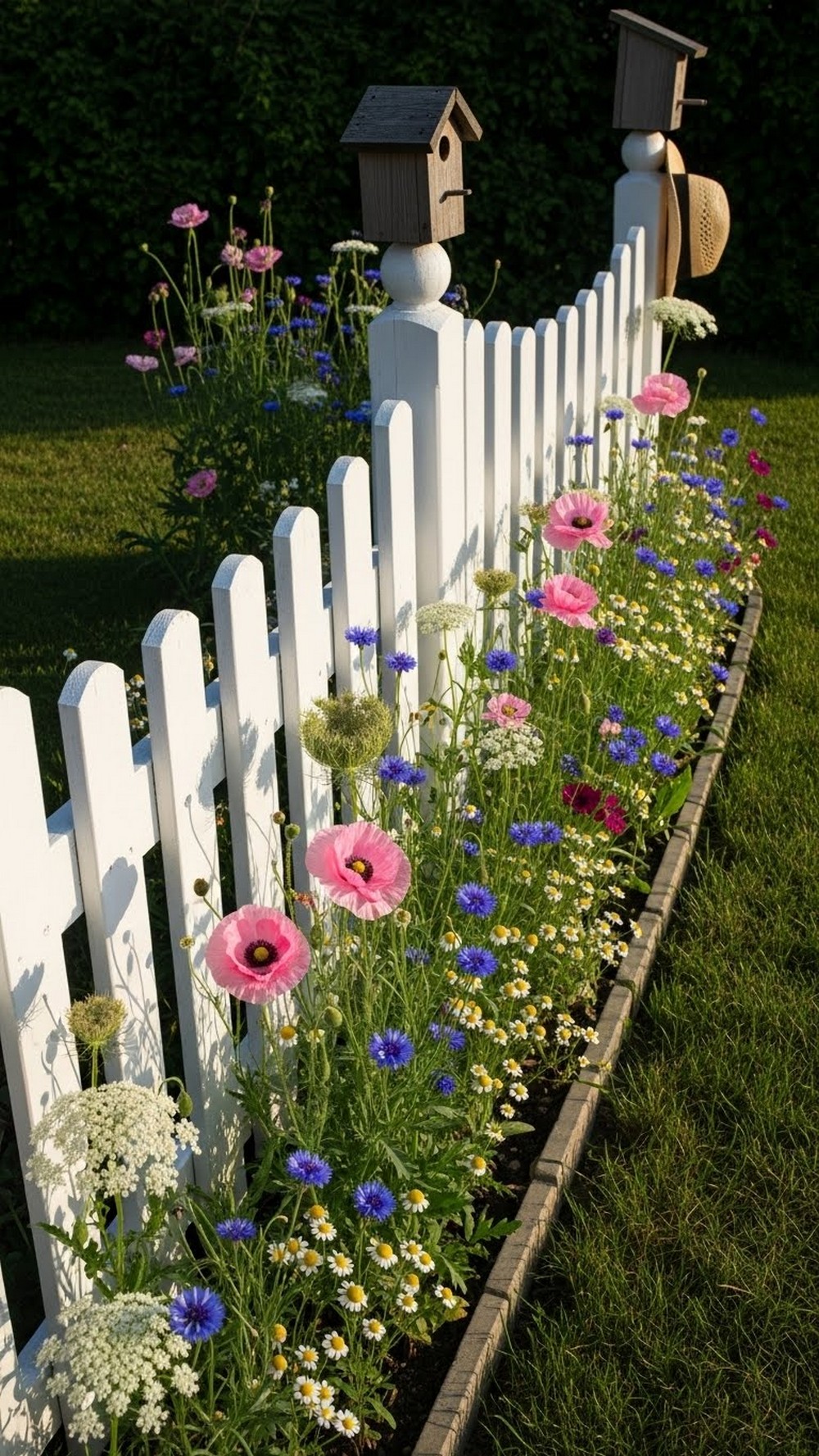
A white picket fence with wildflowers at its feet is classic cottagecore. Paint or refresh the fence in a soft white and run a narrow border along the base. Plant cheerful blooms like poppies, chamomile, cosmos, and cornflowers. Let some stems poke through the pickets and some spill out toward the path. The contrast of crisp white and loose color makes the whole frontage feel friendlier and more lived-in.
- Best For: Front gardens and cottage-style entrances.
- Budget Tip: Mix perennial seedlings with cheaper annual seeds to spread costs.
- Styling Idea: Hang a birdhouse or old metal jug from one fence post.
- Care & Maintenance: Deadhead taller flowers near the fence so they don’t flop too heavily.
Tumble-Down Stone Wall Wildflower Border

A stone wall, even a low one, is a beautiful backdrop for wildflowers. Plant in front of it, and if your wall has crevices, tuck in a few rock-loving plants so it looks as if flowers have always grown there. Combine yarrow, daisies, and soft grasses for a relaxed look. Let some stems lean onto the stones to soften the hard edge. This border works even if your wall is a bit uneven—it only adds to the charm.
- Best For: Sloping gardens or boundaries that need softening.
- Budget Tip: Use local stone offcuts or reclaimed rubble for a short wall.
- Styling Idea: Stand a rustic crate or lantern against the wall for extra cottage detail.
- Practical Note: Avoid plants with very strong roots that could push the wall apart.
Gate Arbor Wildflower Welcome

A gate with an arch above it becomes magical when framed by wildflowers. Grow climbers over the arbor—roses, sweet peas, or honeysuckle—and border the short path leading up with meadow-style blooms. You’ll get layers of color and scent at different heights, from ankle to overhead. It turns everyday comings and goings into a small ritual, with petals brushing your shoulders as you walk through.
- Best For: Main garden entrances or transitions between two areas.
- Budget Tip: Start with a simple wooden or metal arch and let plants do most of the decorating.
- Styling Idea: Add a small enamel “welcome” sign on the gate for an extra cottage touch.
- Practical Note: Keep the path at least wide enough for a barrow or pram.
Kitchen Vegetable Patch Wildflower Edge

Bordering your veg beds with wildflowers is both pretty and practical. Flowers attract pollinators and beneficial insects, while the look ties your productive plot into the rest of your cottage garden. Plant sunny mixes like calendula, borage, and cosmos along the outer edges of your beds or paths. Keep the inner vegetable rows simpler so you can still weed and harvest easily.
- Best For: Kitchen gardens, allotments, or raised bed areas.
- Budget Tip: Use inexpensive pollinator-friendly seed mixes around the outside.
- Styling Idea: Add small wooden plant labels and a rustic stool for a homely feel.
- Practical Note: Choose varieties that don’t grow too tall or they’ll shade out vegetables.
Laundry Line Meadow-Style Border

Turn your washing line into something pretty to look at by planting a low wildflower strip beneath it. Use tough, low-growing meadow plants like clover, small poppies, and hardy daisies that can handle the occasional dropped peg or splashed water. The border will make hanging laundry feel a little less like a chore and more like a gentle, everyday ritual.
- Best For: Back corners where the washing line lives.
- Budget Tip: Scatter seed and thin lightly rather than buying lots of individual plants.
- Styling Idea: Use a wooden peg bucket and simple line posts to keep the look traditional.
- Practical Note: Keep flowers low so linens don’t snag on taller stems.
Orchard Wildflower Understory Border

If you have space for even a couple of small fruit trees, underplanting them with wildflowers completes the cottagecore scene. Sow meadow-style mixes around their base, avoiding right up against the trunk. Choose plants that can cope with light shade: daisies, campions, and low grasses. Let the border blur into lawn or path edges for a soft, natural transition.
- Best For: Back gardens with a little lawn to spare.
- Budget Tip: Start with a ring around each tree and expand as you can.
- Styling Idea: Add a simple bench near the trees for afternoon reading.
- Care & Maintenance: Avoid digging deeply under trees; use hand weeding and gentle mulching.
Window View Wildflower Ribbon

A slim wildflower ribbon below a key window can bring cheer indoors as well as out. Keep the border quite narrow but packed with small, upright flowers that sit within your line of sight. Think cornflowers, nigella, and feverfew. This is especially lovely under kitchen and bedroom windows where you linger. Because you see it so often, even a short border feels special.
- Best For: Homes where you have a clear view of one garden edge.
- Budget Tip: Focus on a single short stretch instead of trying to plant every window at once.
- Styling Idea: Match a few indoor pot plants to the colors outside for a joined-up feel.
- Practical Note: Keep plants slightly below sill level so they don’t block light.
Shady Woodland Wildflower Lane

A shady path can still be cottagecore if you choose the right plants. Use foxgloves, forget-me-nots, ferns, and other shade-tolerant flowers along one or both sides of a narrow route. Let the border ebb and flow in depth so it feels natural. A mulch of leaf mould or bark completes the woodland look and helps keep things low-maintenance.
- Best For: Side yards, under trees, or beside tall fences.
- Budget Tip: Divide shade plants over time instead of buying many new ones.
- Styling Idea: Add a simple wooden handrail or log step to really lean into the woodland feel.
- Care & Maintenance: Water during dry spells; shade spots can still dry out under trees.
Front Walk And Postbox Wildflower Border

Framing the path to your front door with wildflowers makes every arrival nicer. Lay out a clear walkway, then run slim borders on each side and around the base of your postbox. Use bright but soft flowers like daisies, poppies, and cornflowers in mixed pastel and primary shades. Keep at least a little low edging near the path so taller stems don’t flop into visitors’ feet.
- Best For: Front gardens that currently feel a bit bare or formal.
- Budget Tip: Sow a simple seed mix and then “edit” it by adding a few favorite plants later.
- Styling Idea: Place an old pair of boots or a small crate by the door as a playful detail.
- Practical Note: Keep clear access for deliveries and make sure nothing blocks house numbers.
Pond-Side Wildflower Fringe

A small pond with a wildflower fringe looks like a natural watering hole. Plant moisture-loving flowers just beyond the water’s edge and let grasses lean slightly toward the pond. Include flat stones or a simple plank so you can sit close without trampling plants. The contrast between still water and lively flowers gives the area a slightly enchanted feel, especially at dusk.
- Best For: Gardens with even a small water feature or large bowl.
- Budget Tip: Use divisions from friends’ moisture-loving plants and supplement with seeds.
- Styling Idea: Add one weathered log or stone at the edge for birds to perch on.
- Practical Note: Avoid very tall plants that could shed lots of debris into the water.
Rustic Log-Edged Wildflower Bed

Logs laid end-to-end make a gentle, informal border edge. Inside that frame, a wildflower planting looks even more relaxed. Use logs of slightly different diameters and don’t worry if they’re not perfectly straight. Plant a mix of yarrow, clover, chamomile, and tall grasses. Over time, moss on the logs will add to the aged look, making the border feel deeply rooted in place.
- Best For: Informal cottage gardens and backyard edges.
- Budget Tip: Use windfallen or pruned branches cut to size.
- Styling Idea: Place a simple wooden sign or chalkboard at one end of the border.
- Care & Maintenance: Check logs now and then for rot and replace only when needed.
Herb And Wildflower Kitchen Border

Combining herbs and wildflowers right outside the kitchen gives you both beauty and flavor. Plant herbs at the front where you can reach them easily, with taller flowers behind to act as a backdrop. The border looks pretty from indoors and smells wonderful when you brush past. This is a perfect place for calendula and borage, which are both edible and lovely.
- Best For: Spaces just outside a back door or near a patio.
- Budget Tip: Grow herbs from cuttings or small plugs and fill gaps with quick annual flowers.
- Styling Idea: Keep a basket or enamel jug nearby for spontaneous cutting.
- Practical Note: Avoid very flopping flowers right by the door to keep access clear.
Wildflower Border Around A Seating Nook

Framing a small seating area with low wildflowers makes it feel like a little island in the garden. Place a bench or chairs on gravel or pavers, then run a border around the outside edge. Use a mix of low and mid-height plants so you feel enclosed but not hidden. As you sit, you’ll be at eye level with blooms and grasses, with bees working around you.
- Best For: Corners that don’t get much use but could become cozy spots.
- Budget Tip: Outline the nook first with inexpensive edging, then fill the outside ring with seed mixes.
- Styling Idea: Add a soft blanket and a simple lantern to lean into the cottage reading-corner feel.
- Practical Note: Leave a clear path into the nook so you’re not stepping on stems.
Gravel Drive Wildflower Ribbon
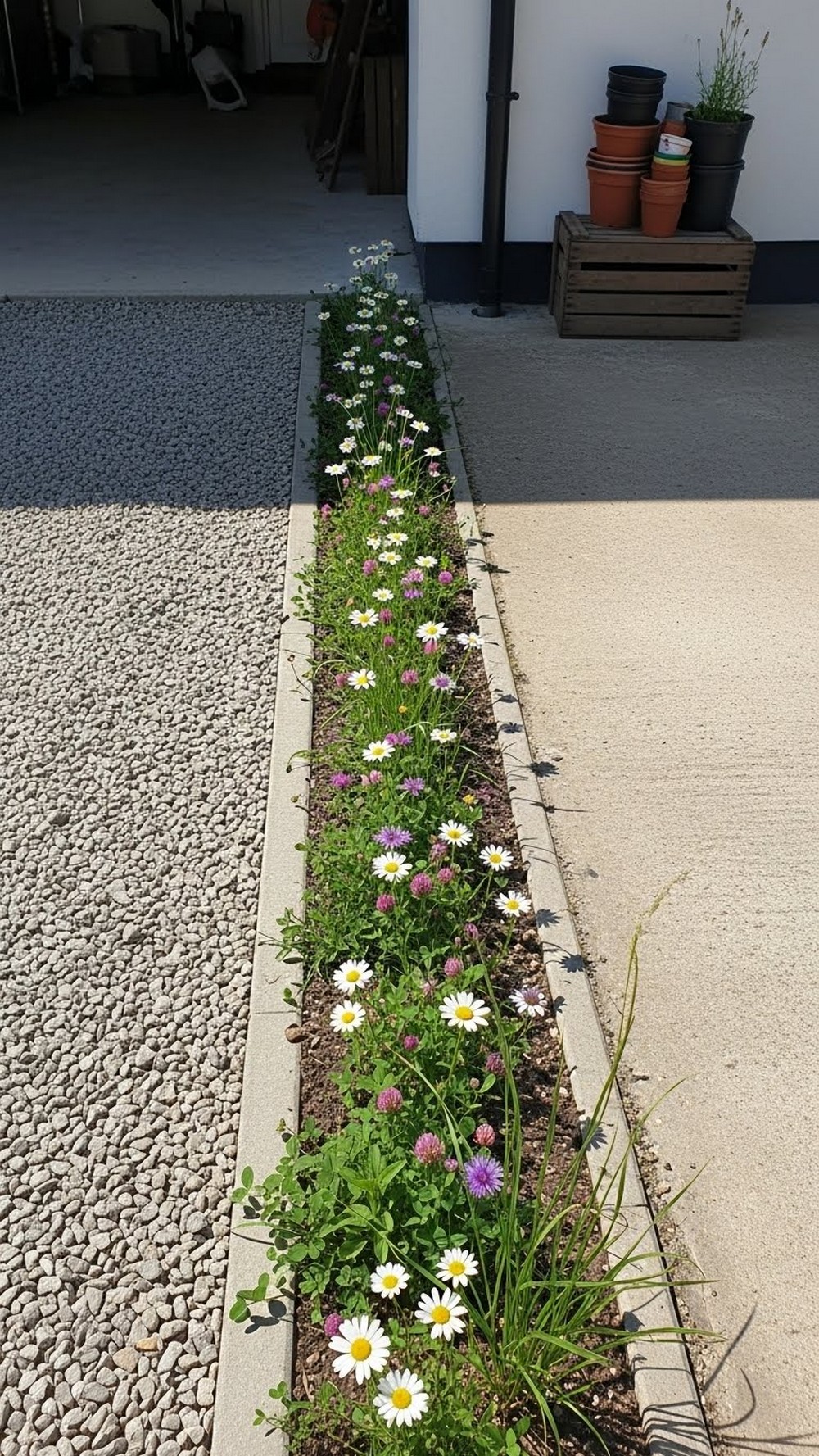
A gravel drive or parking spot can look harsh on its own, but a narrow wildflower ribbon softens it instantly. Plant in a strip where car wheels won’t roll, using tough, drought-tolerant wildflowers. Keep the planting loose so it feels like a natural edge rather than a formal bed. The mix of stone and green creates a pleasing rustic contrast.
- Best For: Homes where the driveway is a big part of the front view.
- Budget Tip: Concentrate flowers along the most visible stretch nearest the house.
- Styling Idea: Add a simple wooden sign or crate near the door to echo the rustic feel.
- Practical Note: Choose low-growing plants near where car doors open to avoid snagging.
Wildflower Border Along The Garden Shed

A shed becomes a feature when it’s lined with wildflowers. Run a border along the sunniest side and let plants lean back against the walls. Daisies, campion, poppies, and tall grasses all work well here. Tools and pots stored against the shed will look as if they’ve quietly grown into place among the stems, rather than being dumped in a bare corner.
- Best For: Utility areas that feel a bit too “work only” at the moment.
- Budget Tip: Use self-seeding annuals so the border refills itself each year.
- Styling Idea: Hang a string of simple bunting or a straw hat on the shed door.
- Care & Maintenance: Leave a narrow gap right by the wall to avoid constant damp on the boards.
Wildflower And Old-Fashioned Rose Hedge

A rose hedge with wildflowers at its feet is pure cottage romance. Plant old-style shrub roses or climbing roses along a fence, then fill the ground in front with meadow-style flowers. Petals will fall into the wildflower border, where they mingle with clover and daisies. It’s a dreamy combination of graceful structure and soft chaos.
- Best For: Boundaries where you’d like privacy and scent.
- Budget Tip: Buy bare-root roses and small wildflower plugs to save money.
- Styling Idea: Add a narrow mown grass path just inside the hedge for secret evening walks.
- Practical Note: Keep prickly stems away from paths to avoid snags and scratches.
Tiny Wildflower Border For Small Spaces

Even the smallest garden can have a wildflower moment. Use a single long planter, window box, or very narrow border and focus on delicate plants that don’t need much width. Choose small daisies, low grasses, and petite poppies, and plant densely so the strip feels generous. A single folding chair placed alongside turns it into your own mini meadow balcony.
- Best For: Balconies, courtyard slivers, and rented spaces.
- Budget Tip: Use one good wildflower seed mix and sow lightly; thin if it’s too crowded.
- Styling Idea: Add a simple lantern or old book on the table to complete the cottage picture.
- Practical Note: Water more often; small plantings dry out faster.
Children’s Wildflower Picking Strip
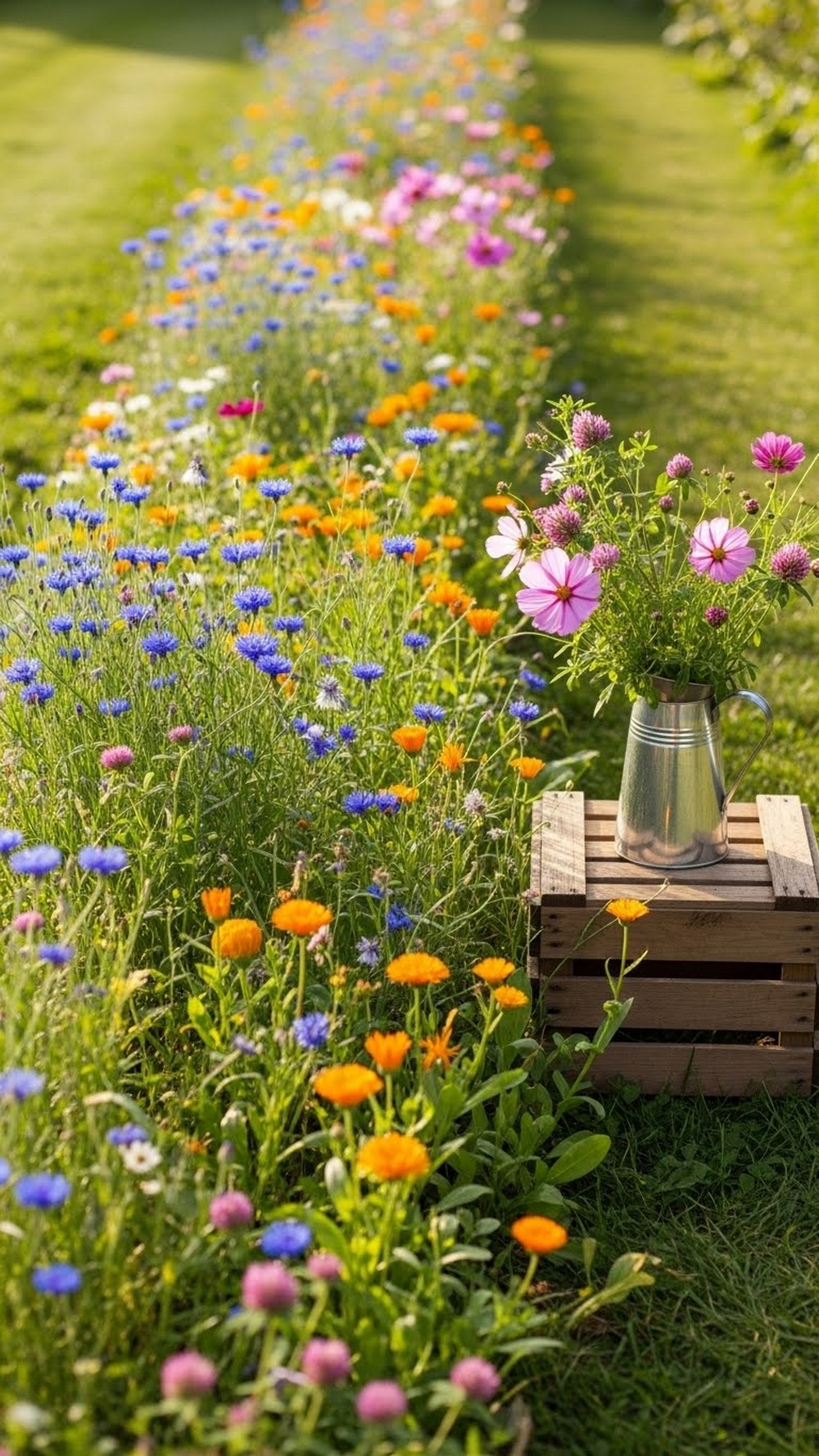
A child-friendly wildflower strip encourages gentle foraging and play. Plant easy, tough flowers at a child’s height and make it clear this is the place where picking is allowed. Bright colors and different textures make it fun to explore. Place it along a path or lawn edge so kids can reach easily, and consider adding a small crate or stool as a makeshift flower-arranging station.
- Best For: Family gardens and schoolyard plots.
- Budget Tip: Use inexpensive annual mixes and let plants self-seed.
- Styling Idea: Add a hand-painted wooden sign inviting little gardeners to “pick a posy.”
- Practical Note: Avoid plants with thorns or irritating sap; choose gentle, non-toxic varieties.
Native Wildflower Pollinator-Friendly Border

A border built from your region’s native wildflowers is good for both style and wildlife. Choose local species that suit your soil and light, and plant them in drifts rather than single plants. The result will look more like a slice of natural meadow than a formal border. Bees, butterflies, and other insects will quickly find it, bringing movement and life to your garden edges.
- Best For: Sunny fence lines and long side borders.
- Budget Tip: Look for native seed mixes or join local plant swaps.
- Styling Idea: Add a small wooden or slate sign explaining it’s a pollinator patch.
- Care & Maintenance: Cut back in late winter, leaving seed heads over autumn for food and shelter.
Conclusion
Cottagecore wildflower borders turn plain edges into soft, living frames for your home and garden. Whether you’re edging a shed, a front path, or a single window, a loose mix of flowers and grasses brings in pollinators, texture, and a gentle sense of time slowing down. You don’t need to plant everything at once—start with one small border and see how it feels. As the seasons turn and the flowers shift, you can expand, edit, and gradually grow your own storybook garden.
FAQs
1. Are wildflower borders hard to maintain?
They can be surprisingly low-maintenance if you choose plants that suit your soil and light. Most wildflowers need less feeding and fuss than formal beds. The key is to prepare the soil well, water young plants until established, and then mostly let them get on with it. A tidy-up once or twice a year is usually enough.
2. How can I create a cottagecore wildflower border on a small budget?
Start with seeds and a few small plug plants instead of large pots. Focus on one border at a time, ideally somewhere very visible. Use simple, inexpensive edging like logs or spare bricks, and let self-seeding annuals refill gaps in future years. Swapping seedlings with friends can also keep costs low.
3. Will wildflower borders make my garden look messy?
They can, if you don’t frame them. Add clear edges—a path, a mown strip of grass, a low fence, or a defined bed edge—to show that the wildness is intentional. Keeping a few key areas neat, like the path or seating spaces, helps the looser planting read as charming rather than untidy.
4. Can I have a wildflower border in shade?
Yes, but you’ll need shade-tolerant plants. Look for woodland-style species such as foxgloves, forget-me-nots, and ferns rather than sun-loving meadow flowers. The cottagecore feel comes from the layering and natural shapes, not just the bright colors, so a shady border can still be very atmospheric.
5. What’s the easiest place to start a cottagecore wildflower border?
Choose a spot you see every day, like along a main path, near the front door, or outside the kitchen window. Working on a small, visible strip first means you’ll enjoy the results more and be more likely to keep going. Once you’ve seen how it fills out over a season, you can repeat the idea elsewhere.
6. How do I stop wildflowers from taking over the whole garden?
Give them clear boundaries. Use edging, paths, or mown grass to separate wildflower zones from other beds. If you use self-seeding plants, be prepared to pull out seedlings where you don’t want them. A little editing each season keeps the borders full but contained.