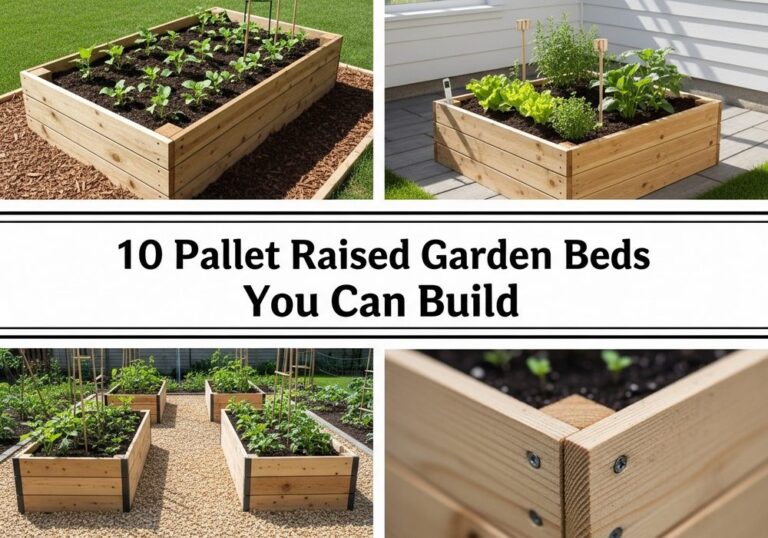
10 Fast Pallet Raised Beds Using Basic Tools
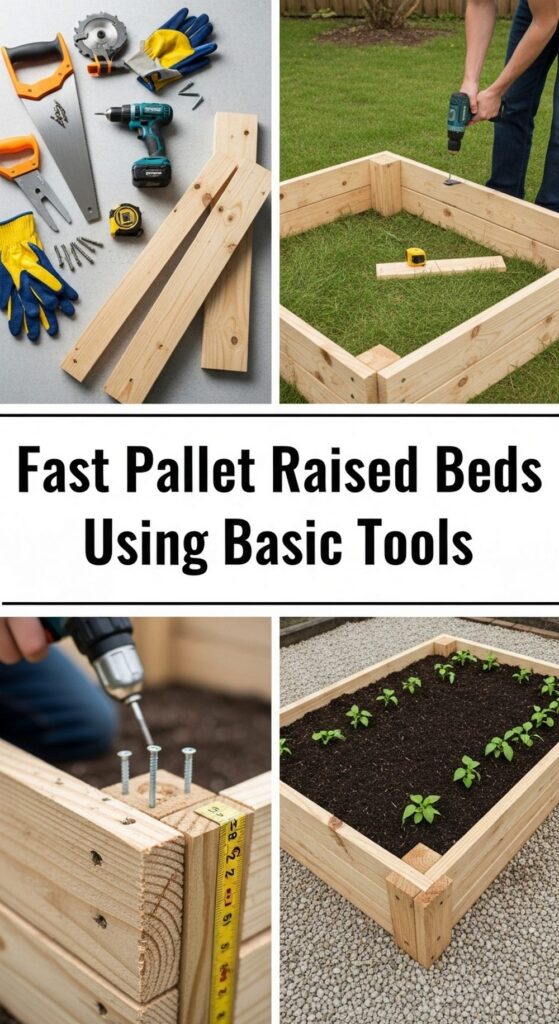
If you’ve got a free afternoon, a couple of pallets, and a few basic tools, you’re much closer to having a raised garden than you think. Pallet wood is affordable, easy to work with, and perfect for quick beds that instantly give your garden shape and personality.
In this guide, you’ll find 10 simple pallet raised bed ideas you can build with a hand saw, drill, and a bit of determination. From slim fence-side borders to waist-height planters and mobile beds on wheels, these projects are designed to be fast, budget-friendly, and beginner-friendly. Pick one design, start small, and enjoy the satisfaction of growing in something you built yourself.
Quick List
Simple Single-Pallet Salad Bed
Double-Pallet Deep Root Bed
Pallet U-Shaped Kitchen Garden
L-Shaped Corner Pallet Bed
Vertical Pallet Herb Wall Bed
Pallet Raised Bed With Legs
Narrow Pallet Border Bed Along A Fence
Tiered Pallet Strawberry & Herb Tower
Mobile Pallet Raised Bed On Casters
Pallet Raised Bed With Built-In Seating Edge
1. Simple Single-Pallet Salad Bed
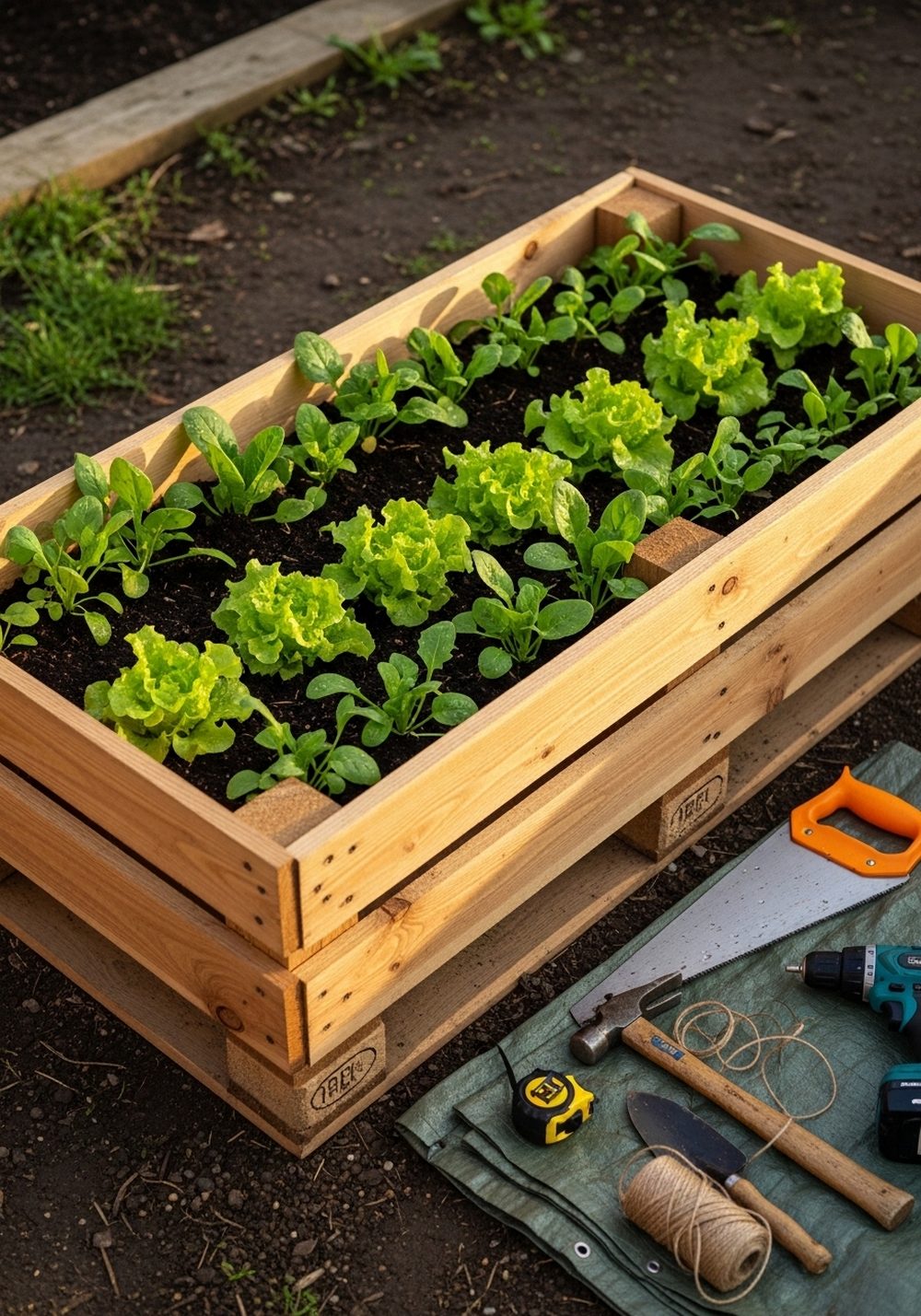
A single pallet laid flat makes a wonderfully quick salad garden. Sand the rough edges, line the underside with landscape fabric or cardboard, then set it on soil or grass and fill the gaps with compost-rich soil. Plant lettuces, spinach, and herbs between the slats for instant structure and tidy rows. The low profile suits smaller spaces and gives a clean, organised look, while the repeating lines of the pallet add subtle design without extra work.
- Best For: Beginners who want a fast win and small salads close to the kitchen door.
- Budget Tip: Find free pallets locally and use cardboard or old newspapers as a low-cost liner.
- Styling Idea: Stain the wood a warm tone to contrast with bright greens, or leave it rustic for a farmhouse feel.
- Practical Note: Place where you can easily reach all sides, as it’s low to the ground.
- Care & Maintenance: Refresh soil yearly and add compost between plantings to keep leaves lush.
2. Double-Pallet Deep Root Bed
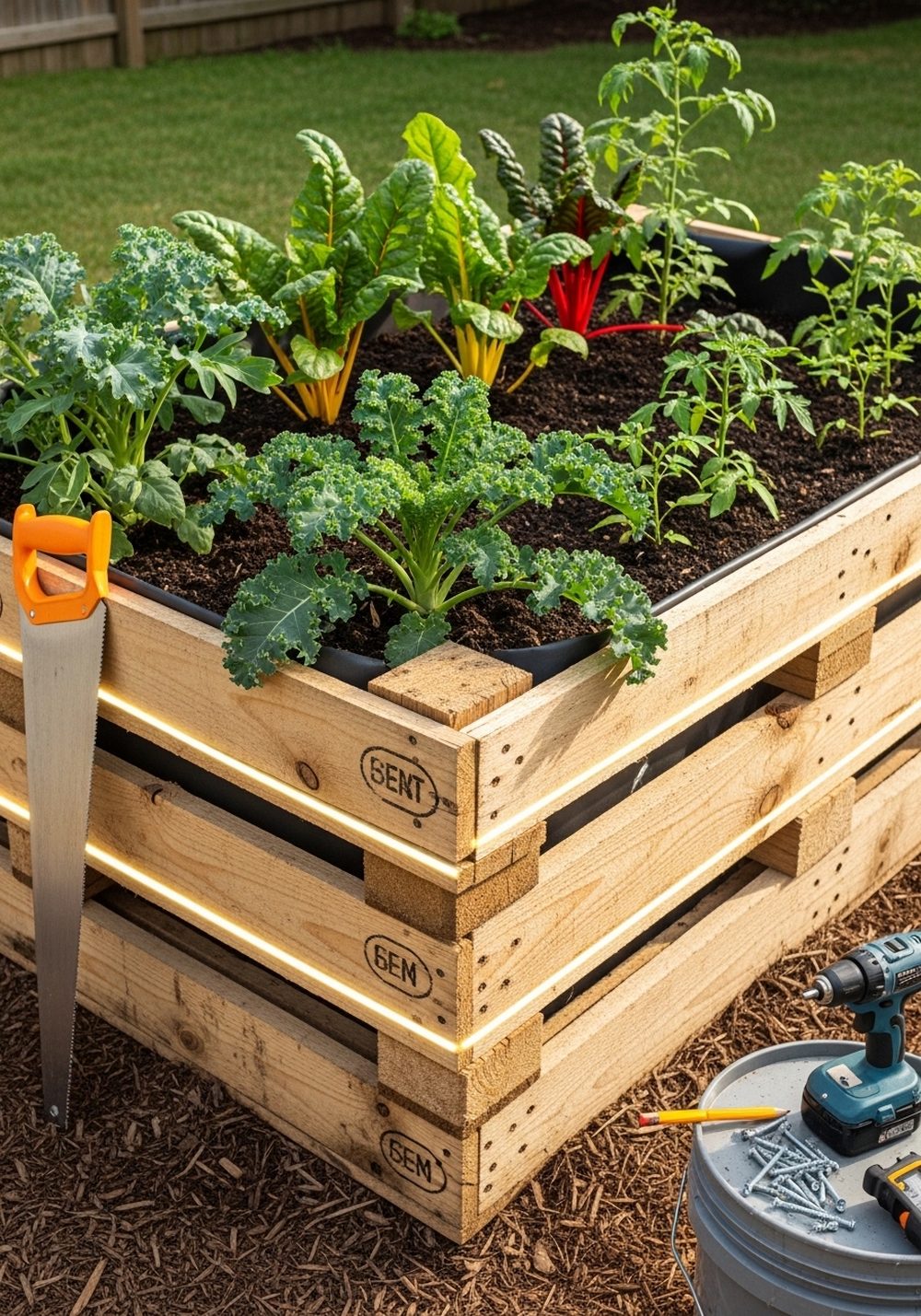
Stacking two pallets creates a deeper raised bed that’s perfect for root crops and larger veggies. Screw the corners together, add cut pallet pieces as end caps, then line the inside to hold soil. This extra height gives plants space to stretch while keeping the look simple and boxy. It feels more substantial than a single pallet but still uses basic tools and minimal cutting, giving your garden a strong focal point in almost no time.
- Best For: Carrots, beets, chard, and tomatoes needing deeper soil.
- Budget Tip: Fill the bottom third with sticks, leaves, or rough compost before adding good topsoil.
- Styling Idea: Paint the outer boards in muted garden shades like sage or charcoal for a modern edge.
- Practical Note: Add corner braces if your pallets are older or slightly warped.
- Care & Maintenance: Top up soil as it settles during the first season.
3. Pallet U-Shaped Kitchen Garden
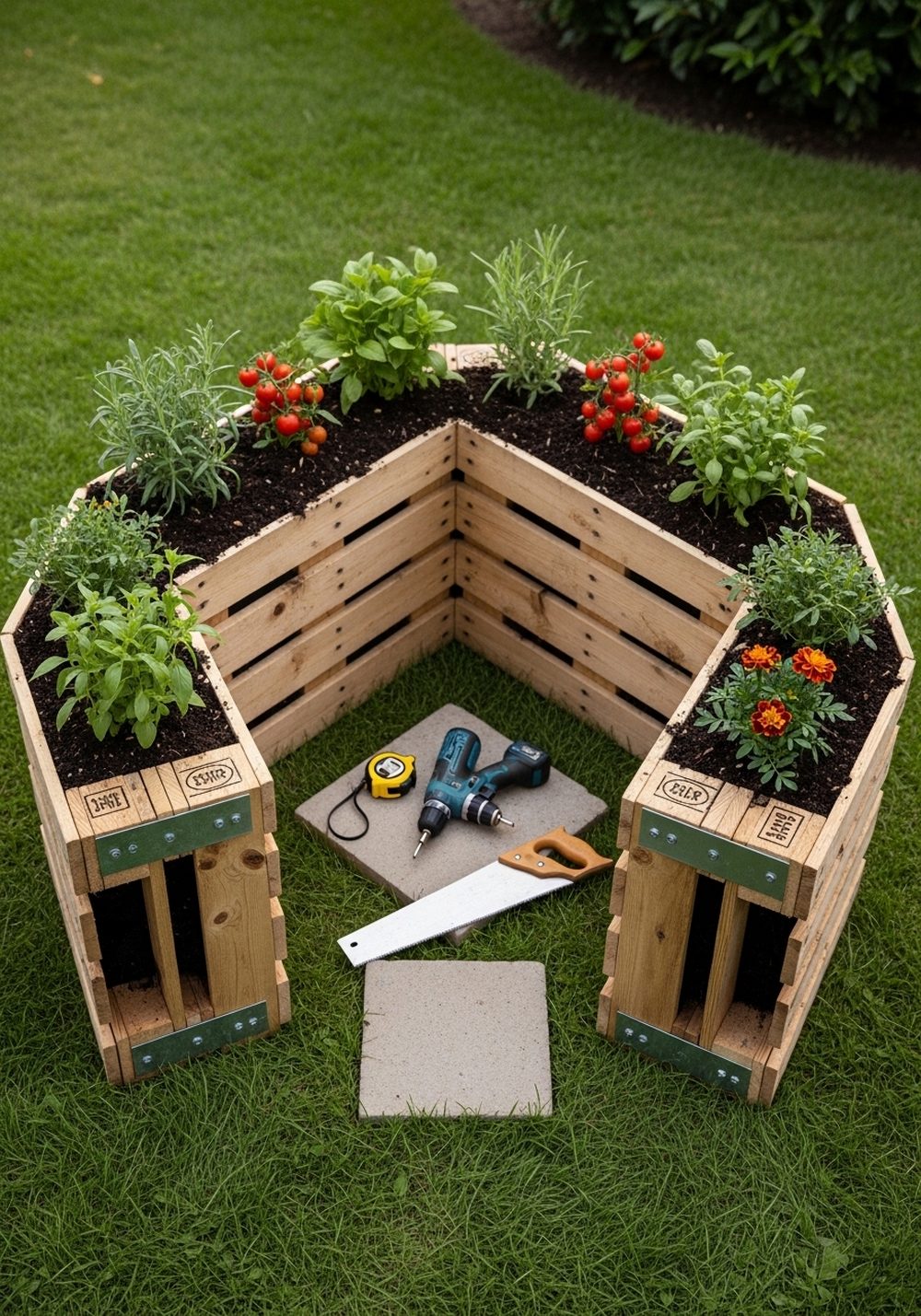
Using three pallets to form a U-shape instantly creates a mini kitchen garden with a cozy working nook. Join the pallets with brackets and add cut boards to close open ends, then fill the interior with soil. The U-shape makes it easy to reach the middle while surrounding you with herbs, greens, and flowers. It looks surprisingly “designed” for how little cutting is required, and turns an empty patch of lawn into a purposeful garden corner.
- Best For: Gardeners who cook often and want everything within arm’s reach.
- Budget Tip: Start with just one side planted and expand as you acquire more soil and plants.
- Styling Idea: Place a stepping stone or paver in the centre of the U to anchor the space visually.
- Practical Note: Check the dimensions so you can comfortably step into and out of the U.
- Extra Idea: Add small labels on the top boards so herbs are easy to identify.
4. L-Shaped Corner Pallet Bed
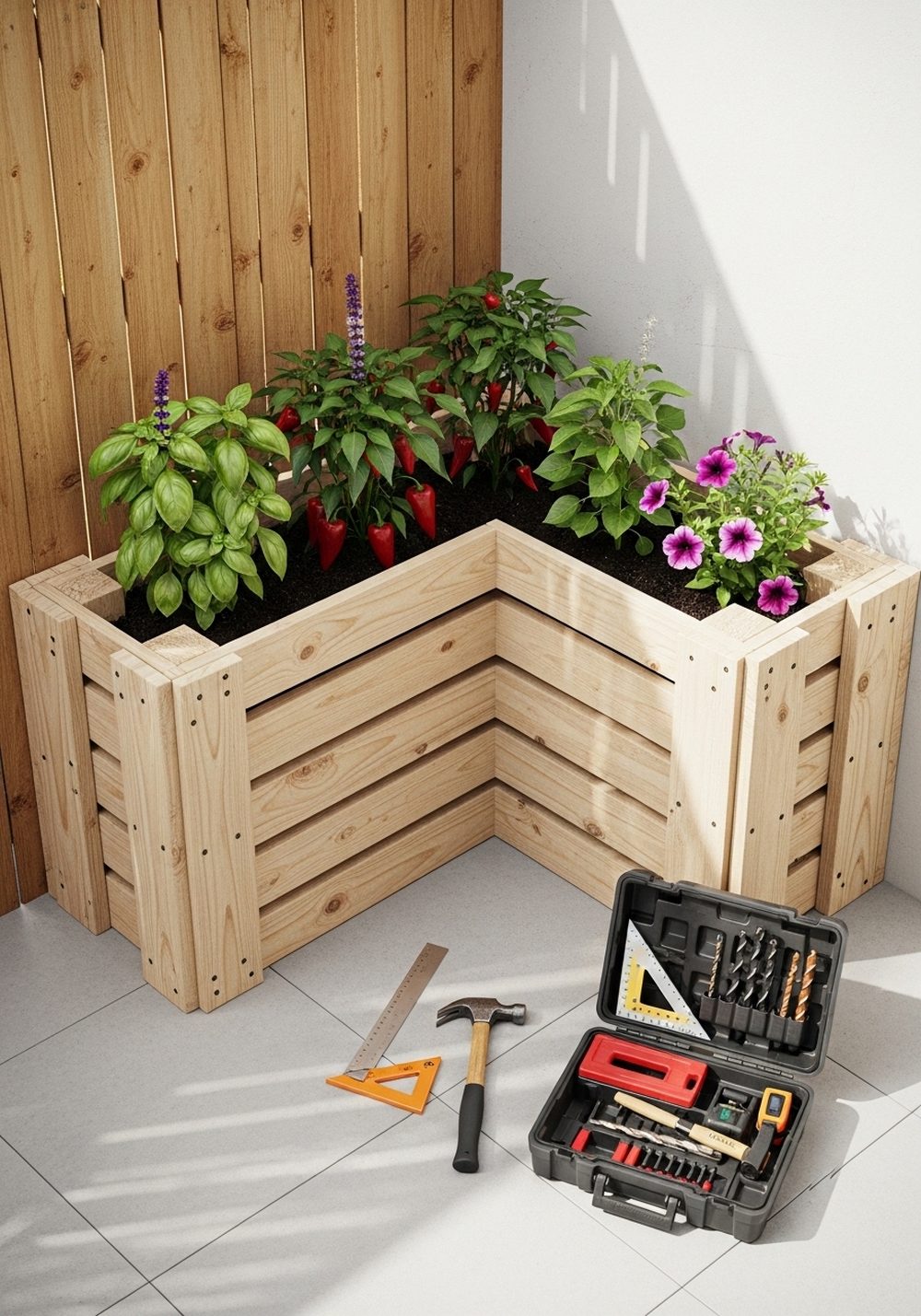
An L-shaped pallet bed hugs a corner, making clever use of awkward spots by walls or fences. Cut one pallet to length, screw it to a second pallet at 90 degrees, and add short boards to close each end. Once filled with soil, the L-shape naturally frames the corner, softening hard edges with foliage and flowers. It’s a fast way to turn a dull, unused area into a planted feature that visually anchors your garden layout.
- Best For: Corners that feel empty or harsh, especially near patios and seating areas.
- Budget Tip: Use offcuts and leftover boards to create end pieces instead of buying new timber.
- Styling Idea: Plant taller varieties in the back and trailing flowers on the inside edge for lush layers.
- Practical Note: Leave enough room to walk along at least one side for easy maintenance.
- Care & Maintenance: Check the inside corner for pooled water and add gravel if necessary for drainage.
5. Vertical Pallet Herb Wall Bed
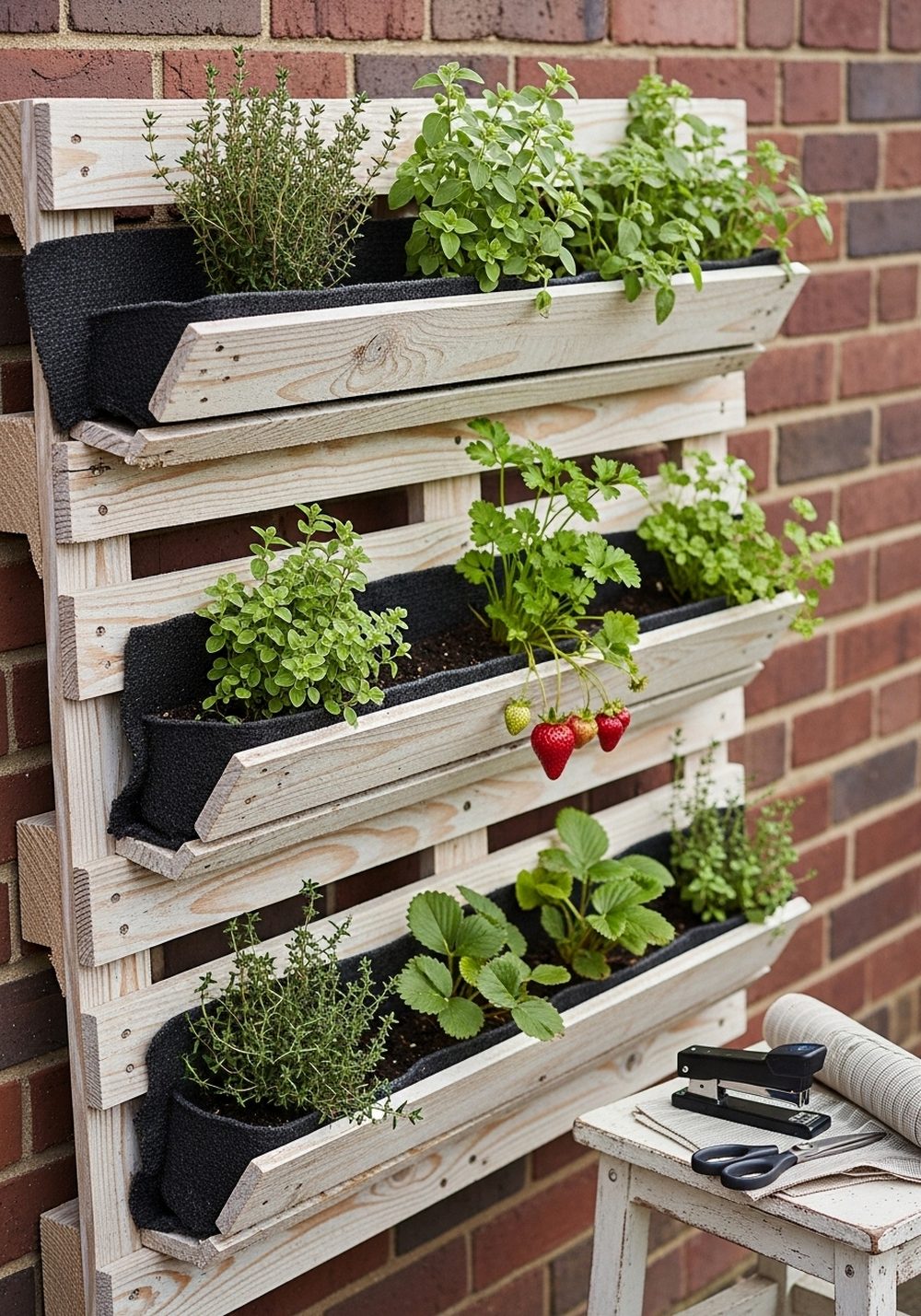
Stand a pallet on its side, reinforce the back, and create fabric-lined pockets between the slats for an instant vertical herb bed. It takes up very little floor space but provides lots of planting spots, turning a blank wall into a living herb display. With just a stapler, scissors, and a drill, you can build a structure that’s both practical and decorative, bringing greenery up to eye level and adding texture to fences, brick, or balcony walls.
- Best For: Small patios, balconies, or narrow paths where ground space is limited.
- Budget Tip: Reuse old landscape fabric or hessian sacks as liners.
- Styling Idea: Whitewash or lightly paint the pallet for a soft, cottage-style backdrop to your herbs.
- Practical Note: Secure the pallet firmly to the wall or fence so it can’t tip.
- Care & Maintenance: Water slowly from the top and let it filter down; check that lower pockets aren’t staying soggy.
6. Pallet Raised Bed With Legs
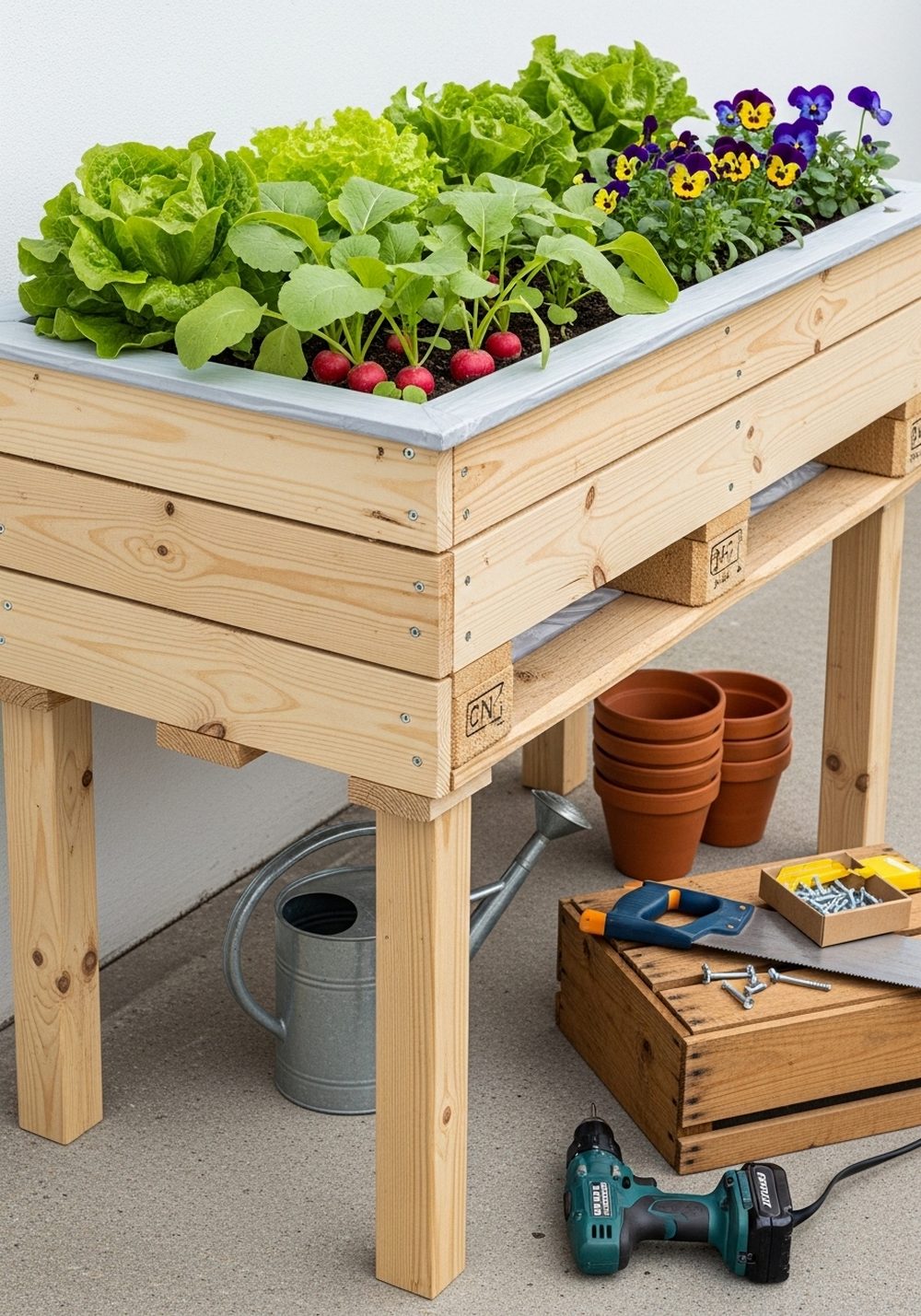
Adding legs to a pallet bed lifts your plants to waist height, saving your back and making your garden feel more like a stylish outdoor workstation. Cut four leg posts, screw them to the pallet corners, and add simple braces for stability. Line and fill the pallet as usual, then enjoy planting without stooping. This design looks neat and intentional, almost like a shop display, and works beautifully in courtyards and along patios.
- Best For: Gardeners with mobility issues or anyone who dislikes bending and kneeling.
- Budget Tip: Use reclaimed posts or offcuts for legs and braces to save on lumber.
- Styling Idea: Pair with matching wooden stools, crates, or side tables for a coordinated look.
- Practical Note: Ensure the legs are level and the bed is stable before filling with soil.
- Care & Maintenance: Check leg bottoms yearly for rot if they sit directly on soil; use pavers under them if needed.
7. Narrow Pallet Border Bed Along A Fence
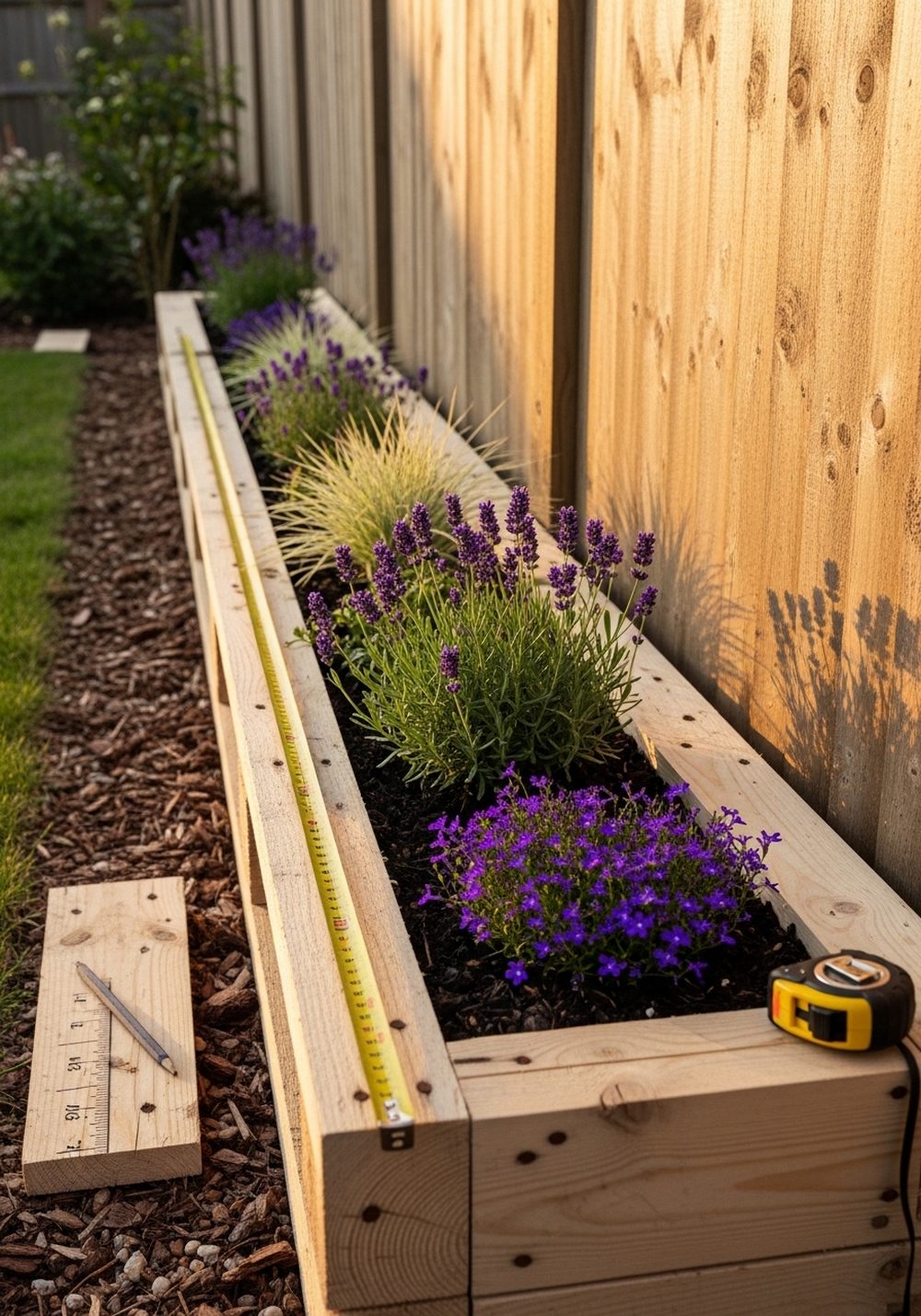
By slicing a pallet lengthwise, you can create a narrow raised bed that tucks neatly against a fence or wall. This slim design is perfect for edging paths or softening fence lines without stealing much space. Once cut, screw on a few boards to close the open sides, line it, and fill with soil. Plant low, airy perennials or herbs to create a simple ribbon of green that instantly makes your fence look more intentional and less bare.
- Best For: Long, narrow strips where a full-width bed would feel cramped.
- Budget Tip: Use free or cheap pallets and fill with hardy plants that return each year.
- Styling Idea: Repeat a limited palette of plants and colours for a calm, cohesive border.
- Practical Note: Leave a slim gap between pallet and fence to prevent trapped moisture.
- Care & Maintenance: Mulch annually to reduce watering and keep weeds down.
8. Tiered Pallet Strawberry & Herb Tower
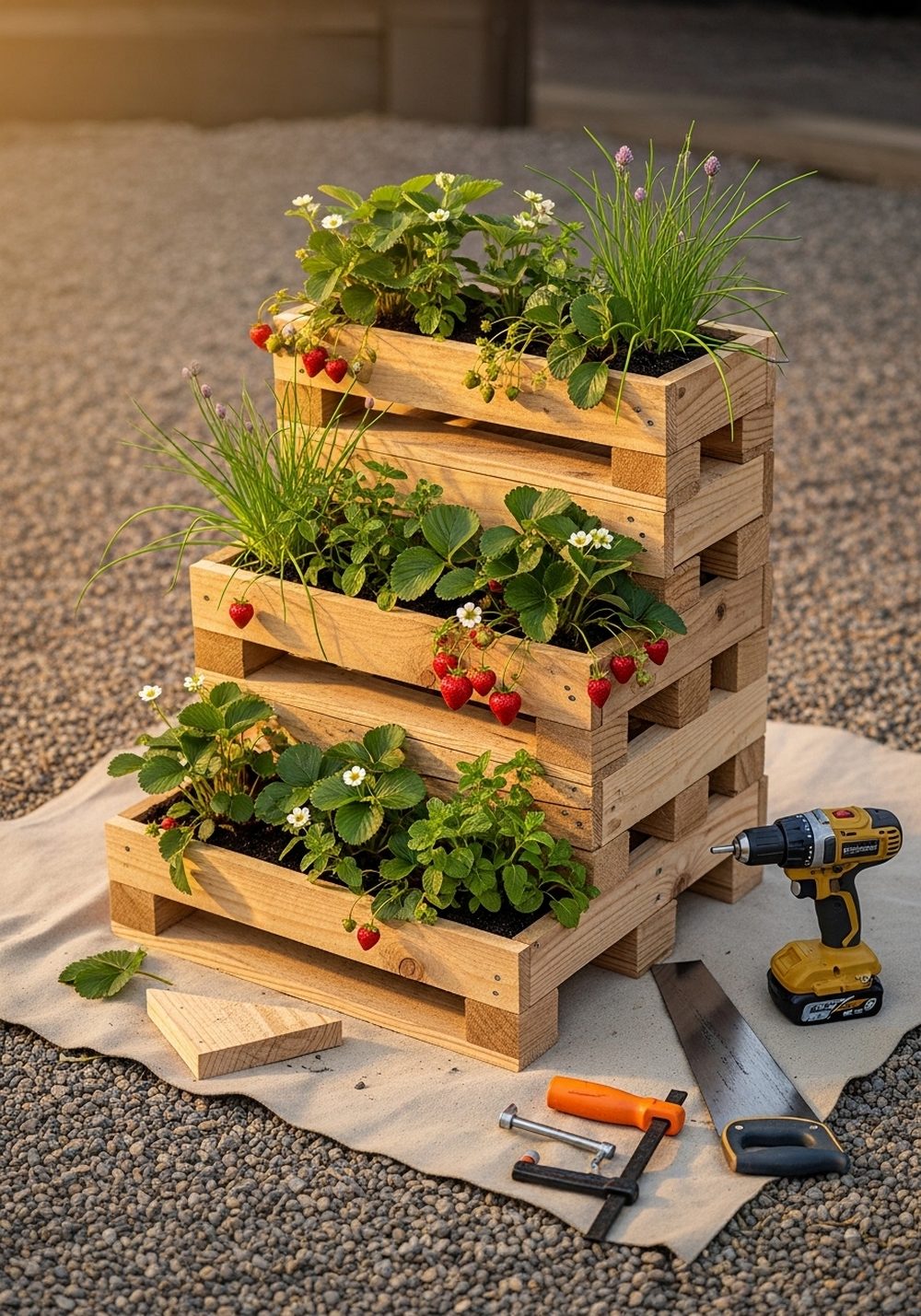
Cutting a pallet into sections and stacking them into a tiered tower creates a compact vertical garden with loads of planting pockets. Each level overhangs slightly, perfect for strawberries, cascading herbs, and small flowers. The stepped design adds height and interest to flat spaces, and looks like a miniature garden sculpture. With just a hand saw, drill, and screws, you can build the tower in stages and keep adding tiers as your confidence grows.
- Best For: Small gardens and courtyards needing height and a focal point.
- Budget Tip: Start with two tiers and add more when you have extra pallets or time.
- Styling Idea: Mix red strawberries, white flowers, and trailing green herbs for a classic, cheerful combination.
- Practical Note: Place on a level, stable base so the tower doesn’t lean.
- Care & Maintenance: Water from the top; tiered designs can dry out quickly in hot weather.
9. Mobile Pallet Raised Bed On Casters
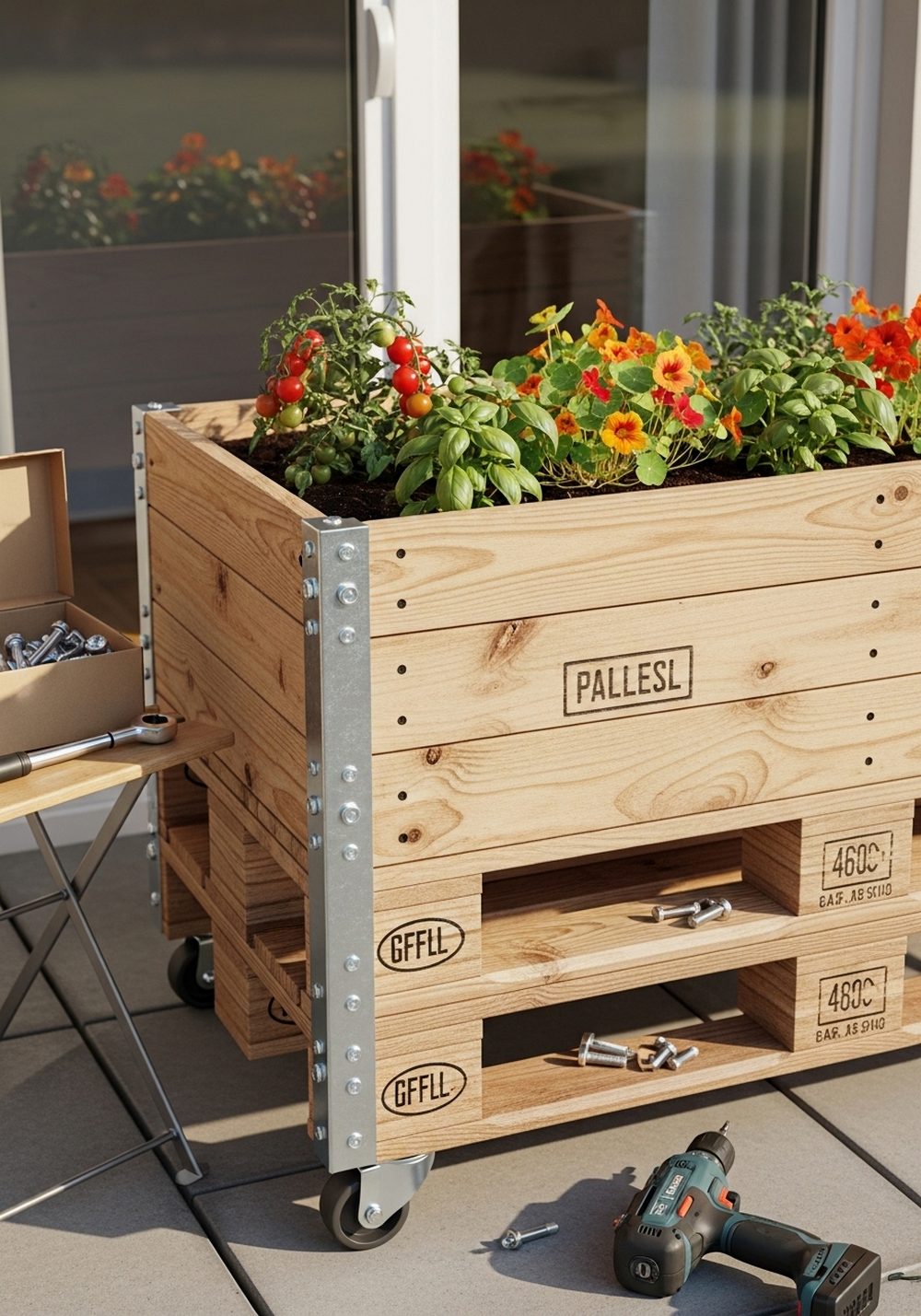
Mounting a pallet bed on heavy-duty casters turns it into a movable garden you can chase the sun with. Screw the wheels into added corner blocks, line and fill the pallet, then roll it around your patio as needed. This idea is especially helpful for renters or anyone who rearranges their outdoor furniture often. The casters also add a subtle contemporary touch that makes the whole setup feel deliberate and smart, not improvised.
- Best For: Patios, driveways, and renters who need flexibility.
- Budget Tip: Use salvaged casters from old furniture if they’re sturdy enough.
- Styling Idea: Plant a mix of edible and ornamental plants for a stylish “rolling kitchen garden” look.
- Practical Note: Choose locking wheels so the bed won’t move in wind or on slopes.
- Care & Maintenance: Check wheel fixings occasionally and avoid overloading the bed with too much soil.
10. Pallet Raised Bed With Built-In Seating Edge
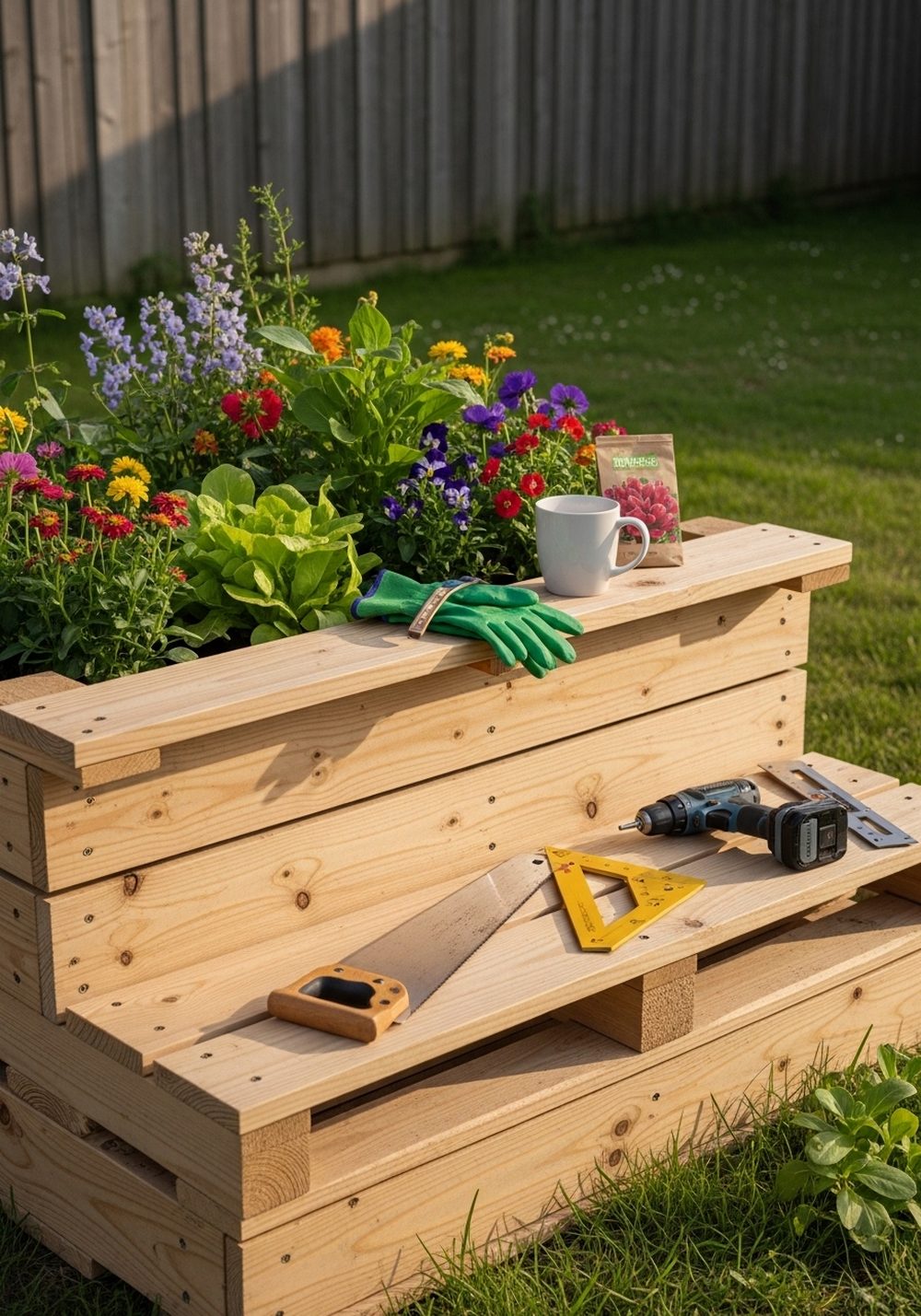
By adding a wide top rim from extra boards, your pallet raised bed doubles as casual seating. The broad edge becomes a perch for coffee cups, tools, and guests while also framing your plants attractively. Screw the boards securely around the top, sand the corners smooth, and treat the wood for outdoor use. This design feels like a small deck and planter in one, turning your bed into a welcoming spot rather than just a box of soil.
- Best For: Social gardens where people gather and lean on beds.
- Budget Tip: Use mismatched offcuts for the rim and sand them well instead of buying long, perfect boards.
- Styling Idea: Add outdoor cushions or a throw blanket on one side for an inviting bench-like feel.
- Practical Note: Make the rim wide enough to sit on comfortably, ideally at least a handspan deep.
- Care & Maintenance: Re-seal the top boards periodically to protect against sun and rain.
Conclusion
Pallet raised beds are one of the quickest ways to give your garden structure, height, and personality without spending a fortune. With just a few basic tools and an afternoon or two, you can turn scrap wood into useful, good-looking planters that make growing food and flowers feel easier and more enjoyable. Start with the simplest idea that suits your space, get comfortable with the tools, and let each small project inspire the next.
FAQs
1. Are pallet raised beds safe for growing vegetables?
Most untreated or heat-treated pallets are fine for garden use, but avoid those that look heavily stained with oils or chemicals. Look for clean, dry pallets and give them a quick sand. If you’re unsure, line the inside with plastic or landscape fabric so your soil doesn’t sit directly against the wood.
2. How can I build pallet beds on a tight budget?
Source pallets for free from local businesses, then use cardboard, leaves, or straw to bulk out the bottom of the bed before adding good soil on top. Start with smaller beds and expand gradually. Choose hardy, easy plants like lettuce, herbs, and flowers from seed instead of buying lots of large plants.
3. Are these pallet projects suitable for renters?
Yes, many of these designs are either movable or simply rest on the ground. The single-pallet bed, vertical herb wall (screwed into a freestanding frame), and mobile bed on casters can all be taken with you when you move. Avoid permanent fixings that damage walls or paving if your lease doesn’t allow it.
4. What tools do I absolutely need to get started?
For most pallet raised beds, a hand saw, cordless drill or screwdriver, tape measure, screws, and some sandpaper are enough. A simple stapler helps if you’re attaching fabric liners. You don’t need fancy equipment—just take your time measuring and pre-drilling holes to avoid splitting the wood.
5. How do I protect pallet wood from weather?
Sand off splinters, then apply an outdoor-safe wood stain or oil to exposed surfaces. Try to keep the base of the pallet off constantly damp soil by using pavers or gravel underneath. Check annually for soft or rotten boards and replace any damaged pieces before they affect the structure of the bed.