
22 Minimalist Gravel Garden Ideas With Green Shrubs
Minimalist gravel gardens are perfect when you want your outdoor space to feel calm, tidy, and easy to look after. Swap patchy lawn and fussy borders for clean lines, neutral stone, and simple green shrubs, and suddenly the whole garden feels more ordered and restful.
This collection of 22 ideas focuses on pairing gravel with evergreen structure: clipped domes, low hedges, tidy columns, and soft mounds that stay good-looking all year. Whether you have a narrow side yard, a small courtyard, a sloping front garden, or just a balcony corner, you’ll find quiet, practical layouts that are realistic to build and simple to maintain.
Quick List
- Linear Gravel Strip With Boxwood Dots
- Courtyard Gravel Carpet With Sculpted Shrubs
- White Gravel And Single Olive Tree Island
- Grey Gravel Path With Repeated Shrub Mounds
- Front Entry Gravel Grid With Low Hedges
- Black Gravel Band With Architectural Shrubs
- Small Side Yard Gravel Ribbon With Columnar Shrubs
- Raised Gravel Terrace With Potted Evergreens
- Gravel Circle Seating With Clipped Green Ring
- Narrow Gravel Bed With Mixed Evergreen Textures
- Gravel And Stepping Stone Walk With Shrub Trios
- Gravel Courtyard With Central Shrub Cube Planters
- Gravel Slope With Tiered Shrub Layers
- Minimalist Japanese-Inspired Gravel And Pine Corner
- Gravel Parking Pad With Shrub Border
- Gravel Patio With Single Shrub Feature Wall
- Gravel Grid Between Pavers With Shrub Cubes
- Gravel Slot Garden With Screen Hedging
- Tiny Balcony Gravel Tray With Dwarf Shrubs
- Gravel Window View Strip With Compact Shrubs
- Gravel Fire Bowl Pad With Evergreen Backdrop
- Monochrome Gravel Garden With Mixed Green Spheres
Linear Gravel Strip With Boxwood Dots

A linear gravel strip is a simple way to tidy up the base of a wall or fence. Lay landscape fabric, add a band of gravel, and plant evenly spaced boxwood or similar shrubs directly into the soil beneath, cutting neat holes in the membrane. The round green “dots” break up the stone and soften the hard edge of the building. Because everything repeats, the effect is calm rather than busy, and maintenance is mostly just occasional trimming and leaf-sweeping.
- Best For: Side returns, house walls, and long boundary lines.
- Budget Tip: Start with smaller shrubs and let them grow into their full size.
- Styling Idea: Use one gravel color and one shrub type for a very pure minimalist look.
- Practical Note: Keep shrubs set slightly away from the wall to allow airflow and access.
Courtyard Gravel Carpet With Sculpted Shrubs
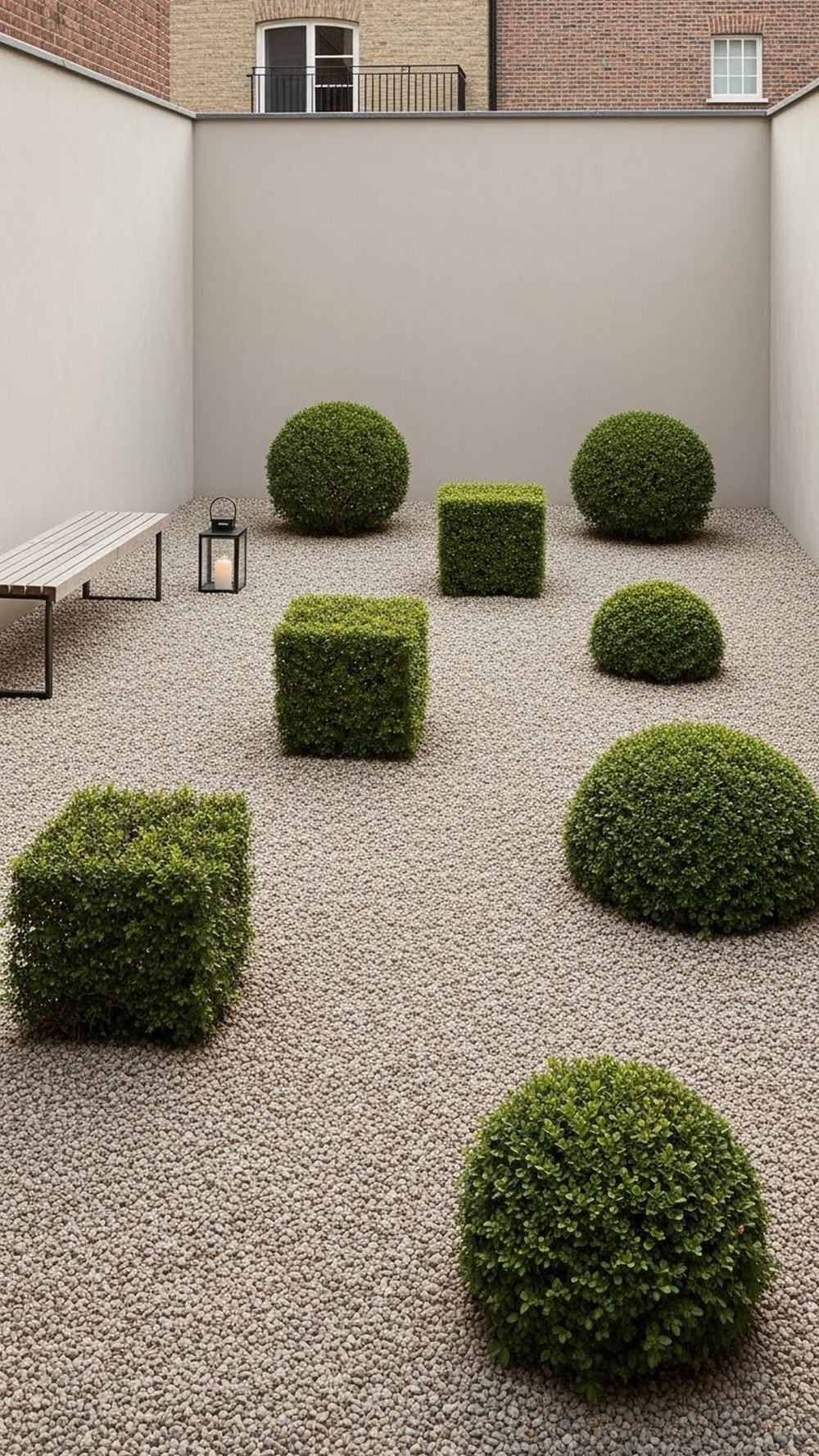
Covering a small courtyard in gravel instantly simplifies the layout. Use one size and color of stone so the ground reads as a single “carpet.” Then place sculpted shrubs—spheres, domes, or cubes—in a loose but intentional pattern. Limit yourself to just one or two shrub varieties so the eye can rest. A bench or low chair against a wall gives you a place to sit and enjoy the stillness while the plants do all the subtle work.
- Best For: Enclosed patios or internal courtyards.
- Budget Tip: Use simple nursery shrubs and clip them over time into neater shapes.
- Styling Idea: Keep furniture slim and neutral so the shrubs remain the main focus.
- Practical Note: Install a solid sub-base and edging to keep gravel from migrating into doorways.
White Gravel And Single Olive Tree Island

A field of white gravel with one main focal point feels very serene. Create a defined planting pocket in the centre for an olive or other small tree, and underplant with a tight ring of low shrubs to anchor it. The gravel’s brightness lifts darker facades and helps small spaces feel larger. A single chair or slim bench nearby turns the “island” into a destination rather than just a feature to look at from afar.
- Best For: Sunny, reflective spots that can handle bright stone.
- Budget Tip: Use compact evergreen shrubs around the tree instead of full groundcover.
- Styling Idea: Pair with slim black or dark metal furniture for crisp contrast.
- Practical Note: White gravel shows debris; plan a quick weekly brush or leaf-blow.
Grey Gravel Path With Repeated Shrub Mounds

A path edged with identical shrubs is classic, but paired with gravel it looks fresh and minimal. Lay a straight or gently curved path, then create a band of gravel along one side. Plant matching mounds at regular intervals into the soil and let the gravel lap gently around them. The repetition pulls the eye along and makes even a short route feel purposeful. It’s a good way to give a side path or main walkway more presence.
- Best For: Main routes through the garden that need definition.
- Budget Tip: Space shrubs generously; they’ll grow to fill the gaps over time.
- Styling Idea: Choose a shrub that responds well to light clipping for a neat, modern line.
- Practical Note: Use edging to stop gravel slipping onto the main path surface.
Front Entry Gravel Grid With Low Hedges

A grid of pavers with gravel in between feels both practical and designed. Lay square slabs in a regular pattern from gate to door, leaving equal gaps between filled with gravel. On one side, a low hedge (or two parallel hedges) provides a simple green line that frames the approach. The combination is easy to walk and easy to maintain, and it suits both contemporary and more traditional houses when you keep the plant palette restrained.
- Best For: Front gardens that double as paths or parking.
- Budget Tip: Use fewer, larger slabs rather than many small ones to cut costs and joints.
- Styling Idea: Choose a hedge plant with small leaves for a fine, crisp edge.
- Practical Note: Make sure the grid spacing works with natural walking strides for comfort.
Black Gravel Band With Architectural Shrubs
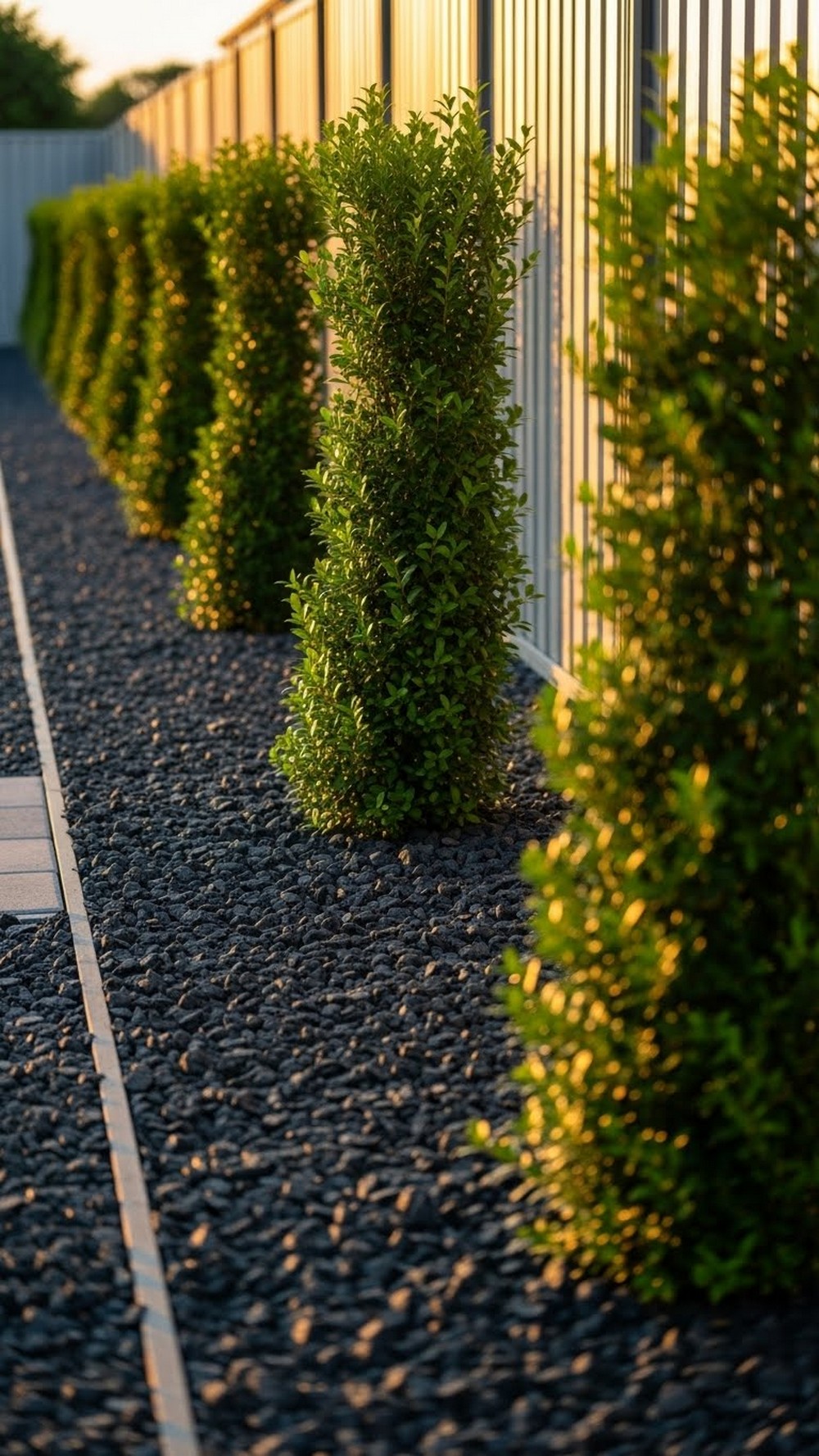
Dark gravel instantly adds drama. Lay a narrow band of charcoal or black stone along a fence or wall, and plant upright or fan-shaped shrubs in a repeating rhythm. The dark base and vertical forms combine into a strong, minimalist statement. Keep other elements nearby quiet—plain decking, simple walls—so the band of green and black can shine. Night lighting looks especially good here; a few ground spots can transform the mood.
- Best For: Modern gardens and side boundaries needing a bold line.
- Budget Tip: Use mid-priced gravel and save by limiting it to a narrow strip.
- Styling Idea: Match metalwork (like railings or furniture) to the gravel’s dark tone.
- Practical Note: Dark stone can get hot in full sun; choose shrubs that tolerate warm roots.
Small Side Yard Gravel Ribbon With Columnar Shrubs

Side yards often feel like wasted space. A simple gravel “ribbon” with tall, slim shrubs gives them purpose without clutter. Run the gravel along the sunny side of the passage, set a few stepping stones through it, and plant columnar shrubs at even intervals. They’ll lift the eye upwards and make the corridor feel more like an intentional route than a storage strip. Keep everything else pared back to avoid the area feeling cramped.
- Best For: Long, narrow gaps between house and boundary.
- Budget Tip: Use a limited number of well-placed shrubs instead of filling the whole run.
- Styling Idea: Choose one bold pot at the end of the view as a quiet focal point.
- Practical Note: Leave clear space for bins, bikes, or maintenance access.
Raised Gravel Terrace With Potted Evergreens
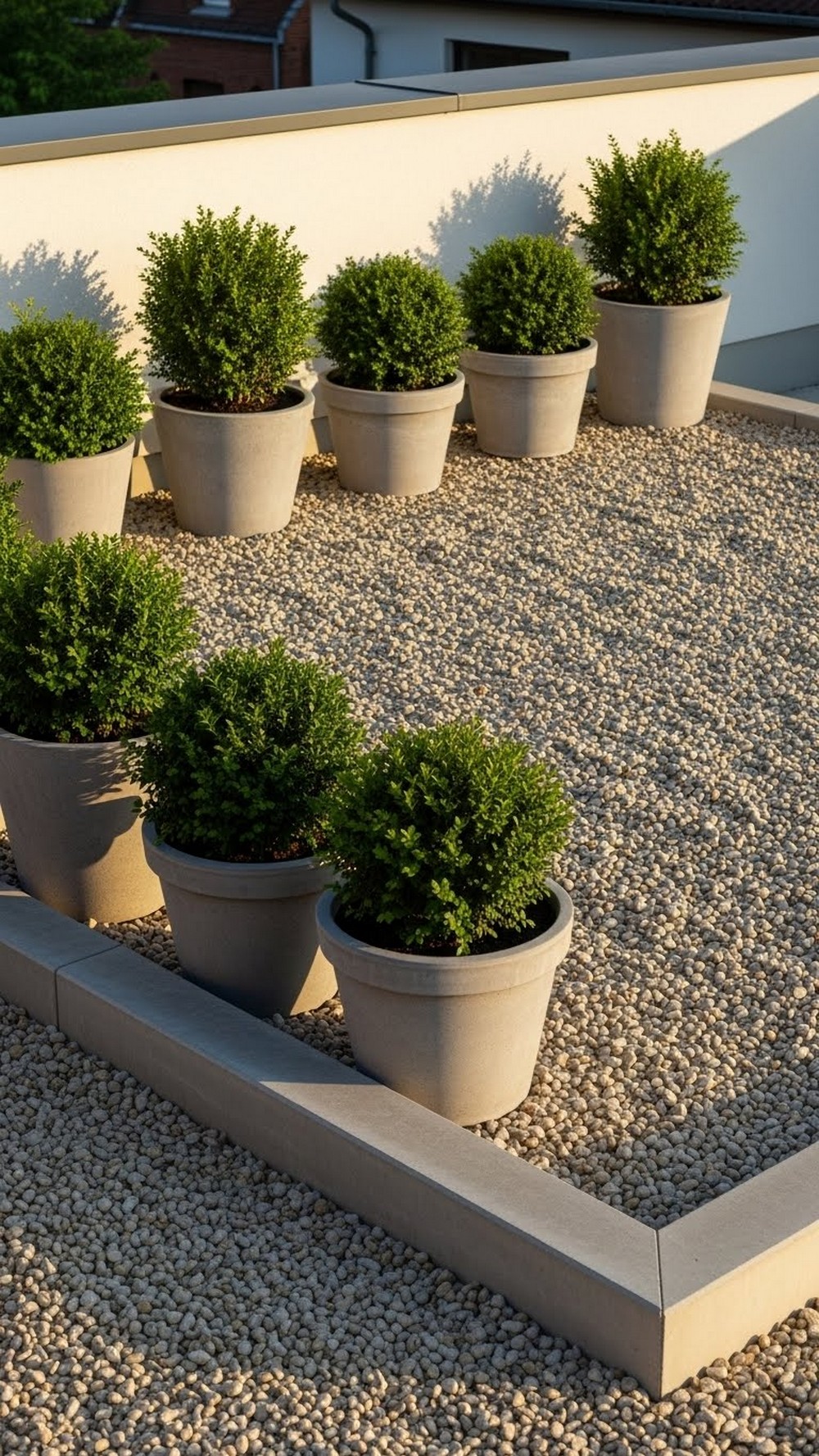
Covering a raised terrace in gravel can soften hard surfaces and make pots feel more grounded. Lay a neat layer of stone over a solid base, then line the edge with matching containers of evergreen shrubs. Their repeated shapes and heights echo the terrace outline. Keep furniture simple and low-profile so the eye can travel easily over shrubs and gravel. This setup works well where you want an easy-care seating area that still feels green.
- Best For: Rooftop-style decks and raised patios.
- Budget Tip: Use identical affordable pots and let the shrubs provide variation.
- Styling Idea: Choose evergreens with slightly different leaf textures for subtle interest.
- Practical Note: Check drainage carefully so water doesn’t collect on the terrace.
Gravel Circle Seating With Clipped Green Ring

Creating a circle instantly defines a “room” outdoors. Set out a simple gravel pad, then plant low shrubs around its outer edge, clipping them into a clean ring as they grow. Place two chairs and a compact table on the gravel. The shrubs act almost like a living wall, separating the nook from the rest of the garden without blocking views. It’s a lovely setup for morning coffee or evening drinks that feels contained without feeling enclosed.
- Best For: Lawns or open areas where you want a distinct seating zone.
- Budget Tip: Start with a half-ring against a hedge or fence instead of a full circle.
- Styling Idea: Use chairs with slim, light frames to keep the composition airy.
- Practical Note: Leave a gap in the shrub ring as a clear entrance to the seating pad.
Narrow Gravel Bed With Mixed Evergreen Textures
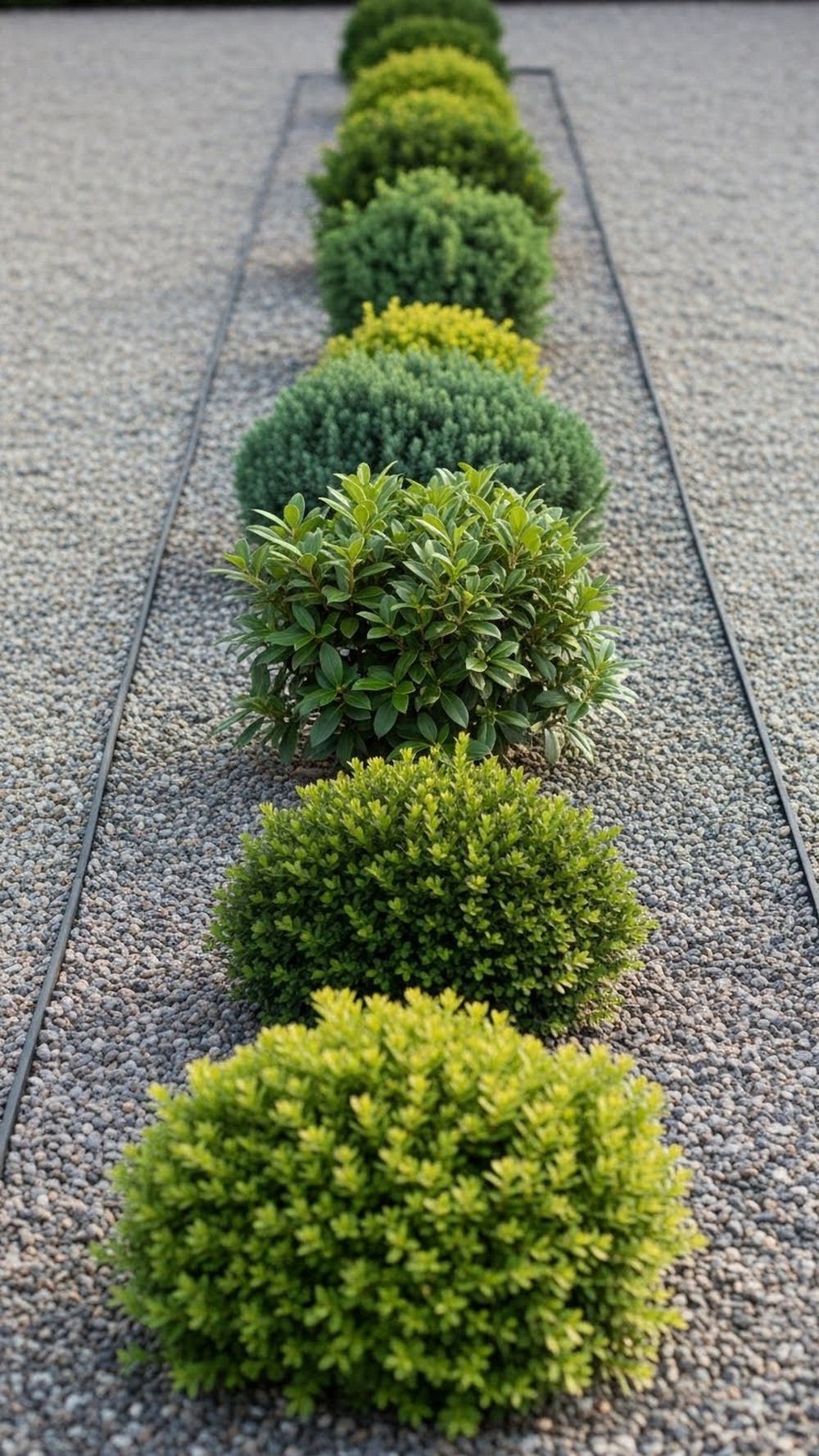
A slim bed is a great place to play with foliage textures while staying minimalist. Fill the area with gravel and choose three or four evergreen shrubs with different leaf sizes and shapes, all in similar shades of green. Space them so each has room to show off its outline. The gravel acts as a quiet background, allowing you to appreciate the differences without adding extra color. It’s a small, subtle way to make a path edge or wall base more interesting.
- Best For: Borders along paths, driveways, or patios.
- Budget Tip: Buy small plants and be patient; texture improves as they mature.
- Styling Idea: Repeat the same combination in more than one bed for a cohesive feel.
- Practical Note: Use a neat metal or timber edging strip for a crisp line between gravel and paving.
Gravel And Stepping Stone Walk With Shrub Trios
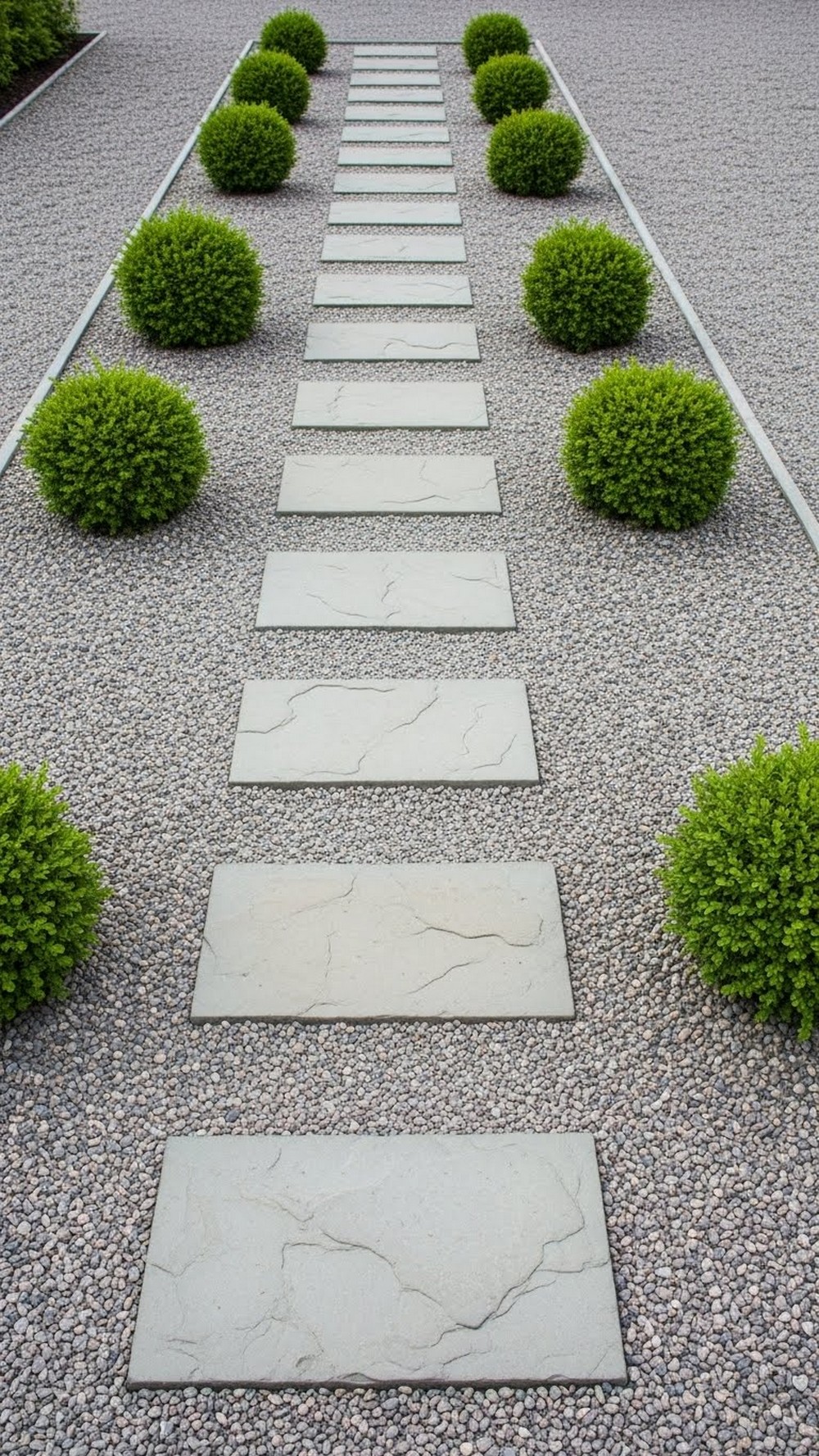
Trios of shrubs create pleasing little “beats” along a path. Lay a wide strip of gravel and set large stepping stones down the centre to form the main walk. At regular points, plant three matching shrubs in a tight group off to the side—one slightly taller, two lower, or all equal. Repeat the trio pattern several times. The effect is minimal but rhythmic, especially when viewed from above or from the house.
- Best For: Main garden paths and transitions between zones.
- Budget Tip: Limit yourself to one shrub type for all the trios to save and simplify.
- Styling Idea: Choose rounded shapes to contrast with the flat, angular stepping stones.
- Practical Note: Keep gravel depth shallow on the main stepping area to avoid unstable footing.
Gravel Courtyard With Central Shrub Cube Planters
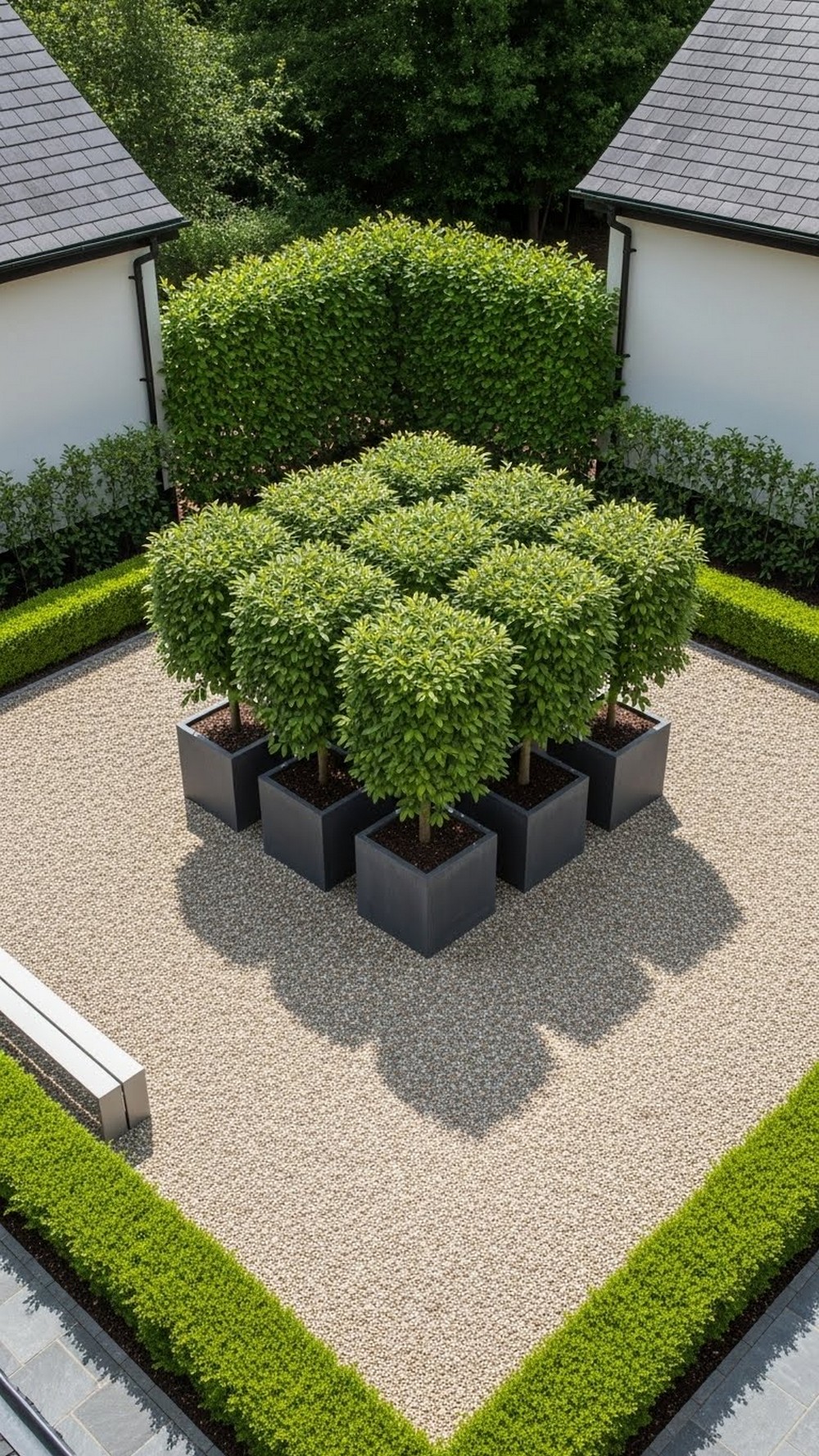
Using cube planters and cube-shaped shrubs in a gravel courtyard feels very composed. Place three, four, or six planters in a tight cluster or straight line, and fill the rest of the courtyard with uniform gravel. The repetition of cube-on-cube gives a sculptural feel that works beautifully against plain walls. A single slim bench is enough seating; you don’t need much else. This is a good option if you like a very tidy, almost gallery-like outdoor space.
- Best For: Compact courtyards and formal side gardens.
- Budget Tip: Use simple timber cubes painted in a stone tone as planters.
- Styling Idea: Stick to one shrub variety for maximum calm and consistency.
- Practical Note: Raise planters slightly on feet or tiles to avoid staining on constant-contact gravel.
Gravel Slope With Tiered Shrub Layers
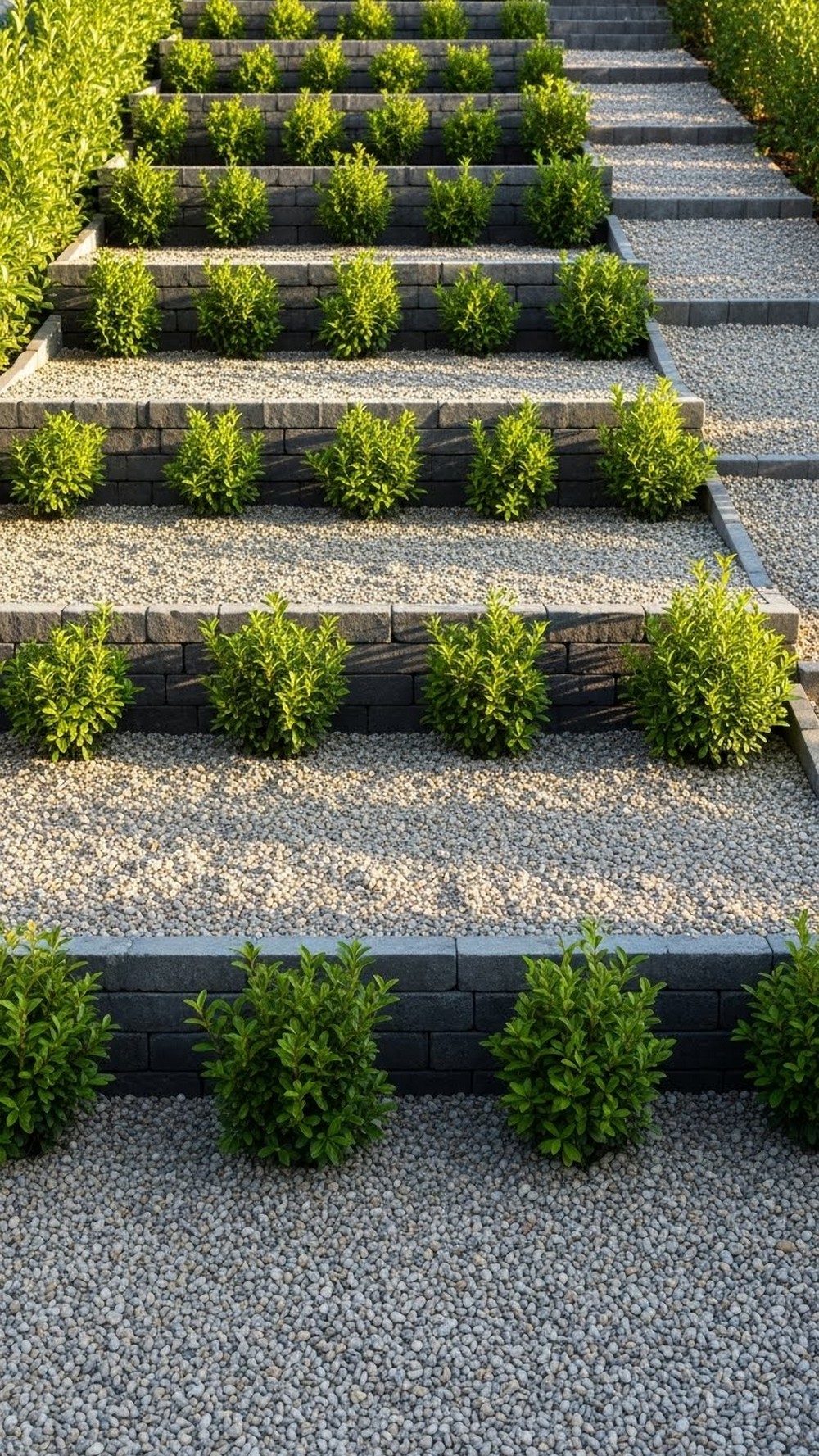
Taming a slope with gravel and shrubs is practical and good-looking. Create low terraces or angled bands on the slope using stone or sleepers, then fill the surfaces with gravel. On each level, plant a row of evergreen shrubs, staggering them so upper plants sit between those below. The repeating rows look strong and intentional from the road or house. Gravel reduces erosion and makes maintenance safer than mowing a steep bank.
- Best For: Front gardens on a hill or tricky side slopes.
- Budget Tip: Mix one main shrub type with a few accent plants to keep costs down.
- Styling Idea: Use the same gravel on terraces and paths nearby for continuity.
- Practical Note: Ensure the terrace edges are well-built to hold soil and stone in place.
Minimalist Japanese-Inspired Gravel And Pine Corner
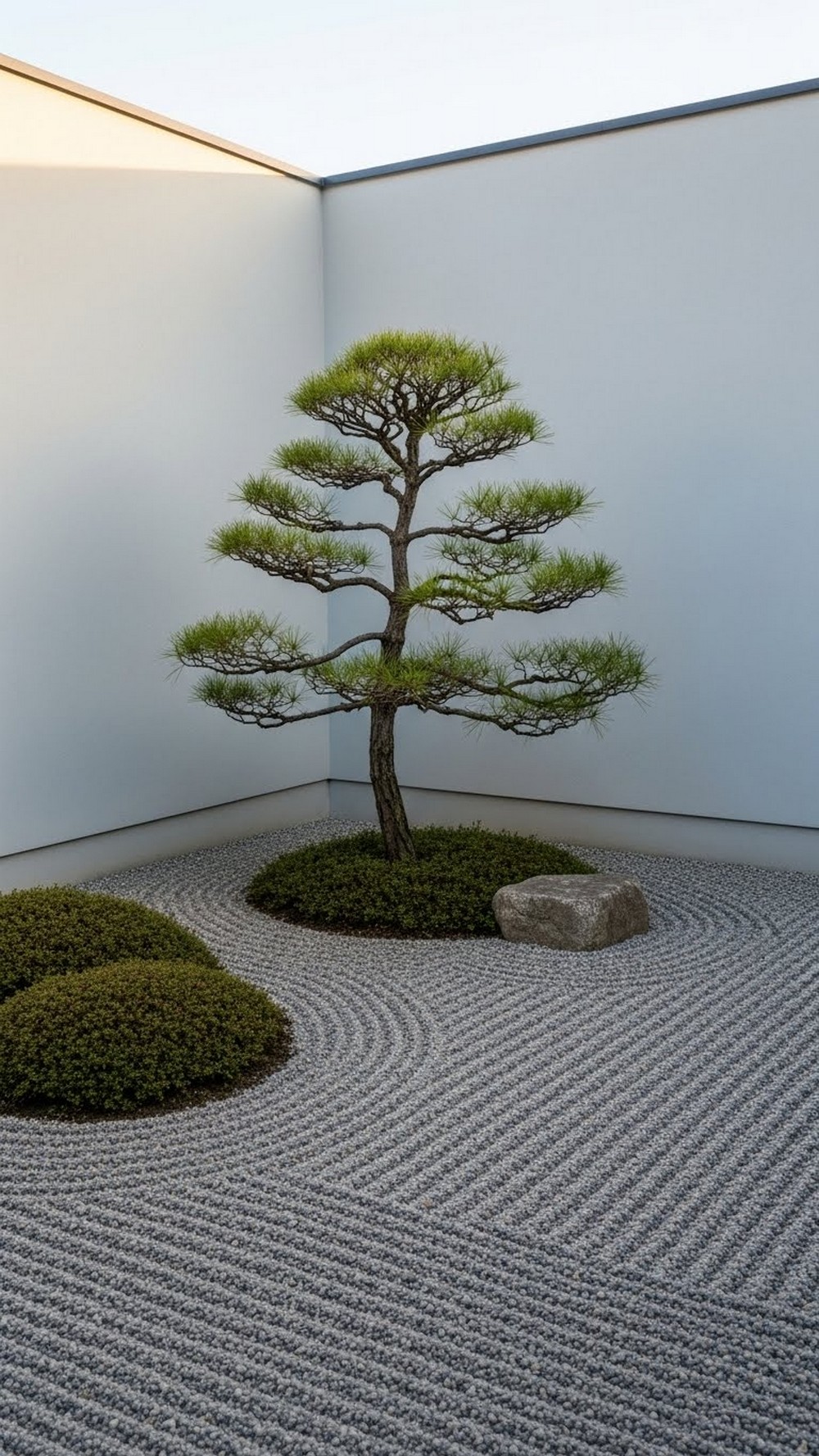
You don’t need a full Japanese garden to borrow its calm. In one corner, lay a rectangular patch of pale gravel and rake it in simple, straight lines. Plant a single pine or small evergreen tree with character, then add one or two low mounds of shrubs at the edge. A single larger rock or boulder bridges the transition between gravel and planting. The result is modest but very atmospheric, especially when seen from indoors.
- Best For: Quiet corners visible from key windows.
- Budget Tip: Use an existing evergreen and build the gravel area around it.
- Styling Idea: Avoid extra decor; let the tree, shrubs, and stone provide all the interest.
- Practical Note: Raking patterns is optional—straight, undisturbed gravel still looks minimalist.
Gravel Parking Pad With Shrub Border

A gravel parking area can look smart with a minimalist green frame. Lay a generous pad of compacted gravel for cars, then run a straight border of shrubs along one or two sides. Keep the shrubs all the same type and height for a clean edge. The contrast between functional surface and soft border makes the area look deliberate rather than leftover space. It’s especially effective in front gardens that need to work hard.
- Best For: Driveways, parking bays, and turning circles.
- Budget Tip: Use hardy, low-maintenance shrubs that need minimal clipping.
- Styling Idea: Match the gravel color to that used in nearby paths for unity.
- Practical Note: Leave enough distance between shrubs and car doors to avoid scuffing.
Gravel Patio With Single Shrub Feature Wall

Instead of spreading plants everywhere, concentrate them along one edge. Cover your patio in gravel, keeping furniture simple. Then choose a boundary wall or fence and plant a single line of shrubs in front, creating a green feature wall. Clip them into tidy shapes or let them stay naturally soft, depending on your taste. The rest of the patio remains open, giving a spacious, uncluttered feel while still providing a leafy backdrop.
- Best For: Small patios where you want greenery without lots of beds.
- Budget Tip: Start with fewer shrubs spaced widely, then fill gaps later if desired.
- Styling Idea: Use wall lighting to wash soft light over the foliage at night.
- Practical Note: Make sure there is a planting pocket or raised bed so shrubs aren’t in pure gravel.
Gravel Grid Between Pavers With Shrub Cubes
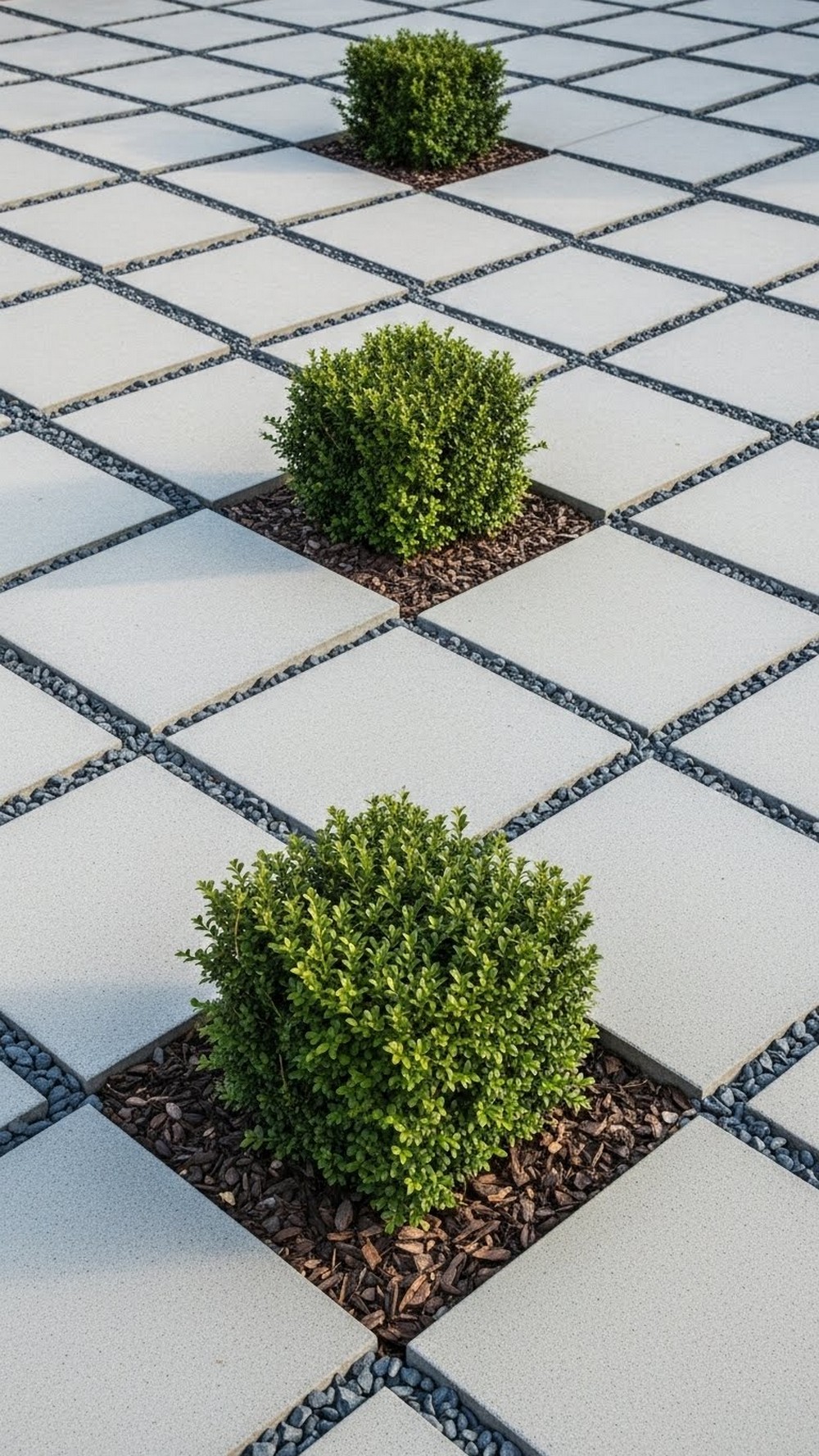
A paver grid with cube shrubs at intersections creates a very graphic garden floor. Lay large square slabs with even gaps filled with gravel. At some junctions (not every single one), cut out planting pockets and place cube-shaped shrubs. This creates a pattern of green “pixels” in the grid. It’s a striking look for a small courtyard, especially when viewed from an upper storey. Keeping everything else around this area plain helps the pattern read clearly.
- Best For: Design-focused courtyards and modern side gardens.
- Budget Tip: Use less-expensive concrete pavers; the layout does most of the work.
- Styling Idea: Stick to one shrub species to keep the pattern strong and uncluttered.
- Practical Note: Plan exact positions before cutting pockets so the grid stays balanced.
Gravel Slot Garden With Screen Hedging
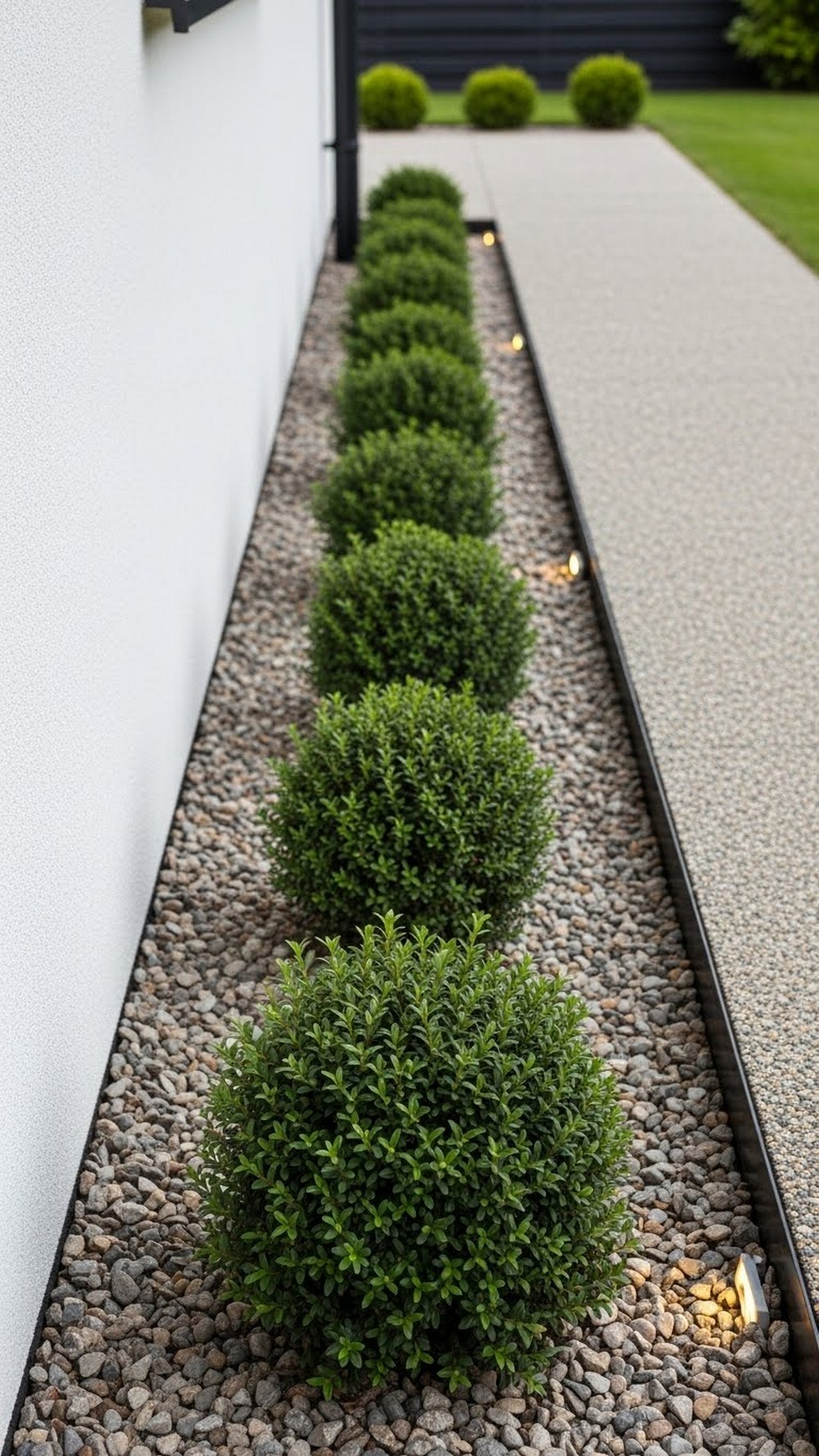
A gravel slot garden is ideal where soil is tight to a building. Dig a narrow trench, fill with good soil, and surface the top with gravel. Plant a single row of shrubs for a low hedge that screens the wall without stealing space. The gravel keeps things tidy, reduces splashback, and blends easily with adjacent paving. This is a neat way to soften the base of a extension or garage while keeping a very minimalist feel.
- Best For: Narrow strips beside walls, garages, or fences.
- Budget Tip: Choose a reliable hedge plant that suits your local conditions and stick with it.
- Styling Idea: Match the gravel color to stone used elsewhere so the slot disappears into the layout.
- Practical Note: Ensure water can drain away from the building, not toward it.
Tiny Balcony Gravel Tray With Dwarf Shrubs
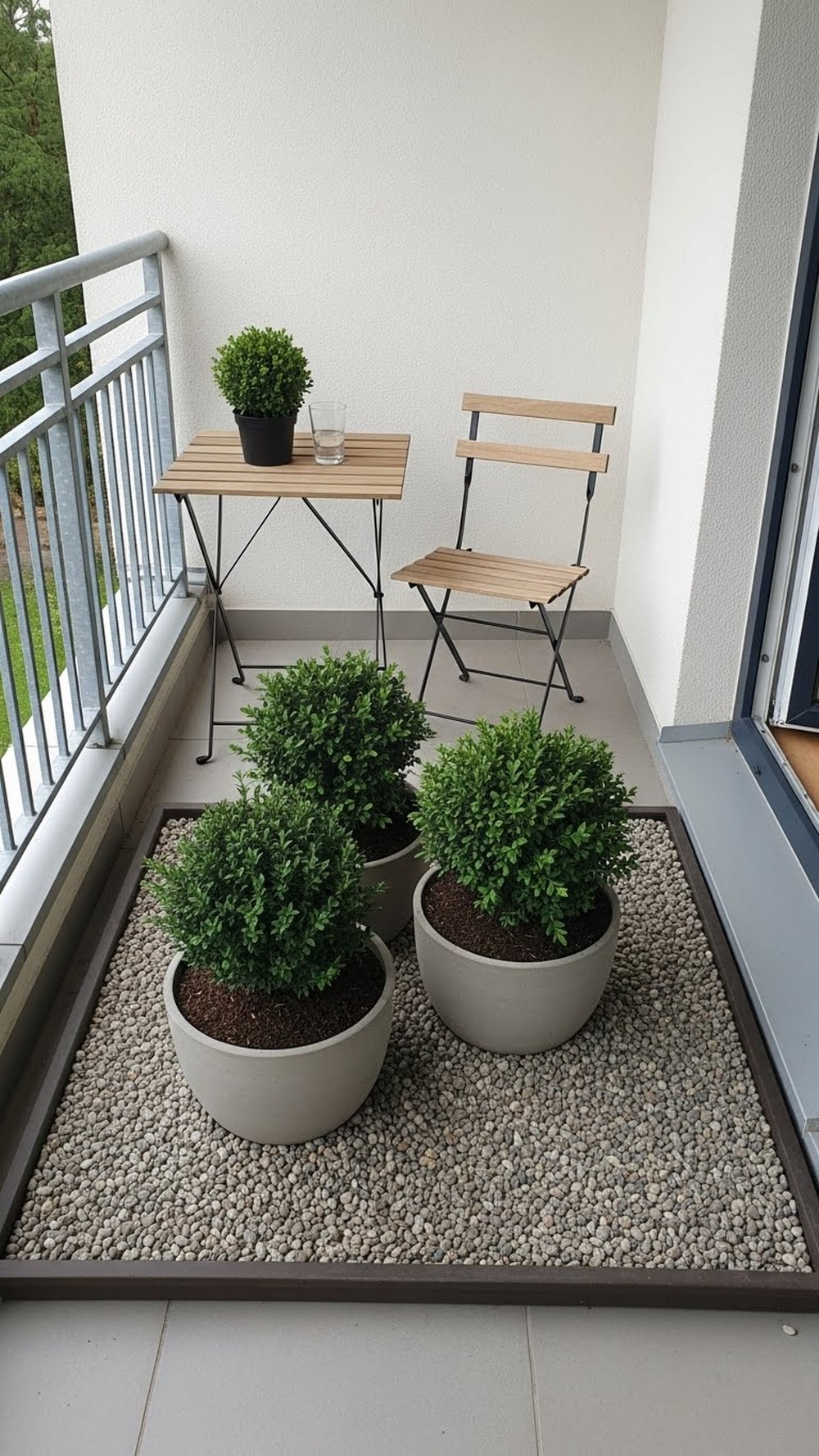
A large, shallow tray or planter filled with gravel and dwarf shrubs can mimic a mini gravel garden on a balcony. Sink pots into the gravel so they look planted; the stone hides saucers and keeps the composition neat. Add a chair, a small side table, and maybe one lantern. Kept to a simple green and grey palette, the tray feels soothing and contained. It’s especially nice under a window where you see it often from indoors.
- Best For: Balconies and roof terraces where you cannot change the main flooring.
- Budget Tip: Use dwarf varieties or prune small shrubs to stay compact.
- Styling Idea: Choose one type of dwarf shrub and vary only pot height for subtle variation.
- Practical Note: Check weight limits and ensure water drains safely from the tray.
Gravel Window View Strip With Compact Shrubs
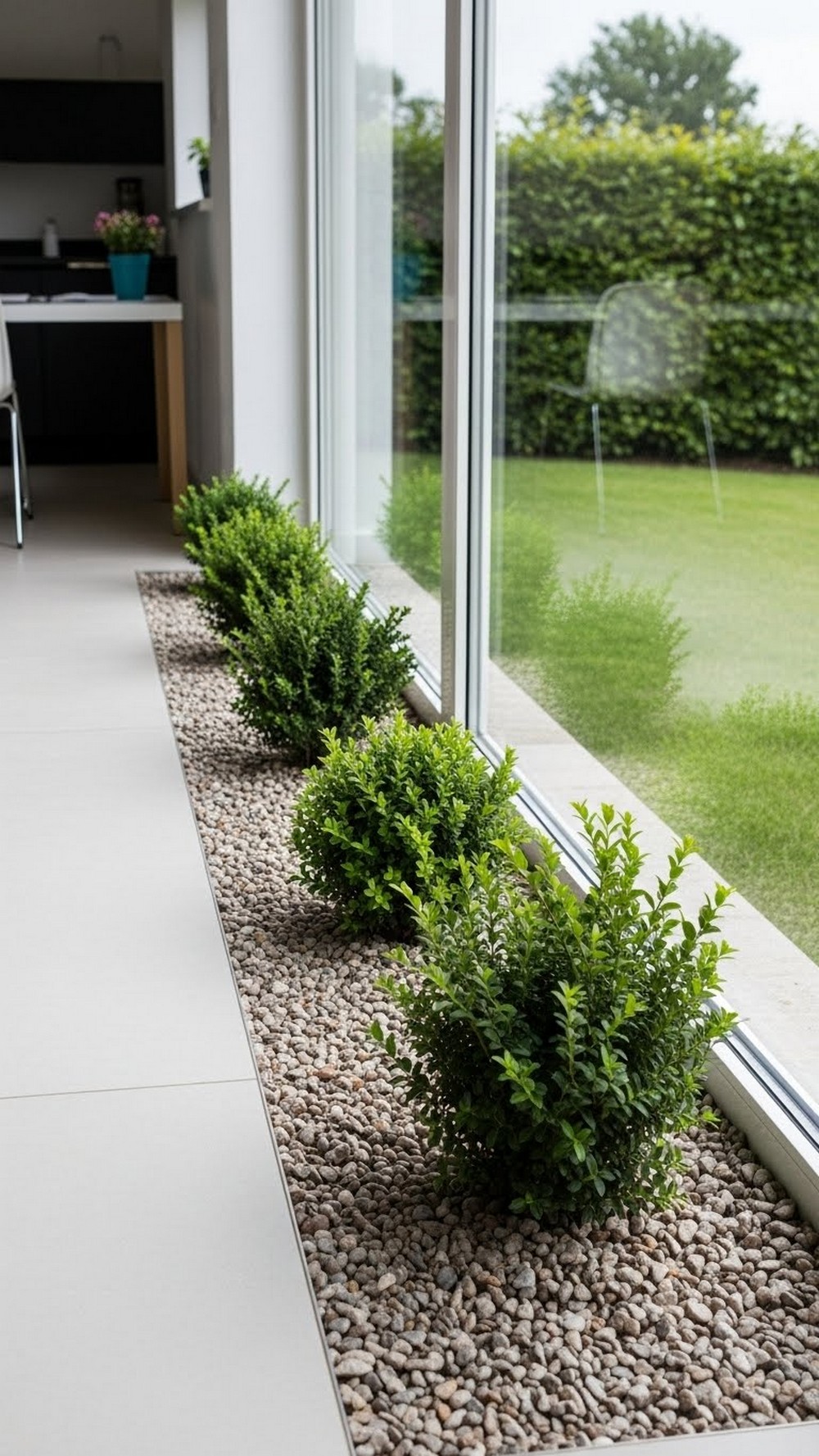
Upgrading the view from a key window with a minimalist strip pays off daily. Replace grass or bare soil directly under the window with gravel, and plant compact shrubs in a straight or staggered line. Keep them low enough not to block light but tall enough to fill your sightline. The combination of stone and evergreen shapes calms the scene, especially in winter when other beds might be bare.
- Best For: Kitchen, office, or living room windows facing a narrow strip.
- Budget Tip: Concentrate spending on this one highly visible area and keep the rest simpler.
- Styling Idea: Echo the window’s shape with the planting—long rectangle, soft arc, or centred group.
- Practical Note: Choose shrubs that stay within your desired height without constant hard pruning.
Gravel Fire Bowl Pad With Evergreen Backdrop
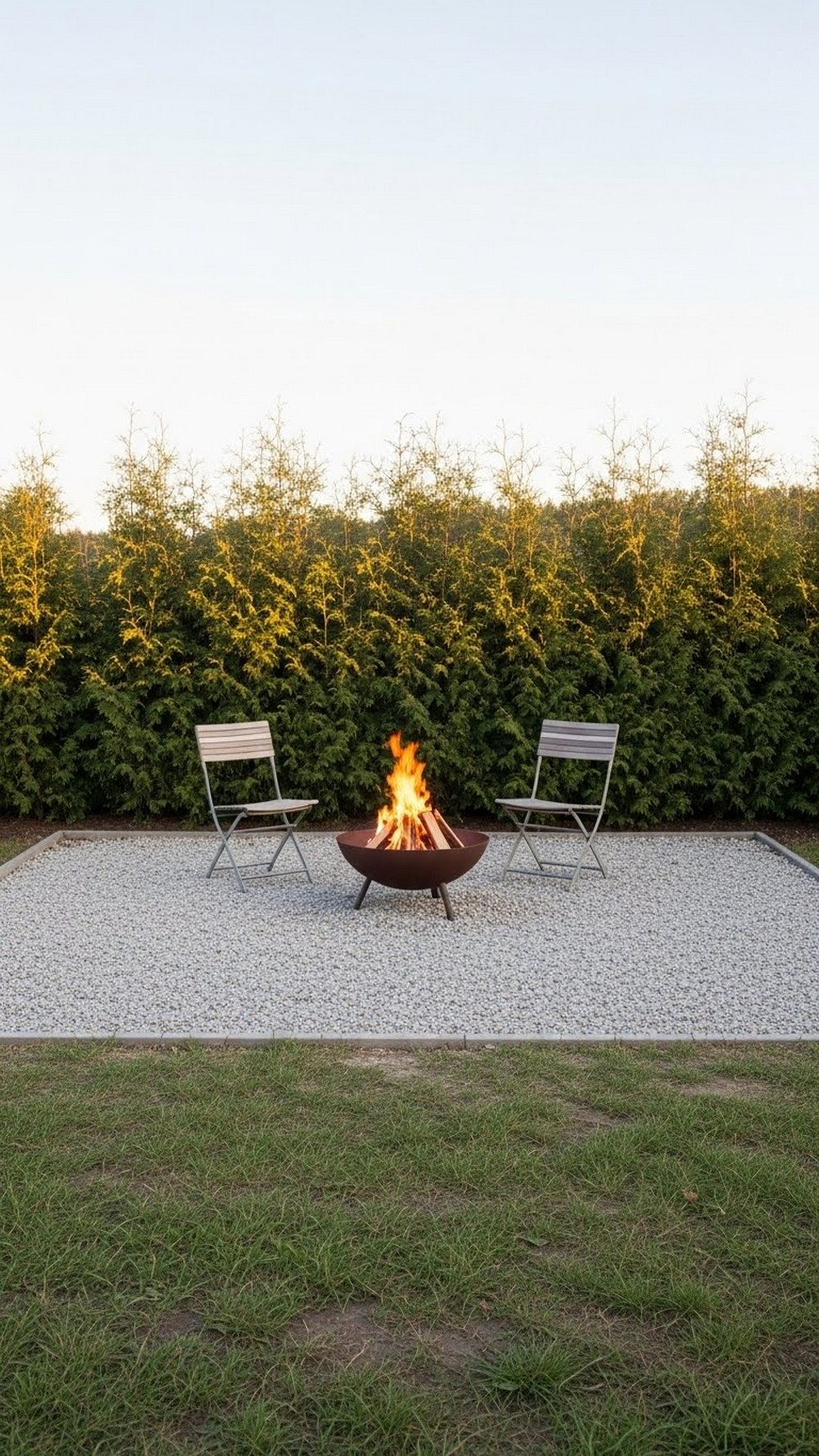
A gravel pad under a fire bowl is practical, but adding an evergreen backdrop makes it feel designed. Set out a square or round area of gravel, place the fire bowl in the centre, and flank it with two chairs. Behind the seating, plant a straight row of evergreen shrubs as a low screen. At night, the flames pick out their outlines, turning them into a quiet living backdrop. The rest of the garden can stay simpler; this nook becomes the destination.
- Best For: Medium gardens that can spare a small dedicated fire area.
- Budget Tip: Use basic shrubs and let the firelight elevate the scene at night.
- Styling Idea: Choose chairs with simple, dark frames so they almost disappear after dusk.
- Practical Note: Keep shrubs set back at a safe distance from radiant heat and sparks.
Monochrome Gravel Garden With Mixed Green Spheres
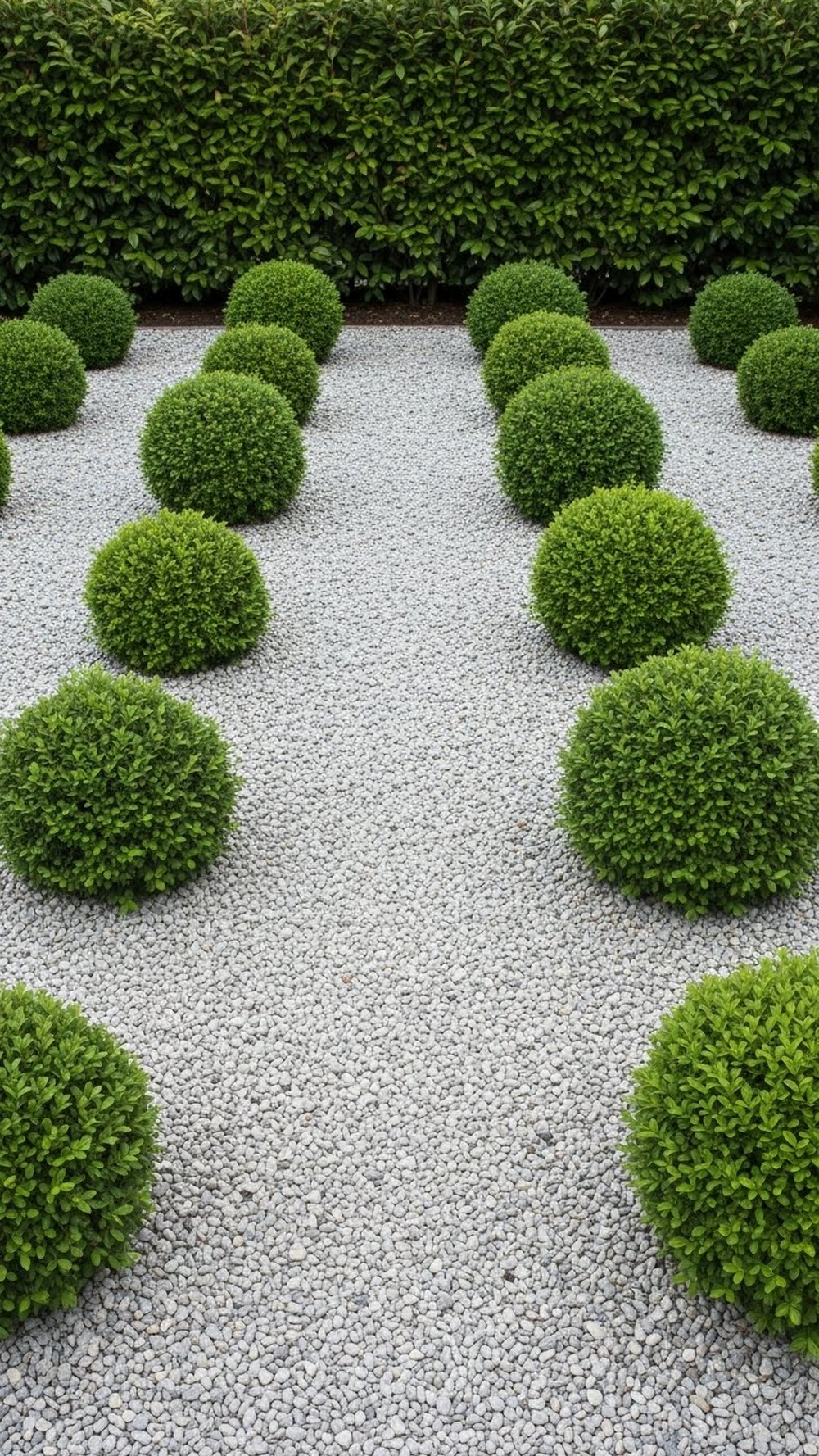
A monochrome gravel field dotted with green spheres is pure minimalist satisfaction. Choose one gravel color and use it across the entire area. Plant a mix of sphere-clipped shrubs in varying sizes in a loose, asymmetrical layout—no straight lines, just a balanced scattering. The different ball sizes create depth without needing flowers or extra colors. Viewed from a window or street, it looks like a serene, sculptural composition that barely changes with the seasons.
- Best For: Front gardens and highly visible spots where you want a strong, low-care statement.
- Budget Tip: Start with fewer, larger spheres and fill in with smaller ones over time.
- Styling Idea: Use a single edging material—steel, stone, or timber—for a clear outer frame.
- Practical Note: Plan access routes so you can reach each shrub easily for occasional clipping.
Conclusion
Minimalist gravel gardens with green shrubs prove you don’t need lots of plants, colors, or ornaments to create a beautiful space. Clean stone surfaces and simple evergreen shapes can make even awkward strips, side yards, and small courtyards feel calm and intentional. Start with one area—perhaps a narrow gravel band with repeated shrubs or a simple patio with a single feature wall—and see how much easier it is to live with and look after. From there, you can gently extend the same language of gravel and green across the rest of your garden.
FAQs
1. Are gravel gardens really low-maintenance?
They can be, if you build them properly. A firm sub-base, good edging, and weed-suppressing membrane under the gravel make a huge difference. Evergreen shrubs need occasional pruning, but you avoid mowing, frequent watering, and replanting seasonal bedding. Expect some light leaf-raking and the odd weed, but far less work than a traditional lawn-and-border layout.
2. What kind of shrubs work best in minimalist gravel gardens?
Look for evergreen shrubs that hold clean shapes and take well to light clipping if needed. Boxwood alternatives, small conifers, pittosporum, low-growing hollies, and other compact shrubs all work well. Focus on simple forms—domes, cubes, columns—rather than lots of different flower colors, and choose varieties suited to your local climate and light levels.
3. Do I need edging between gravel and lawn or paving?
Yes, some form of edging helps keep the look neat and the gravel where it belongs. Slim metal, stone setts, bricks, or simple timber boards all work. Edging creates a clear line, stops stones from migrating into lawn or onto paths, and makes maintenance easier. In a minimalist garden, those clean edges are part of the design.
4. Will gravel make my garden too hot or bright?
Light gravel can reflect heat and glare in very sunny spots, while dark gravel absorbs warmth and can feel hotter underfoot. If your space is already very bright, choose mid-grey or slightly darker tones rather than pure white. Add seating with cushions, a parasol, or shrubs that cast some shade to keep the area comfortable.
5. How do I stop cats or pets using my gravel garden as a litter tray?
Dense planting and well-chosen shrub spacing help discourage digging. Avoid very deep, loose gravel; a firm, compacted layer is less inviting. You can also incorporate larger pebbles or cobbles around shrubs, making it harder for animals to scrape the surface. In key spots, low, open groundcover plants between shrubs can also reduce bare patches of stone.


