
20 Zen Pebble Path Ideas With Potted Plants
Zen pebble paths have a lovely way of making even ordinary spaces feel calmer and more intentional. When you add potted plants to the mix, you get soft greenery, beautiful textures, and flexible layouts that suit tiny gardens, side yards, and balconies just as well as bigger plots.
This collection of 20 ideas focuses on simple pebble paths combined with pots you can place, move, and tweak as your garden grows. You’ll find schemes for cool shaded corners, modern courtyards, narrow side passages, and even family spaces. Each idea is realistic and budget-conscious, aimed at helping you turn plain ground into peaceful little routes and resting spots that invite slower steps and deeper breaths.
Quick List
- Narrow Zen Entry Pebble Path With Terracotta Pots
- Curved White Pebble Path With Black Planters
- Stepping Stone Pebble Path With Mismatched Clay Pots
- Bamboo-Lined Pebble Walk With Tall Planters
- Courtyard Pebble Loop With Meditation Stool And Pots
- Side Yard Pebble Ribbon With Herb Pots
- Pebble Path With Water Bowl And Lotus Pots
- Minimalist Grey Pebble Path With Concrete Cubes
- Lantern-Lit Pebble Path With Deep Green Pots
- Zen Pebble Path Around A Single Feature Tree
- Split-Level Pebble Steps With Cascading Pots
- Front Door Pebble Welcome With Symmetry Pots
- Balcony Pebble Strip With Low Bowls
- Pebble Labyrinth Corner With Potted Grasses
- Zen Tea Corner Pebble Path With Bonsai Pots
- Pebble Path Under Pergola With Hanging Pots
- Circular Pebble Pad With Potted Succulents
- Pebble And Timber Boardwalk With Pot Clusters
- Shady Pebble Path With Fern Pots
- Family-Friendly Pebble Path With Movable Pots
Narrow Zen Entry Pebble Path With Terracotta Pots
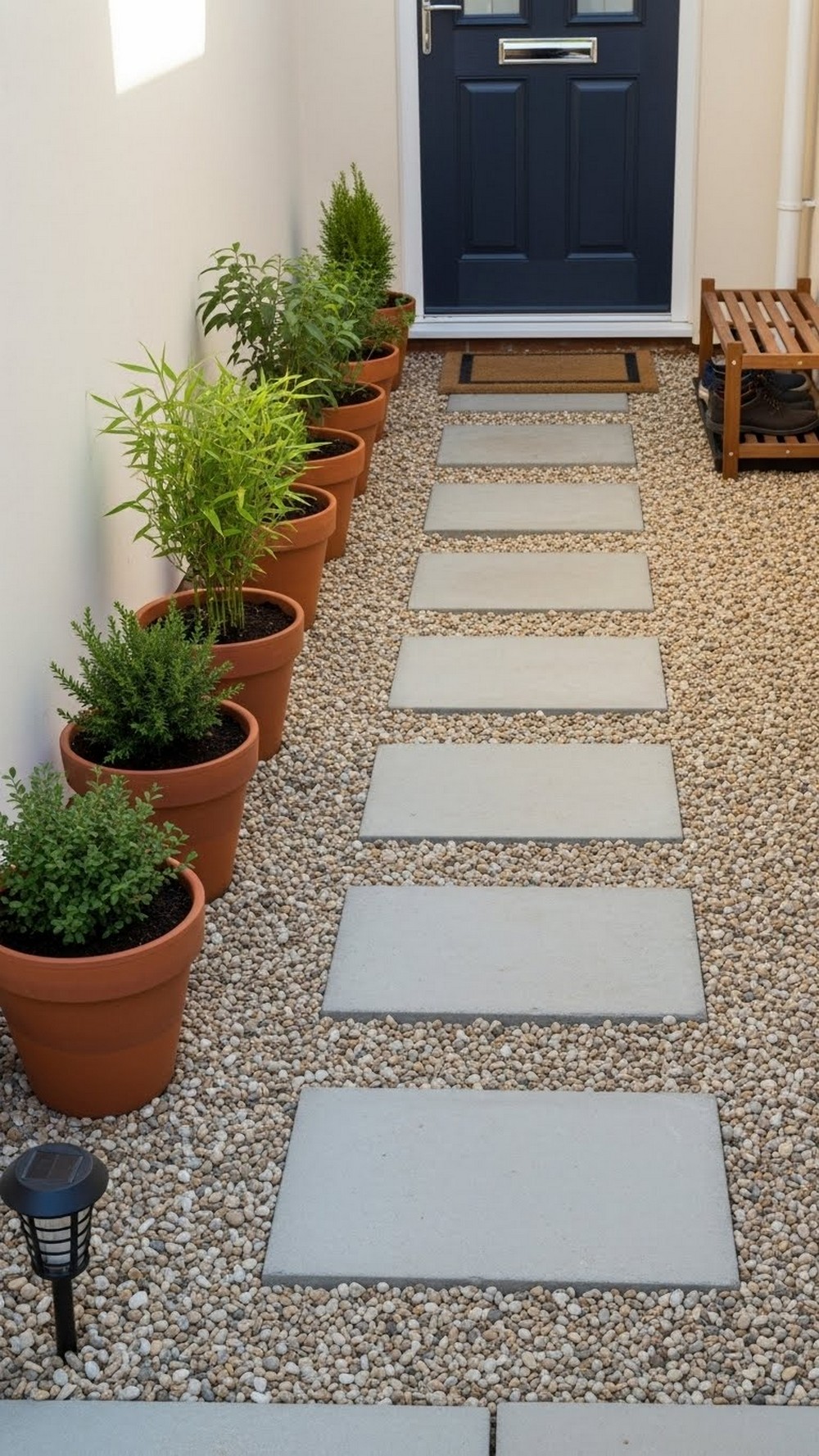
A simple pebble path is a brilliant way to calm a narrow entry. Lay a strip of landscape fabric, pour a layer of pebbles, and nestle flat stepping stones through the centre. Line one side with terracotta pots in one or two sizes only, each planted with a single type of plant for a calm, repeated look. The combination of clay, stone, and green instantly feels more considered than bare soil or cracked concrete.
- Best For: Side entrances and paths between house and gate.
- Budget Tip: Mix small and medium terracotta pots and reuse existing plants you already own.
- Styling Idea: Stick to mostly green foliage; let texture and shape create interest.
- Practical Note: Use lighter-coloured pebbles in darker spaces to keep the path from feeling gloomy.
Curved White Pebble Path With Black Planters
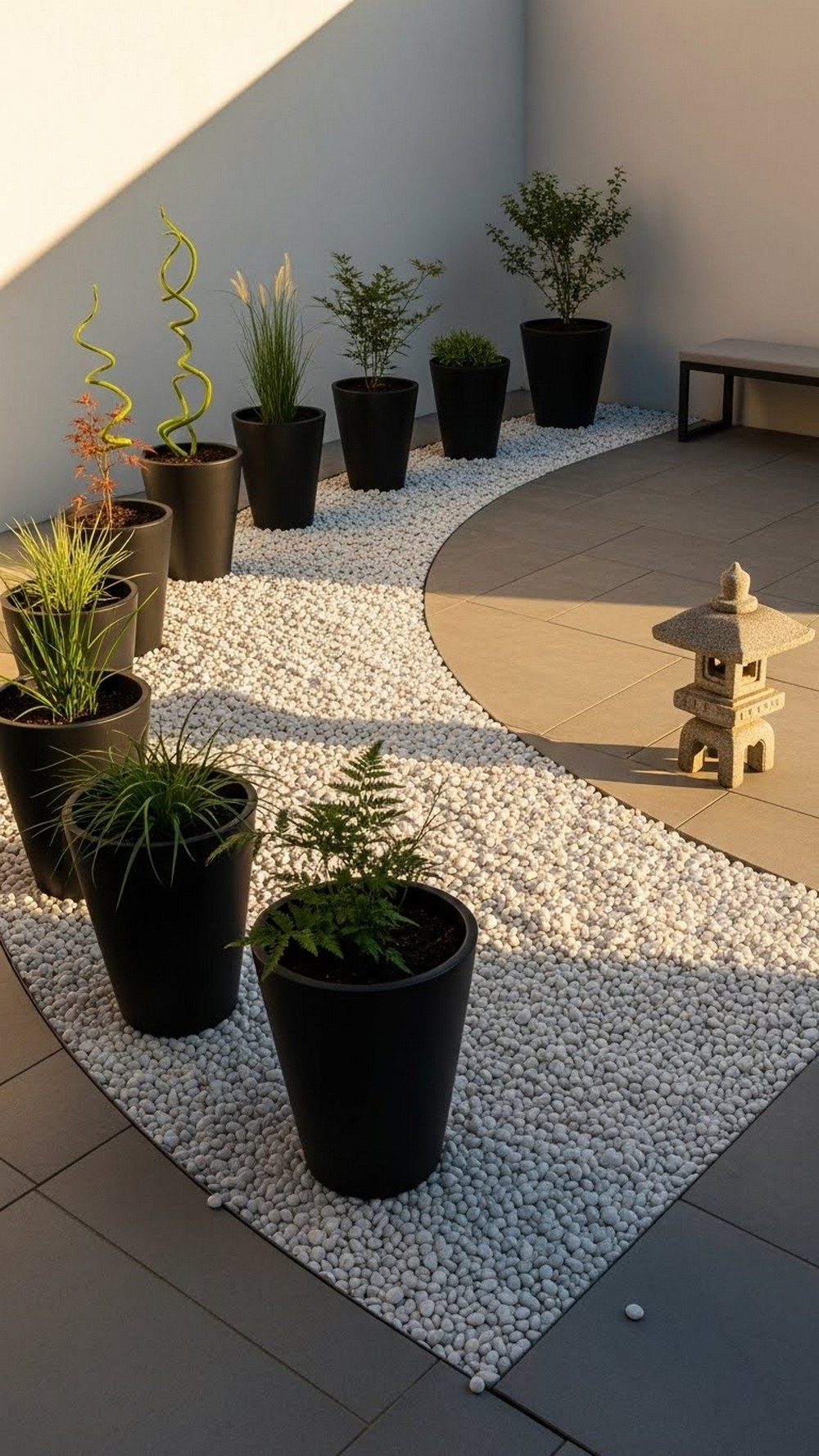
A curved path of white pebbles feels bright and soft, especially in a small courtyard. Create a gentle arc rather than a sharp bend, then add dark, simple planters along the outer edge of the curve. The black pots act like punctuation marks in the scene, with foliage as the “ink.” The contrast between white stones, black planters, and green leaves looks very clean without feeling cold.
- Best For: Small modern courtyards or patios.
- Budget Tip: Use basic lightweight black plastic pots and disguise them inside simple outer sleeves.
- Styling Idea: Choose plants with elegant shapes, such as grasses or small shrubs, rather than busy flowers.
- Practical Note: White pebbles show debris easily—brush them occasionally to keep the look crisp.
Stepping Stone Pebble Path With Mismatched Clay Pots
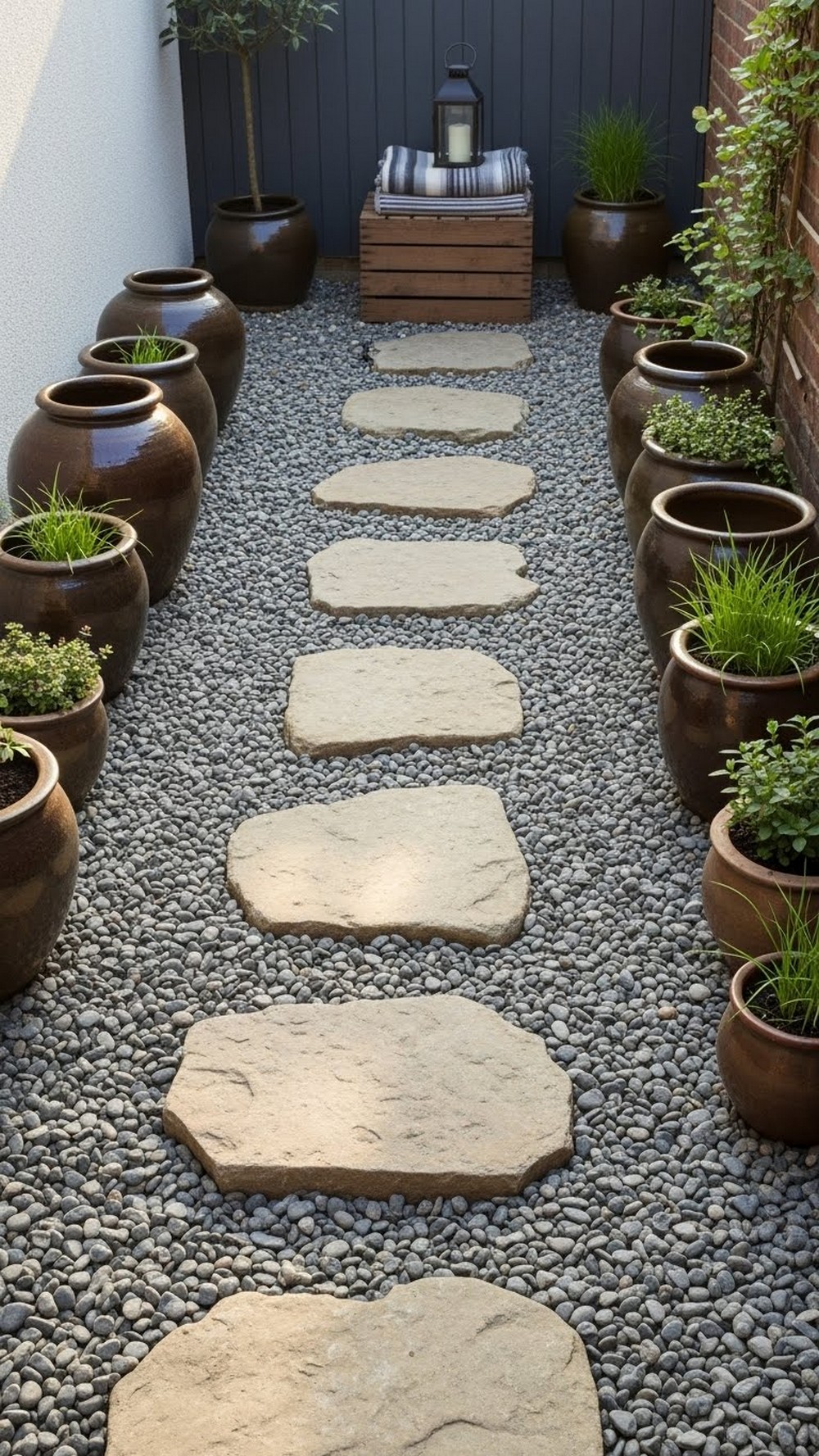
Using mismatched clay pots gives a gentle, collected-over-time feel, perfect for a relaxed zen corner. Set stepping stones into a bed of neutral pebbles and place pots of different shapes and heights on either side. Tie everything together by keeping the palette simple: terracotta, stone, and shades of green. The slight irregularity in both stones and pots stops the path from feeling stiff.
- Best For: Informal back gardens and rental spaces.
- Budget Tip: Gather cheap or second-hand pots and unify them by keeping to terracotta and unglazed finishes.
- Styling Idea: Repeat the same few plant types throughout to avoid visual clutter.
- Practical Note: Place larger pots at “corners” of the path to help guide movement.
Bamboo-Lined Pebble Walk With Tall Planters
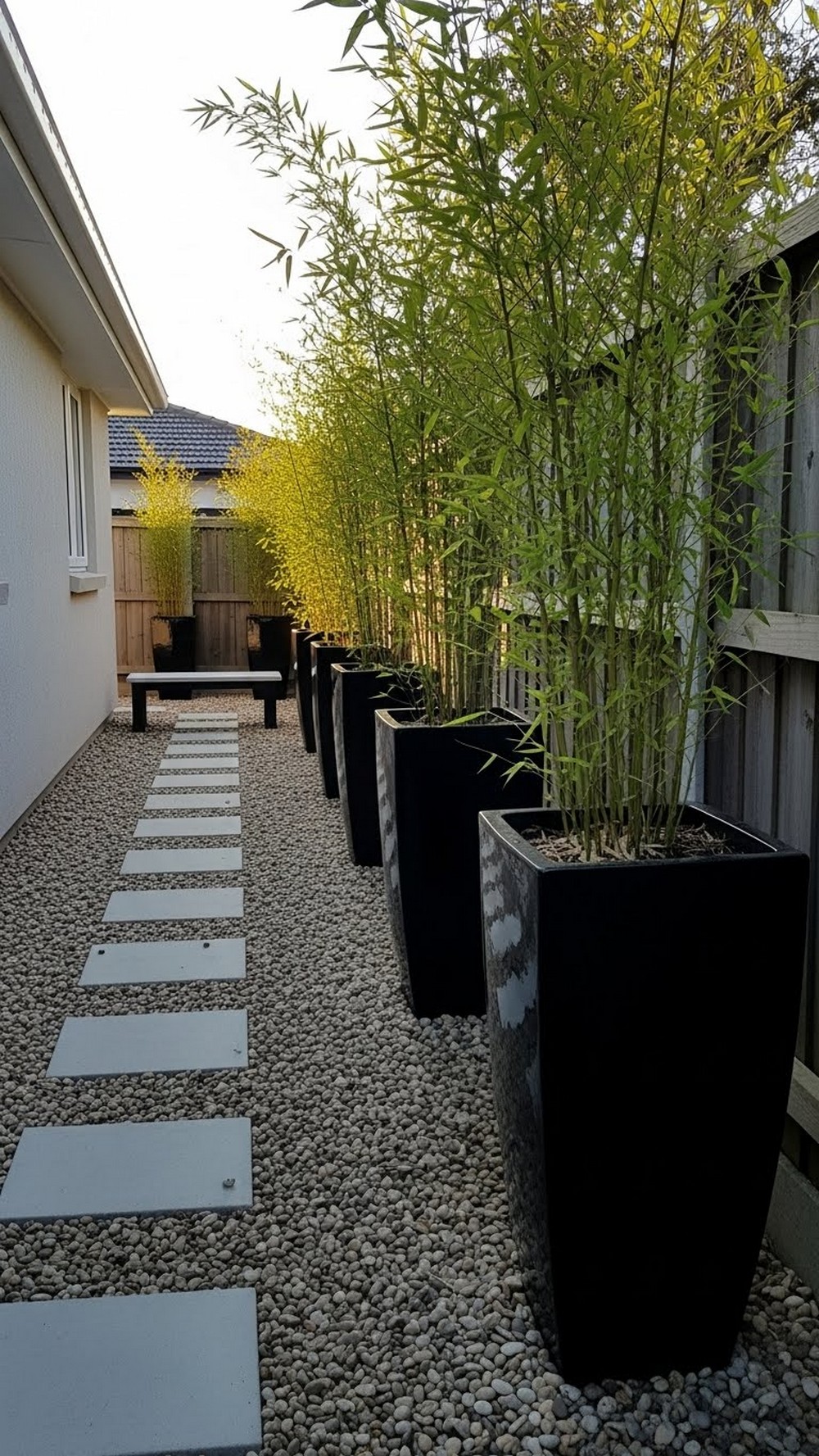
Tall planters filled with bamboo instantly make a slim path feel more private. Lay a strip of pebbles, set stepping stones, and position tall pots at regular intervals along one side. The upright bamboo stems echo the vertical line of the planters, while soft leaves add movement and sound. This is especially effective along fences or between a house and boundary wall.
- Best For: Long, straight side paths that feel exposed.
- Budget Tip: Buy one or two larger bamboo plants and divide carefully over time.
- Styling Idea: Use tall, narrow planters in a single dark colour for a sleek, corridor-like effect.
- Practical Note: Choose clumping bamboo in containers and ensure good drainage to avoid waterlogging.
Courtyard Pebble Loop With Meditation Stool And Pots
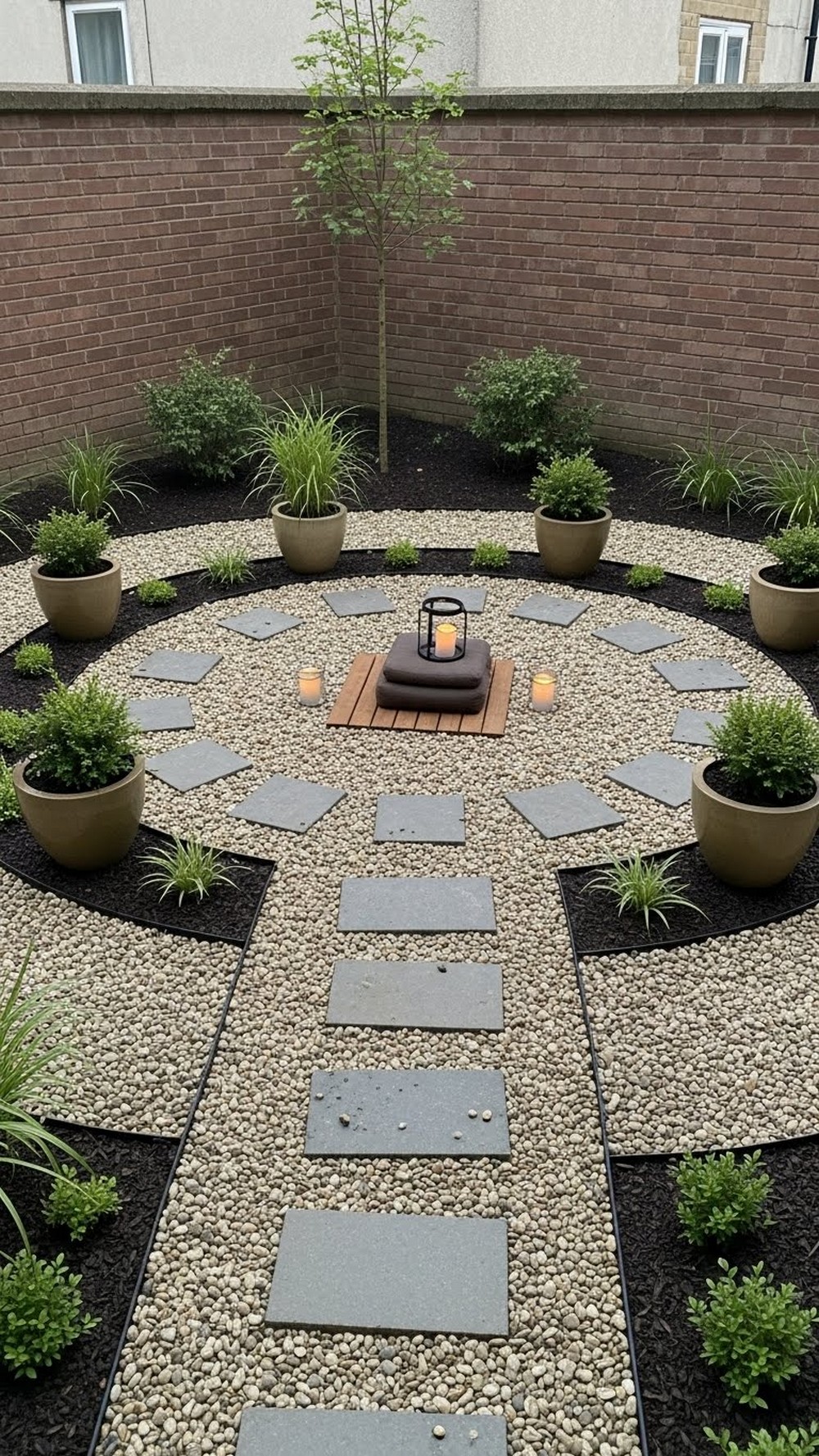
A small pebble loop can turn a cramped courtyard into a tiny walking meditation space. Shape a simple circle or oval path with larger stones marking the edge. Add evenly spaced pots around the outer line—perhaps four or six—planted with the same type of plant for a calm rhythm. In the centre, place a low wooden stool or cushion on a stable pad. Walking the loop slowly becomes a gentle ritual.
- Best For: Enclosed courtyards and tiny square yards.
- Budget Tip: Start with a half-loop against a wall if you don’t have room for a full circle.
- Styling Idea: Use low, rounded shrubs or grasses to mirror the circular shape.
- Practical Note: Choose comfortable stepping-stone spacing to encourage slow, steady steps.
Side Yard Pebble Ribbon With Herb Pots
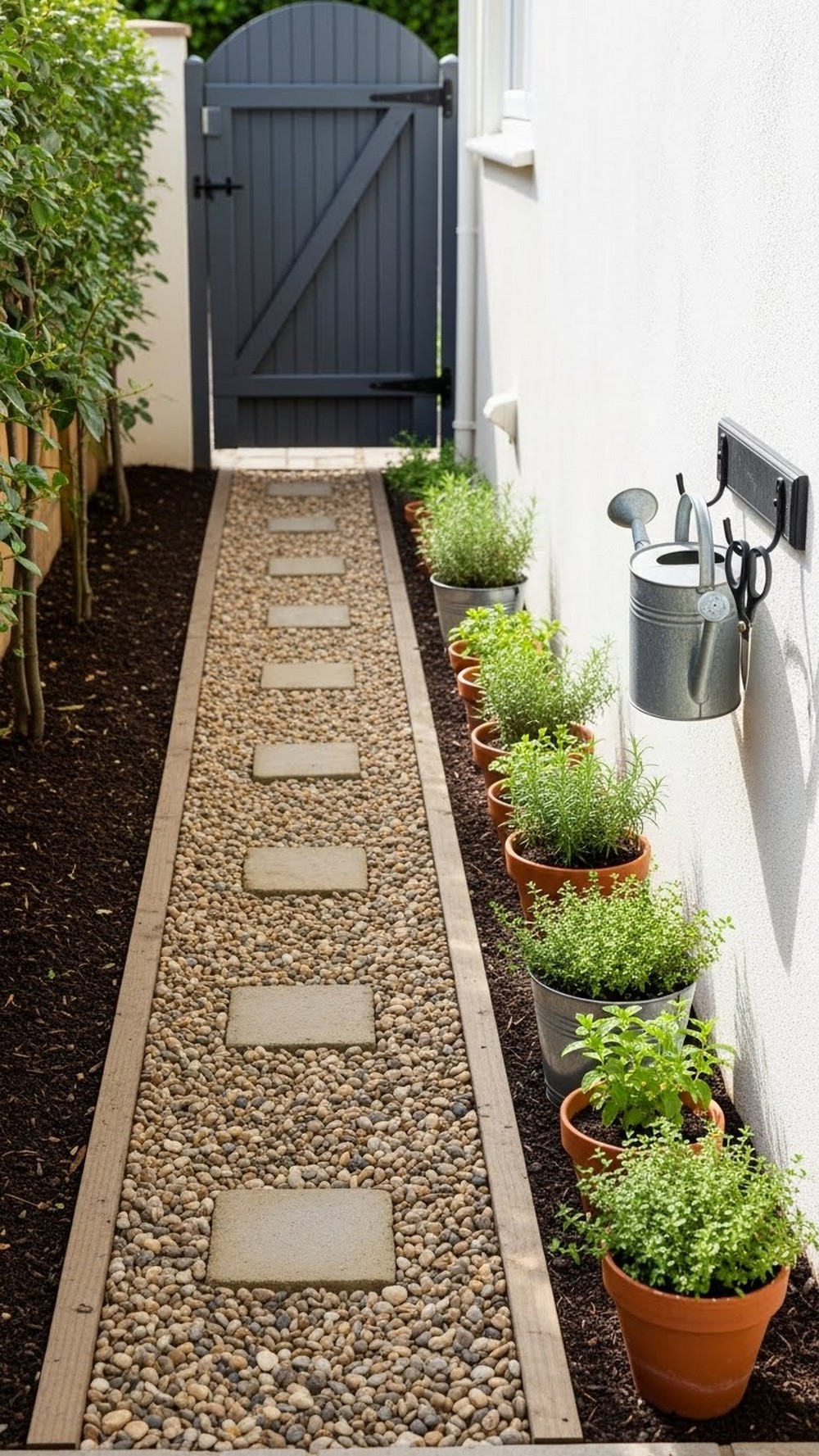
Side yards are often just corridors, but a pebble ribbon bordered with herb pots makes every trip feel special. Lay a narrow bed of pebbles with flat stones for footing, and position small pots along the sunniest edge. Fill them with everyday herbs so brushing past releases scent. The simple repetition of pot–gap–pot keeps the design ordered, even in a tight space.
- Best For: Slim, underused side passages.
- Budget Tip: Use smaller pots and grow herbs from cheap seed or cuttings.
- Styling Idea: Choose simple terracotta and soft silvery greens (like sage) for a soft, Mediterranean feel.
- Practical Note: Keep pots tucked close to the wall or fence so they don’t narrow the walking line.
Pebble Path With Water Bowl And Lotus Pots
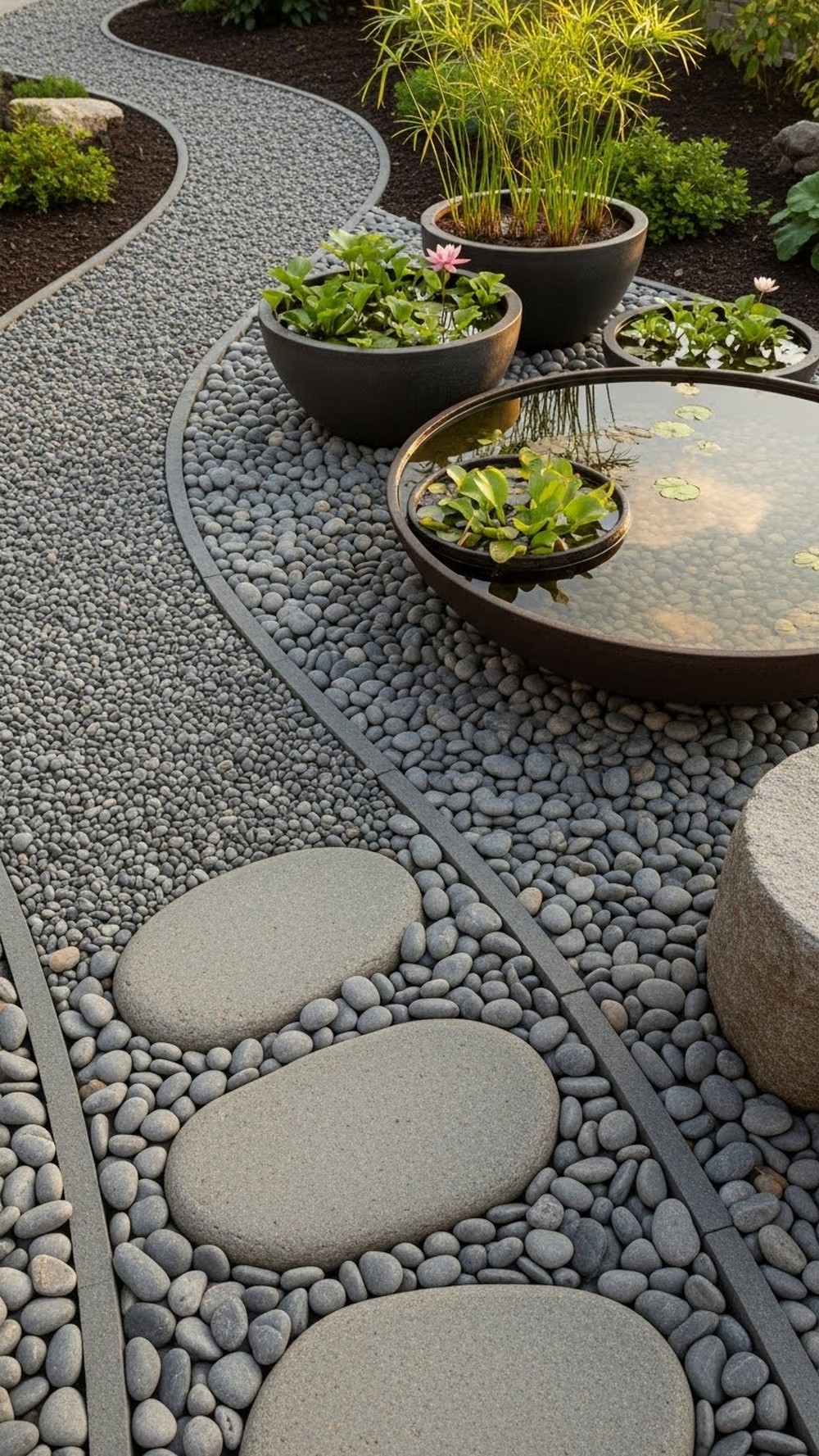
Water plus stone is classic zen. Curve a pebble path gently toward a focal water bowl, and group a few generous pots around it—some with shallow water plants, some with structural greenery. The sounds of water (even from a small bubbler) combined with the crunch of pebbles underfoot feel very soothing. Use a limited palette of materials so the eye rests on reflections and plant forms.
- Best For: Corners where you can safely place water away from heavy traffic.
- Budget Tip: Use a simple, wide plastic tub disguised inside a nicer outer bowl or pot.
- Styling Idea: Choose rounded pots to echo the curve of the path and the water bowl.
- Practical Note: Ensure children and pets are safe around even shallow water features.
Minimalist Grey Pebble Path With Concrete Cubes
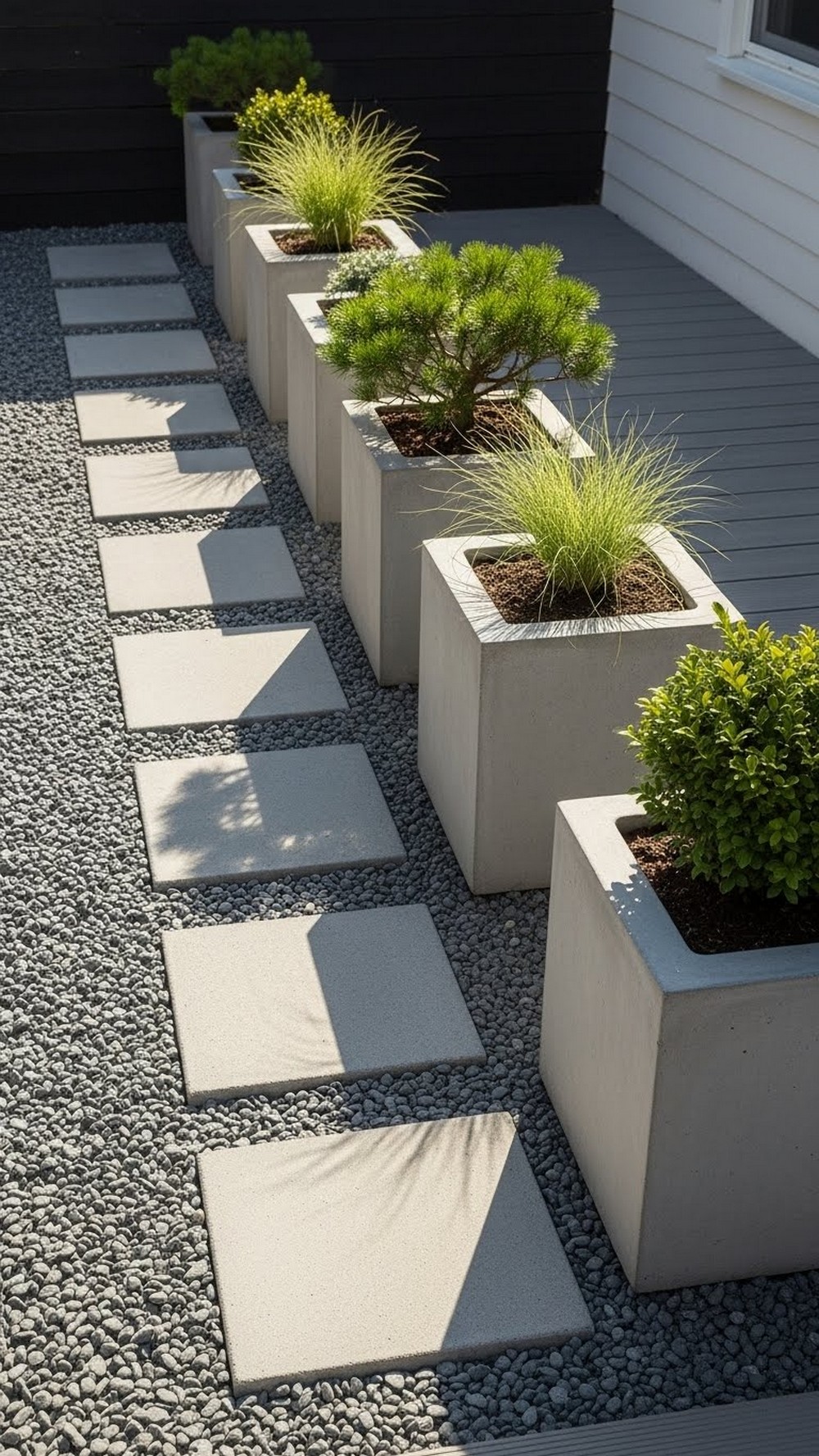
If you like a strongly pared-back look, pair grey pebbles with concrete cube planters. Lay a straight or slightly angled pebble path and set the cubes in a line or staggered pattern on one side. Plant each cube with a single structural plant—like a dwarf conifer, box, or upright grass. The repetition feels calm and architectural, perfect for small modern spaces.
- Best For: Contemporary gardens and tiny, squared-off yards.
- Budget Tip: Use hollow concrete blocks flipped on their sides as planters, lined to hold soil.
- Styling Idea: Keep everything monochrome—greys, whites, and deep greens—for maximum zen.
- Practical Note: Level the ground carefully so cubes sit straight and don’t wobble.
Lantern-Lit Pebble Path With Deep Green Pots
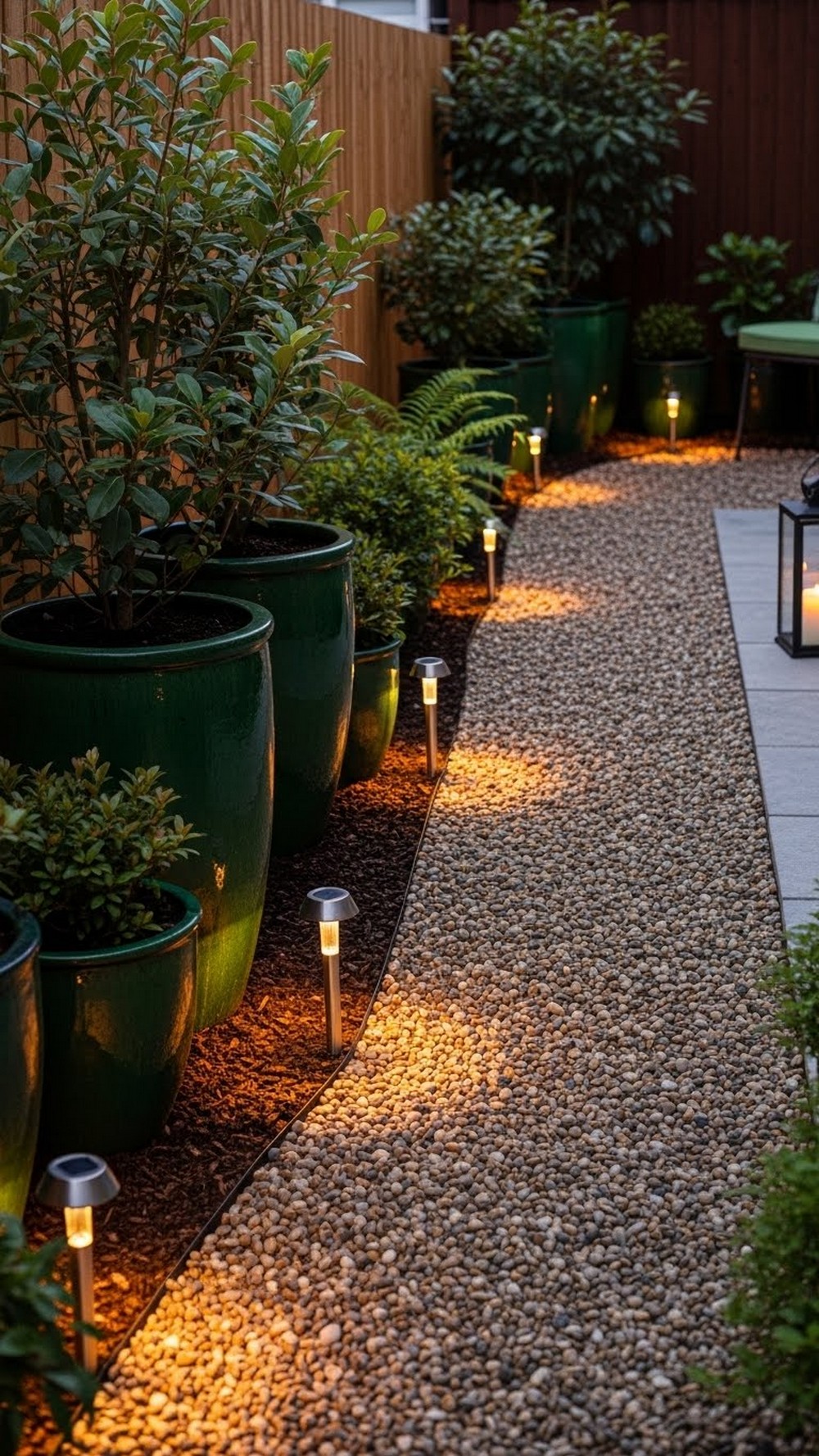
Lighting makes pebble paths magical at night. Lay your path, then place lanterns or solar stake lights at regular intervals along one side, with deep green pots just behind them. Glossy leaves catch the warm light and the pebbles reflect soft highlights. This works especially well between house and seating area or from patio to shed.
- Best For: Gardens you use in the evening or after work.
- Budget Tip: Use simple solar lights and basic pots painted a rich green.
- Styling Idea: Repeat one plant type for a quiet, rhythmic feel beside the lights.
- Practical Note: Position lights where they won’t be kicked or tripped over in the dark.
Zen Pebble Path Around A Single Feature Tree
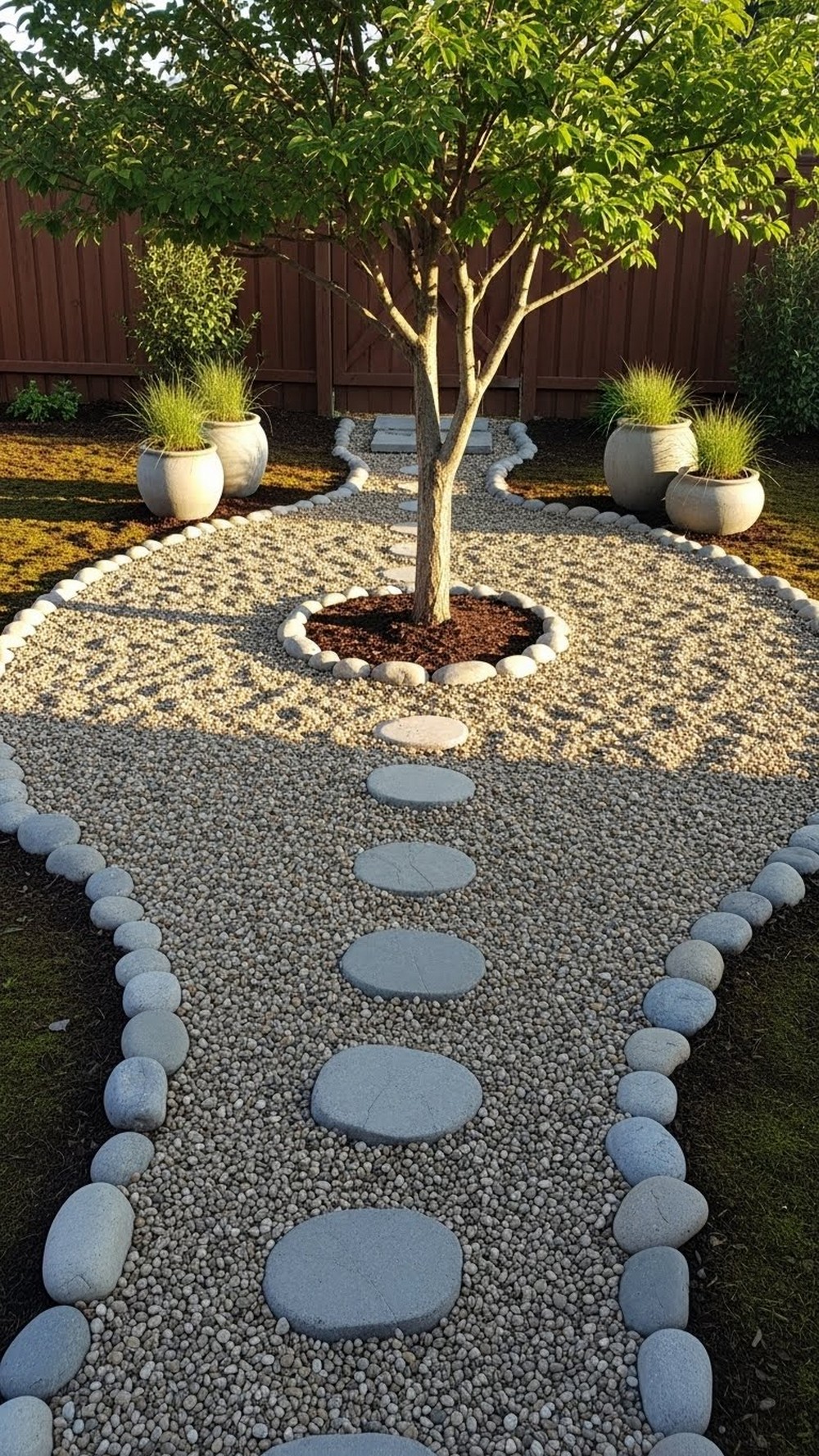
Sometimes one beautiful tree is all you need. Create an oval or circular pebble path that loops around it, with a simple edge of larger stones. Add a few modest pots at the outer edge, filled with low, green plants that don’t compete. Walking slowly around the tree becomes a small ritual, and the pebbles keep the area neat and weed-light.
- Best For: Yards with one established tree slightly away from boundaries.
- Budget Tip: Focus spending on a good edging stone and use inexpensive, sturdy pots.
- Styling Idea: Choose pots and edge stones in colours that echo the tree bark.
- Practical Note: Keep pebbles away from the tree trunk itself so water and air can reach the roots.
Split-Level Pebble Steps With Cascading Pots
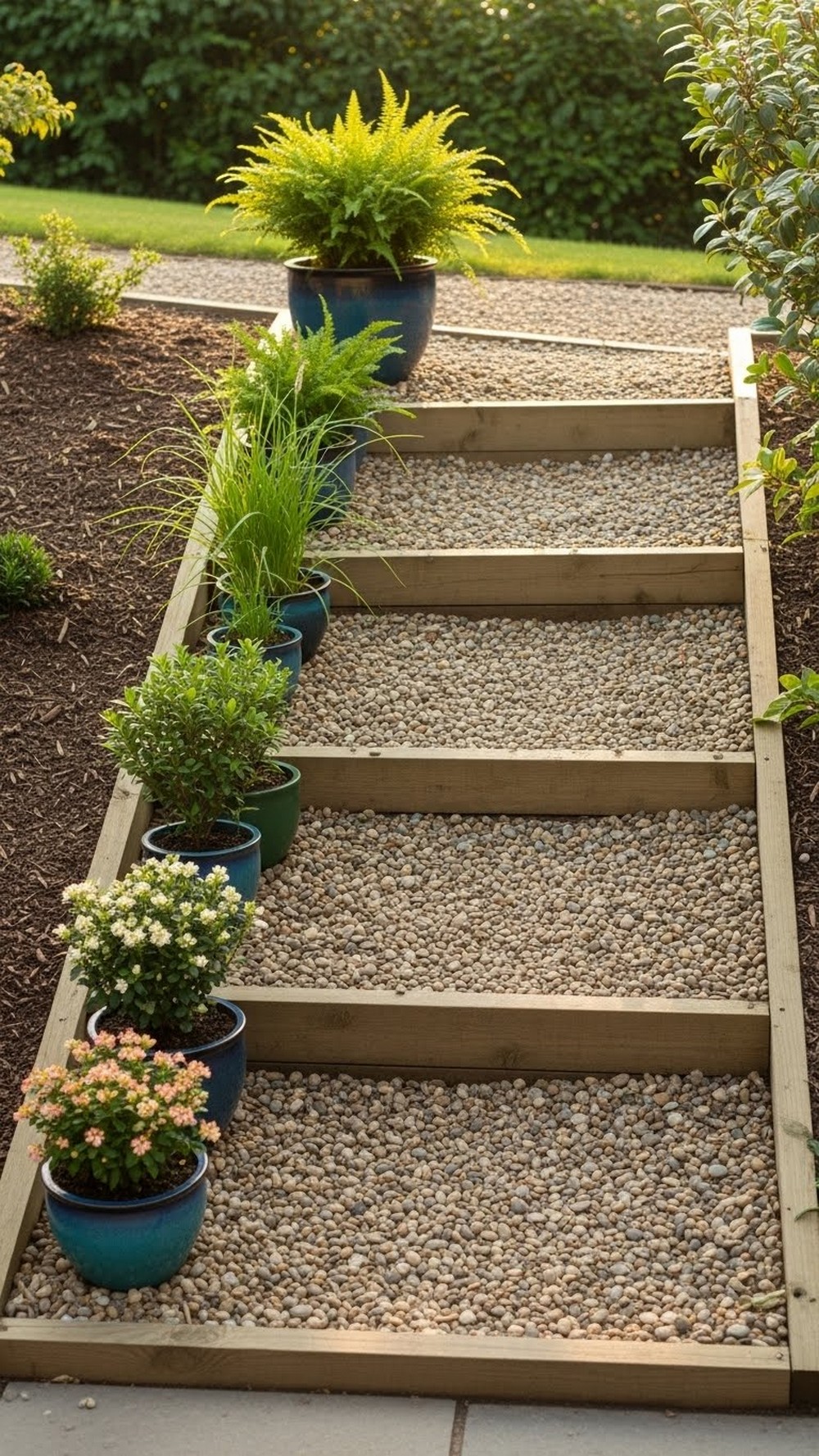
On sloping ground, replacing plain steps with pebble-filled risers and pots creates a gentle, terraced look. Build short steps with low risers, fill tread areas with pebbles, and line one side with pots that decrease in size as they descend. The visual “cascading” effect from large to small echoes the direction of travel and turns a functional route into a small, layered feature.
- Best For: Small gardens with one or two height changes.
- Budget Tip: Use simple, stackable pots and reuse existing plants in new positions.
- Styling Idea: Keep pot colour consistent and vary plant shapes instead.
- Practical Note: Make treads wide and firm enough for secure footing—pebbles should be contained, not loose underfoot.
Front Door Pebble Welcome With Symmetry Pots
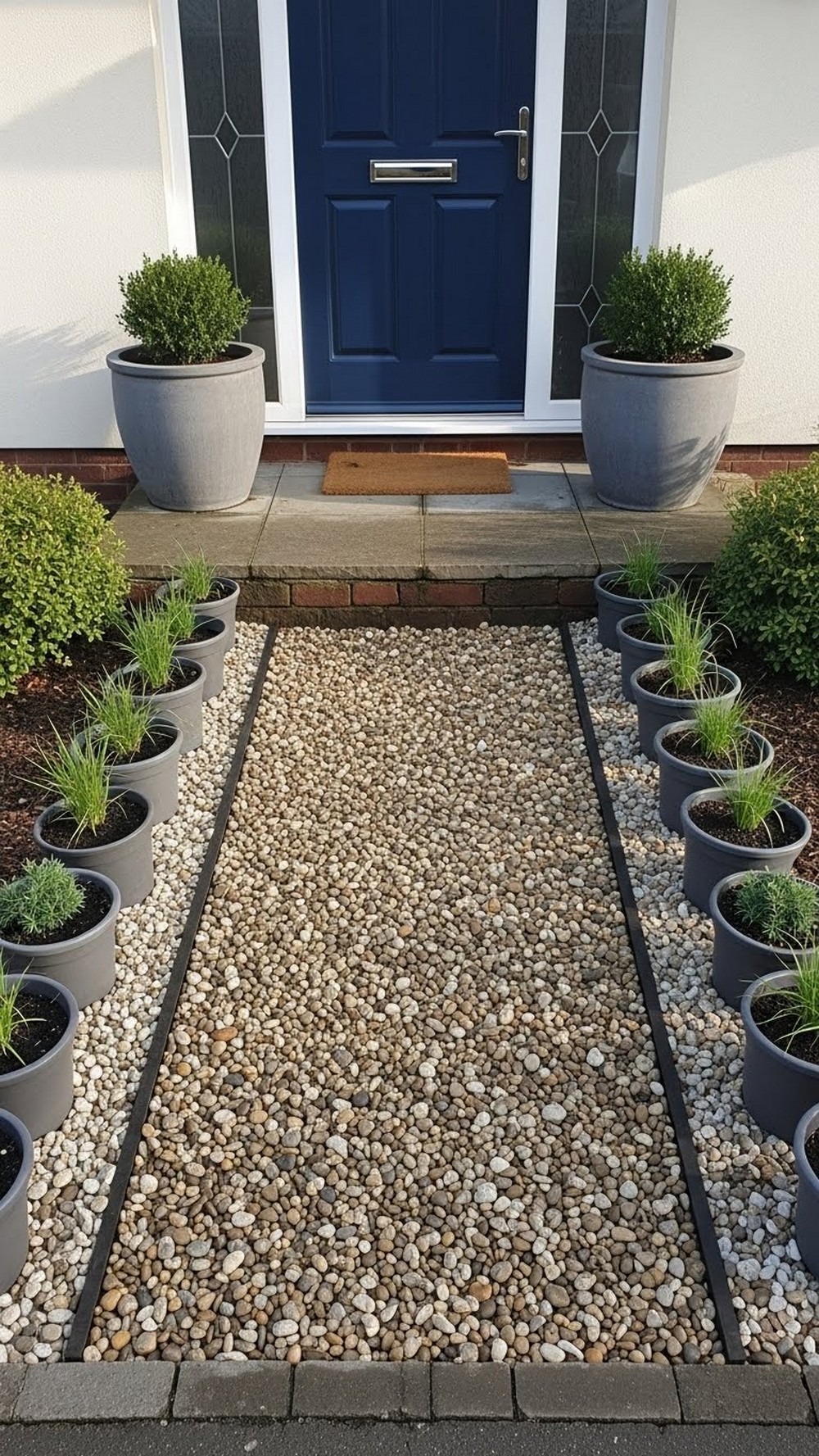
A symmetrical arrangement can feel very calm when done simply. Lay shallow pebble beds either side of your front door path, and place a matching set of pots in mirrored positions. Choose tidy evergreen plants for a stable, year-round welcome. The pebbles keep weeds down and add gentle texture, while the repeated shapes lead the eye straight to the door.
- Best For: Small front gardens that need a clean, low-care entrance.
- Budget Tip: Use plastic pots disguised inside outer ceramic or terracotta sleeves.
- Styling Idea: Match the pot colour to your front door or trim for a pulled-together look.
- Practical Note: Keep pots slightly back from the direct door swing and clear of delivery routes.
Balcony Pebble Strip With Low Bowls
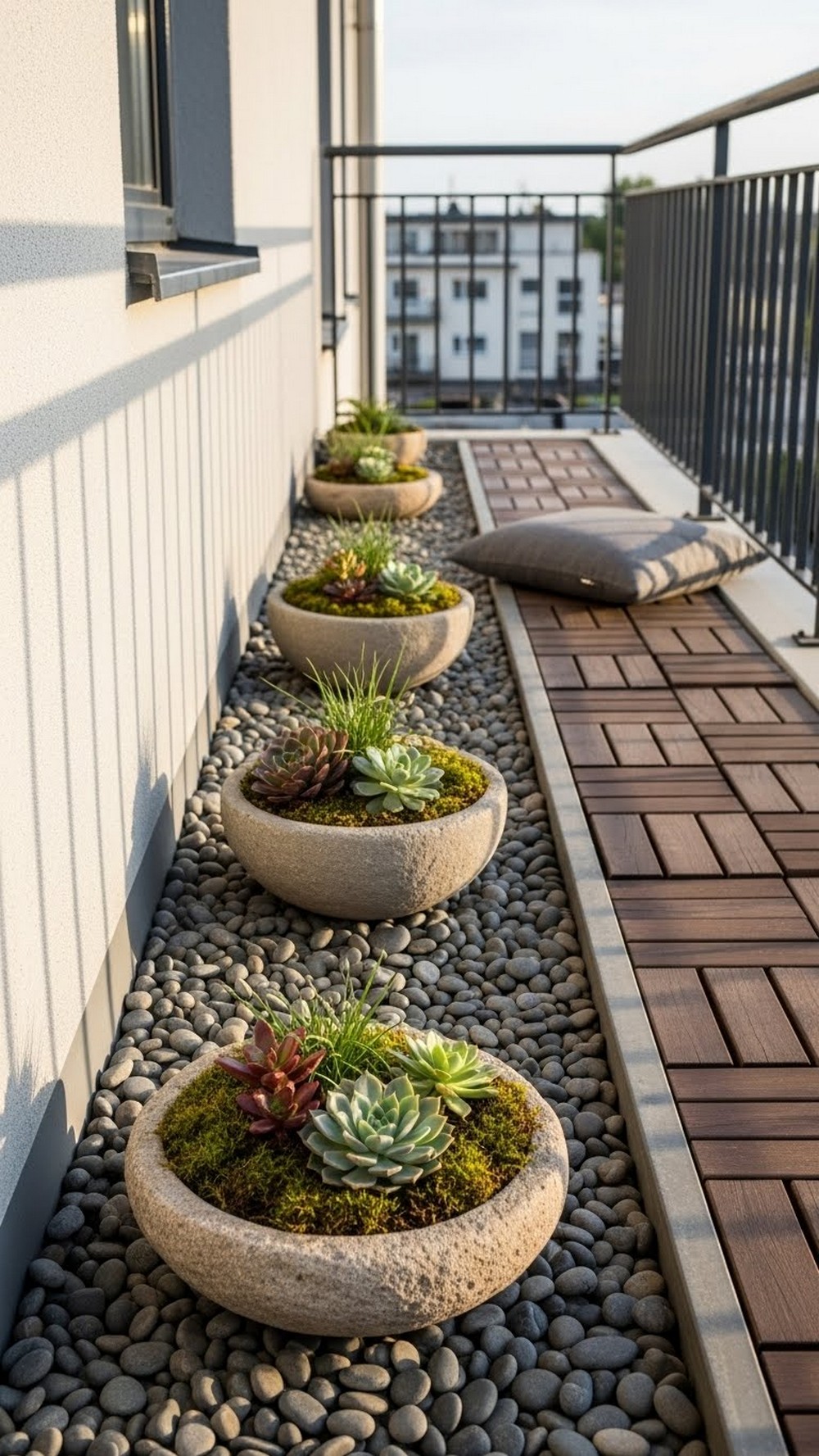
On a balcony, you can fake a ground-level garden with a raised pebble strip and low bowls. Place a narrow trough or shallow crate along the railing, fill with pebbles, and set shallow bowls of succulents or moss on top. It gives you the crunch and look of pebbles without adding too much weight. When you sit nearby, your eye reads it as a tiny zen ground plane.
- Best For: Balconies and roof terraces with strict weight limits.
- Budget Tip: Use lightweight plastic bowls and dress them with a thin layer of decorative stones.
- Styling Idea: Stick to a handful of simple, rounded bowl shapes for a peaceful “stone garden” look.
- Practical Note: Check the combined weight and ensure water has a safe place to drain.
Pebble Labyrinth Corner With Potted Grasses
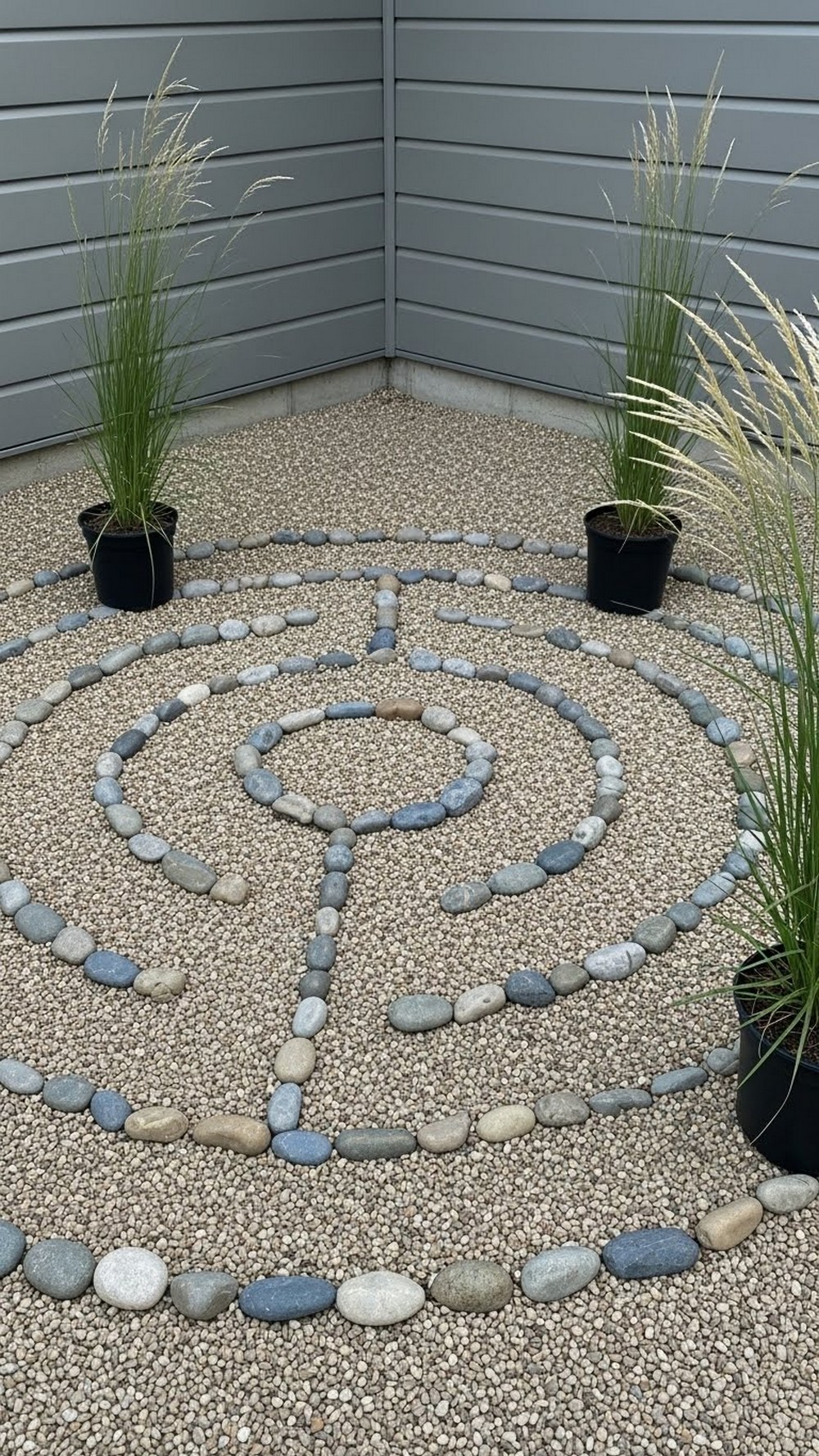
A simple labyrinth-style pattern in a small corner can be surprisingly soothing. Mark a single winding line with stones or a subtle change in pebble colour, leaving a clear walking route between. At key turning points, place pots of tall grasses to act like gentle signposts. The movement of the grasses in the breeze encourages slow walking and deep breathing as you follow the path in and out.
- Best For: Corners that are visible from indoors and worth making special.
- Budget Tip: Keep the labyrinth small; even a 1–1.5 m wide pattern can feel meaningful.
- Styling Idea: Choose grasses with fine, airy plumes for maximum softness.
- Practical Note: Keep the route wide enough for comfortable steps, especially if walking barefoot.
Zen Tea Corner Pebble Path With Bonsai Pots
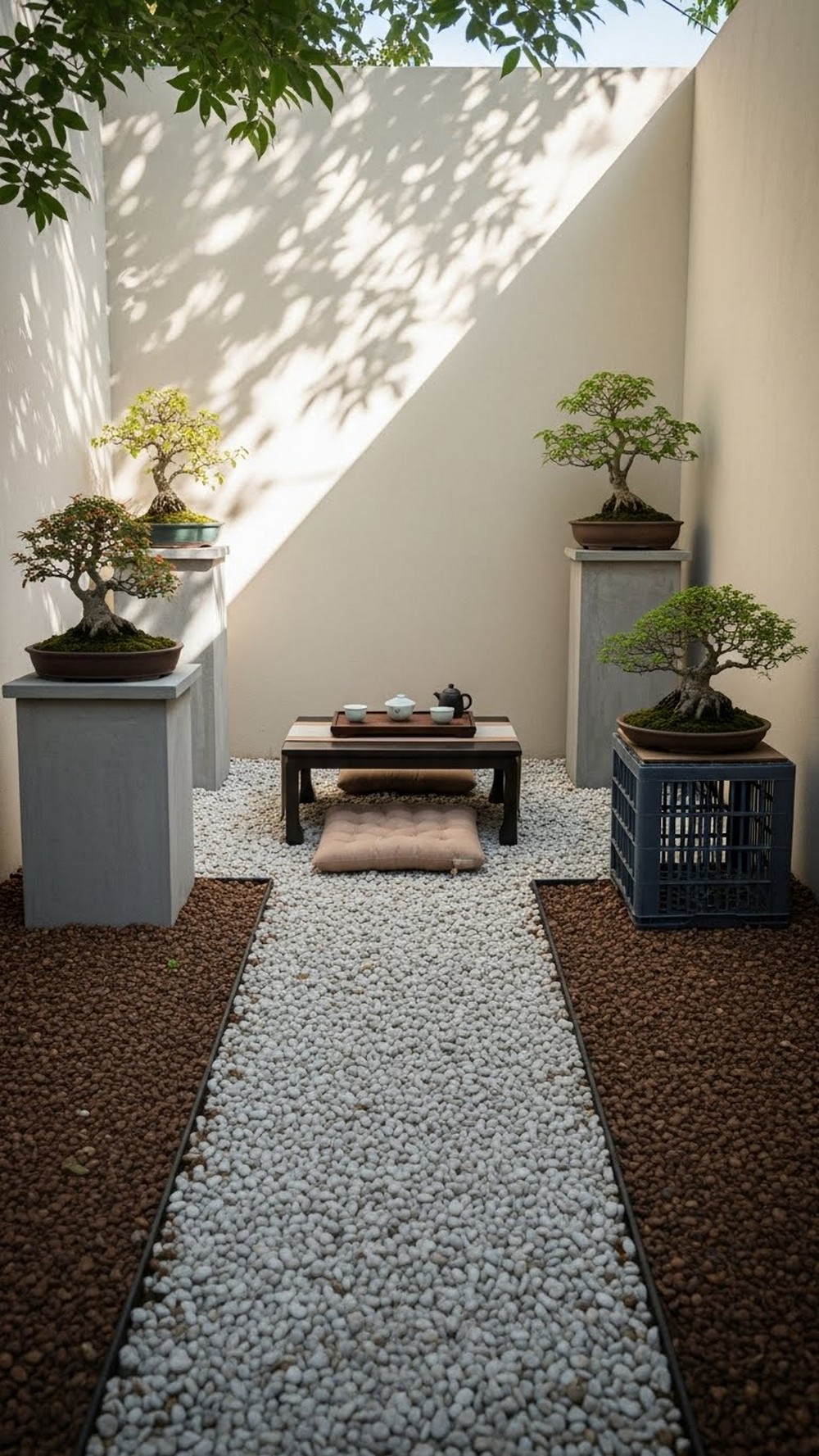
A short pebble path leading to a single cushion and low table feels like a tiny tea house, even in a regular garden. Place two or three bonsai or miniature trees in shallow pots on low stands along the path, so you pass them at eye level as you sit down. The ritual of walking, sitting, and making tea in this one small spot gives the space a special, calm purpose.
- Best For: Sheltered patios and quiet garden corners.
- Budget Tip: Start with one bonsai and add more over time; use simple, shallow dishes as stands.
- Styling Idea: Keep the colour palette soft and neutral so the plants and tea set shine.
- Practical Note: Choose a stable, level surface for the cushion and table so cups don’t wobble.
Pebble Path Under Pergola With Hanging Pots
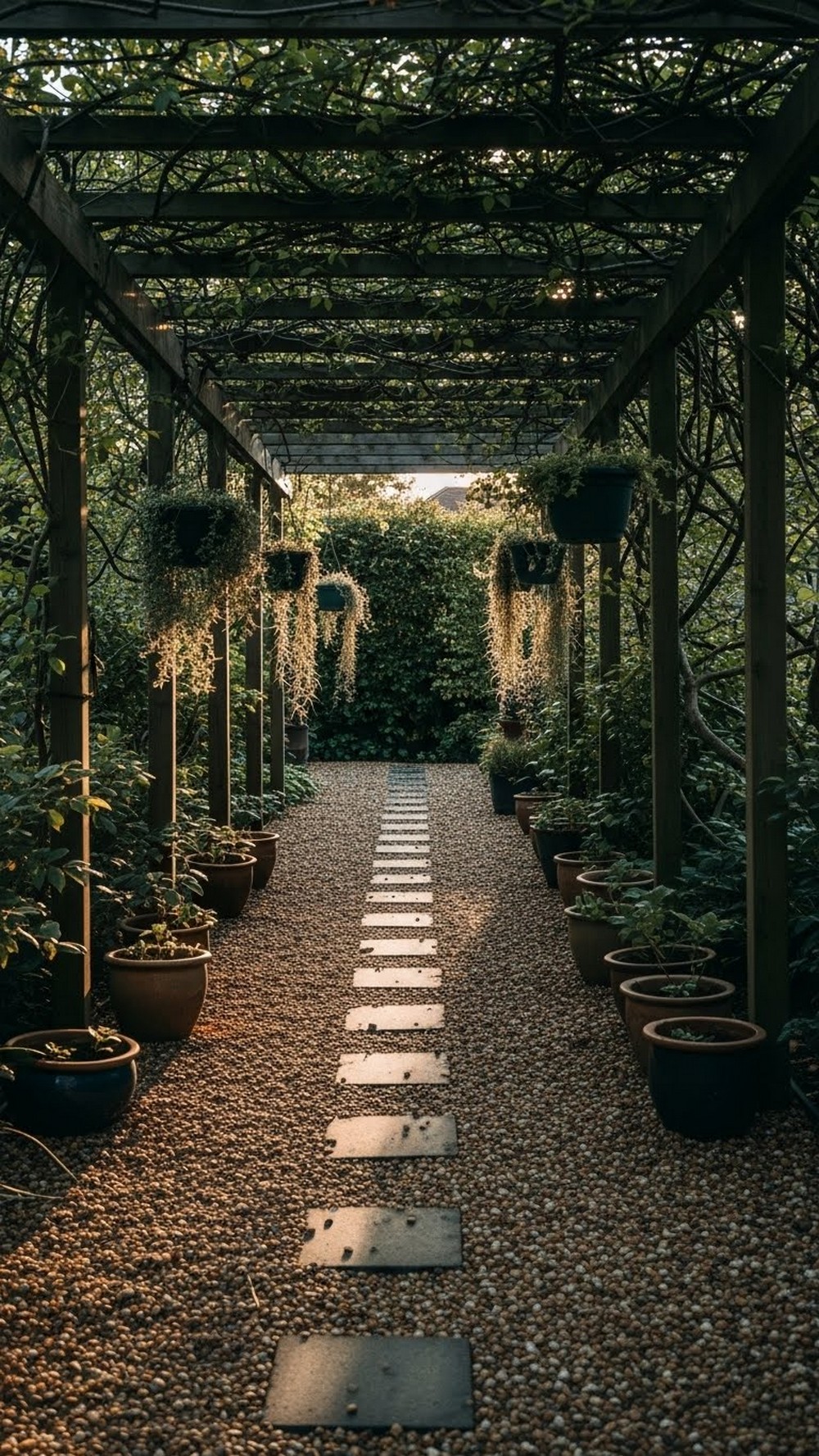
A pergola plus pebble path is a ready-made zen tunnel. Cover the ground with pebbles, add stepping stones, and hang a small number of pots from the pergola beams with trailing plants. At ground level, a line of simple pots along one side adds weight. The vertical layers—overhead, eye-level, and underfoot—make the walk feel like a transition into a calmer zone.
- Best For: Narrow walks that already have some kind of overhead structure.
- Budget Tip: Use basic hooks and lightweight pots for the hanging plants.
- Styling Idea: Match pot colours above and below for a tidy, intentional look.
- Practical Note: Hang pots high enough to walk under comfortably and secure them against wind.
Circular Pebble Pad With Potted Succulents
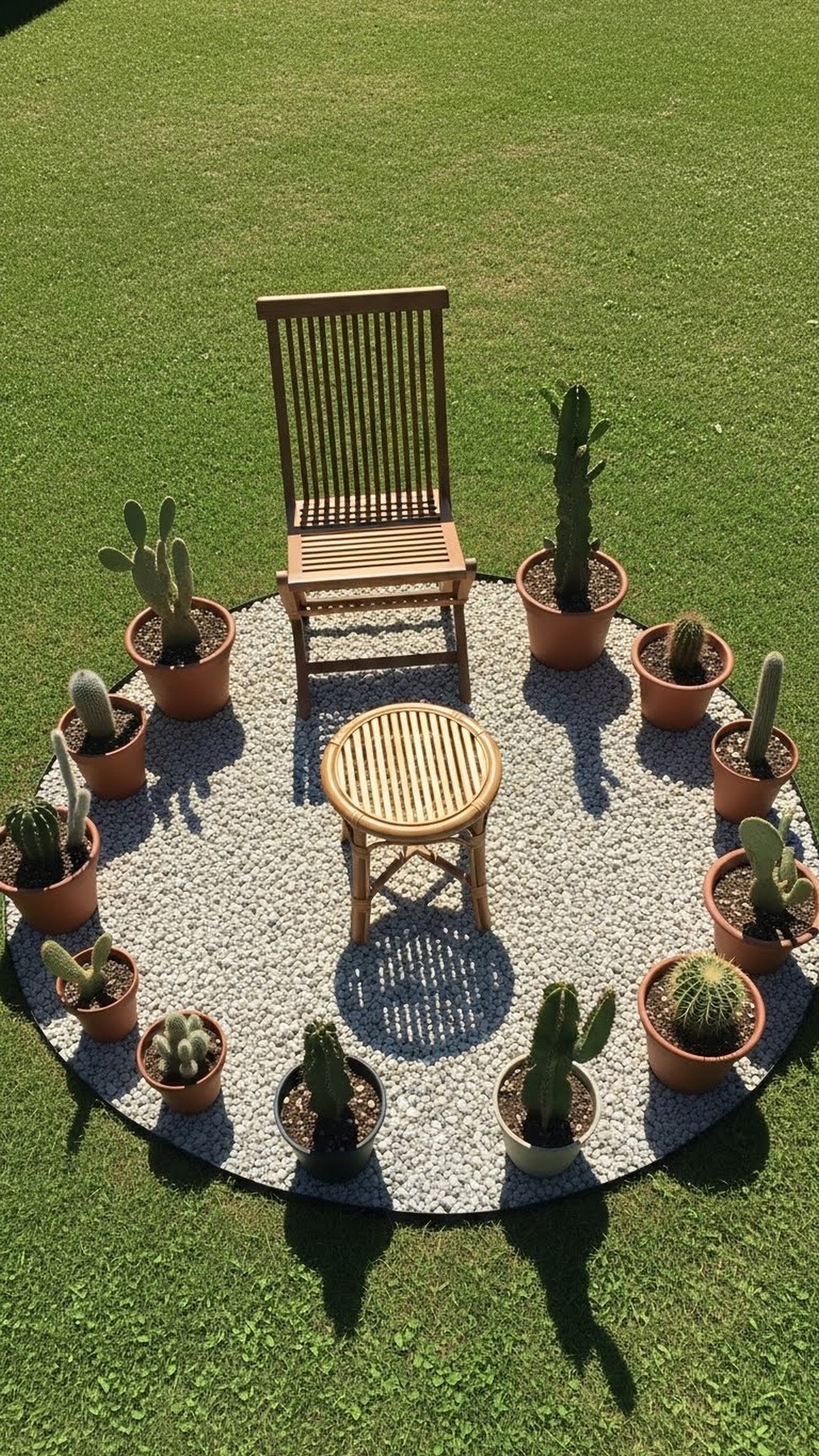
A small circular pad of pebbles can become your personal “zen island.” Place a simple chair or floor cushion in the centre and ring the edge with succulents in pots of different heights. The pebbles quiet the area visually, letting the sculptural shapes of the plants stand out. It’s minimal, low-care, and perfect for very sunny, dry spots where other plants struggle.
- Best For: Bright corners and dry, sunny patches.
- Budget Tip: Propagate succulents from cuttings rather than buying many new plants.
- Styling Idea: Use a mix of low, wide and tall, slim pots to create rhythm around the circle.
- Practical Note: Choose smooth, comfortable pebbles if you like to sit barefoot.
Pebble And Timber Boardwalk With Pot Clusters
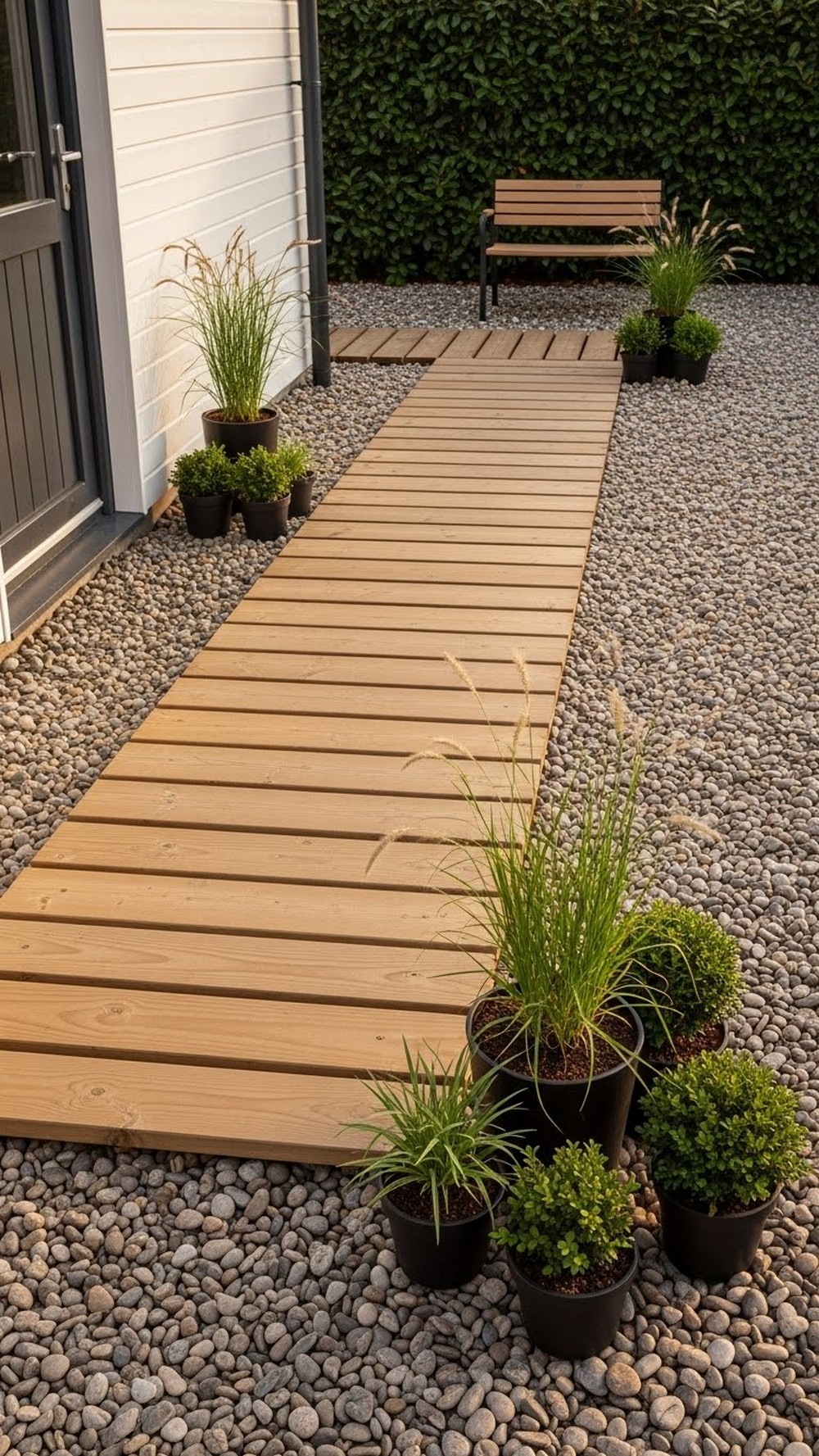
Combining timber boards with pebbles gives a soft, coastal zen feel. Lay a short boardwalk through a sea of pebbles, then group pots at key points—starts, ends, and junctions. Use clusters of three or five pots in each mini “island,” mixing heights but keeping colours quiet. Walking along the boards between these green clusters feels like moving through little garden rooms in a very small footprint.
- Best For: Long, thin gardens and side yards where you want character.
- Budget Tip: Use basic decking boards and inexpensive pebble bags; focus on one or two strong pot clusters.
- Styling Idea: Choose muted pot colours and let foliage shapes be the highlight.
- Practical Note: Make sure boards sit slightly above pebbles so water drains away easily.
Shady Pebble Path With Fern Pots
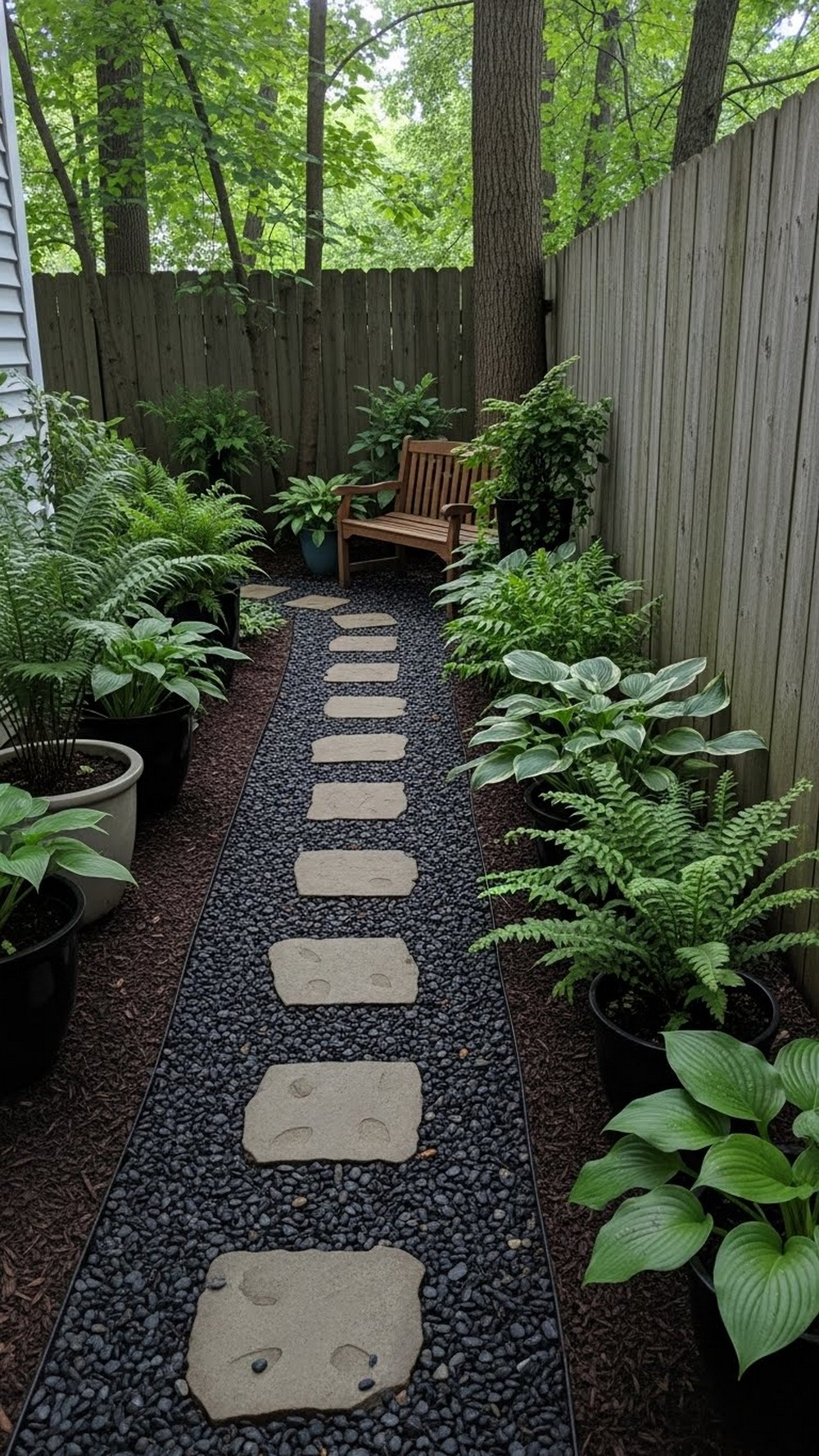
Shady spaces can feel cool and calming with the right combination of textures. Create a simple pebble path, then line it with pots of ferns, hostas, and other shade lovers. Their delicate fronds and broad leaves contrast beautifully with the solid stones underfoot. When light filters in, even briefly, it catches on the layered greens and makes the path feel like a tiny woodland walk.
- Best For: North-facing sides, spaces under trees, and narrow shaded strips.
- Budget Tip: Divide existing ferns and hostas to fill multiple pots.
- Styling Idea: Use darker, mossy-hued pots to deepen the woodland mood.
- Care & Maintenance: Pebbles can dry out quickly—check pots regularly in hot spells even in shade.
Family-Friendly Pebble Path With Movable Pots
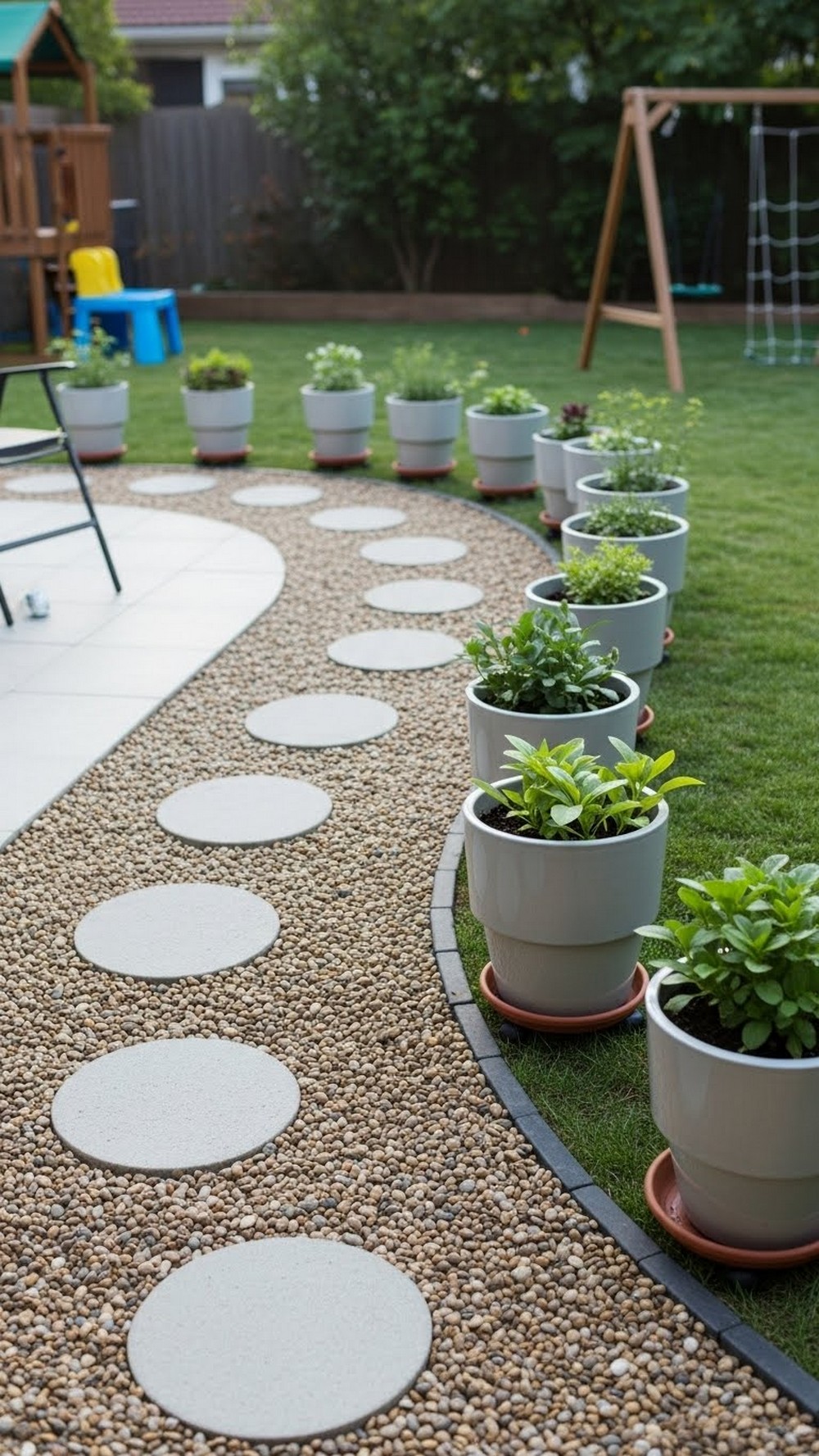
You can have a zen path and keep things flexible for family life. Lay a simple pebble loop or “L” shape and add stepping stones wide enough for running feet. Use lightweight pots on small stands or wheels so you can move them for games or gatherings. Stick to calm, green planting, but let kids help choose and gently rearrange pot positions. The layout can change without losing its soothing backbone.
- Best For: Family gardens that need to be both calm and practical.
- Budget Tip: Use lightweight plastic pots and place them in prettier outer containers only where they’re most visible.
- Styling Idea: Keep pot colours neutral so toys and play equipment stand out less by comparison.
- Practical Note: Ensure pots are stable and not easy to tip, especially along play routes.
Conclusion
Zen pebble paths are a lovely way to bring calm, texture, and a sense of journey into even the smallest outdoor space. When you pair them with carefully chosen potted plants, you get flexible greenery that can grow and shift with your life. Start with one simple path—maybe along a side yard, in a courtyard, or on a balcony—and add a few pots in a limited palette. As you live with it, you can adjust, expand, and gradually build your own quiet, stone-and-green retreat.
FAQs
1. Are pebble paths hard to maintain in a small garden?
Not usually, if you prepare the base properly. Lay landscape fabric under the pebbles to cut down on weeds, and contain stones with simple edging so they don’t spread. A quick rake or brush now and then to remove leaves is often enough. Stepping stones help keep pebbles in place where people walk most.
2. What kind of pots work best along a pebble path?
Choose pots with stable bases and simple shapes. Terracotta, ceramic, concrete, and sturdy plastic all work, as long as the style suits your space. In small gardens, repeating one or two pot colours keeps things calm. Make sure each pot has drainage holes so water doesn’t collect and stain the pebbles.
3. Which plants give the most “zen” feel with pebbles?
Think simple forms and plenty of green. Grasses, ferns, small evergreens, bamboo, succulents, and compact shrubs all pair beautifully with stone. Flowers can be included, but keep them soft and not too busy—perhaps a single colour repeated, rather than lots of bright mixes. Focus on texture and silhouette rather than constant bloom.
4. Can I create a pebble path on a tight budget?
Yes. Start small and use what you already have. One short strip of pebbles with a few stepping stones and several existing pots moved into a line can already transform a space. You can add more pebbles and pots gradually. Often, defining a path and repeating a few simple elements looks better than trying to do everything at once.
5. Will a pebble path be safe for children or older visitors?
It can be, if you design with stability in mind. Use stepping stones set firmly into the pebbles where people walk, and avoid very round, rolling stones on the main route. Keep the path level, ensure good lighting for evening use, and place pots where they won’t be bumped easily. In family gardens, try walking the path in different shoes and speeds to check how it feels.


