10 Brilliant Upcycled Garden Ideas Using Everyday Waste

If you ever look at your recycling bin and wonder, “Could I do something fun with this?” then you are exactly who this guide is for. Home gardeners, renters, and small-space owners can all turn everyday waste into charming, useful garden decor.
In this post, you’ll find simple, budget-friendly ways to reuse tins, bottles, pallets, boots, and more as planters, borders, and lights. These ideas don’t need fancy tools or expert skills—just a bit of imagination. By the end, you’ll see your “junk” as raw material for a greener, more personal outdoor space that feels creative, cosy, and uniquely yours.
Quick List
- Tin Can Rainbow Herb Wall
- Plastic Bottle Balcony Rail Planters
- Old Tire Layered Flower Bed
- Cracked Tea Set Fairy Garden
- Glass Jar Pathway Lanterns
- Worn-Out Boot And Shoe Planters
- Pallet Wood Vertical Veggie Rack
- Vintage Kitchen Colander Hanging Baskets
- Broken Drawer Staircase Planter
- Wine Bottle Garden Edging And Borders
1. Tin Can Rainbow Herb Wall

Save your food tins, scrub them clean, and turn them into a cheerful herb wall. Paint each can a different color, punch a few drainage holes, and screw or wire them to a wooden pallet or fence panel. Fill with potting mix and plant easy herbs like basil, mint, and parsley. The result is a bright, striped wall of greenery that smells as good as it looks and makes the most of a small vertical space.
- Best For: Small patios, balconies, or bare fence panels.
- Budget Tip: Use leftover paint samples and free pallets from local stores.
- Styling Idea: Group colors by gradient for an ombré effect.
- Practical Note: Line cans with a bit of mesh to stop soil washing out.
- Care & Maintenance: Water gently and trim herbs regularly to keep them compact.
2. Plastic Bottle Balcony Rail Planters

Plastic drinks bottles are perfect for lightweight balcony planters. Cut a large opening in the side, poke drainage holes in the bottom, and thread strong wire or rope through the ends. Fill with soil and trailing plants, then attach to your railing so they rest securely. From below, you see a curtain of greenery; from above, a neat row of little planters. It’s a clever way to grow herbs and flowers without using any floor space.
- Best For: Renters and tiny balconies with limited room.
- Budget Tip: Ask friends and neighbours to save their bottles for you.
- Styling Idea: Wrap bottles in jute twine or fabric scraps for a softer look.
- Practical Note: Don’t overload; keep soil light and secure fixings firmly.
- Care & Maintenance: Check moisture often—small containers dry out quickly.
3. Old Tire Layered Flower Bed

Instead of sending old tires to landfill, stack them into a bold, sculptural flower bed. Clean them, paint in pastel or bold shades, and arrange in a pyramid or staggered steps. Fill each tire ring with soil and flowers, from low-growing blooms at the bottom to taller, dramatic plants at the top. The rounded shapes and colors create a playful focal point that kids love and that instantly brightens a dull corner.
- Best For: Larger yards, side yards, or unused driveway corners.
- Budget Tip: Many garages will happily give away old tires.
- Styling Idea: Use two or three coordinated colors to avoid visual clutter.
- Practical Note: Drill extra drainage holes to prevent waterlogging.
- Care & Maintenance: Repaint every couple of years to freshen faded color.
4. Cracked Tea Set Fairy Garden

Don’t toss that chipped teapot or cracked teacups—turn them into a tiny fairy world. Place the pieces on a tray, crate, or low table, add potting soil and moss, then tuck in miniature succulents or baby ferns. Decorate with small pebbles, twigs, and any tiny figurines you like. The contrast between delicate porcelain and lush green plants gives a storybook feel, and it’s a lovely project to do with children or as a table-top feature.
- Best For: Coffee tables, patio tables, and sheltered ledges.
- Budget Tip: Hunt for damaged china at thrift shops or flea markets.
- Styling Idea: Stick to one color palette—like blue and white—for a curated look.
- Practical Note: Place a waterproof tray underneath to protect surfaces.
- Care & Maintenance: Use hardy, slow-growing plants that tolerate small spaces.
5. Glass Jar Pathway Lanterns

Old jam jars and sauce jars are ideal for cosy garden lighting. Wash off the labels, pop a tealight or a short candle inside, and line them along a path, step, or around a seating area. For a softer look, wrap the necks with twine, or frost the glass with a simple craft spray. At dusk, light them and enjoy the gentle warm glow that instantly turns even a simple yard into an inviting evening retreat.
- Best For: Entertaining spaces, steps, and informal paths.
- Budget Tip: Collect jars over time; mix shapes and sizes for interest.
- Styling Idea: Add a layer of sand or pebbles in the base for a beachy feel.
- Practical Note: Keep flames away from dry leaves and overhanging plants.
- Care & Maintenance: Clean wax drips regularly for clear, bright light.
6. Worn-Out Boot And Shoe Planters

Those boots with holes or mismatched shoes can have a second life as quirky garden planters. Punch a few drainage holes in the soles, fill them with potting mix, and add tough little plants like sedums, pansies, or trailing ivy. Arrange them on steps, under a bench, or beside a door, as if someone just stepped out of the garden and left them there. They add personality and a touch of humour to any outdoor space.
- Best For: Cottage-style gardens, porches, and staircases.
- Budget Tip: Use your own worn shoes or ask at charity shops for unsellable pairs.
- Styling Idea: Group boots by color or type—work boots, kids’ shoes, wellies.
- Practical Note: Place on trays or bricks if you don’t want soil marks.
- Care & Maintenance: Replace plants when roots outgrow the shoe.
7. Pallet Wood Vertical Veggie Rack
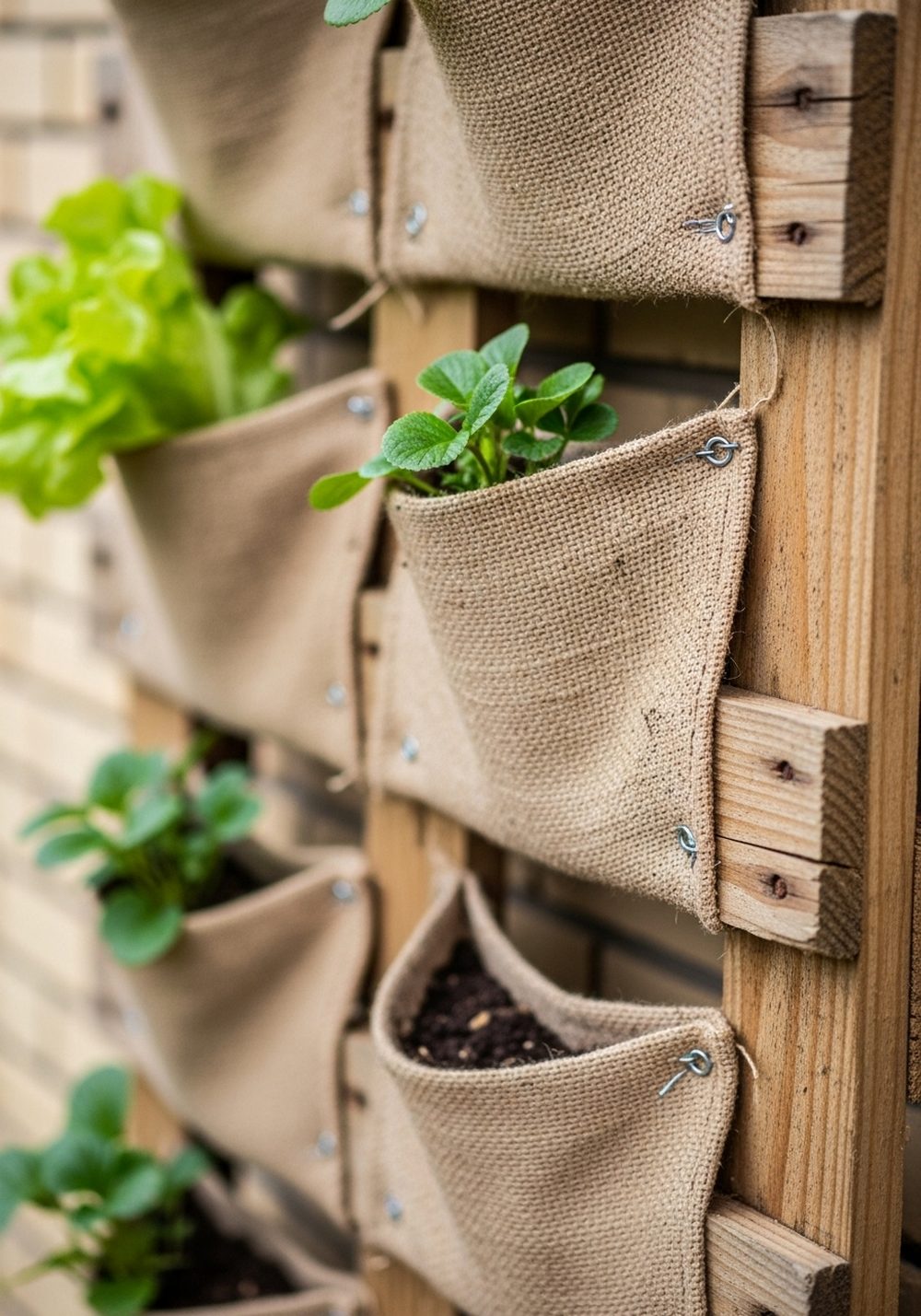
A discarded pallet can become a productive vertical veggie rack in just an afternoon. Stand it upright, secure it firmly, and create pockets between the slats using stapled burlap, landscape fabric, or old tote bags. Fill pockets with soil and plant salad leaves, strawberries, and herbs. The layers of green against the rough wood look rustic and charming, while freeing up precious ground space. It’s part decor, part edible wall, and perfect for small gardens.
- Best For: Narrow yards, side passages, and balconies with a strong wall.
- Budget Tip: Many shops give pallets away for free—just ask nicely.
- Styling Idea: Stencil simple labels or icons on the wood for each row.
- Practical Note: Anchor the pallet securely so it can’t tip in wind.
- Care & Maintenance: Water from the top and let moisture trickle down.
8. Vintage Kitchen Colander Hanging Baskets

Old colanders and metal strainers come pre-made with drainage holes, making them perfect hanging baskets. Add a bit of mesh or coffee filters to stop soil falling out, fill with compost, and plant flowers or herbs that like a bit of airflow. Hang them from hooks, tree branches, or a pergola. When you water, you’ll see droplets sparkling through the holes, and the perforated metal adds texture and a quirky vintage touch.
- Best For: Covered patios, pergolas, and tree branches with strong limbs.
- Budget Tip: Look in thrift shops or your own cupboards for unused colanders.
- Styling Idea: Mix enamel, stainless steel, and colored metal for contrast.
- Practical Note: Use sturdy hooks and chains to handle the weight.
- Care & Maintenance: Line with coir or moss if you notice soil escaping.
9. Broken Drawer Staircase Planter

If a chest of drawers is beyond repair, transform the drawers into a tiered planter. Stack them at staggered angles like little steps, propping with bricks or blocks so each one tilts slightly forward. Fill with soil and plant a mix of cascading and upright flowers so they spill over the edges. The layers of weathered wood and greenery create instant character, like a secret garden display that hints at an old story behind it.
- Best For: Feature corners, against fences, or beside sheds.
- Budget Tip: Use any odd drawers you find on the curb or at second-hand shops.
- Styling Idea: Leave paint chipped for a shabby chic look, or repaint in soft tones.
- Practical Note: Drill drainage holes in the drawer bottoms to prevent rot.
- Care & Maintenance: Treat the outside wood with a protective seal if exposed.
10. Wine Bottle Garden Edging And Borders

Empty wine bottles can become a surprisingly elegant border. Wash them, peel off labels, and bury them neck-down along the edge of a bed, keeping heights fairly even. The glass catches the light, and different colors—green, clear, amber—create a jewel-like line framing your plants. This edging helps define paths, keeps mulch in place, and looks far more interesting than plastic edging, all while keeping glass out of the bin.
- Best For: Flower beds, herb plots, and curved paths.
- Budget Tip: Collect bottles slowly, or ask neighbours and local cafés.
- Styling Idea: Use only clear bottles for a minimalist look, or mix colors for boho charm.
- Practical Note: Ensure tops are well buried and firmly packed with soil for safety.
- Care & Maintenance: Rinse occasionally to remove algae and keep glass sparkling.
Conclusion
Upcycled garden decor proves that style doesn’t have to be expensive—or wasteful. By turning everyday items like bottles, boots, tins, and pallets into planters, lights, and borders, you add character and cut down on rubbish at the same time. Start with one simple project, see how it transforms a dull corner, and let that success inspire the next idea. Soon, your garden will be full of stories, memories, and clever reuse in every direction.
FAQs
1. How can I decorate my garden on a very small budget?
Focus on using what you already have or can get for free. Save jars, tins, and bottles, and ask friends or neighbours for old pallets, tires, and drawers. A bit of cleaning, paint, and creativity can turn “trash” into planters, lanterns, and borders. Add plants gradually from cuttings, swaps, or seed packets to spread the cost.
2. Are these upcycled ideas suitable for renters?
Yes, many of them are renter-friendly. Portable items like boot planters, tea set fairy gardens, colander baskets, and jar lanterns can all move with you. For balconies, use railing planters and freestanding pallet gardens rather than fixing directly into walls. Always check weight limits and avoid drilling into structures you don’t own.
3. Will upcycled garden decor survive bad weather?
Most pieces can handle normal weather if you plan ahead. Choose exterior paint for tins and tires, seal wooden drawers or pallets, and secure hanging items with strong chains or rope. In areas with heavy rain or frost, bring delicate items like fairy gardens and glass lanterns under cover or into a shed when storms are forecast.
4. What are the best upcycled ideas for a tiny balcony?
Vertical and rail-based ideas work best. Try plastic bottle rail planters, a slim pallet herb rack, and a couple of jar lanterns hung from hooks. Worn-out shoe planters can also tuck neatly into corners. Stick to a limited color palette so the small space feels calm, not cluttered.
5. Is it safe to mix plants and recycled materials?
Generally yes, as long as you clean items thoroughly and provide good drainage. Avoid containers that have stored chemicals or anything sharp or unstable. If you’re growing edibles, line metal or painted containers with food-safe plastic or fabric so roots don’t touch questionable surfaces. Always prioritise stability and child safety around glass and stacked structures.
6. What’s the easiest upcycled garden project for beginners?
Glass jar lanterns and tin can planters are great starter projects. They need minimal tools, use items most households already have, and give an instant decorative payoff. Once you feel confident with those, you can move on to slightly bigger builds like a pallet garden or a wine bottle border.