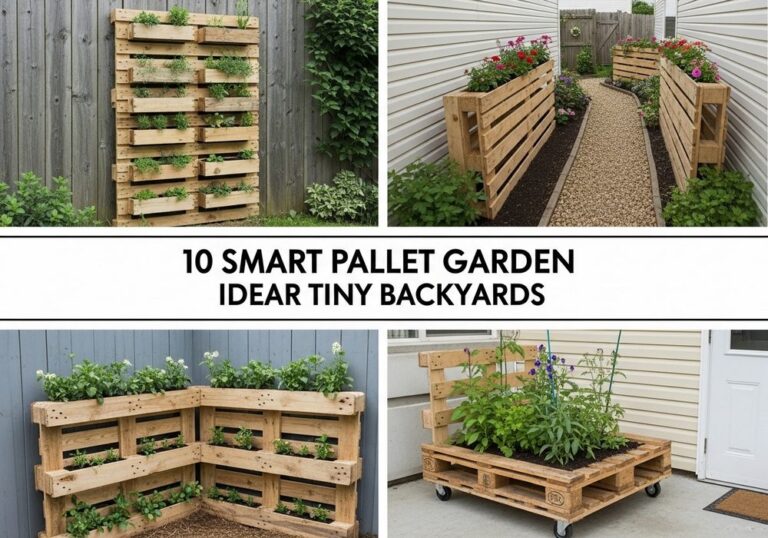
14 Recycled Wooden Crate Raised Planter Ideas

Wooden crates are one of the easiest things to rescue and reuse in the garden. They’re already box-shaped, easy to move, and just tall enough to become instant raised planters with very little effort. Add a liner, some decent soil, and a few favourite plants, and you’ve got a mini raised bed that works on patios, balconies, and in small yards.
This collection of fourteen recycled wooden crate raised planter ideas is perfect for home gardeners, renters, and anyone short on space. You’ll find balcony-friendly crate-on-legs designs, deep veggie beds, mobile planters on wheels, and even bench-back combos. Every idea is realistic, budget-conscious, and designed to help you turn simple crates into useful, good-looking features.
Quick List
- Patio Single-Level Crate Raised Bed
- Stacked Crate Tiered Vegetable Planter
- Back-Door Crate Herb Bar Raised Planter
- L-Shaped Corner Crate Raised Planter
- Balcony Crate-On-Legs Raised Planter
- Crate Tabletop Salad Raised Planter
- Mobile Crate Raised Planter On Wheels
- Fence-Line Crate Trough Flower Planter
- Deep Crate Root Vegetable Raised Bed
- Bench-Back Crate Raised Planter Combo
- Kids’ Painted Crate Veggie Raised Planter
- Shady Crate Woodland Corner Raised Planter
- Vertical Crate Wall Pocket Raised Planter
- Crate Grid Raised Bed For Small Yards
Patio Single-Level Crate Raised Bed

Turn one sturdy crate into a simple raised bed that sits just off the ground. Line the inside with landscape fabric or thick plastic (with drainage holes), fill with good-quality compost, and plant a mix of lettuces, herbs, or compact flowers. Raising it slightly on bricks or blocks improves drainage and makes the crate look more intentional. It’s an easy, low-commitment way to test raised planting on a small patio.
- Best For: Beginners and small patios or courtyards.
- Budget Tip: Ask local shops for free fruit or veg crates and reinforce any weak corners.
- Styling Idea: Stencil a simple label on the side like “Salad Bed” or “Kitchen Garden”.
- Practical Note: Position near a hose or watering can spot, as raised beds dry out faster.
Stacked Crate Tiered Vegetable Planter

Stack crates in a stair-step pattern to create a tier of mini raised beds for vegetables. The top level can hold herbs or strawberries, the middle leafy greens, and the bottom small bushy plants. The tiered layout gives height and lets you grow more in a small footprint, while the rustic crate wood looks relaxed and homely. It’s a great way to make a focal point in a bare corner.
- Best For: Sunny corners in small yards or patios.
- Budget Tip: Use bricks or offcuts of wood between crates for stable, hidden supports.
- Styling Idea: Plant in colour bands—dark greens at the bottom, lighter at the top.
- Practical Note: Make sure the structure can’t tip; heavier crates should sit at the bottom.
Back-Door Crate Herb Bar Raised Planter

Line up two or three crates at a comfortable standing height and you’ve got a little “herb bar” right by your back door. Fill with your most-used herbs and label them for quick snipping on your way in and out. The raised height saves your back and keeps plants away from pets or trampling. It feels like a mini outdoor counter filled with greenery.
- Best For: Back-door patios or side steps near the kitchen.
- Budget Tip: Use a simple frame from scrap wood or old trestles to support the crates.
- Styling Idea: Add chalkboard paint panels on the crate fronts for changing herb names.
- Practical Note: Choose herbs that suit your light—sun-lovers for bright doorways, mint and parsley for part shade.
L-Shaped Corner Crate Raised Planter

Fit crates snugly along two walls to create an L-shaped raised bed that hugs a corner. This layout makes great use of awkward spaces and gives a generous planting area without blocking the rest of the patio. You can dedicate one side to flowers and the other to herbs or veggies. The L-shape also helps frame a bench or small seating area tucked into the corner.
- Best For: Patio or balcony corners that feel empty.
- Budget Tip: Combine different-sized crates and hide the joins with trailing plants.
- Styling Idea: Keep all crates the same stain or paint colour for a built-in look.
- Practical Note: Line the inside well to protect the wood and slowing rotting.
Balcony Crate-On-Legs Raised Planter
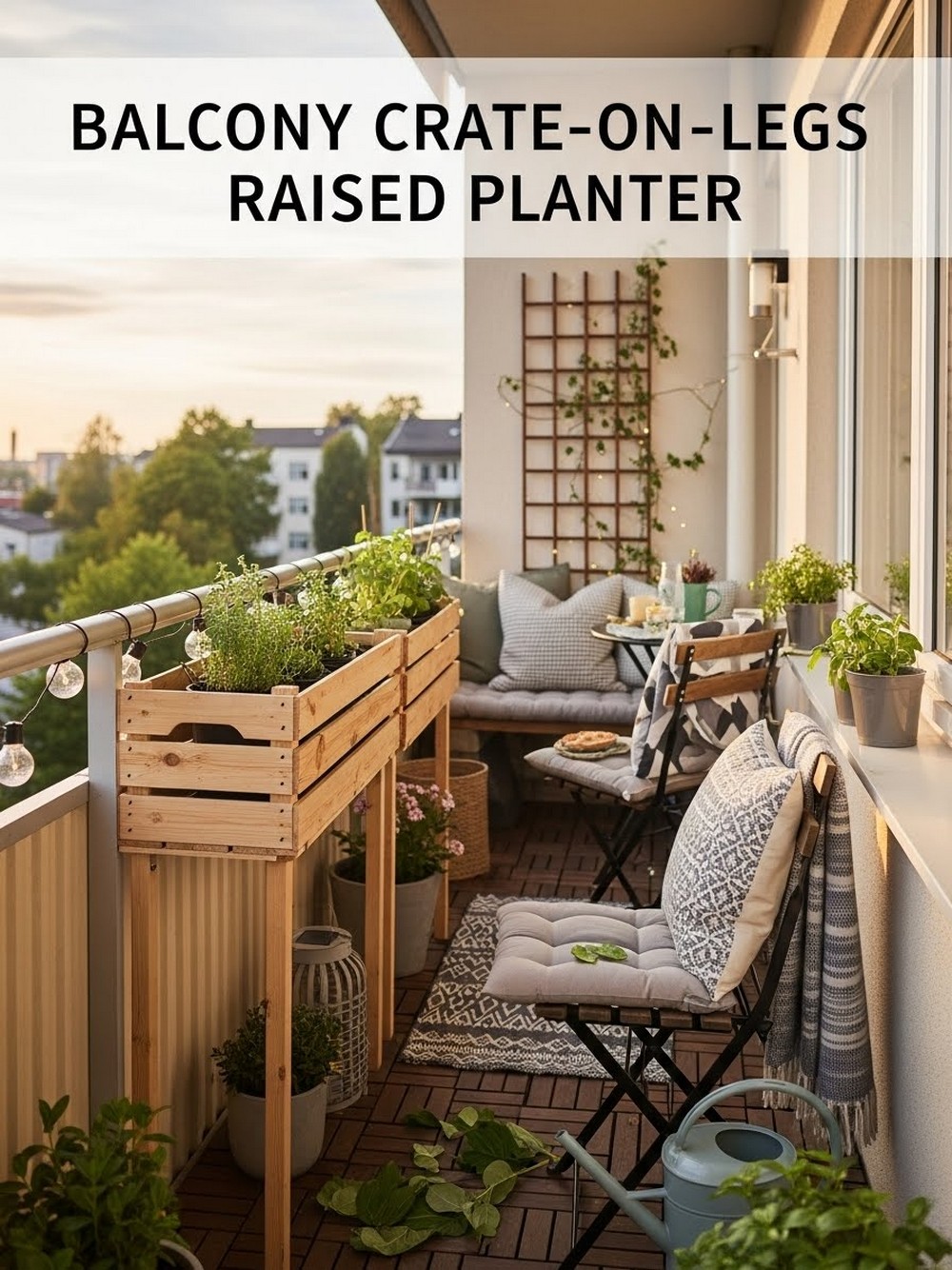
Mount a crate on simple legs to bring the soil up to waist height on a balcony. This keeps the floor clearer and makes tending plants more comfortable. The narrow footprint is ideal against a railing, and the height helps create a green “edge” that feels like a tiny border. It’s especially handy for herbs and salads that you harvest often.
- Best For: Small balconies and roof terraces.
- Budget Tip: Reuse timber offcuts or old table legs rather than buying new supports.
- Styling Idea: Paint the legs to match your balcony rail for a neat finish.
- Practical Note: Check weight and make sure the structure is stable and safe for your balcony.
Crate Tabletop Salad Raised Planter

Use a crate as a tabletop salad garden by placing it on a strong table, bench, or stand. Fill it with cut-and-come-again leaves, rocket, and edible flowers, and you’ve got a raised salad bar that’s easy to harvest. It’s also a lovely visual feature, bringing the greenery up where you really see it while sitting outside.
- Best For: Outdoor dining areas and bistro sets.
- Budget Tip: Sow seeds in rows or patches rather than buying lots of small plants.
- Styling Idea: Add a simple small jug or jar for scissors and labels at one corner.
- Practical Note: Protect wooden tabletops with a waterproof tray or plastic under the crate.
Mobile Crate Raised Planter On Wheels

Attach castors or a sturdy wheeled plant caddy under your crate and suddenly your raised bed can move. Wheel it to chase the sun, slide it aside when you need floor space, or tuck it under cover in bad weather. This flexibility is a game-changer for renters and anyone with a patio that doubles as a play or entertaining area.
- Best For: Patios and courtyards that need flexible layouts.
- Budget Tip: Reuse wheels from an old trolley or furniture piece.
- Styling Idea: Paint the crate a calm, neutral tone so the green plants remain the star.
- Practical Note: Choose lockable wheels and always set them before you start gardening.
Fence-Line Crate Trough Flower Planter

Turn a long crate (or a row of smaller ones) into a raised flower trough along a fence. The added height keeps blooms at viewing level and softens bare panels beautifully. Plant a mixture of trailing flowers, upright grasses, and seasonal colour so the crate edge looks full and spilling over. It instantly makes a fence feel more like a backdrop than a boundary.
- Best For: Plain fence lines and the back of narrow beds.
- Budget Tip: Fill the bottom with clean rubble or upside-down pots before adding soil to save on compost.
- Styling Idea: Repeat the same few flower colours along the entire length for a cohesive look.
- Practical Note: Ensure the crate is raised off damp ground to prolong its life.
Deep Crate Root Vegetable Raised Bed

A deeper crate can act as a miniature raised bed especially suited to root crops. Fill with loose, stone-free soil and grow carrots, beetroot, or parsnips in a tidy block. The depth helps roots develop straight and makes it easier to control soil quality than in heavy ground. It’s also easier to weed and water a compact, raised area like this.
- Best For: Vegetable gardeners with heavy or poor soil.
- Budget Tip: Mix garden soil with compost and a little sand instead of buying all new mix.
- Styling Idea: Add simple wooden or slate labels for each crop row.
- Practical Note: Drill plenty of drainage holes so deep soil doesn’t become waterlogged.
Bench-Back Crate Raised Planter Combo

Set crates just behind a bench to form a raised, living backrest. Fill them with fragrant plants like lavender, rosemary, or mint so you’re surrounded by scent when you sit down. This layout makes the most of space, turning a plain bench wall into a green, layered view. It feels a bit like sitting in a tiny garden booth.
- Best For: Relaxing seating corners and reading spots.
- Budget Tip: Use hardy perennials so you’re not replanting every season.
- Styling Idea: Match cushion colours to one accent flower in the crate planters.
- Practical Note: Keep plants trimmed so they don’t lean too far over the bench and snag clothing.
Kids’ Painted Crate Veggie Raised Planter

Invite kids to paint wooden crates with bright patterns, then turn them into their own raised beds. Fill with easy veggies like radishes, lettuce, and small carrots so children can see quick results. The raised height makes it easier for little backs and knees, and the cheerful designs add fun to the garden. It’s part decoration, part classroom.
- Best For: Family gardens, school yards, and community plots.
- Budget Tip: Use cheap outdoor paints and seal with clear varnish for extra life.
- Styling Idea: Let each child choose one colour or motif so every crate feels personal.
- Practical Note: Adults should check for splinters and sand rough edges before painting.
Shady Crate Woodland Corner Raised Planter

In a shady corner, crates make perfect raised beds for woodland-style planting. Fill them with moisture-retentive soil and plant ferns, hostas, and small shade-tolerant flowers. The lifted height shows off leaf textures and makes the corner feel deliberately designed, not forgotten. Combined with a simple bench, it becomes a cool, green retreat on hot days.
- Best For: Side yards and north-facing corners.
- Budget Tip: Divide existing shade plants to fill the crates instead of buying new ones.
- Styling Idea: Keep crate finishes natural or dark to echo the woodland mood.
- Care & Maintenance: Check drainage so crates don’t stay waterlogged in damp shade.
Vertical Crate Wall Pocket Raised Planter

Mount shallow crates flat against a wall or fence to create a grid of raised “pockets.” Plant herbs, trailing flowers, or small succulents in each one for a living display that doesn’t take up floor space. It feels like a vertical raised bed, perfect where the ground is too hard or narrow for traditional beds. Even a few crates can transform a dull wall.
- Best For: Small courtyards, side passages, and above seating.
- Budget Tip: Use lightweight crates and shallow soil for herbs rather than big shrubs.
- Styling Idea: Stagger crate heights and repeat plants for a calm, patterned effect.
- Practical Note: Use strong fixings suited to your wall material and check weight limits.
Crate Grid Raised Bed For Small Yards
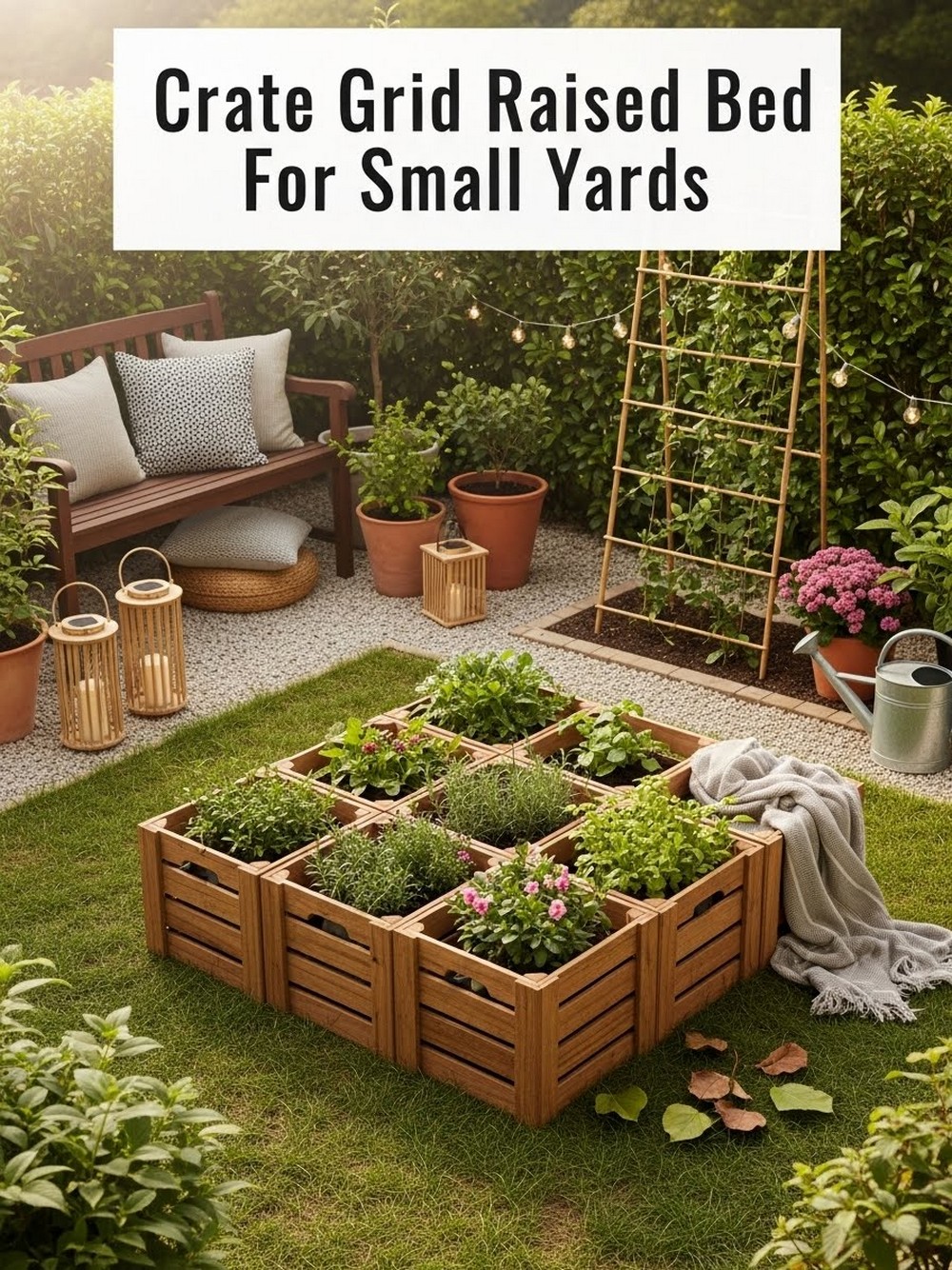
Arrange several crates in a neat grid on bare ground or gravel, each acting as its own mini raised planter. Plant different crops or flowers in each crate so the whole grid becomes a patchwork of colours and textures. This method keeps everything organised and makes crop rotation easy—you simply swap what grows in each box from year to year.
- Best For: Small yards where you want structure and order.
- Budget Tip: Start with a 2×2 grid and add more crates as you collect them.
- Styling Idea: Use matching crates for a modern, boxy look, or mix sizes for a cottage feel.
- Practical Note: Weed-suppressing fabric underneath helps keep paths between crates tidy.
Conclusion
Recycled wooden crates are an easy shortcut to raised planters that look charming and work hard. Whether you stack them into tiers, mount them on legs, roll them on wheels, or tuck them into shady corners, they help you grow more in less space while adding warmth and texture. Start with a single crate near a bench or back door, see how useful it becomes, and then build out your own mix of crate beds to suit every corner of your garden.
FAQs
1. Do I need to line wooden crates before using them as planters?
Yes, lining helps protect the wood and keeps soil from falling through gaps. Use landscape fabric or thick plastic with drainage holes punched in the bottom. This slows rotting, keeps moisture where plants need it, and makes it easier to move crates without losing soil.
2. How long will recycled wooden crates last outdoors as raised planters?
That depends on wood quality and exposure. Untreated crates in full weather might last a couple of seasons, while lined crates kept slightly off the ground and out of constant wet can last much longer. You can extend their life with a breathable wood treatment on the outside only, never on surfaces in direct contact with soil where you’re growing edibles.
3. What should I plant in crate raised planters?
Most herbs, salads, strawberries, and compact vegetables do well in crate planters, as long as the crate is deep enough and has good drainage. Shallow crates suit lettuces and herbs; deeper crates work for root veg and dwarf shrubs. Always match plants to your light conditions and crate depth for best results.
4. Are crate raised planters suitable for renters?
Absolutely. They’re not permanent, can often sit freestanding on patios or balconies, and can move with you when you leave. Mobile crate planters on wheels or crates mounted on simple frames are especially renter-friendly, as they don’t require drilling into walls or paving.
5. How can I stop crate raised planters from looking messy?
Keep the area around them neat with gravel, mulch, or tidy paving, and limit your colour palette for crates and plants. Group similar crates together and repeat the same few plants rather than mixing dozens of types. Regularly trim overgrown foliage and remove dead leaves so the rustic look stays charming rather than chaotic.
6. Do crate planters dry out quickly?
Raised containers generally dry faster than in-ground beds, especially on hot or windy patios. Use a good-quality compost that holds moisture, add a thin mulch layer on top, and check soil regularly with your fingers. In summer, most crates will need watering more often, but the smaller, contained area also makes watering quick and focused.