10 Warm, Weathered Garden Charm Ideas Using Recycled Materials
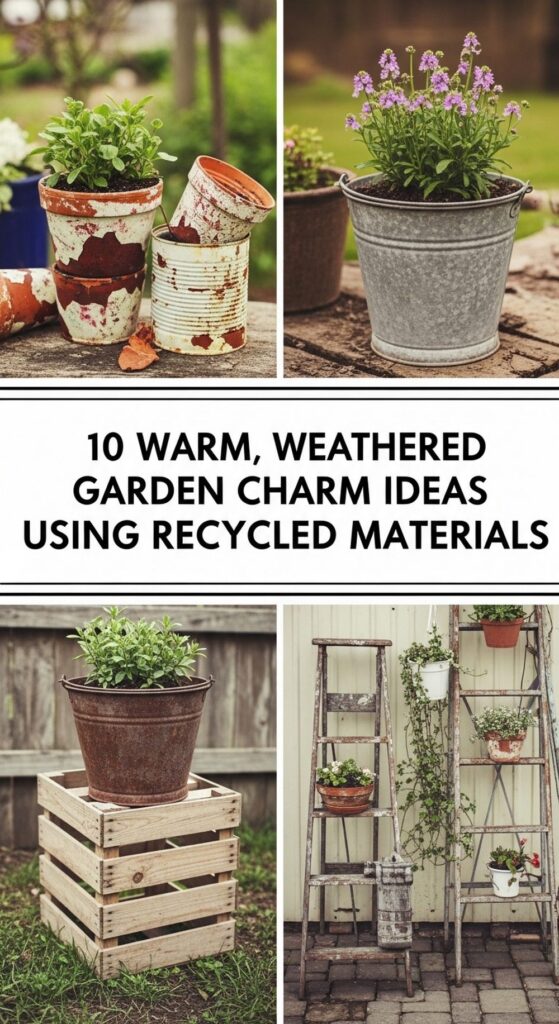
If you love the look of old cottage gardens, sun-faded wood, and soft, lived-in textures, you don’t need a huge budget to get that charm. With a few recycled materials and a bit of creativity, you can give your outdoor space the warm, weathered feel of a garden that’s been loved for years.
This post is for home gardeners, renters, and small-space owners who enjoy simple, hands-on projects. You’ll find easy ideas using crates, cans, jars, and other rescued pieces that turn into beautiful, practical decor. These touches will add character, cozy corners, and personality to your garden, balcony, or patio.
Quick List
- Vintage Crate Planter Towers
- Rusty Watering Can Lanterns
- Weathered Pallet Lounge Corner
- Mismatched Tin Can Herb Rail
- Old Window Frame Garden Gallery
- Reclaimed Brick & Bottle Edge Path
- Worn Ladder Vertical Planter
- Broken Pot “Spilled” Flower Feature
- Upcycled Drawer Planter Stacks
- Recycled Glass Jar Candle Nook
1. Vintage Crate Planter Towers
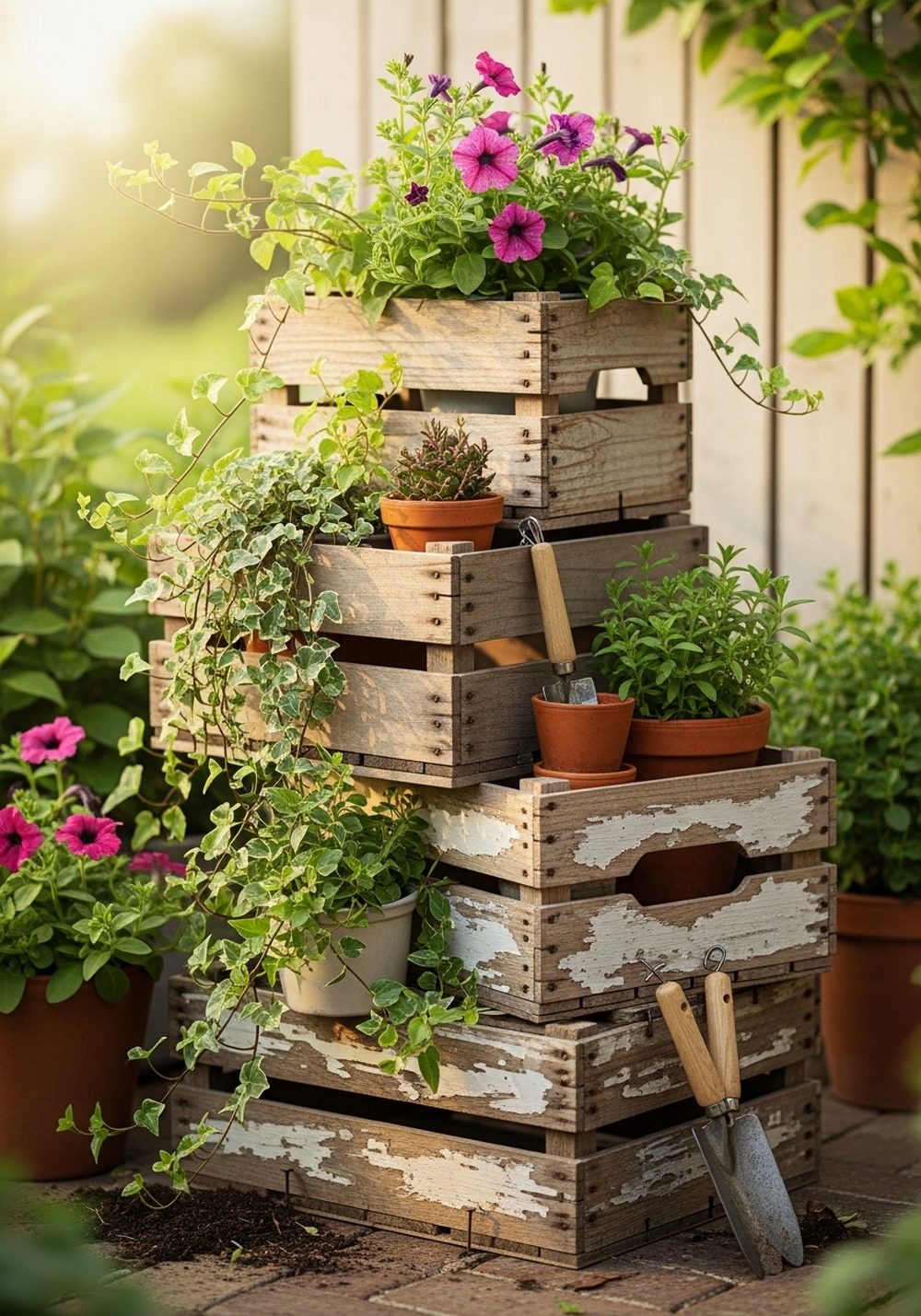
Stack old wooden crates to build a vertical planter tower that looks like it’s been in your garden forever. Turn some crates on their sides, some upright, and secure them with screws or cable ties so they’re stable. Fill them with trailing flowers, herbs, and small shrubs, tucking in little terracotta pots or lanterns between the layers. The scratched wood, faded paint, and rough edges all add to that soft, timeworn charm that makes plants look extra lush and inviting.
- Budget Tip: Look for free or cheap crates from markets, grocery stores, or online listings, then sand lightly instead of fully refinishing.
- Styling Idea: Stick to soft whites, greens, and terracotta for a cottage feel, or muted blues and greys for a coastal look.
- Practical Note: Place heavier crates at the bottom and use bricks inside for weight so the tower doesn’t wobble.
- Care & Maintenance: Line crates with landscape fabric to protect the wood and improve drainage.
2. Rusty Watering Can Lanterns
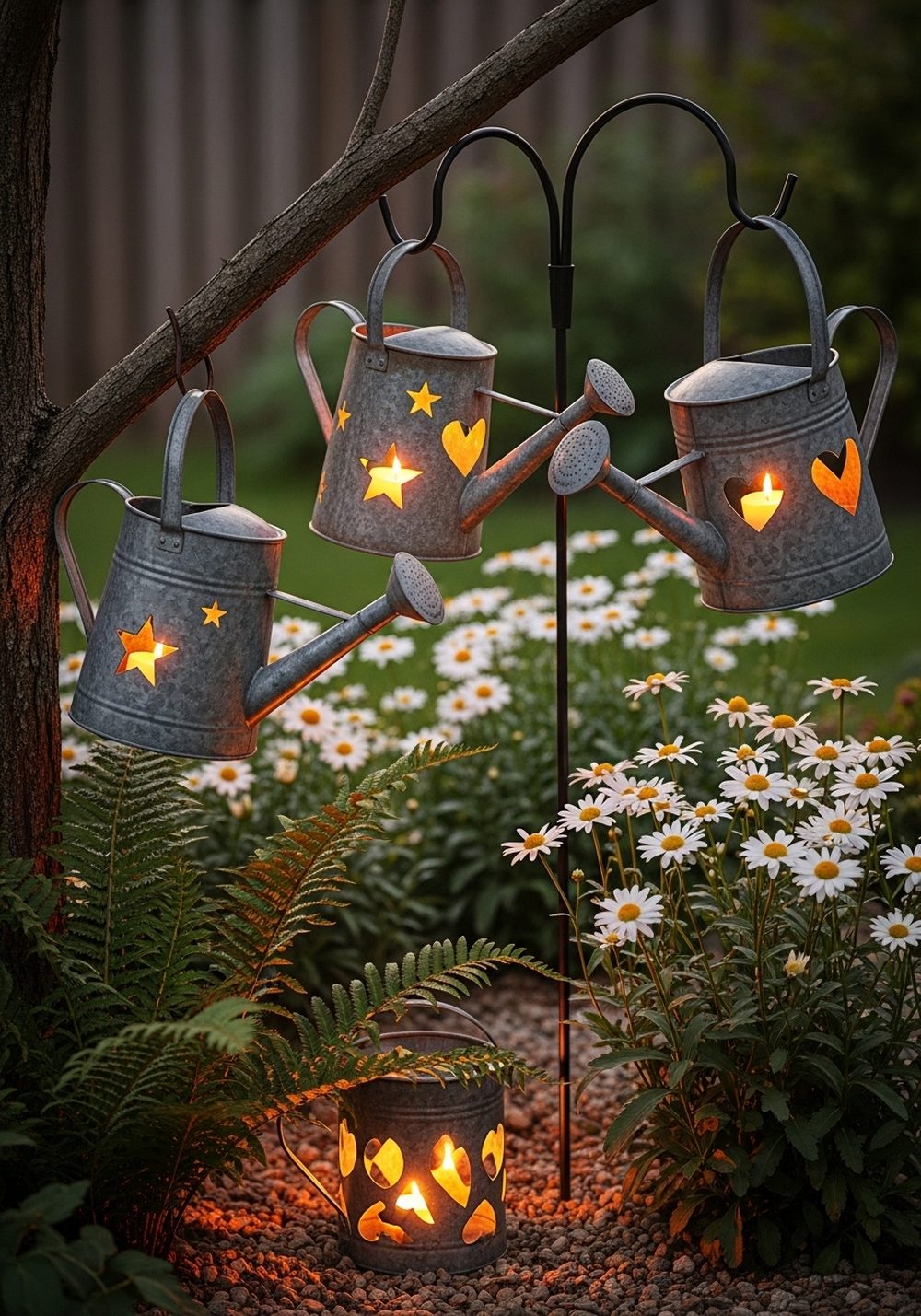
Old metal watering cans with a little rust and patina make the perfect lanterns for dusky evenings. Drill star, heart, or simple dot patterns into the sides, then place solar tealights or real candles inside. Hang them from tree branches, pergolas, or hooks so the light spills through the cut-outs and dances across the surrounding plants. The contrast of soft golden light and worn metal instantly gives your garden a magical, storybook feel.
- Budget Tip: Pick up dented watering cans from thrift shops or scrapyards and embrace their imperfections.
- Styling Idea: Mix a few different sizes and finishes (galvanized, painted, rusty) for a collected-over-time look.
- Practical Note: If using real candles, hang cans away from low branches and dry foliage for safety.
- Extra Idea: Add a few sprigs of dried lavender or herbs in the spout to bring in subtle scent.
3. Weathered Pallet Lounge Corner
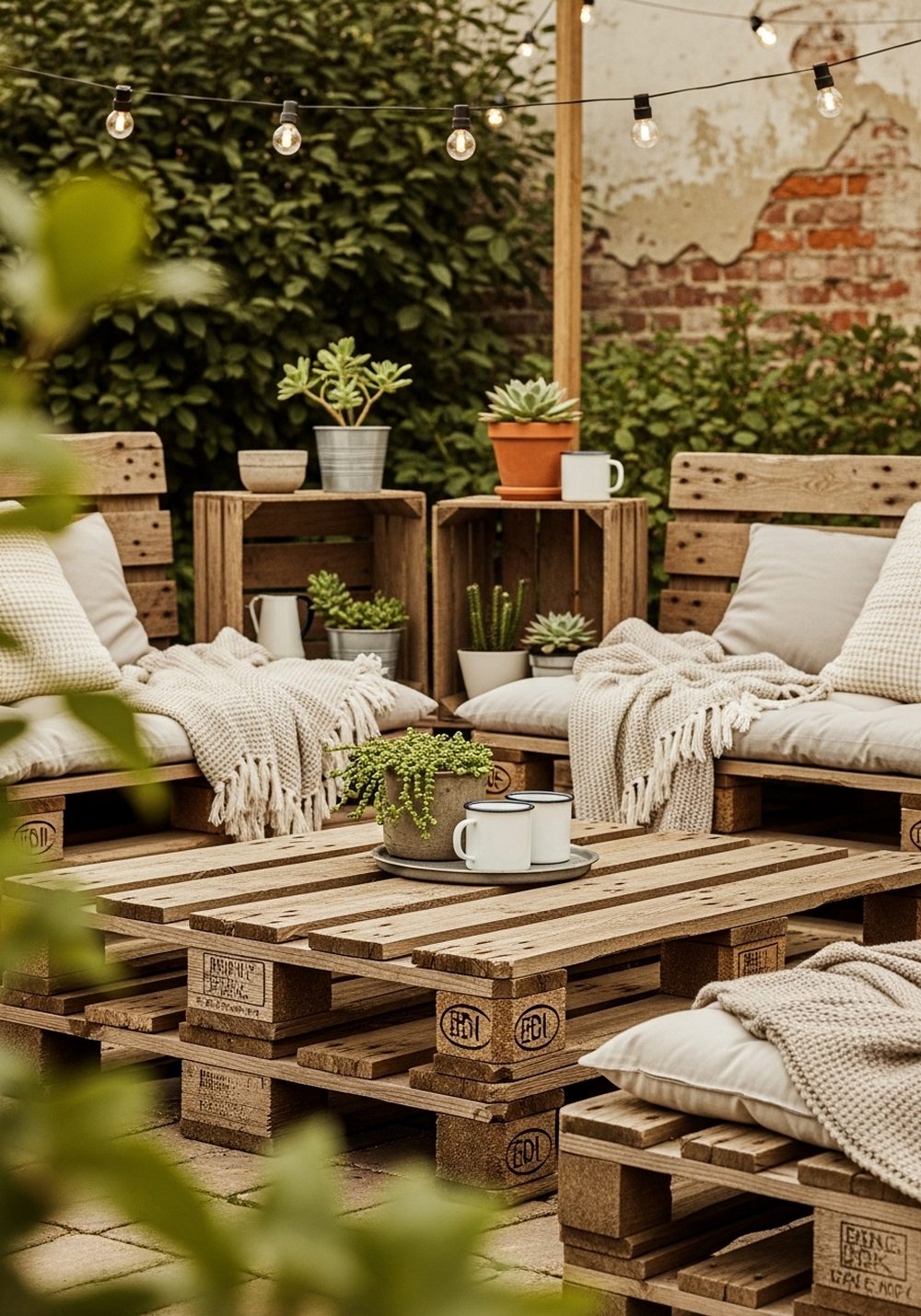
Turn simple pallets into a relaxed lounge corner that looks like it belongs in a rustic garden café. Stack pallets two or three high to form a low bench and coffee table, then top with weather-resistant cushions, throw blankets, and a scattering of old crates as side tables. The scuffed boards, nail marks, and uneven tones in the wood set the scene for evenings of tea, conversation, or reading under the stars. Add string lights overhead to complete the cozy atmosphere.
- Budget Tip: Ask nearby shops or warehouses for pallets they’re discarding, then choose the safest, cleanest ones.
- Styling Idea: Use neutral cushions with one accent color (like mustard, sage, or rust) to keep the space calm and cohesive.
- Practical Note: Sand rough edges and seal the wood with an outdoor-safe finish to prevent splinters.
- Care & Maintenance: Store cushions indoors or in a weatherproof box to prolong their life.
4. Mismatched Tin Can Herb Rail
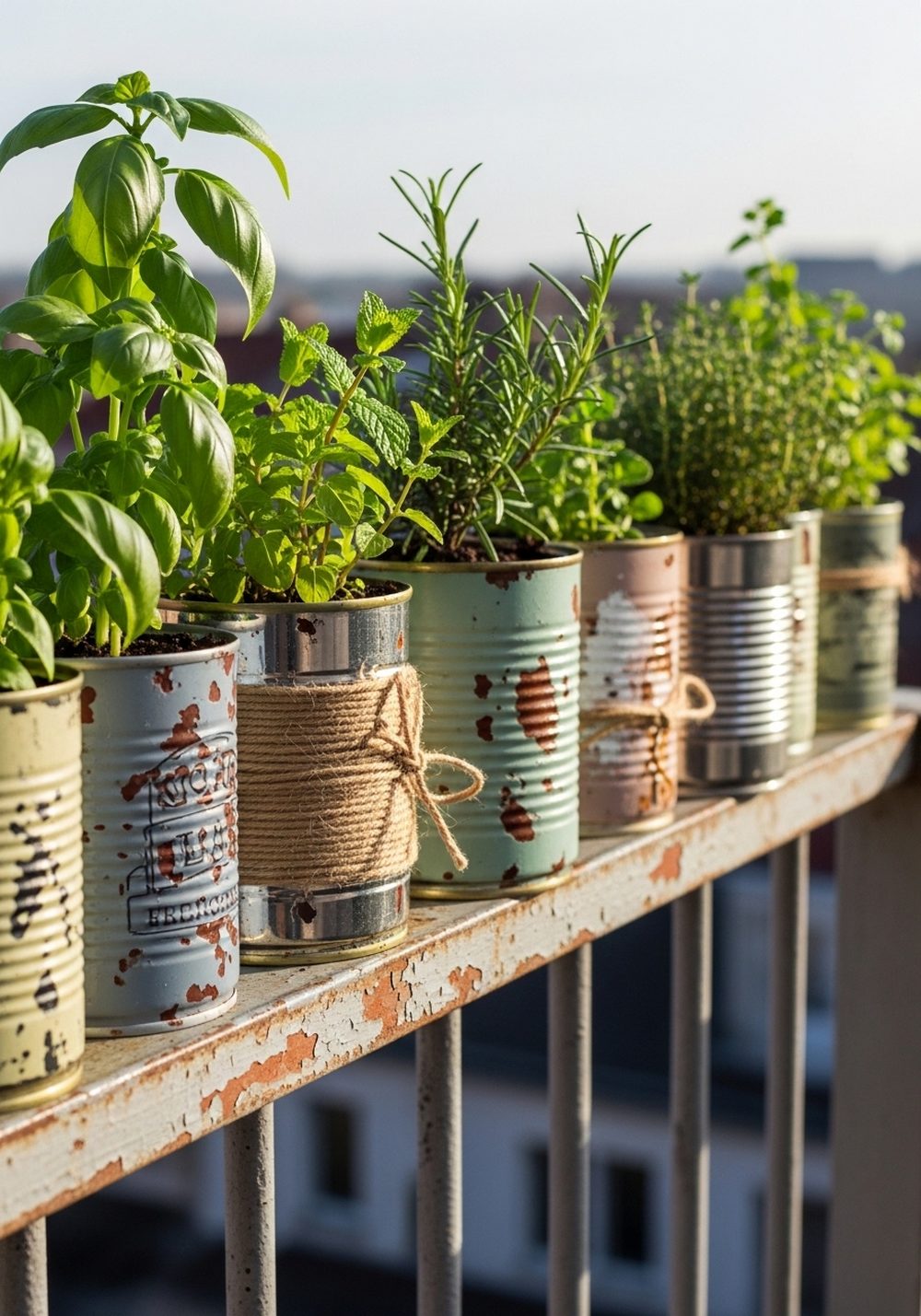
Saving your tin cans turns into a charming herb rail that adds both greenery and character to balconies and small fences. Clean the cans, punch drainage holes in the bottom, then paint some in soft colors, wrap others in twine or burlap, and leave a few with their original patina. Attach them to a wooden rail or directly to the fence, and fill them with fragrant herbs like basil, thyme, and mint. The mix of textures and heights creates a relaxed, informal look that feels instantly homey.
- Budget Tip: Reuse kitchen cans and leftover paint; buy herb seedlings instead of mature plants to save money.
- Styling Idea: Keep your palette simple—two paint colors plus natural twine and bare metal look effortlessly stylish.
- Practical Note: Don’t forget drainage holes and a drip tray or gravel bed beneath to catch excess water.
- Care & Maintenance: Rotate herbs so sun-lovers get more light and shade-tolerant varieties stay on the cooler side.
5. Old Window Frame Garden Gallery
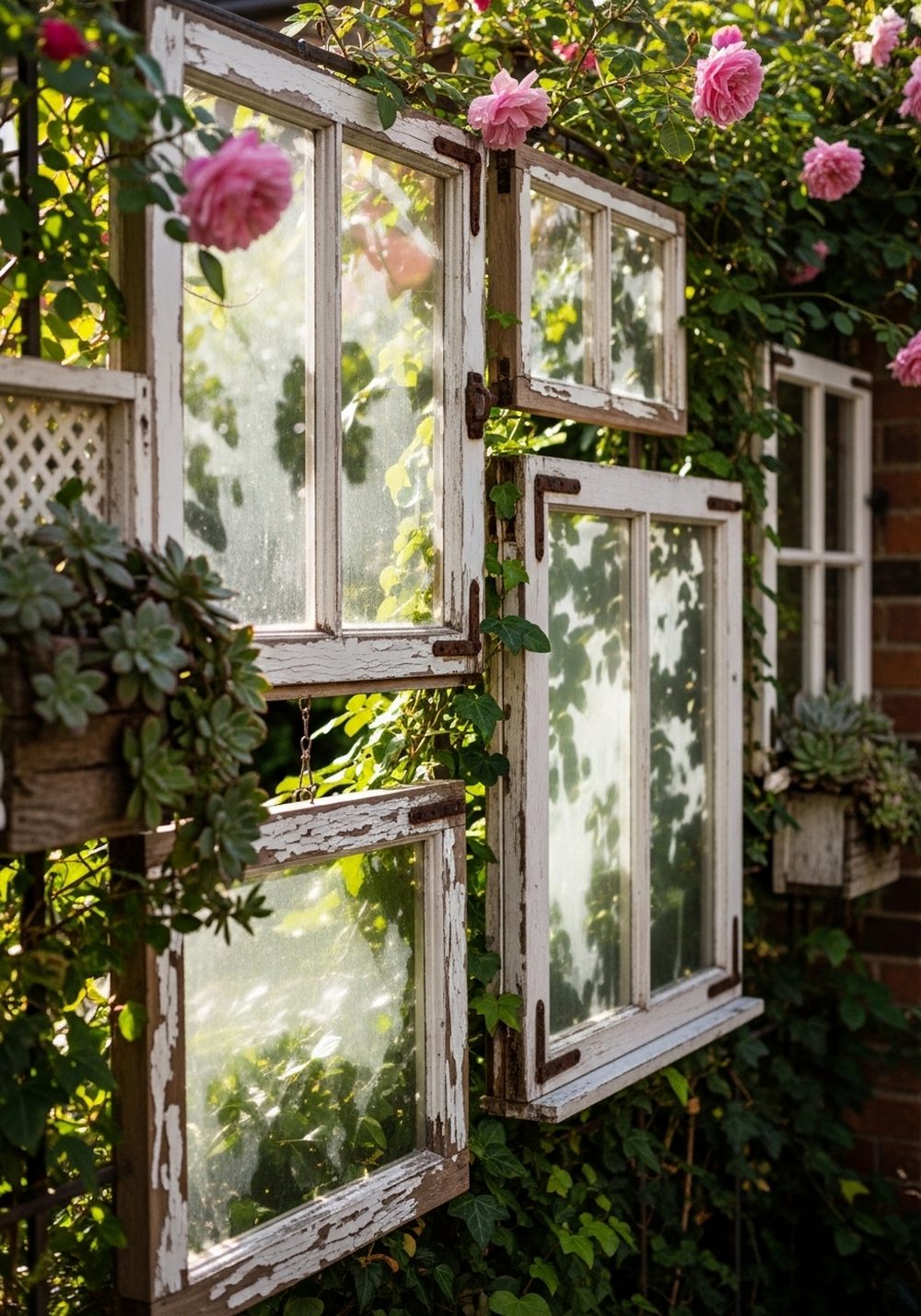
An old window frame with peeling paint can become a beautiful garden feature that feels like a secret doorway into another world. Mount one or several frames on a fence, brick wall, or even freestanding posts. Let ivy, jasmine, or climbing roses weave their way around the edges, and add small planter boxes beneath some frames for trailing flowers. When you step back, the frames “picture” different parts of your garden, creating an instant gallery with vintage soul.
- Budget Tip: Look for discarded windows from renovation sites, but make sure to remove any sharp glass if it’s cracked.
- Styling Idea: Keep frames in their naturally distressed state rather than repainting; the peeling paint adds gorgeous rustic charm.
- Practical Note: Use strong wall fixings so frames are secure in wind and bad weather.
- Extra Idea: Hang a small mirror in one window space to reflect more light and greenery.
6. Reclaimed Brick & Bottle Edge Path
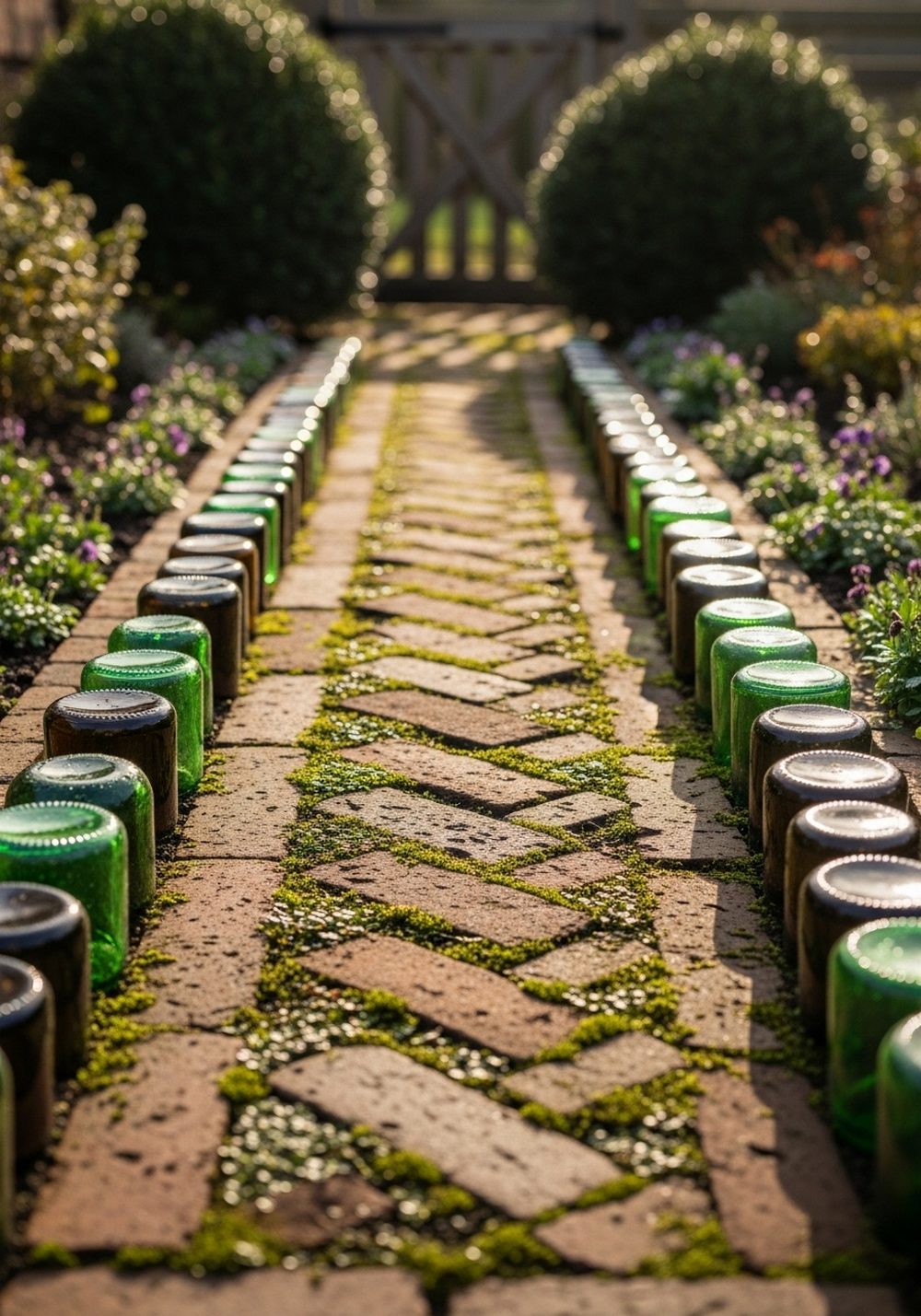
A short path or small sitting-area edge can be transformed with reclaimed bricks and old glass bottles. Lay the bricks in a simple pattern—like herringbone or offset rows—and use upside-down bottles as a playful border. The worn surfaces, tiny chips, and color variations in the glass catch the light and give your garden a slightly old-world, slightly bohemian feel. Add low plants like thyme or creeping sedum between bricks so the path looks like it has been there for years.
- Budget Tip: Ask neighbors, builders, or demolition sites for leftover bricks and bottles that would otherwise be tossed.
- Styling Idea: Choose mostly green and brown bottles for a soft, earthy look, or add a few clear ones for extra sparkle.
- Practical Note: Sink bottles deeply so they don’t wobble, and ensure the path surface is level and safe to walk on.
- Care & Maintenance: Sweep occasionally and trim plants so they don’t make the path slippery.
7. Worn Ladder Vertical Planter
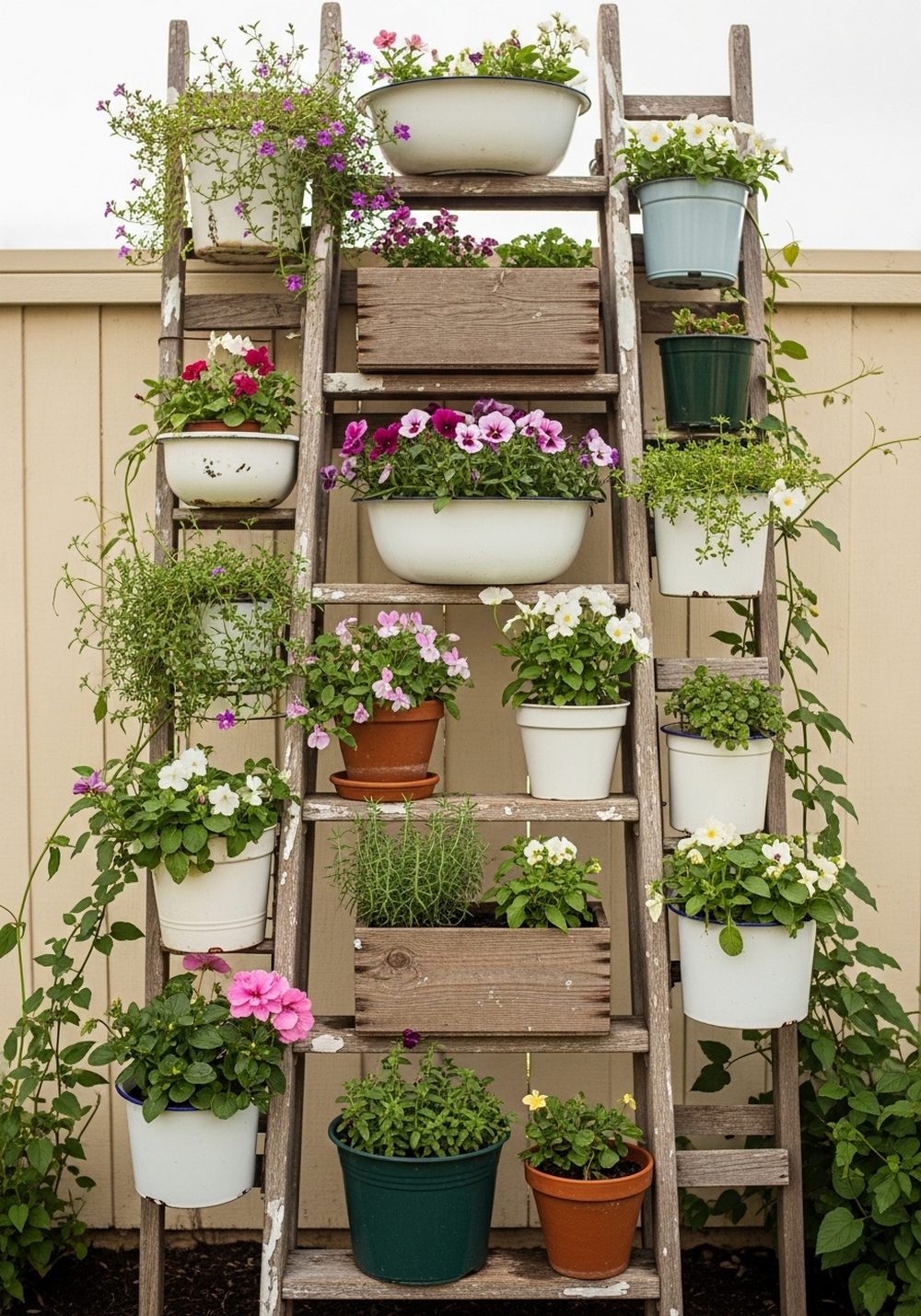
A weathered wooden ladder becomes a lovely vertical garden that adds height and rustic character in one go. Lean the ladder securely against a fence or wall, then place pots, bowls, or recycled containers on each rung. Fill them with a mix of trailing plants, compact herbs, and seasonal flowers. The ladder’s faded paint, scuffed edges, and imperfect shape contrast beautifully with fresh green leaves and bright blooms, turning a forgotten object into a focal point.
- Budget Tip: Use an old ladder from a garage or pick up a damaged one cheap—its flaws actually add charm.
- Styling Idea: Keep pots in similar tones—terracotta, cream, and muted greens—to stop the display feeling cluttered.
- Practical Note: Secure the top of the ladder with brackets or strong hooks so it can’t slip.
- Care & Maintenance: Place thirstier plants lower down where they’re easier to water and less exposed to wind.
8. Broken Pot “Spilled” Flower Feature
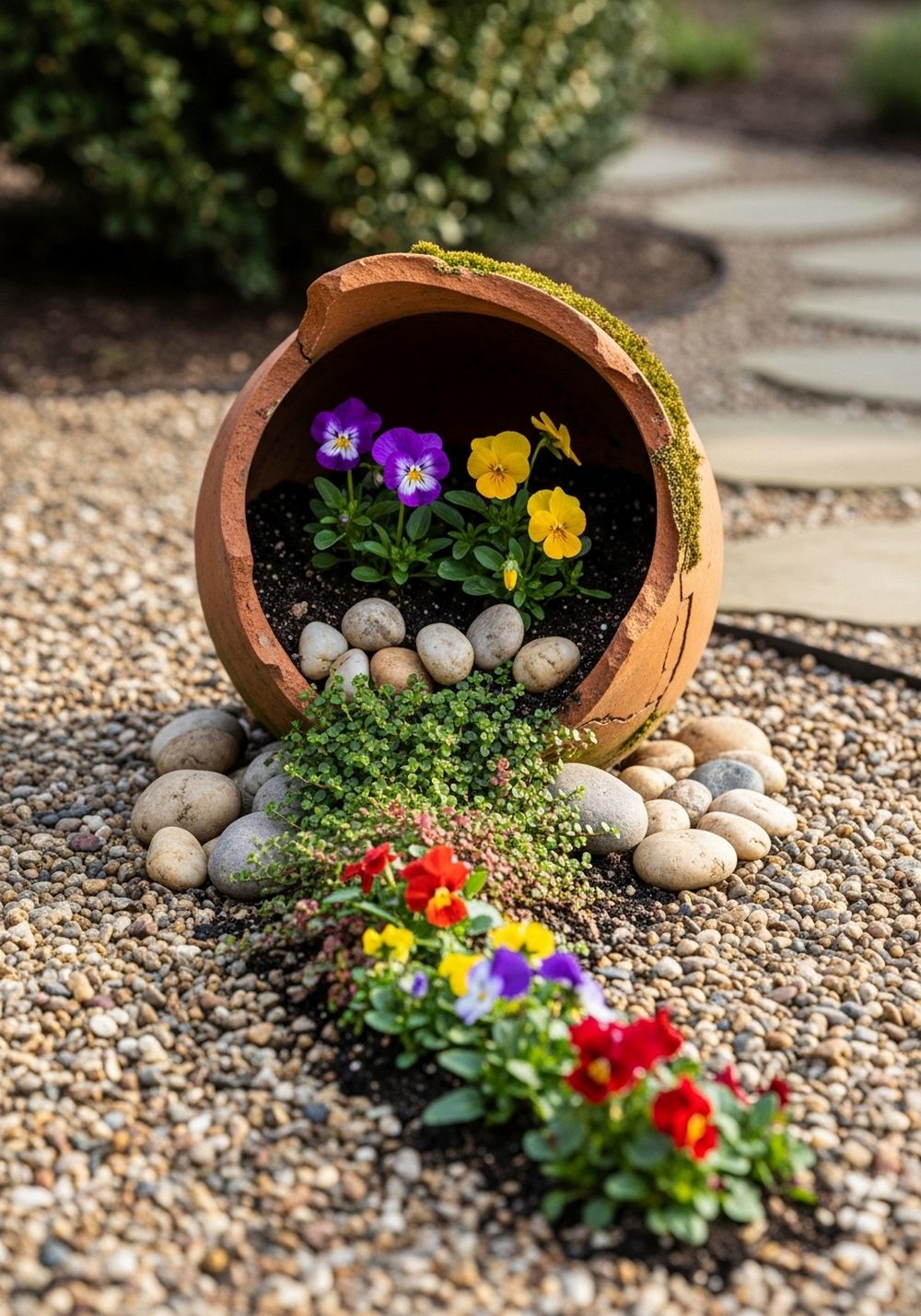
Don’t throw away cracked or broken pots; turn them into a whimsical “spilled” flower feature instead. Lay a broken terracotta pot on its side on gravel or soil, then plant a stream of low-growing flowers or groundcover plants that appear to flow out of the opening. Add pebbles and small stones to outline the “pouring” shape. Over time, the plants fill in, and the scene looks like a soft river of color gently spilling into your garden, with the pot adding that perfect weathered touch.
- Budget Tip: Use damaged pots from your own stash or ask garden centers if they have cracked ones to give away.
- Styling Idea: Choose one color family for your “spill,” like blues and purples or cheerful yellows and whites.
- Practical Note: Position the feature where it’s visible from a window or main seating area so you enjoy it often.
- Care & Maintenance: Pick low-growing plants that don’t need constant trimming to keep the “pouring” shape.
9. Upcycled Drawer Planter Stacks
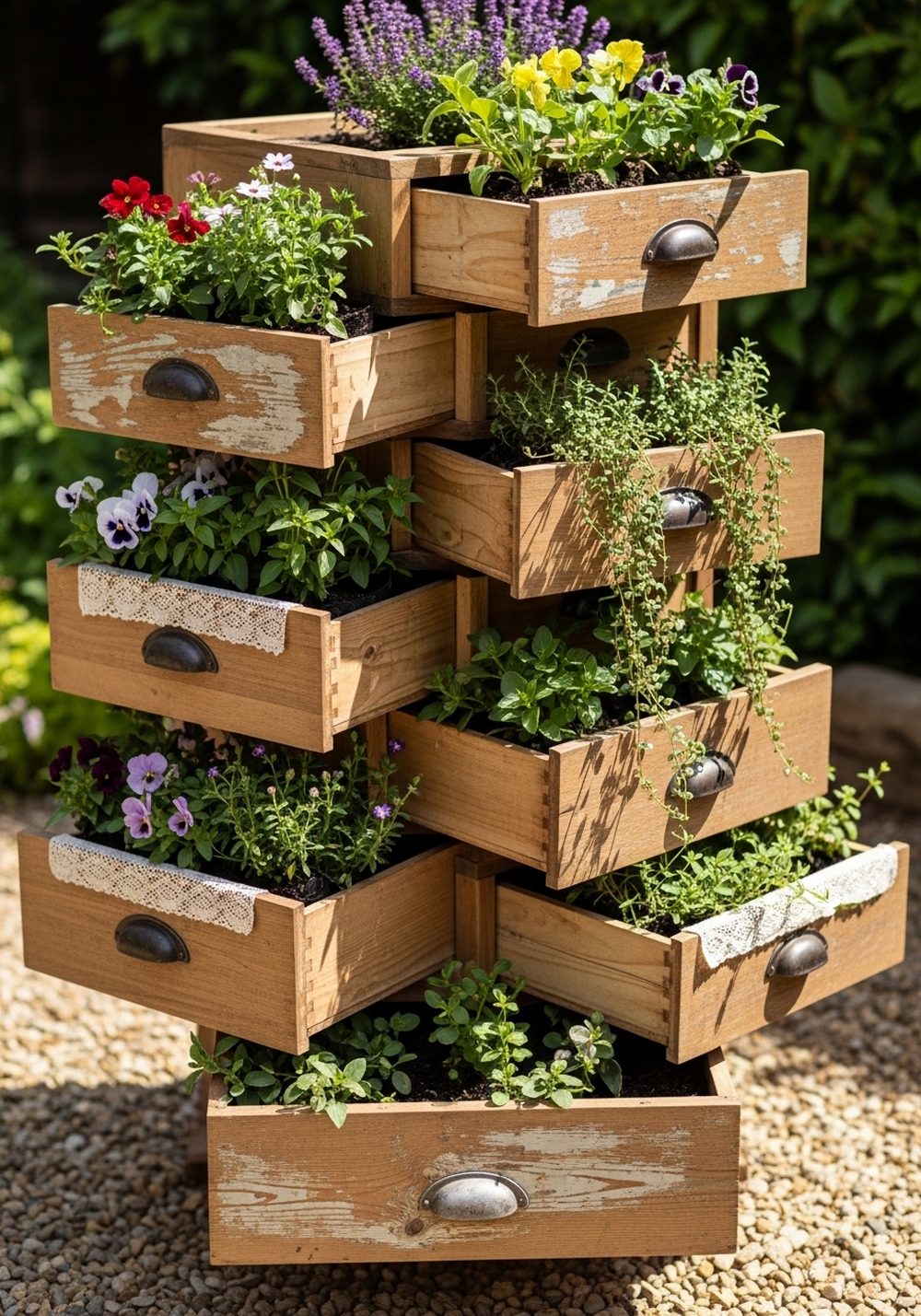
Old drawers from a broken dresser can be transformed into charming stacked planters that look like a mini garden cabinet. Place the largest drawer at the bottom and stack smaller ones at varied angles on top, securing them together. Fill each drawer with soil and plant a mix of upright and trailing plants so it looks like greenery is overflowing from every level. The aged wood, worn handles, and scuffed paint make the whole piece feel like it has a history.
- Budget Tip: Search secondhand furniture listings for pieces that are too damaged to use but perfect for the garden.
- Styling Idea: Leave drawers in their original finish or give them a light wash of chalky paint for a soft, vintage feel.
- Practical Note: Drill drainage holes in the bottoms and raise the stack slightly on bricks so water can escape.
- Care & Maintenance: Refresh soil and plants each season to keep the display looking full, not tired.
10. Recycled Glass Jar Candle Nook
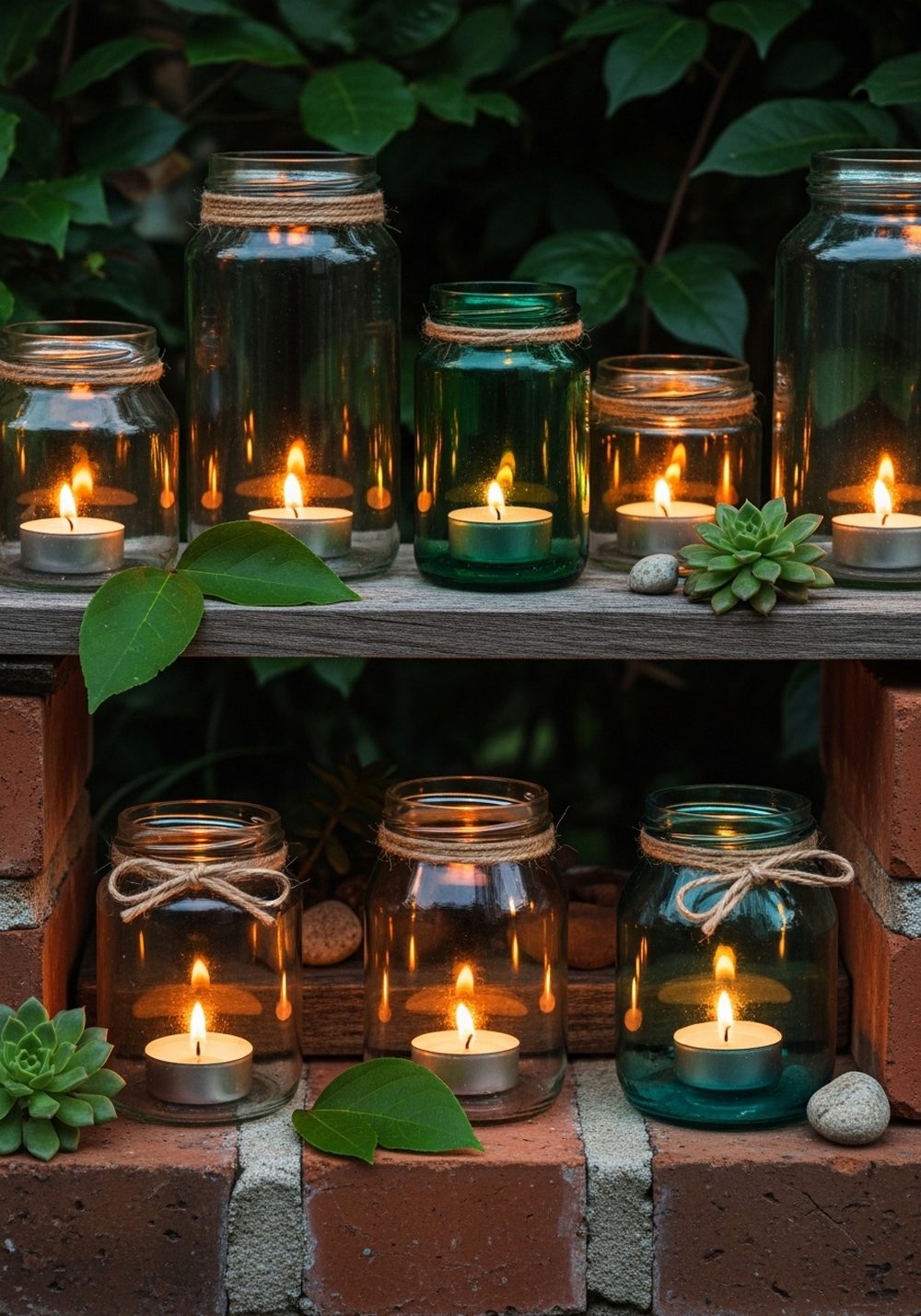
Gather your spare glass jars to create a dreamy candle nook that glows on warm evenings. Arrange jars of different heights on a reclaimed shelf, brick ledge, or old wooden crate, then add tealights or small pillar candles inside. Wrap some jars with twine or lace and leave others plain so the flickering light shines through clearly. Surround the display with potted plants, stones, and maybe a driftwood piece for extra texture. As night falls, the gentle candlelight and reflections feel wonderfully calming.
- Budget Tip: Use jars from sauces, jams, and pickles; any clear glass works beautifully once cleaned.
- Styling Idea: Keep the scene in warm neutrals and greens so the candlelight becomes the star of the show.
- Practical Note: Place jars on a stable, non-flammable surface and keep flames away from hanging foliage.
- Extra Idea: Swap real candles for battery or solar tealights if you want a completely fuss-free option.
Conclusion
Warm, weathered charm doesn’t come from expensive decor; it grows from clever re-use, soft materials, and small details that tell a story. By turning recycled pieces into planters, lanterns, and cozy corners, you can give even the plainest garden or balcony a gentle, lived-in glow. Start with one or two simple projects, see how they transform your space, and let your ideas slowly “weather in” along with the plants you love.
FAQs
1. How can I decorate my garden on a very small budget?
Focus on using what you already have or can get for free: tins, jars, crates, pallets, and old furniture. Combine these with affordable plants like cuttings from friends, seed packets, and small seedlings. Simple touches like grouping pots together, adding one string of lights, or stacking crates can make a huge difference without a big spend.
2. Are these recycled decor ideas suitable for renters?
Yes. Many of these ideas are non-permanent and movable, like tin can herb rails, ladder planters, and jar lanterns. Use hooks that can be removed without damage, freestanding pieces, and container-based designs so you can take your decor with you when you move. Always check your rental agreement before fixing anything to walls or railings.
3. What recycled materials hold up best outdoors?
Galvanized metal, terracotta, sturdy hardwood, and thick glass generally cope well with outdoor conditions. That said, all materials last longer with a little care—like drilling drainage holes, sealing wood, and avoiding areas where water pools. If something begins to break down, you can often shift it into a more sheltered spot or repurpose it again.
4. How can I make sure my garden decor is safe for plants?
Avoid containers that once held chemicals or paint, and don’t use treated wood where roots will sit directly in the soil. Always add drainage holes so roots don’t stay waterlogged. If you’re unsure, line containers with fresh potting mix and a layer of landscape fabric so the plants are separated from any questionable surfaces.
5. What are the easiest ideas for complete beginners?
Start with simple projects like a mismatched tin can herb rail, a broken pot “spilled” flower feature, or a cluster of recycled glass jar lanterns. These require basic tools and very little measuring. Once you feel confident, you can move on to larger builds like pallet seating or stacked crate planters. The key is to begin small and enjoy the process.