
10 Creative Shoe Planter DIYs For A Fun, Quirky Garden Look
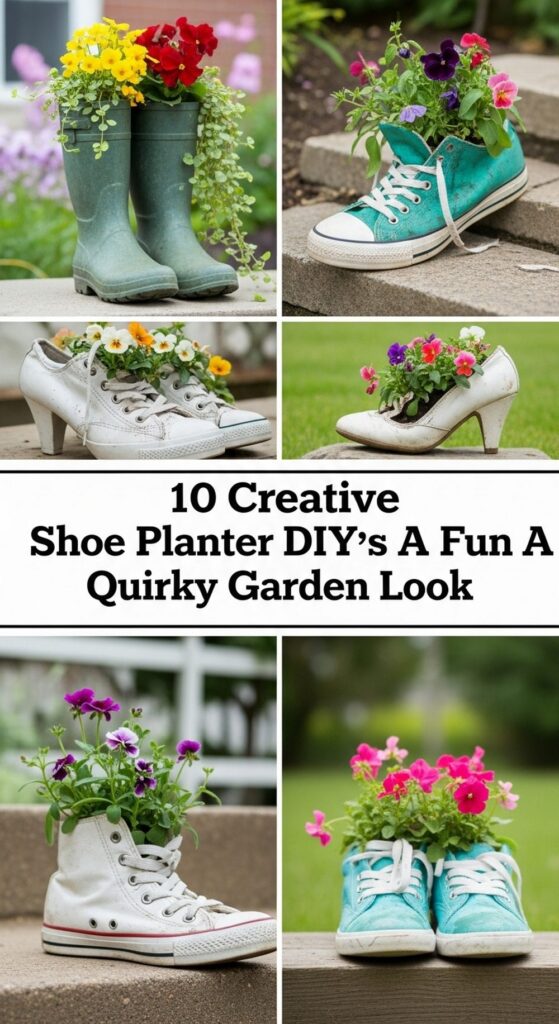
If you’ve got a pile of old shoes by the door, you’re closer to a quirky, conversation-starting garden than you think. From kids’ outgrown sneakers to those boots you can’t quite throw away, shoes make wonderfully unexpected planters with loads of personality.
In this post, you’ll find simple, playful shoe planter DIYs that work for patios, balconies, and full-sized gardens. We’ll talk about drainage, styling, and smart plant choices so your shoe planters look charming and stay healthy. Pick one idea, grab a pair of shoes, and turn everyday clutter into a fun little garden moment.
Quick List
- Colorful Sneaker Succulent Planters
- Vintage Leather Boot Herb Garden
- Rainbow Rainboot Flower Line-Up
- Elegant High-Heel Mini Rose Planters
- Kids’ Outgrown Shoes Fairy Garden
- Work Boot Moss And Fern Corner
- Hanging Canvas Shoe Wall Planters
- Sporty Trainer Strawberry Pots
- Flip-Flop Mini Cactus Row
1. Colorful Sneaker Succulent Planters
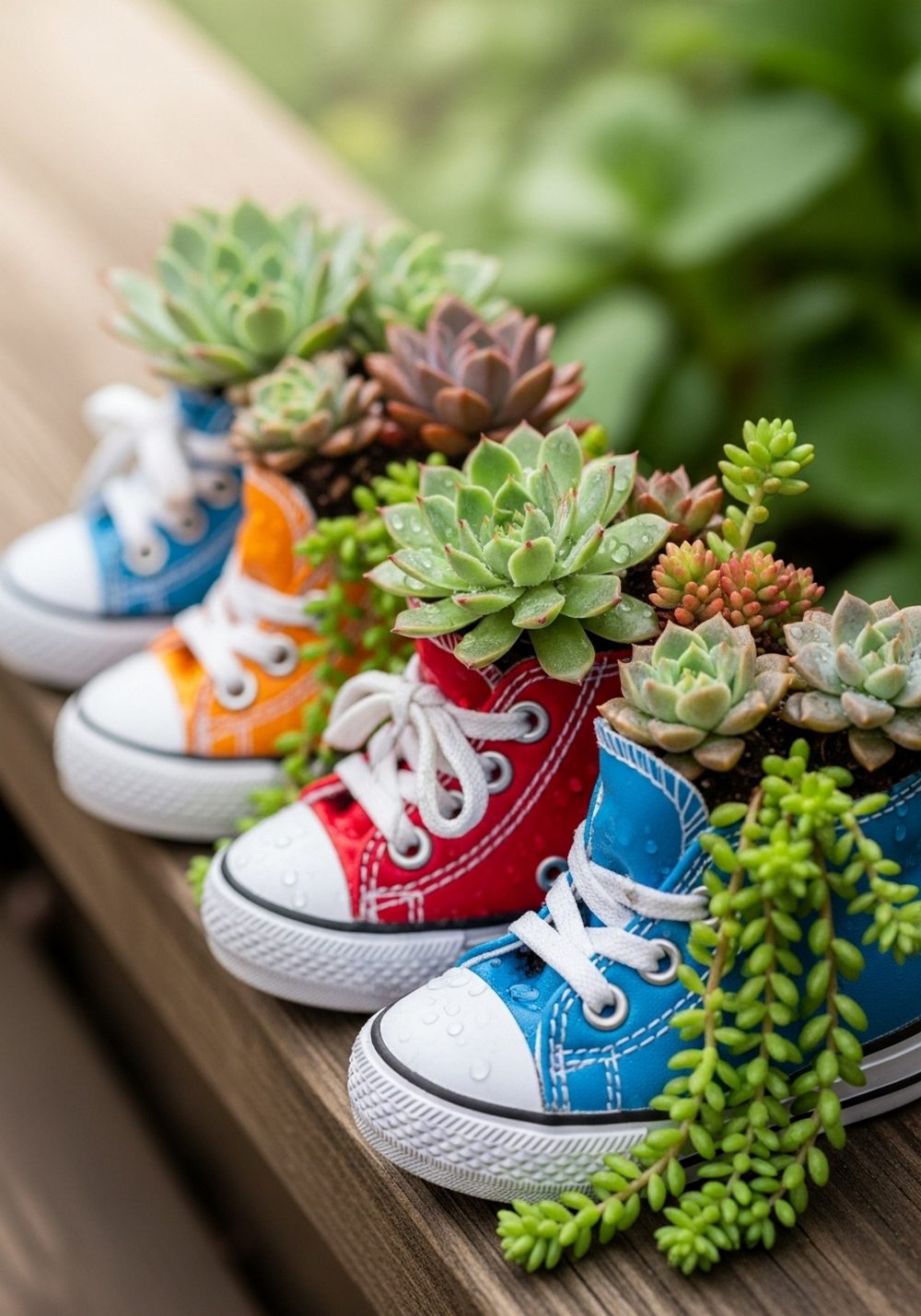
Old sneakers become instant garden stars when you pack them with hardy succulents. Drill or poke drainage holes through the soles, add a thin layer of gravel, and fill with gritty, well-draining soil. Tuck in small echeveria, sedum, and string-of-pearls around the laces and tongue so they seem to spill out. Line your sneaker planters along a step, on a shelf, or beside your front door for a playful, low-maintenance display of color and texture.
- Best For: Sunny porches, steps, or balconies with at least 4–6 hours of light.
- Budget Tip: Use thrifted sneakers or pairs you were going to toss, plus a small bag of cactus mix.
- Styling Idea: Stick to one color family (all blue shoes, all white shoes) for a more curated, gallery look.
- Care & Maintenance: Water lightly and infrequently; succulents hate soggy soil, especially in confined spaces.
- Extra Idea: Paint the rubber soles or draw simple patterns on the sides for an even more playful feel.
2. Vintage Leather Boot Herb Garden
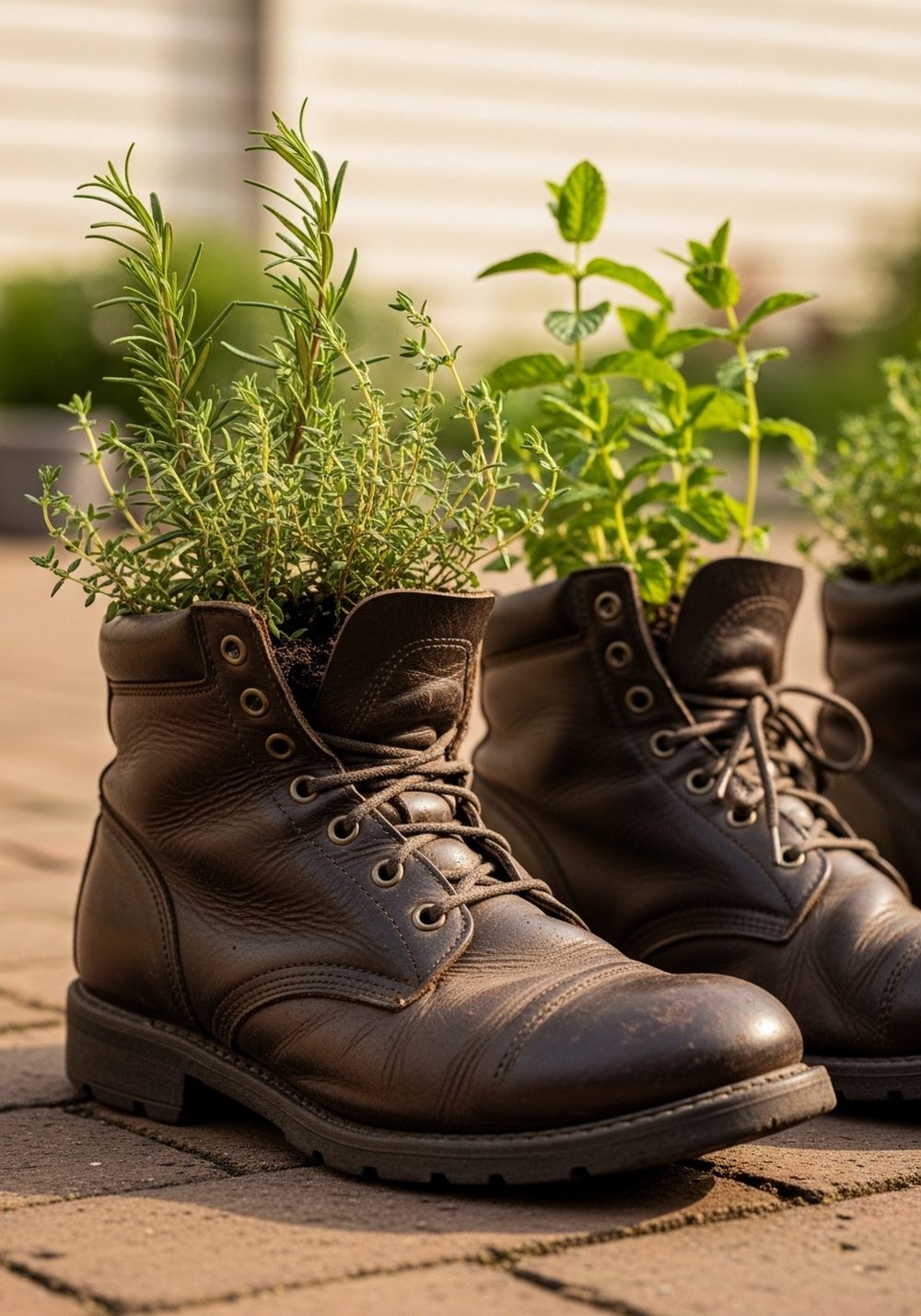
A pair of worn leather boots makes a perfectly rustic home for kitchen herbs. Add drainage holes through the sole, then position the boots together on a step or crate so they look like they’ve just been “parked” there. Fill them with rich potting mix and plant a mix of rosemary, thyme, parsley, and mint. The tall boot shafts contain deeper roots, while the scuffed leather contrasts beautifully with fresh green herb leaves.
- Best For: Cottage-style gardens, patios, and doorsteps with partial to full sun.
- Budget Tip: Ask friends or family for old boots and start with inexpensive herb seedlings.
- Styling Idea: Tie jute string or gingham ribbon around the tops for a cozy farmhouse touch.
- Practical Note: Place a shallow tray or old tile beneath to protect your decking or paving from staining.
- Care & Maintenance: Herbs need regular watering and occasional trimming to stay lush and compact.
3. Rainbow Rainboot Flower Line-Up
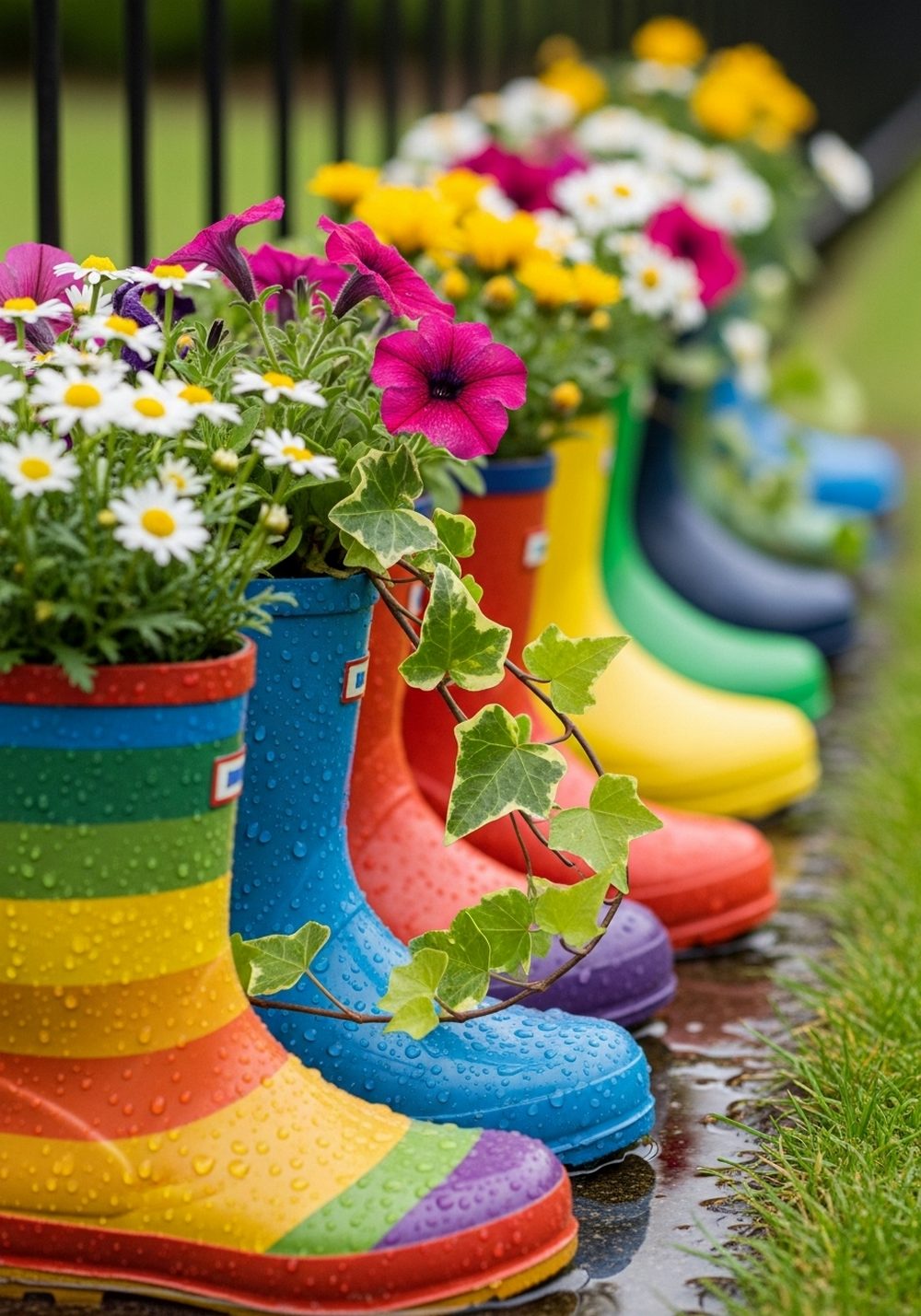
Children’s rainboots are made for puddles, but they’re also perfect flower planters. Gather a mix of bright, patterned boots and punch drainage holes near the bottom. Arrange them in a row along a fence, front step, or garden path. Fill with lightweight potting mix and plant cheerful flowers like marigolds, petunias, violas, and alyssum. As they grow, blooms spill over the tops of the boots, creating a joyful, storybook-style border.
- Best For: Family gardens, play areas, and front yards where you want an instant smile.
- Budget Tip: Mix your own flowers from a few starter trays or seed packets rather than buying many individual pots.
- Styling Idea: Group boots by color (all yellow together, all blue together) for a rainbow gradient effect.
- Practical Note: Weigh the bottom of each boot with a few pebbles so strong winds don’t knock them over.
- Care & Maintenance: Water regularly and deadhead faded blooms to keep the display going longer.
4. Elegant High-Heel Mini Rose Planters
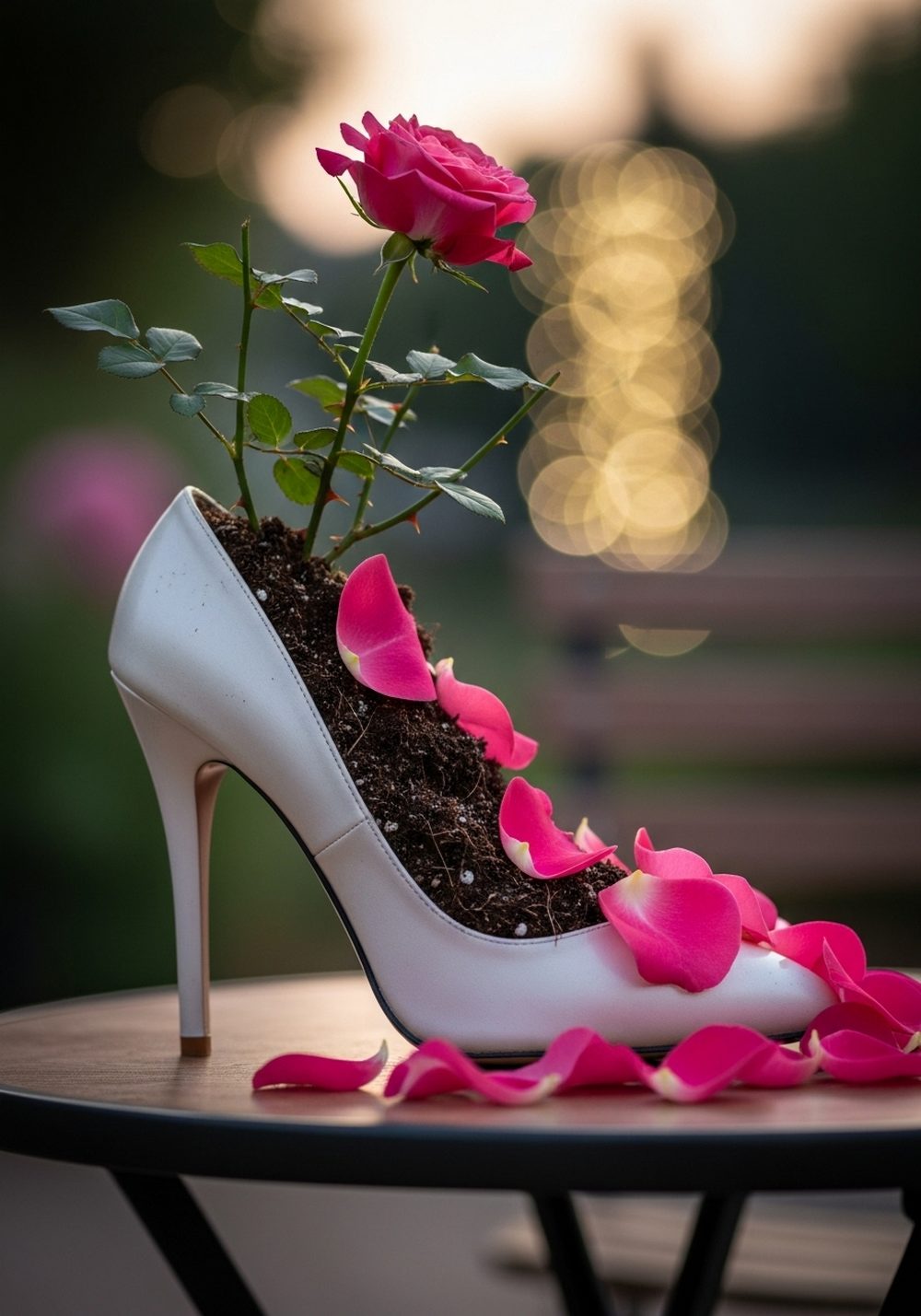
Those fancy heels you never wear can live on in the garden as chic little rose planters. Choose compact miniature roses or small flowering plants and line the inside of the shoe with a bit of plastic that has drainage holes to protect delicate materials. Fill with potting mix, then plant so blooms sit just above the edge of the shoe. Display them on a patio table, windowsill, or beside an outdoor mirror for a glamorous, slightly whimsical touch.
- Best For: Small patios, balconies, or outdoor tables where you can admire the details up close.
- Budget Tip: One pair of thrifted heels plus a few mini roses can create a full, styled vignette.
- Styling Idea: Use neutral or metallic shoes with pale roses for a soft, romantic look; go bold with red heels and deep pink blooms.
- Practical Note: Keep high-heel planters in a fairly sheltered spot to protect them from rain damage.
- Care & Maintenance: Roses need steady moisture but hate soggy roots; check drainage often in tiny planters.
5. Kids’ Outgrown Shoes Fairy Garden
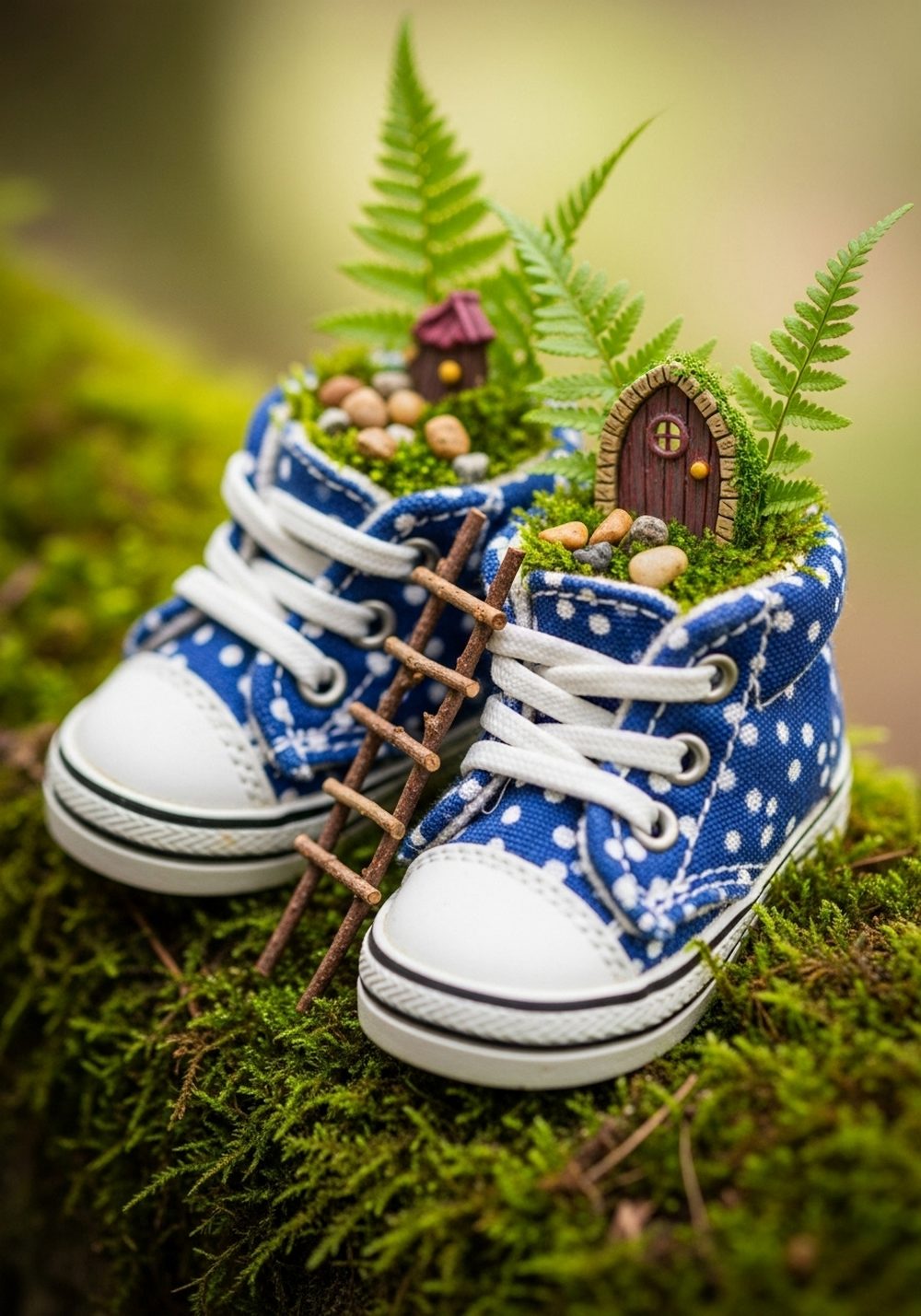
Turn your kids’ outgrown shoes into a tiny fairy world. Start with sturdy sneakers or little boots and add drainage holes. Fill with a mix of potting soil and fine gravel, then plant small ferns, moss, and tiny groundcovers. Add miniature accessories like a little pebble path, twig ladder, or a tiny faux door leaning against the shoe. Nestle the fairy shoe in a shady corner or under a shrub, where it feels secret and magical.
- Best For: Families with children who enjoy imaginative play and storybook spaces.
- Budget Tip: Use natural “fairy furniture” like twigs, pebbles, and acorn caps instead of buying miniatures.
- Styling Idea: Choose shoes with fun patterns or bright colors to add extra charm to the fairy setting.
- Practical Note: Place the fairy shoe where you can reach it easily to adjust decorations and water gently.
- Care & Maintenance: Mist moss and ferns regularly to keep the mini landscape lush and green.
6. Work Boot Moss And Fern Corner
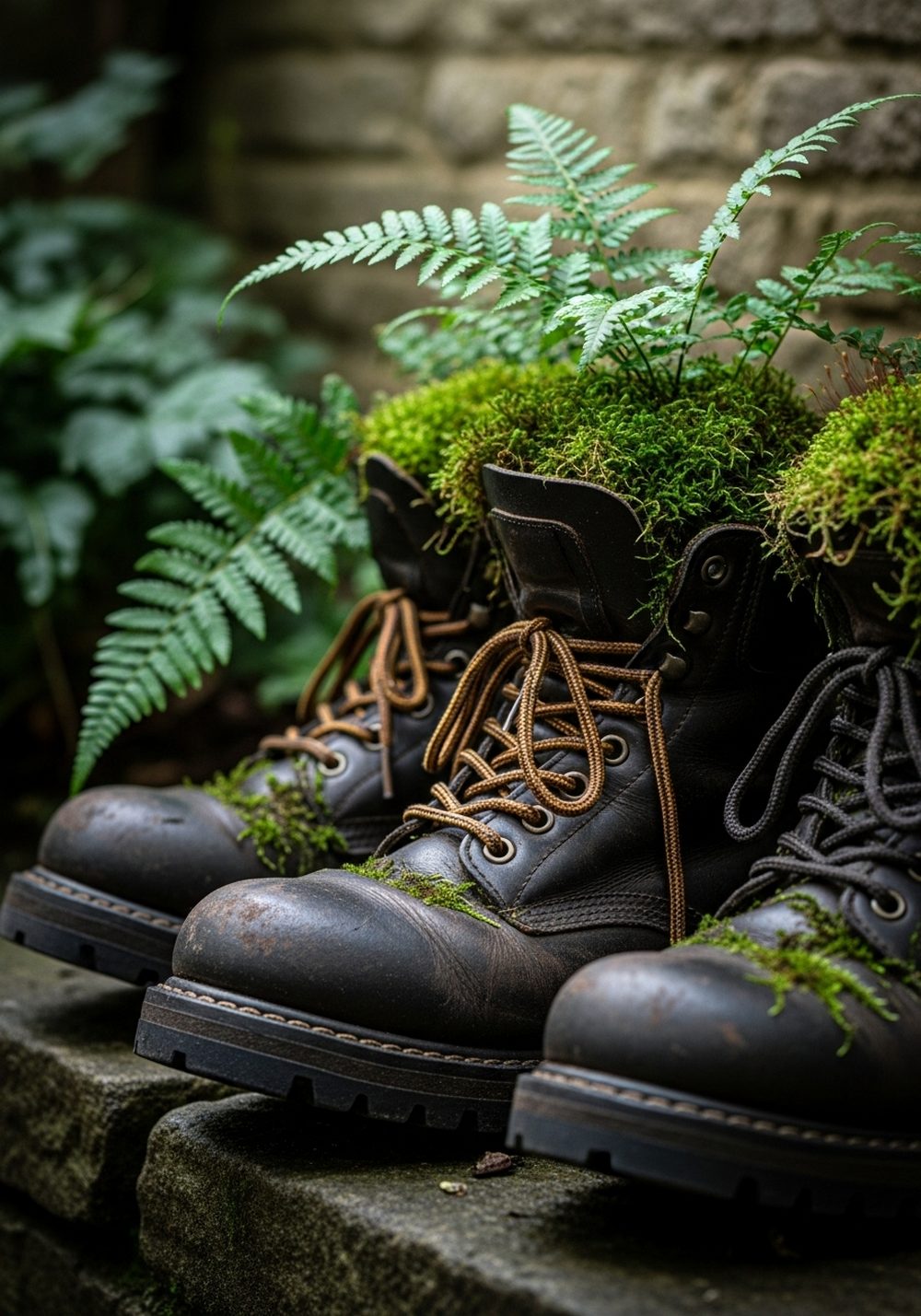
Heavy work boots are made for rough conditions, so they’re ideal for a rugged, woodland-style planter. After making drainage holes, position the boots in a shady, damp part of the garden on top of rocks or bark. Fill them with moist, humus-rich soil and tuck in ferns, moss, and other shade-loving plants. Over time, the leather will weather and soften, blending into the surrounding greenery and giving your garden a secret-forest feel.
- Best For: Shaded corners, under trees, or beside garden sheds where most flowers struggle.
- Budget Tip: Collect moss from your own garden (where it’s unwanted) to reuse in your boot planter.
- Styling Idea: Add a small lantern or stone statue nearby to create a focused, enchanted vignette.
- Practical Note: Avoid placing these where they’ll sit in standing water; damp, not flooded, works best.
- Care & Maintenance: Keep the soil evenly moist and trim back ferns if they overshadow smaller plants.
7. Hanging Canvas Shoe Wall Planters
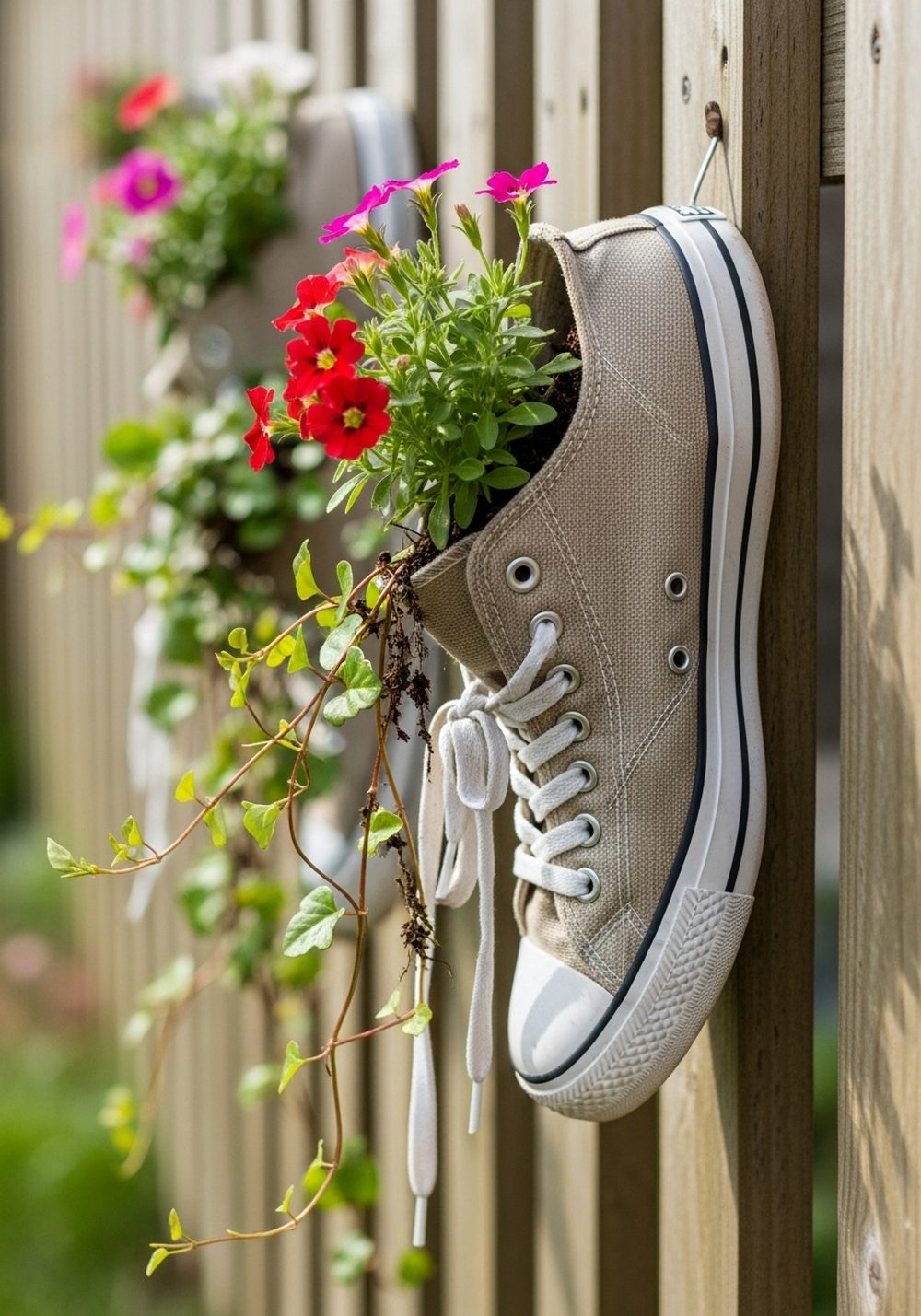
Canvas shoes and sneakers can be turned into lightweight wall planters with a few hooks and some imagination. Attach the shoes to a fence or wall using sturdy screws through the heel or hang them from nails by their laces. Add drainage holes, fill with soil, and plant trailing vines, small annuals, or herbs. Stagger the shoes in a pattern to build a living collage of color and texture that climbs vertically.
- Best For: Small gardens, balconies, or plain fences that need a vertical focal point.
- Budget Tip: Use mismatched old shoes for a fun, free look and plant cuttings from existing plants.
- Styling Idea: Arrange shoes in a grid for a modern feel or in a loose cluster for a relaxed, boho look.
- Practical Note: Make sure fixings are secure so the shoes don’t fall when soil gets wet and heavy.
- Care & Maintenance: Because wall planters dry out quickly, check moisture often and water more frequently.
8. Sporty Trainer Strawberry Pots
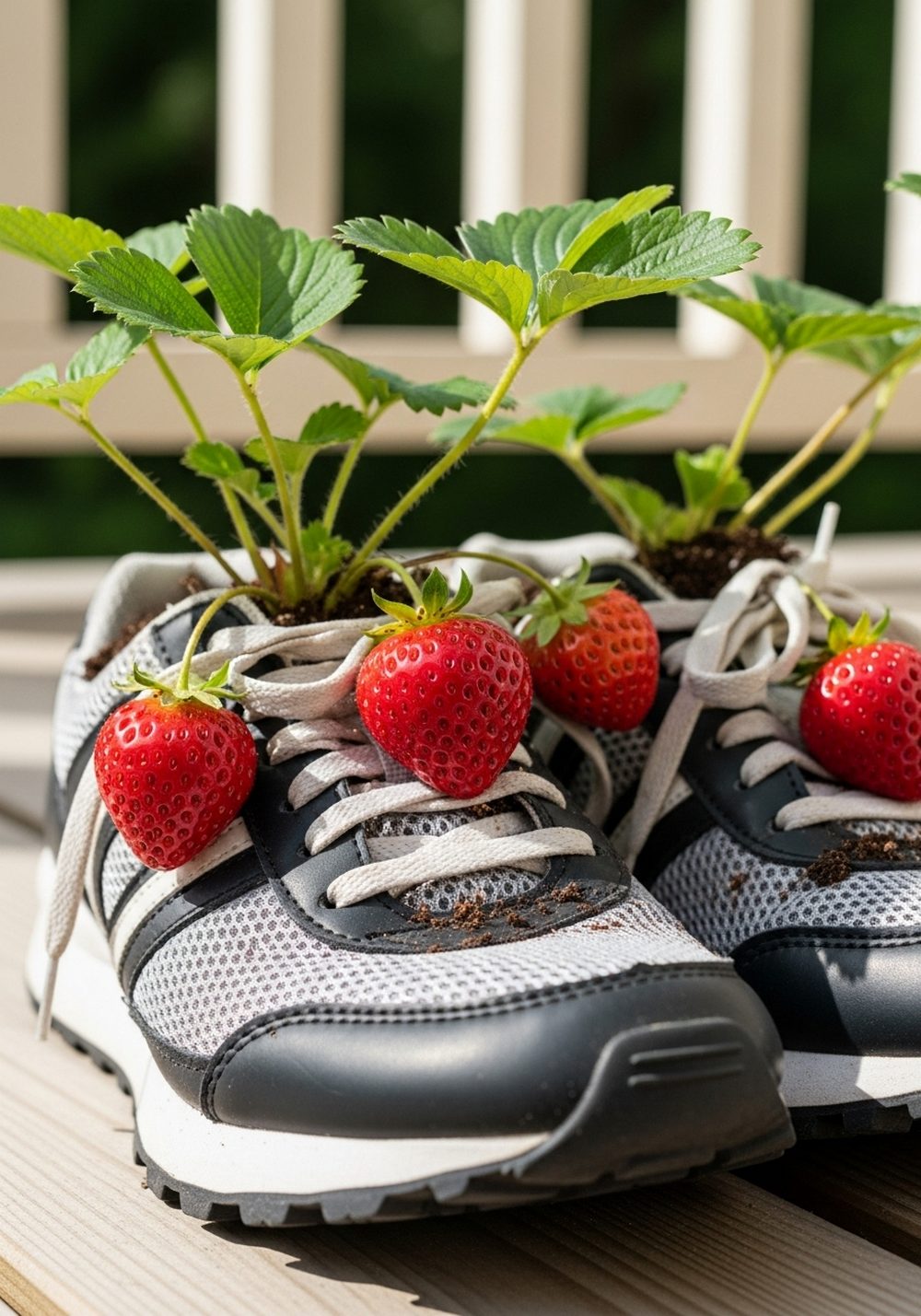
Sporty trainers make unexpectedly good planters for strawberries. Create several drainage holes, then fill the shoes with rich, composted soil. Plant a small strawberry plant so the crown sits just above the laces. As it grows, runners and fruits will spill out through the sides and over the tongue. Line a few trainers together on a sunny step or bench for a playful, edible display that kids and adults both enjoy.
- Best For: Sunny spots like steps, deck railings, or low tables where fruits can ripen.
- Budget Tip: Start with bare-root strawberries or small starter plants, which are usually cheaper than bigger pots.
- Styling Idea: Choose trainers in bright reds, whites, or stripes to match the berries.
- Practical Note: Protect from slugs by raising the shoes slightly or using simple barriers around them.
- Care & Maintenance: Water consistently and feed with a mild liquid fertilizer during the fruiting season.
9. Flip-Flop Mini Cactus Row
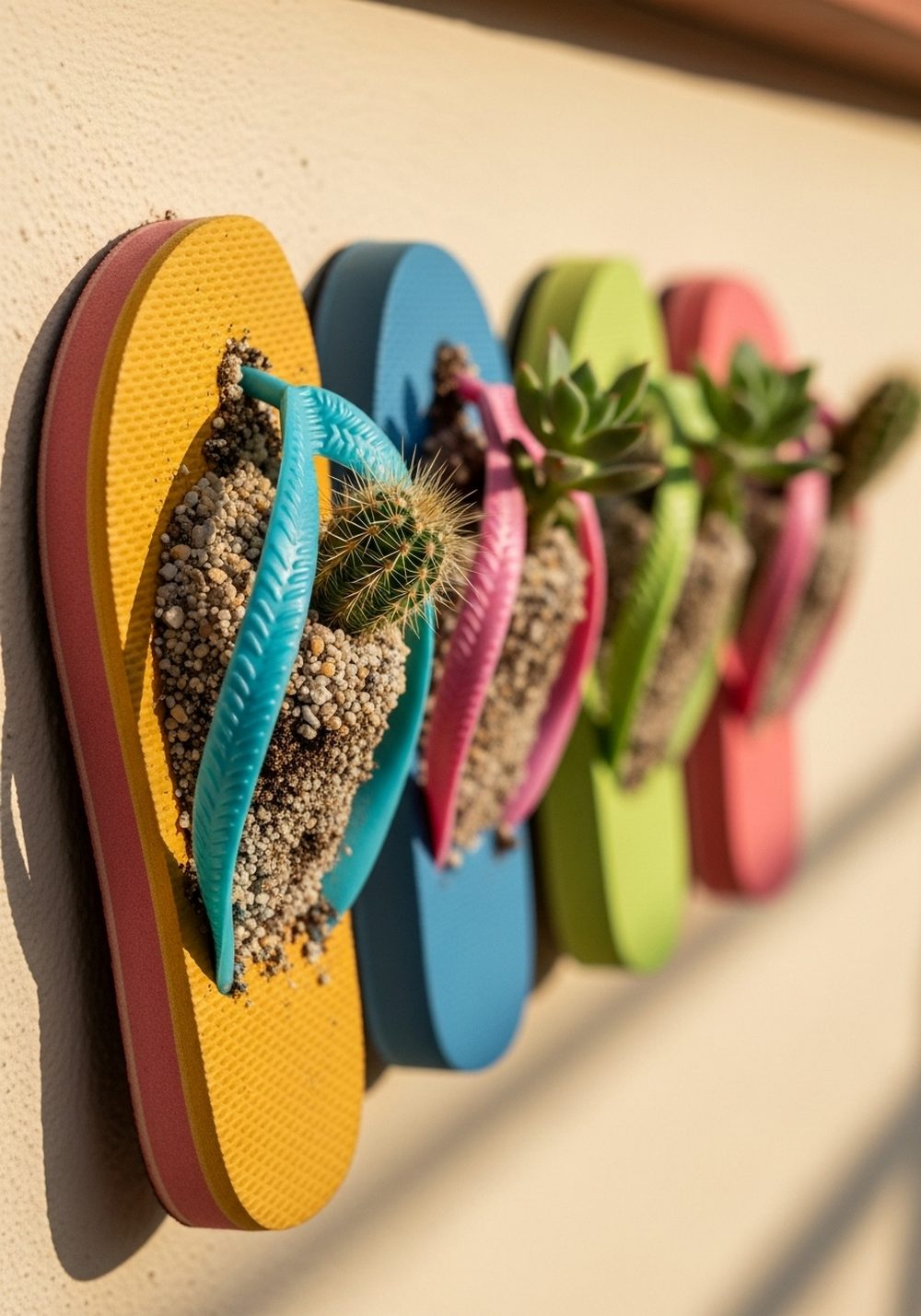
Flip-flops don’t have much depth, but that’s perfect for tiny cacti and succulents. Secure each flip-flop onto a narrow wooden shelf or strip, then add small shallow containers or pockets of sandy soil on top of the soles. Plant miniature cacti, lithops, and low-growing succulents. The result is a fun, beachy-looking row of little spikes and rosettes that fits almost anywhere, even on a windowsill or balcony rail.
- Best For: Hot, sunny windowsills, railings, or small balcony edges.
- Budget Tip: Buy a mixed tray of tiny succulents or cacti and divide them among multiple flip-flops.
- Styling Idea: Use flip-flops in coordinated colors like turquoise, coral, and white for a seaside vibe.
- Practical Note: Keep these planters out of reach of children and pets because of sharp spines.
- Care & Maintenance: Water sparingly and make sure the soil dries completely between waterings.
10. Wedding Shoe Memory Planter Pair
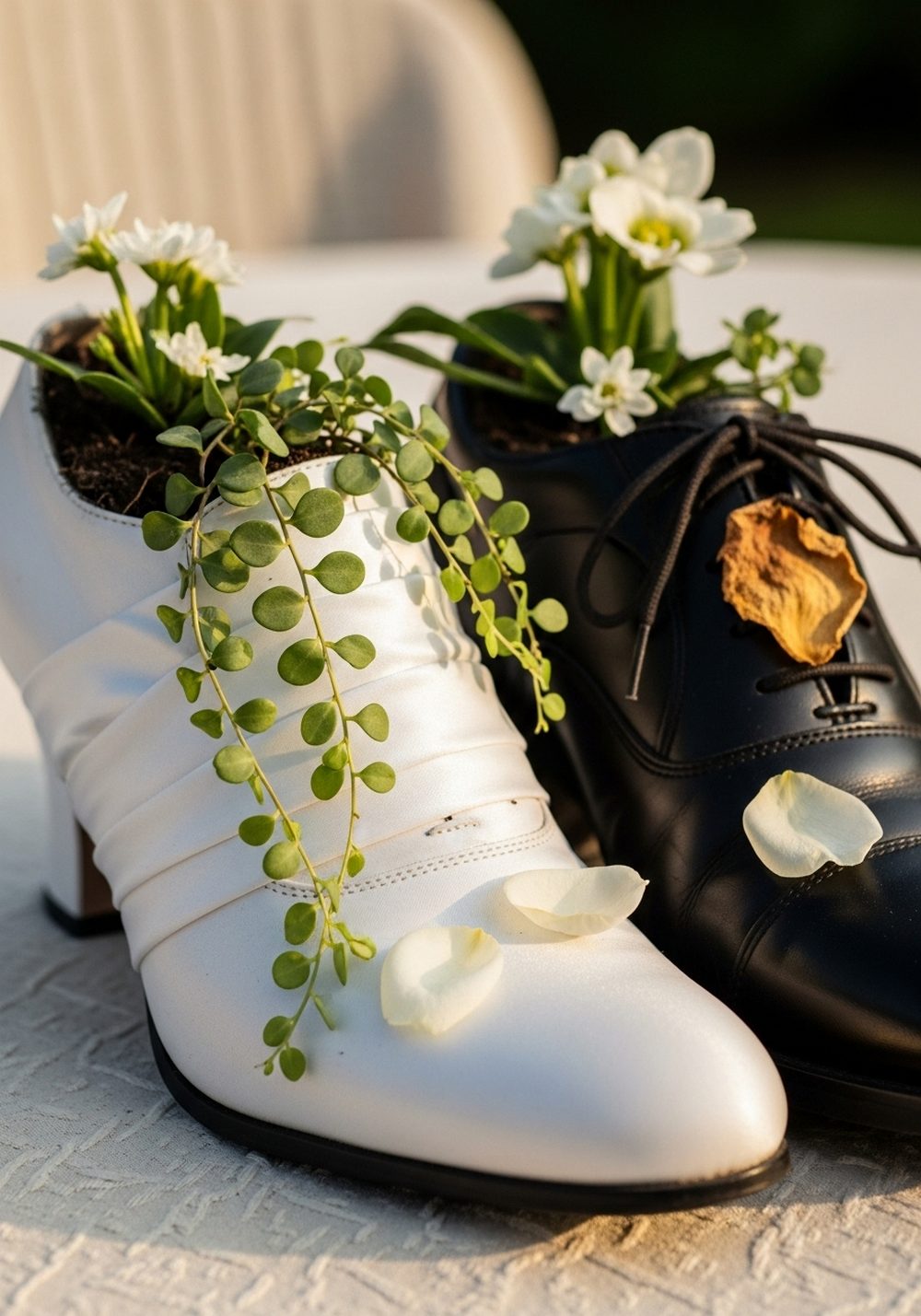
Keep wedding memories alive by turning your special shoes into sentimental planters. Line each shoe with plastic (with drainage holes) to protect the materials, and fill with potting mix. Plant soft, romantic flowers like baby’s breath, miniature roses, or trailing ivy. Display the pair together on a shelf, table, or in a sheltered part of the garden, maybe alongside a framed photo or your wedding date painted on a nearby stone.
- Best For: Sheltered patios, covered porches, or indoor windowsills with bright light.
- Budget Tip: Use cuttings or divisions from existing plants that already have meaning for you.
- Styling Idea: Keep the color palette soft and simple—whites, blush pinks, and greenery—to match the sentimental theme.
- Practical Note: Protect the shoes from heavy rain and direct soil staining where possible.
- Care & Maintenance: Refresh flowers seasonally if you use annuals; evergreen trailing plants keep the memory alive year-round.
Conclusion
Shoe planters are a wonderfully simple way to add humor, heart, and personality to your garden without spending much money. Whether you’re rescuing old boots from the back of the closet or turning tiny sneakers into fairy homes, each pair tells a story. Start with one or two ideas that make you smile, then build up a little “shoe garden” over time. Before long, your outdoor space will feel uniquely yours, step by quirky step.
FAQs
Q1. Do I need to add drainage holes to shoe planters?
Yes, drainage is essential. Without holes, water collects inside the shoe and can rot both the plants and the shoe itself. Use a drill, awl, or sturdy nail to make several holes through the sole, then add a thin layer of gravel or small stones before filling with soil.
Q2. What plants work best in shoe planters?
Compact, tough plants are usually best. Succulents, small herbs, trailing vines, ferns, and miniature flowers all do well in limited soil. Match the plant to the conditions: choose sun-loving plants for bright spots and shade-lovers like ferns and moss for darker corners or work boot planters.
Q3. Will shoe planters damage my patio or balcony?
They can, especially leather boots or metal eyelets that sit directly on wood or stone. To protect your surfaces, place shoes on old tiles, plastic trays, or bricks. This also helps keep drainage water away from decking and reduces staining from soil and rust.
Q4. Are shoe planters suitable for renters?
Definitely. Shoe planters are lightweight, movable, and completely non-permanent. You can place them on shelves, steps, or railings without drilling into walls or fences. When you move, just take the shoe planters with you or empty the soil and start fresh in your new place.
Q5. How can I keep shoe planters looking tidy over time?
Check them occasionally for mold, crumbling materials, or plants that have outgrown their space. Refresh tired shoes with a quick clean, a coat of outdoor-safe paint, or new laces. If a shoe starts falling apart, reuse the plants in a bigger pot and retire the shoe gracefully.
Q6. What’s the easiest beginner-friendly shoe planter idea?
Sneaker succulent planters and flip-flop cactus rows are both very forgiving. Succulents and cacti need little water and grow slowly, so they’re ideal if you’re new to gardening. Start with just one pair of shoes, get comfortable with watering, then experiment with more whimsical designs.


