10 DIY Wooden Pallet Compost Bin Ideas Perfect For Small Gardens
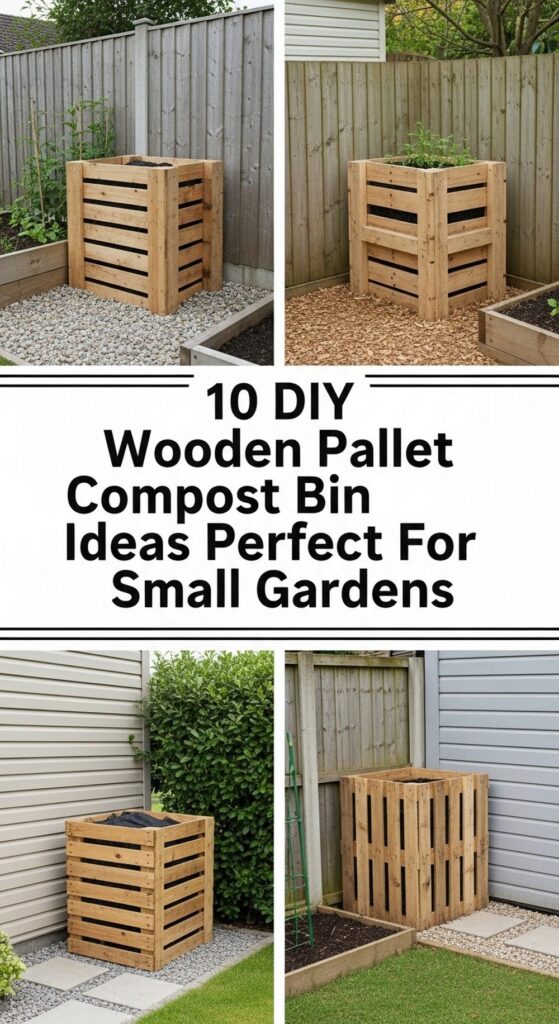
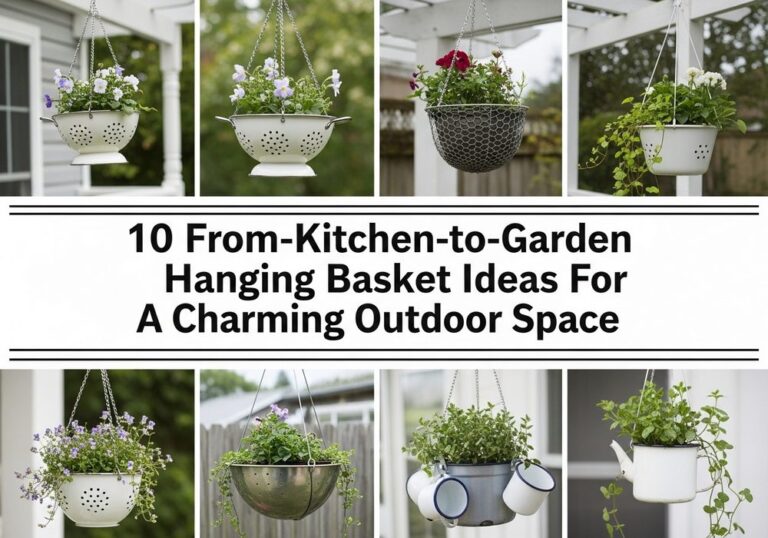
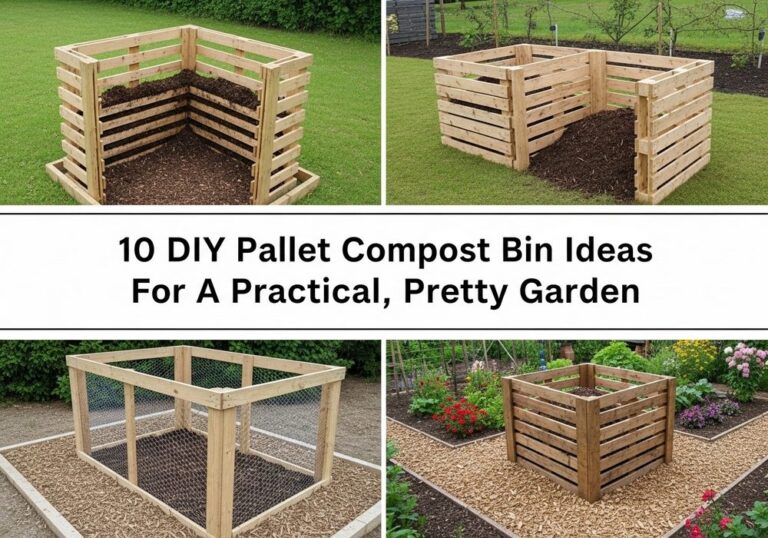
If you’re gardening in a small space, every square foot has to work hard. That’s why a good compost bin needs to be compact, practical, and, ideally, nice to look at too. Wooden pallets are a brilliant solution: they’re sturdy, often free or cheap, and easy to turn into attractive compost bins that fit neatly into tiny gardens.
In this guide, you’ll find ten DIY wooden pallet compost bin ideas designed especially for small gardens, courtyards, and balconies. Each idea focuses on simple builds, budget-friendly tweaks, and clever ways to make your compost bin feel like part of your garden decor, not an eyesore in the corner.
Quick List
- Single-Bay Pallet Compost Cube
- Slimline Pallet Compost Bin for Narrow Spaces
- Two-Bay Pallet Compost System for Faster Breakdown
- Corner Pallet Compost Bin with Planter Top
- Pallet Compost Bin Disguised as a Rustic Bench
- Pallet Compost Bin with Hinged Front Door
- Mini Pallet Compost Bin for Balconies and Courtyards
- Pallet Compost Bin with Lattice Screen Front
- Rolling Pallet Compost Crate on Casters
- Pallet Compost Station with Integrated Tool Rack
1. Single-Bay Pallet Compost Cube
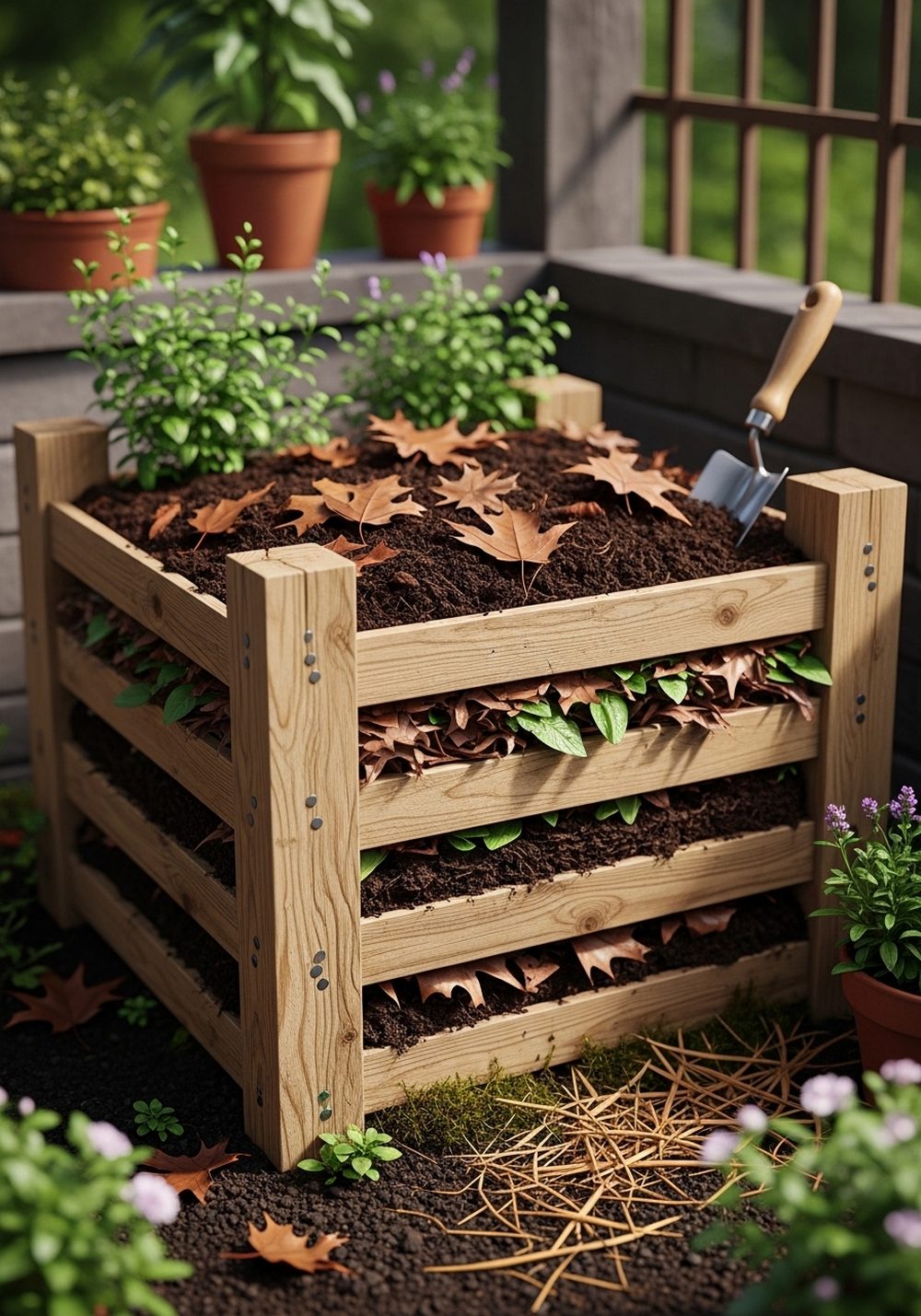
A single-bay pallet compost cube is the simplest way to start composting in a small garden. You only need three or four pallets, stood on edge and fixed together to form a sturdy square. Leave small gaps between slats for airflow, and set it on bare soil so worms can move in and out. Tuck the cube into a back corner or beside a shed, then soften the look with a few pots or low flowers around the base so it blends into your planting.
- Best For: Beginners who want an easy compost setup that doesn’t take over the whole garden.
- Budget Tip: Ask local shops or warehouses for free pallets and use reclaimed screws or brackets if you have them.
- Styling Idea: Sand the outer faces and add a light wood stain so the cube matches your fences or raised beds.
- Practical Note: Keep one side slightly looser or removable so you can access the compost for turning or harvesting.
2. Slimline Pallet Compost Bin for Narrow Spaces
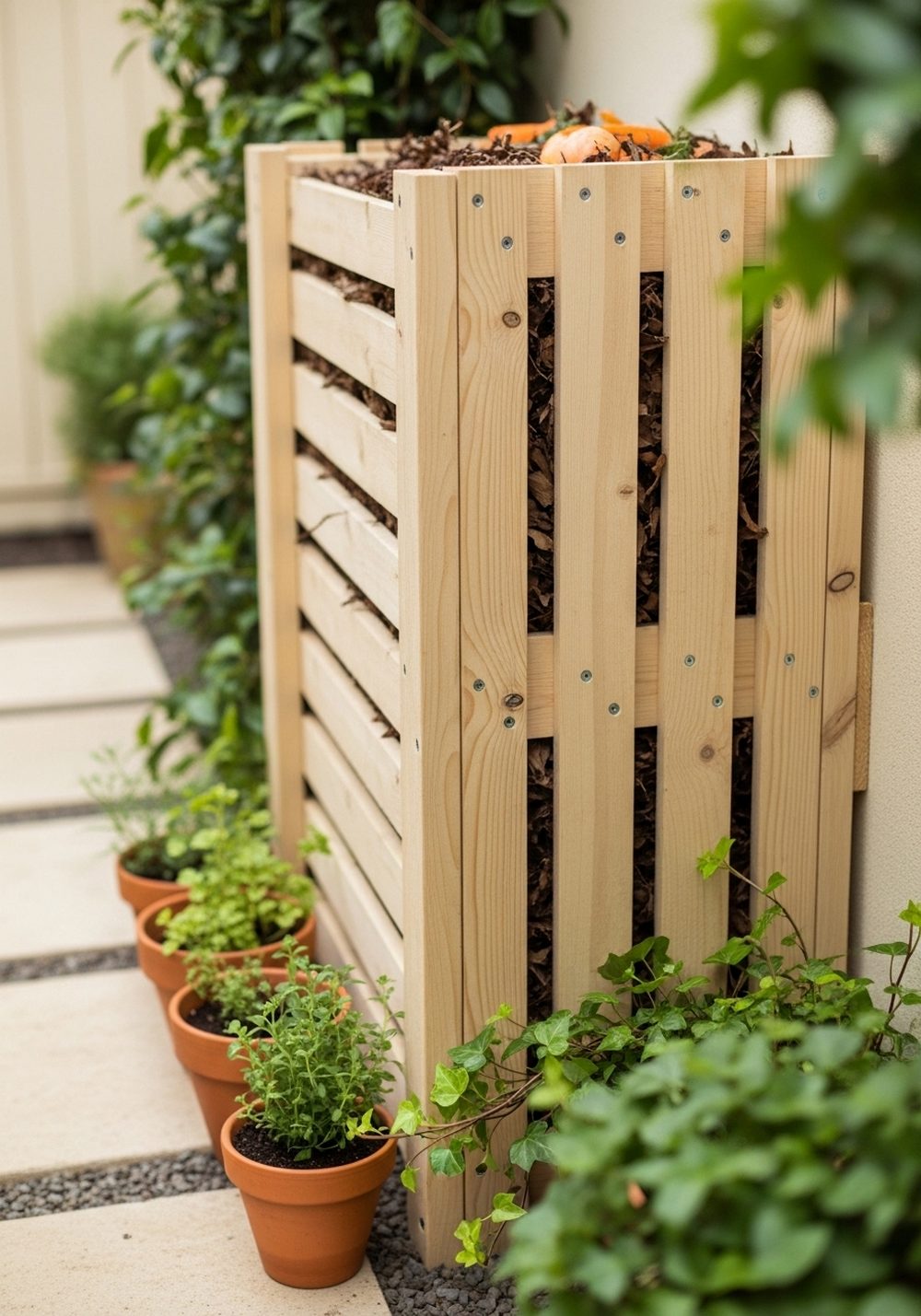
If your garden is long and skinny, a slimline pallet compost bin is ideal. Build a tall, narrow rectangle using cut-down pallets or pallet boards so the bin hugs a fence or wall. The small footprint means you still have walking space while gaining vertical storage for composting. Line the inside with chicken wire or slats to keep materials in place, and use the height to your advantage by tucking little pots or hanging planters along the top edge.
- Best For: Side passages, narrow town gardens, and small plots with long fences.
- Budget Tip: Cut one full-size pallet in half lengthways to create two slim panels and reuse offcuts for the back.
- Styling Idea: Paint the outside a soft garden color like sage or charcoal to give a modern, tidy look.
- Practical Note: Keep the depth manageable so you can still reach in to turn the compost with a small fork.
3. Two-Bay Pallet Compost System for Faster Breakdown

Even in a small garden, a two-bay pallet system can fit if you build it just one pallet deep. Use three pallets for the back and sides, then divide the front with an extra pallet or board wall, creating two compartments side by side. One bay holds fresh garden waste while the other matures into finished compost. This setup speeds up the process and keeps things visually organized, especially if you add a simple removable slat front to keep everything neat.
- Best For: Keen gardeners who want a steady supply of compost in a compact footprint.
- Budget Tip: Mix reclaimed pallets with scrap boards to create the divider and front slats.
- Styling Idea: Label each bay (“New” and “Finished”) with small wooden signs or plant markers for a charming, organized look.
- Practical Note: Place the system along the back fence to create a low “wall” that still leaves room for plants in front.
- Care & Maintenance: Alternate layers of dry browns and fresh greens to keep the pile healthy and reduce smells.
4. Corner Pallet Compost Bin with Planter Top

Turning a corner into a compost hub is clever space-saving. Build an L-shaped bin by fixing pallets together at a right angle, then add a simple, shallow frame on top for a planter. Fill the top with trailing herbs, flowers, or small grasses. From above, it looks like a pretty corner planter; from the side, it hides your composting area. It’s a great way to disguise practical storage while still giving that spot a decorative, finished feel.
- Best For: Small gardens with awkward or unused corners.
- Budget Tip: Use offcut boards and leftover plastic or landscape fabric to line the top planter.
- Styling Idea: Choose plants that spill over the edges, softening the hard lines of the pallets and adding movement.
- Practical Note: Make the planter frame removable or hinged so you can open it when you need to turn or empty the compost.
5. Pallet Compost Bin Disguised as a Rustic Bench
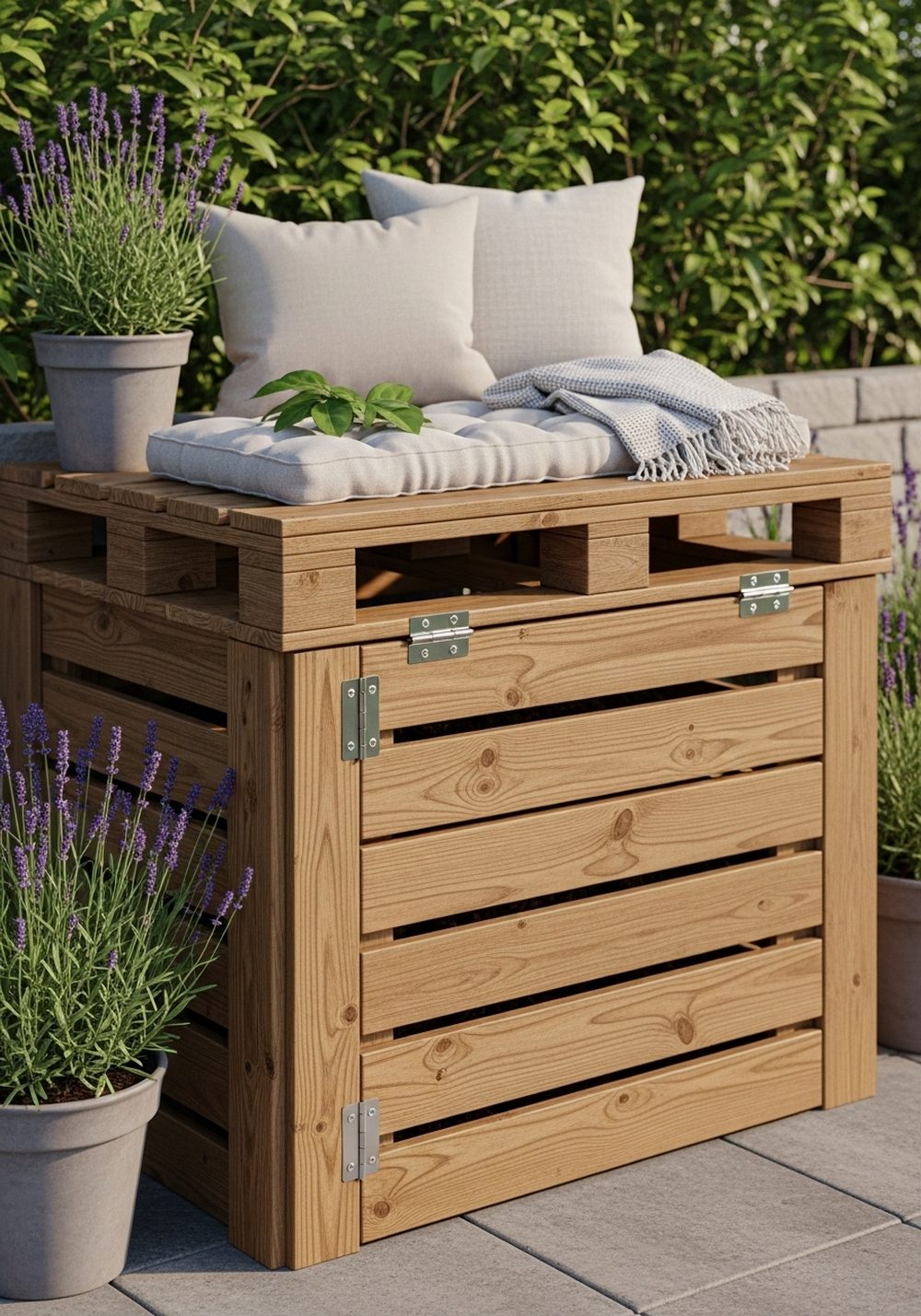
A pallet compost bin disguised as a bench is perfect for tiny yards where every piece must multitask. Build a low, boxy compost bin from pallets, then add a flat pallet or deck boards as a lid. The lid becomes a comfy seat once you pop on a cushion. Place it along a path or near a flower bed so it feels like a normal seating spot. Guests will see a charming rustic bench, while you know it’s doing double duty behind the scenes.
- Best For: Small entertaining spaces where you want more seating and hidden composting.
- Budget Tip: Use leftover exterior paint or stain to protect the wood instead of buying new finishes.
- Styling Idea: Add outdoor cushions and a throw in weather-resistant fabrics to create a cozy reading or tea spot.
- Practical Note: Fit sturdy hinges and a simple handle so you can safely lift the seat to access the compost.
6. Pallet Compost Bin with Hinged Front Door
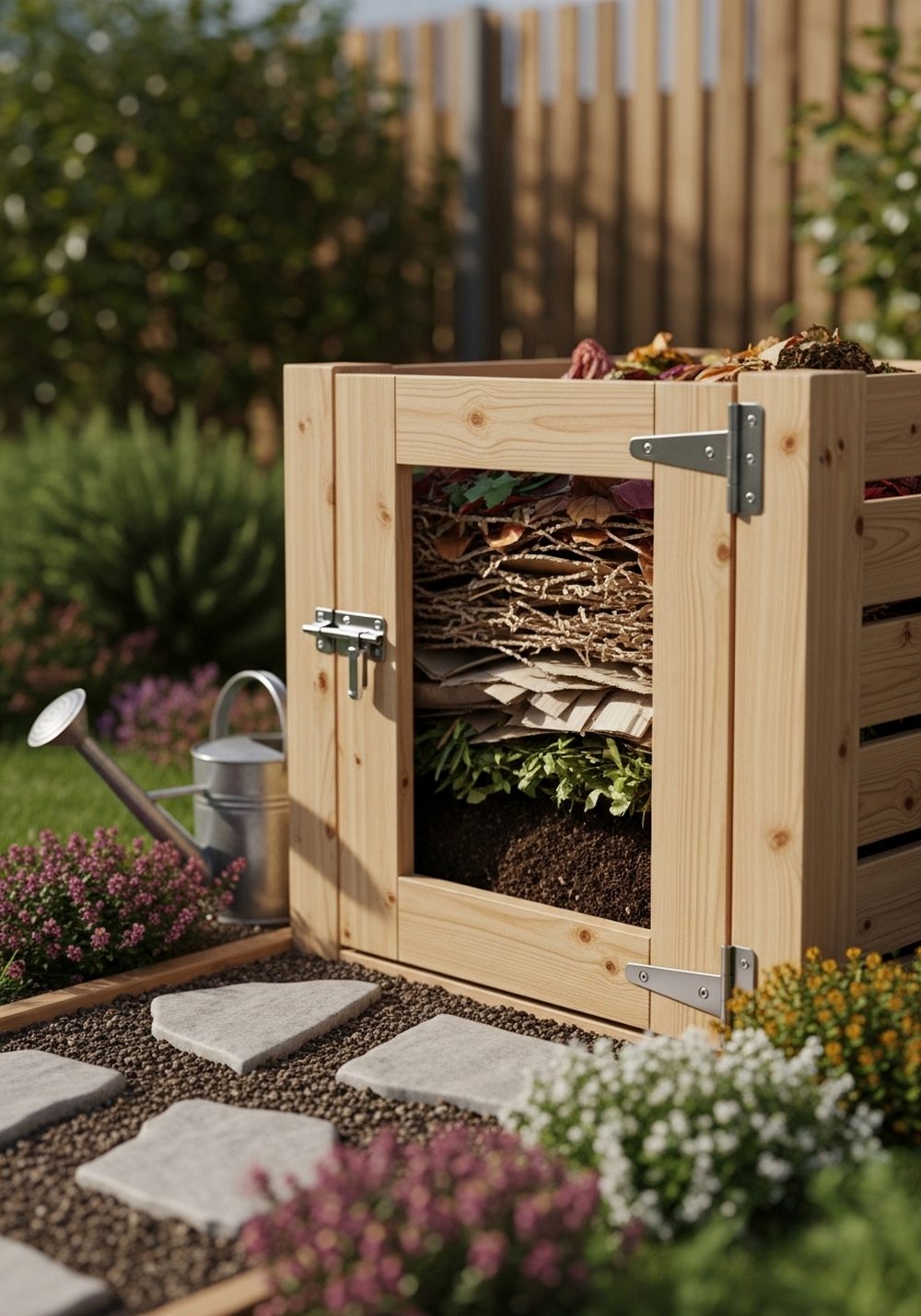
If bending and digging deep into a bin isn’t appealing, a pallet compost bin with a hinged front door makes life easier. Build a basic three-sided pallet box, then create a framed front panel that swings open like a cupboard. This lets you shovel out finished compost from the bottom or turn the pile without wrestling loose boards. The solid front also gives a cleaner look, especially in small gardens where you see the bin from nearby seating areas.
- Best For: Gardeners who want neat lines and easy access for turning or harvesting compost.
- Budget Tip: Reuse old gate hinges and latches from other projects instead of buying new hardware.
- Styling Idea: Paint or stain just the front door in a contrasting color so it becomes a subtle feature, not a “bin.”
- Practical Note: Install a simple latch to keep pets and wildlife out, especially if the bin is near the house.
7. Mini Pallet Compost Bin for Balconies and Courtyards
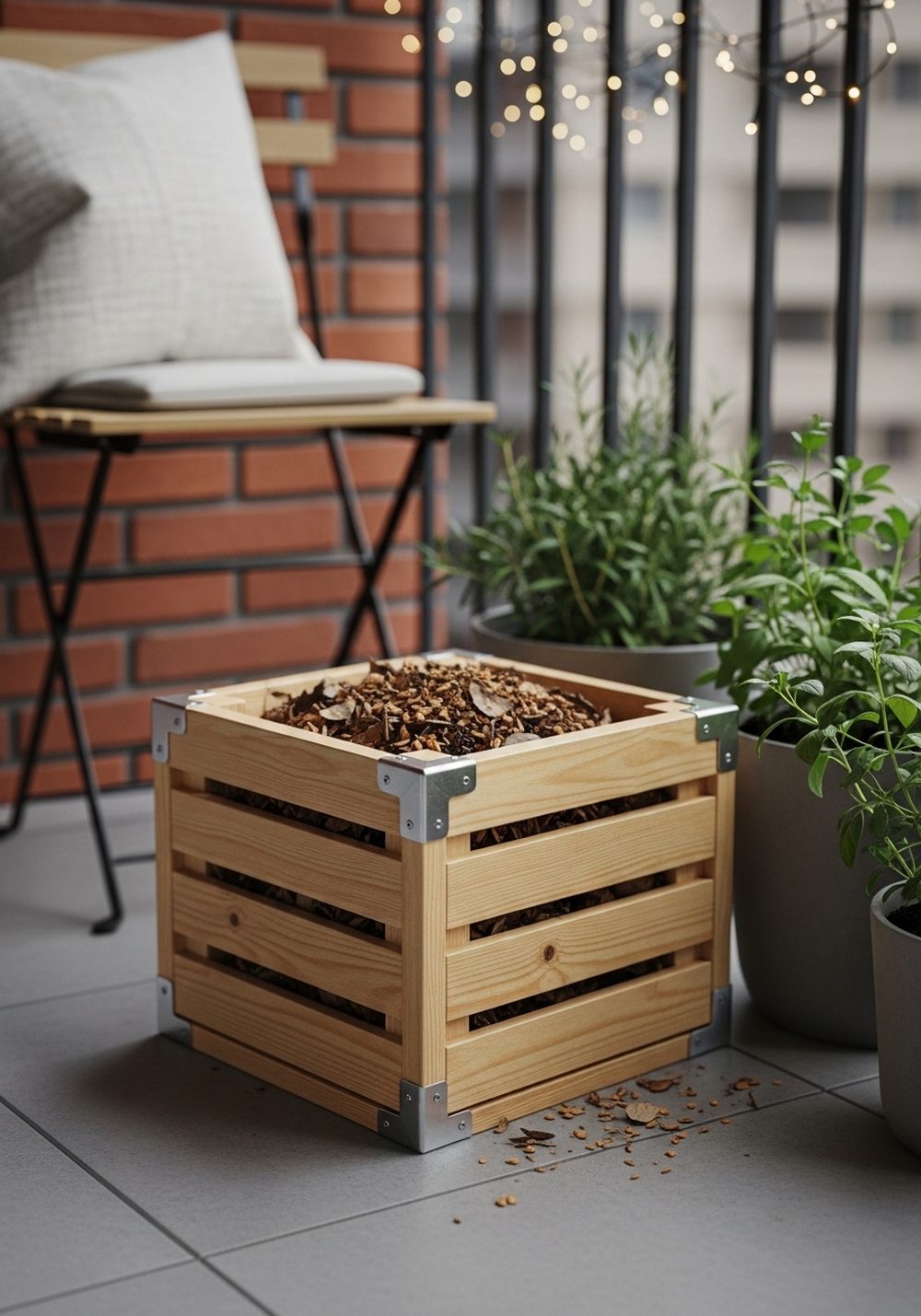
For very small spaces, scale everything down. Use cut pallet boards to make a compact cube, about the size of a storage box, and line the inside with breathable fabric or mesh to hold materials. This mini bin can sit in a courtyard corner, on strong balcony flooring, or beside a container garden. Add a snug lid to keep everything contained and visually tidy. You won’t produce loads of compost, but you’ll still recycle kitchen scraps and feed your pots with homemade goodness.
- Best For: Balconies, inner courtyards, and rented spaces with no soil border.
- Budget Tip: Use offcuts from a larger pallet project and repurpose old fabric as the inner lining.
- Styling Idea: Treat the outside like a small garden chest—add handles, a favorite color, or stencilled leaves.
- Practical Note: Keep the bin small and light enough that you can move it for cleaning or if you change rental homes.
8. Pallet Compost Bin with Lattice Screen Front

A lattice-front compost bin keeps things airy while adding decorative charm. Build the back and sides with standard pallets, then use a section of wooden trellis or narrow battens for the front panel. As plants climb the lattice, they soften the look and partially hide the contents. In a small garden, this can double as a vertical green accent, especially if you grow sweet peas, nasturtiums, or a small clematis in front. It turns a functional bin into a living screen.
- Best For: Visible spots where you want the bin to blend into the planting scheme.
- Budget Tip: Make your own lattice from thin scrap strips rather than buying a ready-made trellis.
- Styling Idea: Match the lattice design to any existing trellis or screens for a coordinated look.
- Practical Note: Keep some sections open enough so you can still see and access the compost pile behind.
9. Rolling Pallet Compost Crate on Casters

A rolling pallet compost crate is great if you like rearranging your space or have to share a narrow access area. Build a low, sturdy crate from pallets and mount it on heavy-duty outdoor casters. You can roll the bin out for turning, then tuck it back against a wall when you’re done. On a small patio, it can sit behind planters and be wheeled forward when needed. The crate style feels more like a rustic storage box than a typical compost heap.
- Best For: Patios, paved yards, and flexible layouts where things often move around.
- Budget Tip: Hunt for used casters from old furniture or market trolleys to keep costs down.
- Styling Idea: Stencil a simple word like “Compost” or leaf motifs along the side for a playful, organized touch.
- Practical Note: Choose large, lockable wheels so the bin rolls easily but stays put in wind or on slopes.
10. Pallet Compost Station with Integrated Tool Rack

Turn your compost bin into a full mini station by adding a tool rack on one side. Build a standard pallet bin, then fix another slim pallet or a board upright as a side wall with hooks or nails for hanging trowels, forks, and gloves. A small shelf on top can hold a bucket for kitchen scraps or brown materials. This keeps everything you need in one tidy spot, which is especially helpful when storage is limited and you want to avoid clutter.
- Best For: Small but busy gardens where staying organized is important.
- Budget Tip: Make hooks from bent nails, old brackets, or thick wire rather than buying new hardware.
- Styling Idea: Add a simple header board and hand-lettered label like “Compost Corner” for a charming, potting-shed feel.
- Practical Note: Position the station near your main beds so carrying full buckets of compost doesn’t mean a long trek.
Conclusion
With a few pallets and some simple tweaks, your compost bin can become a hardworking feature instead of something you hide. These ten ideas show how to squeeze practical composting into even the smallest garden, balcony, or courtyard while keeping everything looking neat and welcoming. Start with one design that suits your space and skills, then adapt and decorate it over time. As your compost improves your soil, your garden will only get greener, healthier, and more beautiful.
FAQs
1. Can I build a pallet compost bin if I’m renting?
Yes, you can. Choose designs that sit on top of the ground or paving without concrete footings, such as the mini pallet bin, rolling crate, or bench-style bin. If you need to move, you can empty the compost into bags or pots and take the structure apart or transport it whole if it’s small enough.
2. How do I make a pallet compost bin on a very small budget?
Start by sourcing free pallets from local businesses, markets, or online community groups. Keep the design simple—a single-bay cube or mini bin needs very few screws and no fancy hardware. Skip paint at first and just sand any rough edges, then add finishes and decorative touches later as you have time and spare materials.
3. Will a pallet compost bin look messy in a small garden?
It doesn’t have to. Choose a tidy, compact shape and place it against a fence or in a corner. Add a front panel, lattice screen, or planter top to disguise the contents, and soften the structure with surrounding pots and plants. A quick coat of stain or coordinated color can also help the bin blend with your other garden features.
4. Is wood from pallets safe for compost bins?
Most modern pallets are heat-treated rather than chemically treated, but it’s still wise to check. Look for markings that indicate heat treatment and avoid pallets that are stained, oily, or have an unknown history. If you’re unsure, use those pallets only for outer framing and line the inside with boards or mesh you trust.
5. What’s the easiest pallet compost design for beginners?
A simple single-bay pallet cube is the easiest starting point. You just stand three or four pallets on edge, secure them together, and you’re ready to compost. Once you’re comfortable, you can upgrade with doors, lids, or extra bays, but even the basic version works well in a small garden.
6. How can I keep my pallet compost bin low-maintenance?
Choose a design with good airflow and easy access, such as a front-opening or two-bay system. Place it somewhere you can reach comfortably, and keep a small stash of dry browns (like leaves or shredded cardboard) nearby. Adding a lid or cover helps keep rain and pests out, so the composting process stays steady with less effort from you.