10 Budget-Friendly Mosaic Stepping Stone Ideas Using Broken Tiles

If you have a pile of broken tiles lying around, you’re already halfway to a beautiful mosaic garden path. Mosaic stepping stones are a fantastic way for home gardeners, renters, and small-space owners to turn scraps into something stylish and practical. With a bit of concrete, grout, and imagination, you can create unique paths, focal points, and little landing spots in almost any outdoor space.
In this guide, you’ll find ten budget-friendly ideas that show you how to use broken tiles for curved paths, cozy balcony pads, herb markers, and more. Each idea focuses on simple steps, low-cost materials, and designs that can be adapted to your taste so your garden feels more personal, welcoming, and full of character.
Quick List
- Curved Path With Pastel Tile Mosaics
- Leaf-Shaped Broken Tile Stepping Stones
- Circular Mandala Mosaic Garden Discs
- Family Name And Handprint Memory Stones
- Herb Patch Mosaic Label Stepping Stones
- Black-And-White Geometric Mosaic Pavers
- Rustic Terracotta And Tile Mix Stones
- Coastal Blue-And-White Patio Steppers
- Glow-In-The-Dark Accent Mosaic Stone
1. Curved Path With Pastel Tile Mosaics

A curved path made from mosaic stepping stones instantly softens a garden and makes it feel more inviting. Start with simple concrete stepping stones or pour concrete into shallow molds, then press broken pastel tiles into the surface while it’s still workable. Mix soft pinks, blues, creams, and mint for a gentle, cottage feel. Once the concrete sets, grout between the pieces and lay the stones in a sweeping curve through grass, gravel, or groundcover for a dreamy, budget-friendly walkway.
- Best For: Side paths, narrow gardens, and routes to sheds or seating areas.
- Budget Tip: Ask tile shops for leftover samples or broken boxes; they’re often very cheap or free.
- Styling Idea: Repeat one or two key colors in pots, cushions, or lanterns along the path.
- Practical Note: Keep stones level with the ground so they’re easy to mow or sweep over.
2. Leaf-Shaped Broken Tile Stepping Stones

Leaf-shaped stepping stones echo the natural shapes in your garden and look magical winding through a shady bed. Cut simple leaf outlines from cardboard to use as molds or buy leaf-shaped stepping stone molds. Arrange broken green and neutral tiles along “vein” lines before pressing them into the concrete. The result is a series of leafy mosaics that lead your eye through ferns, hostas, or woodland plants, adding both function and a subtle decorative story.
- Best For: Shady borders, under trees, or woodland-style corners.
- Budget Tip: Mix inexpensive plain tiles with just a few patterned pieces to keep costs low.
- Styling Idea: Use mostly green tiles with small pops of white or yellow to mimic real leaves catching light.
- Practical Note: Choose slightly textured tiles to reduce slipperiness in damp, shady spots.
3. Circular Mandala Mosaic Garden Discs
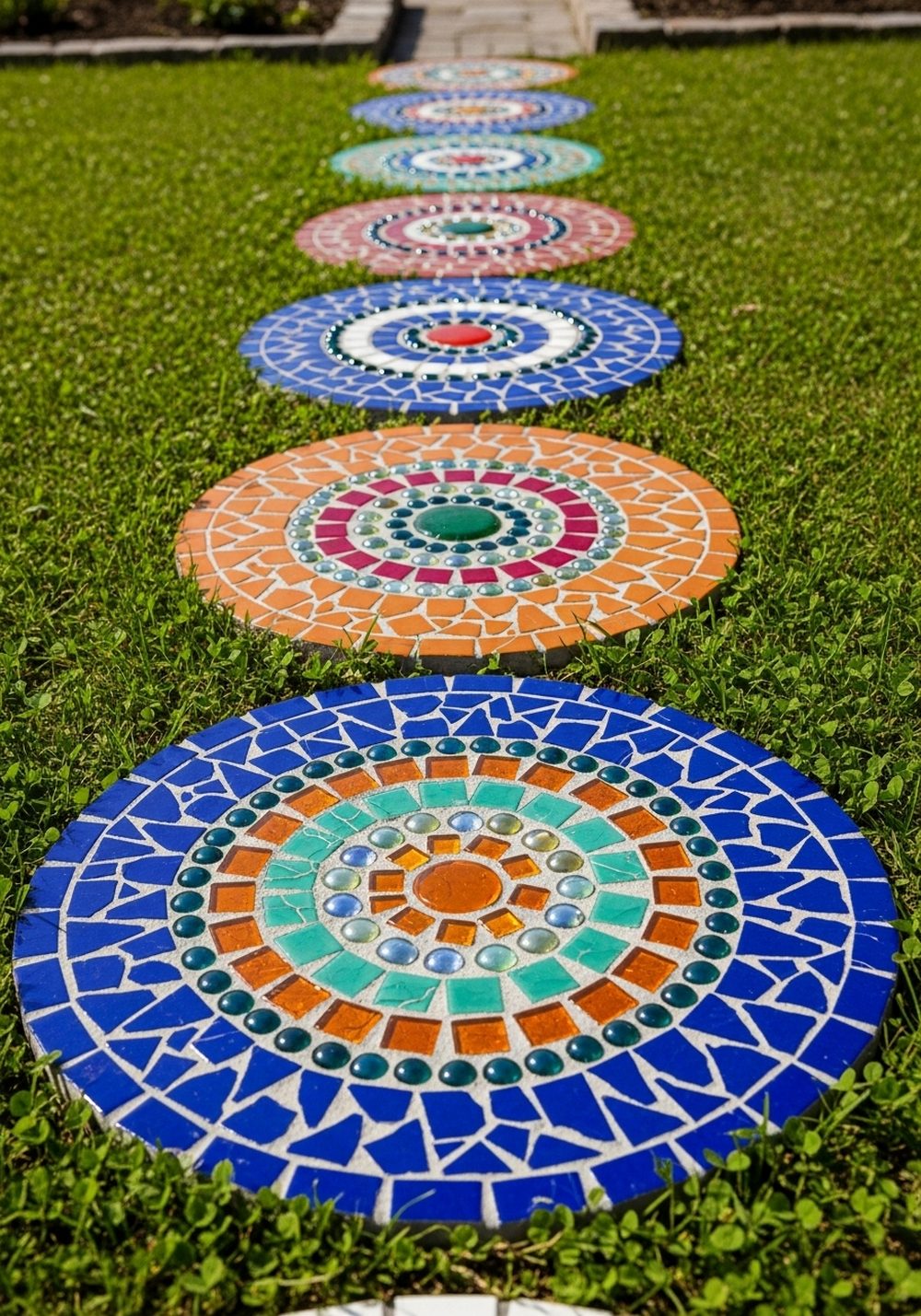
Circular mosaic discs with mandala-style patterns become instant focal points in the lawn or between gravel. Use round stepping stone molds or large plastic plant saucers as forms. Lay broken tiles from the center outwards, forming simple rings of color or radiating triangles. Even a loose pattern reads as a mandala when the colors repeat in circular bands. Once cured, set the discs flush with grass, bark, or gravel for a low, artistic feature that can guide your steps.
- Best For: Open lawn areas, meditation corners, or path junctions.
- Budget Tip: Stick to just three or four colors to stretch a small amount of tile and reduce waste.
- Styling Idea: Choose jewel tones like deep blue, green, and amber for a rich, almost stained-glass look.
- Practical Note: Leave a small plain border of concrete around the tiles to help the discs sit firmly in the ground.
4. Family Name And Handprint Memory Stones
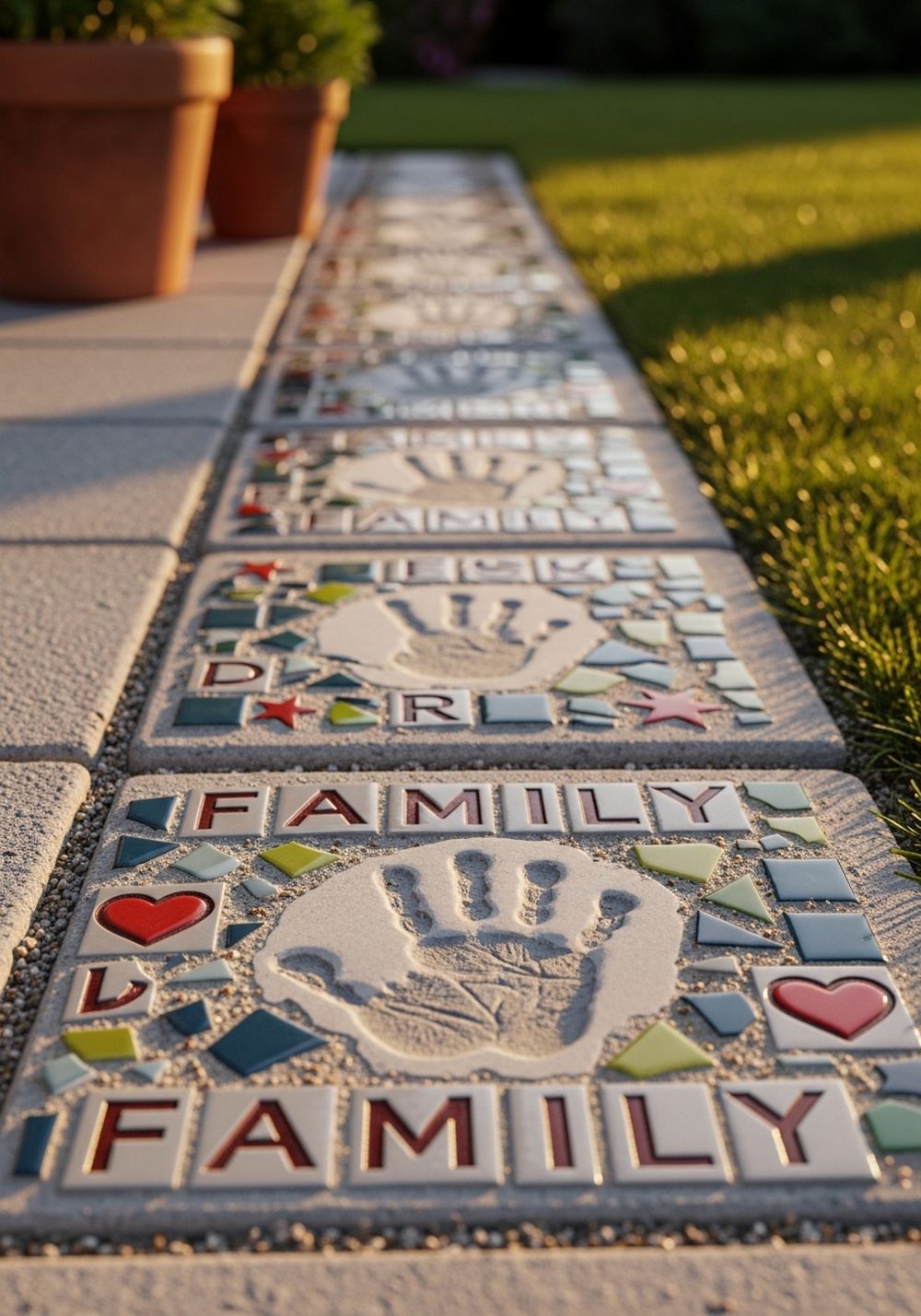
Turn your stepping stones into story pieces by adding family names and handprints to the mosaic. While the concrete is still soft, press a child’s hand or a simple stamp to create an impression, then surround it with broken tiles forming initials, hearts, or simple shapes. When laid by the patio or along a main path, these stones become a timeline of your family’s garden life that guests will naturally pause to read.
- Best For: Main paths, patio edges, or spots near a seating area.
- Budget Tip: Use leftover tiles from home projects, mixing them with cheap plain ones to fill space.
- Styling Idea: Keep to a consistent color palette across all family stones so the collection looks unified.
- Practical Note: Make sure tiles sit slightly below the concrete surface around handprints to avoid sharp edges underfoot.
5. Herb Patch Mosaic Label Stepping Stones

In a busy herb patch, mosaic label stones act as both markers and handy stepping spots so you don’t compact the soil everywhere. Create small square or rectangular stones, each decorated with broken tiles forming simple leaves or the first letter of the plant name. Set them just slightly above soil level at the front or between rows of herbs. They help guide where you can step while adding a charming, handmade label system.
- Best For: Raised beds, kitchen gardens, and container herb clusters.
- Budget Tip: Use mainly white or neutral tiles with only a few colored shards to outline each plant symbol.
- Styling Idea: Tie colors to herb foliage—greens for basil, soft purples for lavender, silver-grey for sage.
- Practical Note: Place stones where you naturally reach and harvest to make gardening easier.
6. Black-And-White Geometric Mosaic Pavers

If your style is more modern than cottage, black-and-white mosaic pavers can give a clean, graphic look. Use square stepping stones and arrange broken tiles into simple chevrons, stripes, or check patterns. The limited palette makes everything feel intentional, even if the shards are irregular. Set the pavers in gravel or fine pebbles, with grasses and architectural plants around them, for a calm, contemporary garden path that still uses very humble materials.
- Best For: Modern courtyards, minimalist front gardens, and small patios.
- Budget Tip: Look for clearance boxes of plain white and dark tiles; you don’t need fancy designs.
- Styling Idea: Carry the black-and-white theme into outdoor textiles, pots, or a painted fence panel.
- Practical Note: Keep grout lines slightly deeper so dirt washes into them instead of sitting on the surface.
7. Rustic Terracotta And Tile Mix Stones

Combining broken terracotta with colorful tiles gives your stepping stones a warm, rustic feel that suits cottage or farmhouse-style spaces. Break old terracotta pots into pieces and mix them with blue, green, or cream tiles in simple, uneven patterns. The terracotta adds warmth and texture, while the tiles catch the light. When laid along a grass path or dirt track, the stones look as if they’ve always belonged there, slowly aging and mossing over in the best way.
- Best For: Informal paths, potting areas, and routes to sheds or vegetable beds.
- Budget Tip: Save cracked pots and bargain terracotta; they break beautifully for mosaics.
- Styling Idea: Pair with wooden crates, galvanized cans, and vintage tools for a lived-in garden look.
- Care & Maintenance: Let a little moss grow in cooler spots if you like the aged effect; gently scrub only if they become too slippery.
8. Coastal Blue-And-White Patio Steppers

Blue-and-white mosaic stones instantly give an airy, coastal mood, even if you’re miles from the sea. Use broken bathroom or kitchen tiles in blues and whites to create wave-like swirls or simple stripes across each stone. Lay them between gravel or low groundcover leading from your back door to a small seating area. Add white pots, lavender, and perhaps a pale bench, and the whole corner feels lighter and fresher without a big spend.
- Best For: Small patios, pergola entrances, and paths to a seating nook.
- Budget Tip: Broken bathroom tiles are often easy to find second-hand or in clearance bins.
- Styling Idea: Mix different shades of blue, from navy to sky, to give depth and a watery feel.
- Practical Note: Choose outdoor-grade grout and seal well to cope with weather changes.
9. Glow-In-The-Dark Accent Mosaic Stones

Glow-in-the-dark mosaic accents bring a subtle bit of magic to your garden at night. Mix a small amount of glow-in-the-dark glass or stones with your broken tiles, arranging them into stars, swirls, or border lines within the stepping stone. During the day, they look like regular mosaics; after dark, they gently glow and mark out key spots in the path. Place them near seating areas or along a main route so the effect is both pretty and practical.
- Best For: Evening gardens, entertaining areas, and kids’ play spaces.
- Budget Tip: Only use glow pieces as small accents and fill the rest with regular broken tiles.
- Styling Idea: Keep daytime colors fairly neutral so the night glow remains the main surprise.
- Practical Note: Position stones where they catch some daylight or soft lighting so they can recharge.
10. Compact Balcony Mosaic Step Pads

Even if you only have a balcony, you can enjoy mosaic stepping stones in the form of small step pads. Create thin, flat mosaic slabs using broken tiles and concrete in shallow trays, then place them on top of your balcony surface like moveable tiles. Group them under a chair, beside the door, or as a mini “path” to a plant corner. They protect the floor, add color, and make a small space feel intentionally styled rather than cluttered.
- Best For: Balconies, roof terraces, and rental outdoor spaces.
- Budget Tip: Make a few pads at a time as you collect more broken tiles to spread out the cost.
- Styling Idea: Coordinate colors with your balcony rail, cushions, or indoor decor for a joined-up look.
- Practical Note: Keep pads light enough to lift and add non-slip backing or a mat underneath if needed.
Conclusion
Using broken tiles for mosaic stepping stones is a simple way to turn waste into something beautiful and useful in your garden. From curved pastel paths to modern monochrome pavers and tiny balcony pads, these ideas can work in almost any outdoor space or budget. Start with one or two stones, experiment with color and pattern, and let your path grow over time. Each new piece will add personality, tell a little story, and make your garden feel even more like home.
FAQs
1. How can I make mosaic stepping stones on a very small budget?
Use whatever you already have first: cracked tiles, broken plates, old terracotta pots, or leftover bathroom tiles. Ask friends, neighbors, and local tile shops if they have broken pieces or samples they’re throwing away. Buy basic concrete mix and a simple mold, or reuse plastic trays and plant saucers. Start with just one or two stones and add more as you collect additional materials.
2. Are mosaic stepping stones safe to walk on?
Yes, as long as you set them up properly. Make sure all tile edges are pressed firmly into the concrete and set slightly below the surface so there are no sharp or raised pieces. Choose tiles with a bit of texture for paths that may get wet, and lay your stones on a stable, level base. If they feel wobbly, bed them more deeply into soil, sand, or mortar.
3. Can renters use mosaic stepping stones without damaging the yard or balcony?
Definitely. On a balcony or terrace, create thin, flat mosaic pads that simply sit on top of the existing floor. Outdoors, you can lay stones on top of soil or gravel without fixing them permanently so they can be lifted when you move. Avoid gluing anything to walls or floors; instead, rely on weight and careful placing to keep your decor in place.
4. What kind of tiles and grout work best for outdoor mosaic stones?
Ceramic and porcelain tiles are both good choices, as long as they’re suitable for outdoor use and not too smooth. Use a sand-and-cement-based grout made for exterior conditions, and follow the instructions for mixing and curing. Sealing the finished stones can help them handle rain and changes in temperature better, especially in climates with frost or very strong sun.
5. How do I stop mosaic stepping stones from cracking?
The main trick is to pour stones thick enough and on a stable base. Aim for a good thickness of concrete, and avoid very thin stones in areas that will take a lot of weight. Let the concrete cure fully before moving or walking on them. If your area has heavy frosts, make sure water can drain away under and around the stones so it doesn’t freeze and push them apart.
6. What’s the easiest mosaic stepping stone idea for beginners?
Start with a simple shape and a loose pattern, such as a basic square stone with random broken tiles pressed into it. Don’t worry about perfect designs or letters at first. Mix just two or three colors, press the pieces into wet concrete, and leave small gaps for grout. Once you’ve made one or two simple stones, you’ll feel more confident to try mandalas, leaf shapes, or family name designs.