10 Easy Pallet Raised Beds for a Herb and Flower Garden
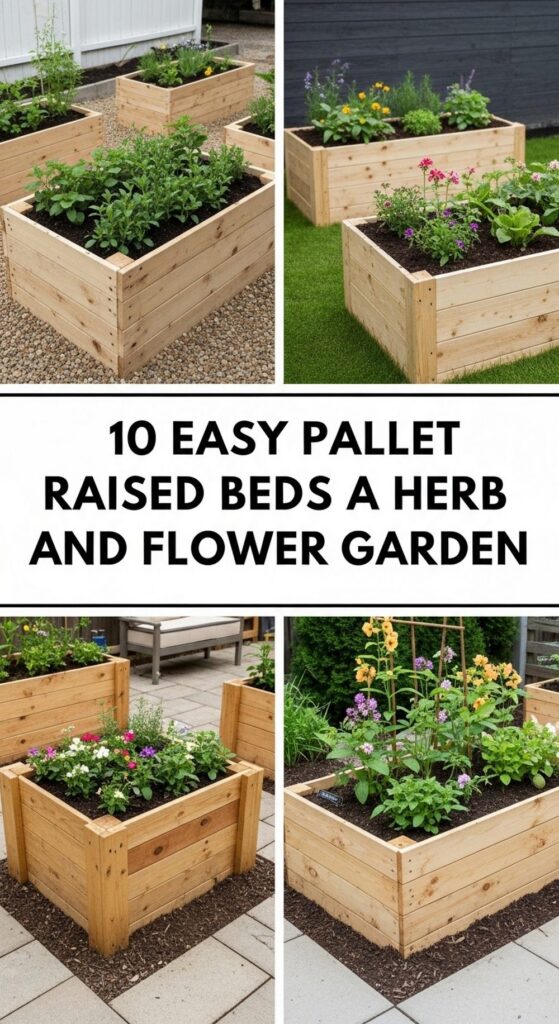
If you love the idea of growing your own herbs and flowers but don’t want to spend a fortune on fancy planters, pallet raised beds are a brilliant shortcut. With just a few basic tools and some reclaimed wood, you can build charming, practical beds that instantly give your garden more shape and character.
This guide shares ten easy pallet raised bed ideas designed for home gardeners, renters, and small-space owners. You’ll find simple builds, budget-friendly tips, and layout ideas that work in courtyards, patios, and backyards. Pick one style, add your favourite herbs and blooms, and watch your outdoor space turn into a cosy, personal garden you’ll love spending time in.
Quick List
Classic Single-Pallet Herb Bed
Double-Pallet Flower Border Bed
L-Shaped Corner Pallet Planter
Tiered Pallet Herb And Flower Stack
Pallet U-Shaped Kitchen Garden Bed
Narrow Pallet Bed For Small Spaces
Pallet Raised Bed With Built-In Trellis
Pallet Wheel Pathway Herb Beds
Vertical Pallet Pocket Planter For Herbs
Pallet-Framed Cutting Flower Bed
1. Classic Single-Pallet Herb Bed

A classic single-pallet herb bed is the easiest way to start using pallets in your garden. Lay a heat-treated pallet flat on weed fabric, line the gaps with landscape fabric or boards, then fill with good-quality compost. Plant simple herbs like basil, parsley, mint (in pots sunk into the soil), and chives in grouped pockets. The horizontal lines of the pallet instantly add structure, and the low height makes it easy to reach everything for cutting and watering.
- Best For: Beginners who want a fast, low-fuss herb patch in a small garden or patio.
- Budget Tip: Look for free pallets locally and spend your money on good soil and a few strong starter plants.
- Styling Idea: Sand the top edges and leave the wood natural for a rustic look, or paint just the top slats in soft garden colours.
- Practical Note: Make sure the pallet is stamped “HT” (heat-treated) and hasn’t been used for chemicals before you plant in it.
2. Double-Pallet Flower Border Bed
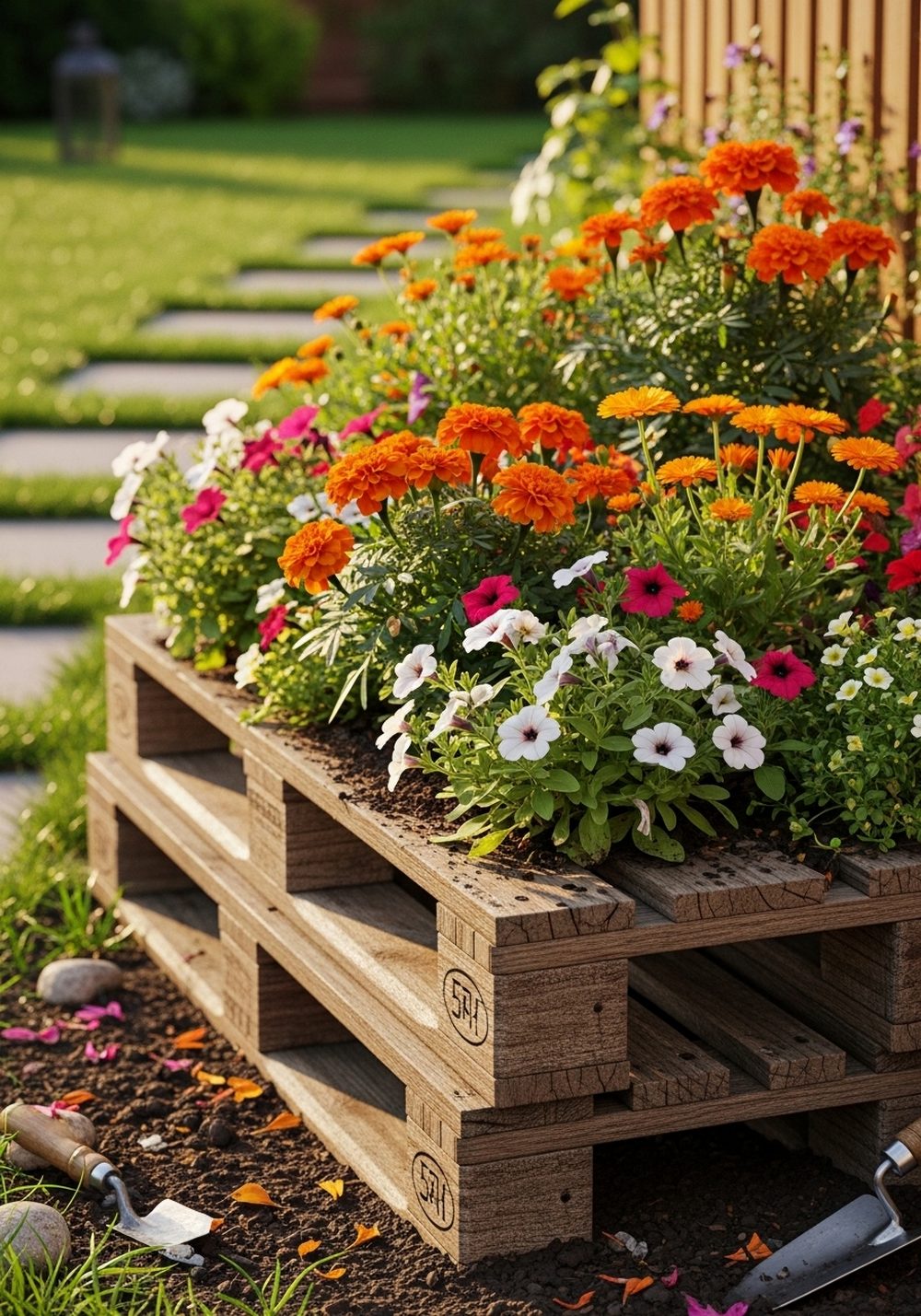
Stacking two pallets to make a double-height border bed gives your flowers more presence and saves your back when you garden. Place one pallet on top of another, secure them together, then line the inside with strong plastic or landscape fabric. Fill with rich soil and plant marigolds, petunias, and low-growing herbs along the front. The extra height creates a neat edge along a fence or path and makes even simple flowers look like a planned feature.
- Best For: Along fences, driveways, or the edge of a patio where you want a defined border.
- Budget Tip: Fill the bottom half with rough branches or old compost bags before adding soil to reduce how much compost you need.
- Styling Idea: Paint the outer sides one solid colour to match your fence or keep them weathered for a cottage feel.
- Care & Maintenance: Refresh the top 5–10 cm of soil each year with compost to keep blooms strong and healthy.
3. L-Shaped Corner Pallet Planter
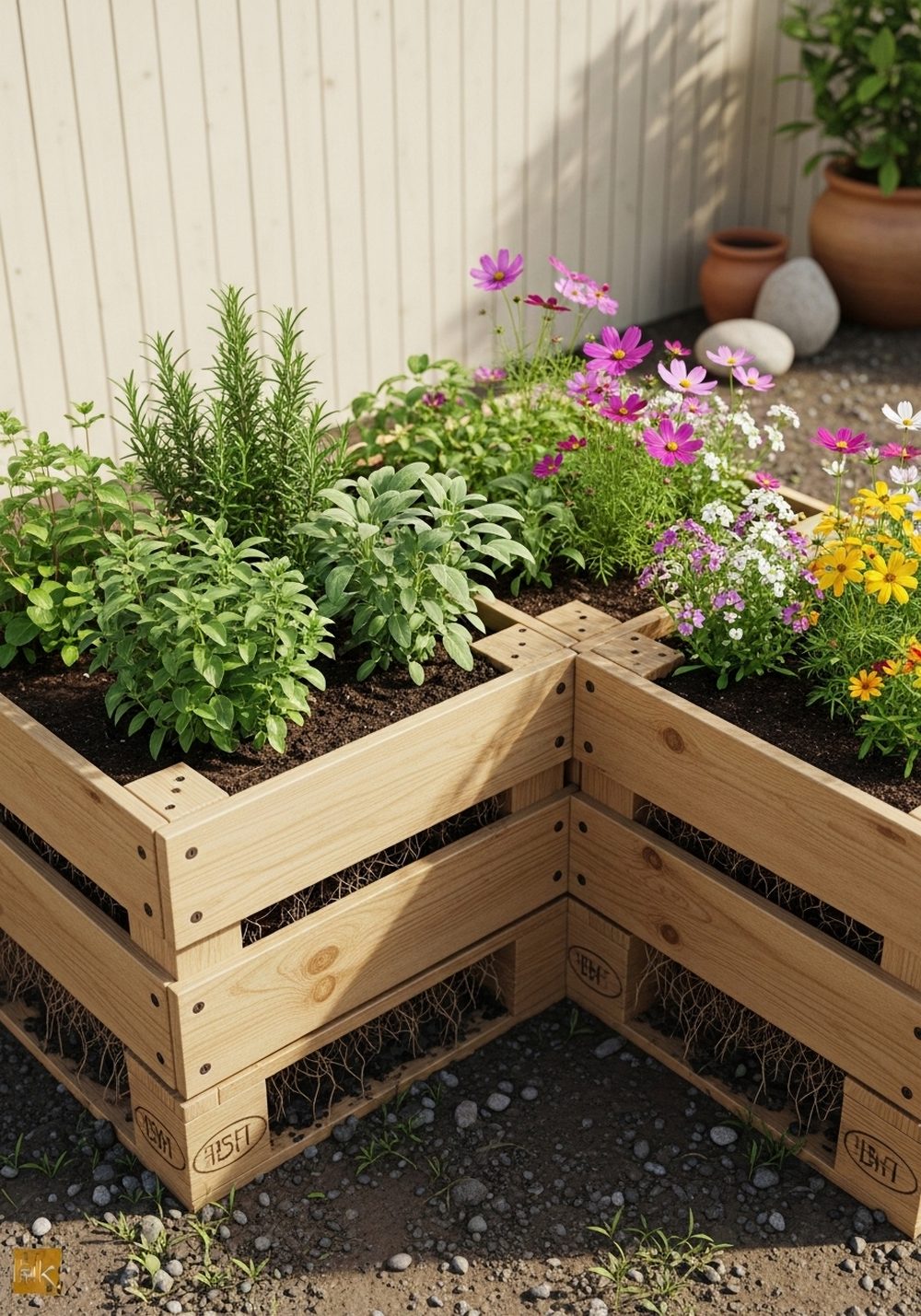
An L-shaped pallet planter turns an empty garden corner into a lush herb-and-flower nook. Position two pallets at right angles, creating a corner bed, then brace them together at the join. Line the interior, fill with soil, and plant woody herbs like rosemary and sage at the back, soft herbs like parsley in the middle, and bright flowers at the front. The “L” shape frames the space and naturally draws the eye, making a forgotten corner feel designed.
- Best For: Dead corners against walls or fences that get at least a half day of sun.
- Budget Tip: Use off-cuts of pallet boards to create small shelves or edging on the outside instead of buying extra decor.
- Styling Idea: Add a small chair or lantern in the corner so the planter wraps around a cosy seating spot.
- Practical Note: Keep taller herbs at the back so they don’t shade shorter plants like calendula or violas.
4. Tiered Pallet Herb And Flower Stack
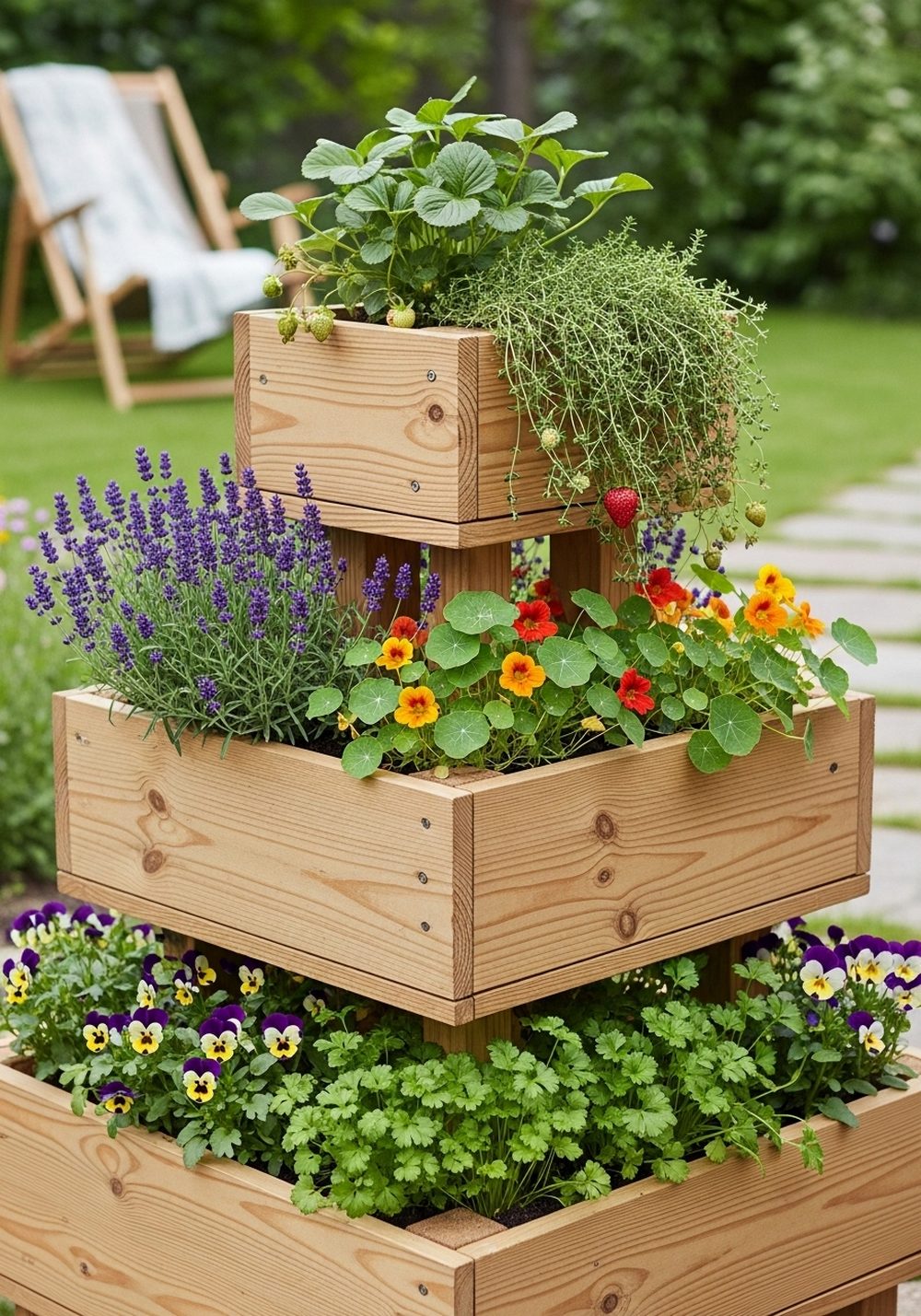
A tiered pallet stack gives you lots of growing space in a small footprint and looks like a mini garden display. Cut a pallet into smaller sections to form three tiers, with the largest at the bottom and smallest at the top. Secure them together so each level overhangs slightly, then plant trailing thyme and strawberries on top, lavender and nasturtiums in the middle, and leafy herbs and pansies at the base. The layered heights make every plant visible and add instant charm.
- Best For: Small gardens and courtyards where floor space is tight but you want lots of plants.
- Budget Tip: Use seeds or small plugs, starting from the top tier where they’re easiest to watch and water.
- Styling Idea: Keep the wood natural and let trailing plants soften the edges for an informal, cottage look.
- Care & Maintenance: Water from the top so moisture naturally trickles down through each tier, but check the bottom layer doesn’t stay soggy.
5. Pallet U-Shaped Kitchen Garden Bed
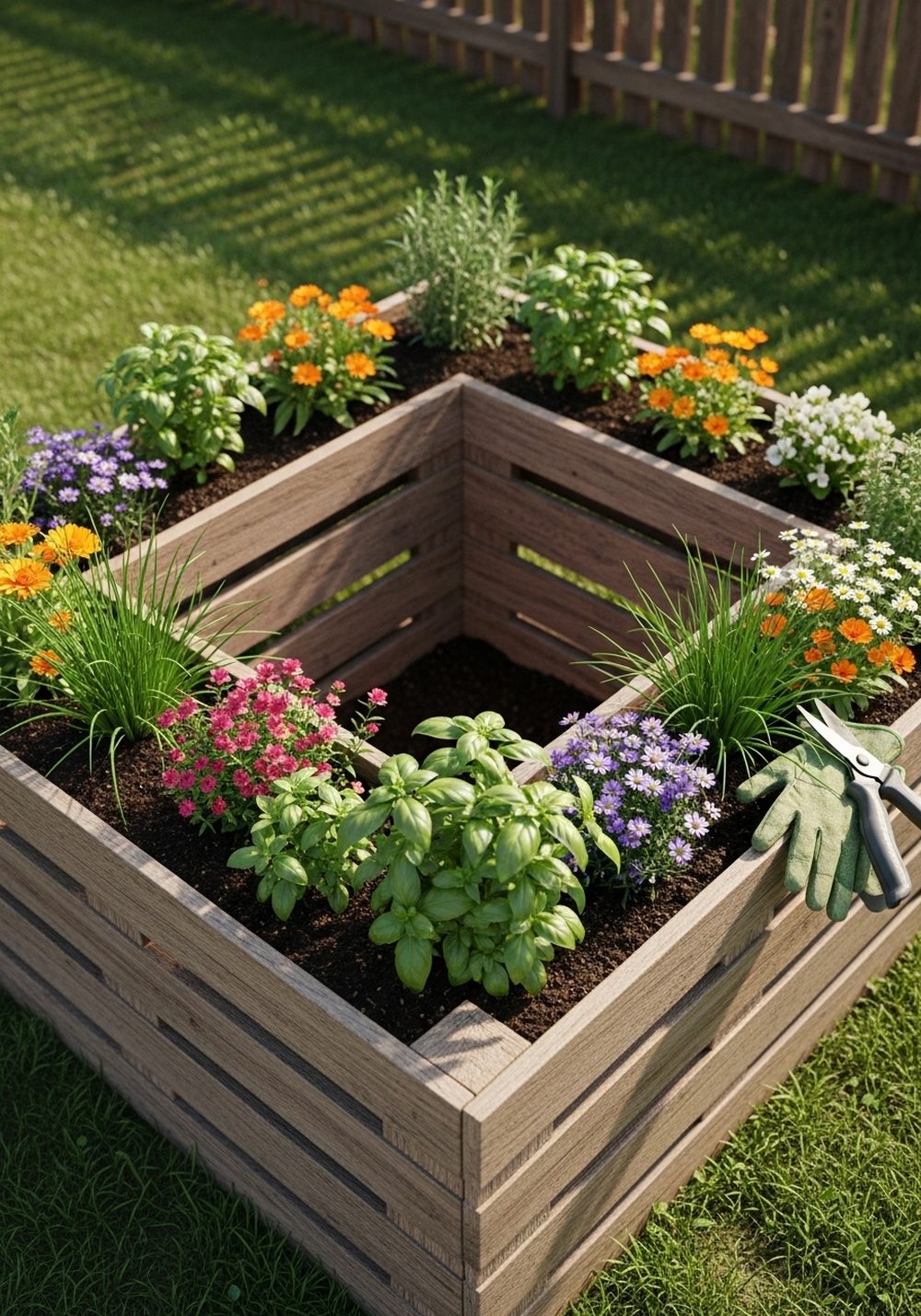
A U-shaped pallet bed turns a patch of ground into a mini walk-in kitchen garden. Arrange three pallet sections into a “U,” leaving a standing space in the middle. Fasten them together, line the inside, and fill with soil. Plant herbs you use daily near the front edges, with longer-reaching or bushier plants towards the back. The central opening makes it easy to harvest from all sides, and the shape feels like your own tiny garden room.
- Best For: Keen cooks who want a dedicated herb-and-flower area close to the kitchen door.
- Budget Tip: Start with just two pallets in an “L” shape and add the third later when you’re ready to expand.
- Styling Idea: Add stepping stones or bark chippings in the centre of the U for a defined, tidy walkway.
- Practical Note: Keep watering cans or a small hose nearby, as the raised sides can dry out faster in warm weather.
6. Narrow Pallet Bed For Small Spaces
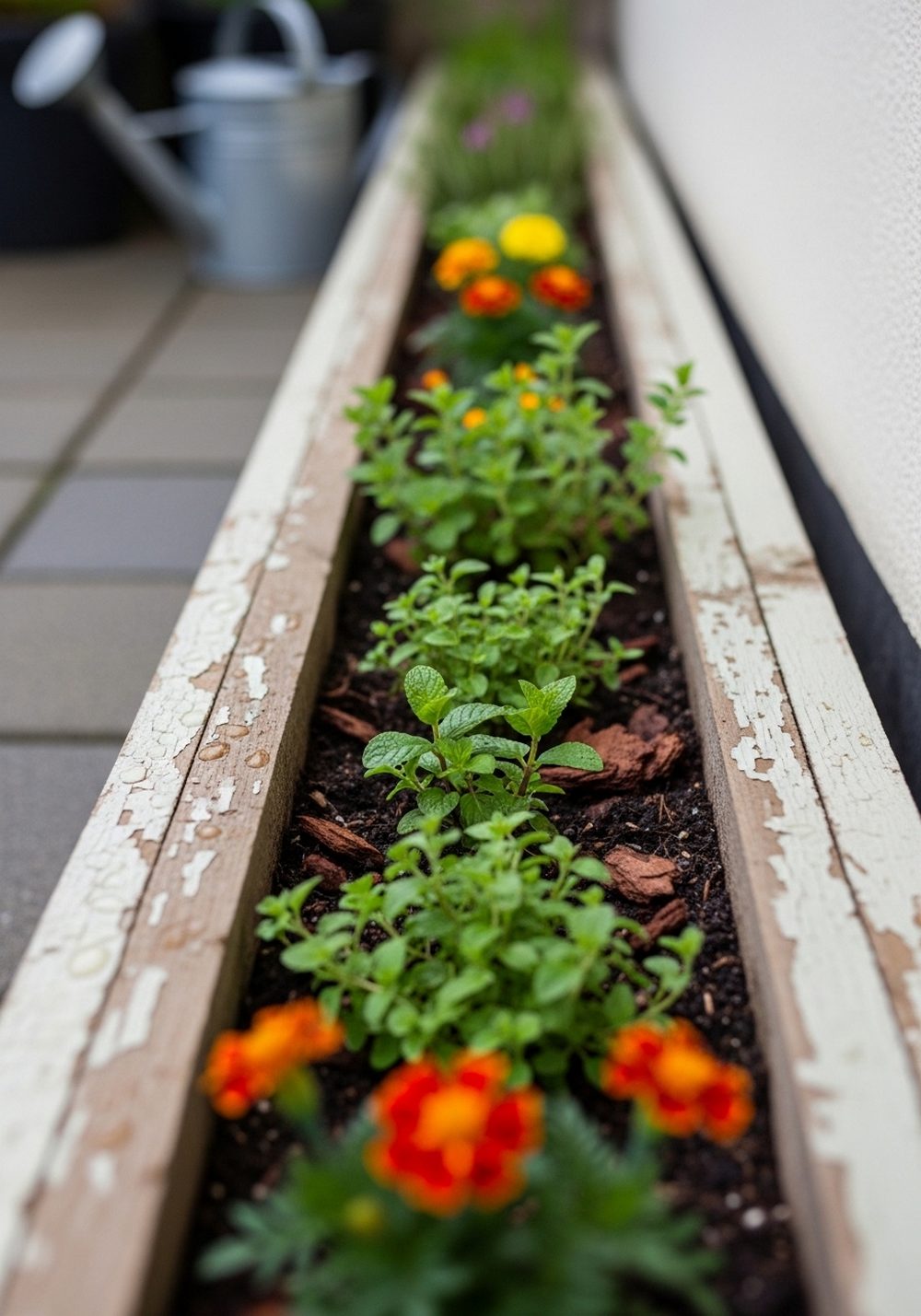
If your space is very tight, a narrow pallet bed tucked along a wall or fence can still give you a surprising amount of growing room. Choose a slim pallet or cut one to size, stand it on edge to check the width, then lay it flat and build low sides from pallet boards. Fill with soil and plant compact herbs and small flowers in a single neat row. It’s a subtle way to green up a path, balcony edge, or side return.
- Best For: Tiny side yards, balcony edges, and slim strips along paths or sheds.
- Budget Tip: Use cut-down plastic bottles for plant labels instead of buying markers, and sow a simple mix of seeds.
- Styling Idea: Stick to one colour palette, like cool whites and blues, to keep a narrow bed from looking cluttered.
- Practical Note: Because it’s small, this bed dries out faster—add a layer of mulch to help hold moisture in.
7. Pallet Raised Bed With Built-In Trellis
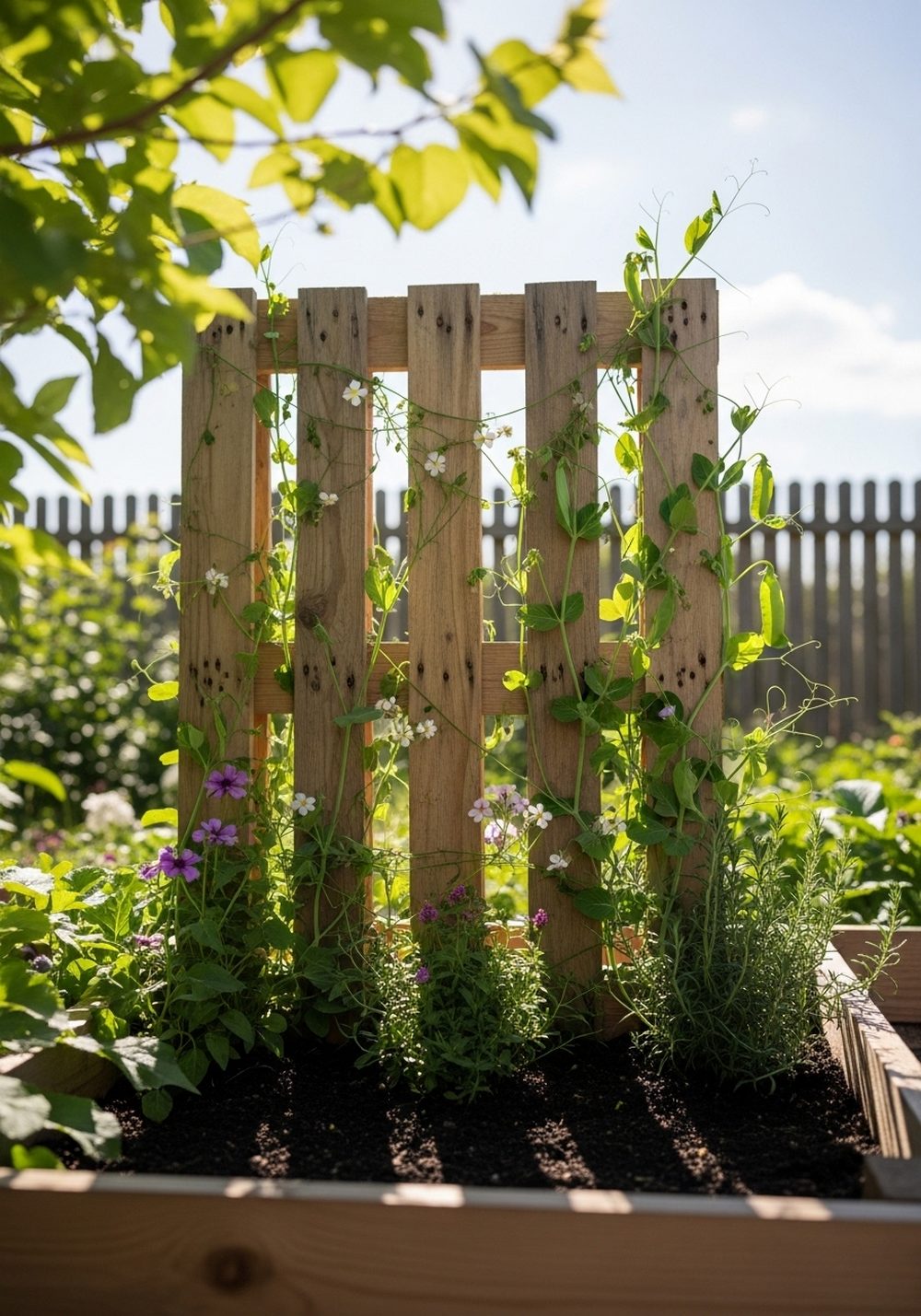
Combining a raised bed and trellis in one pallet project gives you height, privacy, and extra growing space. Build a standard pallet bed, then attach pallet slats vertically at the back to form a simple trellis. Plant climbing flowers, beans, or peas at the base of the trellis, with lower herbs in the front section. As plants climb, they soften the wooden structure, creating a living screen and a pretty backdrop for your herbs and flowers.
- Best For: Screening a sitting area, covering a bare fence, or dividing parts of the garden.
- Budget Tip: Use off-cut pallet wood for the trellis instead of buying pre-made panels.
- Styling Idea: Paint the trellis a soft, receding colour like sage green to make foliage and blooms stand out.
- Care & Maintenance: Tie in new shoots gently with twine so they climb the slats rather than flopping forward.
8. Pallet Wheel Pathway Herb Beds
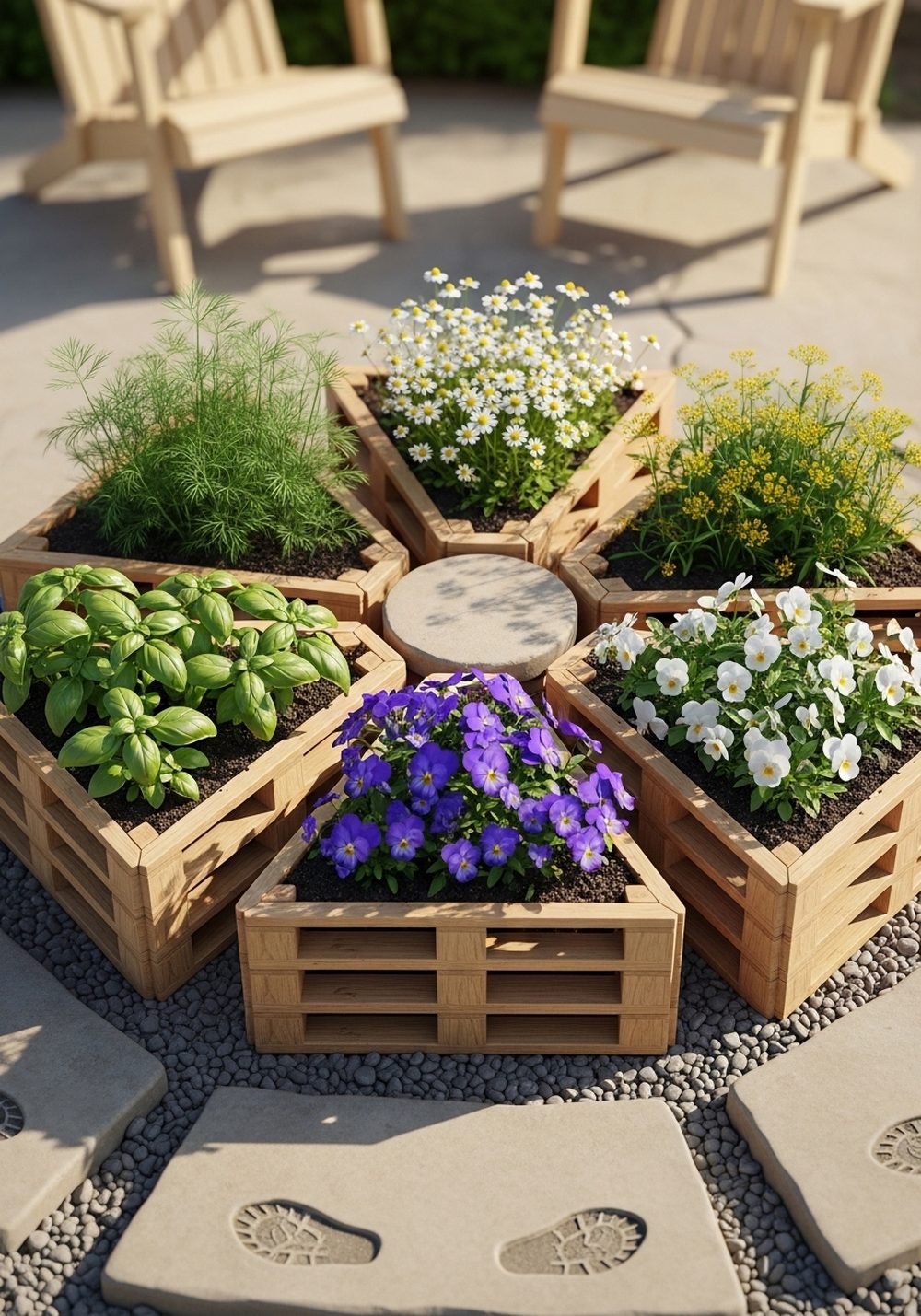
A pallet wheel layout makes your herb garden feel like a feature rather than just a few plants in a row. Cut pallets into smaller sections and arrange them like spokes around a central stepping stone or circular paver, leaving paths in between. Line and fill each wedge-shaped bed, then give each its own herb or flower theme—one for Italian herbs, one for teas, one for pollinator-friendly blooms. It looks playful and makes it easy to remember what’s planted where.
- Best For: Open spaces where you can walk around the beds and enjoy them from all sides.
- Budget Tip: Start with just four “spokes” and add more pallet sections over time as your plant collection grows.
- Styling Idea: Use the central stone as a place for a small pot, lantern, or birdbath to complete the wheel design.
- Practical Note: Keep spreading herbs like mint in pots sunk into the soil to stop them taking over the spokes.
9. Vertical Pallet Pocket Planter For Herbs
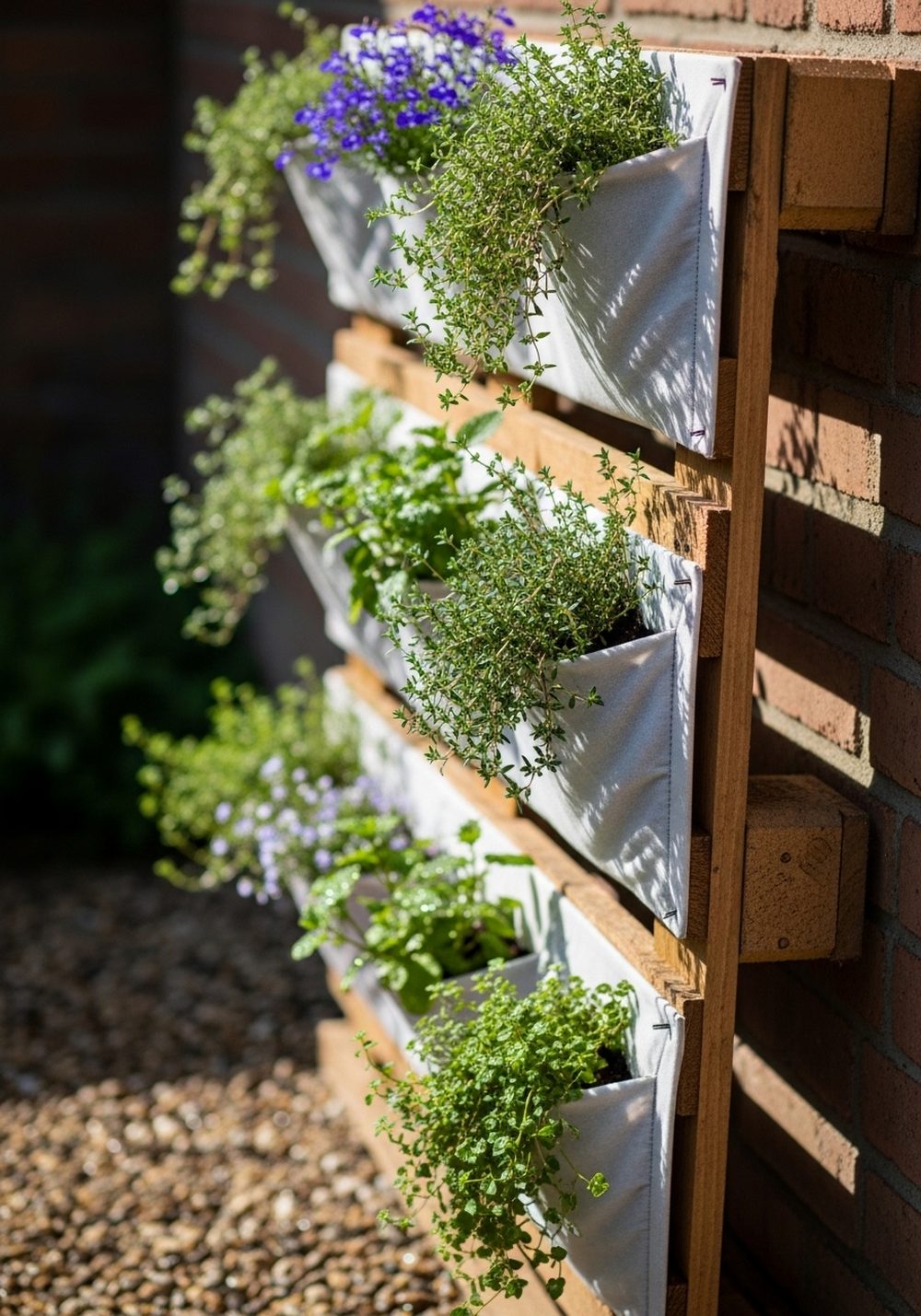
A vertical pallet pocket planter is ideal when ground space is limited but you still want fresh herbs and flowers at eye level. Stand a pallet upright, line the back and bottom of each slat gap with fabric or nailed-on boards to form pockets, then fill each with soil. Plant trailing herbs, strawberries, and small flowers in the pockets so they spill over the edges. Lean the pallet against a wall or secure it with brackets for safety.
- Best For: Balconies, small patios, and renters who need something that can move with them.
- Budget Tip: Use one tall pallet and gradually fill pockets as you can afford more plants, starting from the bottom.
- Styling Idea: Keep a mix of textures—soft trailing plants, upright herbs, and delicate flowers—for a lush, layered look.
- Care & Maintenance: Water slowly from the top with a watering can so each pocket gets a chance to soak up moisture.
10. Pallet-Framed Cutting Flower Bed
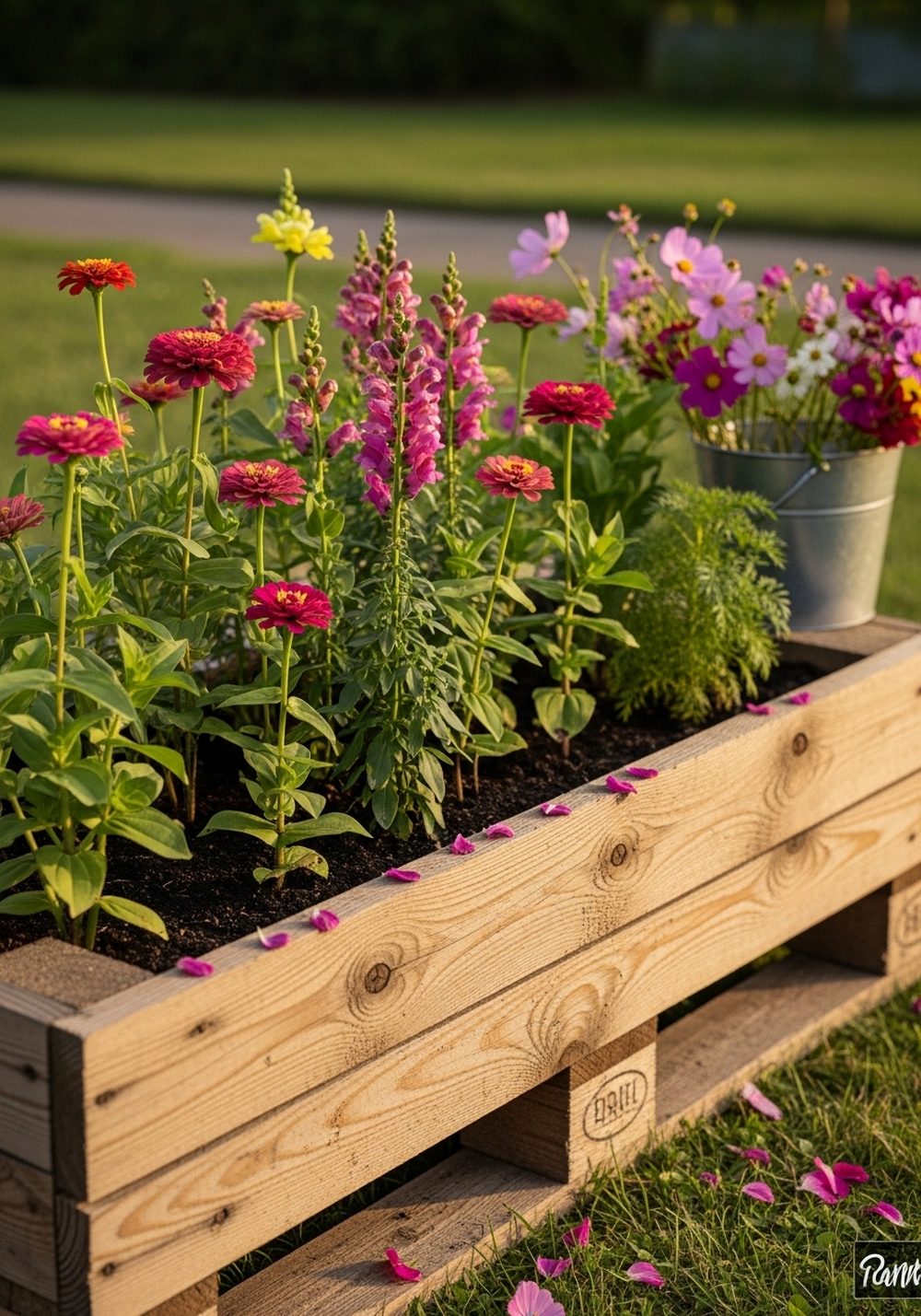
A pallet-framed cutting bed gives you a dedicated space to grow flowers just for vases while still looking tidy in the garden. Use a pallet as a simple rectangle frame on top of weed fabric, then fill the interior with compost. Plant rows of easy cutting flowers like zinnias, cosmos, and snapdragons, plus a few herbs such as dill and fennel for foliage. The pallet edges keep the soil in place and make it easy to see where your rows start and end.
- Best For: Gardeners who love bringing homegrown bouquets indoors.
- Budget Tip: Sow seeds directly into the bed rather than buying lots of potted flowers.
- Styling Idea: Choose a colour theme for your cutting bed—pastels, brights, or warm sunset shades—to make arrangements look intentional.
- Practical Note: Cut flowers early in the morning and keep the soil topped up with compost for strong, repeat blooming.
Conclusion
Pallet raised beds are a simple, budget-friendly way to turn bare ground, patios, and corners into a thriving herb and flower garden. With a few reclaimed pallets, some soil, and a handful of plants, you can add height, structure, and colour to even the smallest space. Start with one easy design that fits your garden, learn how the materials behave, and then build out from there. Before long, your pallet projects will feel like a natural part of your outdoor style.
FAQs
How do I make sure pallets are safe to use for herb and flower beds?
Look for pallets stamped with “HT,” which means heat-treated rather than chemically treated. Avoid any that smell of chemicals or show stains from unknown spills. Give the wood a quick scrub and let it dry before building your bed.
Can I use pallet raised beds if I’m renting?
Yes, many pallet beds can be built as freestanding units that sit on top of weed fabric or gravel. If you avoid fixing them permanently to walls or fences, you can disassemble them and take the wood—and even some plants—with you when you move.
What’s the cheapest way to fill a pallet raised bed?
To save money, fill the bottom third with chunky material like branches, old leaves, or inverted empty pots, then add a mix of garden soil and compost on top. This reduces how much fresh compost you need while still giving roots plenty of rich growing medium.
Are pallet raised beds hard to maintain?
Not really. Like any raised bed, they need regular watering, an occasional top-up of compost, and some mulch to keep moisture in. Over time the wood will weather, but that often adds to the rustic look. Replace or repair slats if they become very soft or broken.
What herbs and flowers work best in pallet raised beds?
Compact, sun-loving herbs like thyme, chives, basil, and oregano do very well, along with flowers like marigolds, calendula, cosmos, and violas. In shadier spots, try parsley, mint (in containers), and flowers such as impatiens. Choose plants that match your light conditions and keep taller ones from shading the rest.