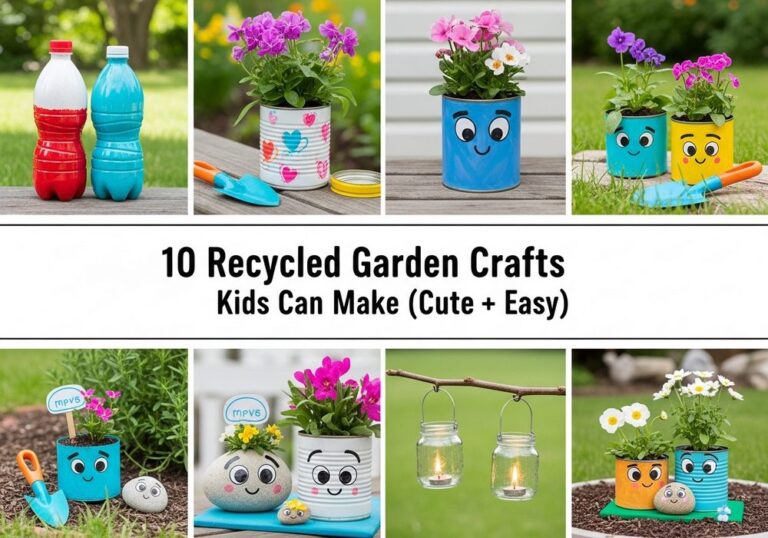
10 Broken Bucket Flower Pot Ideas For Rustic Outdoor Charm
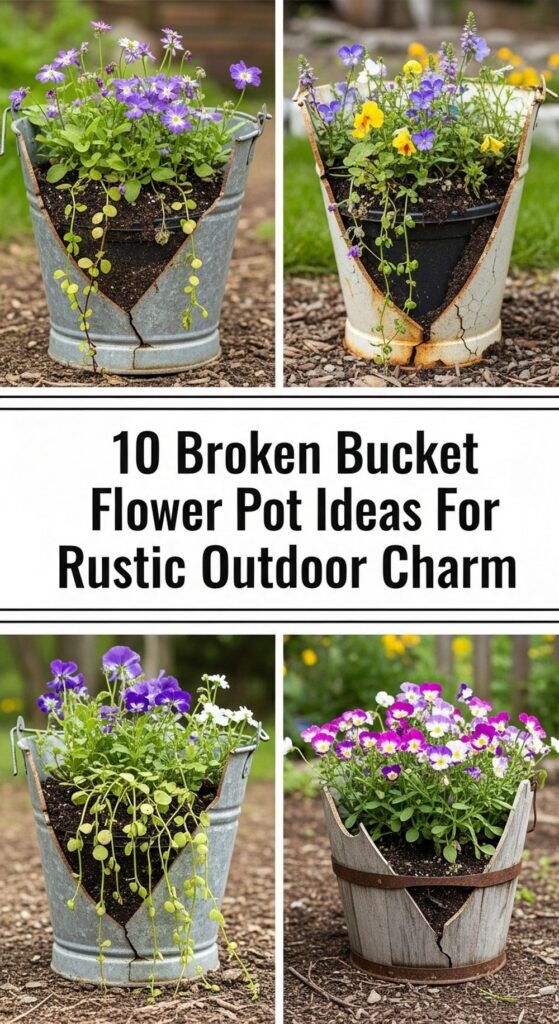
If you’ve got old, cracked, or rusty buckets lying around, don’t toss them just yet. Those “ruined” containers are secretly perfect for creating charming, character-filled flower pots that look like they’ve been in your garden for decades.
In this post, you’ll find ten easy ways to turn broken buckets into rustic planters that suit porches, patios, borders, and tiny cottage corners. These ideas are simple, budget-friendly, and beginner-friendly, using what you already have or can find second-hand. With a few flowers, some potting mix, and a bit of imagination, your worn-out buckets can become some of the most eye-catching decor in your outdoor space.
Quick List
- Tipped Broken Bucket “Spilled Flowers” Display
- Layered Broken Bucket Tower Planter
- Wall-Mounted Half-Bucket Flower Pockets
- Rustic Enamel Bucket Wildflower Tub
- Cracked Bucket Herb Patch By The Door
- Broken Bucket In Wooden Crate Flower Box
- Broken Bucket Planter On An Old Chair
- Half-Buried Broken Bucket Cottage Border
- Mixed Metal Broken Bucket Cluster Corner
- Broken Bucket Lantern And Flower Pot Duo
1. Tipped Broken Bucket “Spilled Flowers” Display
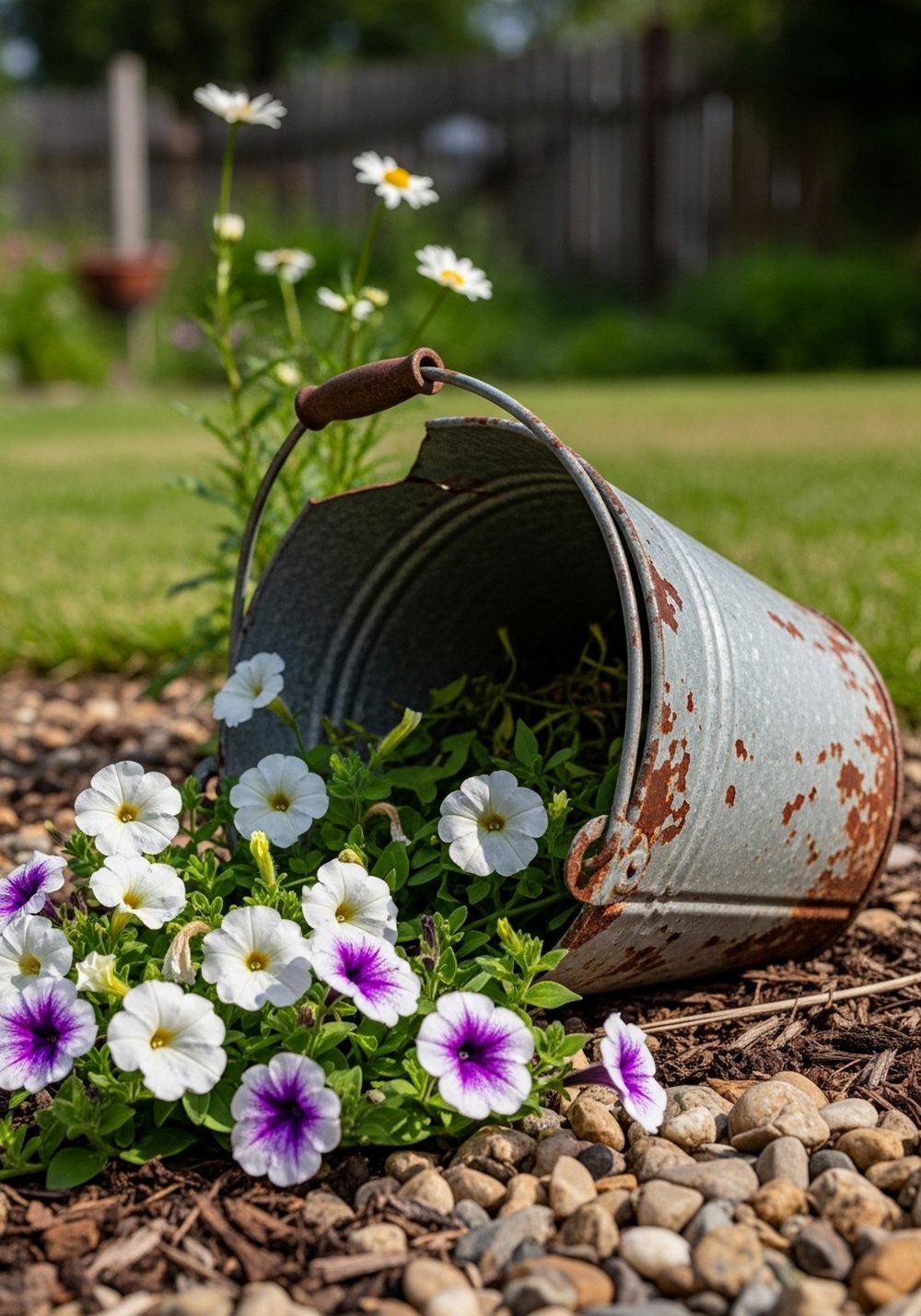
Lay your broken bucket on its side, wedge it securely on soil or gravel, then plant trailing flowers so they appear to pour out like a colorful stream. Petunias, lobelia, alyssum, or creeping thyme all create a gorgeous “spill” effect. The crack or missing section of the bucket only adds to the illusion, as if the flowers are escaping. Place this display at the edge of a lawn, near a path, or by a gate where the playful effect will be noticed and enjoyed.
- Best For: Edges of lawns, paths, and entrance areas.
- Budget Tip: Use one main plant flat and divide between bucket and “spill” area.
- Styling Idea: Choose one main flower color and add a few accent blooms for a neat, painterly look.
- Practical Note: Sink the bucket slightly into the ground so it doesn’t roll or move.
- Care & Maintenance: Use trailing varieties that don’t mind a bit of sun and regular watering.
2. Layered Broken Bucket Tower Planter
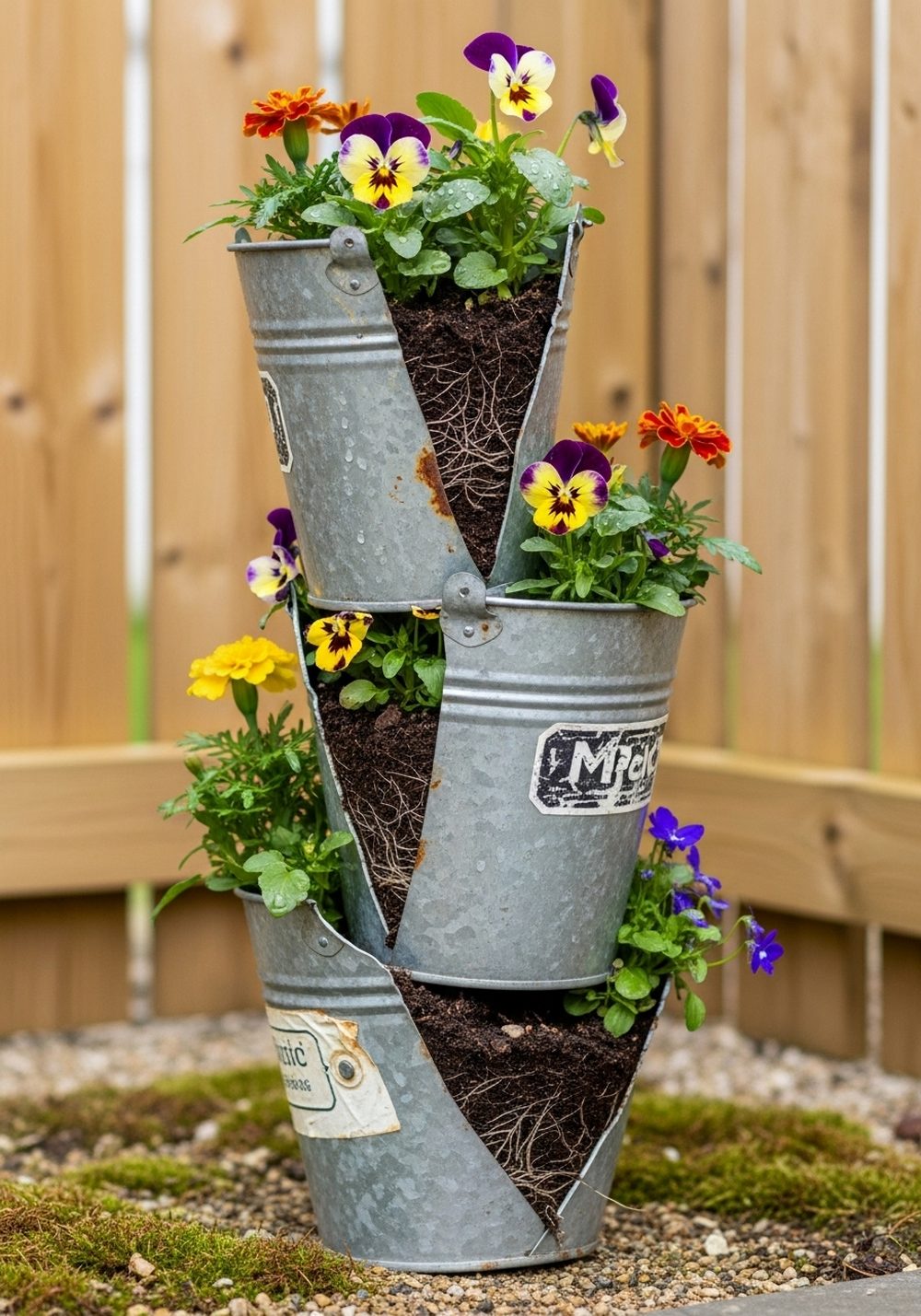
Stack two or three broken buckets at slight angles to build a vertical flower tower. Start with the largest bucket at the base, then nest the smaller ones into the soil of the one below, using the broken rims to tuck in extra plants. This layered look adds height without needing a big footprint, making it perfect for small patios or corners. Fill each bucket with potting mix, secure them well, and plant each level with flowers in coordinated colors for a lush, cascading column.
- Best For: Small patios, courtyards, and balcony corners.
- Budget Tip: Mix annuals and hardy perennials so you refresh only some plants each year.
- Styling Idea: Go ombré with colors that fade from dark at the bottom to pale at the top.
- Practical Note: Insert a sturdy stake through the buckets to keep the tower stable.
- Care & Maintenance: Water from the top and let moisture soak through all levels.
3. Wall-Mounted Half-Bucket Flower Pockets
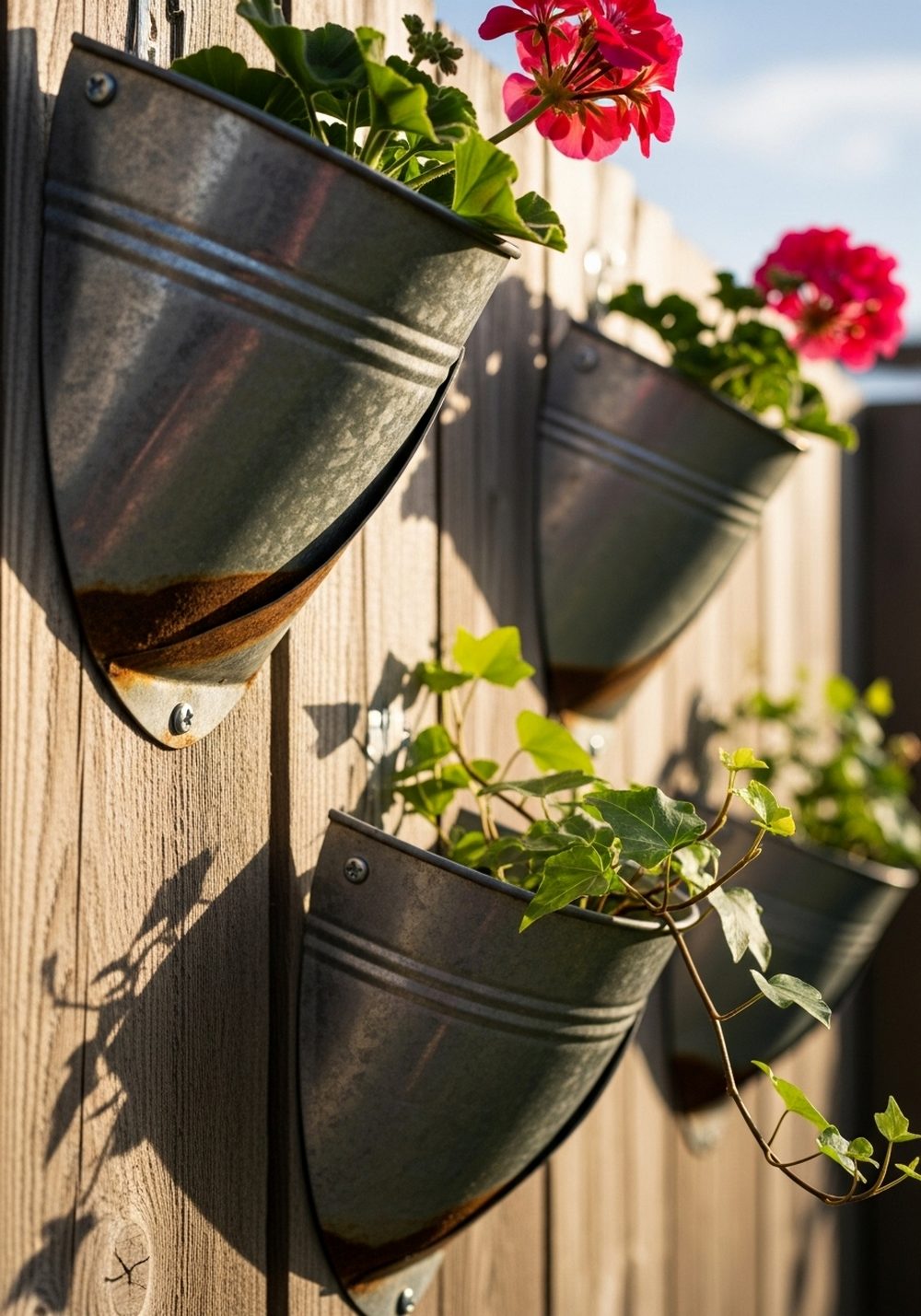
Turn broken buckets into charming wall pockets by securing them against a fence or wall. If a bucket has lost its bottom or side, that’s perfect—just mount the remaining part firmly and use it as a shallow planter. Add a layer of landscape fabric or burlap inside to hold soil, then plant compact flowers or trailing ivy. Several buckets lined up in a row or staggered pattern give instant vertical interest and create a rustic “window box” effect without taking floor space.
- Best For: Renters with fences, small courtyards, and bare walls.
- Budget Tip: Mount just two or three buckets and slowly add more as you find them.
- Styling Idea: Mix different bucket finishes—galvanized, painted, enamel—for an eclectic gallery look.
- Practical Note: Make sure buckets are screwed into solid wood or masonry with proper anchors.
- Care & Maintenance: Use moisture-retaining potting mix since wall pockets can dry out quickly.
4. Rustic Enamel Bucket Wildflower Tub
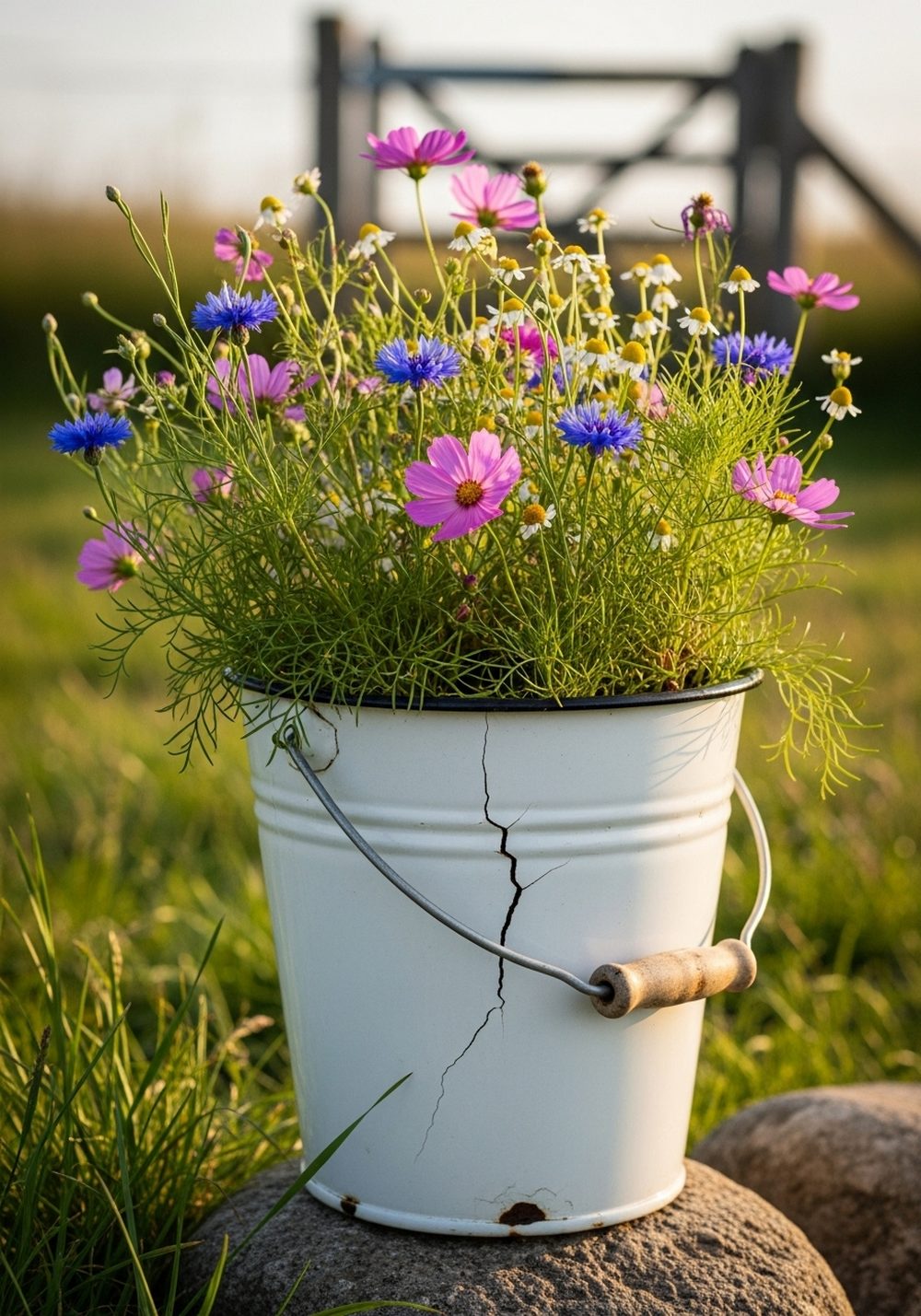
A chipped enamel bucket with a crack or missing piece makes a lovely faux “antique” tub for wildflowers. Place a few stones under the broken side to keep soil in place and drill drainage holes if needed. Fill with a wildflower mix or a blend of tall, airy blooms like cosmos and cornflowers. The simple white or pale enamel contrasts beautifully with the loose, unstructured planting, creating a relaxed meadow feel in even the smallest corner of your yard.
- Best For: Cottage-style gardens, relaxed beds, and meadow-style corners.
- Budget Tip: Use a packet of mixed wildflower seeds instead of buying lots of individual plants.
- Styling Idea: Pair the bucket with an old watering can or wooden crate to build a small vignette.
- Practical Note: Raise the bucket on bricks to improve drainage and protect enamel from constant damp.
- Care & Maintenance: Water well until seedlings establish, then let the planting stay fairly low-maintenance.
5. Cracked Bucket Herb Patch By The Door
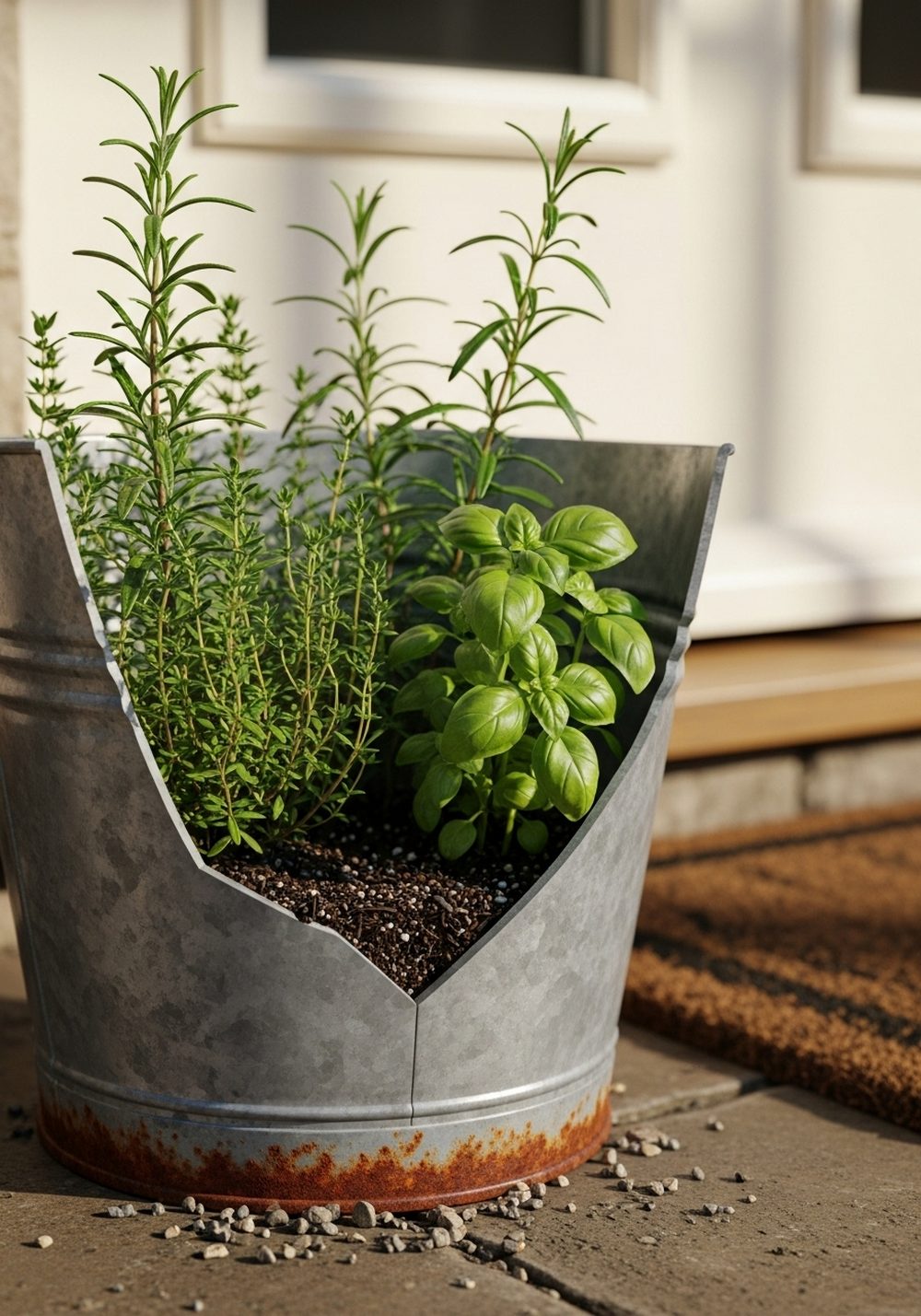
Place a single cracked bucket near your back door, steps, or kitchen entrance and turn it into a compact herb patch. The crack gives it instant character and also lets extra water escape. Fill with good-quality potting mix and plant a mix of easy herbs like basil, thyme, and parsley. The mix of lush greens and the softly weathered metal makes a lovely welcome every time you step outside—and it’s just a few steps away when you’re cooking.
- Best For: Doorsteps, stoops, and small porches.
- Budget Tip: Start with small herb plants or cuttings rather than mature potted herbs.
- Styling Idea: Tie a bit of jute twine around the bucket or add a small wooden label for a farmhouse feel.
- Practical Note: Place the cracked side facing away from foot traffic to avoid snagging ankles or clothing.
- Care & Maintenance: Snip herbs often to keep plants bushy and productive.
6. Broken Bucket In Wooden Crate Flower Box
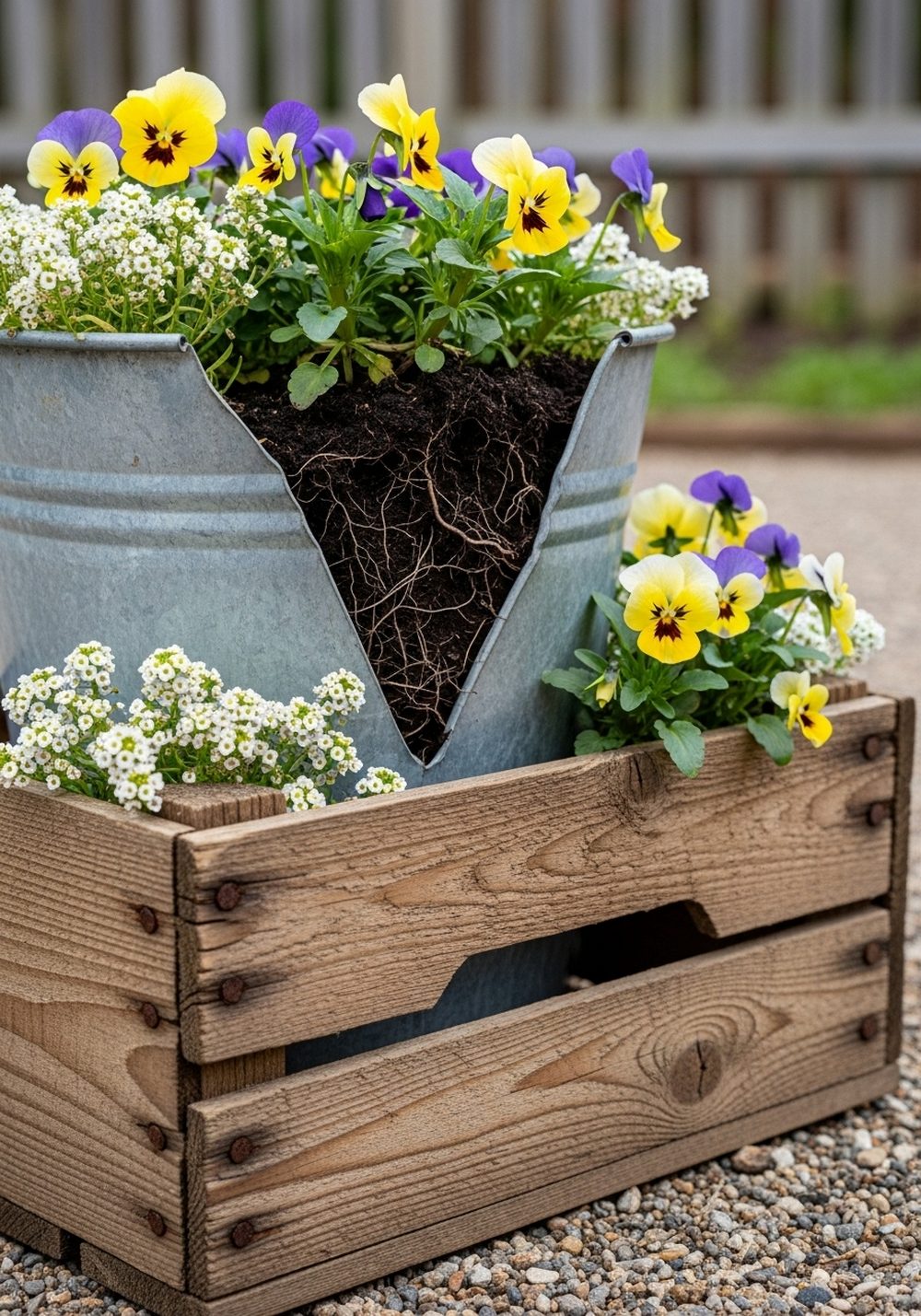
Nestle your broken bucket inside an old fruit crate or wooden box to create a layered, rustic planter. The crate hides the worst damage while still letting the weathered metal peek through. Fill the bucket with soil and plant taller flowers, then tuck smaller trailing plants between the bucket and crate edges. The combination of rough wood, aged metal, and soft blooms looks like it came straight from a vintage market stall.
- Best For: Gravel paths, patios, and porch corners.
- Budget Tip: Pick up free or low-cost crates from markets or reuse delivery crates.
- Styling Idea: Choose soft pastel flowers for a shabby-chic feel, or bright hues for a more cheerful look.
- Practical Note: Line the inside of the crate with plastic (with drainage holes) to protect the wood.
- Care & Maintenance: Lift and check occasionally to be sure the base isn’t sitting in standing water.
7. Broken Bucket Planter On An Old Chair
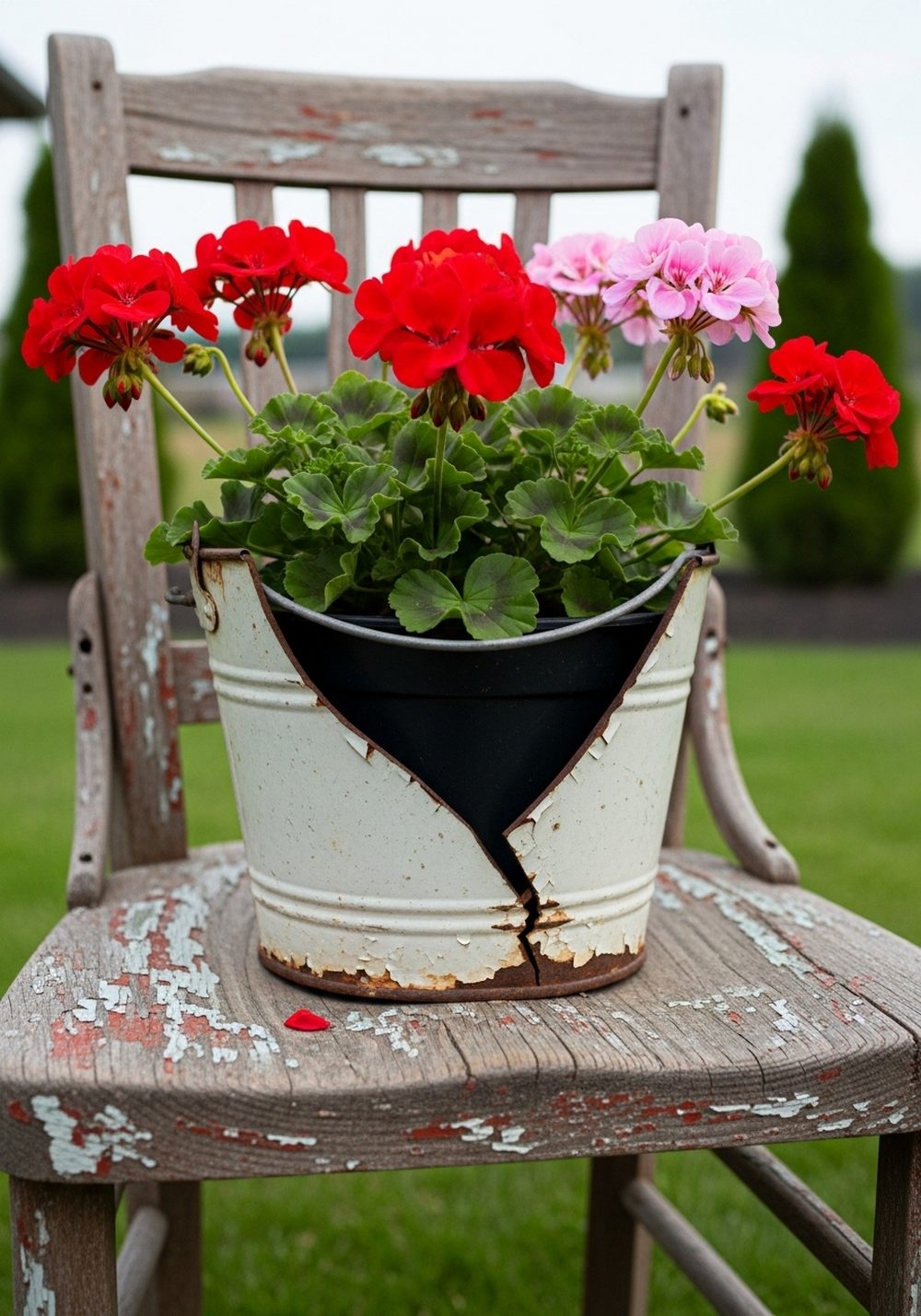
Give an unwanted chair and a damaged bucket a second life together. Remove the chair’s broken seat if needed, then set or secure the bucket in the opening or on top of the seat area. Plant it generously with full, upright flowers like geraniums, begonias, or coleus, and let the blooms rise above the chair back. The whole piece becomes a playful sculptural planter that adds height and personality to your garden, especially if you angle it slightly or lean it against a wall.
- Best For: Focal points in flower beds or on patios.
- Budget Tip: Hunt for free curbside chairs and buckets, then paint only the chair if needed.
- Styling Idea: Paint the chair a soft pastel or bold color to contrast with the metal bucket.
- Practical Note: Make sure the chair is stable and won’t tip, especially on uneven ground.
- Care & Maintenance: Use a lightweight potting mix so you can move the chair if you need to.
8. Half-Buried Broken Bucket Cottage Border
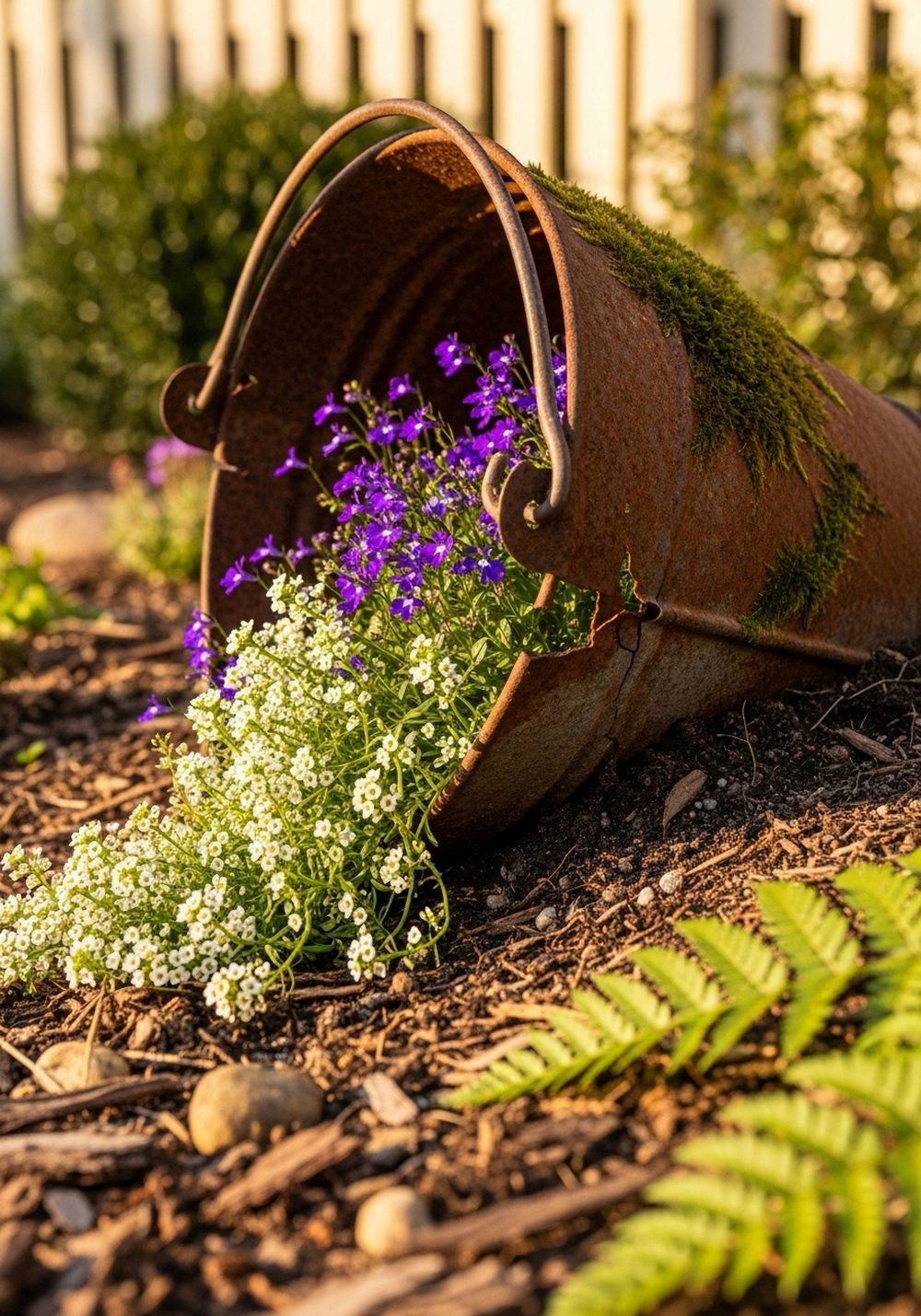
Dig a shallow trench along a border and half-bury a broken bucket at an angle so it looks like it has sunk over time, with flowers falling out. Plant low-growing, spreading varieties like alyssum, creeping phlox, or small daisies just inside and around the bucket opening. The combination of partially hidden metal and soft blooms gives your border a storybook, “found object” feel, as if the garden has grown around something long forgotten.
- Best For: Cottage borders, mixed beds, and edges of paths.
- Budget Tip: Use cuttings or divisions from existing plants to fill around the bucket.
- Styling Idea: Add a few scattered stones or a small sign nearby to create a whimsical mini-scene.
- Practical Note: Sand any sharp edges and angle the bucket so rainwater doesn’t pool inside.
- Care & Maintenance: Mulch around the base to keep weeds down and moisture in.
9. Mixed Metal Broken Bucket Cluster Corner
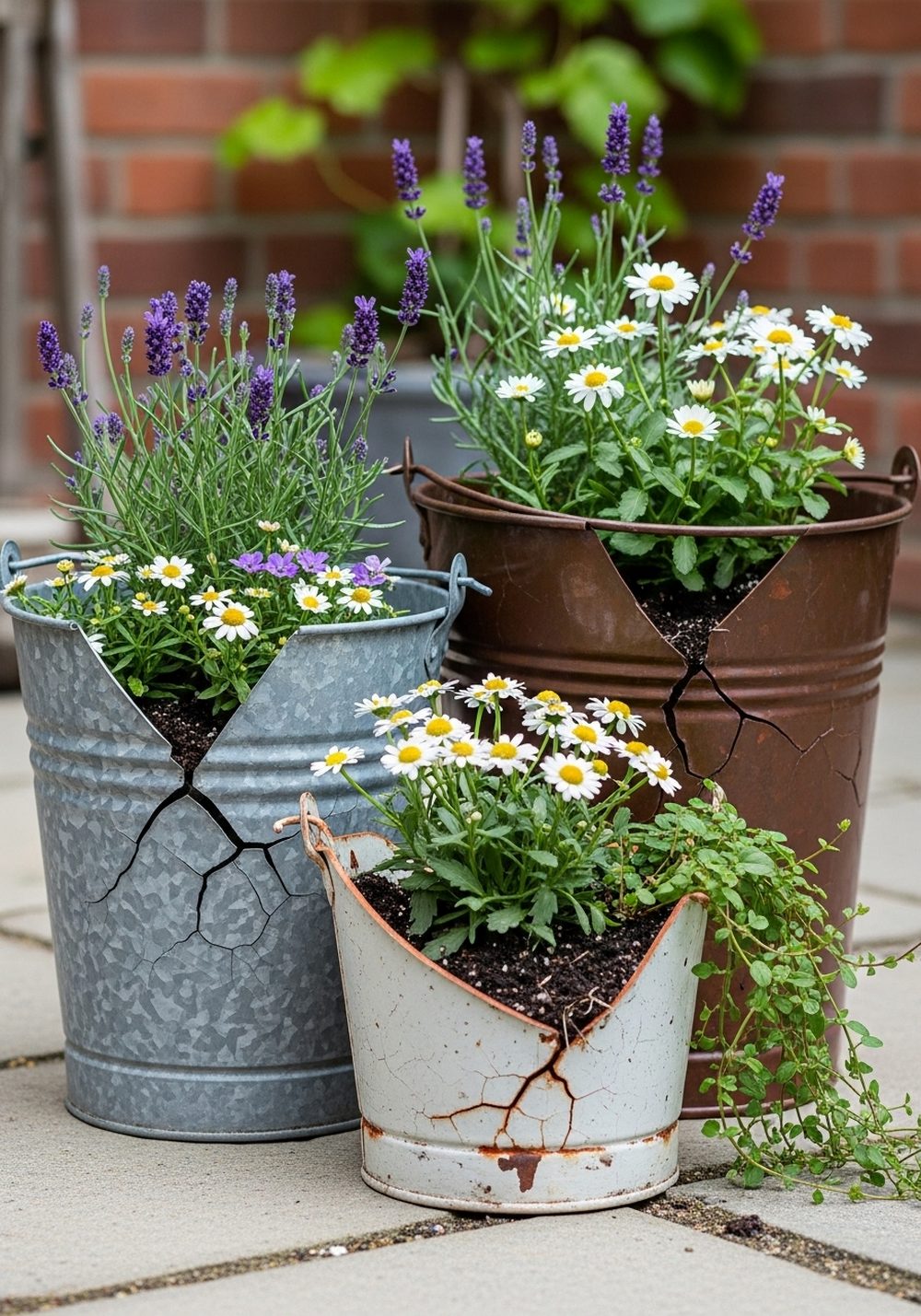
Gather two or three broken buckets in different metals—galvanized, enamel, copper-colored—and cluster them in a neglected corner as a small container garden. Vary the heights by placing some on bricks or small logs. Plant each bucket with a different flower type or color theme, and let a few trailing plants drip down between them. The mix of metals, patinas, and blooms creates a rich, layered display that looks intentional and collected over time, not thrown together.
- Best For: Bare patio corners, beside sheds, or near fences.
- Budget Tip: Build the cluster slowly, adding one bucket at a time as you find bargains.
- Styling Idea: Choose one repeating color (like white or purple) to tie all the different containers together.
- Practical Note: Space the buckets so you can still get behind them to sweep or weed.
- Care & Maintenance: Rotate buckets occasionally so each plant gets its fair share of sun.
10. Broken Bucket Lantern And Flower Pot Duo
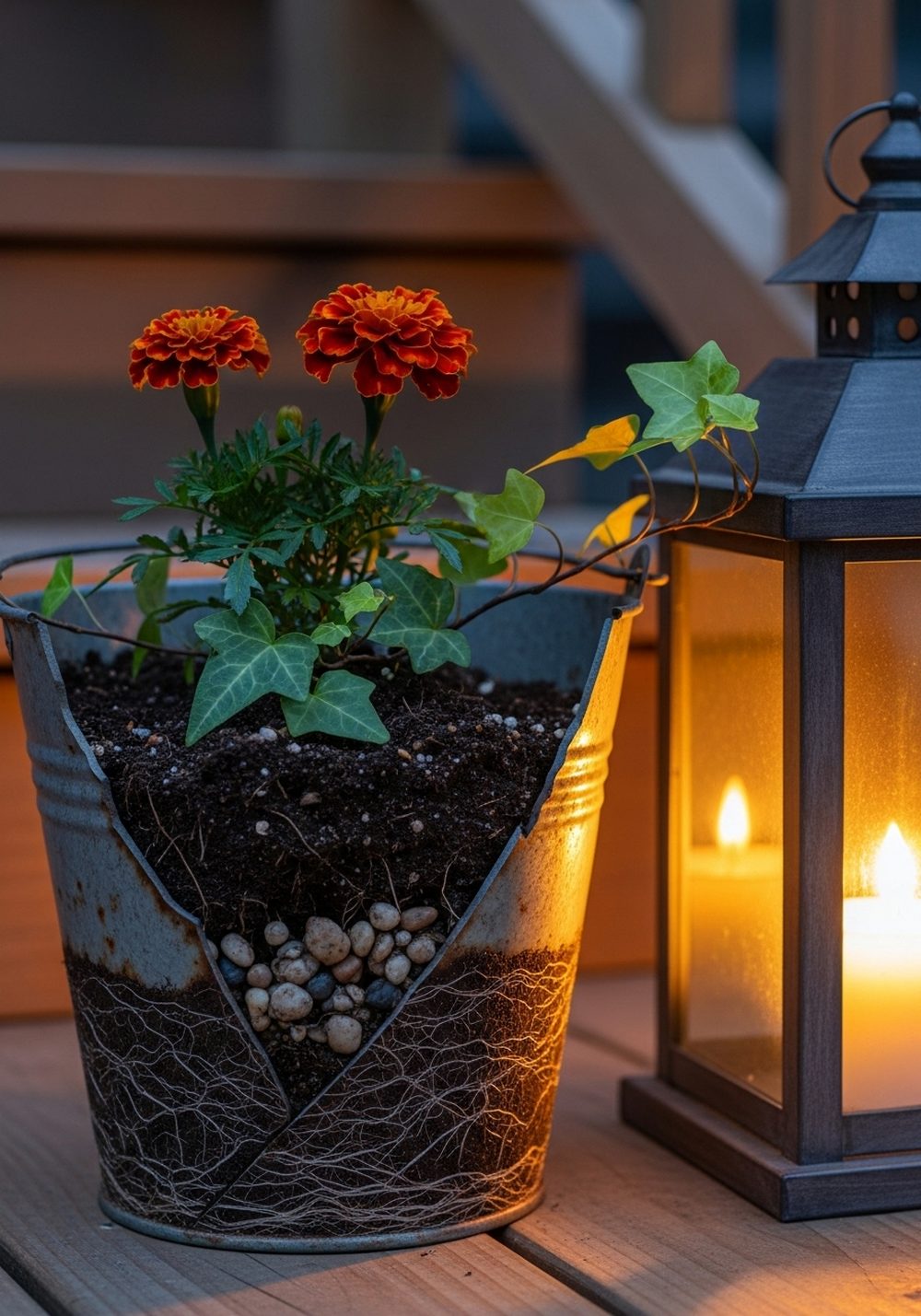
Combine soft light with flowers by pairing a broken bucket planter with a lantern or solar light on steps or by the porch. Plant the bucket with warm-colored blooms like marigolds, snapdragons, or orange calibrachoa, and position the lantern so the light shines across the petals at dusk. The cracked metal, flickering light, and glowing flowers together create a cozy evening atmosphere that feels both rustic and welcoming, perfect for spots you enjoy at night.
- Best For: Porch steps, decks, and outdoor seating areas.
- Budget Tip: Use a simple candle in a glass jar or an inexpensive solar lantern.
- Styling Idea: Choose warm-toned flowers to echo the glow of the light source.
- Practical Note: Keep any real flames safely away from dry leaves and wooden railings.
- Care & Maintenance: Deadhead flowers regularly so your evening display always looks fresh.
Conclusion
Broken buckets might seem like junk at first glance, but with a little creativity they can become some of the most charming flower pots in your garden. From spilled blooms and stacked towers to cozy porch scenes, each idea adds character and story to your space without spending much. Start with one simple project using a bucket you already have, then build up a little collection of rustic planters that make your outdoor area feel warm, personal, and beautifully lived-in.
FAQs
1. How can I safely use a broken bucket as a flower pot?
First, sand or file any sharp edges so they can’t cut fingers or snag clothing. Drill a few drainage holes in the base if they aren’t already there, and line particularly jagged areas with a bit of landscape fabric or thick burlap. Position cracked sides facing away from walkways, and if the bucket is very damaged, tuck it partly into soil or a crate so only the safe parts are exposed.
2. What if I’m renting and can’t change much in my outdoor space?
Broken bucket planters are perfect for renters because they’re completely portable. Use them on balconies, patios, or beside doors instead of digging beds. Cluster a few in a corner, place one on an outdoor table, or line them along a railing. When it’s time to move, just pick them up and take your mini garden with you.
3. Are broken bucket planters suitable for very small spaces or balconies?
Yes, especially designs that add height like stacked bucket towers or chair-top planters. These ideas use vertical space instead of spreading out. Choose compact plants, avoid very heavy soil, and keep the containers light enough to move. A single bucket beside a chair, or two on either side of a balcony door, can make even a tiny area feel styled and inviting.
4. How do I stop old metal buckets from rusting too quickly outdoors?
Some rust is part of the rustic charm, but you can slow it down by drilling drainage holes so water doesn’t sit inside. You can also place a plastic nursery pot inside the bucket and plant in that instead, so the metal stays a bit drier. If you prefer less patina, brush off loose rust and apply a clear outdoor sealant to the outside of the bucket.
5. What are good low-maintenance plants for broken bucket flower pots?
Look for tough, sun-loving annuals and perennials like marigolds, geraniums, sedums, and small ornamental grasses. Trailing plants such as ivy, creeping Jenny, or lobelia soften the edges without needing constant fuss. Use a good-quality potting mix, water deeply but not constantly, and add a slow-release fertilizer at planting time so your broken bucket planters stay colorful with minimal effort.