10 Easy Wheelbarrow Planters for a Cozy Garden Look

If you’ve got an old wheelbarrow hanging around, you’re closer to a charming garden makeover than you think. Wheelbarrow planters are one of the easiest ways to add instant character, height, and color to any outdoor space, whether you garden in a big backyard or a small side yard.
In this post, you’ll find simple, realistic ideas that anyone can copy—using basic plants, a few tools, and plenty of creativity. From rustic blooms to edible greens, these wheelbarrow planter ideas are budget-friendly, renter-friendly, and full of personality, helping you create a cozy garden corner that feels welcoming every time you step outside.
Quick List
- Rustic Wooden Wheelbarrow With Cottage Blooms
- Vintage Metal Wheelbarrow Herb Garden
- Compact Succulent Wheelbarrow Planter
- Tiered Wheelbarrow With Trailing Flowers
- Pastel Painted Wheelbarrow Porch Welcome
- Shady Fern-Filled Wheelbarrow Planter
- Edible Greens Wheelbarrow By The Kitchen
- Seasonal Changeable Wheelbarrow Display
- Drought-Tolerant Gravel Wheelbarrow Planter
- Whimsical Fairy Garden Wheelbarrow
1. Rustic Wooden Wheelbarrow With Cottage Blooms
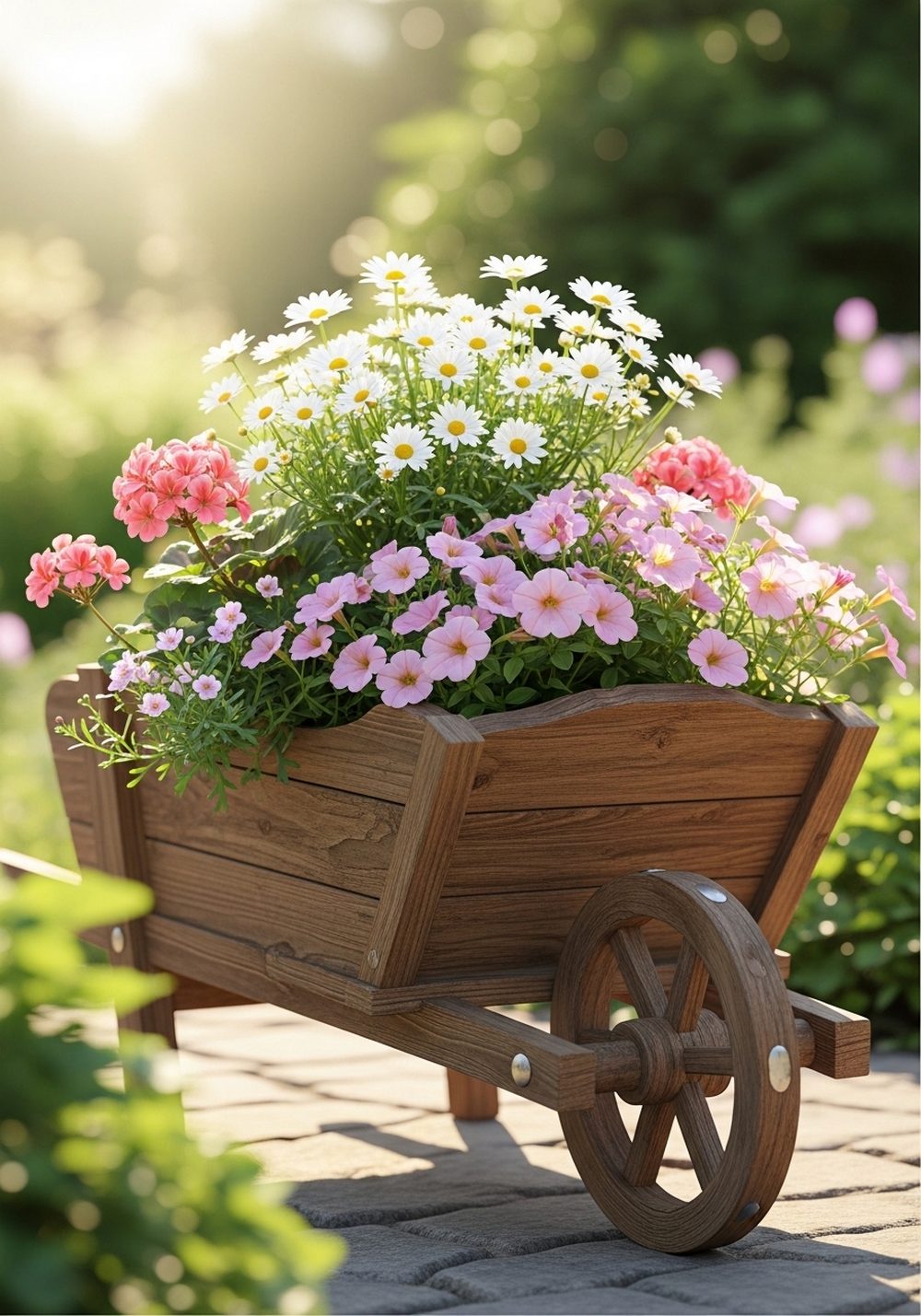
Turn a tired wooden wheelbarrow into the star of your garden with overflowing cottage-style flowers. Line the base with landscape fabric, add drainage holes if needed, and fill with a good-quality potting mix. Plant a mix of daisy-like blooms, petunias, geraniums, and airy fillers so it looks full and relaxed, not too perfect. Park the wheelbarrow beside a path or near a seating area, where the mix of colors, foliage, and weathered wood instantly softens the whole garden.
- Best For: Front yards, cottage-style gardens, and welcoming entry paths.
- Budget Tip: Use multipacks of annuals and divide them across the wheelbarrow for a lush look on a small budget.
- Styling Idea: Stick to a palette of soft pinks, whites, and blues for a dreamy, romantic feel.
- Practical Note: Raise the front slightly on a brick so water drains away and the wood lasts longer.
2. Vintage Metal Wheelbarrow Herb Garden

A metal wheelbarrow makes a wonderfully practical herb garden that’s easy to move and care for. Drill several drainage holes in the base, then add a layer of gravel and potting mix. Plant herbs like rosemary, thyme, basil, chives, and parsley in small clusters, leaving paths of bare soil for new additions. Place the wheelbarrow near your back door or kitchen path so you can snip fresh herbs while cooking. The mix of silver metal, green foliage, and scented leaves is both beautiful and useful.
- Best For: Cooks, food lovers, and small gardens near the house.
- Budget Tip: Start with just three herbs and expand as you harvest and divide plants.
- Styling Idea: Add a small wooden sign or slate label for each herb to keep the look charming and organised.
- Care & Maintenance: Trim herbs regularly to keep them compact and encourage fresh new growth.
3. Compact Succulent Wheelbarrow Planter

If you want something low-water and low-maintenance, a compact succulent wheelbarrow is perfect. Choose a smaller wheelbarrow or fill only part of a larger one with gritty, free-draining soil. Arrange rosette succulents, small agaves, and trailing varieties like string of pearls in a tight, patterned layout, leaving decorative gravel visible between plants. This style works beautifully on patios or balconies where you can appreciate the sculptural shapes up close. The mix of stone, metal or wood, and fleshy leaves feels modern and tidy.
- Best For: Busy gardeners, hot climates, and sunny patios.
- Budget Tip: Propagate succulents from cuttings or shared pieces instead of buying full plants.
- Styling Idea: Keep to grey-green and soft blue tones for a calm, contemporary look.
- Practical Note: Make sure the wheelbarrow gets several hours of bright light to keep succulents compact and colourful.
4. Tiered Wheelbarrow With Trailing Flowers
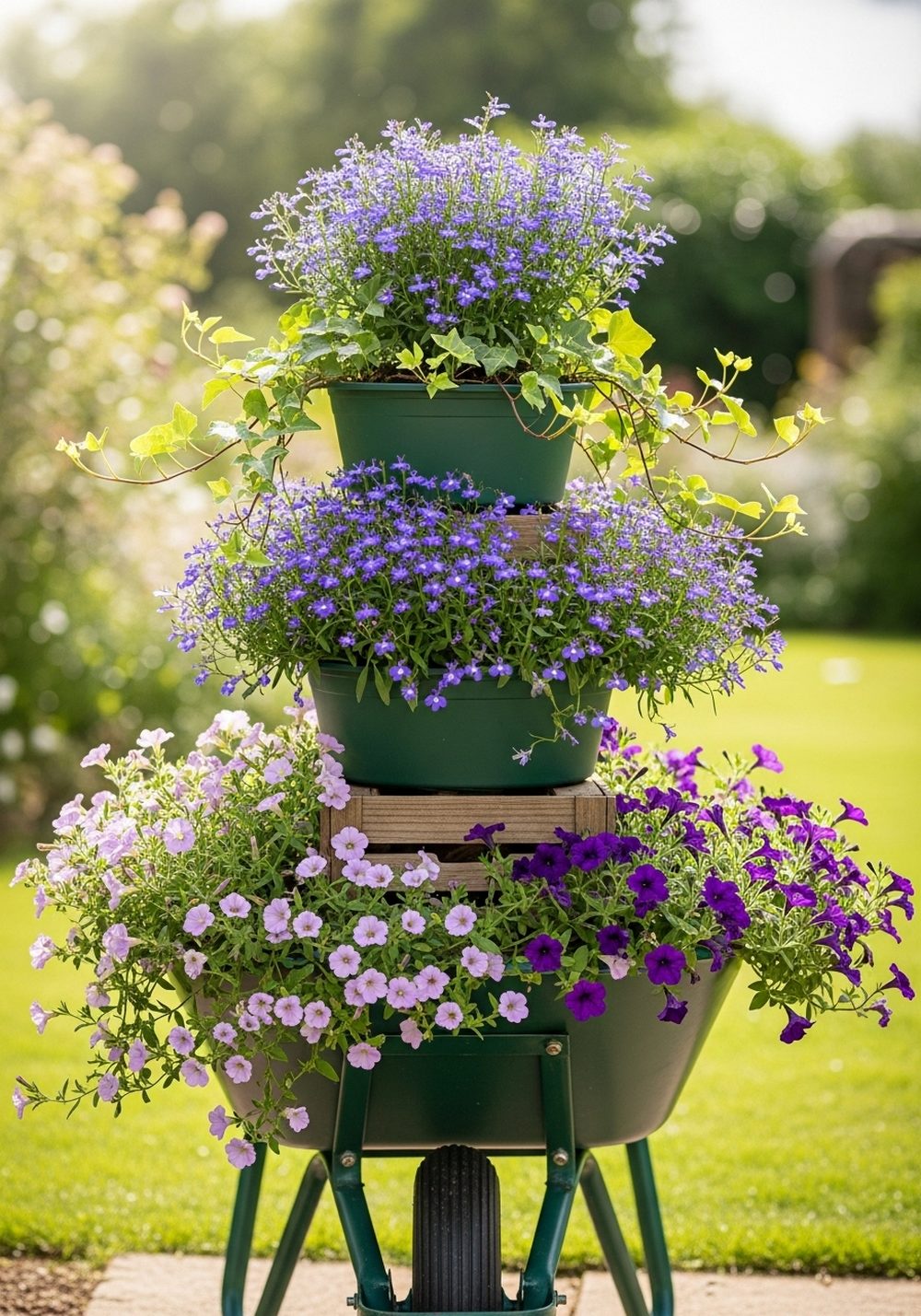
Create a lush, layered effect by turning your wheelbarrow into a mini tiered garden. Stack a couple of bricks or an upside-down pot inside to lift a second container higher, then plant each level with a mix of upright and trailing flowers. Cascading lobelia, bacopa, ivy, and calibrachoa spilling over the sides will soften the edges and draw the eye. This works wonderfully beside a doorway or along a path, where the tiers and tumbling blooms add drama without taking up extra ground space.
- Best For: Corners that need height and fullness without permanent structures.
- Budget Tip: Use recycled plastic pots hidden inside the wheelbarrow to save soil and plants.
- Styling Idea: Choose one main colour, like purple or red, and repeat it across both tiers for a pulled-together feel.
- Practical Note: Rotate the wheelbarrow occasionally so all sides receive sunlight and stay even.
5. Pastel Painted Wheelbarrow Porch Welcome
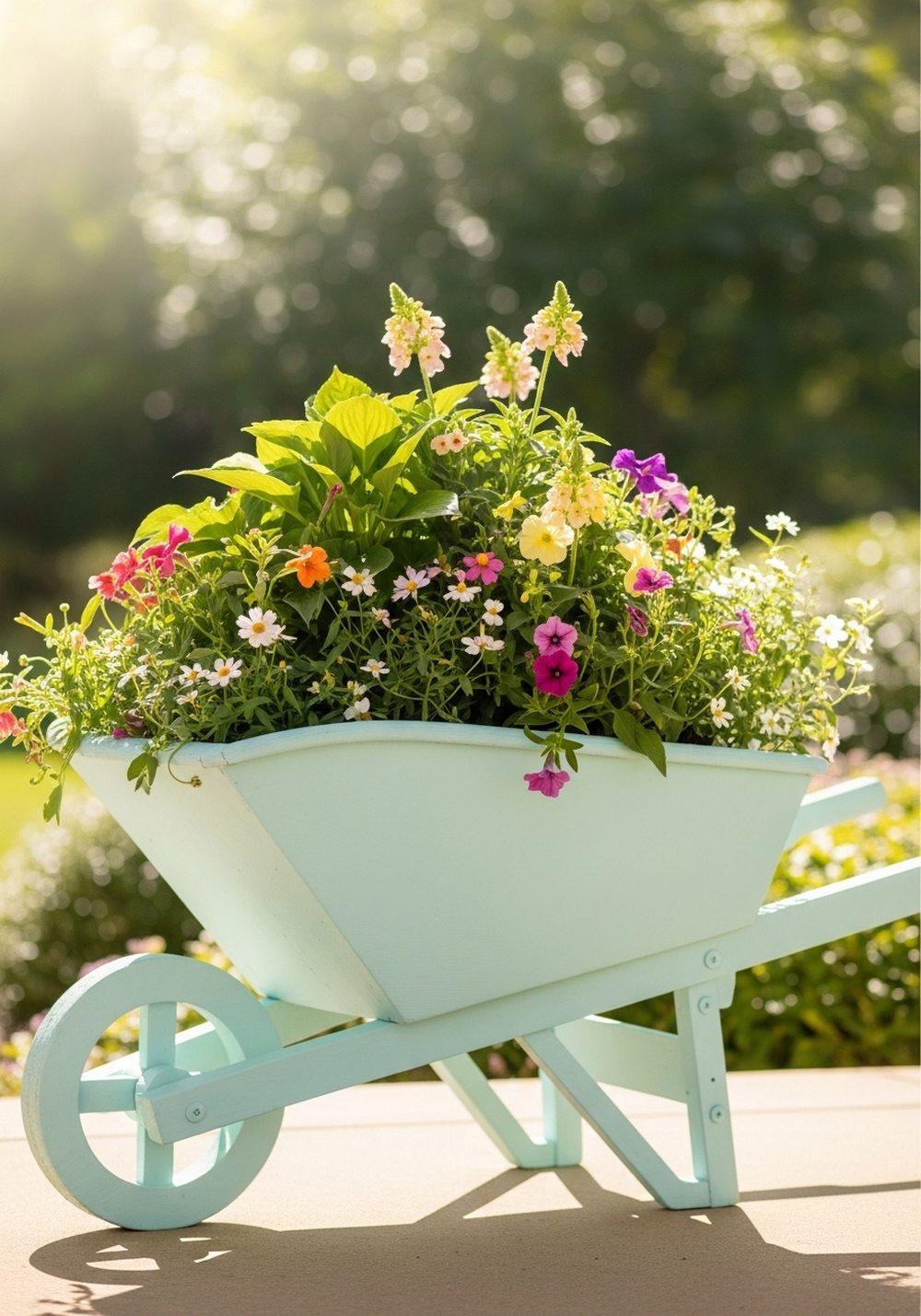
A pastel painted wheelbarrow planter makes a charming welcome beside any front door. Lightly sand the surface, prime if needed, and paint in a soft pastel shade that suits your home—mint green, pale blue, or blush pink all work beautifully. Once dry, add a mix of compact flowering plants and fresh greenery, making sure they rise just above the rim. Place the wheelbarrow angled slightly toward the door so guests see flowers and colour as they arrive. It’s an effortless way to brighten the entrance.
- Best For: Porches, front steps, and rental entryways.
- Budget Tip: Use leftover paint from indoor projects and inexpensive annuals for a quick refresh.
- Styling Idea: Match the paint to your front door colour or do a gentle contrast for a curated look.
- Practical Note: Choose plants that match the light levels at your entrance, whether full sun or part shade.
6. Shady Fern-Filled Wheelbarrow Planter
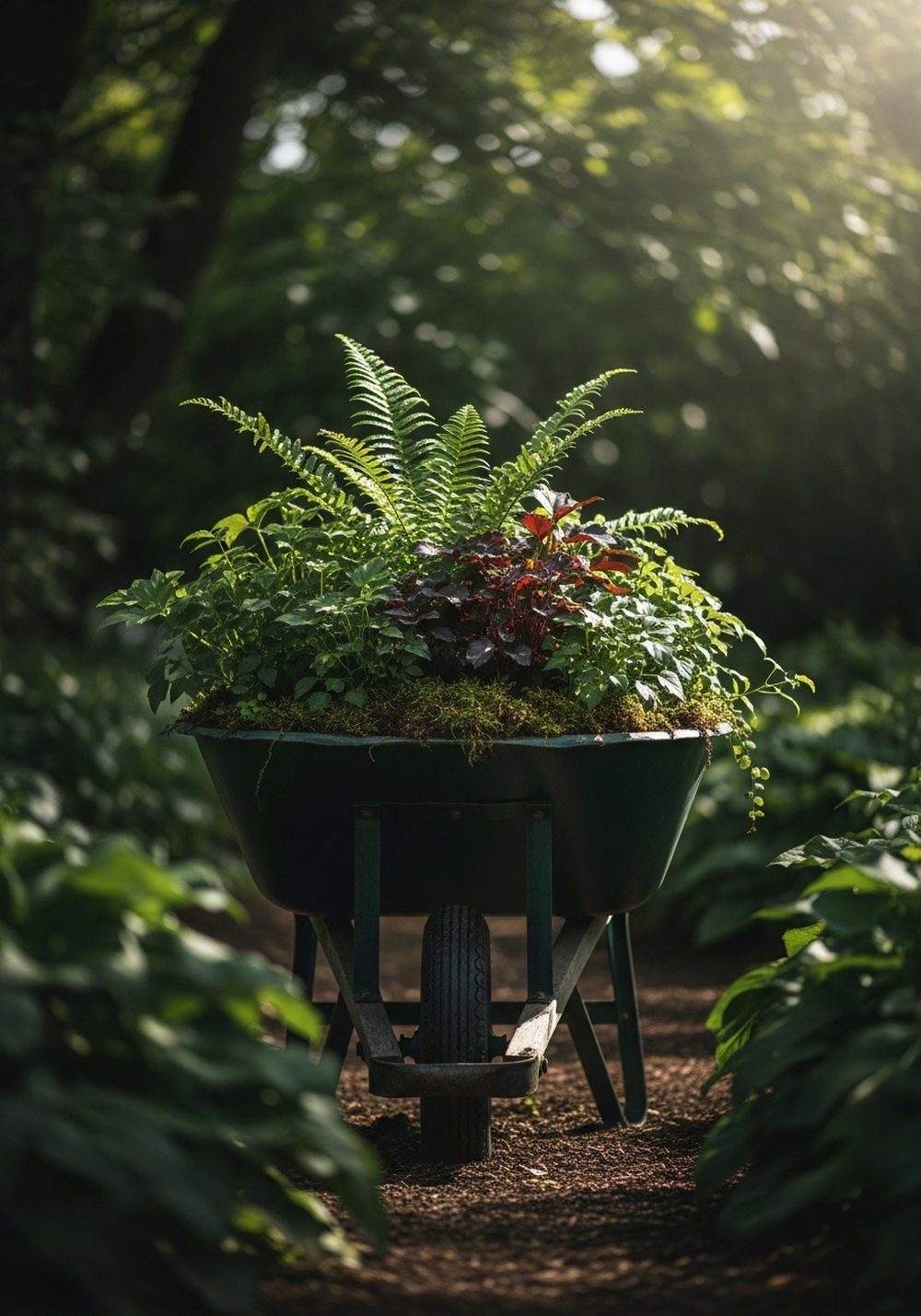
Shady corners often look bare, but a fern-filled wheelbarrow instantly adds texture and depth. Position the wheelbarrow under a tree or beside a fence where it gets dappled light. Fill with moisture-retentive compost, then plant a mix of ferns, hostas, and other shade lovers, tucking in moss or groundcover to hide bare soil. The layered green foliage and arching fronds give a cool, woodland feel that contrasts beautifully with rough metal or wood. It’s a simple way to turn a dull spot into a tranquil feature.
- Best For: North-facing patios, under-tree areas, and narrow side gardens.
- Budget Tip: Divide larger ferns and hostas from other beds instead of buying new plants.
- Styling Idea: Keep everything in tones of green for a soothing, natural look with plenty of texture.
- Care & Maintenance: Water regularly during dry spells, as containers in shade can still dry out.
7. Edible Greens Wheelbarrow By The Kitchen
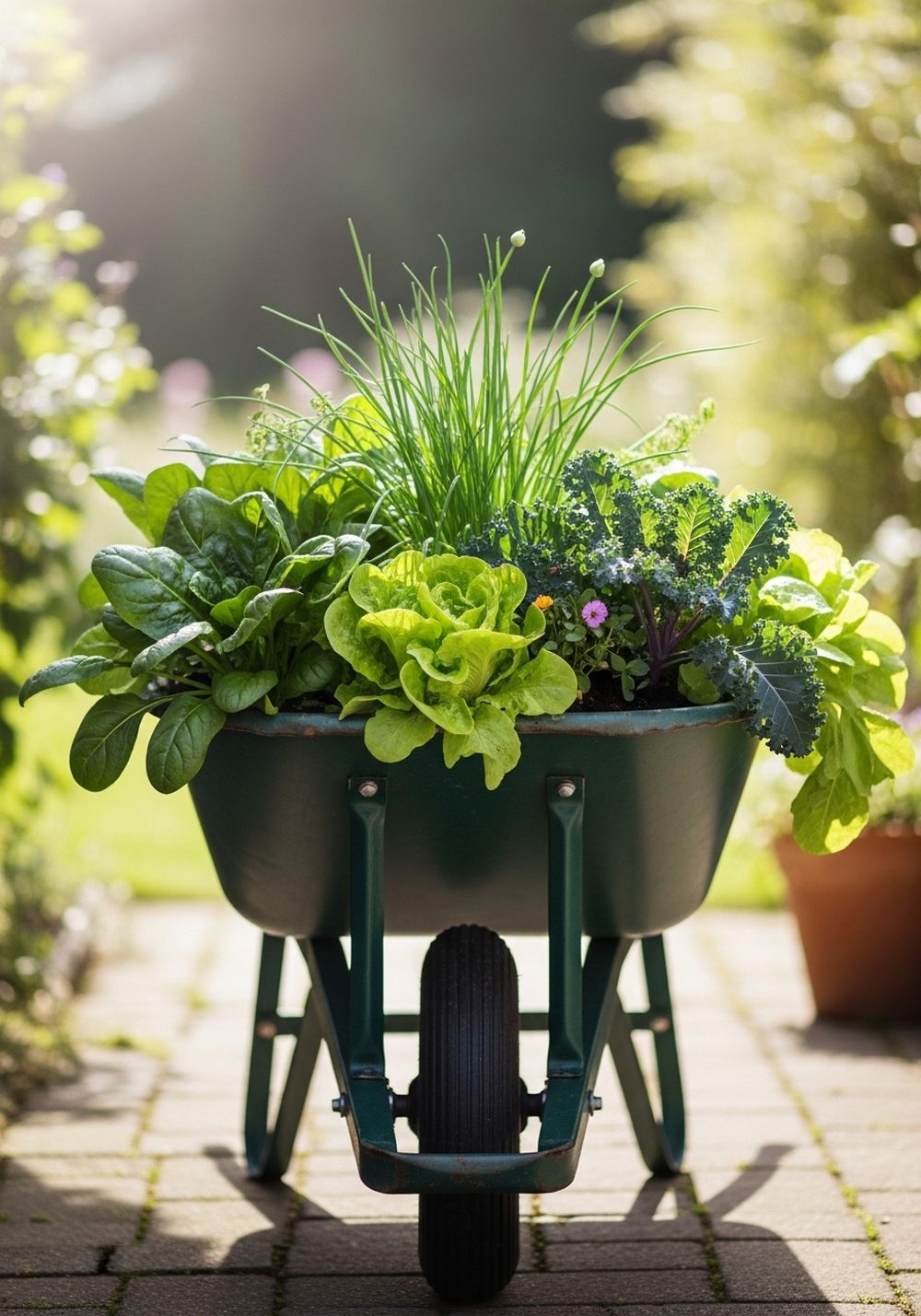
A wheelbarrow packed with edible greens is both beautiful and delicious. Fill it with a mix of lettuces, rocket, spinach, chives, and small herbs, arranging them in rows or curves like a tiny vegetable bed. Place the wheelbarrow close to your kitchen door so you can snip leaves minutes before meals. The fresh green foliage looks lush and inviting, especially when combined with a few marigolds or nasturtiums to add colour and help attract pollinators.
- Best For: Gardeners who love salads and quick kitchen harvests.
- Budget Tip: Grow from seed or mixed salad leaf packets to fill a large area cheaply.
- Styling Idea: Use a neutral-coloured wheelbarrow so the vibrant greens and flowers stand out.
- Practical Note: Harvest a little at a time to keep plants producing for longer.
8. Seasonal Changeable Wheelbarrow Display

Use one wheelbarrow as your “changing display” that shifts with the seasons. In spring, fill it with bulbs, pansies, and primroses. In summer, swap to bright annuals and trailing vines. Autumn might bring chrysanthemums, ornamental cabbages, and small pumpkins, while winter could feature evergreens and lanterns. Because everything is in one container, it’s easy to change out plants and props without reworking your whole garden. Position this wheelbarrow somewhere prominent so it sets the mood for the season.
- Best For: Front gardens and patios where you want a strong focal point.
- Budget Tip: Reuse the same containers inside the wheelbarrow, and only change the top layer of plants.
- Styling Idea: Add small, weather-safe decorations like lanterns or baskets that match each season.
- Practical Note: Keep the base soil and structure, just refreshing plants as they fade to save time and effort.
9. Drought-Tolerant Gravel Wheelbarrow Planter

If you’d like beauty without constant watering, a drought-tolerant gravel wheelbarrow is ideal. Fill the barrow with a mix of gravel and well-draining soil, then plant hardy sedums, small ornamental grasses, and other drought-tolerant varieties. Top with decorative stones to reduce evaporation and give a clean, modern look. This works perfectly in hot, sunny spots or in gardens where you want a neat, structured feature that still feels natural.
- Best For: Sunny, dry areas and gardeners who prefer low-maintenance containers.
- Budget Tip: Collect stones or gravel from around your garden instead of buying new decorative rock.
- Styling Idea: Stick to plants with strong shapes and repeat them for a minimalist, sculptural effect.
- Care & Maintenance: Water lightly during the first few weeks, then only in prolonged dry spells.
10. Whimsical Fairy Garden Wheelbarrow
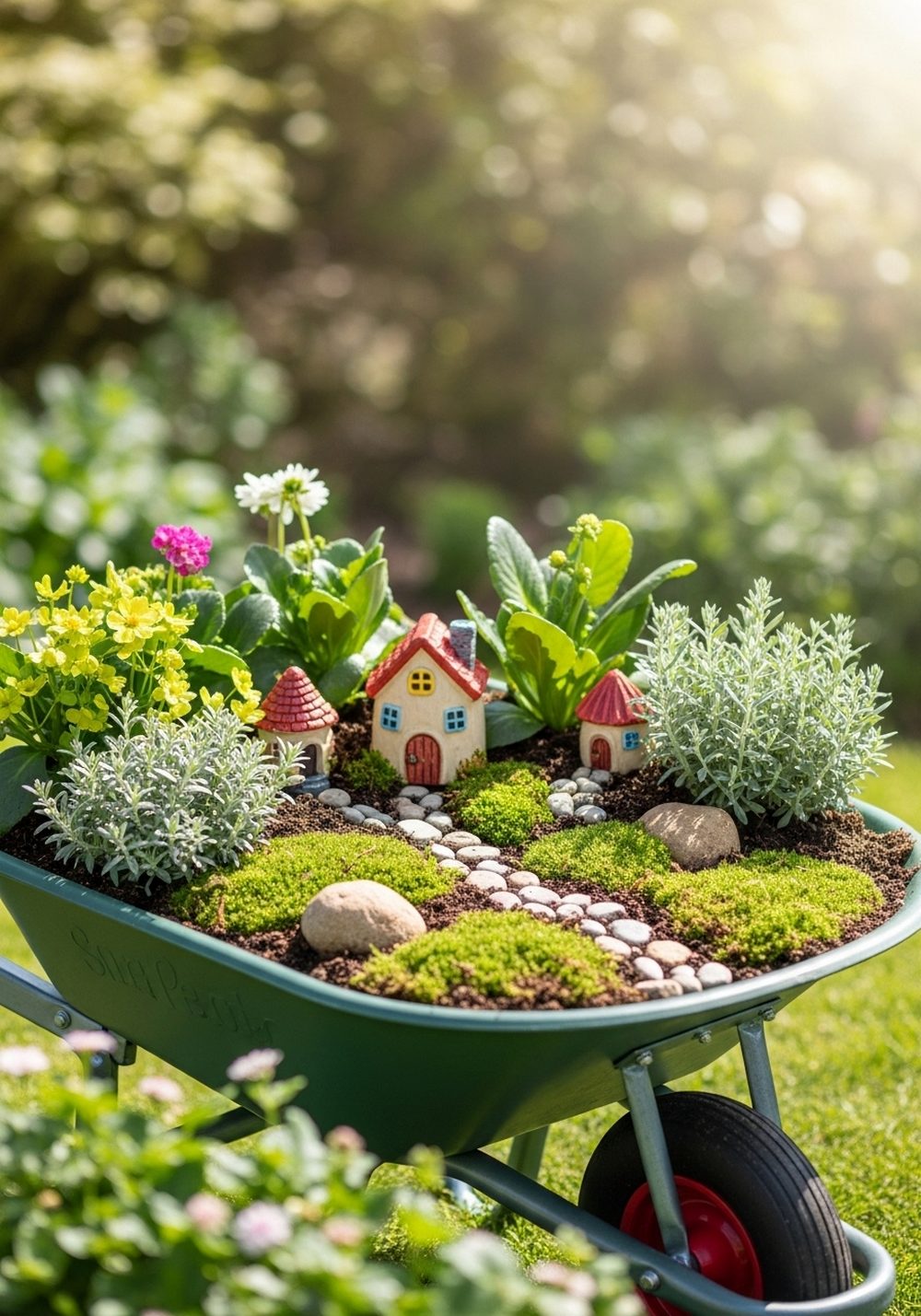
A fairy garden wheelbarrow brings playful charm, especially for families or guests with children. Fill the wheelbarrow with soil and plant low-growing, fine-textured plants like creeping thyme, baby tears, and tiny ferns. Add miniature houses, pathways made from pebbles, and little bridges or arches. Tuck in a few colourful flowers and a small “pond” made from a shallow dish. The raised height makes it easy to see all the details and to rearrange accessories whenever you like.
- Best For: Family gardens, children’s play areas, and storytelling corners.
- Budget Tip: Make miniature decorations from stones, sticks, and recycled materials rather than buying figures.
- Styling Idea: Choose a muted, natural colour palette so the tiny scene feels like a secret woodland world.
- Practical Note: Place it where it gets some protection from heavy rain and pets, to keep the scene intact.
Conclusion
Wheelbarrow planters are an easy way to add height, character, and warmth to any outdoor space, from a rented patio to a long-established garden. With a single container, you can experiment with flowers, herbs, greens, or even miniature landscapes without committing to permanent changes. Start with one idea—a pastel welcome by the door or a simple herb barrow by the back steps—and let your confidence grow as your plants do, turning your garden into a truly cozy place to be.
FAQs
1. How can I make a wheelbarrow planter on a very small budget?
Look for second-hand or damaged wheelbarrows that are still sturdy, or repurpose your own if you no longer use it for work. Use inexpensive multipacks of annuals, seeds, or divisions from other beds to fill it. Line the barrow with landscape fabric or old hessian to hold soil, and top with a thin layer of fresh compost for a clean finish.
2. Are wheelbarrow planters suitable for renters?
Yes, they’re ideal for renters because they are portable and non-permanent. You’re not digging into the ground or altering the property, and you can simply wheel your planter to a new home when you move. Just be sure to place it where water runoff won’t stain surfaces, and use saucers or gravel underneath on balconies or paved areas.
3. What should I do to stop my wheelbarrow planter from rotting or rusting too quickly?
For wooden barrows, drill drainage holes and angle the wheelbarrow slightly so water can escape, then treat the wood with an exterior-safe sealant. For metal barrows, add drainage and a layer of gravel to keep soil away from the base, and consider a rust-inhibiting primer on the outside. Raising the front on bricks or blocks helps air circulate and keeps the structure drier.
4. Can I use a wheelbarrow planter in a very small courtyard or balcony?
Absolutely, especially if you choose a compact wheelbarrow or plant only part of a larger one. Succulents, herbs, and small flowering plants work well in tight spaces. Just check the weight if you’re on a balcony (use lightweight potting mix and fewer stones) and place the barrow where it doesn’t block doors or walkways.
5. What are the easiest plants for beginners to grow in a wheelbarrow?
Beginner-friendly options include hardy geraniums, marigolds, petunias, herbs like parsley and chives, and small succulents. These plants are forgiving, adapt well to containers, and provide lots of colour or texture with basic care. Choose varieties suited to the amount of sun your spot receives, and don’t overcrowd the planter so each plant has room to grow.
6. How do I safely mix decor items and plants in a wheelbarrow planter?
Keep decor pieces small, stable, and weather-safe—nothing sharp, easily broken, or heavy enough to crush plants. Place ornaments on top of stones or bare soil rather than pressing them into roots. Leave clear spaces between decorations and stems so foliage can grow freely and water can reach the soil without being blocked.