10 Pallet Vertical Herb Wall Ideas For Small Spaces

If you dream of fresh herbs but only have a balcony, tiny patio, or small kitchen, a pallet vertical herb wall might be your new best friend. Old pallets are easy to find, simple to customize, and perfect for turning a bare wall into a living pantry.
In this post, you’ll find ten clever ways to use pallets in small spaces, from slim balcony walls to rolling herb screens. Each idea focuses on simple setups, budget-friendly tweaks, and easy maintenance, so you can enjoy fresh flavor without sacrificing precious floor space. Pick one design that suits your home and watch your outdoor (or indoor) corner instantly feel greener, cozier, and more personal.
Quick List
- Slim Balcony Pallet Herb Wall
- Indoor Kitchen Window Pallet Herb Wall
- Fold-Down Pallet Herb Wall Table
- Pallet Herb Wall Room Divider For Small Patios
- Tiered Stair-Step Pallet Herb Wall
- Mason Jar Pallet Herb Wall
- Color-Block Painted Pallet Herb Wall
- Chalkboard Label Pallet Herb Wall
- Bench-Back Pallet Herb Wall
- Mobile Pallet Herb Wall On Casters
1. Slim Balcony Pallet Herb Wall

A slim balcony pallet herb wall is all about using height instead of floor space. Mount a sanded pallet vertically against the railing or wall, then add shallow planter boxes or landscape fabric pockets between the slats. Fill with compact herbs like basil, thyme, and chives so they don’t overshadow each other. The narrow profile keeps your balcony feeling open, while the green wall softens concrete and metal. Add a small stool or folding chair nearby so you can snip herbs and enjoy the fresh scent.
- Best For: Very narrow balconies or fire escape-style ledges.
- Budget Tip: Use scrap wood for pockets and repurpose plastic pots cut to fit.
- Styling Idea: Keep wood natural and pair with neutral pots for a calm, modern look.
- Practical Note: Choose sun-loving herbs if your balcony gets strong light most of the day.
- Care & Maintenance: Install a drip tray or saucer at the bottom to catch excess water.
2. Indoor Kitchen Window Pallet Herb Wall

If your outdoor space is limited, bring the herb garden inside with a compact pallet wall near a bright kitchen window. Fix the pallet securely to the wall and create narrow shelves or pockets to hold small pots. Arrange herbs you use daily—like basil, parsley, and coriander—at eye level for quick picking while you cook. The warm timber against tile or painted walls makes the space feel cozy, and the herbs act like living decor that refreshes the whole room.
- Best For: Renters and homes with no balcony but a sunny window.
- Budget Tip: Reuse yogurt cups or small jars as liners inside the pallet pockets.
- Styling Idea: Keep pots all one color, such as white or terracotta, for a clean, unified look.
- Practical Note: Protect the wall behind with a thin plastic sheet if you’re worried about splashes.
- Care & Maintenance: Rotate pots occasionally so each herb gets an even share of light.
3. Fold-Down Pallet Herb Wall Table

This clever design turns a pallet herb wall into a tiny outdoor workstation. Mount the pallet to your balcony wall with sturdy brackets and hinge a flat board near the middle. When folded up, the board sits flush like part of the wall; folded down, it becomes a mini table for potting herbs or enjoying a cup of tea. Herbs planted above the table cascade gently overhead, creating a snug little nook that feels like a tiny garden café.
- Best For: Micro-balconies where every inch must multitask.
- Budget Tip: Use an offcut of plywood or reclaimed wood for the fold-down panel.
- Styling Idea: Paint the table surface in a soft color to contrast with rustic pallet boards.
- Practical Note: Use strong hinges and chains so the table can safely hold weight.
- Extra Idea: Add a small hook underneath for hanging hand tools or a watering can.
4. Pallet Herb Wall Room Divider For Small Patios
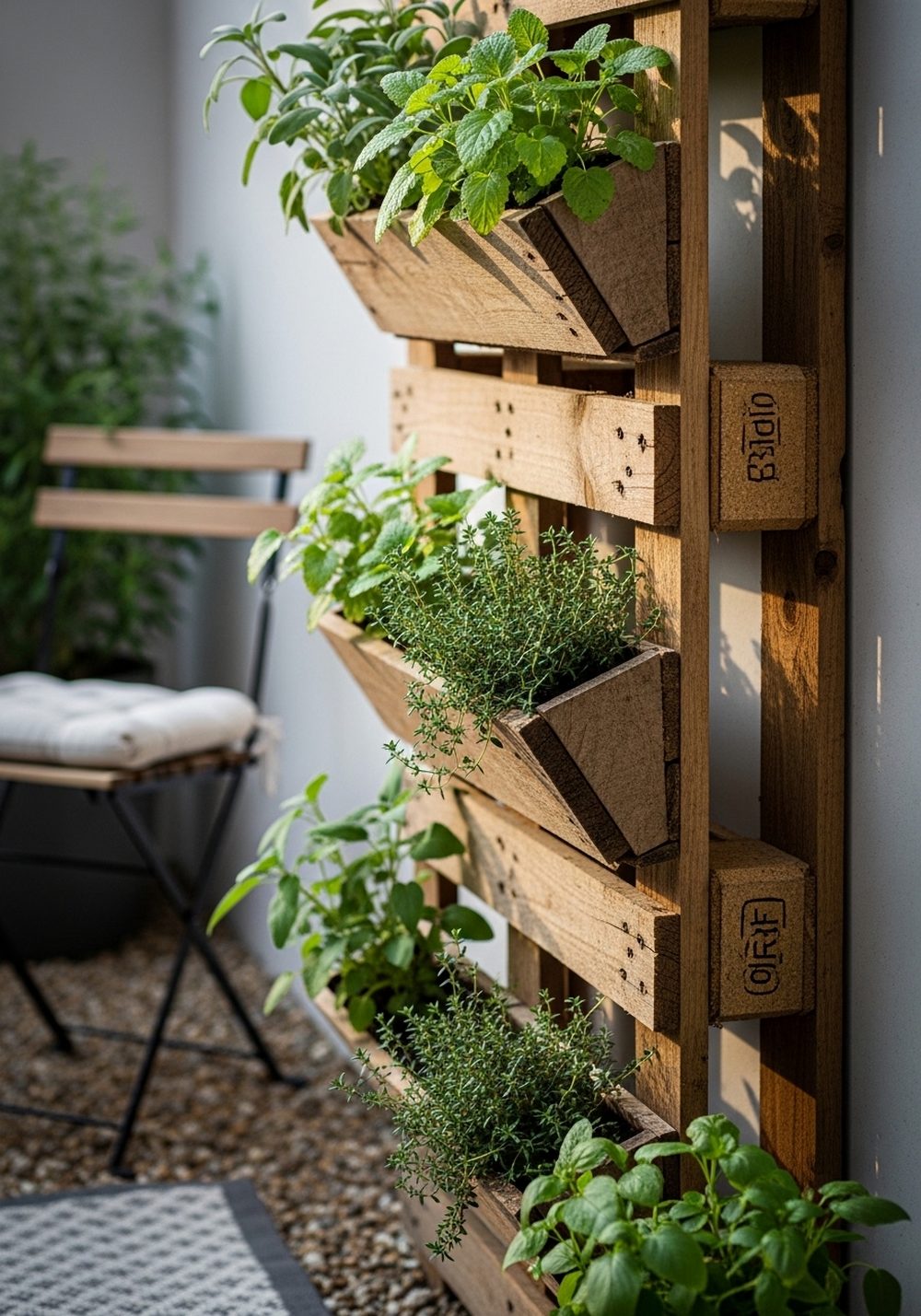
On a small patio, privacy can feel like a luxury. A tall, narrow pallet herb wall set perpendicular to a railing or wall creates a green screen that separates a tiny seating area from the rest of the space. Fill pockets at different heights with herbs like lemon balm, mint, and thyme to create a varied, leafy surface. As the plants fill out, they diffuse views and soften noise, while still letting light and air filter through the gaps between slats.
- Best For: Small patios that feel too exposed or open.
- Budget Tip: Use one pallet cut in half and stacked vertically to form a taller screen.
- Styling Idea: Match cushion colors to the herbs (soft greens and muted creams) for a coordinated look.
- Practical Note: Secure the base well or anchor it to a planter box to prevent tipping.
- Care & Maintenance: Plant hardy herbs that tolerate occasional wind and dryness.
5. Tiered Stair-Step Pallet Herb Wall
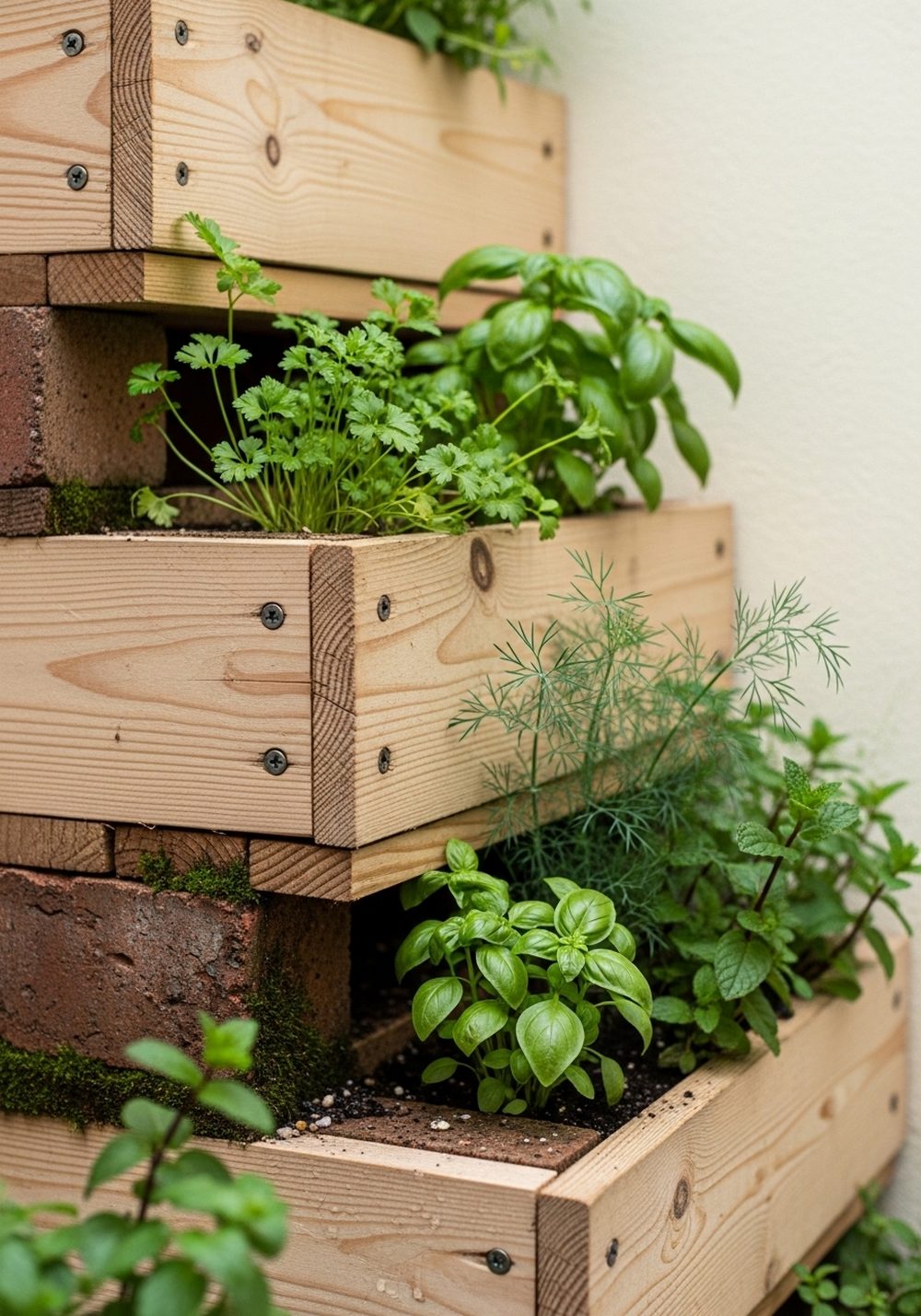
A tiered stair-step pallet herb wall gives each plant a chance to shine in the light. By adding boxy extensions that step out gradually as they go up, you create layers of herbs that overlap and cascade without blocking each other. This works beautifully against a plain wall in a side passage or tiny courtyard. The staggered structure adds depth and shadow, turning an otherwise flat area into a textured focal point full of scent and color.
- Best For: Narrow side yards, alleyways, or small walled courtyards.
- Budget Tip: Build the tiered boxes from leftover decking boards or pallet offcuts.
- Styling Idea: Leave the wood natural and pair with simple black or terracotta liners for a timeless feel.
- Practical Note: Put thirstier herbs like basil and parsley in the lower tiers where water collects.
- Care & Maintenance: Check upper tiers more often, as they may dry out faster in hot weather.
6. Mason Jar Pallet Herb Wall

Mason jars on a pallet create a light, airy herb wall that suits both indoors and out. Attach metal hose clamps in even rows across the pallet, then slide jars inside and tighten. Fill with free-draining potting mix and small herbs like chives and mint. The clear glass lets you see roots and moisture, adding another interesting layer to the display. When the sun hits, it sparkles through the jars, casting soft reflections on nearby surfaces and giving even the smallest balcony a charming, handmade feel.
- Best For: Bright but sheltered spaces where jars won’t be knocked or frozen.
- Budget Tip: Mix second-hand jars of different heights for a collected look.
- Styling Idea: Keep the pallet wood pale and pair with light-colored furniture for a fresh, airy vibe.
- Practical Note: Add a little gravel at the bottom of each jar to improve drainage.
- Care & Maintenance: Water lightly; jars can become waterlogged if overwatered.
7. Color-Block Painted Pallet Herb Wall

A color-block pallet herb wall adds both greenery and bold design to a small space. Before planting, paint sections of the pallet in broad stripes or blocks—perhaps muted teal, clay, and cream—leaving some bare wood exposed. Once the paint dries, attach pockets or small troughs in front of each block and fill with herbs. The color behind each plant makes greens look more vibrant and turns the herb wall into a piece of outdoor art, perfect when you want a statement in a tiny area.
- Best For: Balconies or patios that feel dull or too neutral.
- Budget Tip: Use leftover paint samples; you don’t need much to cover each block.
- Styling Idea: Repeat the same colors on nearby pots or cushions for a cohesive scheme.
- Practical Note: Choose exterior paint or seal the wood to handle moisture.
- Extra Idea: Keep the bottom section unplanted and use it as a ledge for candles or tiny decor items.
8. Chalkboard Label Pallet Herb Wall
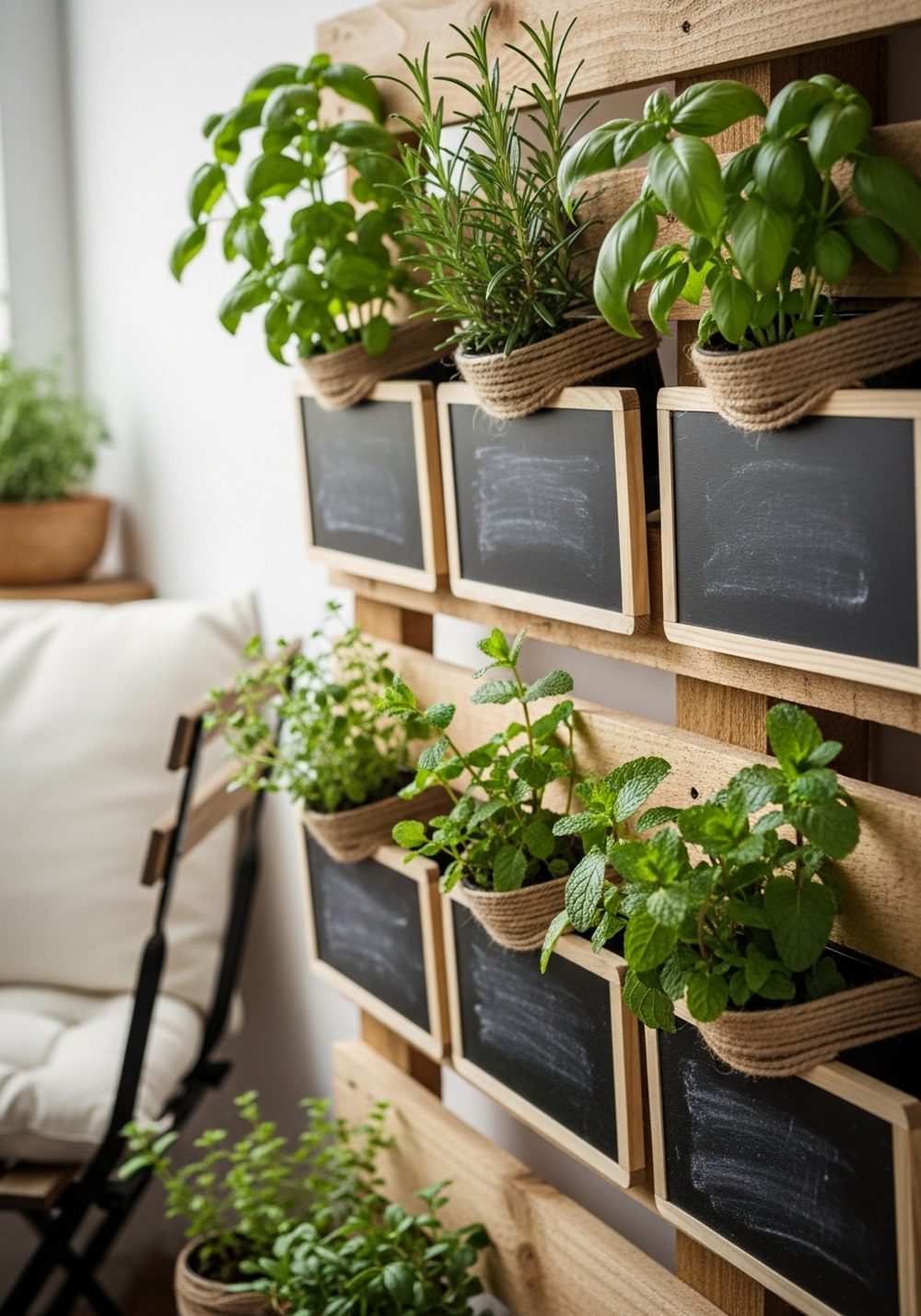
This idea combines practical labeling with rustic charm. Fix small chalkboard panels or paint rectangles directly onto the pallet beneath each planting pocket. As you arrange herbs like basil, rosemary, and mint, you can note their names in chalk and wipe them away if you change planting later. The dark chalkboard patches contrast beautifully with green foliage and pale wood, giving your small balcony or kitchen corner a cozy, cottage-style feel while keeping herbs easy to identify at a glance.
- Best For: Beginners still learning to recognize different herbs.
- Budget Tip: Use leftover chalkboard paint and inexpensive plywood offcuts for labels.
- Styling Idea: Pair with enamel-style pots or simple metal buckets for a vintage look.
- Practical Note: Avoid writing too close to wet soil so it doesn’t smear quickly.
- Care & Maintenance: Refresh the chalk occasionally and seal labels lightly if they’re fully outdoors.
9. Bench-Back Pallet Herb Wall
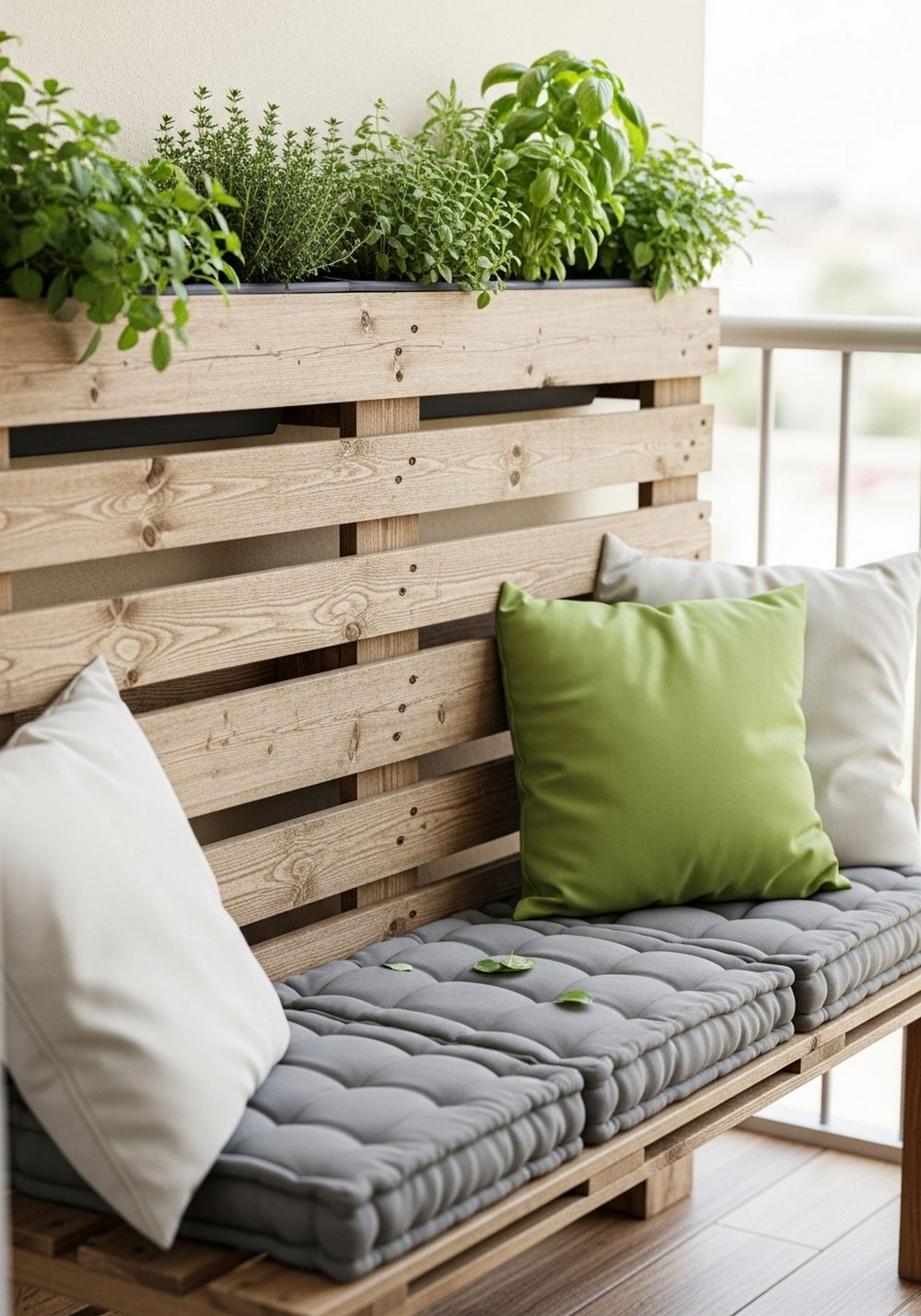
Turn a plain bench into a lush little retreat by mounting a pallet herb wall directly behind it. The pallet becomes a living backrest, filled with herbs at shoulder and head height. When you sit down, you’re surrounded by scent from mint, thyme, or lavender brushing behind you. This setup works beautifully on a slim balcony or porch, as the bench and wall share the same footprint. Add a cushion or two, and you create a compact seating and growing area in one.
- Best For: Tiny patios where seating and planting must overlap.
- Budget Tip: Repurpose an old bench and pallet instead of buying new furniture.
- Styling Idea: Use cushions in soft greens and neutrals so the herbs remain the star.
- Practical Note: Ensure the pallet is strongly fixed so it doesn’t wobble when you lean back.
- Care & Maintenance: Choose herbs that don’t grow too woody or scratchy against clothing.
10. Mobile Pallet Herb Wall On Casters

A mobile pallet herb wall lets you chase the light and rearrange your small space as needed. Attach locking casters to the base of a sturdy pallet and add a wide bottom board or planter box for stability. Fill staggered pockets with herbs and roll the whole wall to follow the sun or create temporary privacy. This flexibility is especially useful on shared balconies or rooftop spaces where you might need to move things around. It’s a mini green screen you can position wherever it suits you most.
- Best For: Shared or multi-use spaces like rooftop terraces or rented balconies.
- Budget Tip: Look for second-hand casters from old furniture to keep costs down.
- Styling Idea: Paint the pallet a single soft tone to complement your flooring or railing.
- Practical Note: Use locking wheels so the wall stays safely in place in wind.
- Care & Maintenance: Check wheel hardware occasionally and tighten screws if they loosen.
Conclusion
Pallet vertical herb walls turn even the tightest corners into fresh, green features that look as good as they taste. Whether you mount one beside your kitchen window, behind a tiny bench, or on wheels for a flexible balcony layout, each design adds height, color, and scent without stealing precious floor space. Start with one simple pallet project, learn which herbs you love most, and gradually build your own compact, living wall that makes every small space feel richer and more inviting.
FAQs
1. How can I build a pallet herb wall on a small budget?
Look for free or inexpensive pallets from local shops, then sand and seal just the visible areas. Use recycled containers like tins, jars, or cut-down plastic bottles as liners, and buy a small selection of herb seedlings rather than lots of full-size plants. Build in stages—start with a few pockets and expand as you can afford more soil and plants.
2. Are pallet herb walls suitable for renters who can’t drill into walls?
Yes, there are renter-friendly options. You can lean a pallet herb wall securely against a railing, stand it in a long planter box for stability, or choose a mobile design on casters. Use adjustable straps, cable ties, or freestanding frames instead of screws in walls. Always make sure the structure is stable and won’t tip or blow over.
3. What herbs work best in vertical pallet gardens?
Compact, frequently picked herbs are ideal. Try basil, thyme, oregano, chives, mint, parsley, and coriander. Avoid very tall or woody plants that become heavy or unbalanced. In shadier small spaces, mint, parsley, and chives usually cope better, while sunnier balconies suit basil, thyme, and rosemary.
4. How do I keep my pallet herb wall from damaging walls or railings?
Add a moisture barrier, such as a plastic sheet or waterproof fabric, on the back of the pallet so damp soil doesn’t sit directly against the wall. Use rubber pads or felt strips at contact points to prevent scratching. Place a tray or row of saucers at the bottom to catch drips and empty them regularly.
5. What’s the easiest pallet herb wall idea for beginners?
A simple pallet leaned or lightly fixed against a wall with removable pots is the easiest place to start. You only need basic tools to add brackets or hooks for pots, and you can rearrange plants as you learn how much light and water they need. Once you’re confident, you can try more advanced ideas like fold-down tables or mobile casters.
6. Can pallet herb walls handle bad weather in small outdoor spaces?
They can, as long as you plan for it. Use weather-treated or sealed pallets, choose sturdy containers, and pick herbs suited to your climate. In very windy or exposed spots, anchor the base with a heavy planter or weights and select tougher herbs. During extreme weather, small pots can be lifted out and moved indoors until conditions improve.