10 Quick Pallet Compost Bin Builds For Easy Composting
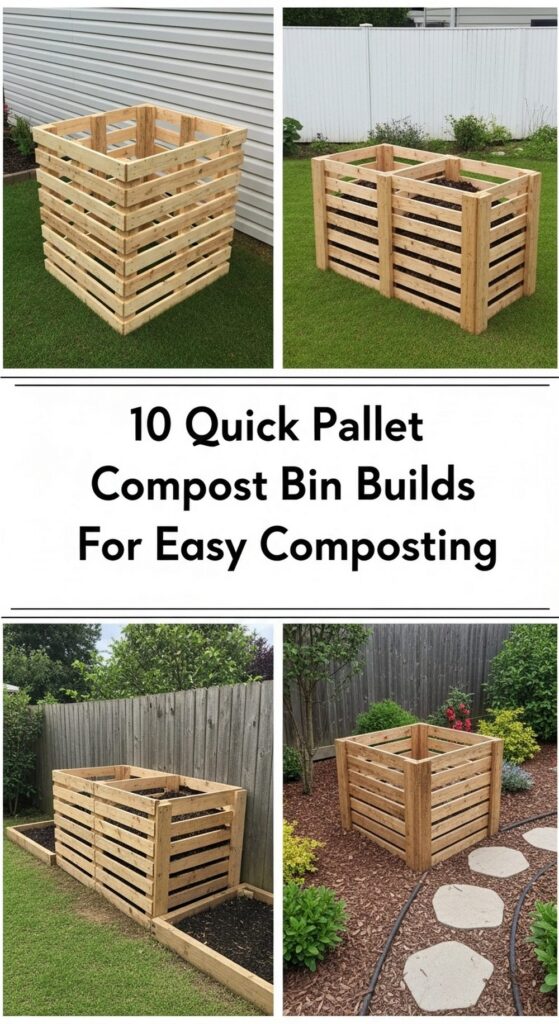
If you’ve been wanting to compost but feel put off by complicated systems or high prices, pallet compost bins are a brilliant shortcut. Old pallets are often free or very cheap, they’re easy to work with, and they fit naturally into a garden setting.
In this guide, you’ll find 10 quick, practical pallet compost bin builds you can put together with basic tools and a free afternoon. Whether you have a big backyard or a small side yard, these ideas will help you turn kitchen scraps and garden waste into rich, dark compost—while keeping things tidy, rustic, and surprisingly attractive.
Quick List
- Simple Three-Pallet Compost Bin
- Corner-Lashed Pallet Compost Bin
- Hinged-Front Pallet Compost Bay
- Double-Bay Pallet Compost System
- Pallet Compost Bin With Removable Slats
- Compact Pallet Compost Bin For Small Yards
- Pallet Compost Bin With Wire Mesh Lining
- Rustic Pallet Compost Bin With Herb Top
- Mobile Pallet Compost Bin On Casters
- Pallet Compost Bin Disguised As Garden Screen
1. Simple Three-Pallet Compost Bin

The classic three-pallet bin is the easiest way to start composting fast. Stand one pallet at the back and two along the sides to form a U shape, then secure them together with rope, wire, or a few brackets. Leave the front open so you can easily toss in kitchen scraps, grass clippings, and dry leaves. The gaps between the pallet slats allow air to flow, helping everything break down more quickly while still looking neat in a garden corner.
- Best For: First-time composters who want a no-fuss setup.
- Budget Tip: Ask local shops or warehouses for free pallets and use salvaged rope or wire.
- Styling Idea: Choose similar-looking pallets and give them a quick sand so the wood looks more intentional and less junky.
- Practical Note: Place directly on soil so worms and microbes can move in and work their magic.
2. Corner-Lashed Pallet Compost Bin
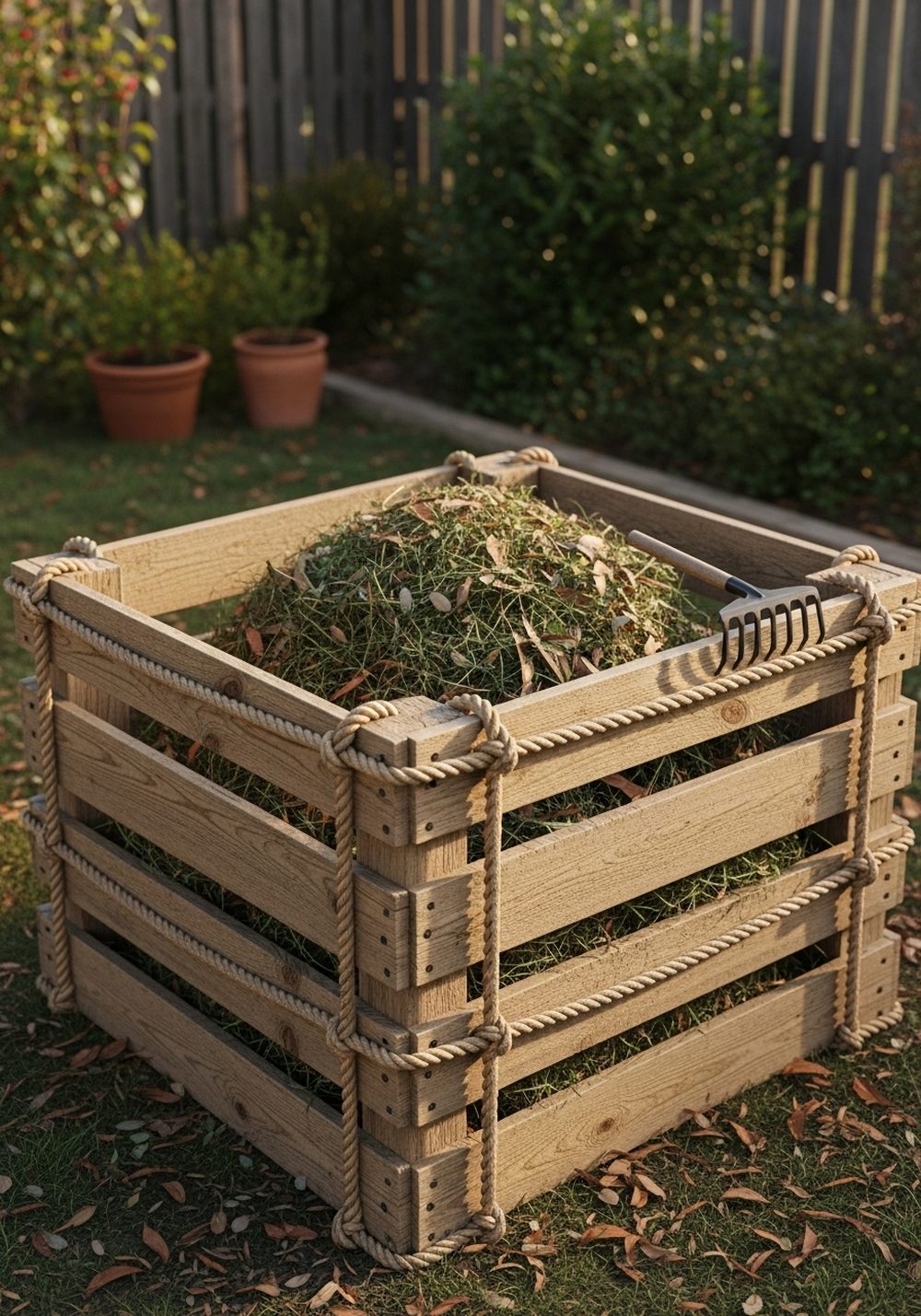
If you have an unused corner of the garden, this simple two-pallet design works beautifully. Stand two pallets in an L shape, pushed snugly into the corner of a fence or wall, then lash them together with sturdy rope. The fence creates the third side, saving materials and time. Compostable materials pile neatly into the corner, and the whole structure feels like it was meant to be there. It’s airy, rustic, and takes minutes to assemble.
- Best For: Garden corners and side yards where you want to tuck compost out of the way.
- Budget Tip: Use natural rope or old bungee cords you already have instead of buying hardware.
- Styling Idea: Choose natural jute or sisal rope for a soft, rustic look that blends with plants.
- Practical Note: Avoid placing directly against wooden house walls; use a fence or detached boundary instead.
3. Hinged-Front Pallet Compost Bay
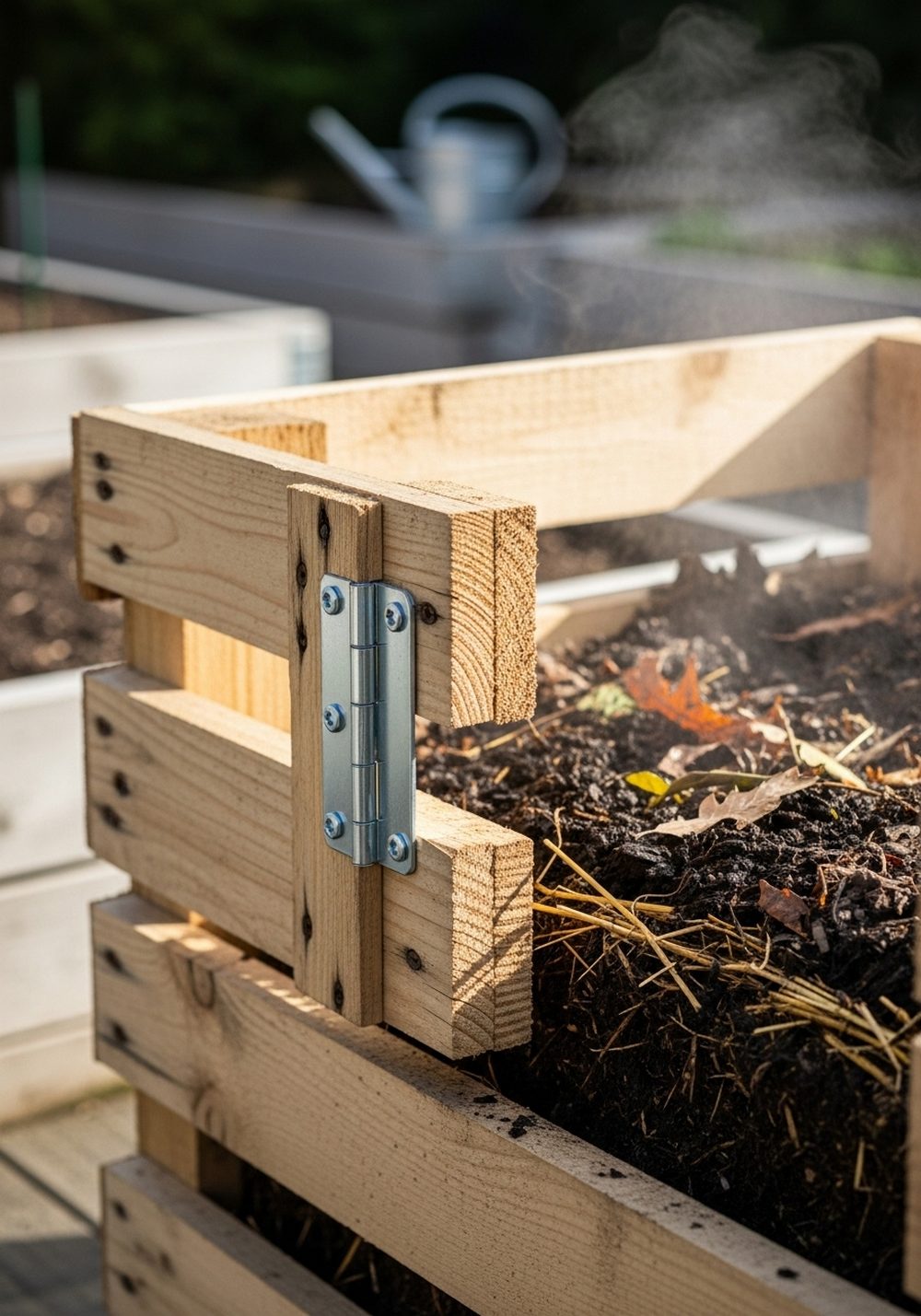
This build takes a basic pallet bin and makes it far easier to manage. Use pallets for the back and sides, then mount a front pallet panel on simple hinges so it swings open like a gate. When you’re ready to turn or harvest compost, just swing the front away and step right in with a fork or shovel. The rest of the time, the front panel hides the pile and keeps everything tidy and contained.
- Best For: People who want easy access without lifting heavy boards every time.
- Budget Tip: Reuse old door hinges and screws instead of buying new hardware.
- Styling Idea: Paint or stain the front pallet in a garden-friendly color like soft green or charcoal.
- Practical Note: Use strong hinges and secure posts so the front doesn’t sag when full.
4. Double-Bay Pallet Compost System
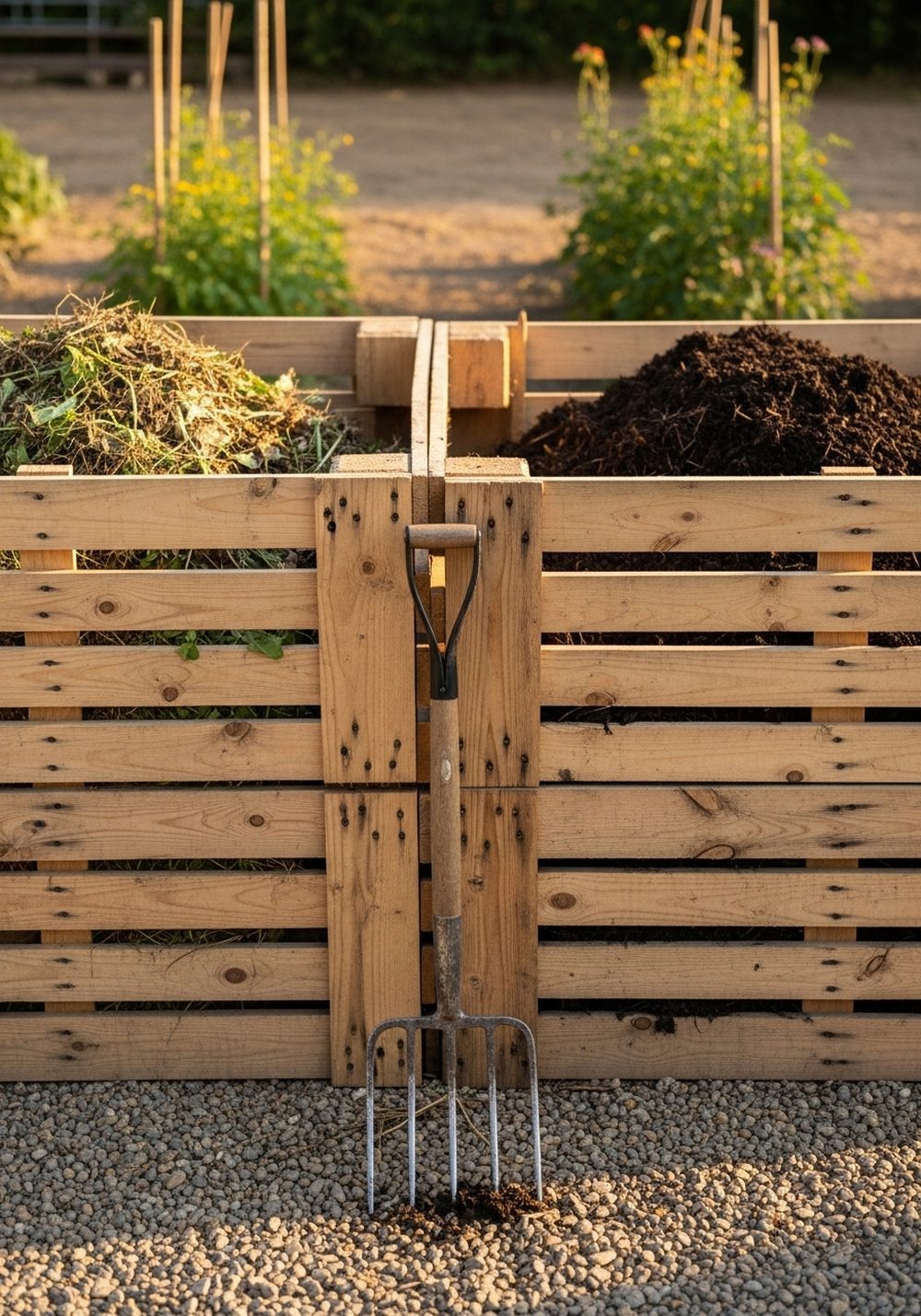
If you’re serious about composting, a double-bay system is a big upgrade. Build two pallet bins side by side, sharing a central wall. One bay is for fresh materials; the other is for compost that’s halfway or fully finished. This lets you keep a steady cycle going without mixing new scraps into finished compost. The repeated pallet slats give a pleasing, structured look that can anchor the back of a veg patch or along a fence line.
- Best For: Keen gardeners with enough space to make compost regularly.
- Budget Tip: Look for identical pallets from the same source so everything fits together easily.
- Styling Idea: Add a simple gravel or wood-chip path in front to make the whole area look planned.
- Practical Note: Keep the bays about a pitchfork-width wide so you can turn material comfortably.
5. Pallet Compost Bin With Removable Slats
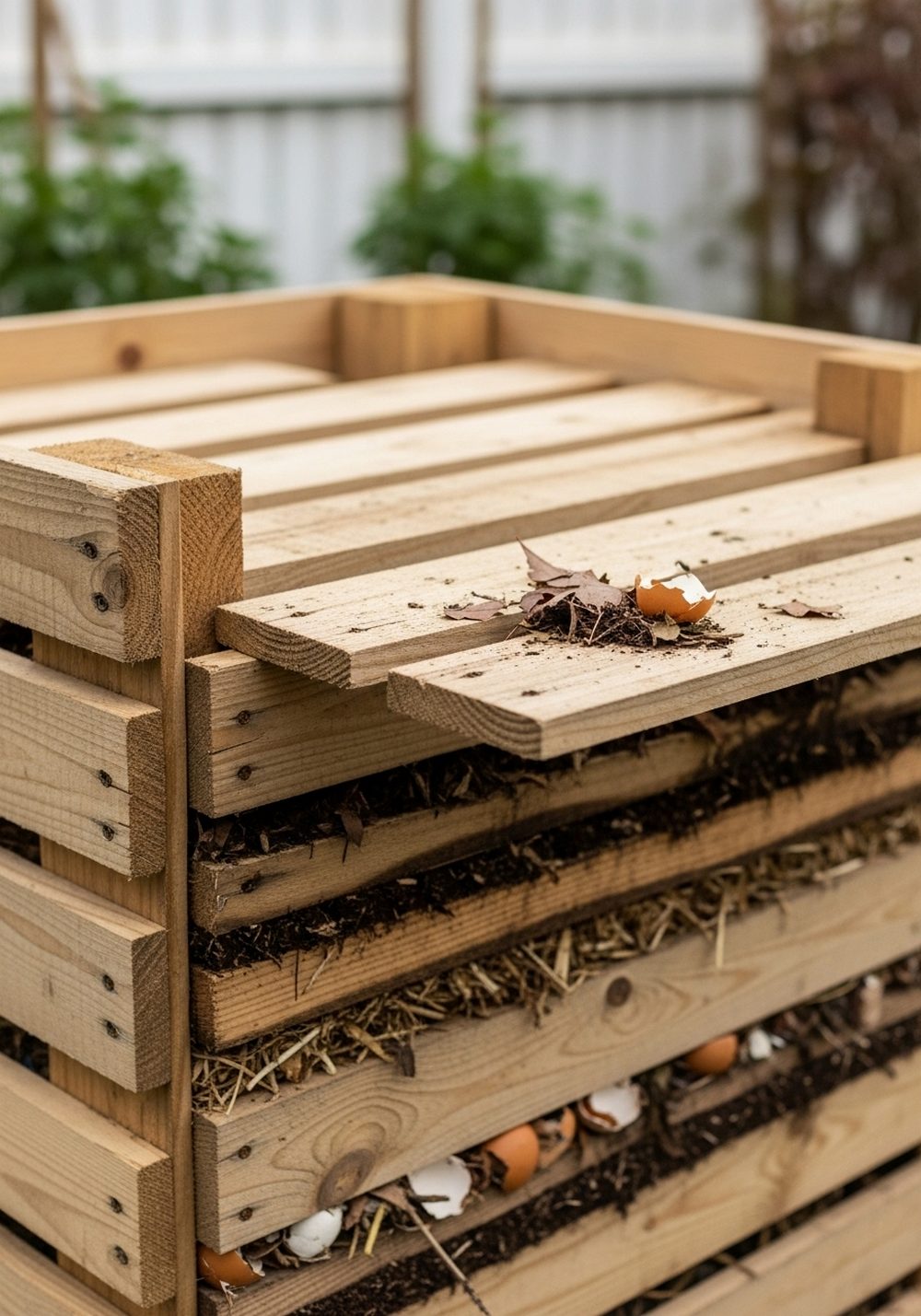
For those who hate fighting with a solid front panel, try a removable slat design. Build your bin with pallets, but leave the front open and add vertical posts or side runners. Cut additional boards to slide in horizontally as slats, stacking them up to form the front wall. When it’s time to remove compost, simply slide out a few slats from the bottom. It’s neat, clever, and saves your back from heavy lifting.
- Best For: Gardeners who want clean, easy access to finished compost at the bottom.
- Budget Tip: Cut extra slats from damaged pallets or leftover fencing boards.
- Styling Idea: Sand the front slats and leave them natural for a simple, Scandinavian-style look.
- Practical Note: Label the slats or mark the posts so you remember the correct order when sliding them back.
6. Compact Pallet Compost Bin For Small Yards
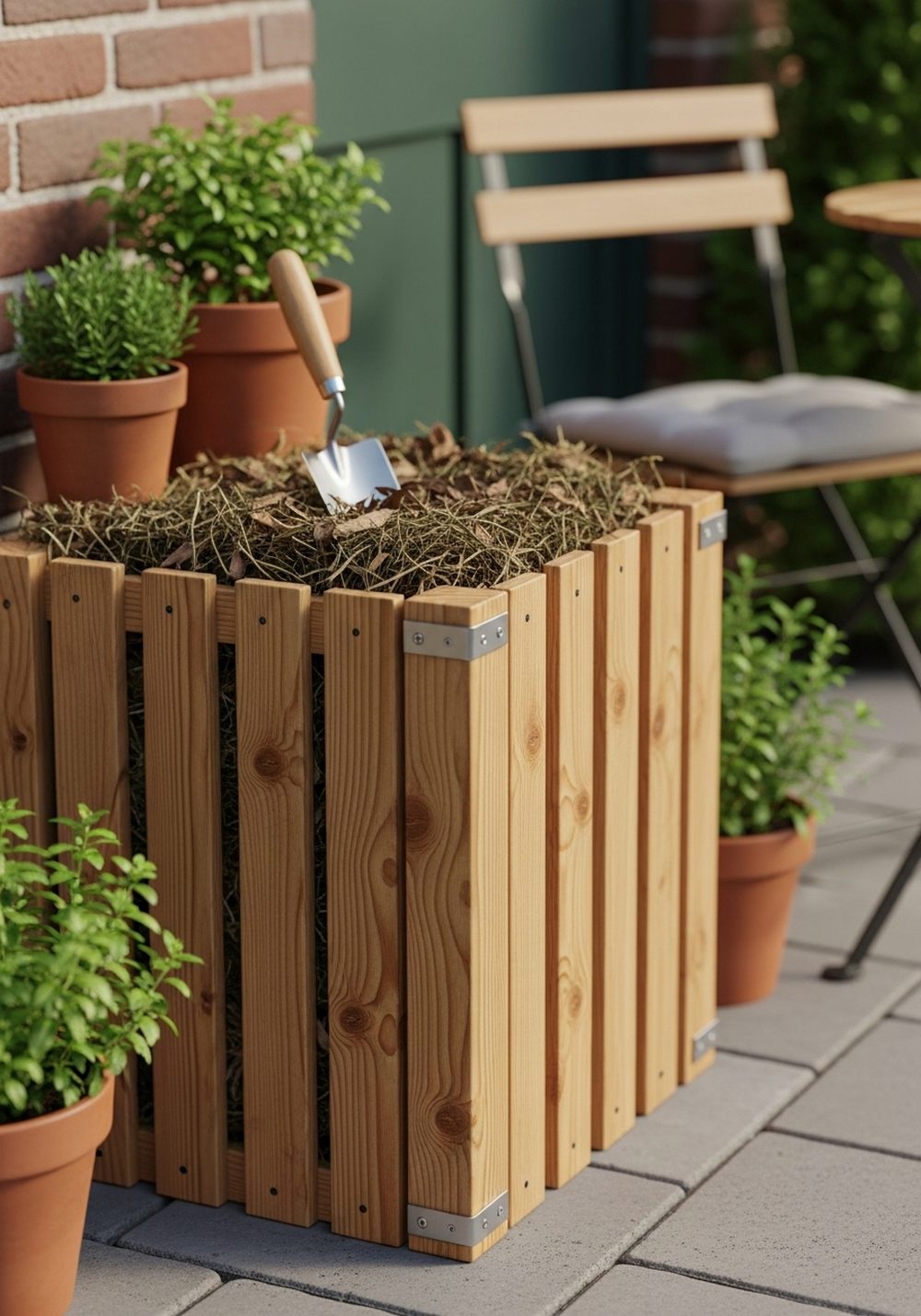
Don’t have space for a full-size bin? Cut pallets down and build a compact cube-shaped compost bin that fits into a narrow side yard or small garden. The smaller footprint still gives plenty of room for a modest household’s scraps and clippings. With careful cutting and a few brackets, the bin looks tidy and intentional, more like a rustic wooden box than a big compost heap. It’s ideal where every square metre counts.
- Best For: Small gardens, narrow spaces, and modest compost needs.
- Budget Tip: Use a single pallet carefully cut into sections for multiple sides.
- Styling Idea: Place a pot or small ornament on top to make the bin feel like part of the design.
- Practical Note: Turn the compost more often in smaller bins, as they can dry out faster.
7. Pallet Compost Bin With Wire Mesh Lining
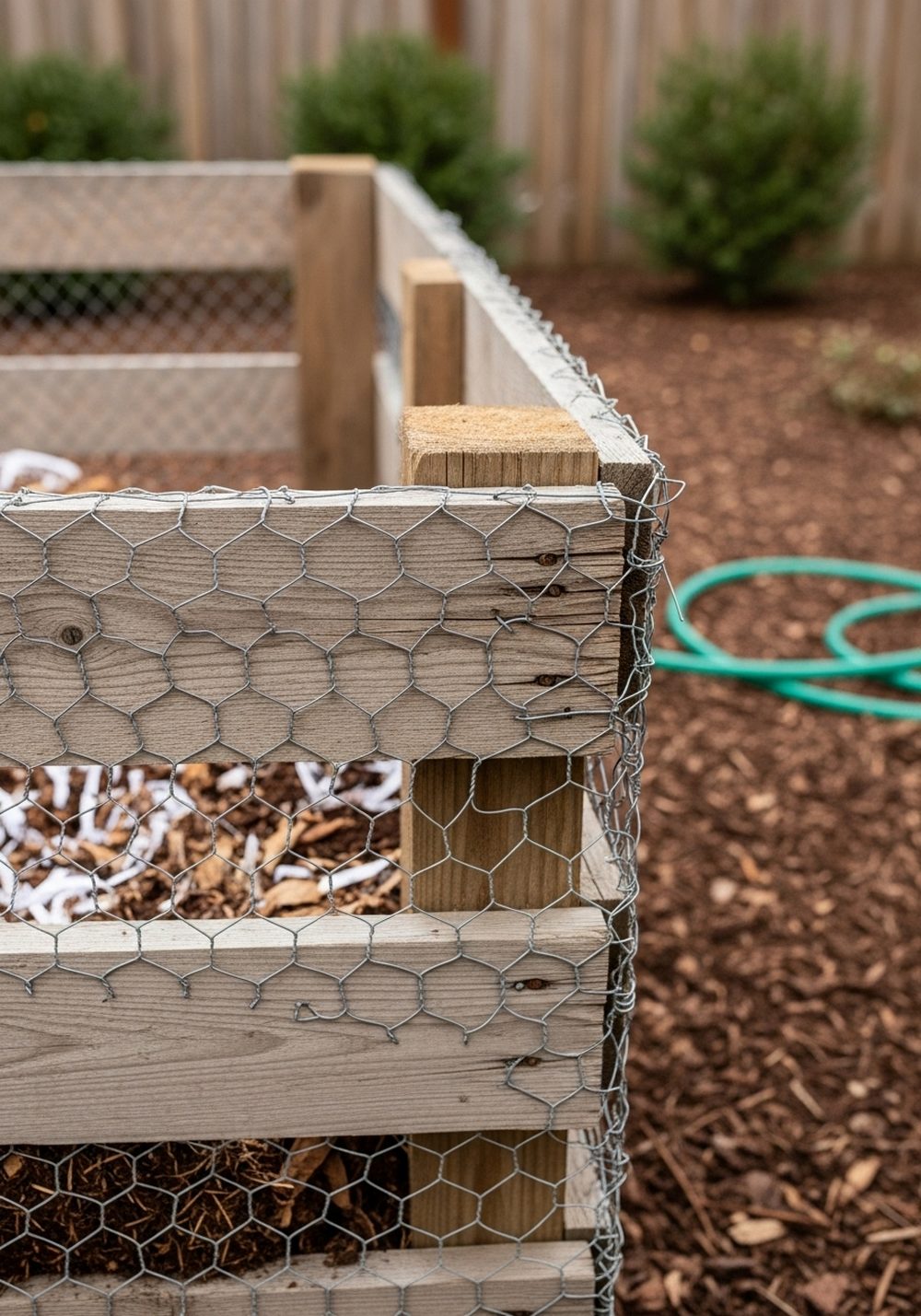
If you compost fine materials like coffee grounds, shredded paper, or small leaves, lining your pallet bin with wire mesh keeps everything from spilling out. Attach mesh inside the pallet walls with staples or small nails, forming a tight inner shell. The compost still gets lots of air, but the bin looks more contained and professional. This is especially helpful if your compost area is close to a patio or neighbour’s fence and you want a cleaner look.
- Best For: Urban gardens and anyone using fine or shredded compost materials.
- Budget Tip: Use leftover mesh offcuts or repurpose old fencing where possible.
- Styling Idea: Pair the mesh-lined bin with a bark or gravel surface underneath for a clean, organised feel.
- Practical Note: Fold mesh edges neatly and tuck them away to avoid sharp snagging points.
8. Rustic Pallet Compost Bin With Herb Top
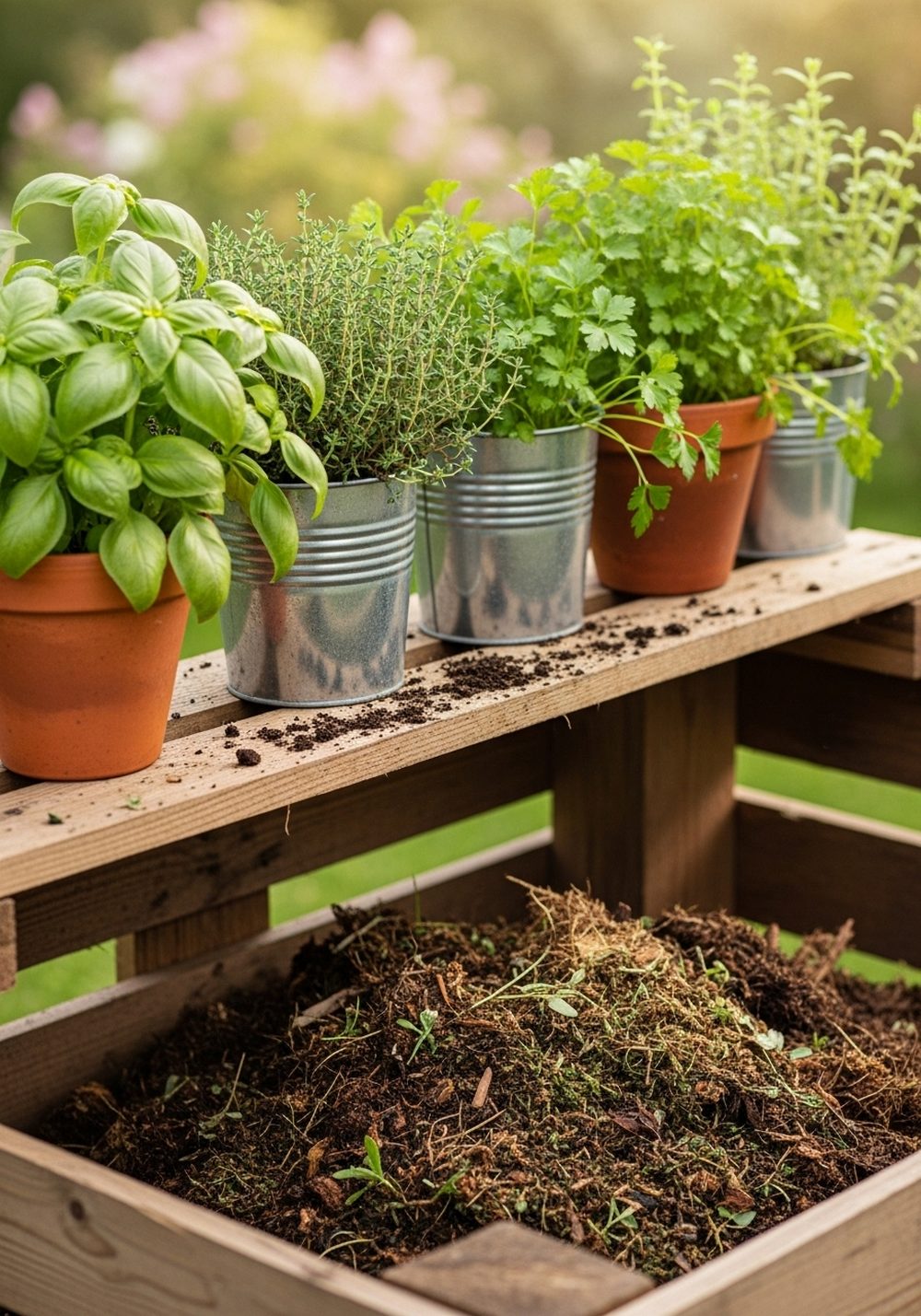
Turn your compost bin into a feature by using the flat top edge as a narrow herb shelf. Build a sturdy pallet bin, then place a row of small pots filled with herbs like thyme, parsley, and oregano along the top. You’ll soften the look of the structure and bring scent and greenery right to the compost area. The contrast between rustic wood and lush herbs makes the bin look like a deliberate part of your garden design.
- Best For: Cottage-style gardens and cooks who love fresh herbs close at hand.
- Budget Tip: Use mismatched second-hand pots and freshen them with a quick coat of paint.
- Styling Idea: Repeat one accent color across several pots to tie the look together.
- Practical Note: Ensure the bin is sturdy and level before adding anything to the top.
9. Mobile Pallet Compost Bin On Casters
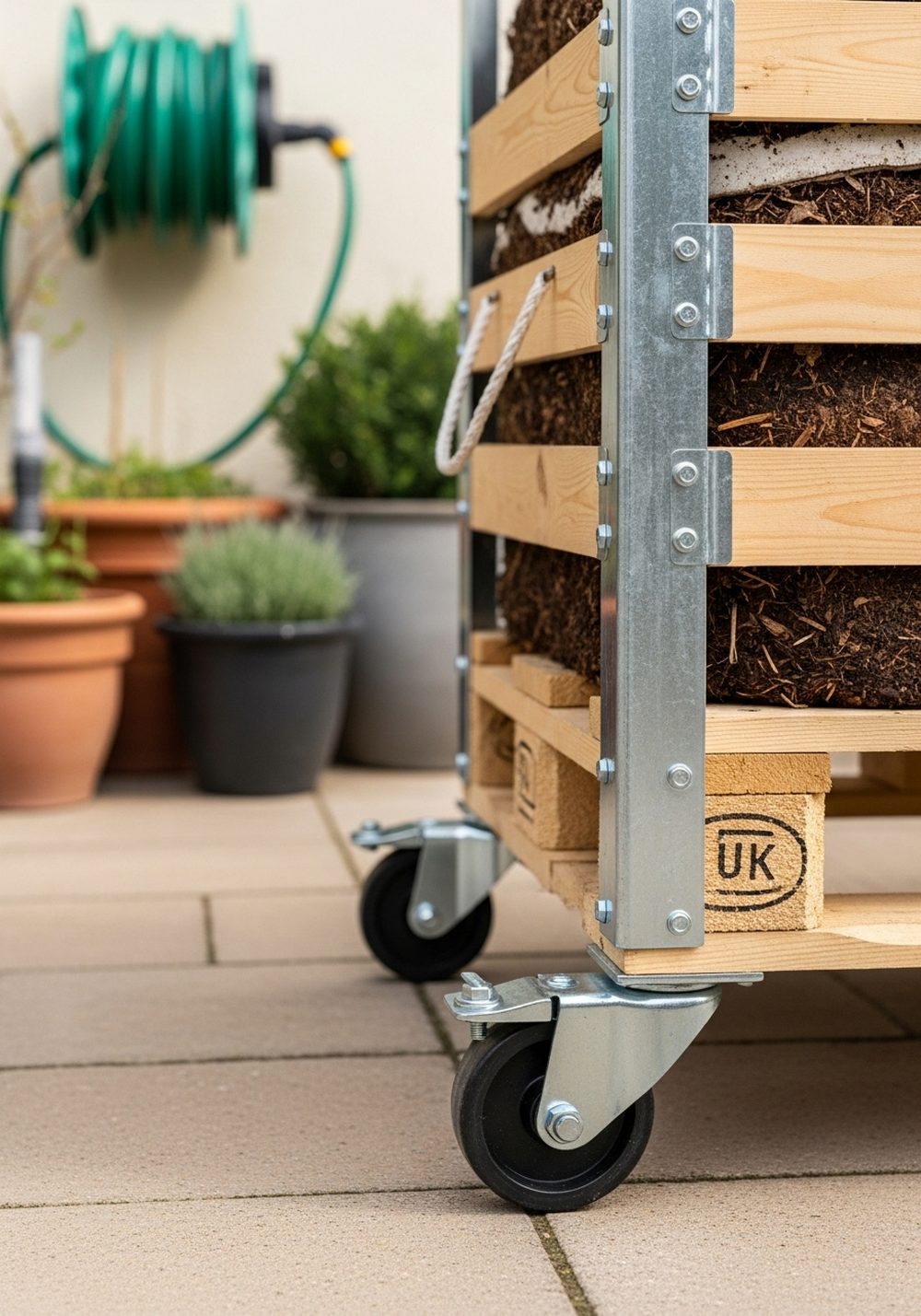
For patios or rented spaces, a mobile pallet compost bin can be a game-changer. Build a compact bin from pallets and mount it on strong casters, so you can roll it aside when you need the space or move it to catch more sun. It looks like a rustic wooden box on wheels, especially neat on paved areas. As long as you keep the size sensible, it’s surprisingly easy to move even when full of composting material.
- Best For: Paved yards, renters, and flexible layouts that change through the year.
- Budget Tip: Salvage casters from old furniture or trolleys to keep costs low.
- Styling Idea: Keep the wood a single, simple tone so it looks like a deliberate garden piece, not a cart.
- Practical Note: Choose lockable casters so the bin won’t roll away in wind or when you’re working.
10. Pallet Compost Bin Disguised As Garden Screen

If you’d rather not look at compost at all, disguise your bin as a vertical garden screen. Use pallets to build a compost bay behind, then add a facing pallet with fabric pockets, small planters, or trailing plants on the front. From the garden side, it appears as a living wall or decorative screen, while the compost quietly does its work behind. This is ideal for front gardens or shared spaces where you want function without sacrificing looks.
- Best For: Visible spots where you want compost hidden in plain sight.
- Budget Tip: Use cheap fabric pockets or repurpose old bags for planting on the front.
- Styling Idea: Mix trailing greenery with a few seasonal flowers for changing colour through the year.
- Practical Note: Leave enough gap at the top or side for air flow and easy access to the compost bay.
Conclusion
Pallet compost bins prove that practical garden projects don’t have to be expensive or unattractive. With a few simple builds, you can turn waste into rich, useful compost while adding texture and structure to your outdoor space. Start with one quick design that suits your garden and your time, then adjust, expand, or upgrade as you gain confidence. Before long, your pallet bin will feel like an essential, well-loved part of the garden.
FAQs
1. How can I build a pallet compost bin on a very small budget?
Look for free pallets from local shops, warehouses, or building sites (always ask permission). Start with a simple three-pallet or corner design that uses minimal hardware. You can lash pallets together with rope or wire you already have, and skip paint or extras until later. The most important part is getting the structure up and starting to compost.
2. Are pallet compost bins suitable for renters?
Yes, most of these designs can be taken apart and moved if you leave the ground underneath untouched. Mobile bins on casters or compact cube designs are particularly renter-friendly. Avoid sinking posts into the soil if you know you’ll need to move, and keep the bin away from house walls to make removal easier when you leave.
3. Will a pallet compost bin last in bad weather?
Pallet wood isn’t permanent, but it holds up reasonably well for several years, especially if you keep it off constantly wet ground. Choosing pallets that are in good condition and untreated with harsh chemicals is important. You can add a simple protective finish or a small roof over the bin if your area gets heavy rain, which will also help control moisture in the compost.
4. What if I only have a tiny yard or paved space?
A compact pallet bin or a mobile bin on casters works well in very small or paved areas. Just make sure there’s some drainage underneath, such as a gravel tray or a small patch of soil where liquid can escape. Keep the size modest and turn the compost regularly, as smaller piles can dry out or cool down faster.
5. Is it safe to place pallet compost bins near plants and decor?
Yes, as long as there’s some airflow and the compost isn’t constantly soggy and leaking. Place bins slightly away from delicate plants and wooden structures, and avoid running compost juice onto patios you want to keep clean. You can use gravel, bark, or pavers around the base to create a neat, dry border that looks tidy and protects nearby decor.
6. What’s the easiest pallet compost idea for beginners?
The simple three-pallet bin is the easiest starting point. It’s quick to assemble, easy to understand, and forgiving if your composting routine isn’t perfect yet. Once you’re comfortable, you can add upgrades like a hinged front, mesh lining, or a second bay without having to completely start over.