10 Painted Rock Garden Marker Ideas That Are Fun to Make

If you love knowing exactly what’s growing where, painted rock garden markers are a charming way to label your plants and add personality to your beds and pots. They’re perfect for home gardeners, renters, balcony growers, and anyone who enjoys a small creative project between watering sessions.
In this post you’ll find ten fun, low-cost painted rock ideas that double as plant labels and tiny works of art. From cute veggie faces to minimalist line drawings, these projects are simple enough for beginners and kids, yet stylish enough to brighten any garden. Grab a handful of stones, some paint, and let’s turn your labels into decor.
Quick List
- Herb Silhouette Painted Rock Markers
- Cute Veggie Face Garden Marker Rocks
- Chalkboard-Style Painted Rock Labels
- Soft Watercolor Wash Garden Marker Stones
- Mandala Pattern Painted Rock Plant Markers
- Busy Bug-Themed Rock Markers For Kids
- Storybook Lettering Fairy Garden Rock Labels
- Mosaic-Inspired Painted Rock Plant Markers
- Simple Line-Art Icon Garden Rocks
- Reversible Seasonal Painted Rock Markers
1. Herb Silhouette Painted Rock Markers

Painted herb silhouette rocks are a lovely way to keep track of your basil, thyme, mint, and more. Start with smooth stones and paint the whole surface in a light color. Once dry, use a darker shade to paint simple leaf and stem silhouettes, then write the herb name neatly underneath or beside the shape. Cluster the finished rocks at the base of each plant so the silhouettes echo the real foliage above.
- Best For: Herb beds, kitchen gardens, and windowsill pots.
- Budget Tip: Use leftover wall paint or sample pots and a fine brush instead of specialty supplies.
- Styling Idea: Stick to two or three colors (for example white, charcoal, and olive) for a calm, modern look.
- Practical Note: Keep silhouettes bold and simple so they’re easy to read from standing height.
- Care & Maintenance: Seal with clear outdoor varnish to prevent the silhouettes from fading.
2. Cute Veggie Face Garden Marker Rocks

Turn your vegetable patch into a playful cast of characters with painted rocks that look like smiling carrots, tomatoes, and peas. Paint each rock in a solid veggie color, then add simple eyes, cheeks, and a tiny mouth. Write the crop name along the bottom edge or on the back. Kids especially love “planting” their little characters next to seedlings and checking on them as the real vegetables grow taller.
- Best For: Family gardens and raised beds where kids help out.
- Budget Tip: Use basic craft paints and a black permanent marker for the faces and names.
- Styling Idea: Keep the faces very simple so the plot looks cute, not cluttered.
- Practical Note: Choose larger rocks so the names are clearly visible from the path.
- Extra Idea: Add a tiny signature or year on the underside to remember each growing season.
3. Chalkboard-Style Painted Rock Labels

Chalkboard-style rock markers give your beds and containers a fresh, modern look. Paint flat stones with matte black or deep charcoal paint and let them dry fully. Then, use a fine white paint pen to add plant names in a handwriting-style script. A thin white border around the edge of the rock finishes the “mini chalkboard” effect. Nestle them into mulch or gravel near each plant for a clean, graphic touch.
- Best For: Neat, organized gardens and rental spaces where you want labels that stand out.
- Budget Tip: One small pot of black paint and a single white paint pen will label a lot of plants.
- Styling Idea: Use the same lettering style on all stones to keep things cohesive and calm.
- Practical Note: Keep the stones large and low so they don’t get knocked over by watering cans.
- Care & Maintenance: Refresh the white lettering every year if it starts to fade.
4. Soft Watercolor Wash Garden Marker Stones

If you like a dreamy, artistic look, try watercolor-style rock markers. Paint stones with a white or very pale base, then lightly brush diluted colors over the top so they softly blend and swirl. Once dry, use a dark fine-tipped pen or brush to write plant names across the gentlest part of the wash. The result is a soft, cloudlike backdrop that makes your labels feel special but still easy to read.
- Best For: Cottage gardens, mixed borders, and pretty container displays.
- Budget Tip: Thin your paints with water to stretch a small amount across many stones.
- Styling Idea: Choose color families (cool blues and greens, or warm pinks and corals) for each bed.
- Practical Note: Test writing on a spare stone first so your lettering doesn’t bleed on the wash.
- Care & Maintenance: Use a satin sealer to keep the watercolor effect from wearing away.
5. Mandala Pattern Painted Rock Plant Markers

Mandala pattern rocks are like tiny jewels tucked into your beds. Start with dark-colored base coats—navy, black, or deep teal—and then build circular designs using dots and petals in bright, contrasting colors. Leave a flat band across the bottom or back where you can write the plant name in neat letters. These markers add a sense of detail and craftsmanship, turning each planting area into its own little art gallery.
- Best For: Statement pots, focal beds, and slow-growing perennials.
- Budget Tip: Use the ends of old paintbrushes or toothpicks instead of dotting tools.
- Styling Idea: Pick two or three main colors and repeat them through your mandalas for harmony.
- Practical Note: Keep the name section clear and plain so it’s still readable at a glance.
- Care & Maintenance: Let each layer of dots dry fully before sealing to avoid smudging.
6. Busy Bug-Themed Rock Markers For Kids

Bug-themed rock markers turn labeling into a simple science lesson. Paint rocks as ladybirds, bees, caterpillars, or beetles, using bold stripes and spots. Once dry, write the plant name on the underside or along one side so the bug design stays front and center. Place them near matching crops—bee by the flowers, ladybird near beans—to talk about helpful insects while you work together in the garden.
- Best For: Kid-friendly plots, school gardens, and beginner veggie beds.
- Budget Tip: Use a small set of primary colors to mix everything you need.
- Styling Idea: Keep bug shapes simple so they’re charming, not overly detailed or fussy.
- Practical Note: Choose chunky rocks that are easy for small hands to carry without dropping.
- Extra Idea: Make a “bug hotel” corner nearby to reinforce the insect theme.
7. Storybook Lettering Fairy Garden Rock Labels

For fairy gardens or whimsical beds, storybook-style rock markers are a perfect match. Paint stones in soft pastels, then add tiny stars, swirls, and vine details around the edges. Use a fine brush or pen to write plant names in a playful, slightly curly script. Nestle them among moss, miniature houses, and tiny figurines so it feels like each plant has its own little chapter in a garden story.
- Best For: Fairy gardens, shady corners, and container groupings on porches.
- Budget Tip: Just a few pastel paints can be blended to create many soft shades.
- Styling Idea: Repeat the same script style on plant tags, signs, and other accessories nearby.
- Practical Note: Keep the center of each stone fairly clear so the names are legible.
- Care & Maintenance: Store smaller fairy garden rocks indoors over winter to preserve delicate details.
8. Mosaic-Inspired Painted Rock Plant Markers

Mosaic-inspired markers give the look of tiled art without the weight or cost of real mosaic. Paint stones in a solid background color, then break up the surface with small painted “tiles” in contrasting shades. Leave a central strip or block of plain color where you can neatly write the plant name. When you tuck these into gravel or between pavers, they echo the look of tiling and instantly make beds feel more designed.
- Best For: Patio pots, gravel gardens, and Mediterranean-style spaces.
- Budget Tip: Use a single brush and rinse well between colors instead of buying many tools.
- Styling Idea: Choose earthy terracotta, blues, and whites for a classic courtyard feel.
- Practical Note: Don’t overcrowd the rock with tiny shapes—some simplicity helps the name stand out.
- Care & Maintenance: A gloss sealer will make the “tiles” look more like glazed ceramic.
9. Simple Line-Art Icon Garden Rocks
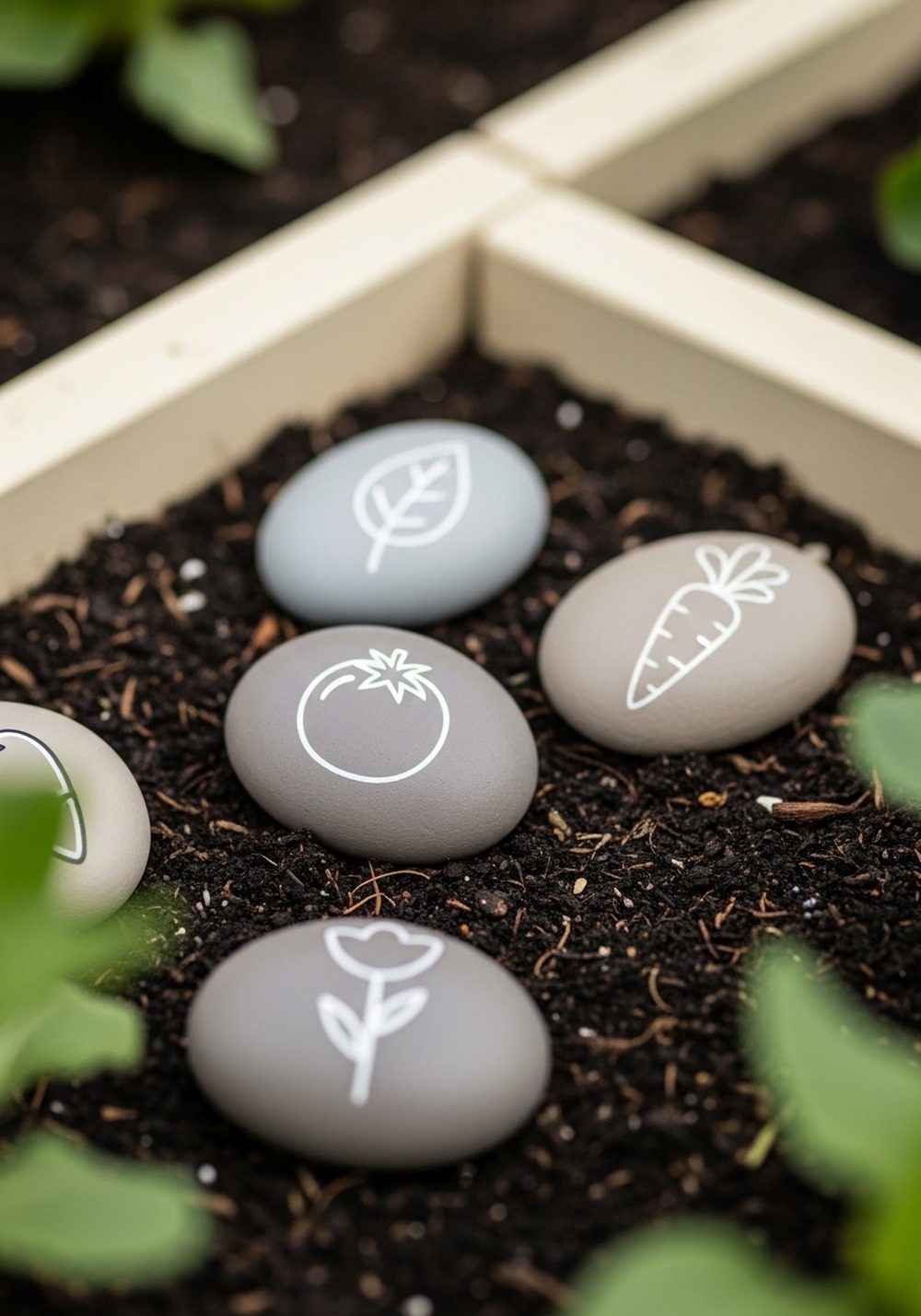
If your style is clean and minimal, line-art icon markers are a great fit. Paint each rock a neutral base, then draw a simple line icon on the front—a tomato outline, a leaf shape, a carrot, or a flower. Add the plant name in small, clear capitals underneath the drawing. These markers tie your beds together without stealing focus from the plants themselves, while still looking thoughtfully designed.
- Best For: Modern gardens, balcony boxes, and small urban spaces.
- Budget Tip: One base color and one good paint pen will carry the whole project.
- Styling Idea: Stick to just black or white line work to keep everything crisp and graphic.
- Practical Note: Test your pen on the painted rock first to check it flows smoothly.
- Care & Maintenance: Top up any thin lines after a season outdoors, then reseal.
10. Reversible Seasonal Painted Rock Markers

Reversible markers are a clever way to refresh your garden with the seasons. Paint one side of each rock with a fresh, spring look—greens, blossoms, maybe tiny sun rays—along with the plant name. On the reverse, create an autumn version with warm browns, oranges, and falling leaves, repeating the name. When the weather changes, simply flip your rocks to match. It’s like giving your garden a quick seasonal makeover with zero extra storage.
- Best For: Perennial beds and crops that stay in the same spots year after year.
- Budget Tip: Use the same rock collection all year instead of making separate sets.
- Styling Idea: Keep the design motifs consistent (same leaf shape, different colors) for each season.
- Practical Note: Add a discreet dot on the spring side edge so you know which way is which.
- Care & Maintenance: Seal both sides and let them dry fully before putting the rocks back into the soil.
Conclusion
Painted rock garden markers are one of those small projects that make a big difference. They keep your beds organized, add personality, and invite you to spend a little more time enjoying your plants. Whether you choose bold bug characters or quiet line art, start with just one or two ideas and build your collection over time. Before long, your garden will feel labeled, loved, and beautifully your own.
FAQs
Q1. What kind of paint should I use for painted rock garden markers?
Acrylic craft paint is usually the easiest and most affordable option. It sticks well to clean, dry rocks and comes in lots of colors. For outdoor use, always finish with a clear sealer rated for exterior projects so your designs don’t wash away in the rain.
Q2. How do I make painted rock markers last outside in all weather?
First, scrub and dry the rocks so there’s no dust or mud. After painting and adding names, let everything cure fully, then apply two or three thin coats of clear outdoor varnish or spray sealer. Place the rocks where they won’t sit in constant water to help them last longer.
Q3. Are painted rock garden markers suitable for renters and balcony gardens?
Yes, they’re ideal because they’re completely non-permanent. You can move them from pot to pot, take them with you when you move, and rearrange them as your container layout changes. They’re also small, light, and easy to store in a box over the off-season.
Q4. What’s the cheapest way to make a whole set of markers?
Collect free rocks from your own garden (where local rules allow) or buy a small bag of landscaping stones. Use a limited color palette of basic paints, and add details with a single black or white paint pen. By keeping designs simple, you can label many plants without buying special tools.
Q5. Will painted rocks harm my plants or soil?
When you use standard, non-toxic acrylic paints and let them fully dry and seal, painted rocks are generally safe to use as surface decor. Place them on top of the soil rather than burying them deeply, and avoid blocking drainage holes in pots so water can still flow freely.
Q6. Which painted rock ideas are easiest for beginners or kids?
Cute veggie faces, bug-themed rocks, and simple line-art icons are very forgiving and fun for beginners. Shapes can be basic, and a slightly wobbly line just adds charm. Start with those, then move on to more detailed ideas like mandalas or watercolor washes as your confidence grows.