10 Recycled Junk Planters To Turn Everyday Trash Into Garden Treasure

If you love plants but hate waste, recycled junk planters are the perfect way to bring more life and personality into your garden. Old boots, dented buckets, and even broken chairs can be transformed into quirky, beautiful homes for your flowers and herbs. You get unique decor and less clutter in one go.
This post is for home gardeners, renters, and small-space owners who want budget-friendly ideas that feel creative rather than crafty chaos. You’ll discover simple ways to reuse what you already have, add colour and height to dull corners, and create a garden that feels playful, welcoming, and completely your own.
Quick List
- Vintage Teapot & Kettle Planters
- Painted Tin Can Herb Towers
- Worn-Out Boot & Shoe Planter Row
- Upcycled Wooden Crate Planter Stack
- Colander Hanging Basket Planters
- Broken Chair Flower Throne
- Tire Stack Flower Planters
- Old Drawer Step Planters
- Enamel Bucket & Pail Planter Cluster
- Rusty Wheelbarrow Mini Garden
1. Vintage Teapot & Kettle Planters

Old teapots and kettles make charming little planters, especially for flowers with soft colours and delicate foliage. Look for chipped enamel, dented metal, or thrifted finds that are no longer safe for the kitchen. Drill a few drainage holes in the base, add a layer of gravel, then fill with potting mix and plant low-growing blooms or trailing ivy. These tiny planters look beautiful on steps, tables, or nestled among larger pots, where their handles and spouts add a whimsical storybook feel.
- Budget Tip: Hunt for teapots and kettles at flea markets, thrift shops, or even family cupboards before buying new containers.
- Styling Idea: Stick to one colour family (soft pastels, all whites, or bold reds) so a mixed collection still feels coordinated.
- Best For: Small patios, window ledges, and balconies where every bit of surface space counts.
- Practical Note: Avoid very thin or cracked pots for outdoors in frosty climates, as they may break further in winter.
2. Painted Tin Can Herb Towers

Instead of throwing out food cans, turn them into a vertical herb garden. Clean the cans carefully, sand any sharp edges, and punch a few drainage holes in the bottom. Paint them in cheerful stripes, solids, or patterns using outdoor paint, then screw or wire them to a wooden board, fence, or railing in staggered rows. Fill with compost and tuck in favourite herbs like basil, parsley, or thyme. The result is a slim, colourful “tower” of greenery that looks like functional art.
- Budget Tip: Use leftover wall or craft paint rather than buying special colours; mismatched shades can still look fun together.
- Styling Idea: Repeat one accent colour in several cans to tie the whole design into nearby furniture or cushions.
- Best For: Balconies and narrow side yards where floor space is limited but vertical surfaces are available.
- Care & Maintenance: Water slowly so it doesn’t gush straight through the drainage holes and stain walls or decking.
3. Worn-Out Boot & Shoe Planter Row

Those old boots and shoes at the back of the cupboard are just waiting to become mini planters. Choose sturdy footwear with intact soles, poke a few drainage holes, and line the inside with a bit of landscape fabric or coffee filters to stop soil escaping. Fill with potting mix and add compact flowers or hardy succulents. Arrange the “shoe family” along a path, under a bench, or beside the front steps. They instantly add character and make guests smile as they spot them.
- Budget Tip: Use your own worn-out shoes first, then ask friends or neighbours for pairs they’re throwing away.
- Styling Idea: Match plant colours to the shoes—yellow blooms in yellow boots, soft blues in faded denim sneakers.
- Best For: Informal cottage-style gardens or playful family spaces where a bit of whimsy fits right in.
- Care & Maintenance: Check regularly for mouldy insoles or rotting materials and replace shoes once they collapse.
4. Upcycled Wooden Crate Planter Stack
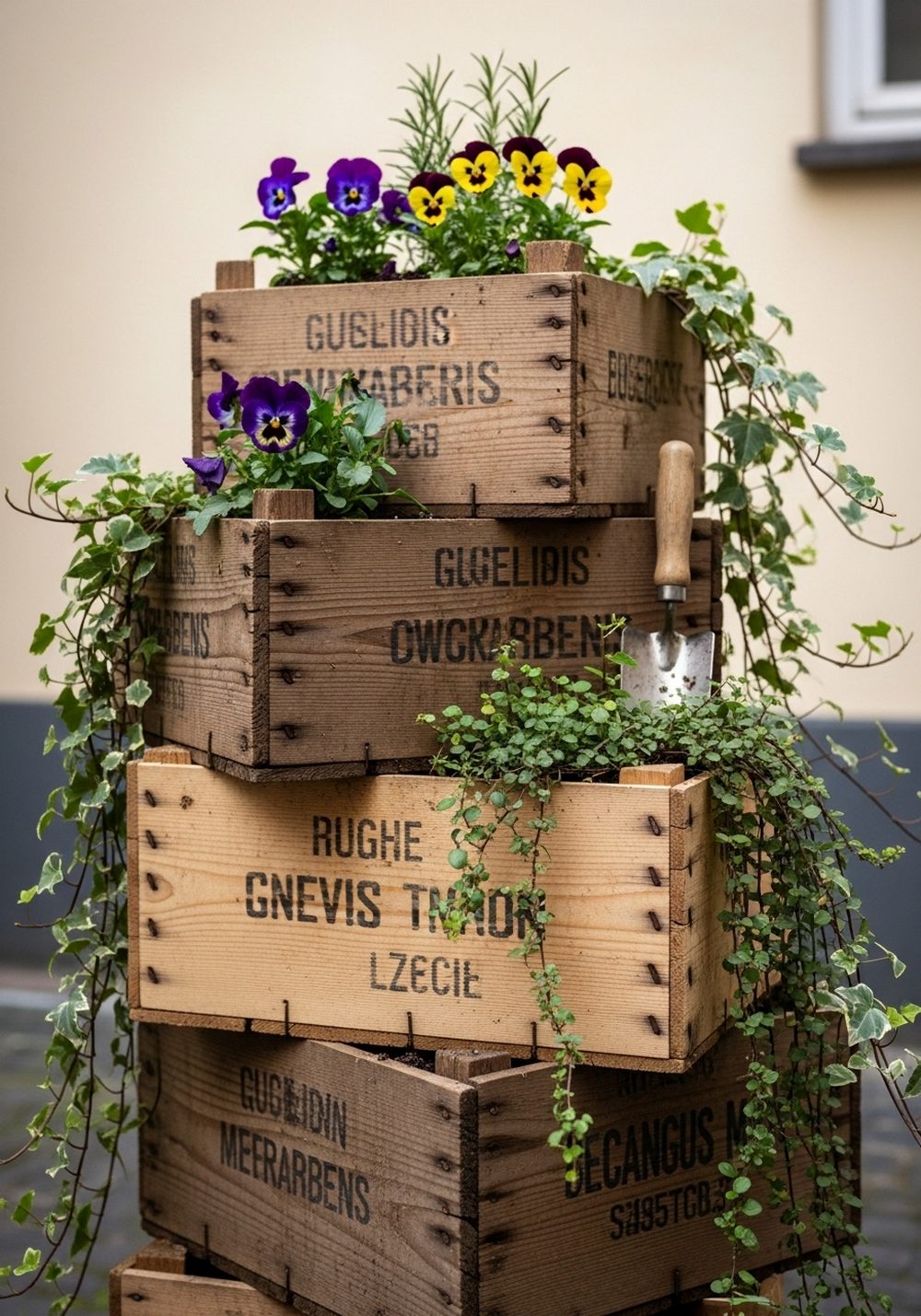
Wooden fruit or wine crates can be stacked into a lovely tiered planter display. Check they’re sturdy, then sand any rough edges. Stack two or three crates in a staggered tower, securing with screws or brackets if needed, and line the insides with landscape fabric or thick plastic with drainage holes. Fill with soil and plant a mix of trailing plants, upright flowers, and herbs. The different levels add height and depth, making even a bare wall or corner instantly more interesting.
- Budget Tip: Ask local markets, grocers, or wine shops if they have free or cheap crates you can rescue.
- Styling Idea: Leave the wood raw for a rustic feel, or stain all the crates in a single tone for a more polished look.
- Practical Note: Place heavier crates at the bottom and anchor the stack against a wall to prevent tipping in strong winds.
- Care & Maintenance: Because crates are shallow, check moisture levels more often during hot weather.
5. Colander Hanging Basket Planters

Metal colanders make surprisingly perfect hanging baskets thanks to their built-in drainage holes. Give an old colander a good scrub, then attach three chains or sturdy cords to the rim and hang it from a pergola, tree branch, or wall bracket. Line the inside with moss or coir, add compost, and plant tumbling strawberries, petunias, or trailing ivy. As water drains, it gently showers the plants and creates a light, airy feel above your seating or dining area.
- Budget Tip: Look for dented or slightly warped colanders in bargain bins; they work just as well as perfect ones.
- Styling Idea: Paint metal colanders in bright colours and hang several at different heights for a playful, festival-style look.
- Best For: Patios, porches, and small gardens where hanging planters can free up precious floor space.
- Practical Note: Hang securely with appropriate fixings and avoid spots where draining water might drip onto cushions.
6. Broken Chair Flower Throne
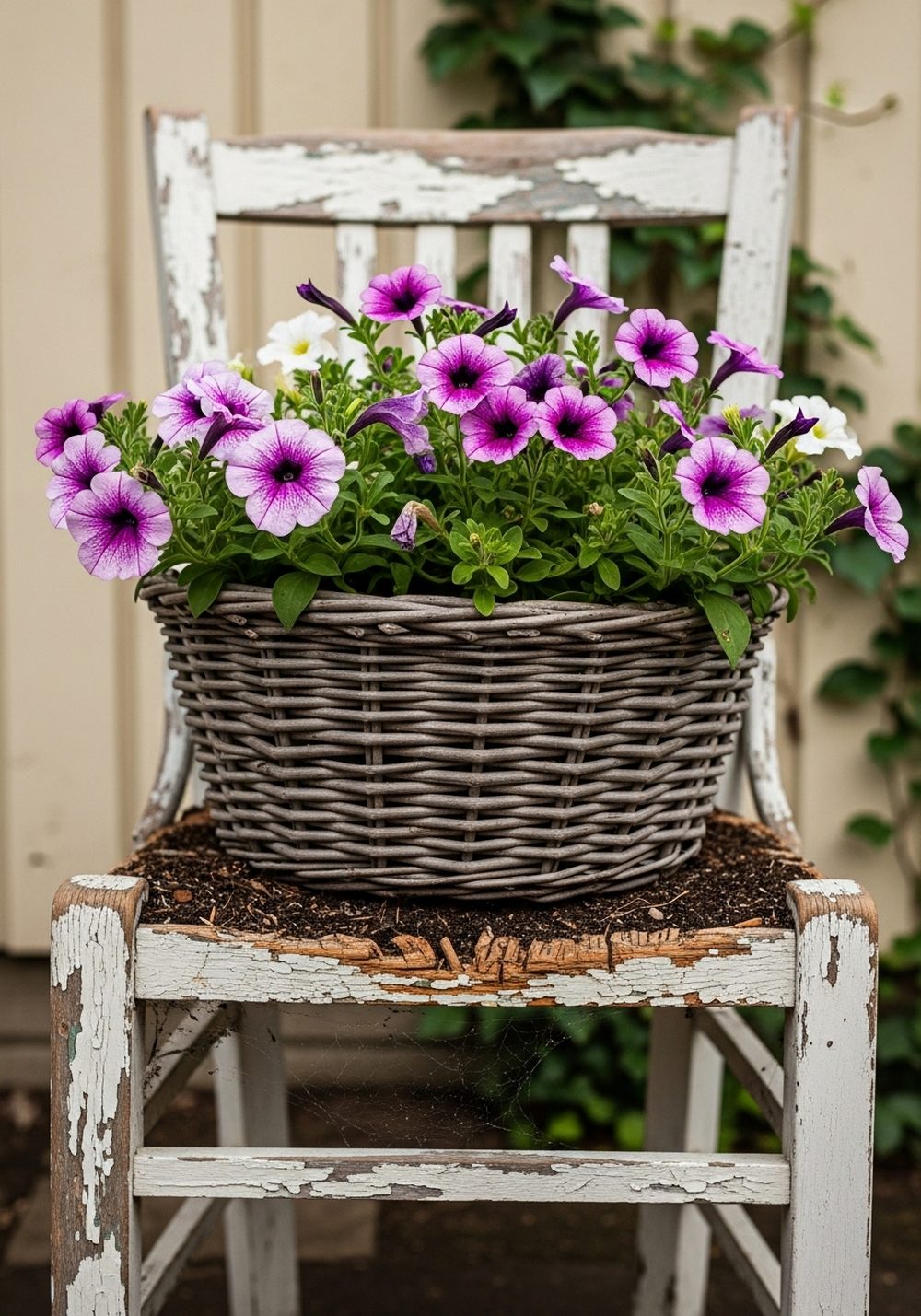
A broken chair might not be safe to sit on, but it can still hold flowers beautifully. Remove the damaged seat and fit a basket, wooden box, or plastic tub into the frame, making sure it’s well supported. Drill drainage holes if needed, line it, and fill with potting mix. Plant a generous mix of blooms that spill over the edges—petunias, calibrachoa, or small ferns all work well. Place the “flower throne” against a fence or in a border as a standout focal point.
- Budget Tip: Rescue roadside chairs or damaged pieces from thrift shops that are too wobbly to use indoors.
- Styling Idea: Paint the chair in a bold contrast colour—turquoise, sunny yellow, or classic white—to make the flowers pop.
- Best For: Bare corners that need a single eye-catching piece rather than lots of small pots.
- Care & Maintenance: Check the chair legs for rot if it stands on soil, and place on pavers or bricks if needed.
7. Tire Stack Flower Planters

Old tires are often thrown away, but they can become bright, cheerful planter towers. Clean the tires thoroughly, then paint them in solid colours or fun patterns using exterior paint. Stack two or three, fill the centre with gravel at the bottom for drainage, then add soil and plant bold, easy-care flowers or even shrubs. The rounded shape and layered height make a strong statement, especially at the edge of lawns or near play areas.
- Budget Tip: Ask local garages if they have worn tires they’re discarding; many are glad for you to take a few.
- Styling Idea: Choose two or three colours that echo toys, garden furniture, or a mural to create a coordinated look.
- Practical Note: Place tire planters where they won’t need moving often—they’re heavy once filled with soil.
- Care & Maintenance: In very hot climates, consider using drought-tolerant plants, as dark rubber can heat up the soil.
8. Old Drawer Step Planters
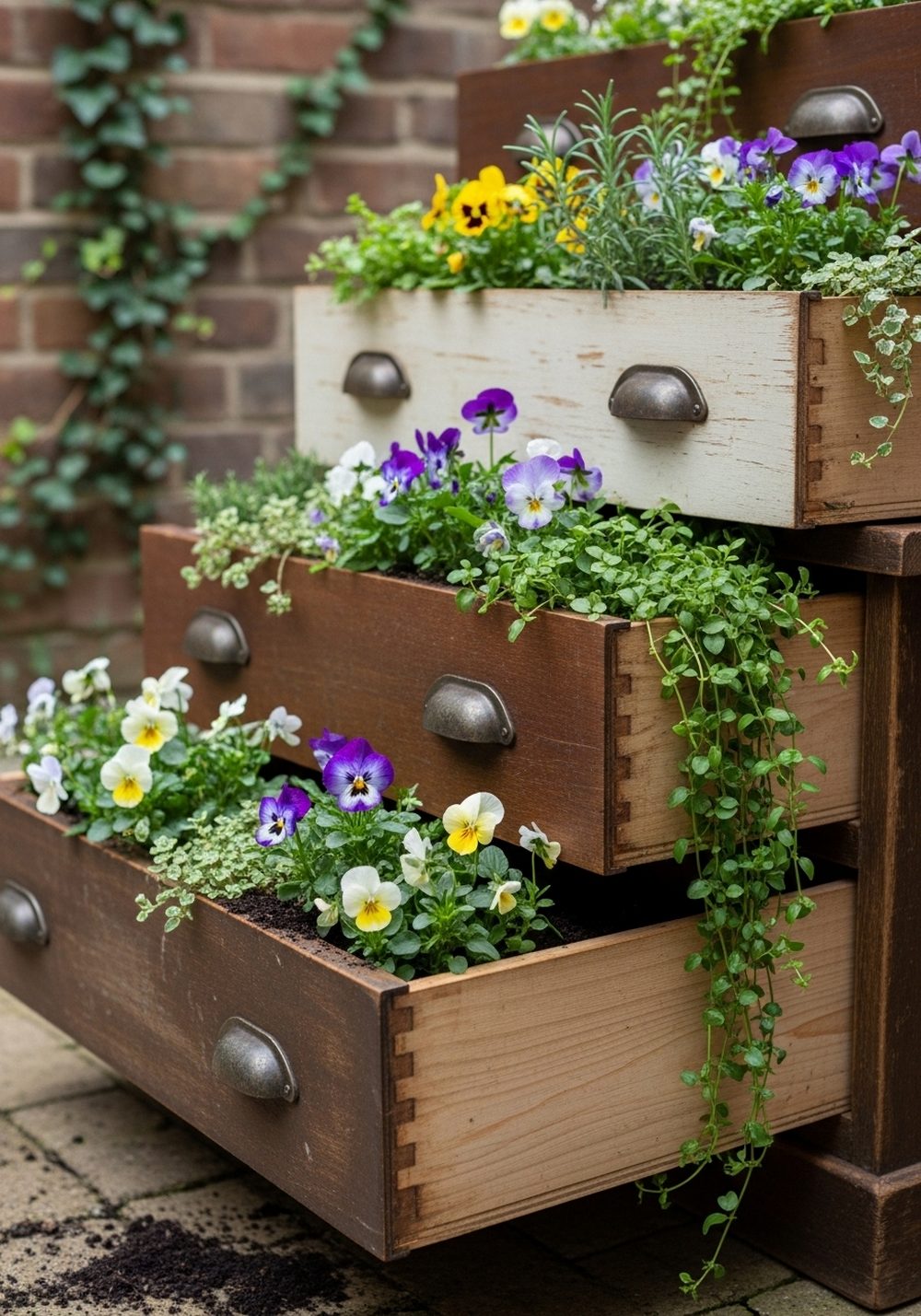
Old drawers from broken dressers can be transformed into charming step-style planters. Use bricks or wooden blocks to stagger them at different heights, like a little staircase. Drill drainage holes in the drawer bases, line them with plastic or fabric, and fill with potting soil. Plant herbs, violas, and trailing plants, letting foliage spill over the edges. Against a wall or fence, this layered arrangement creates a mini garden that looks like it has grown out of an old piece of furniture.
- Budget Tip: Watch for free or cheap damaged dressers online and salvage only the drawers.
- Styling Idea: Paint all the drawer fronts in complementary tones, or keep mismatched colours for a quirky, boho feel.
- Best For: Sheltered patios and porches where the wood won’t sit directly in puddles.
- Care & Maintenance: Raise the drawer bases slightly off the ground to help them dry out and last longer.
9. Enamel Bucket & Pail Planter Cluster
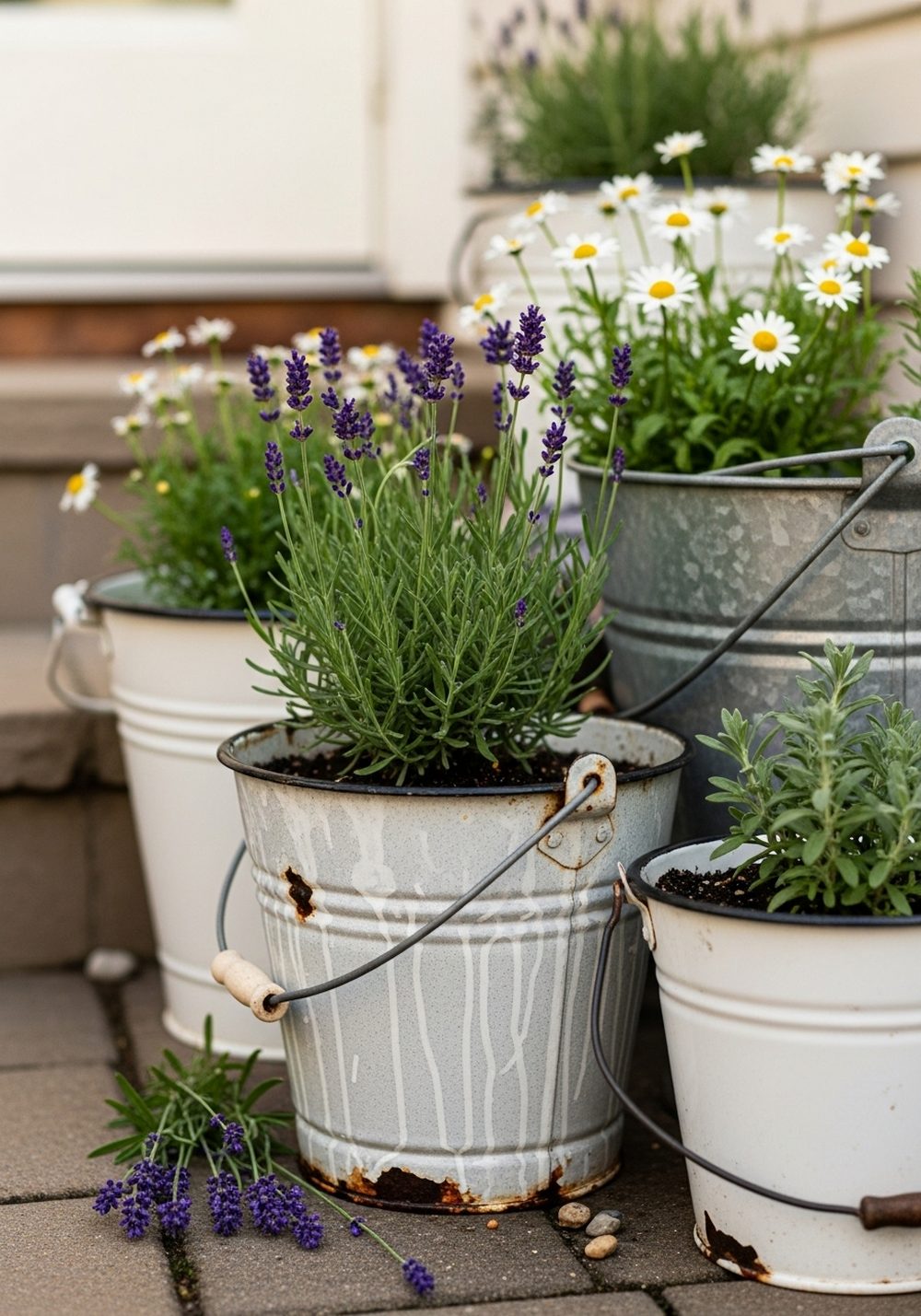
Chipped enamel buckets and metal pails have a lovely rustic charm that suits almost any garden style. Clean them, drill drainage holes, and add a thin layer of gravel in the base. Plant lavender, daisies, or herbs, and group the buckets in threes or fives by a doorway, along a wall, or at the top of steps. Different heights and shapes will naturally create a relaxed, layered display that looks thoughtful without being too formal.
- Budget Tip: Mix gifted, thrifted, and found pails rather than buying a matching set; the variety adds character.
- Styling Idea: Tie jute rope or ribbon around the rims, or stencil simple numbers or words on the sides for extra charm.
- Best For: Entryways and back doors where a quick splash of greenery makes the space feel more welcoming.
- Care & Maintenance: Check for sharp rust spots and sand them smooth before planting, especially if children are nearby.
10. Rusty Wheelbarrow Mini Garden

A rusty, leaky wheelbarrow is the perfect base for a little rolling garden. Drill a few extra drainage holes if needed, then add a layer of gravel and quality compost. Create a mini landscape with low-growing perennials, small grasses, and trailing plants spilling over the sides. You can even tuck in a tiny ornament or two. Park the wheelbarrow in a prominent spot, and if it’s still moveable, you can shift it with the seasons to catch the best light.
- Budget Tip: Look for old wheelbarrows at farm sales or ask neighbours before they send one to the dump.
- Styling Idea: Keep the rusty patina for a cottage look, or spot-paint parts of the frame in a bright, modern colour.
- Practical Note: Avoid planting very tall or heavy shrubs that could make the wheelbarrow tip.
- Care & Maintenance: Because it’s shallow, water more often in hot weather, and refresh the soil every couple of years.
Conclusion
Recycled junk planters prove you don’t need fancy pots to create a beautiful garden. With a bit of imagination, everyday cast-offs become playful focal points, space-saving planters, and conversation starters. Start with one simple project—a tin can herb tower or an old boot planter—and see how it transforms a dull corner. As your confidence grows, you can build up more pieces and slowly turn your outdoor space into a unique, eco-friendly garden full of stories.
FAQs
Q1. How can I decorate my garden with recycled planters on a very small budget?
Start by looking around your home, shed, and recycling bin for containers: cans, jars, broken furniture, or old kitchenware. Focus on a few matching paint colours to bring random pieces together, and group planters in clusters rather than scattering them. Simple touches like twine, stencilled shapes, or handwritten labels can make the cheapest container look thoughtful and decorative.
Q2. Are recycled junk planters suitable for renters who can’t change the garden permanently?
Yes, they’re ideal for renters. Most of these planters are portable and sit on the surface rather than being built-in. Use crates, buckets, and wheelbarrows that can move with you, and avoid screwing anything directly into walls or railings without permission. When you leave, you can empty the soil, take your containers, and start again in your next outdoor space.
Q3. What should I watch out for when using old metal items as planters?
Check for sharp edges, loose rust flakes, and areas where metal has worn thin. Sand rough spots smooth, and line the inside with plastic if you’re worried about rust staining patios. Always add drainage holes so roots don’t sit in water. If you’re growing edibles, use a good-quality potting mix and avoid containers with unknown chemical residues.
Q4. Do recycled planters work in very small spaces or balconies?
Absolutely. Look for ideas that go up rather than out: tin can herb towers on fences, colander hanging baskets, or crate stacks against walls. Choose compact plants and keep pathways clear for safety. A few well-placed, vertical planters can give you herbs, flowers, and greenery without taking over the limited floor space.
Q5. Are these ideas high-maintenance?
Most recycled planters are as easy to care for as regular pots. The main difference is that some containers are shallower, so they dry out faster in hot weather. Choose drought-tolerant plants where possible, add a layer of mulch on top of the soil, and check moisture regularly. Once a week, give everything a quick look-over for peeling paint, wobbly stacks, or rotting wood.
Q6. Can I mix children’s play areas with recycled junk planters safely?
Yes, as long as you plan carefully. Keep containers with sharp edges or heavy stacks away from play zones. Choose sturdy, stable pieces like low buckets or tire planters around swings or sandpits. Involve children by letting them paint cans or pick flowers for their own “shoe planter,” and always check that fixings and stacks are secure before they play nearby.