12 Recycled Door Garden Trellis Wall Ideas
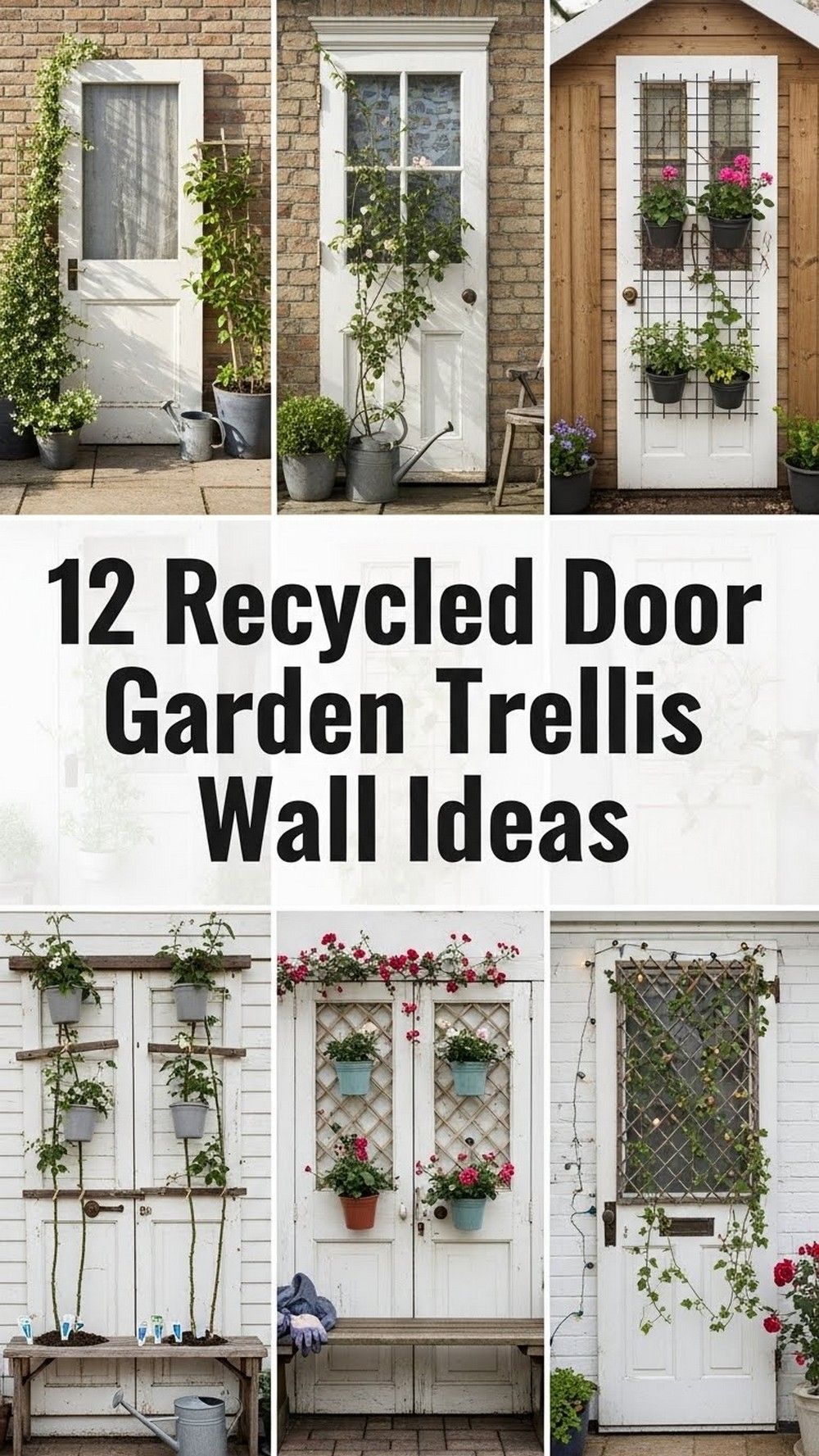
Old doors are one of those things it feels wrong to throw away. They’re sturdy, full of character, and already built to stand tall – which makes them perfect for garden trellis walls. With a few screws and some climbing plants, you can turn a forgotten door into a vertical feature that frames views, adds privacy, and gives your garden instant storybook charm.
In this post, you’ll find twelve creative ways to reuse doors as trellis walls. Whether you have a tiny balcony, a narrow side yard, or a full backyard, you’ll get simple building tips, budget-friendly tricks, and styling ideas to create beautiful, plant-covered “rooms” outdoors.
Quick List
- Vintage Front Door Rose Trellis Wall
- Double-Door Garden Room Divider Trellis
- Shabby-Chic Patio Door Clematis Screen
- Color-Washed Door Herb Trellis Wall
- Salvaged French Door Pea And Bean Wall
- Rustic Barn Door Privacy Trellis
- Porch Entry Door Trellis Arch Pair
- Mismatched Door Cottage Trellis Fence
- Mirrored Door Ivy Trellis Panel
- Pallet-And-Door Veggie Trellis Wall
- Window-Paned Door Flower Trellis
- Tiny Balcony Door Rail Trellis Screen
Vintage Front Door Rose Trellis Wall
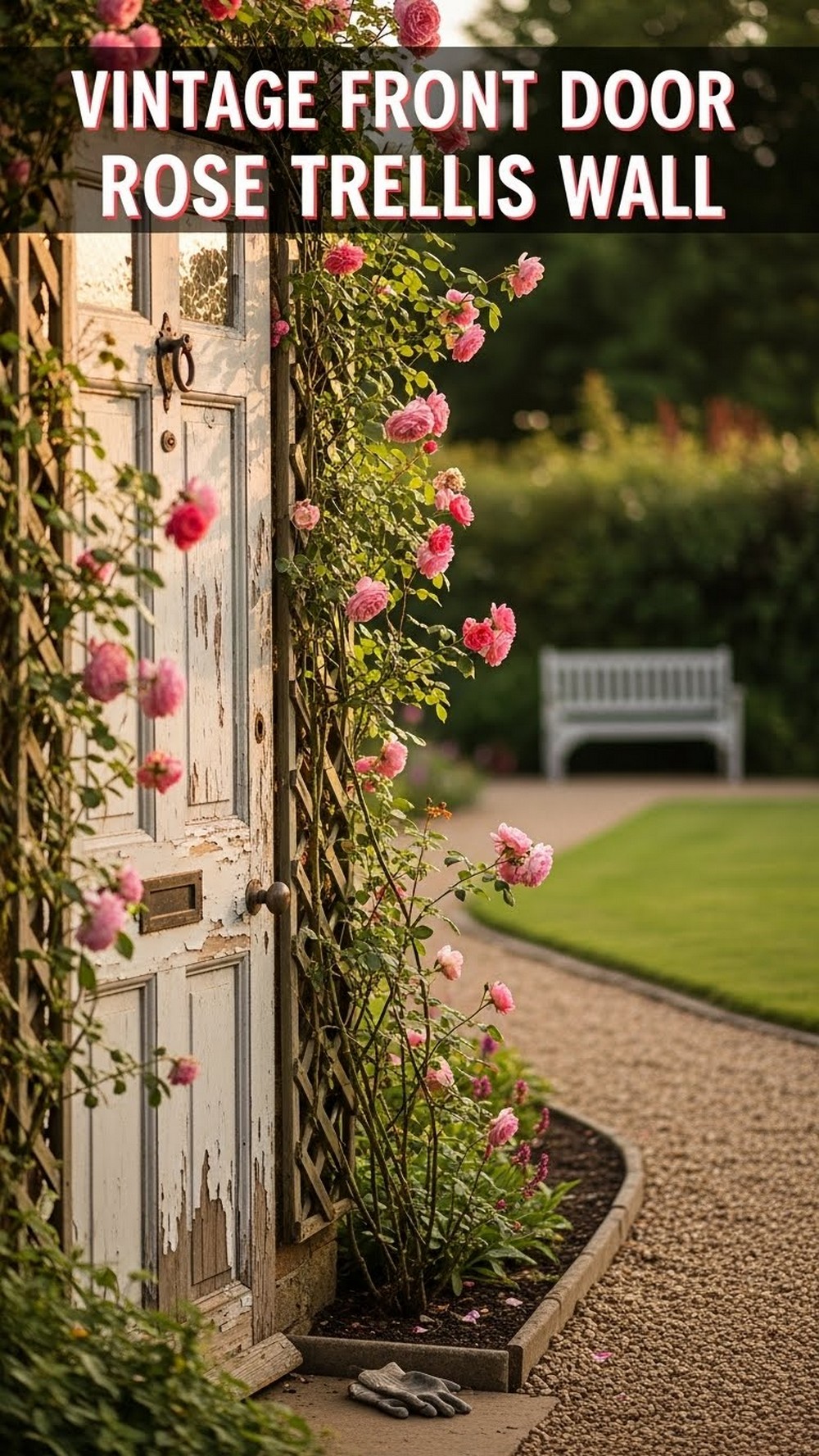
Give a pretty old door a second life by turning it into a rose-covered vertical accent. Sink sturdy posts or metal stakes behind it, then screw the door securely in place so it stands upright along a path or boundary. Add simple screw-in hooks or eyelets and run twine or wire for your climbing rose to weave through. Over time, the peeling paint, old handle, and soft blooms create that “found in a secret garden” feeling.
- Best For: Side yards, narrow strips, or along a garden path.
- Budget Tip: Use a door from a salvage yard and start with a small, affordable climbing rose.
- Styling Idea: Choose a door color that echoes your front door or shutters to tie the whole property together.
- Practical Note: Anchor door and posts deeply so wind can’t loosen them once the rose gets heavy.
- Care & Maintenance: Tie in new rose growth regularly so it hugs the trellis instead of flopping forward.
Double-Door Garden Room Divider Trellis
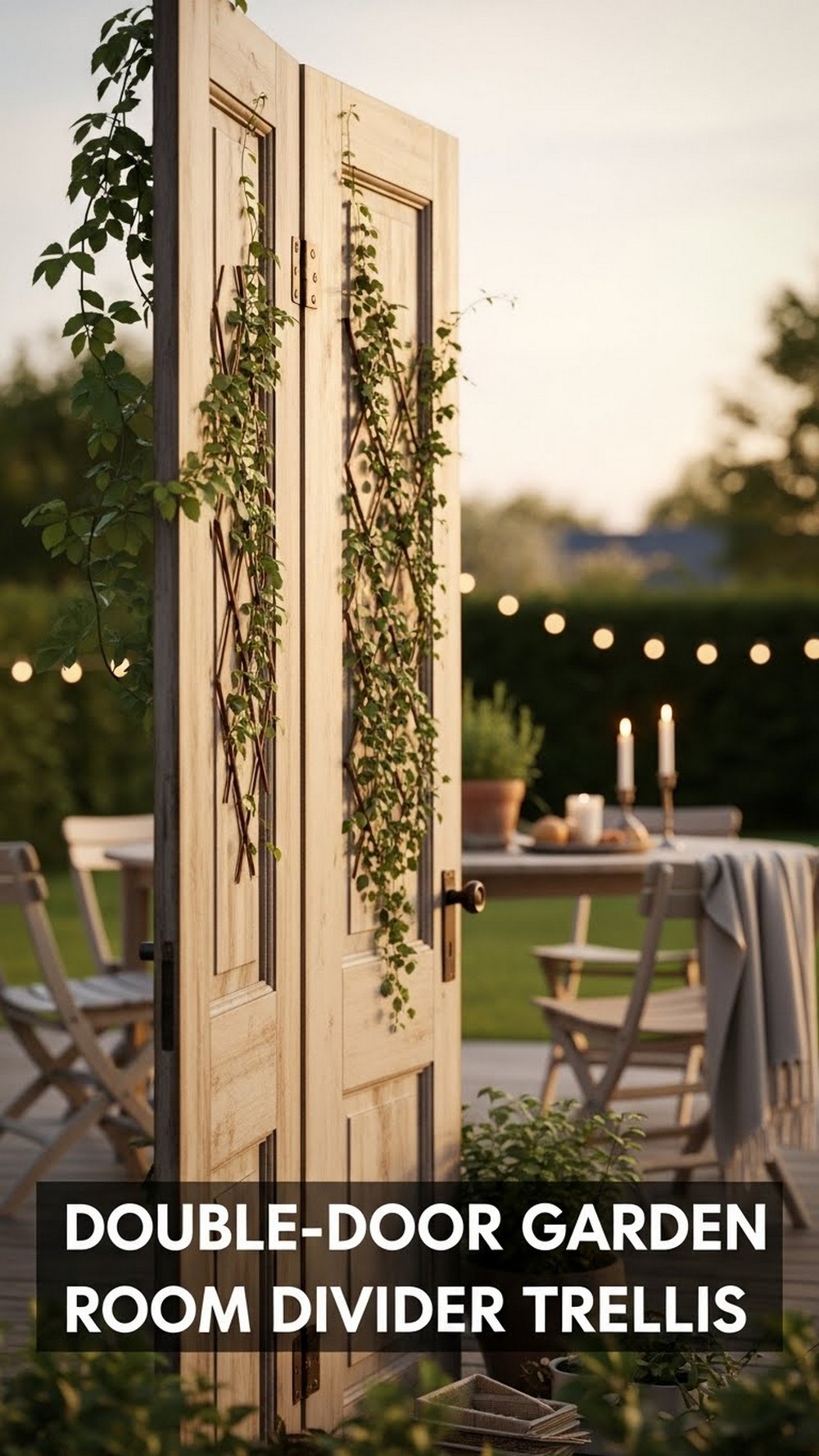
Create a “room” in your garden by hinging two reclaimed doors together and using them as a living divider. Set the hinged pair on a firm base of gravel or paving, then secure them to hidden posts or a low planter box. Plant climbers at the base on both sides so greenery grows through panels and around edges. It’s a lovely way to separate a dining area from a veg patch without building a solid fence.
- Best For: Defining zones in medium to large gardens and patios.
- Budget Tip: Mix two non-matching doors and paint them the same color to make a set.
- Styling Idea: Add simple hooks on the “room” side for hanging lanterns or string lights.
- Practical Note: Use exterior-grade hinges and screws; indoor hardware will rust quickly outside.
- Care & Maintenance: Check hinge screws once or twice a year and touch up paint where plants rub.
Shabby-Chic Patio Door Clematis Screen
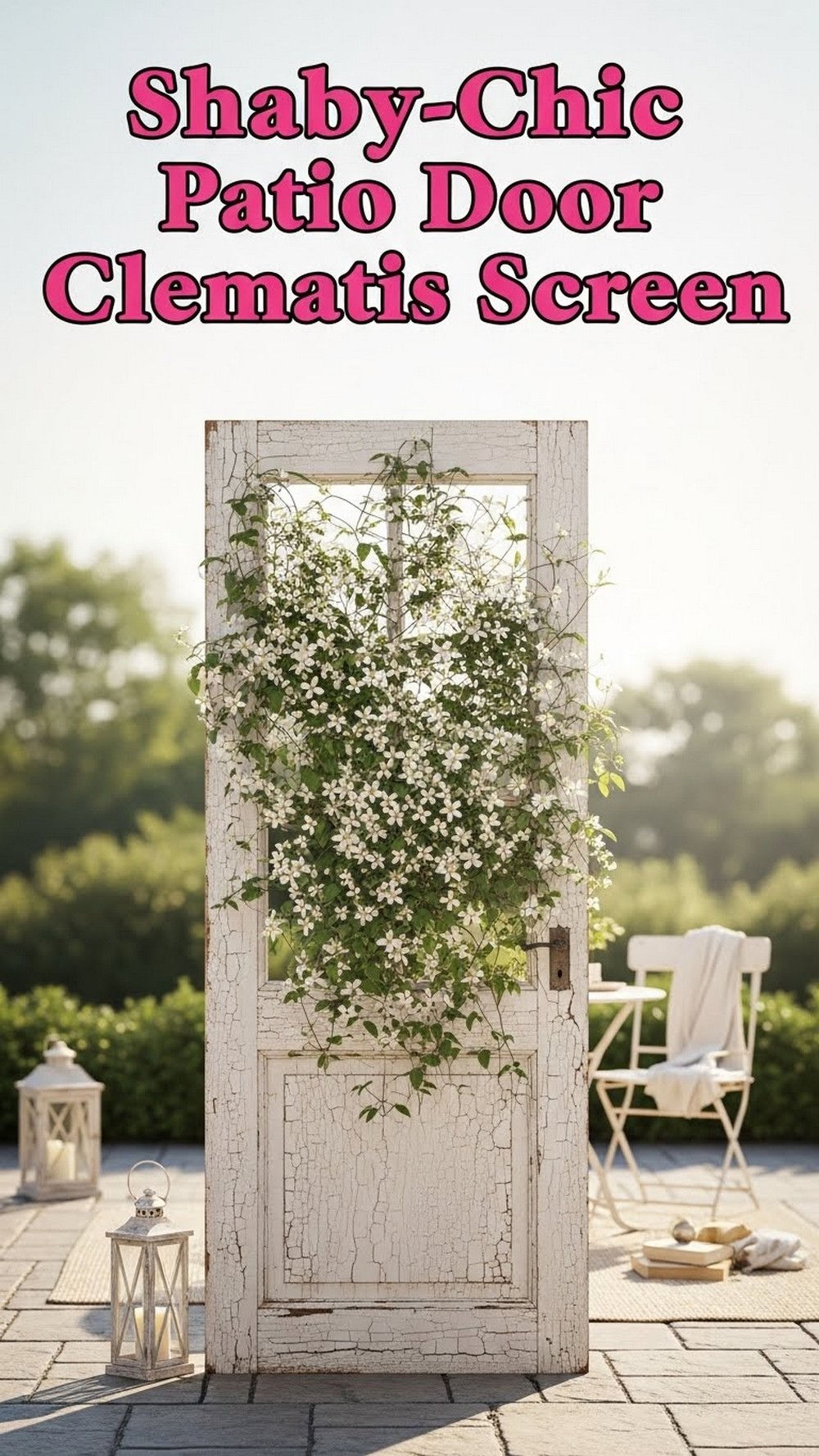
Leaning a single, distressed door against a wall is an easy way to create a soft, shabby-chic backdrop for a patio. To turn it into a trellis, attach a piece of wire mesh, lattice, or simple string grid to the door, then plant a clematis in a pot or bed at the base. As it climbs and flowers, the door fades into the background and becomes a textured frame for blooms instead of a bulky object.
- Best For: Small patios, rented spaces, or bare walls that need softening.
- Budget Tip: Use leftover chalk paint for a quick, intentionally worn finish.
- Styling Idea: Pair with a dainty bistro set and a few mismatched vintage pots.
- Practical Note: Angle the door slightly, with stops at the base, so it can’t slide or tip.
- Care & Maintenance: Prune clematis according to its group and gently guide stems through the trellis.
Color-Washed Door Herb Trellis Wall
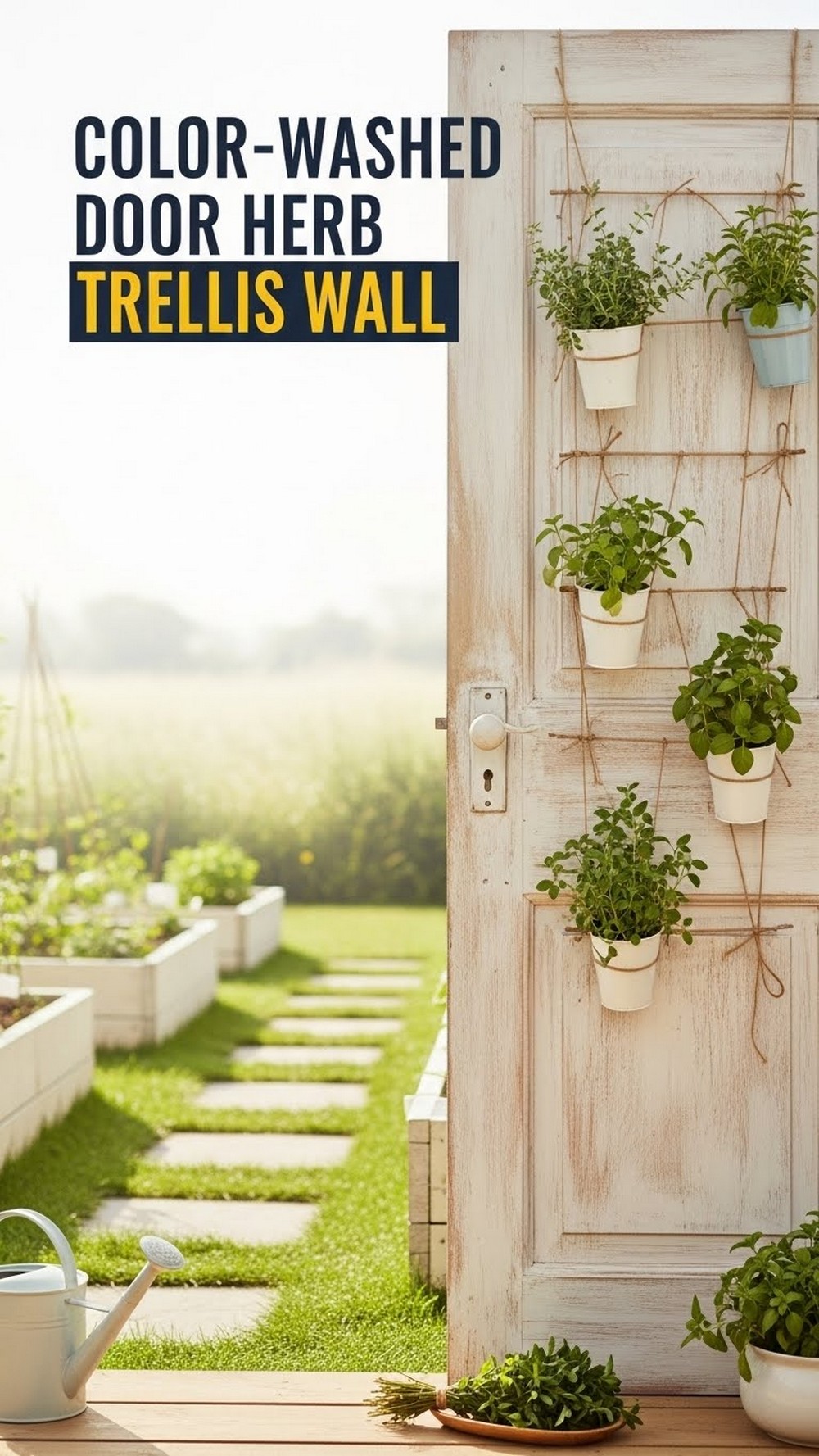
For a kitchen garden, a lightly color-washed door makes a cheerful backdrop for climbing herbs like rosemary, climbing nasturtium, or even espaliered small fruit. Give the door a thin coat of watered-down paint so grain still shows, then fix it to posts behind a bed or planter. Attach simple wire or twine in vertical lines and plant herbs at the base. As they grow, they create fragrant, edible wall art.
- Best For: Kitchen gardens, near back doors, or beside outdoor cooking areas.
- Budget Tip: Mix leftover paints to create your own soft, muted wash color.
- Styling Idea: Paint herb names directly onto the door or on small wooden tags hanging from hooks.
- Practical Note: Use breathable exterior paint so the wood can handle changing weather.
- Care & Maintenance: Trim herbs regularly for cooking so they stay lush and don’t get woody.
Salvaged French Door Pea And Bean Wall
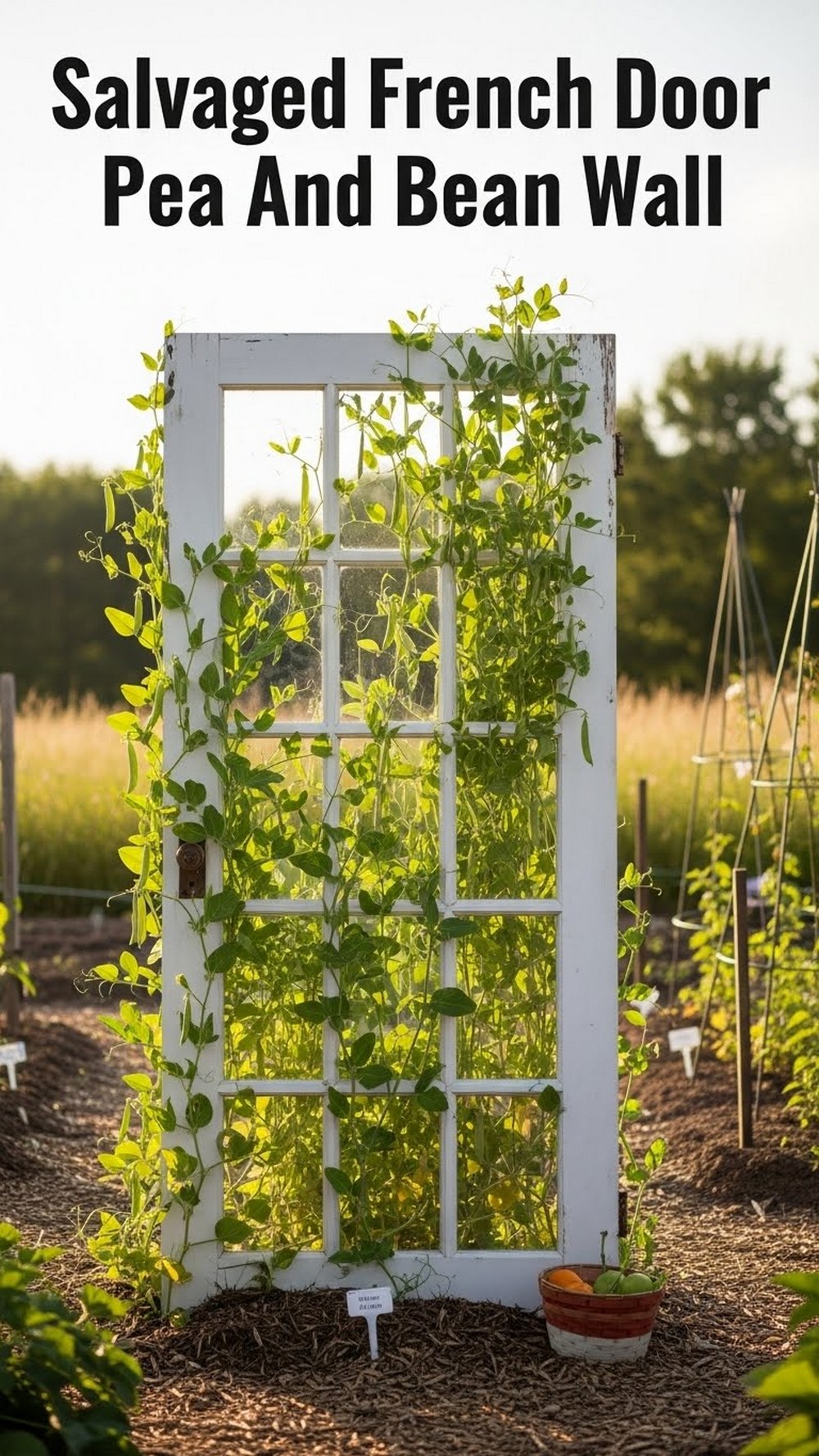
A French door with multiple panes is ready-made for peas and beans to climb. Stand it upright at the end of a raised bed or directly in the soil, anchoring with posts and brackets. Run twine vertically through the panes or staple netting to the back. Plant peas or beans in a row at the base and let them scramble up. It turns your veg patch into a pretty, green wall that also makes picking easier.
- Best For: Productive veggie gardens that still want a decorative touch.
- Budget Tip: Look for cracked or single French doors at salvage yards; minor flaws won’t matter outdoors.
- Styling Idea: Leave the frame white or soft grey to contrast with the deep green of foliage.
- Practical Note: Remove any fragile remaining glass or replace with perspex if you’re worried about breakage.
- Care & Maintenance: Swap crops seasonally to avoid disease build-up and keep the trellis in use.
Rustic Barn Door Privacy Trellis
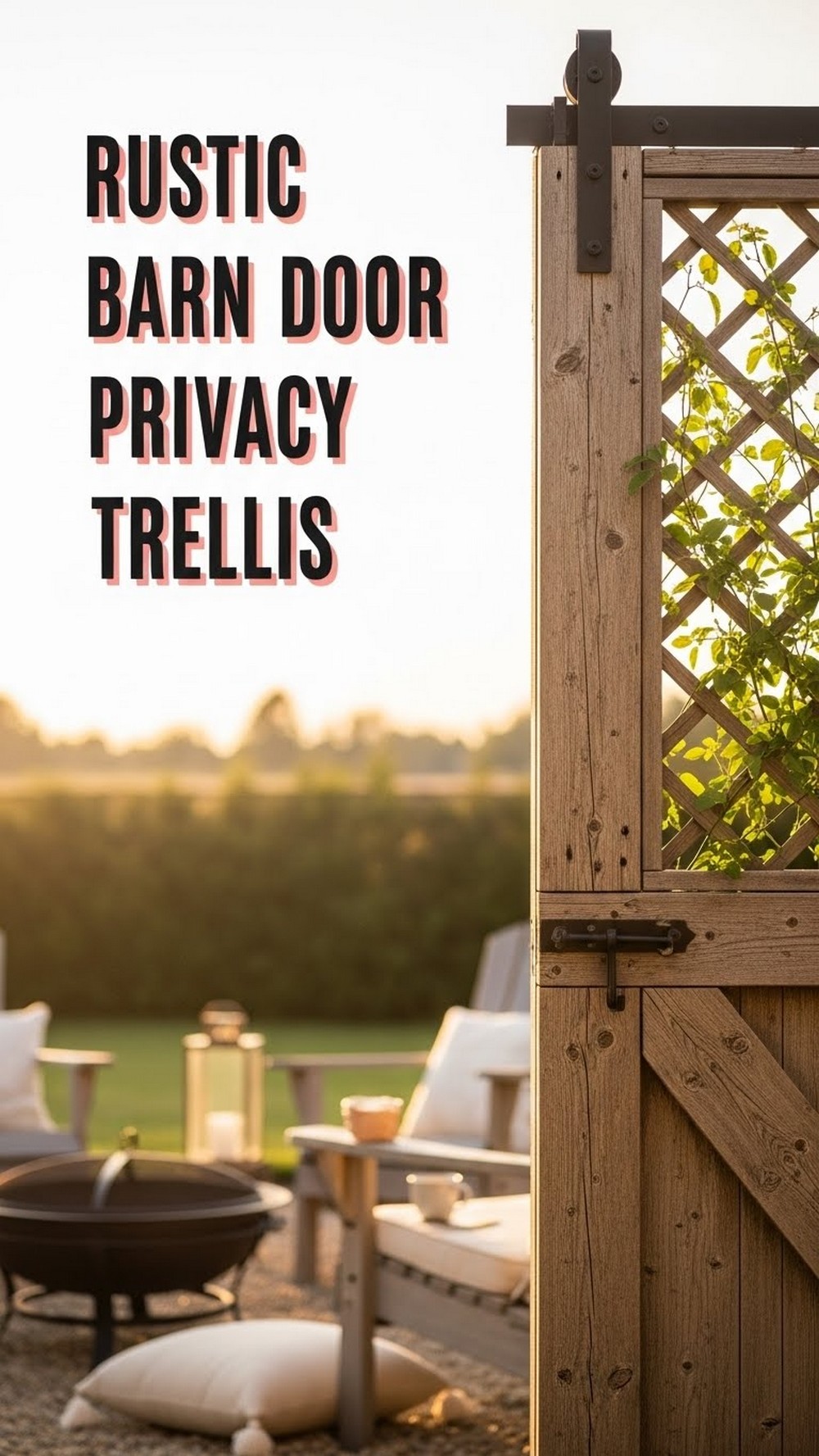
If your seating area needs a bit more privacy, a tall barn-style door covered in climbers works beautifully. Fix the door securely to sturdy posts behind a bench or outdoor sofa, then plant fast-growing vines like honeysuckle, jasmine, or even annual sweet peas at the base. The rough wood softens the feel of nearby fences, and the greenery helps block views without feeling like a solid wall.
- Best For: Screening neighbours’ windows or hiding sheds and bins.
- Budget Tip: Use a rough, ex-barn or shed door that’s too worn for the house but perfect for outdoors.
- Styling Idea: Add an old handle or sliding barn-door hardware purely as a decorative touch.
- Practical Note: Leave a small gap at the bottom so the wood doesn’t sit in damp soil.
- Care & Maintenance: Re-stain or seal the door every couple of years if you want to slow weathering.
Porch Entry Door Trellis Arch Pair
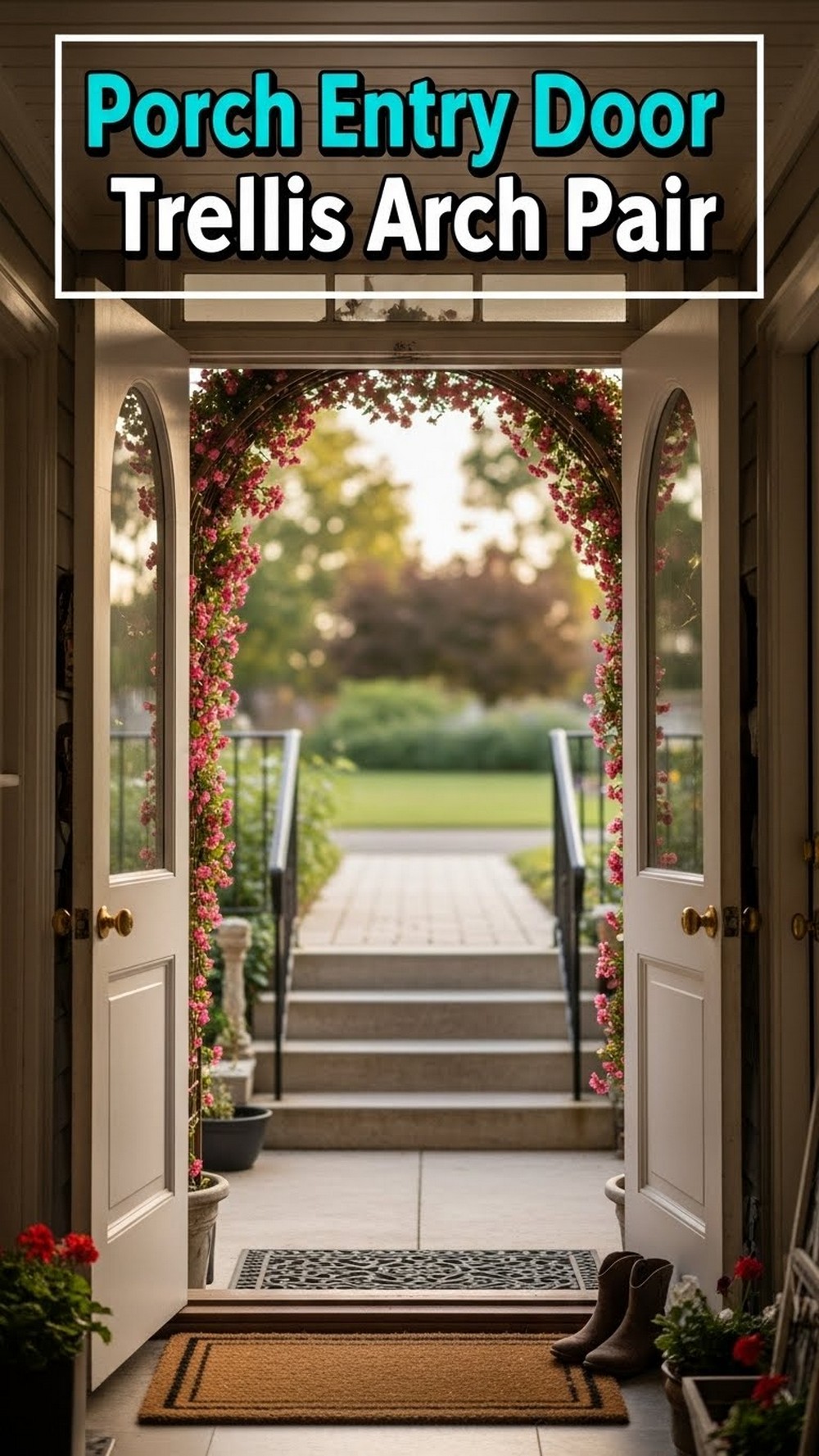
Create a magical entrance by setting two doors upright opposite each other and linking them overhead with a simple arch or beam. Plant climbers like roses, honeysuckle, or star jasmine at both bases and train them up, over, and across. As the plants meet, they form a leafy arch that turns even a basic path into a charming approach, especially when seen from the street or driveway.
- Best For: Paths leading to front doors, kitchen doors, or secret garden spaces.
- Budget Tip: Use two different doors painted the same color to make them feel like a pair.
- Styling Idea: Hang a small bell, lantern, or sign from the center of the arch.
- Practical Note: Make sure the overhead beam is high enough for people, wheelbarrows, and bikes to pass under.
- Care & Maintenance: Prune climbers so they don’t get too heavy or block the walkway.
Mismatched Door Cottage Trellis Fence
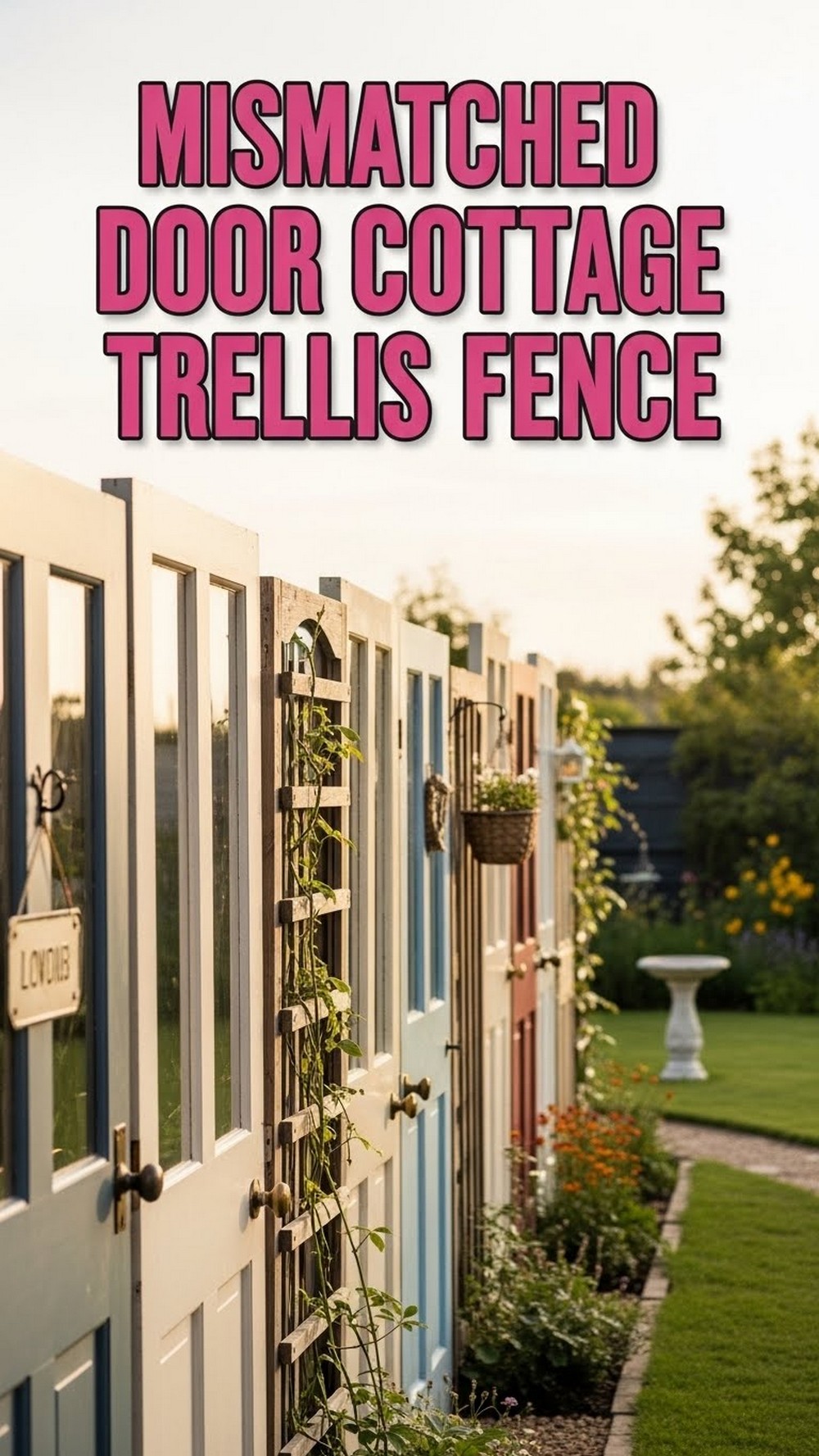
A line of mismatched doors, each supporting its own climber, makes a wonderfully quirky cottage-style fence. Sink posts at intervals, then attach different doors along the run, leaving small gaps or overlapping as needed. Plant a mix of climbers—sweet peas, morning glory, climbing roses, beans—so each door has its own personality. The result looks like a storybook collage and is brilliant for adding height on a low budget.
- Best For: Informal cottage gardens, side boundaries, or allotment plots.
- Budget Tip: Collect doors slowly from friends, skips (with permission), or reuse centre bargains.
- Styling Idea: Stick to one color family (all pastels or all neutrals) so the fence feels intentional, not chaotic.
- Practical Note: Check weight and stability; taller doors might need extra bracing in windy spots.
- Care & Maintenance: Replace or repaint doors as they age—weathering can add charm, but rot should be dealt with.
Mirrored Door Ivy Trellis Panel
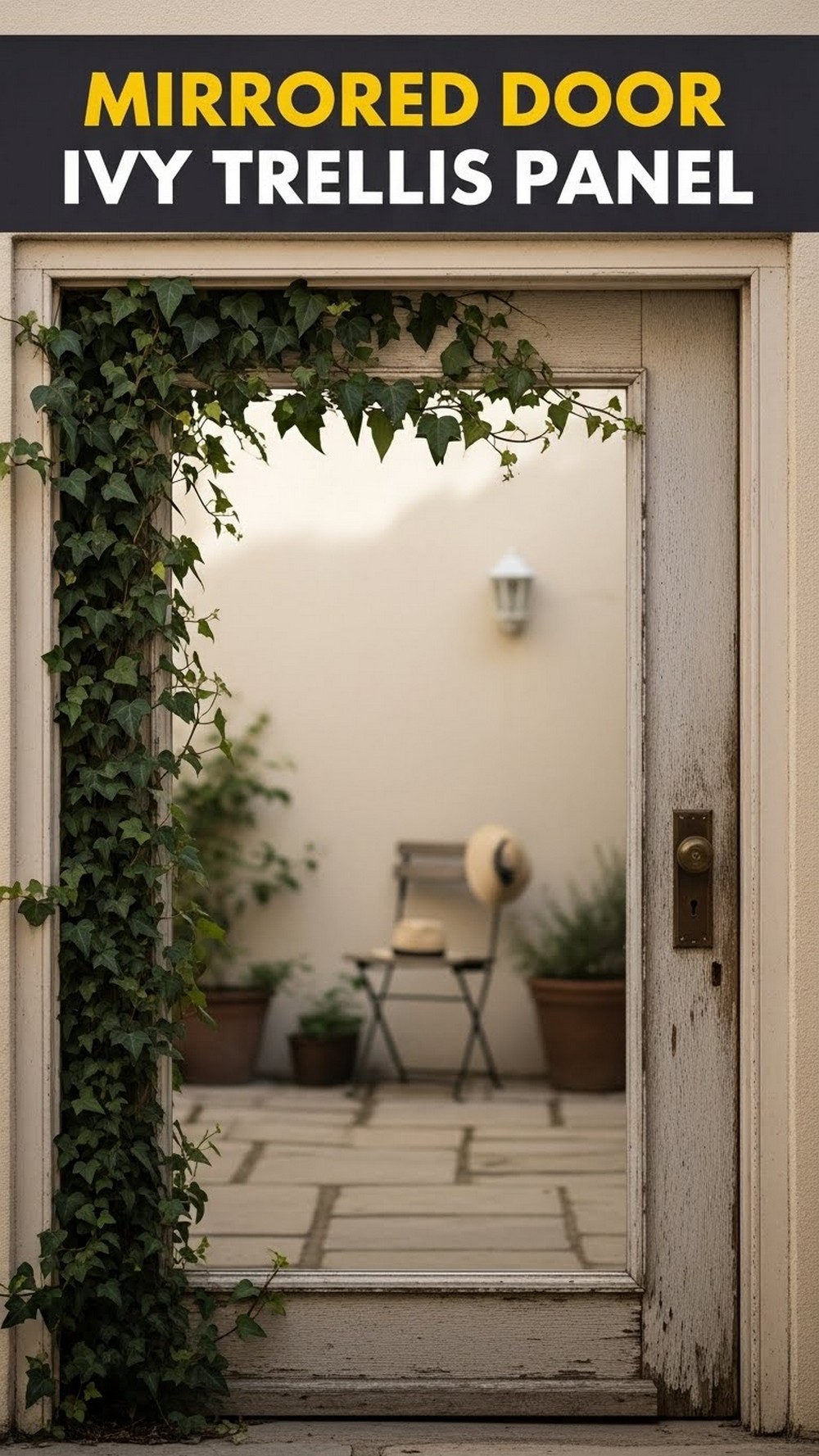
Adding a mirror to an old door and training ivy around it can make a small garden look much larger. Mount the door firmly against a wall or fence, with the mirrored section at about eye level. Plant ivy or another evergreen climber at the base and guide it around the frame, leaving the mirror mostly clear. The reflected greenery doubles the sense of depth and makes your space feel lush and secret.
- Best For: Courtyards, narrow side returns, and shady corners.
- Budget Tip: Use a secondhand mirror or mirrored acrylic panel cut to fit one of the door panels.
- Styling Idea: Keep the frame color simple so the reflection and foliage are the main stars.
- Practical Note: Place it where birds are less likely to fly straight toward the reflection.
- Care & Maintenance: Clean the mirror gently and trim ivy so it doesn’t completely cover the reflective area.
Pallet-And-Door Veggie Trellis Wall
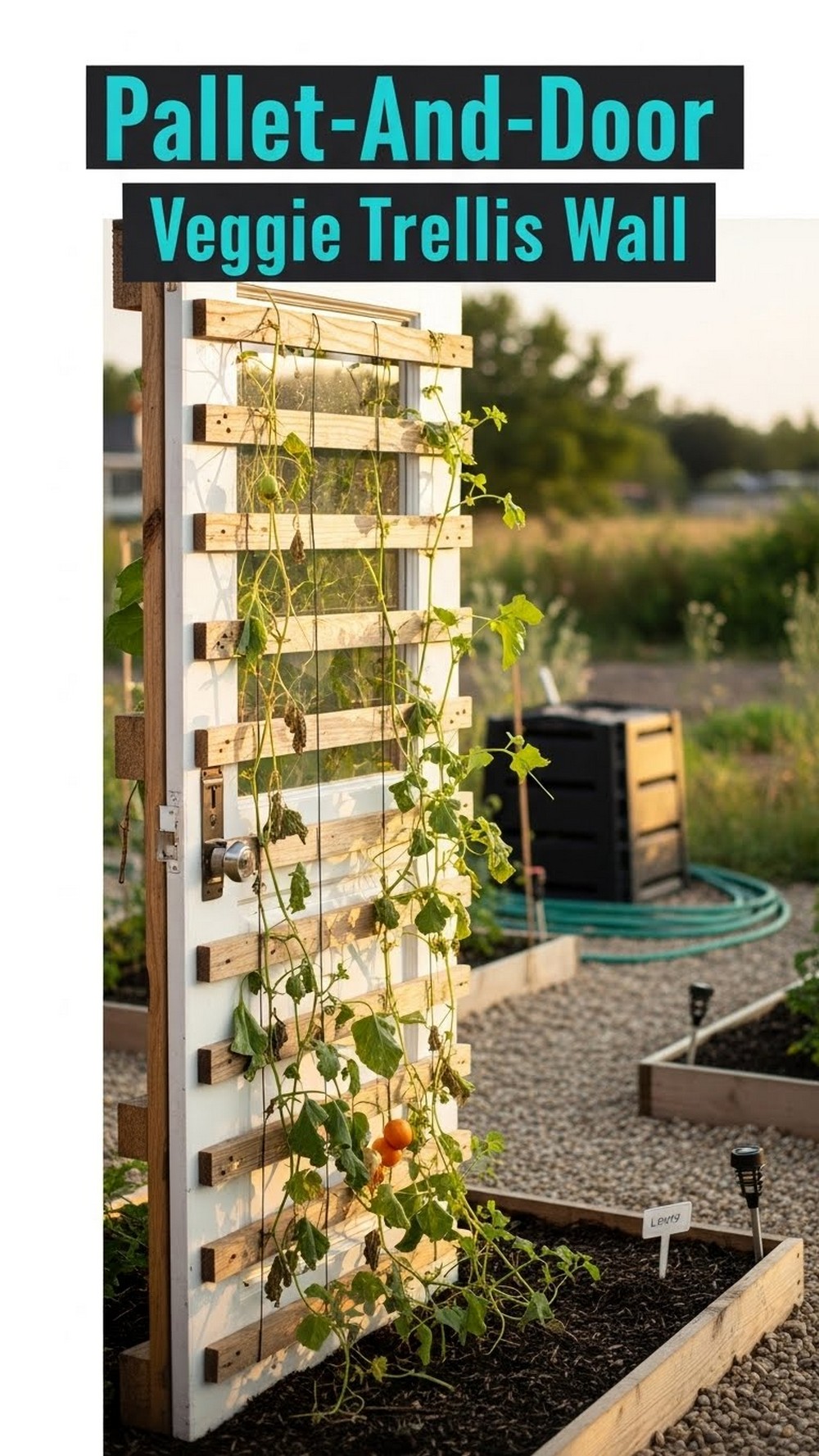
Combine a pallet and a door for a super practical, rustic veggie trellis. Stand the pallet upright, secure the door beside or on top of it, and fix both to posts or a frame. Attach mesh or string zigzags and plant cucumbers, squash, or climbing beans at the base. The pallet slats can also hold small pots, labels, or tools, turning one wall into a compact, high-yield growing station.
- Best For: Small backyards, side yards, and busy kitchen gardens.
- Budget Tip: Use free pallets (checked for safety stamps) and an old interior door sealed for outdoor use.
- Styling Idea: Paint the door, but leave the pallet natural for a nice contrast of “finished” and rustic.
- Practical Note: Ensure the whole structure leans slightly back or is braced, as crop weight will increase.
- Care & Maintenance: Inspect pallet wood regularly for splinters and soft spots; replace boards if needed.
Window-Paned Door Flower Trellis
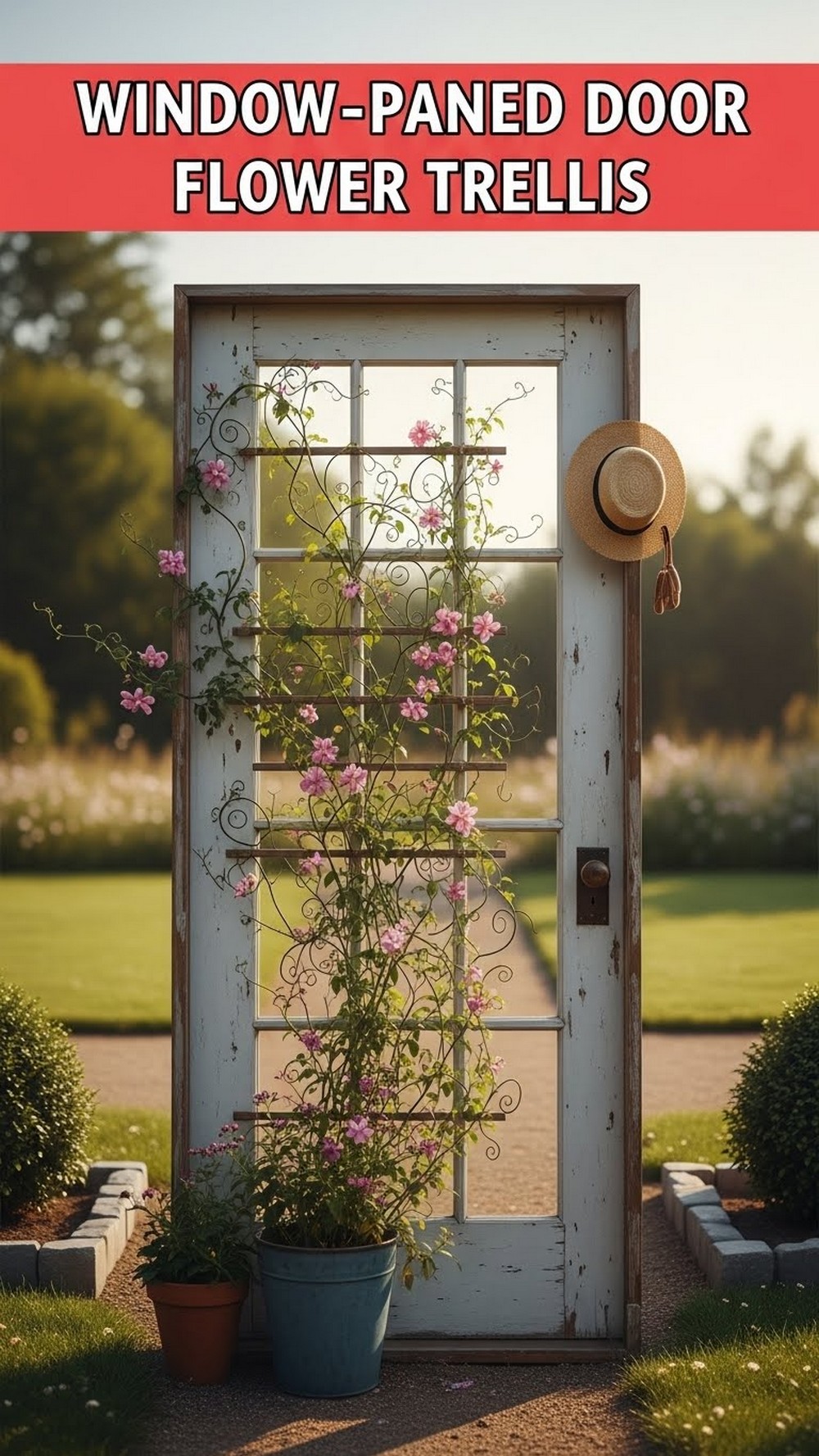
A window-paned door is ideal for showcasing flowering climbers. Stand it at the back of a flower border or in a large container, then plant clematis, climbing nasturtium, or annual sweet peas at the base. The panes frame little glimpses of blooms as the plant threads through, almost like a series of tiny garden “photos.” It adds strong vertical interest without feeling heavy or formal.
- Best For: Flower beds that need height without a tall shrub or tree.
- Budget Tip: Use a door with cracked glass and carefully remove the panes, leaving just the muntins.
- Styling Idea: Paint the door a soft, faded color that complements your flower palette.
- Practical Note: If glass remains, make sure there are open spaces for stems to weave in and out.
- Care & Maintenance: Tie stems loosely to the frame to help them find their way and prevent damage in wind.
Tiny Balcony Door Rail Trellis Screen
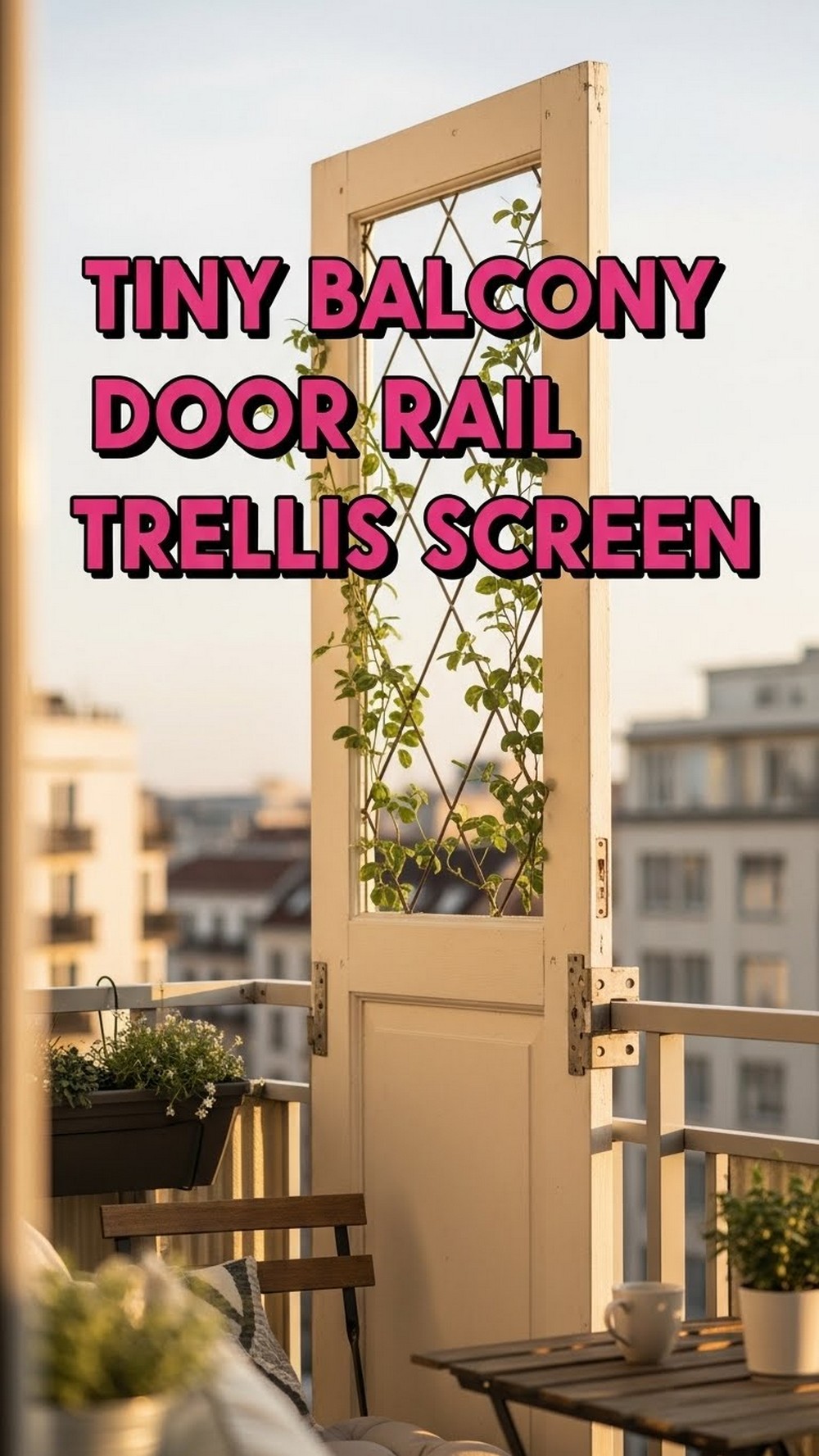
Even a small balcony can enjoy a recycled door trellis. Cut down a lightweight door if needed and secure it inside the railing with brackets or cable ties. Add a narrow trough or pots at the base and grow compact climbers or even tomatoes up the door frame. It creates a green screen that adds privacy from neighbours and disguises plain railings, while still letting light through.
- Best For: Apartments, rented flats, and upper-level balconies.
- Budget Tip: Look for hollow-core doors; they’re lighter and easier to handle in tight spaces.
- Styling Idea: Match the door color to your balcony furniture or cushions for a cohesive feel.
- Practical Note: Always fix into the balcony structure safely and check weight limits.
- Care & Maintenance: Water carefully to avoid drips onto neighbours below and trim plants so they don’t block your whole view.
Conclusion
Recycled doors make fantastic trellis walls: they’re tall, full of character, and ready to support climbing plants with very little extra work. Whether you lean one on a patio, build a cottage-style fence, or add privacy to a balcony, these ideas help you grow upwards instead of outwards. Start with a single door and a simple climber you love. Once you see how much charm and greenery it adds, you might find yourself building a whole “gallery” of door trellises around your garden.
FAQs
1. Do I need to treat old doors before using them as trellises?
Ideally, yes. Brush off loose paint, check for rot, and sand rough edges. For wooden doors, add a coat of exterior primer and paint or stain to help them last longer outdoors. If you like a weathered look, seal with a clear exterior varnish instead of solid paint.
2. Can I use interior doors outside?
You can, but they need extra care. Interior doors are often hollow-core or made from less weather-resistant materials, so keep them off direct soil, add strong supports, and protect them with good exterior paint or sealer. They’re best in sheltered spots like covered patios or balconies.
3. What climbers work best with door trellis walls?
Choose plants that suit your light and climate: roses, clematis, honeysuckle, jasmine, peas, beans, sweet peas, and annual climbers like morning glory all work well. For balconies and small spaces, pick compact or dwarf varieties so they don’t overwhelm the structure.
4. How can I make recycled door trellises renter-friendly?
Keep things freestanding or attached to movable planters rather than drilling into walls. Lean doors against fences with hidden braces, or fix them to large containers that can be lifted and moved. When you leave, you can take both door and plants with you.
5. Are door trellis walls safe in windy areas?
They can be, as long as they’re well-anchored. Use deep-set posts, strong brackets, or bolt doors to sturdy structures. In very exposed gardens, choose lower doors or cut tall ones down so they catch less wind, and avoid super-heavy glass doors in open spots.
6. What if my door starts to rot or fall apart?
Minor cracks and peeling paint just add charm, but structural rot should be dealt with. You can reinforce weak areas with extra boards from behind or retire the door and reuse the hardware and paint colors on a new salvaged find. The climbers will happily move to their next “wall.”