10 Stunning Side-of-House Landscaping Ideas
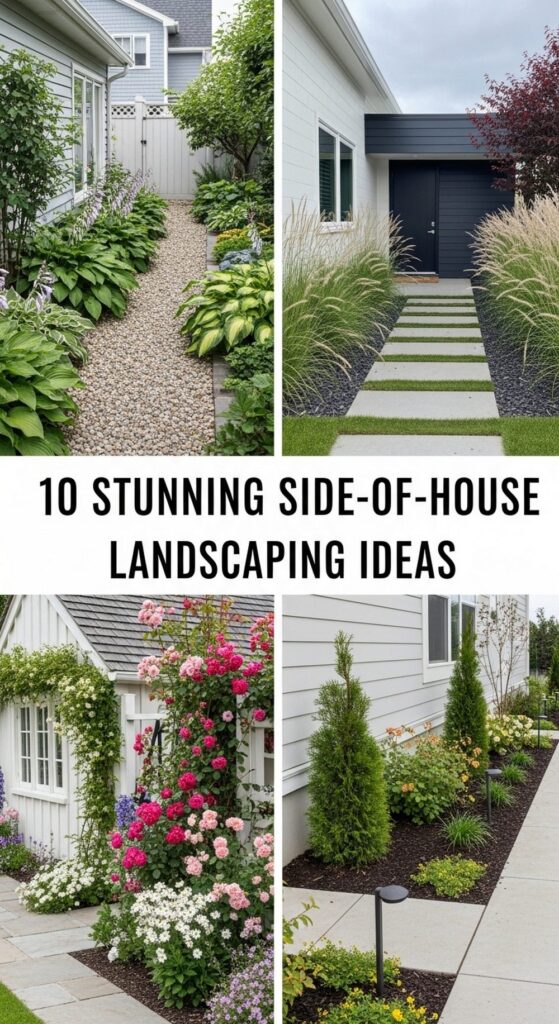
The side of the house is often a forgotten strip of lawn, gravel, or bare soil that you hurry past without a second thought. But with a little planning, that narrow space can become one of the most charming parts of your garden.
In this guide, you’ll find ten stunning side-of-house landscaping ideas that work for busy homeowners, renters, and small-space gardeners. From easy paths and layered greenery to clever lighting and container displays, these ideas focus on simple upgrades, realistic budgets, and layouts you can actually maintain. With a few thoughtful changes, your side yard can look polished, welcoming, and very much part of your home.
Quick List
- Narrow Gravel Path With Border Plants
- Vertical Trellis Wall With Climbing Vines
- Layered Shrubs And Evergreen Structure
- Side Yard Herb And Kitchen Garden Strip
- Modern Stone Steppers With Groundcovers
- Rain Garden Beside The Downspout
- Shady Woodland Side Path
- Utility Area Hideaway With Screens
- Container Gallery Along The Wall
- Side-Of-House Lighting And Uplights
1. Narrow Gravel Path With Border Plants
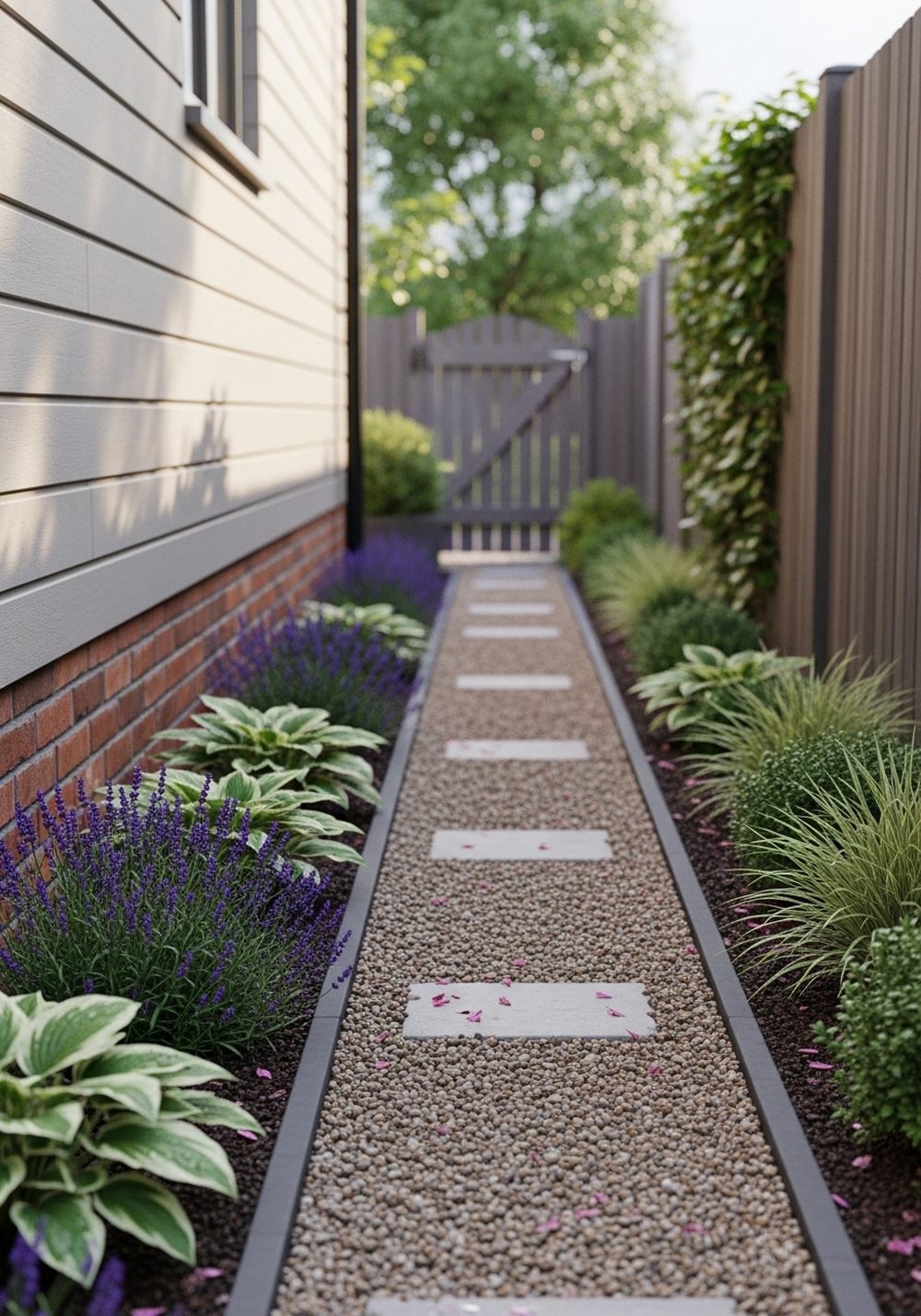
Turn a muddy side passage into a charming walkway with a narrow gravel path edged in plants. Lay down a weed membrane, pour a layer of compacted gravel, and define the edges with bricks, timber, or metal edging. Then tuck in low-growing plants like lavender, catmint, or dwarf grasses along one or both sides. The contrast of soft foliage against crisp gravel instantly neatens the space and makes it feel intentional instead of forgotten.
- Best For: Long, narrow gaps between house and fence that get decent sun.
- Budget Tip: Use local gravel and secondhand bricks or pavers for edging.
- Styling Idea: Choose one plant variety repeated along the whole length for a calm, modern look.
- Practical Note: Keep the path just wide enough for walking to save on materials and maintenance.
2. Vertical Trellis Wall With Climbing Vines

If your side yard is dominated by a blank wall or fence, treat it like a vertical canvas. Attach slim wooden or metal trellises and plant climbers such as jasmine, clematis, or star jasmine at their base. Over time, the vines soften the walls, add fragrance, and draw the eye up, making the space feel less like a corridor. Add gravel or mulch below to keep it tidy and make watering easy. The result is a leafy green runway from front to back.
- Best For: Narrow spaces where horizontal planting room is limited.
- Budget Tip: Use simple DIY timber strips instead of fancy pre-made trellises.
- Styling Idea: Match trellis color to your trim or fence for a coordinated feel.
- Care & Maintenance: Add a few discreet ties early on to guide vines up and avoid tangles.
3. Layered Shrubs And Evergreen Structure
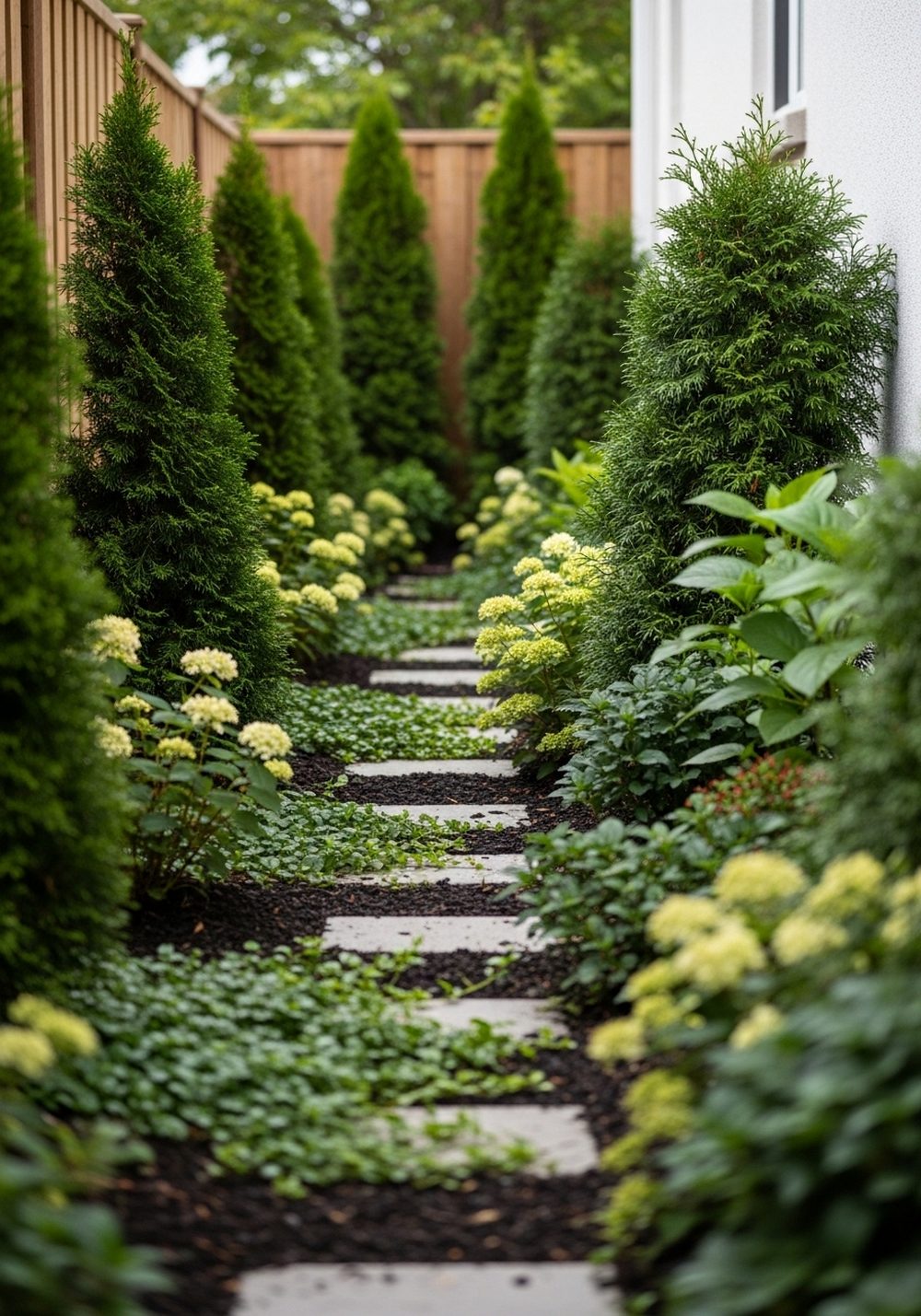
For a side yard that looks good year-round, think in layers. Start with tall, narrow evergreens at the back, mid-height flowering shrubs in front, and low groundcovers or edging plants along the path. This creates depth in a tight space and ensures structure even in winter. Choose varieties with different leaf shapes and shades of green so the strip feels lush, not flat. A simple mulch path or stepping stones alongside let you enjoy the greenery up close.
- Best For: Homeowners who want a “plant it and enjoy it” side view with minimal fuss.
- Budget Tip: Buy smaller shrubs and evergreens; they’ll fill in within a couple of seasons.
- Styling Idea: Mix glossy dark greens with a few silvery-leafed plants for contrast.
- Care & Maintenance: Prune lightly once or twice a year to keep plants narrow and tidy.
4. Side Yard Herb And Kitchen Garden Strip
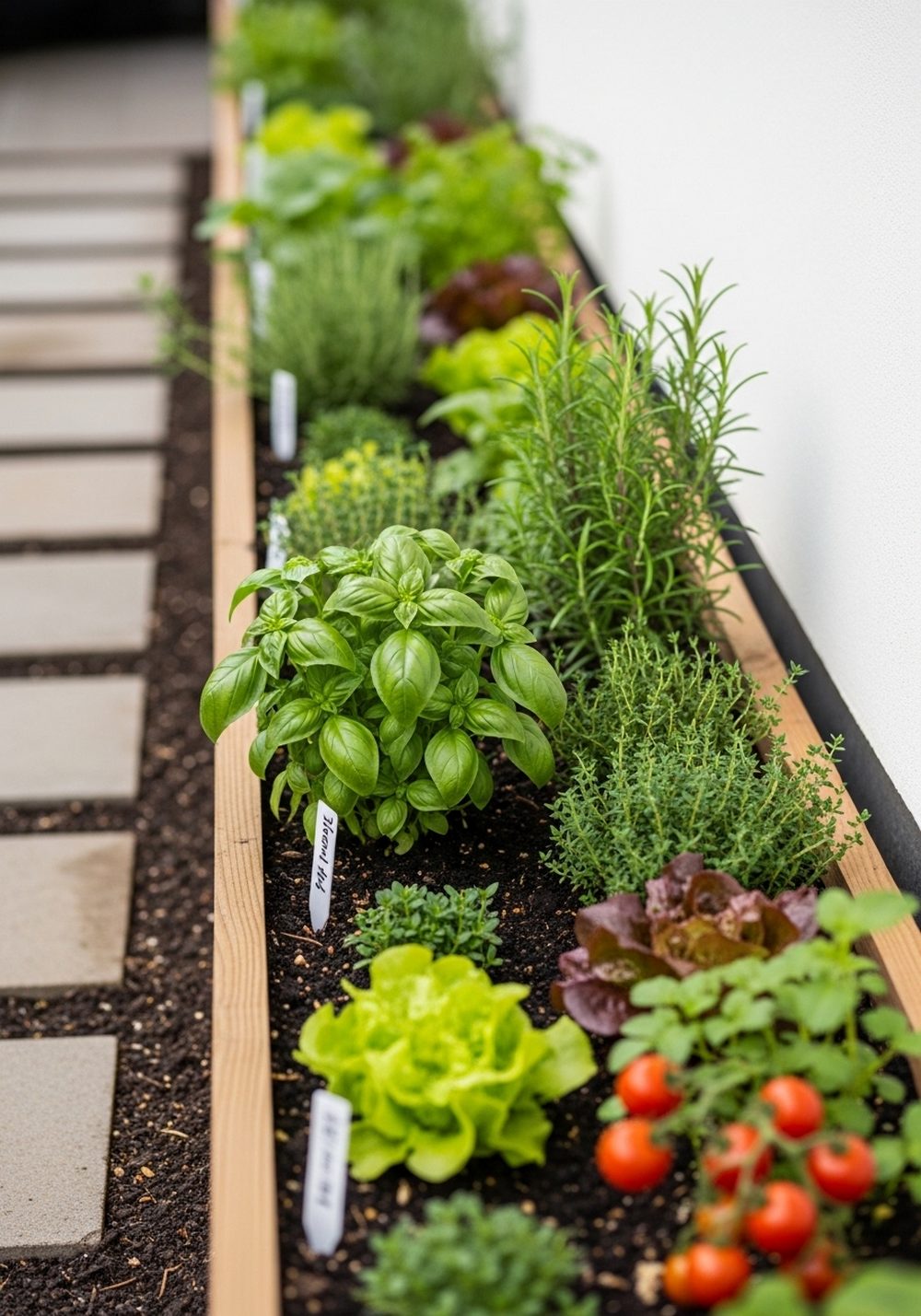
Make your side passage do double duty by turning it into a productive herb and veggie strip. Install a row of shallow raised beds or simple in-ground rows along the sunniest side of the house. Fill them with herbs like basil, thyme, and parsley, plus a few compact vegetables such as lettuce, radishes, or cherry tomatoes. A narrow stepping-stone path between beds gives you easy access for harvesting. The scent of herbs and the sight of fresh greens turn a once-boring area into a daily delight.
- Best For: Sunny side yards close to the kitchen door.
- Budget Tip: Build beds from reclaimed timber or stacked bricks and fill with homemade compost.
- Styling Idea: Use simple black or terracotta plant labels for a neat, kitchen-garden look.
- Practical Note: Keep bed depth shallow near the house to protect foundations and allow airflow.
5. Modern Stone Steppers With Groundcovers
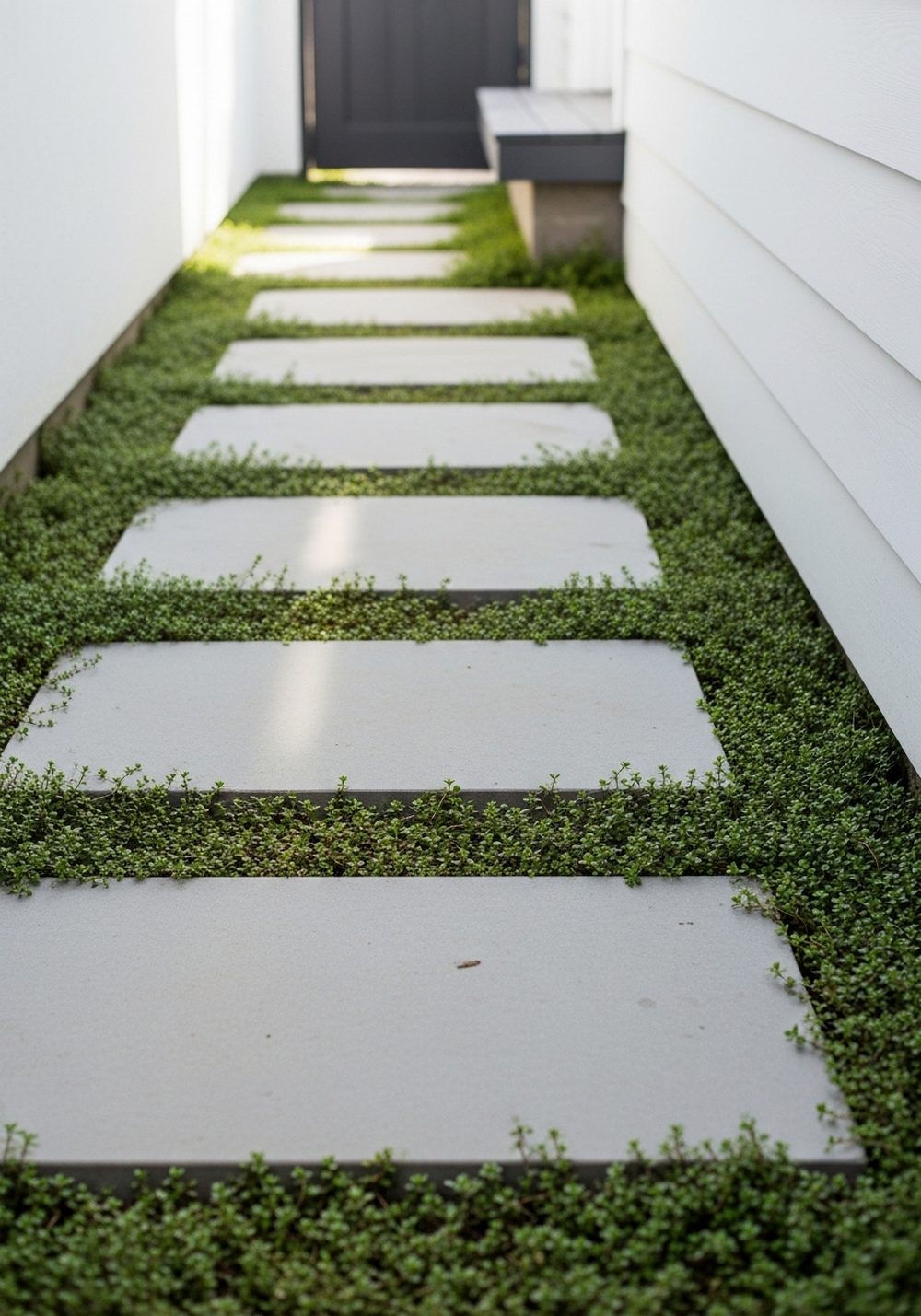
For a clean, contemporary feel, lay large rectangular stepping stones in a single line or staggered pattern, then infill the gaps with low, soft groundcovers. Think concrete or stone pavers “floating” in a sea of creeping thyme, baby’s tears, or low sedums. This look works beautifully along a modern home and instantly smartens a dull strip of lawn or bare soil. The repeating shapes create a visual rhythm, while the plants soften the hard edges and add a gentle scent underfoot.
- Best For: Modern homes and minimal, low-clutter side yards.
- Budget Tip: Space steppers slightly farther apart and let groundcovers fill over time.
- Styling Idea: Choose square or rectangular pavers for a sleek, architectural vibe.
- Practical Note: Set steppers level and stable for safe walking, especially in wet weather.
6. Rain Garden Beside The Downspout

If your side yard suffers from puddles or gutter runoff, turn that problem into a feature with a rain garden. Dig a shallow, saucer-shaped area near the downspout, line it with a mix of gravel and compost, and plant moisture-loving species like irises, sedges, or native wetland plants. Edge it with river rocks to keep soil in place and give a neat finish. During rain, the garden temporarily fills and slowly drains, reducing runoff while looking beautifully wild and natural.
- Best For: Low spots or areas where roof water naturally collects.
- Budget Tip: Gather stones and pebbles from your own yard or local sources where allowed.
- Styling Idea: Use a limited palette of green and white flowers for a calm, spa-like feel.
- Practical Note: Keep the basin away from foundations and check local guidelines for drainage.
7. Shady Woodland Side Path
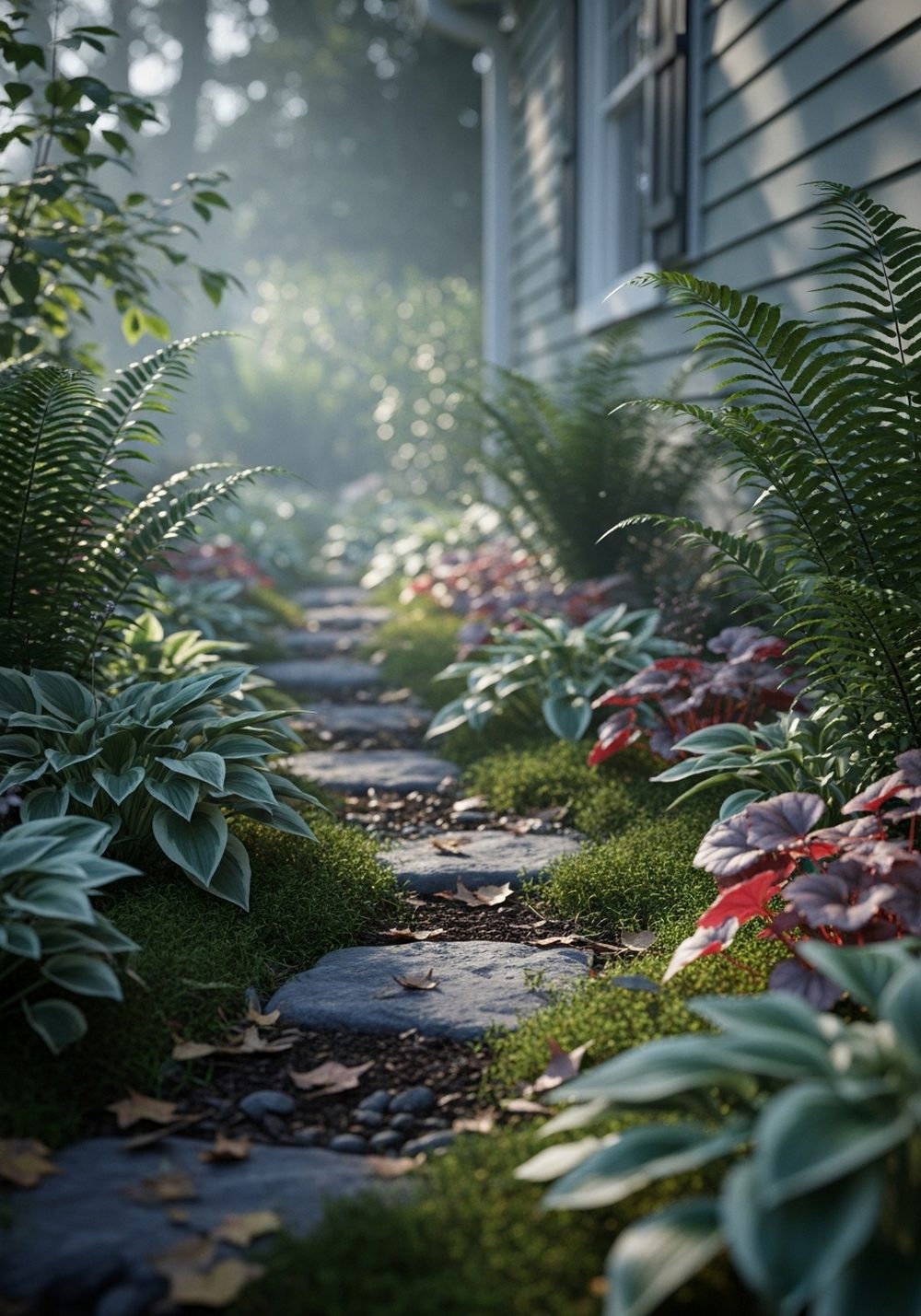
A shaded side of the house can feel gloomy, but it’s ideal for a woodland-style planting. Lay a simple bark chip or stepping-stone path, then fill the borders with ferns, hostas, heucheras, and other shade-lovers. Add a few logs, rocks, or a small birdbath to complete the woodland mood. The mix of big leaves, fine fronds, and rich soil gives depth and interest even without bright flowers. Walking through feels like a cool, leafy escape right beside your home.
- Best For: North-facing or tree-shaded side yards with low light.
- Budget Tip: Divide existing hostas and ferns from elsewhere in your garden instead of buying new.
- Styling Idea: Stick to greens, silvers, and deep purples for a sophisticated woodland palette.
- Care & Maintenance: Top up mulch annually to keep moisture in and weeds down.
8. Utility Area Hideaway With Screens
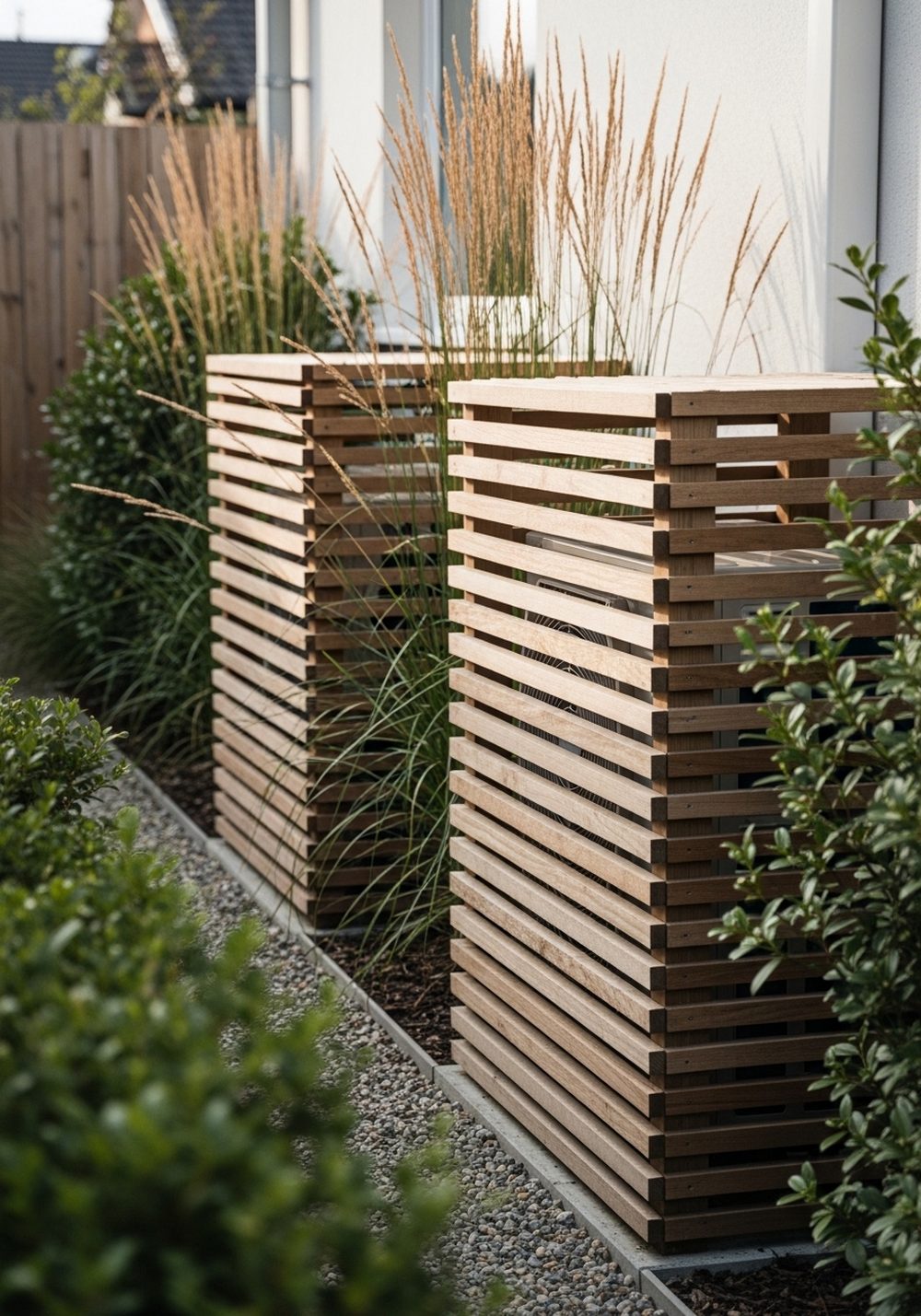
Many side yards are home to bins, air-conditioning units, or meters. Instead of staring at them, hide them in plain sight. Install slim slatted screens or lattice panels a short distance in front, leaving space for airflow and access. Plant tall grasses, bamboo in containers, or slim shrubs in front of the screens to soften the view further. With gravel underfoot and a small path for maintenance, you’ll have a tidy, semi-hidden utility zone that doesn’t spoil the rest of your landscaping.
- Best For: Practical side spaces that need to stay accessible.
- Budget Tip: Use simple treated timber and stain it yourself rather than buying decorative panels.
- Styling Idea: Paint screens the same color as your trim or fence for a built-in look.
- Practical Note: Ensure doors, meters, and vents remain fully accessible and well-ventilated.
9. Container Gallery Along The Wall
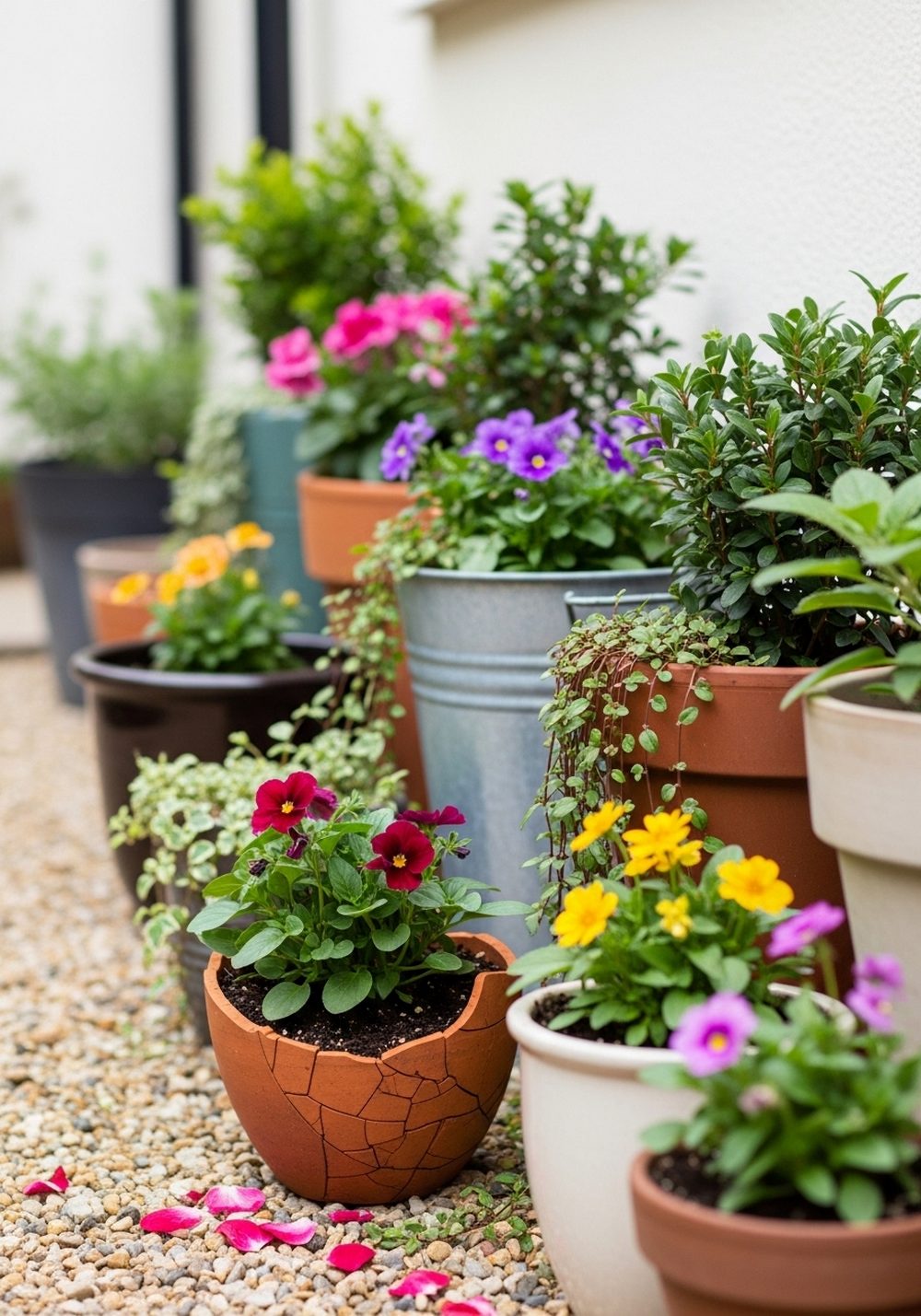
If you can’t dig, decorate. Line the side of your house with a mix of containers in different heights and shapes, from tall troughs to small pots. Fill them with a mix of evergreen shrubs, seasonal flowers, and trailing plants that spill over the edges. Group a few pots together for impact and leave some breathing room so the space doesn’t feel cluttered. A simple gravel or paver base keeps things level and clean, and you can refresh the look every season just by swapping plants.
- Best For: Renters or anyone with paved or concreted side yards.
- Budget Tip: Blend a few statement pots with inexpensive plastic ones hidden at the back.
- Styling Idea: Stick to one or two pot colors for a cohesive, gallery-style display.
- Care & Maintenance: Choose plants with similar water needs and add saucers if drainage is limited.
10. Side-Of-House Lighting And Uplights
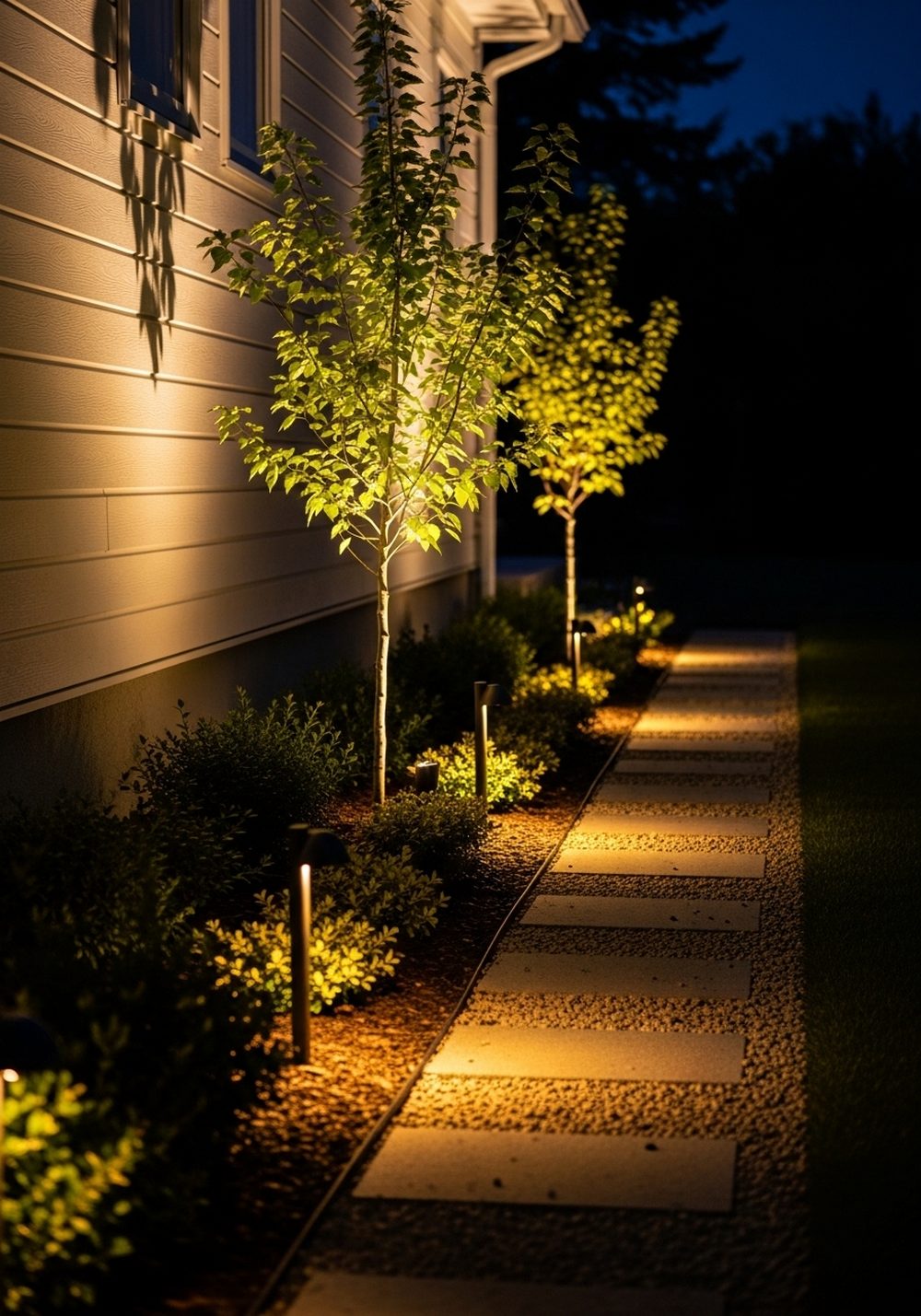
Good lighting can completely change the mood of a side yard, especially if it connects your front and back doors. Add subtle low-level lights along a path, plus a few uplights aimed at the wall, fences, or key plants. Warm white bulbs create a welcoming glow and highlight textures in brick, timber, and foliage. Even a simple gravel path looks special when softly lit at night. It also makes the space safer to walk through, turning a dark corridor into a charming evening passage.
- Best For: Homes where the side path is used in the evening or for guests.
- Budget Tip: Start with solar stake lights and add hard-wired options later if you wish.
- Styling Idea: Keep fixtures simple and discreet so the effect of light is what you notice, not the hardware.
- Practical Note: If wiring, always use a qualified electrician and outdoor-rated fittings.
Conclusion
Your side-of-house strip doesn’t have to be a wasted, weedy shortcut. With a few smart choices—whether that’s a simple gravel path, a wall of green climbers, or a row of containers—you can turn it into a space that feels cared for and connected to the rest of your garden. Start with one idea that fits your budget and light conditions, then build from there. Small changes along the side can make your entire home feel more finished and welcoming.
FAQs
Q1. How can I landscape the side of my house on a very small budget?
Focus on simple, structural changes first: a gravel path, a tidy mulch layer, and a few repeat plants. Use reclaimed bricks or stones for edging and divide plants from other parts of your garden instead of buying new. Even just neatening edges and adding one or two feature plants can make the side look intentional without a big spend.
Q2. Are these side-of-house ideas suitable for renters?
Yes, many can be done without digging or permanent changes. Container galleries, vertical trellises attached to freestanding posts, and portable solar lighting are all renter-friendly. You can place pots on pavers, use freestanding screens to hide utilities, and take everything with you when you move.
Q3. What should I plant if my side yard is very shady?
Choose plants that thrive in low light, such as ferns, hostas, heucheras, and some types of hydrangea. Focus on interesting leaf shapes and colors rather than flowers. Add a bark or gravel path and perhaps a small birdbath or log to reinforce the woodland feel. Avoid sun-loving plants here—they’ll struggle and look thin.
Q4. How do I keep side-of-house landscaping low maintenance?
Keep the plant palette simple and repeat the same few species. Use weed membrane under gravel or mulch, choose slow-growing shrubs, and plant densely enough to shade out weeds. Drip irrigation hoses tucked under mulch can save you time in summer. Avoid fussy lawns in narrow strips; they’re harder to mow than they’re worth.
Q5. Can I mix decor items with plants in such a narrow space?
You can, as long as you keep the layout uncluttered. Opt for a few well-chosen pieces, like a small wall-mounted feature, a birdbath, or a single sculptural pot, rather than many small ornaments. Make sure decor doesn’t block access, vents, or meters, and leave enough room to walk and maintain your plants comfortably.
Q6. What are the easiest ideas for beginners to try first?
The simplest starting points are a gravel path with clear edging, a row of containers along the wall, or basic solar lighting. None of these require complex planting knowledge, and you’ll see an instant improvement. Once you’re comfortable, you can add shrubs, climbers, or a small herb strip to build on your new side-yard look.