10 Tall Pallet Raised Beds For Easy Harvesting

If you love homegrown food but hate bending, kneeling, and aching backs, tall pallet raised beds might be your new best friends. By reusing sturdy pallets, you can build planters that bring your vegetables and herbs right up to a comfortable height, making planting, watering, and harvesting so much easier.
In this guide, you’ll find ten creative ways to turn simple pallets into tall beds that suit different spaces, from tiny yards to patios and family gardens. Expect practical build tips, styling ideas, and budget-friendly tricks to help you grow more food, enjoy your garden longer, and keep your body happier while you do it.
Quick List
- Classic Waist-High Pallet Bed
- U-Shaped Pallet Raised Bed For Easy Reach
- Pallet Bed With Built-In Trellis Back
- Mobile Tall Pallet Bed On Casters
- Tall Pallet Corner Bed For Small Yards
- Tall Pallet Salad Bar Bed Near The Patio
- Tiered Pallet Herb And Strawberry Tower
- Tall Pallet Bed With Wide Seating Ledge
- Accessible Pallet Bed For Kids And Seniors
- Colorful Tall Pallet Bed As A Focal Point
1. Classic Waist-High Pallet Bed
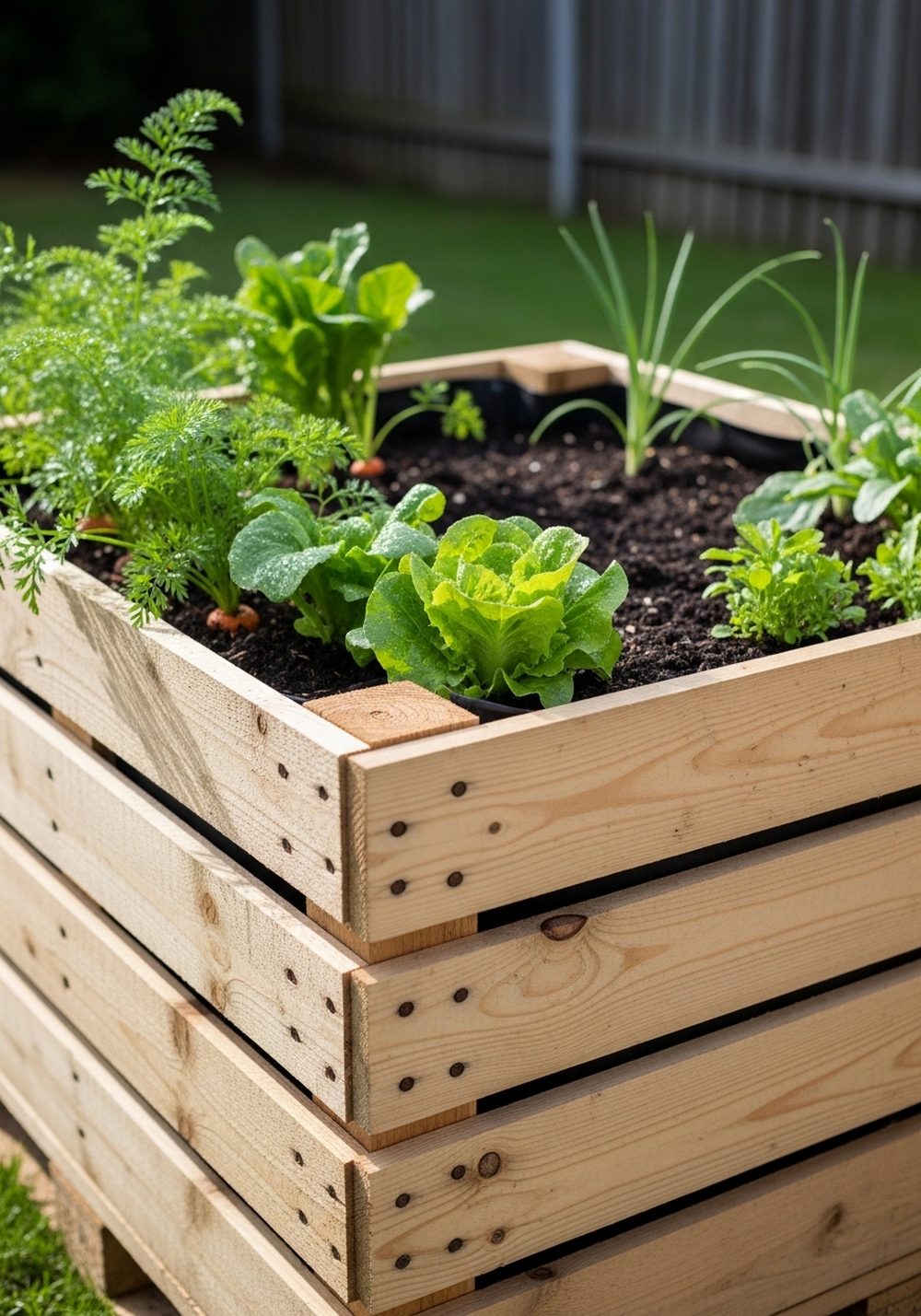
A classic waist-high pallet bed is the easiest way to test out tall growing. Stack and secure pallet frames to about hip height, line the interior with landscape fabric, then fill with quality soil. The result is a chunky wooden box where your greens, roots, and herbs grow right at hand level. Visually, it looks clean and structured, with the warm texture of timber framing a lush, green top. Place it where you can walk all the way around for effortless harvesting.
- Best For: Gardeners who want simple, straight beds and minimal bending.
- Budget Tip: Use free or cheap pallets and fill gradually, layering branches and compost at the bottom.
- Styling Idea: Sand and oil the wood for a warm rustic look that ages gracefully.
- Practical Note: Screw the pallets together firmly and brace the corners to handle the weight of damp soil.
- Care & Maintenance: Check for loose boards each season and re-oil or stain when the wood starts to dry out.
2. U-Shaped Pallet Raised Bed For Easy Reach

A U-shaped tall pallet bed wraps around you, so every plant is within a small stretch or step. Build three pallet sections to form a U, leaving a comfortable path in the middle. Because the walls are high, you get loads of growing space without needing to step inside the bed. Visually it feels like a tiny vegetable courtyard, with green walls on three sides. This design is especially helpful if kneeling or stretching is difficult, but you still want a productive plot.
- Best For: Medium-sized yards or allotments where access and comfort matter.
- Budget Tip: Start with a shorter U and add extra pallet height later as budget allows.
- Styling Idea: Stain all pallet walls the same color so the U-shape reads as one smart feature.
- Practical Note: Keep the middle path wide enough for a wheelbarrow or kneeling stool.
- Extra Idea: Add a simple arch at the opening of the U and grow climbers over it for a garden “gateway.”
3. Pallet Bed With Built-In Trellis Back
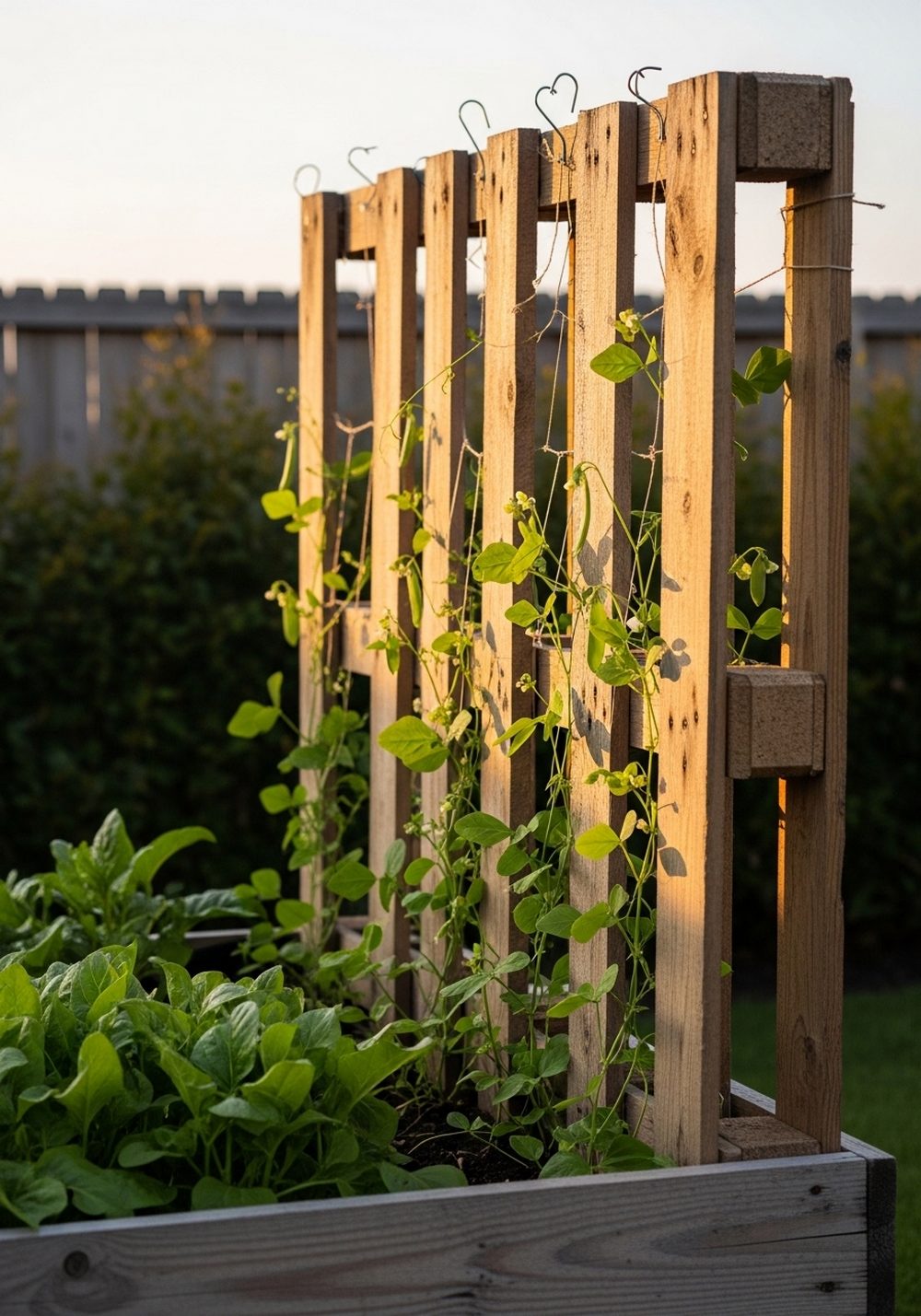
A pallet bed with a built-in trellis back gives you both a raised planter and a vertical growing wall. Stand extra pallet panels on the rear side, secure them firmly, and run twine or wire up the slats. Plant climbing beans, peas, or cucumbers at the back and shorter crops at the front. This creates a layered look, with tall vines forming a green backdrop and bushy plants billowing below. It’s a great way to grow more in a small footprint and add structure to your garden.
- Best For: Narrow spaces along fences or walls that need height and interest.
- Budget Tip: Use offcuts and leftover pallet boards as trellis slats instead of buying lattice.
- Styling Idea: Paint the trellis back a soft color so green vines really pop against it.
- Practical Note: Anchor the trellis securely to prevent top-heavy tipping in wind.
- Care & Maintenance: Replace twine or ties each season before they rot or cut into stems.
4. Mobile Tall Pallet Bed On Casters

Mounting your tall pallet bed on heavy-duty casters lets you roll your mini-plot wherever the light is best. Build a rectangular pallet box, add a strong plywood base, and attach locking wheels rated for the full weight. Filled with soil and plants, it becomes a chunky, movable garden cart. This design works especially well on patios and driveways, where you might need to shift the bed to clean, host guests, or follow the sun. It looks modern and practical, a neat mix of rustic wood and smooth hardware.
- Best For: Patios, rented spaces, and gardeners chasing sun patches.
- Budget Tip: Watch for second-hand industrial casters and reuse strong boards for the base.
- Styling Idea: Keep the wood pale and the wheels visible for an urban, workshop-style vibe.
- Practical Note: Always choose locking casters and test the movement before filling with soil.
- Care & Maintenance: Check bolts and wheels each season and oil moving parts to prevent rust.
5. Tall Pallet Corner Bed For Small Yards
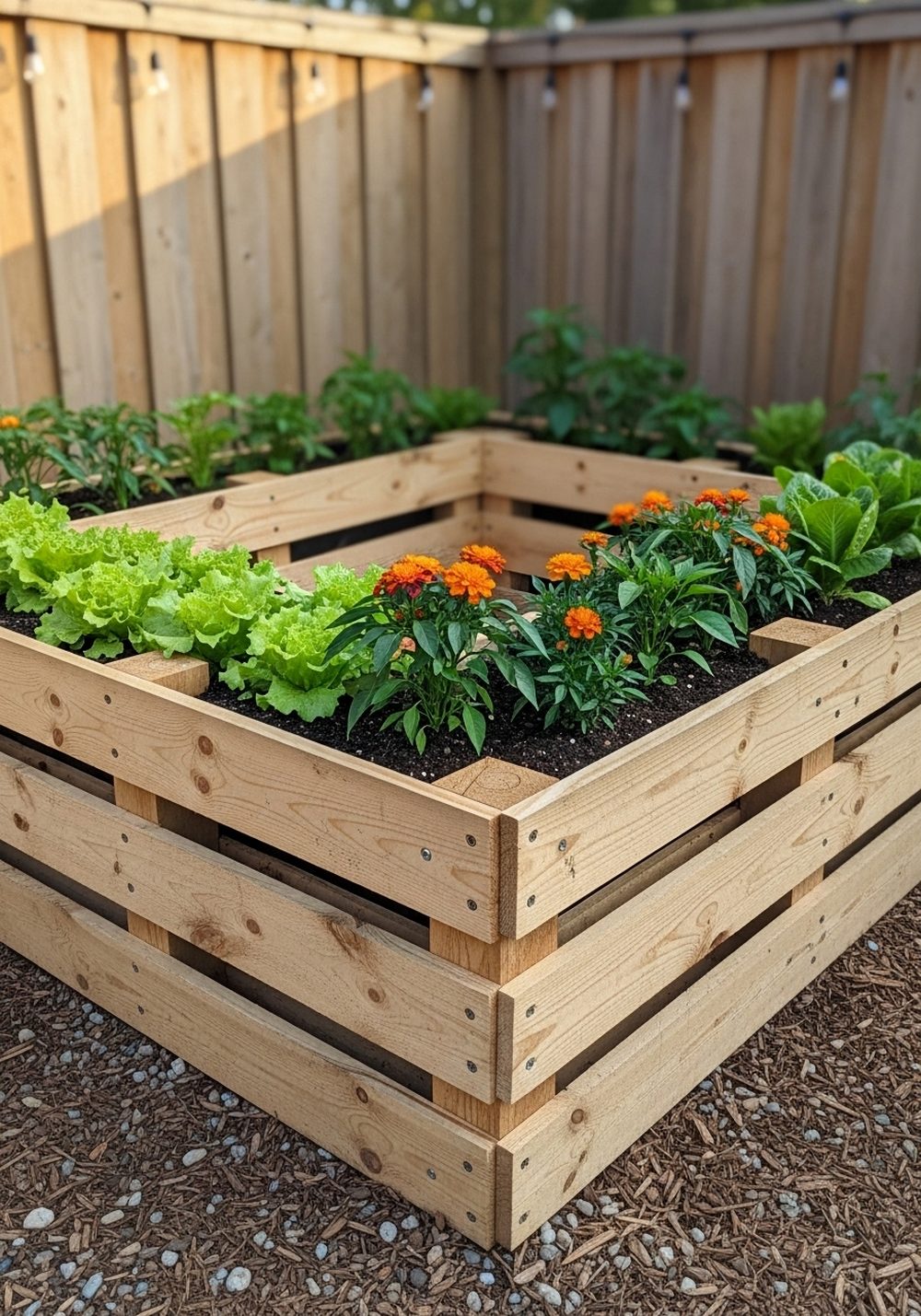
A tall corner pallet bed makes clever use of an awkward spot where two fences meet. Build an L-shaped frame from pallets cut to size, hugging the boundaries and leaving the rest of the yard free. At waist height, the corner suddenly becomes a productive tower of veggies and flowers, softening the hard lines of the fence. From the front, you see a lush wedge of greens and blooms, and you can harvest without crouching into the corner.
- Best For: Small yards or courtyards with unused corners.
- Budget Tip: Use shorter offcut pieces in the back where they’re less visible and reserve full boards for the front face.
- Styling Idea: Paint or stain the front panels to match your fence or outdoor furniture.
- Practical Note: Add a slight inward slope or braces so tall panels stay rigid over time.
- Extra Idea: Hang small hooks along the top edge for tools or a string of solar lights.
6. Tall Pallet Salad Bar Bed Near The Patio

Turn a tall pallet bed into a living salad bar by positioning it right beside your outdoor dining area. Fill it with different lettuces, rocket, baby beets, and herbs, planting in broad stripes or blocks for a patterned top. When you sit down to eat, everything you need is at arm’s reach: just snip, rinse, and serve. Visually it becomes a lush green buffet, blurring the line between decor and dinner and making your patio feel like a restaurant terrace.
- Best For: Gardeners who love fresh salads and outdoor dining.
- Budget Tip: Grow from seed in succession sowings instead of buying lots of seedlings at once.
- Styling Idea: Stick to a green and purple palette with red lettuces and chard for a designer look.
- Practical Note: Keep a watering can and scissors stored nearby to encourage quick use.
- Care & Maintenance: Re-seed bare patches frequently so the “salad bar” always looks full and inviting.
7. Tiered Pallet Herb And Strawberry Tower
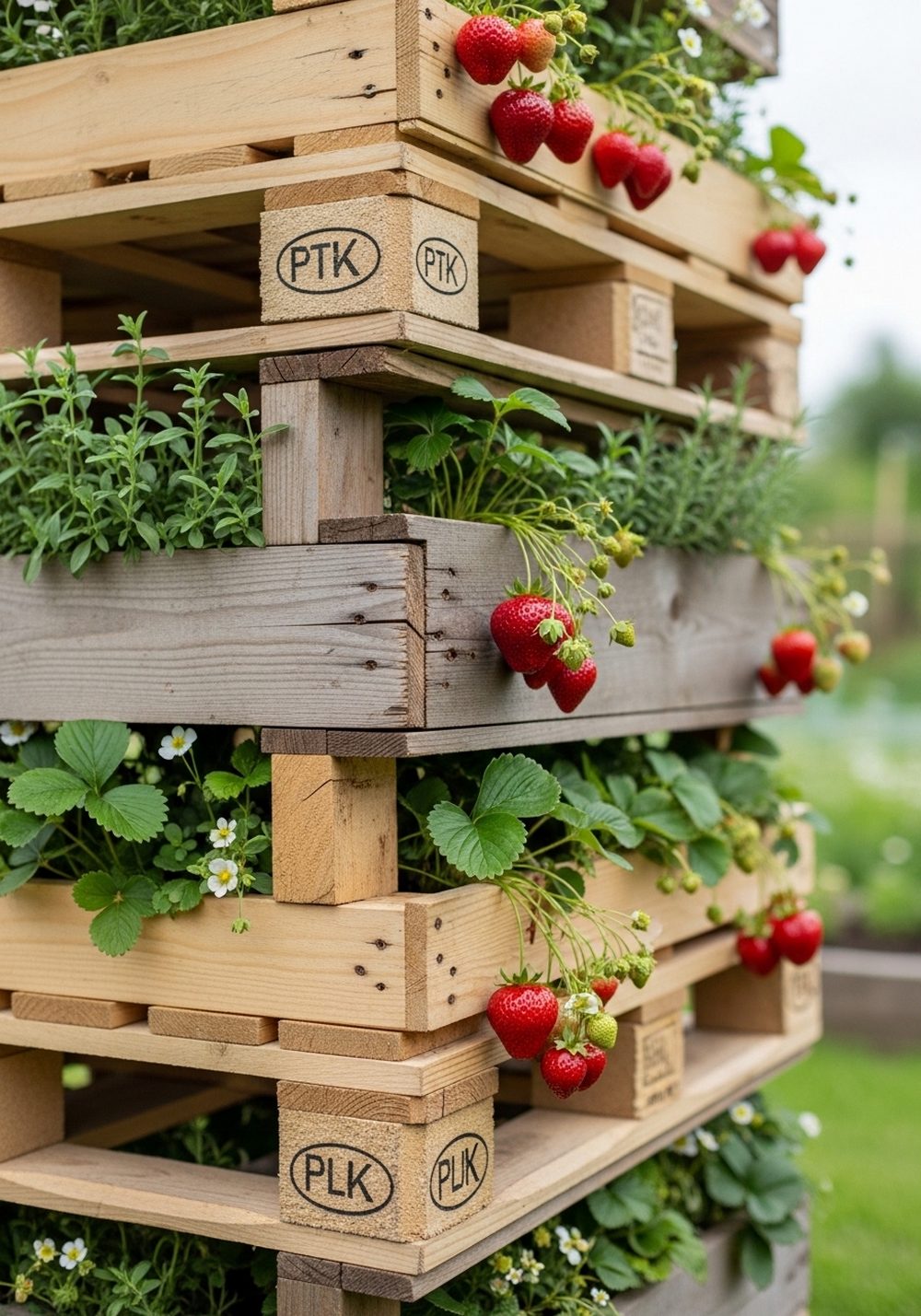
By stacking pallet sections in a stepped or zigzag pattern, you can create a tall, tiered bed perfect for herbs and trailing strawberries. Each level offers a different planting pocket, so leaves and fruit spill over the edges at varying heights. It looks like a living sculpture, with textures of wood, foliage, and berries all layered together. This design works beautifully in a corner, against a wall, or as a stand-alone feature in a small yard or courtyard.
- Best For: Small gardens that need vertical interest and lots of herbs.
- Budget Tip: Use scrap pallet pieces for the smaller top tiers and reinforce joints with inexpensive brackets.
- Styling Idea: Plant each tier in a theme: one for pizza herbs, one for teas, one for strawberries.
- Practical Note: Ensure the base tier is extra sturdy, as it carries the weight of all the higher levels.
- Care & Maintenance: Water slowly from the top, allowing moisture to trickle down through the tiers.
8. Tall Pallet Bed With Wide Seating Ledge
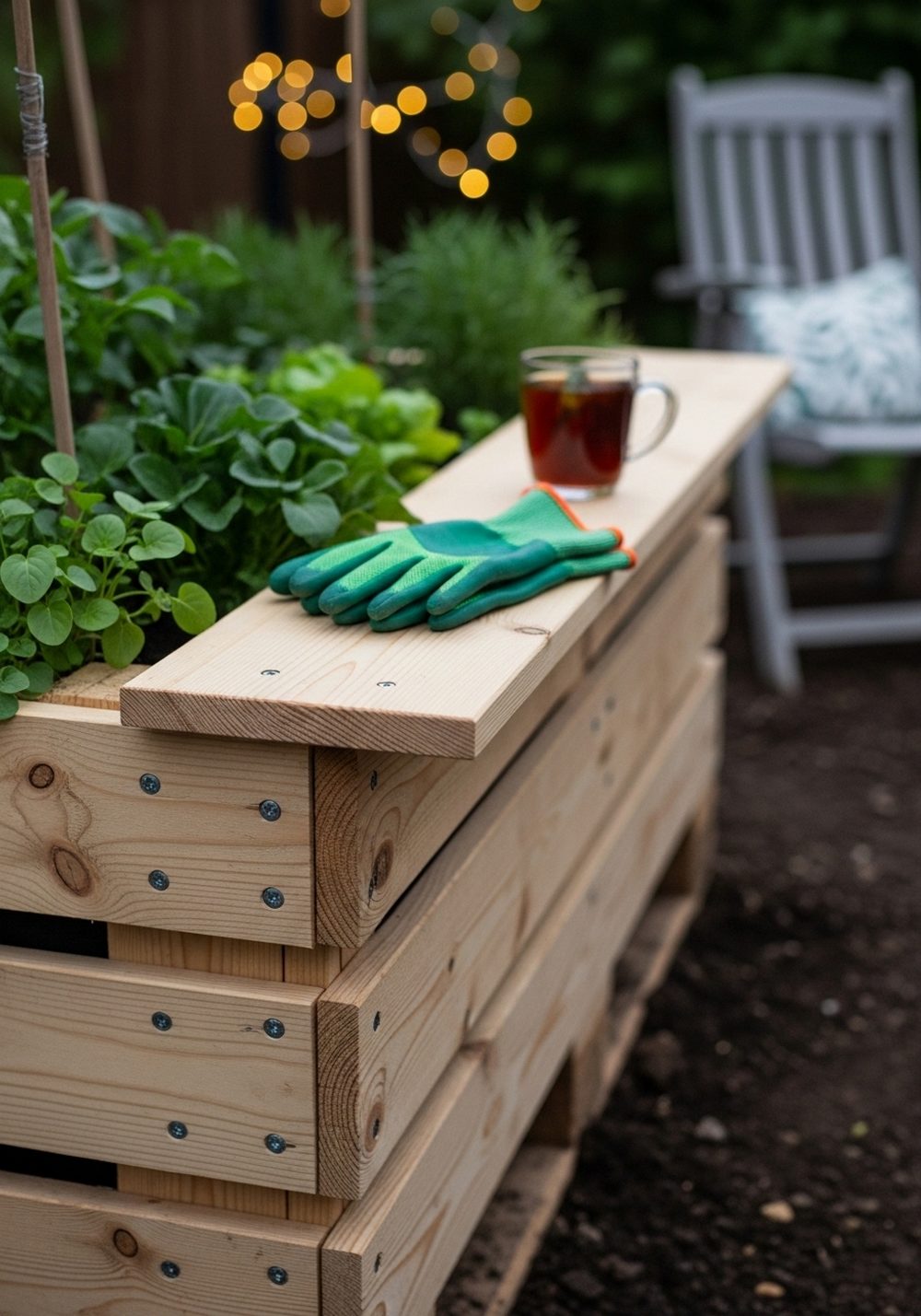
Adding a wide plank along the top of a tall pallet bed instantly turns it into a multipurpose piece: planter plus seating. The ledge invites you to sit and rest, sip a drink, or perch while you harvest. It also gives a neat, finished look, hiding raw pallet edges and tying the whole bed together. This design works especially well along paths or beside patios, effectively creating a low, living bench lined with vegetables, herbs, or flowers.
- Best For: Social gardens where people gather, sit, and chat.
- Budget Tip: Use reclaimed decking or a single long board for the top rather than multiple narrow strips.
- Styling Idea: Stain the ledge a slightly darker tone than the pallet sides for a subtle contrast.
- Practical Note: Round or sand the outer edge so it’s comfortable on the backs of legs and safe for kids.
- Care & Maintenance: Re-seal the top board annually since it will get more wear and exposure.
9. Accessible Pallet Bed For Kids And Seniors

An accessible pallet bed focuses on comfort and safety for all ages. Build the bed slightly higher than average, add extra internal braces, and smooth every edge. Consider making one side slightly lower or adding a shallow “shelf” for resting tools and baskets. Plant easy-to-pick crops like bush beans, cherry tomatoes, and herbs that don’t require deep bending. The look is friendly and inviting, with rounded corners and sturdy, reassuring lines that let everyone garden with confidence.
- Best For: Family gardens, community plots, and anyone with mobility issues.
- Budget Tip: Prioritize strong, good-quality pallets for this bed and save rougher ones for non-structural projects.
- Styling Idea: Add simple painted symbols or colors on each side to help kids remember what’s planted where.
- Practical Note: Place the bed on a firm surface and leave plenty of room for walkers, chairs, or wheelchairs.
- Care & Maintenance: Inspect screws, rails, and corners regularly and fix any wobble immediately.
10. Colorful Tall Pallet Bed As A Focal Point

Instead of hiding pallet wood, celebrate it by painting your tall bed in cheerful colors. Choose a palette of two or three shades and paint alternating boards, or go for an ombre fade from dark at the bottom to light at the top. When filled with mixed veggies and flowers, the bed becomes a bright focal point that lifts the whole garden. It works brilliantly in plain yards, rental spaces, or patios that need a shot of personality and fun.
- Best For: Plain outdoor spaces that need a bold statement piece.
- Budget Tip: Use leftover sample pots or mix your own shades from basic exterior paints.
- Styling Idea: Match the colors to your outdoor cushions, pots, or door to tie the whole area together.
- Practical Note: Use outdoor-safe, non-toxic paint and let it cure fully before filling with soil.
- Care & Maintenance: Touch up chips each spring so the colors stay fresh and vibrant.
Conclusion
Tall pallet raised beds make growing and harvesting feel less like hard work and more like a pleasure. By bringing the soil up to you, they protect your back while turning simple pallets into striking garden features. Start with one design that suits your space, then add more as you gain confidence. Little by little, you can build a productive, beautiful garden that’s kinder to your body and full of easy, joyful harvests.
FAQs
1. Are tall pallet raised beds expensive to build?
They don’t have to be. Many people source pallets for free or at low cost from local businesses, then spend mainly on screws, a liner, and soil. You can fill beds in layers, using branches, cardboard, and compost at the bottom to reduce how much bagged soil you need at once.
2. Are pallet beds safe for growing vegetables?
Choose pallets that are heat-treated (often marked “HT”) rather than chemically treated and avoid ones that look stained or contaminated. Sand any rough spots and line the inside with landscape fabric or a thick plastic liner with drainage holes. This helps protect both the wood and your soil.
3. Can renters use tall pallet beds without upsetting landlords?
Yes. Many pallet beds can be built as freestanding units placed on patio slabs, gravel, or weed membrane. Designs on casters are especially renter-friendly because they don’t disturb the ground and can be rolled away or removed completely when you move out.
4. How tall should a pallet raised bed be for easy harvesting?
Most people find somewhere between knee and hip height comfortable, typically around 60–90 cm. If you or someone in your household has mobility issues, aim for closer to hip height so there’s minimal bending. You can test this by stacking boxes or crates first and seeing what feels best.
5. What can I grow in a tall pallet bed besides salad greens?
Almost anything you’d put in a normal raised bed: bush beans, dwarf tomatoes, peppers, root crops, herbs, and even compact fruit like strawberries. Just remember that tall beds dry out a little faster, so include compost or moisture-retaining materials and water consistently, especially in hot weather.
6. How do I keep tall pallet beds looking tidy and decorative?
Keep the front face neat by trimming loose fibers, sanding sharp edges, and painting or staining the wood. Plant in clear blocks or rows for a patterned look, and tuck in a few flowers like marigolds or nasturtiums at the edges. A string of solar lights or a nearby seating area instantly makes the beds feel intentional and stylish.