10 Upcycled Colander Planter for Rustic Charm

If you love the look of worn wood, chipped enamel, and mismatched vintage finds, colanders might be your new favorite garden containers. Those old kitchen strainers hiding in cupboards or thrift shops can become charming planters with built-in drainage and loads of personality.
In this post, you’ll discover simple, budget-friendly ways to turn everyday colanders into rustic garden decor. Whether you have a tiny balcony, a shady back porch, or a full backyard, these ideas will help you add height, color, and charm. Think hanging baskets, table centerpieces, fairy gardens, and more—all with that cozy, collected-over-time feel.
Quick List
- Enamel Colander Herb Planter Trio
- Vintage Hanging Metal Colander Basket
- Colorful Colander Strawberry Planter
- Galvanized Colander Tabletop Centerpiece
- Tiered Flower Tower With Colanders
- Colander Planter In A Wooden Crate
- Colander Planter On A Rustic Stool
- Window Sill Row Of Colander Planters
- Whimsical Fairy Garden Colander Planter
- Porch Rail Line Of Colander Planters
1. Enamel Colander Herb Planter Trio
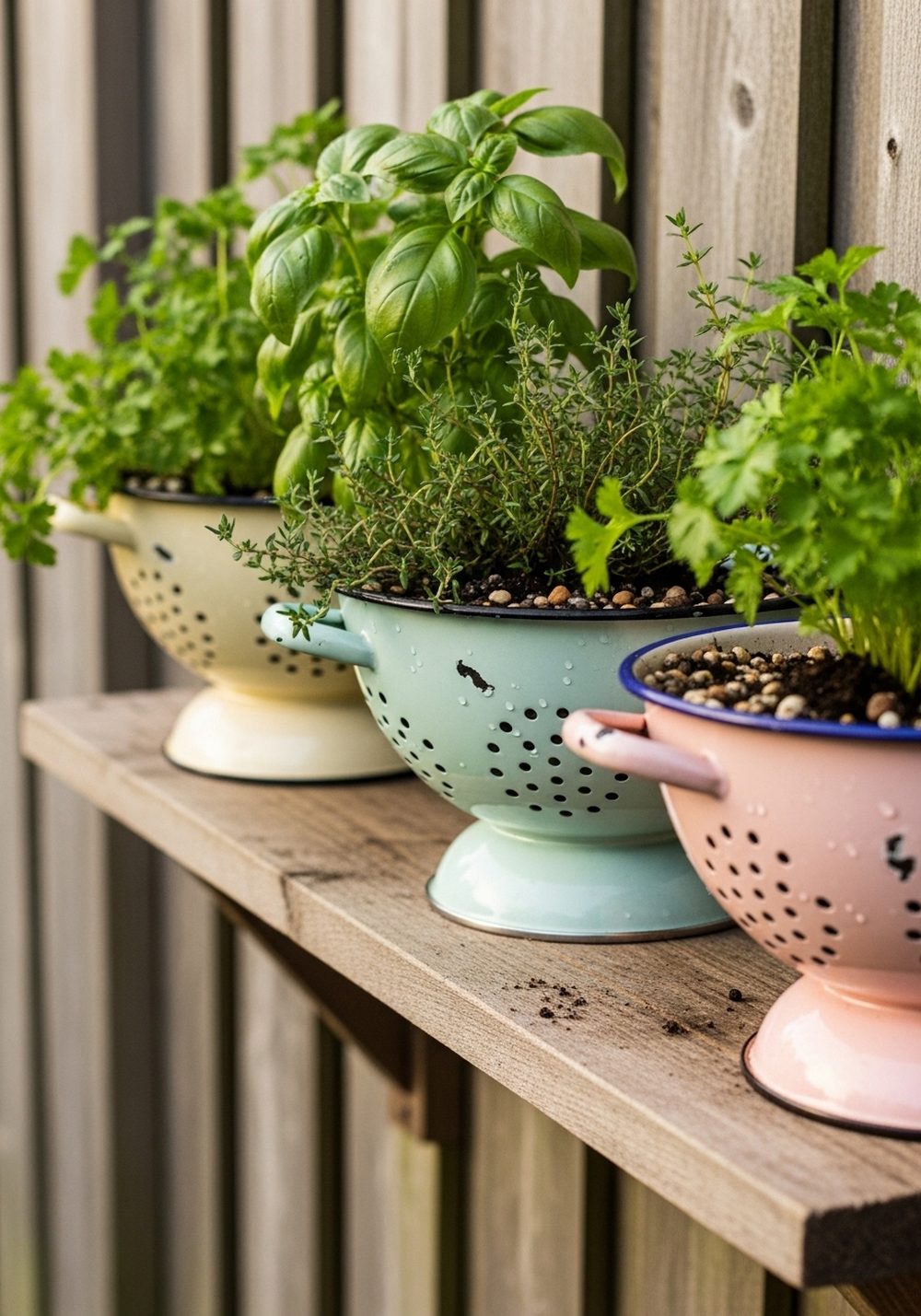
Line up three old enamel colanders on a shelf, bench, or low wall and turn them into a charming herb bar. Because colanders already have drainage, you just need to add a coffee filter or piece of mesh at the bottom, then fill with potting mix and plant herbs like basil, thyme, or mint. Grouping them in different pastel or classic white enamel instantly creates that rustic farmhouse feel and makes it easy to snip fresh herbs while you cook or relax outdoors.
- Best For: Small patios, balconies, or narrow garden walls.
- Budget Tip: Hunt for mismatched enamel colanders at thrift shops and flea markets.
- Styling Idea: Keep to a soft color palette—creams, pale blues, and greens—for a calm, vintage look.
- Practical Note: Place a tray or thin board under the colanders if you’re worried about drips.
- Care & Maintenance: Trim herbs regularly so they stay compact and don’t become leggy.
2. Vintage Hanging Metal Colander Basket

Turn an old metal colander into a hanging basket by adding three chains or sturdy twine to the handles and rim, then suspend it from a pergola, branch, or hook. Fill it with trailing plants like ivy, lobelia, or sweet potato vine so greenery cascades through the holes and over the edges. The mix of aged metal, dangling foliage, and dappled light creates an instantly cozy focal point that feels like it’s been there for years.
- Best For: Rustic porches, pergolas, or tree branches with partial shade.
- Budget Tip: Use secondhand chains or strong twine instead of buying new hanging kits.
- Styling Idea: Leave the metal weathered and slightly rusty for authentic cottage charm.
- Practical Note: Add a thin coco liner or mesh to keep soil from spilling out of the holes.
- Care & Maintenance: Water slowly so it doesn’t rush out the sides and ensure good support from above.
3. Colorful Colander Strawberry Planter
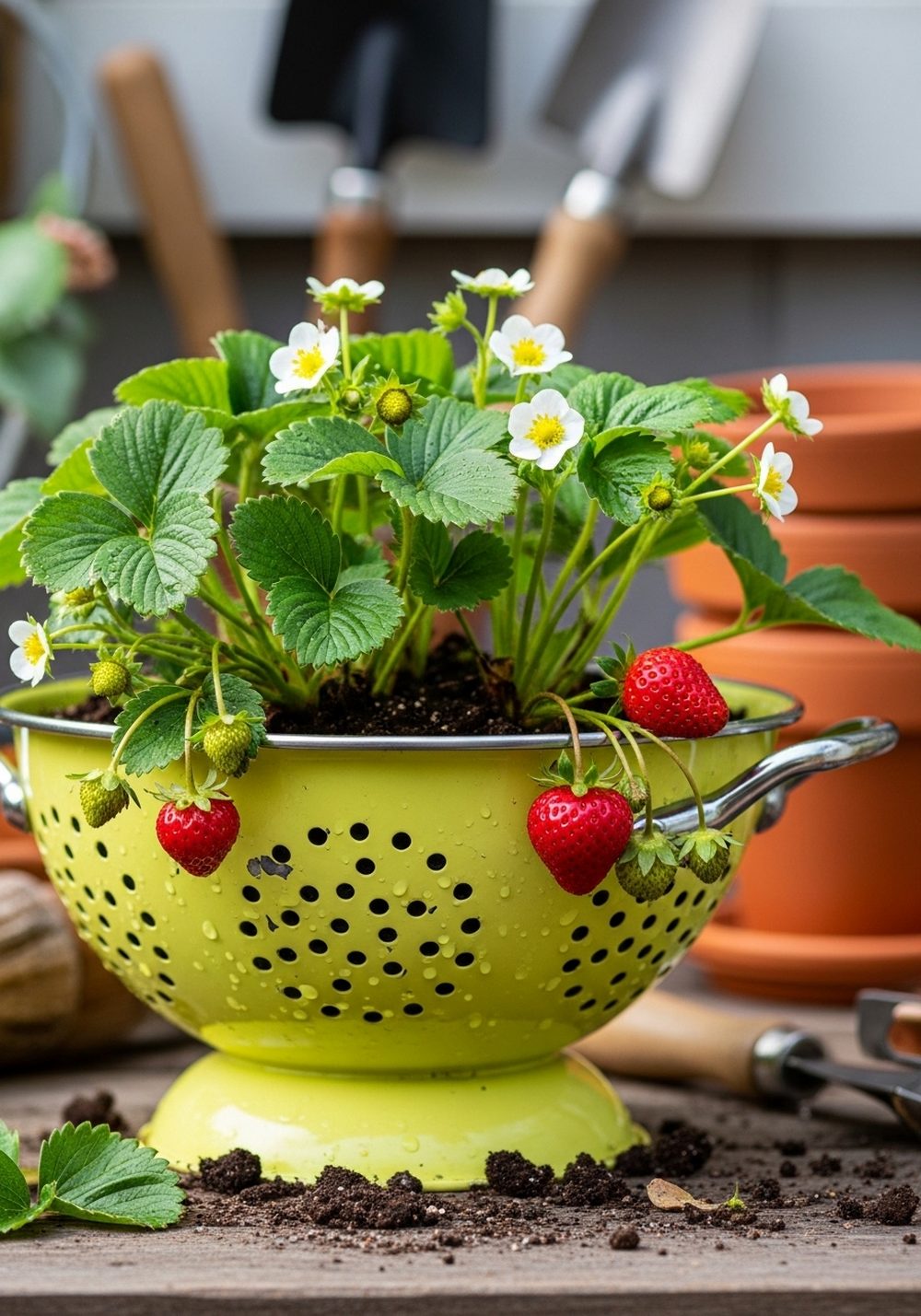
Give an old colander a new coat of bright, outdoor-safe paint and turn it into a playful strawberry planter. The built-in drainage is perfect for strawberries, which dislike soggy roots. Fill with a light potting mix, tuck in a few strawberry starts near the edges, and let the runners spill over the sides. The combination of glossy red berries, green leaves, and a colorful colander makes a cheerful, rustic accent on steps, tables, or a sunny ledge.
- Best For: Sunny spots with at least six hours of direct light.
- Budget Tip: Use leftover spray paint and start with just one or two strawberry plants.
- Styling Idea: Choose bold colors like red, yellow, or teal to contrast with the fruit and foliage.
- Practical Note: Stand the colander on bricks or pot feet so water drains freely.
- Care & Maintenance: Feed regularly with a balanced fertilizer and remove damaged leaves.
4. Galvanized Colander Tabletop Centerpiece
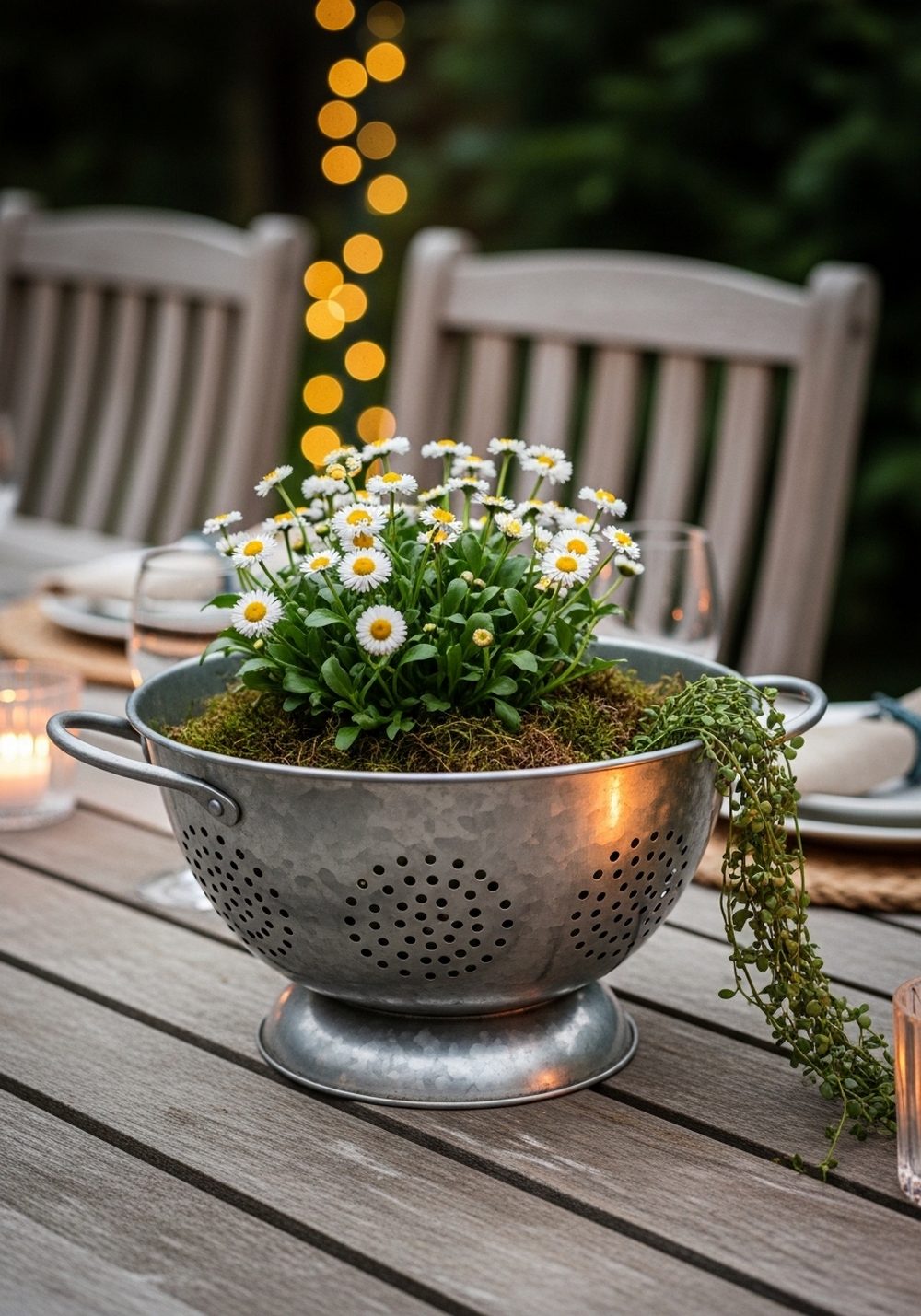
Place a galvanized colander in the center of your outdoor table and turn it into a low, lush planter that doubles as decor. Fill it with compact flowers like small daisies, violas, or alyssum and tuck in moss between plants for a soft, finished look. The cool metal, tiny perforations, and mix of greenery create a simple farmhouse centerpiece that doesn’t block conversation and looks beautiful by day or lit with candles and string lights at night.
- Best For: Outdoor dining tables, picnic tables, or coffee tables.
- Budget Tip: Choose inexpensive seasonal annuals and reuse the colander each year.
- Styling Idea: Keep the color scheme limited—white flowers with green foliage for an elegant, neutral look.
- Practical Note: Place a small saucer or waterproof mat under the colander if the table is delicate.
- Care & Maintenance: Deadhead spent blooms so the display stays fresh and full.
5. Tiered Flower Tower With Colanders
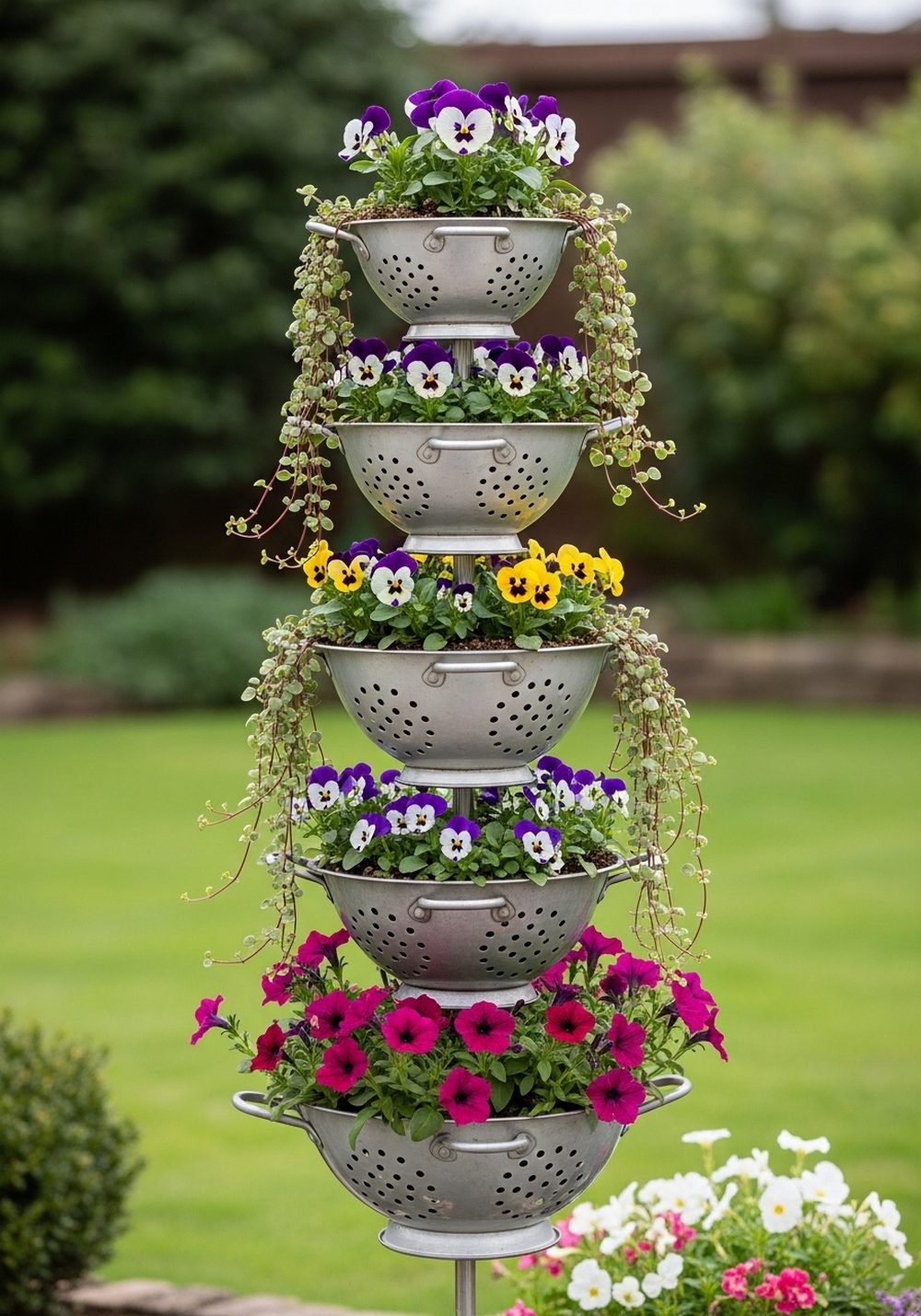
Create a vertical “flower tower” by stacking colanders on a central metal rod or thick wooden dowel anchored in a heavy pot or directly in the ground. Each colander becomes a tier, filled with different plants: pansies on top, petunias in the middle, and trailing vines at the bottom. The perforated sides let foliage peek through and water trickle down, while the stacked shape adds height and drama without using much ground space.
- Best For: Small gardens that need height or a focal point near an entrance.
- Budget Tip: Mix colanders you already own with a couple of thrifted ones; they don’t need to match.
- Styling Idea: Stick to one metal finish—enamel, aluminum, or galvanized—for a cohesive look.
- Practical Note: Secure the base well and check that the tower is stable before planting.
- Care & Maintenance: Water from the top and let excess run down through the tiers.
6. Colander Planter In A Wooden Crate

Nestle a colander planter inside a rustic wooden crate for an instant layered look. The crate acts as a frame, adding height and character, while the colander sits snugly inside, planted with succulents, small annuals, or herbs. Add pebbles, moss, or a mini sign to fill gaps around the colander. This combination of rough wood and smooth metal looks charming on a patio, steps, or beside a garden bench.
- Best For: Patios, terraces, or spots where you want a small statement piece.
- Budget Tip: Use a reclaimed fruit crate or build a simple box from scrap wood.
- Styling Idea: Stencil numbers or words on the crate for extra farmhouse detail.
- Practical Note: Leave space underneath the colander so water can drain freely.
- Care & Maintenance: If using succulents, water lightly and ensure good sun.
7. Colander Planter On A Rustic Stool
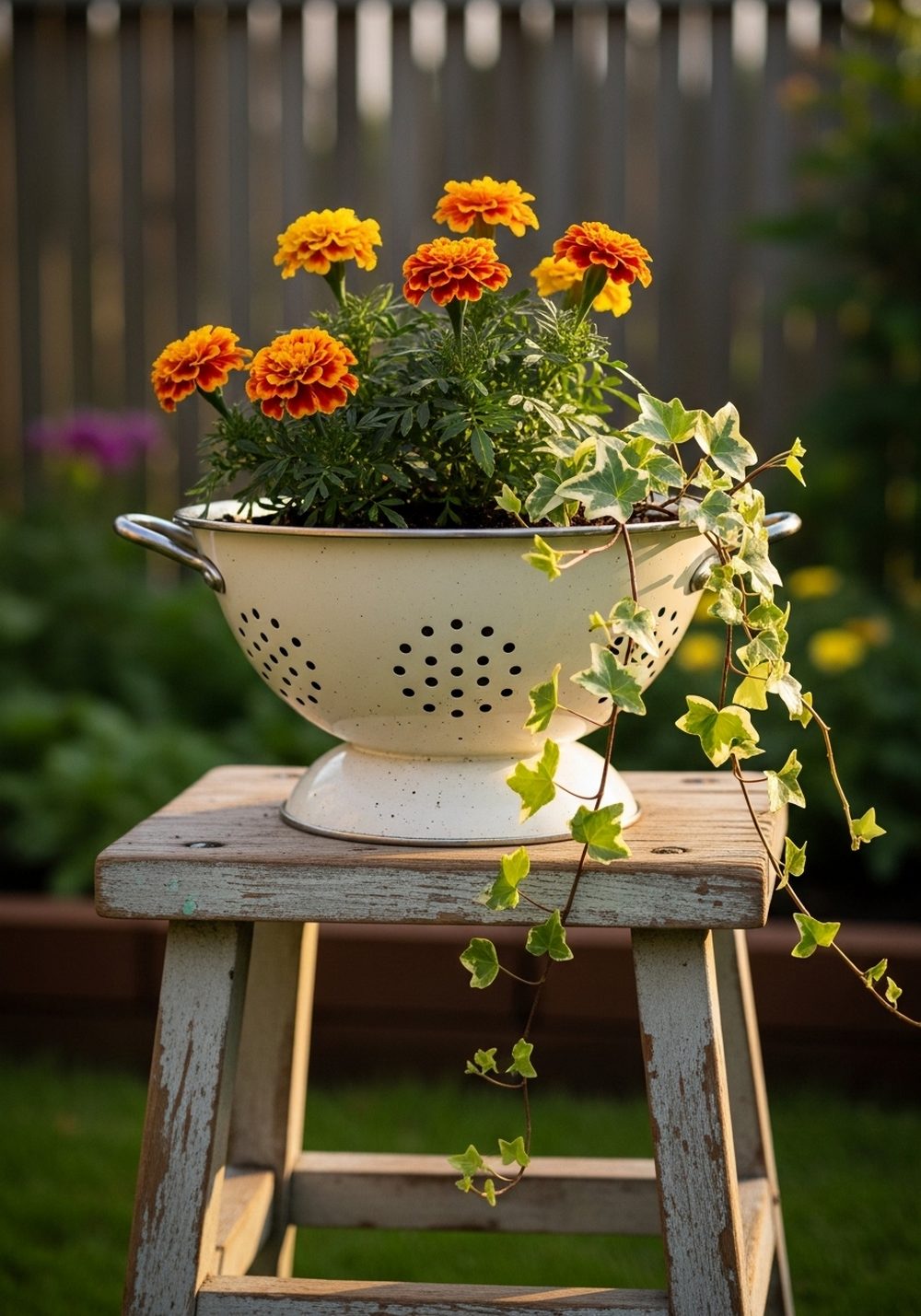
Set a planted colander on top of an old wooden stool or small chair to create a sweet, eye-level display. The elevation makes even a single colander feel important, drawing the eye to its shape, color, and foliage. Plant it with cheerful marigolds, geraniums, or mixed annuals, then position the stool by a doorway, in a corner, or beside a path. It adds instant rustic charm, especially if the stool is paint-splashed or lightly worn.
- Best For: Empty corners that need a little height and color.
- Budget Tip: Use a damaged chair or stool that’s no longer safe for sitting.
- Styling Idea: Let the stool’s original patina show instead of repainting it perfectly.
- Practical Note: Place the stool on level ground so it doesn’t wobble or tip.
- Care & Maintenance: Rotate the colander occasionally so all sides get some sun.
8. Window Sill Row Of Colander Planters
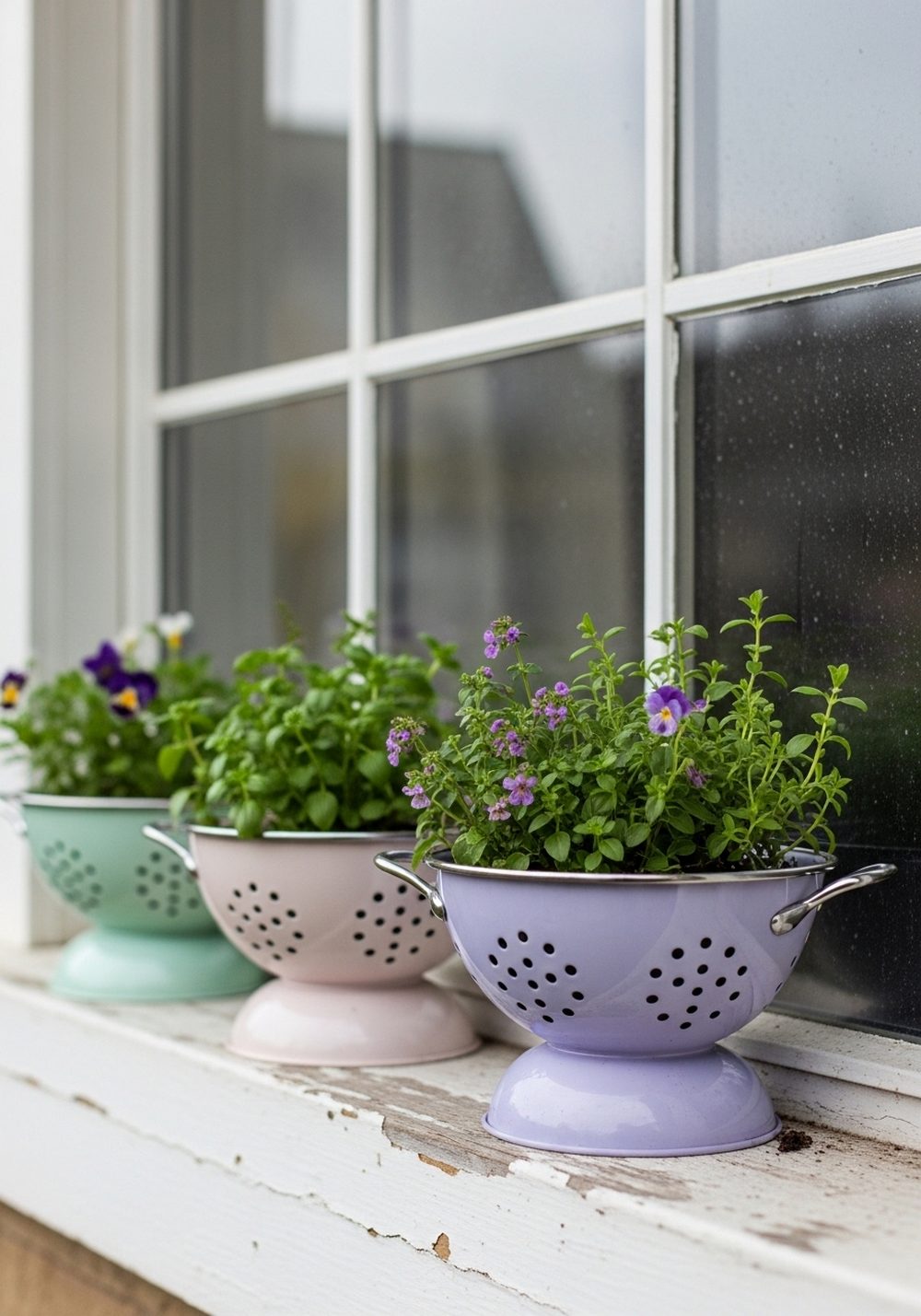
Line up two or three small colanders along an outdoor window sill or narrow ledge to create a charming row of mini planters. Fill them with herbs, trailing lobelia, or small flowers and watch them spill over the edges. The repetition of shape and color across the sill instantly softens a plain wall and makes the window feel like part of the garden. This is especially effective when the colanders are in coordinating colors or finishes.
- Best For: Small outdoor spaces and plain house walls needing interest.
- Budget Tip: Start with just one or two and add more as you find colanders.
- Styling Idea: Choose a single accent color that ties in with your door or shutters.
- Practical Note: Secure colanders so they cannot slip or be knocked off in wind.
- Care & Maintenance: Check moisture often, as small containers dry out quickly.
9. Whimsical Fairy Garden Colander Planter
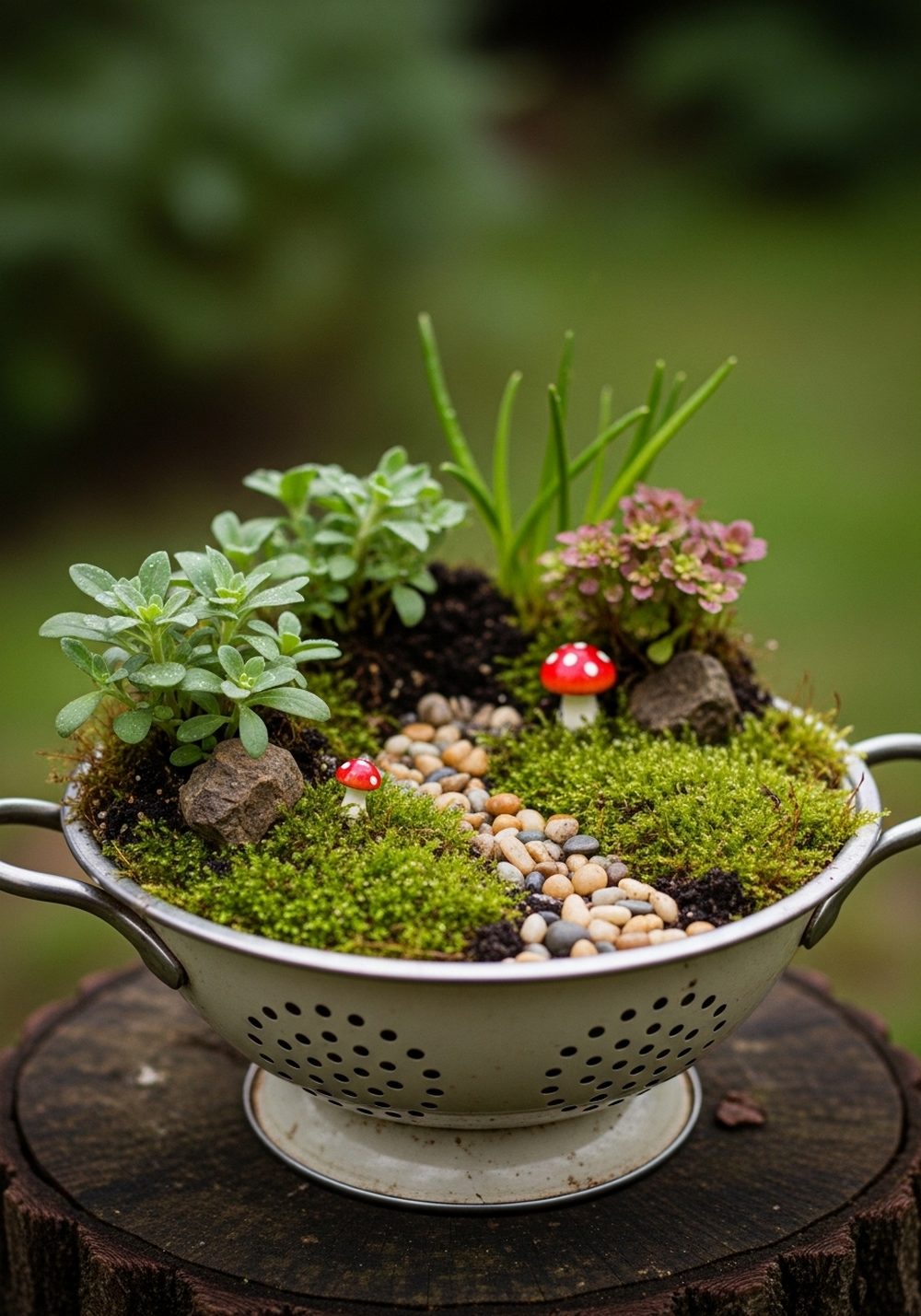
Turn a colander into a magical fairy world that delights kids and adults alike. Use moss, tiny groundcovers, and miniature accessories like dollhouse doors, furniture, or small pebbles for paths. The holes in the colander add texture and look like secret tunnels or fairy windows. Place the finished fairy garden on a tree stump, table, or low wall where it can be admired up close and easily rearranged or refreshed with new tiny treasures over time.
- Best For: Families with children or anyone who loves whimsical touches.
- Budget Tip: DIY accessories using pebbles, sticks, and bottle caps instead of buying miniatures.
- Styling Idea: Keep the color scheme natural—greens, browns, and a few soft accent colors.
- Practical Note: Choose hardy, low-growing plants that don’t mind being trimmed.
- Care & Maintenance: Mist moss and tiny plants regularly so they stay lush.
10. Porch Rail Line Of Colander Planters

Hook or bracket a series of colanders along your porch or deck rail to create a rustic, colorful border. Each colander becomes a mini planter, filled with geraniums, trailing ivy, or other cheerful blooms. The repetition of shape and rhythm along the rail defines the edge of your outdoor space and makes it feel like an inviting room. It’s a great way to add lots of plants without taking up floor space.
- Best For: Porches, balconies, or decks with sturdy rails.
- Budget Tip: Mix thrifted colanders in different styles for an eclectic, collected look.
- Styling Idea: Alternate colors or plant types along the rail for a playful pattern.
- Practical Note: Ensure brackets or hooks are strong and screwed securely into the rail.
- Care & Maintenance: Water carefully so excess doesn’t pour onto seating below.
Conclusion
Upcycled colanders are a simple, charming way to add rustic character to any outdoor space, from small balconies to generous back gardens. Their built-in drainage and vintage shapes make them perfect planters, and a little creativity turns them into focal points, centerpieces, and playful accents. Start with one easy idea—a herb trio, a hanging basket, or a fairy garden—and see how it transforms the mood. Before long, you may find every old kitchen colander has a new life among your plants.
FAQs
1. Are colander planters safe for plants?
Yes, colanders are great for plants because they offer excellent drainage. Just line the inside with a coffee filter, mesh, or a thin layer of coco liner to keep soil from washing out. Use a good-quality potting mix and water a bit more often than you would with a solid pot, as they dry out faster.
2. How can I stop soil from falling through the holes?
Add a coffee filter, old mesh produce bag, piece of landscape fabric, or thin coco liner inside the colander before adding soil. This allows water to drain while holding the mix in place. You can also add a shallow layer of pebbles at the bottom for extra stability and drainage.
3. Are colander planters suitable for renters?
Absolutely. Most of these ideas are non-permanent: hanging baskets, stool displays, crate arrangements, and rail planters can all be moved when you go. Just avoid drilling into walls if your lease doesn’t allow it and instead use hooks, over-the-rail brackets, or freestanding stands.
4. What plants work best in colander planters?
Herbs, small annual flowers, strawberries, and trailing plants all do well. Because colanders are usually shallow, choose plants with relatively small root systems and avoid anything that needs a deep pot. For very sunny, dry spots, succulents and drought-tolerant varieties are a great low-maintenance option.
5. How do I protect colander planters from bad weather?
In strong wind or heavy rain, move lightweight colander planters to a more sheltered spot, such as close to a wall or under a porch roof. You can also place heavier stones in the bottom to add weight. In colder climates, bring fragile plants indoors or into a shed over winter, or treat them as seasonal displays.
6. Can I decorate colanders without permanent changes?
Yes. If you don’t want to paint or drill extra holes, simply add removable touches: tie on ribbons, wrap the handles with jute twine, or tuck decorative stones and tags into the soil. These small details boost the rustic charm without altering the colander itself, making it easy to change or remove later.