10 Old Ladder Plant Stand Ideas For A Vertical Garden Look

If you have an old ladder lying around, you’re already halfway to a charming vertical garden. With just a few pots and some simple styling, a tired step ladder can become the star of your patio, balcony, or backyard.
This post is for home gardeners, renters, and anyone short on floor space but long on plant dreams. You’ll find easy, budget-friendly ways to turn old ladders into beautiful plant stands that add height, color, and personality. From rustic herb ladders to painted statement pieces, these ideas will help you build a vertical garden that feels stylish, organized, and completely your own.
Quick List
- Rustic A-Frame Ladder Herb Stand
- Weathered Step Ladder Flower Wall
- Narrow Ladder Plant Stand For Small Balconies
- Vintage Painter’s Ladder With Terracotta Pots
- Folding Ladder Shelf For Potted Houseplants
- Leaning Ladder Succulent Display
- Multi-Ladder Corner Vertical Garden
- Ladder Plant Stand With Hanging Baskets
- Reclaimed Ladder Plant Stand For Shady Corners
- Painted Ladder Plant Stand For A Color Pop
1. Rustic A-Frame Ladder Herb Stand

Turn an old A-frame ladder into a charming herb stand by lining each rung with small pots of basil, thyme, parsley, and mint. The triangular shape feels sturdy and balanced, and the staggered levels give every plant its own bit of light. Place it against a fence, by the kitchen door, or on a deck so you can snip herbs as you cook. The worn wood, earthy pots, and fresh green leaves create a vertical garden that looks relaxed and deliciously rustic.
- Best For: Patios, decks, or spots near the kitchen where fresh herbs are handy.
- Budget Tip: Use inexpensive terracotta or upcycled tins with drainage holes.
- Styling Idea: Tie simple twine labels around pots for a cottage-garden feel.
- Practical Note: Keep thirstier herbs on the lower rungs where moisture lingers.
- Care & Maintenance: Refresh soil yearly and trim regularly to keep herbs bushy.
2. Weathered Step Ladder Flower Wall
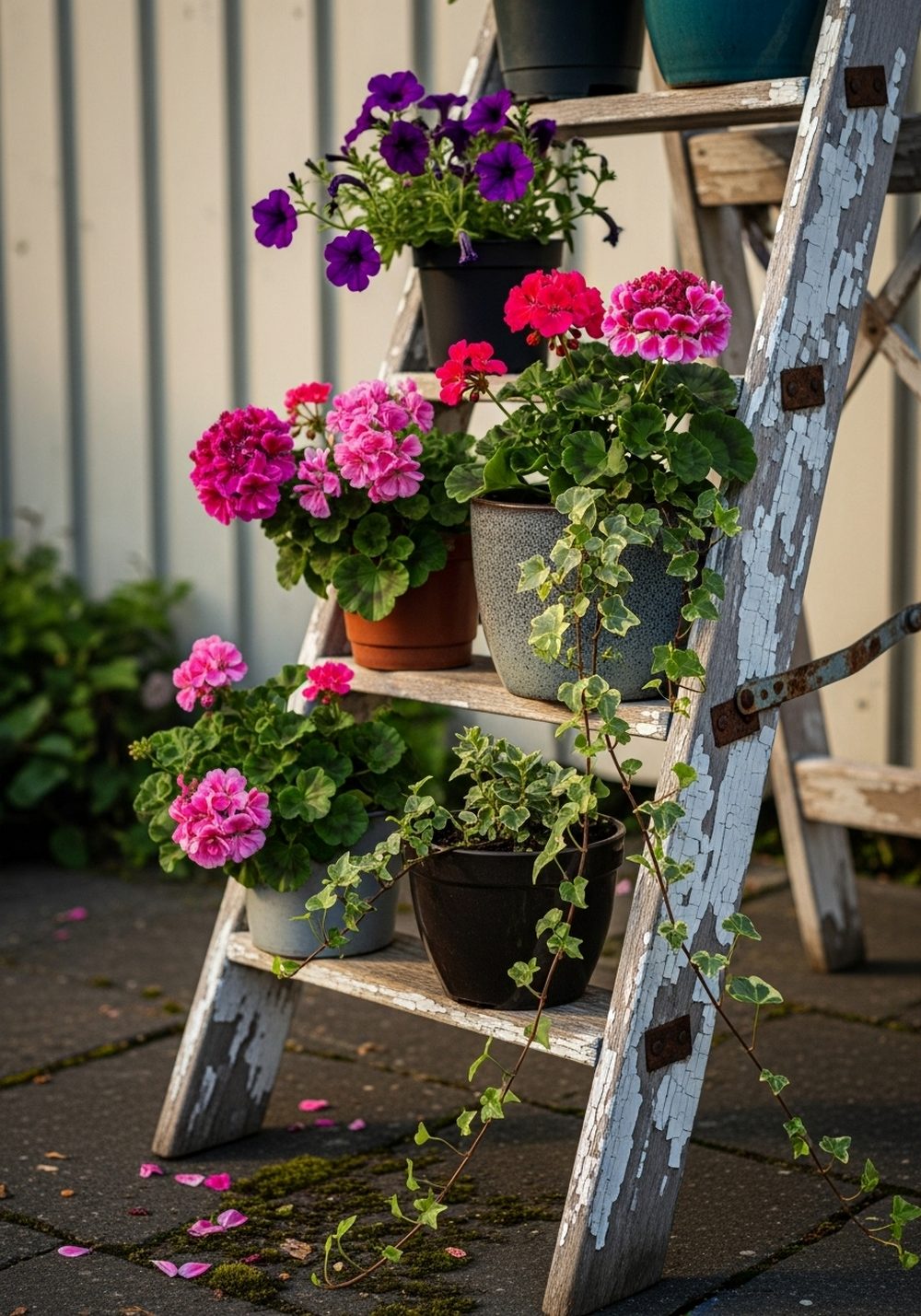
Give a worn step ladder a second life as a vertical flower wall. Open it fully, secure it if needed, and place colorful flowering pots along each step and the top platform. Choose trailing blooms like petunias or ivy to spill over the edges and soften the structure. Against a fence or wall, it instantly looks like a layered mini flower show, turning a dull flat surface into something full of life, color, and texture.
- Best For: Bare fences, garage walls, or the side of a shed.
- Budget Tip: Mix seed-grown annuals with a few larger nursery plants to save money.
- Styling Idea: Keep pot colors simple—two or three shades—to let the flowers shine.
- Practical Note: Weigh down the bottom with heavier pots so the ladder feels stable.
- Extra Idea: Add a small solar lantern on the top step for a pretty evening glow.
3. Narrow Ladder Plant Stand For Small Balconies
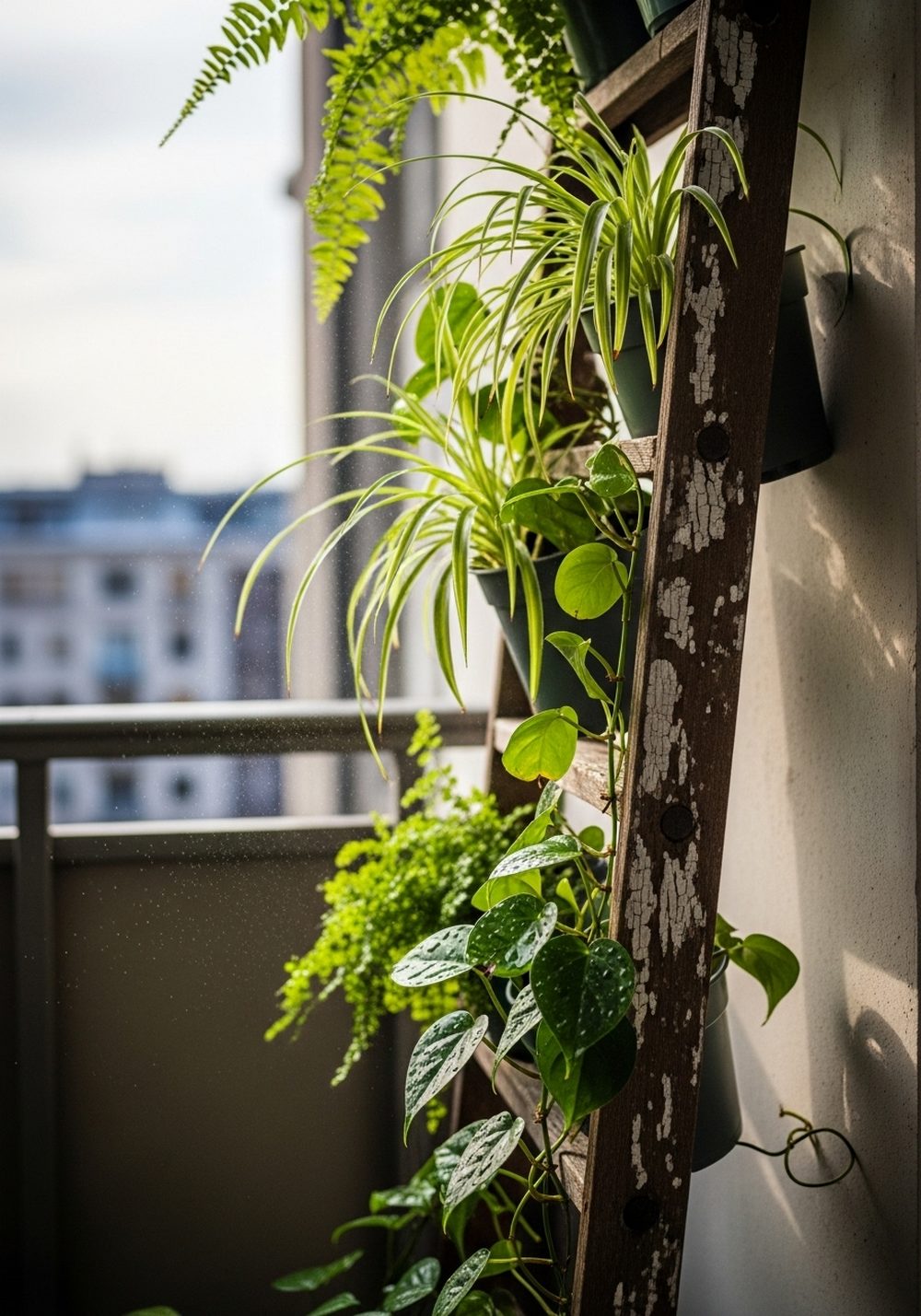
If your balcony is tiny, a narrow ladder plant stand is a brilliant way to go vertical. Lean a slim old ladder against the wall and use narrow pots or long planter boxes tied securely to each rung. Fill them with compact plants like herbs, small ferns, or low-growing flowers. This setup keeps your floor clear for chairs or a small table, but still gives you a lush green backdrop that makes the space feel alive and cozy.
- Best For: Small balconies and apartment patios with limited floor space.
- Budget Tip: Repurpose food cans and jars as slim planters with drilled drainage.
- Styling Idea: Choose a muted palette of greens and whites for a calm city oasis.
- Practical Note: Secure the ladder at the top so wind doesn’t knock it over.
- Care & Maintenance: Water slowly from the top so excess trickles down to lower pots.
4. Vintage Painter’s Ladder With Terracotta Pots

A vintage painter’s ladder, splashed with old paint drips, has loads of character and makes a beautiful plant stand. Arrange classic terracotta pots on each step, mixing flowers like marigolds, daisies, and lavender for color and scent. The warm orange of the pots contrasts nicely with the faded wood and bright blooms, giving you a vertical garden that feels both nostalgic and vibrant. Set it near a seating area so you can enjoy the fragrance and view.
- Best For: Cottage-style gardens, relaxed patios, and artistic outdoor spaces.
- Budget Tip: Collect secondhand terracotta pots and repair chips with a little sanding.
- Styling Idea: Stick to one or two flower colors for a more intentional look.
- Practical Note: Place heavier pots on the bottom steps for stability.
- Extra Idea: Tuck a small watering can or garden tool on the lowest step as decor.
5. Folding Ladder Shelf For Potted Houseplants
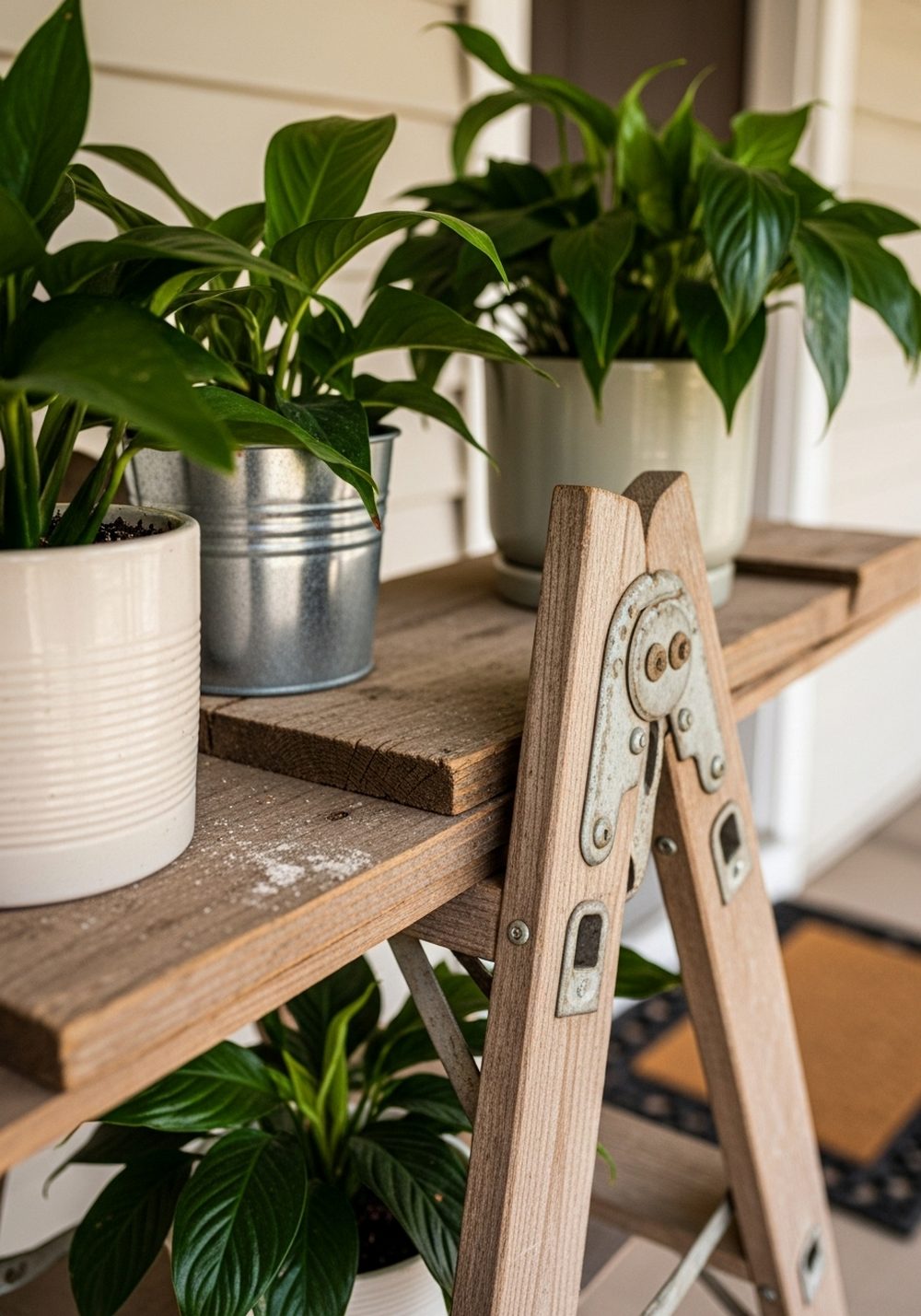
Old folding ladders can easily transform into tiered plant shelves. Open the ladder and lay reclaimed boards across the steps to create wide, sturdy shelves. Arrange your favorite houseplants outdoors for summer—monsteras, pothos, ferns, and snake plants will love the fresh air in a shaded spot. This design gives you generous display space while keeping everything vertical and neat, turning a blank wall or porch corner into a leafy, layered plant gallery.
- Best For: Covered porches, verandas, and sheltered patios.
- Budget Tip: Use scrap wood or pallet planks as shelf boards after sanding.
- Styling Idea: Mix different pot shapes but keep colors neutral for a calm, curated feel.
- Practical Note: Make sure the boards are level and fixed so they can’t slip.
- Care & Maintenance: Rotate plants occasionally so each gets an even share of light.
6. Leaning Ladder Succulent Display
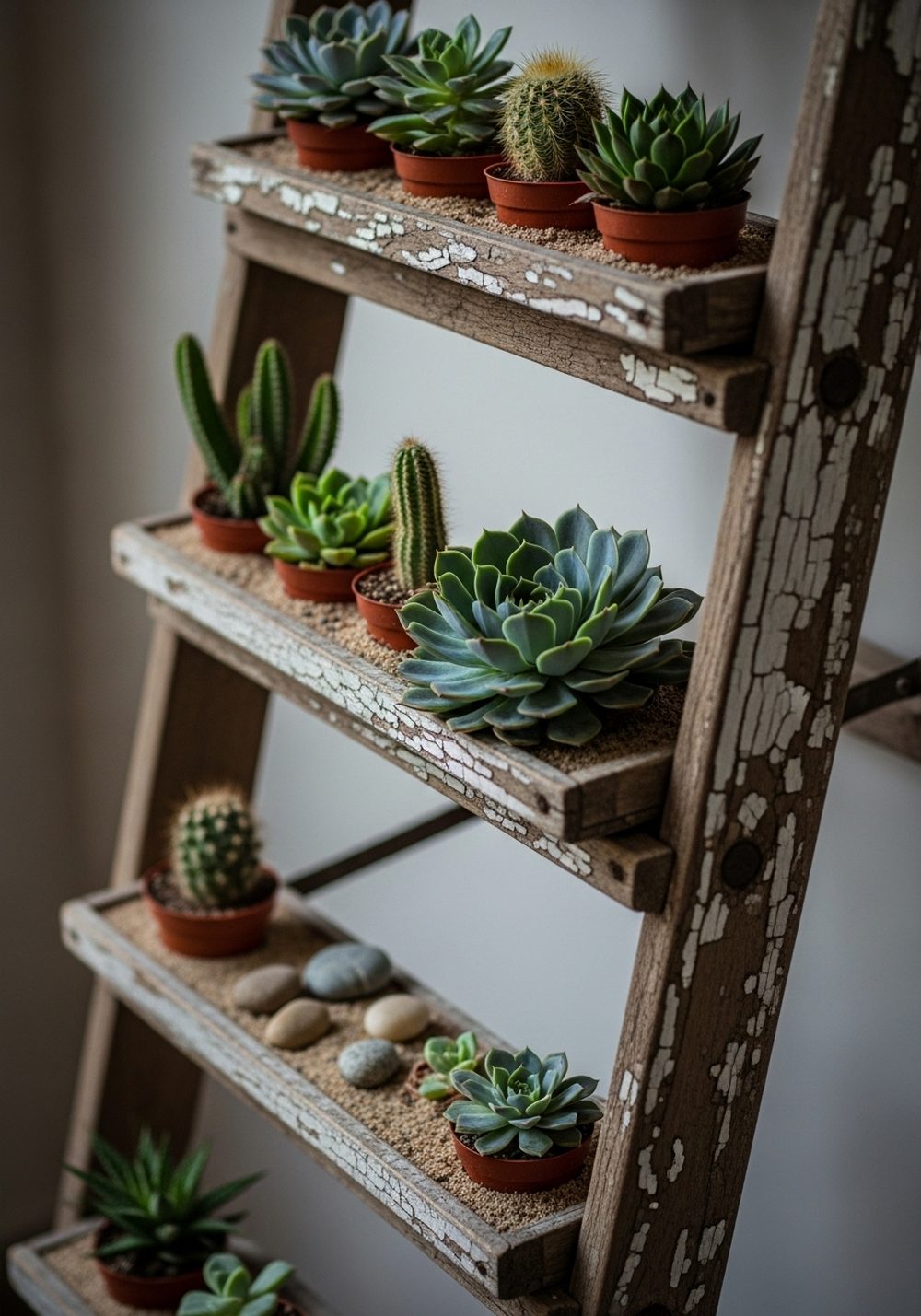
For a sleek, low-maintenance look, lean an old ladder against a wall and line its rungs with small succulent pots or narrow trays filled with gravel and rosette-style plants. The simple shapes of the succulents work beautifully with the straight lines of the ladder, giving a modern vertical garden feel. This setup doesn’t need much watering and is ideal for sunny, dry spots where other plants might struggle.
- Best For: Sunny walls, modern patios, and minimalist outdoor areas.
- Budget Tip: Start with leaf cuttings or baby succulents instead of mature plants.
- Styling Idea: Use simple clay or concrete-look pots to match the clean design.
- Practical Note: Angle the ladder securely so it can’t slide on smooth surfaces.
- Care & Maintenance: Water sparingly and ensure excellent drainage to avoid rot.
7. Multi-Ladder Corner Vertical Garden
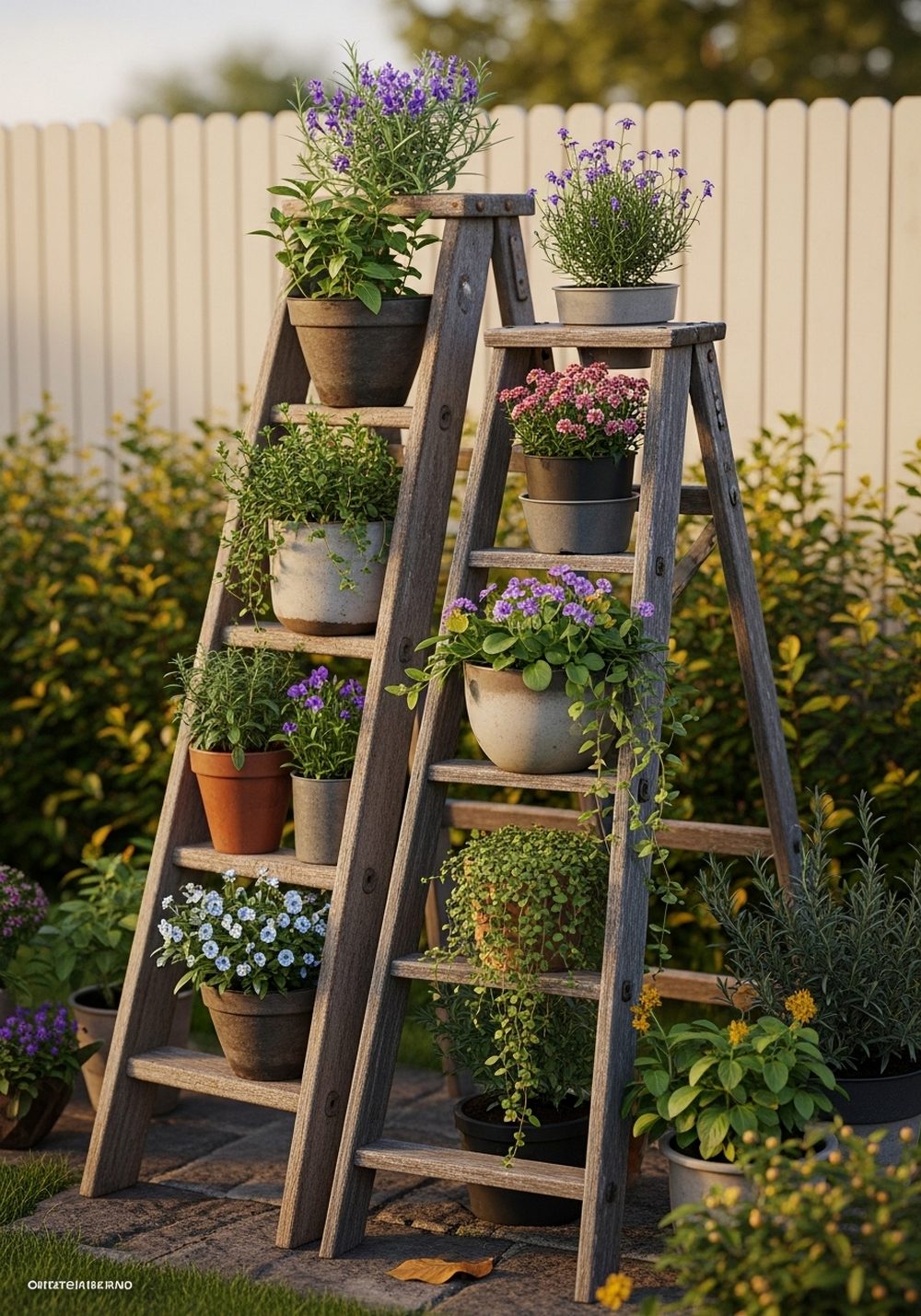
If you have more than one old ladder, combine them to create a dramatic corner vertical garden. Place two mismatched ladders at angles to each other, then fill their rungs with a mix of foliage and flowering plants. The layered heights and different shapes make the corner look lush and full, perfect for hiding an ugly fence or transforming a forgotten area. The slightly haphazard mix of ladders adds charm, like a secret garden nook built over time.
- Best For: Awkward corners, bare fence joins, and overlooked garden spots.
- Budget Tip: Use cuttings and divided plants from friends to fill many pots cheaply.
- Styling Idea: Repeat a few plant types across both ladders to tie the look together.
- Practical Note: Anchor the ladders together or to the fence for extra stability.
- Extra Idea: Add a small stool or log nearby to create a tucked-away reading corner.
8. Ladder Plant Stand With Hanging Baskets
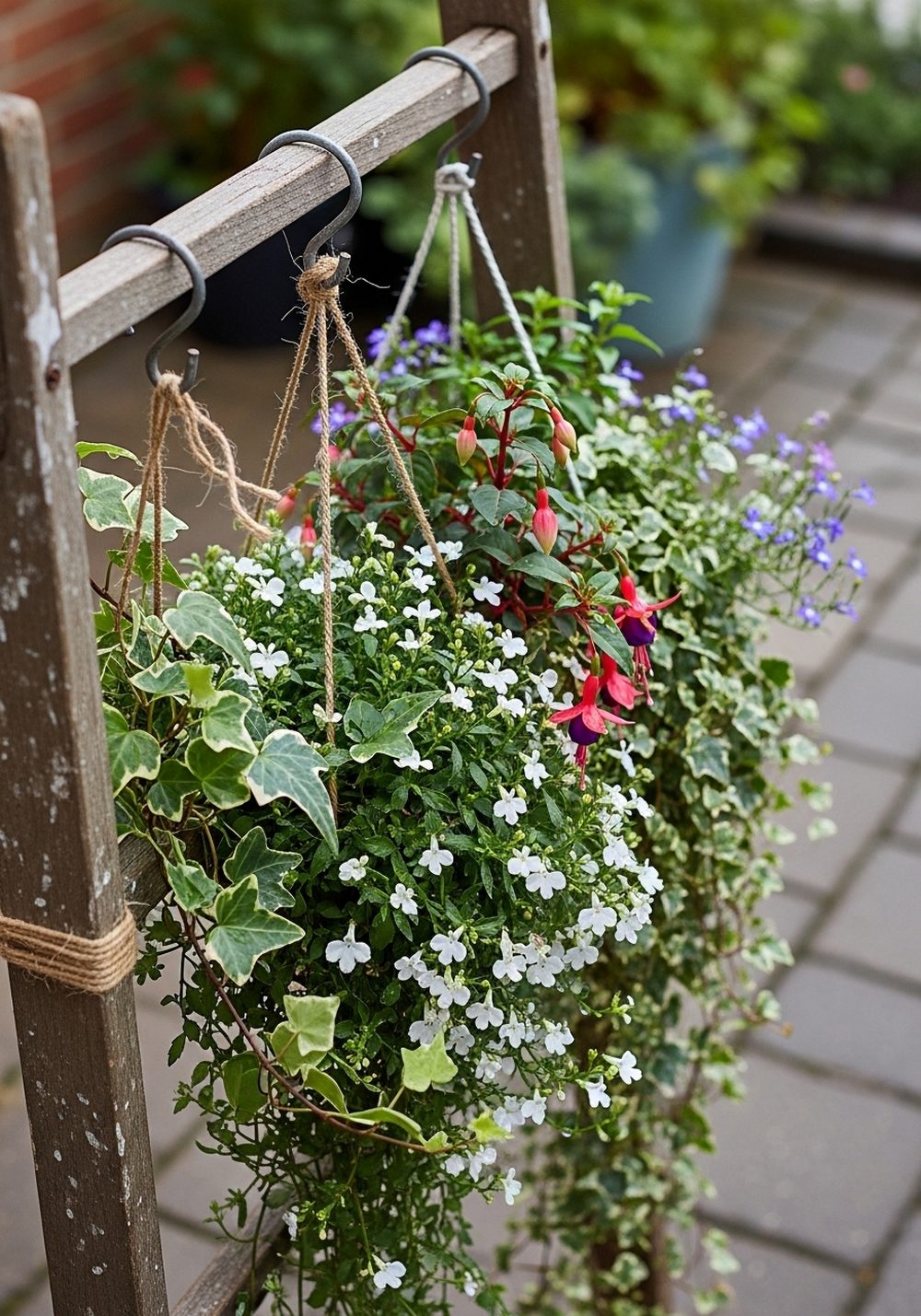
Adapt an old ladder into a vertical hanging basket display by adding hooks or a dowel across the top. Hang baskets overflowing with trailing ivy, lobelia, or strawberries so they cascade down in layers. You can still place pots along the steps to double the planting space. The hanging plants create softness and movement, turning the ladder into a green waterfall that frames a door, window, or seating area beautifully.
- Best For: Patios, entryways, and spots where you want a soft green screen.
- Budget Tip: Use coir-lined wire baskets and refill them yearly with affordable annuals.
- Styling Idea: Choose one trailing plant variety per basket for a clean, graphic look.
- Practical Note: Check weight limits and keep the heaviest baskets closest to the ladder.
- Care & Maintenance: Water hanging baskets thoroughly, as they dry out faster than pots.
9. Reclaimed Ladder Plant Stand For Shady Corners
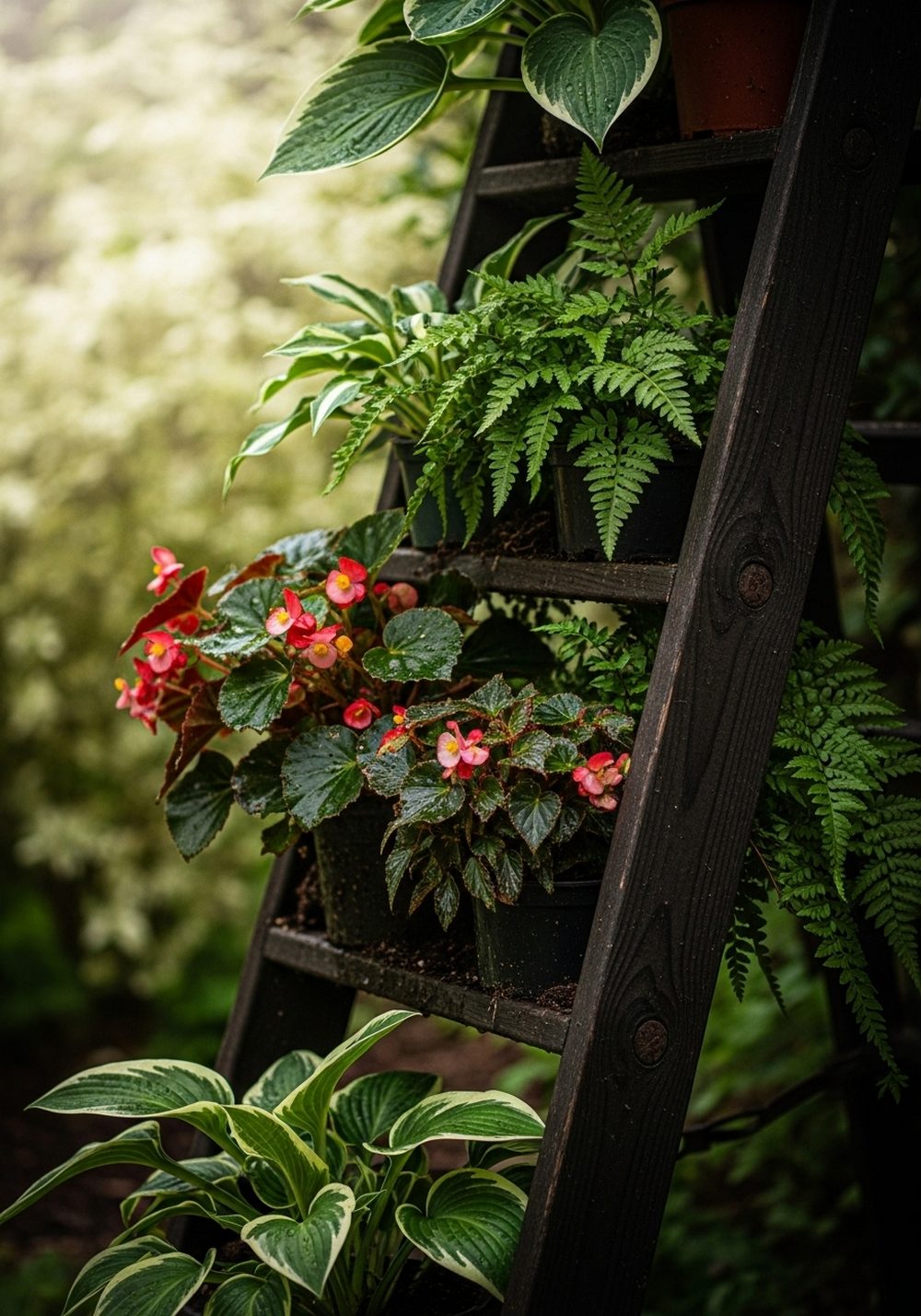
Shady corners don’t have to be dull. Place a reclaimed ladder there and cover its rungs with shade-lovers like ferns, hostas, begonias, and caladiums. The vertical structure gives the corner height and presence, while the plants create a cool, woodland feel. The darker wood of a well-aged ladder looks particularly beautiful here, blending with the deep greens and patterned foliage for a calm, quietly dramatic effect.
- Best For: North-facing walls, under trees, and dim garden corners.
- Budget Tip: Buy small starter plants and let them fill out over the season.
- Styling Idea: Focus on foliage textures—stripes, spots, and ruffles—to add interest.
- Practical Note: Avoid placing the ladder directly on constantly wet soil to reduce rot.
- Care & Maintenance: Mulch pots lightly to help keep moisture in shady spots.
10. Painted Ladder Plant Stand For A Color Pop

Give an old ladder a bold new personality with a fresh coat of paint, then load it with plants for a cheerful vertical garden feature. Choose a bright color like teal, sunny yellow, or coral to contrast with green foliage and neutral pots. Once dry, place the ladder in a visible spot—by the back door, near a seating area, or at the end of a path—so it acts like a piece of outdoor art. The painted ladder instantly lifts the mood of the whole space.
- Best For: Family gardens, playful patios, and spaces that need a focal point.
- Budget Tip: Use leftover paint from other projects and simple plastic or terracotta pots.
- Styling Idea: Match a few cushions or accessories to the ladder color for a tied-together look.
- Practical Note: Use exterior paint or seal the ladder to help it last outside.
- Care & Maintenance: Touch up chips yearly to keep the color fresh and bright.
Conclusion
Old ladders are one of the easiest ways to create a beautiful vertical garden without spending a fortune. With a few pots, some thoughtful plant choices, and a little styling, you can turn forgotten corners and flat walls into lush, layered features that feel welcoming and personal. Start with one simple ladder project that fits your space, then build from there—adding color, height, and character step by step as your garden (and your confidence) grows.
FAQs
Q1. How can I decorate with an old ladder on a really small budget?
You can keep costs low by using basic terracotta or recycled containers and filling them with seed-grown annuals or cuttings from friends. Clean the ladder, secure it safely, and let its natural weathered look shine rather than refinishing it. Over time, add more plants as your budget allows, treating the ladder as a growing project rather than something to finish all at once.
Q2. Are ladder plant stands safe for renters who can’t drill into walls?
Yes, most ladder plant stands can be freestanding, especially A-frame and folding styles. Place them on a flat, stable surface and weigh the bottom with heavier pots to prevent tipping. If you’re worried about movement, you can use removable, non-damaging straps to lightly secure the top to a railing or post without drilling. Everything stays temporary and easy to move when you leave.
Q3. What kind of plants work best on outdoor ladder stands?
Choose plants based on light and watering needs. Herbs, small flowers, and succulents do well in sunny spots; ferns and hostas are better for shade. Place thirsty plants on lower rungs where they catch extra run-off and drought-tolerant ones higher up. Always use containers with drainage holes so water doesn’t sit around the roots and damage both plants and ladder.
Q4. How do I protect an old ladder plant stand from the weather?
If you like the rustic look, you can simply brush off dirt and add a clear outdoor sealant to slow down rot. For more protection, use exterior paint or stain and keep the ladder off constantly damp soil by resting it on pavers or bricks. In very wet or cold climates, consider moving the ladder under cover for winter to extend its life.
Q5. What’s the easiest ladder plant stand idea for beginners?
A simple leaning ladder with pots hung from S-hooks or tied to each rung is a great starter project. It doesn’t require building shelves, and you can begin with just a few plants. As you get comfortable, you can add more pots, try different plant types, or even repaint the ladder for a new look. It’s low-commitment, forgiving, and still gives that lovely vertical garden feel.