
10 Vintage Colander Hanging Planter Ideas For A Cottage Garden Look

If you love that soft, storybook cottage garden style, vintage colanders might be your new favorite decor secret. Those old enamel or metal strainers sitting at the back of a cupboard are already full of drainage holes, making them perfect for charming hanging planters.
In this post, you’ll find ten easy ways to turn humble colanders into pretty hanging displays for herbs, flowers, and trailing plants. These ideas are friendly for renters, budget-conscious gardeners, and anyone working with a porch, balcony, or small backyard. With a bit of potting soil, some rope or hooks, and a few plants, you can give your outdoor space a cozy, cottage-style makeover.
Quick List
- Hang A Porcelain Colander Herb Planter By The Back Door
- Create A Pastel Painted Colander Over The Potting Bench
- Use A Galvanized Colander Planter On The Cottage Porch
- Make A Tiered Colander Flower Chandelier Above The Seating Area
- Line Up Mismatched Colander Planters Along A Garden Fence
- Turn An Enamel Colander Into A Kitchen Window Planter
- Add Fairy Lights To A Lace-Pattern Colander Hanging Basket
- Suspend Colander Planters From An Old Window Frame Or Ladder
- Hang A Cluster Of Colander Strawberry Planters From A Tree Branch
- Clip Mini Colander Planters Along A Balcony Or Deck Railing
1. Hang A Porcelain Colander Herb Planter By The Back Door
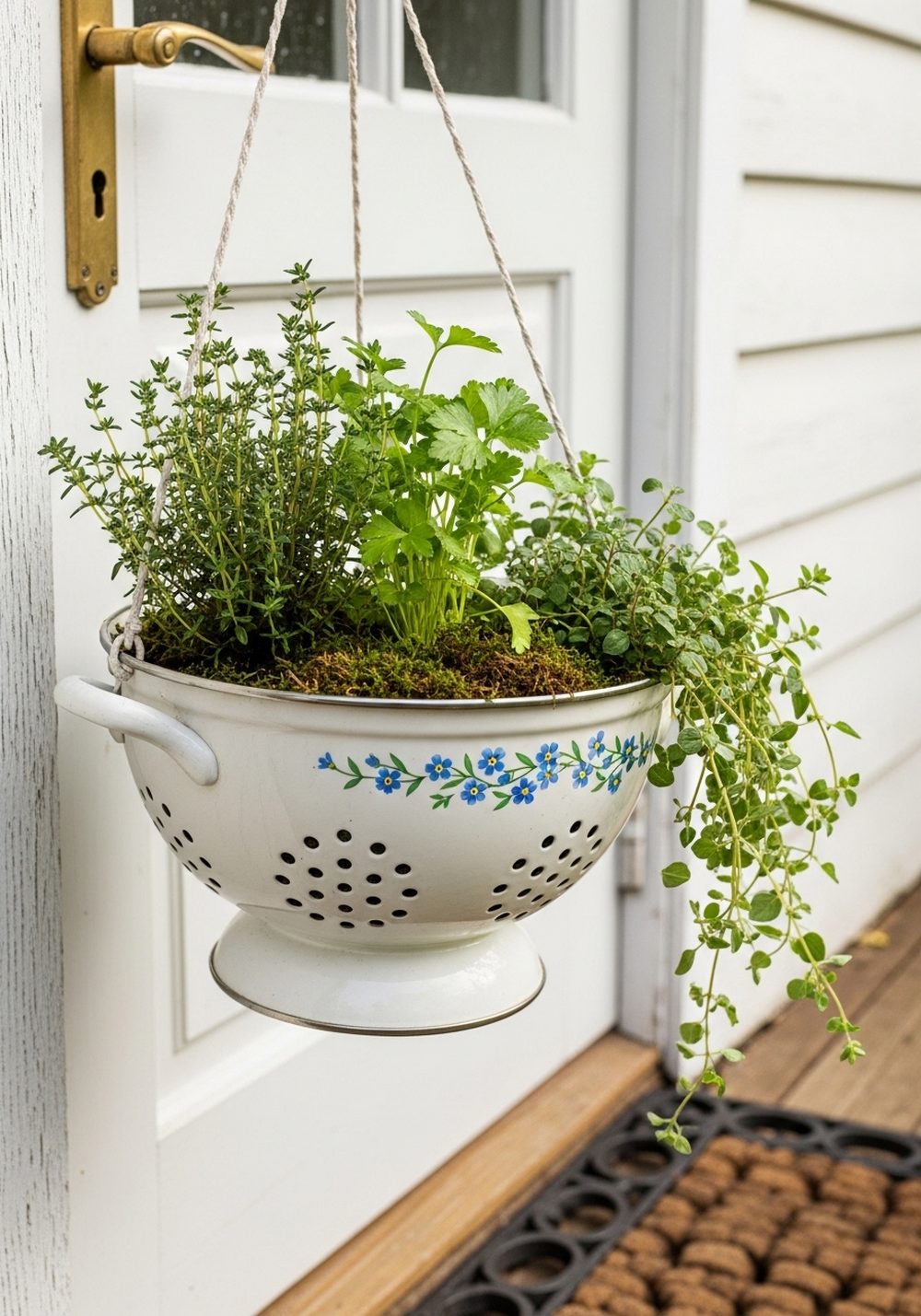
A vintage porcelain colander makes a lovely hanging herb planter right by your back door, where you’ll see and use it every day. Line the inside with moss or a piece of burlap to stop soil washing out, then fill it with potting mix and quick-growing herbs like thyme, oregano, and parsley. Hang it on a sturdy hook near the door so the herbs brush your hand as you come and go, adding scent and a soft cottage touch.
- Best For: Small porches, back steps, and kitchen side doors.
- Budget Tip: Use a thrifted colander and divide one herb pot into several planters.
- Styling Idea: Choose colanders with delicate floral rims for a truly old-world feel.
- Practical Note: Keep it within easy reach for regular harvesting and watering.
- Care & Maintenance: Trim herbs often to keep them compact and lush.
2. Create A Pastel Painted Colander Over The Potting Bench

If your potting bench looks a bit plain, hang a pastel painted colander above it as a cheerful focal point. Lightly sand an old metal colander, then spray or hand-paint it in soft mint, blush pink, or pale blue. Once dry, line it with coco liner or moss and plant it with small flowers like violas or trailing lobelia. The gentle color combined with tiny blooms instantly softens the work area and makes it feel more like a styled cottage corner.
- Best For: Garden sheds, garages, or outdoor potting benches.
- Budget Tip: Use leftover paint samples and cheap metal colanders from second-hand stores.
- Styling Idea: Match the colander color to your pots, gloves, or watering can.
- Practical Note: Hang it just above head height so you don’t bump into it while working.
- Care & Maintenance: Refresh paint every couple of years as it chips for a charming distressed look.
3. Use A Galvanized Colander Planter On The Cottage Porch
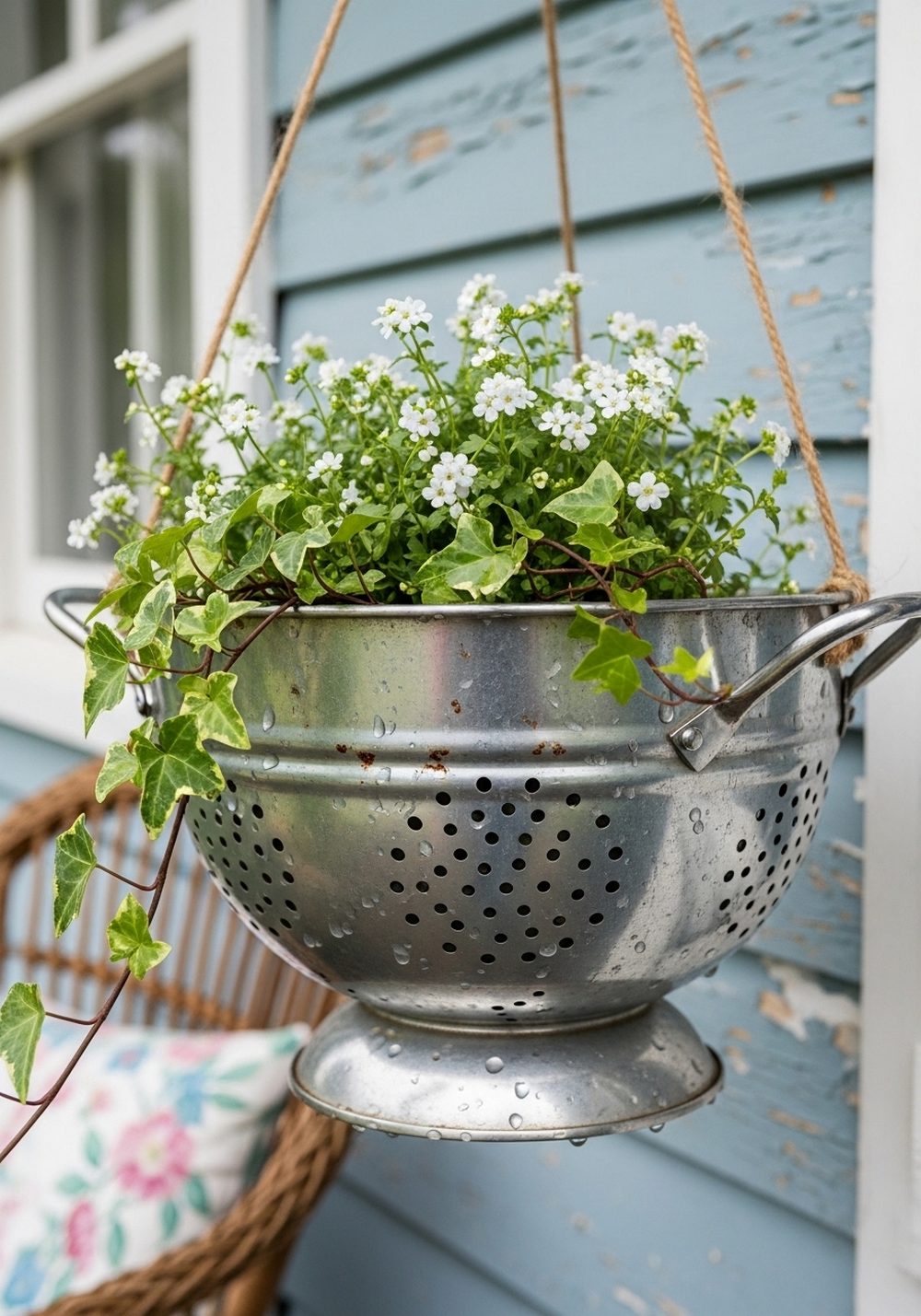
A galvanized colander has a lovely rustic look that fits perfectly on a cottage porch. Thread jute rope or chain through the handles and hang it from the ceiling or a wall bracket. Fill it with trailing ivy and white flowering plants like bacopa for a simple, calming color scheme. The cool silver metal, green foliage, and white blooms create a classic country feel that works with almost any exterior paint color.
- Best For: Covered porches, verandas, or sheltered doorways.
- Budget Tip: Look for old kitchen colanders at yard sales or markets instead of buying new.
- Styling Idea: Pair with wicker chairs, striped cushions, and a woven doormat.
- Practical Note: Check that the hook or beam can support the weight of wet soil.
- Care & Maintenance: Brush off any rust flakes and let the patina develop naturally.
4. Make A Tiered Colander Flower Chandelier Above The Seating Area
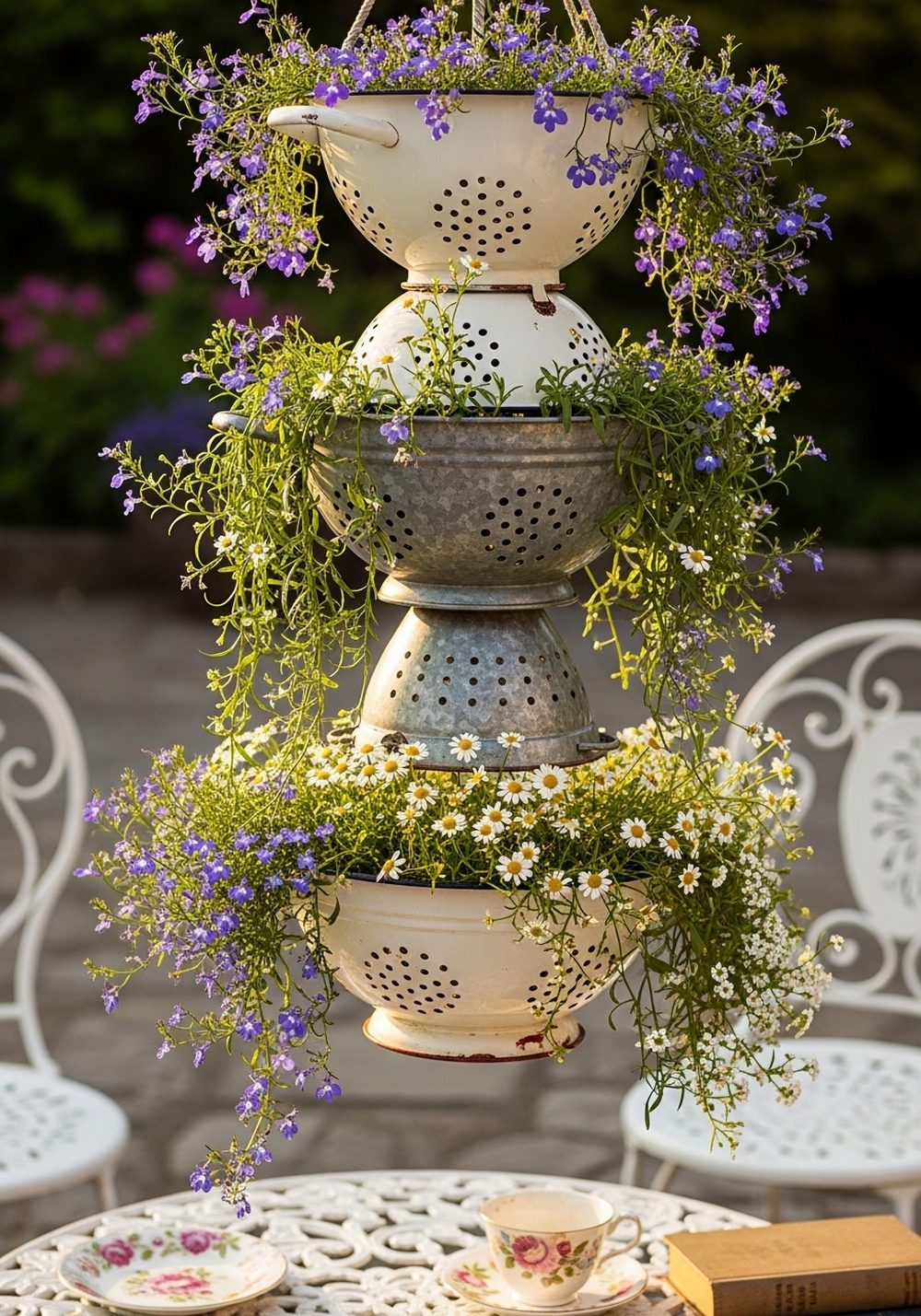
Turn several colanders into a whimsical “flower chandelier” above your garden seating area. Use three colanders of different sizes and finishes, stacking them vertically on sturdy chains or ropes so each hangs slightly lower than the one above. Plant each with trailing plants and small flowers, allowing stems to fall through the holes and spill over the edges. The effect is a cascading column of blooms that feels playful and romantic, especially over a bistro set or small dining table.
- Best For: Patio seating corners, small dining areas, or pergolas.
- Budget Tip: Mix thrifted colanders in different finishes rather than buying matching sets.
- Styling Idea: Keep to one color palette—such as pinks and whites—to avoid looking messy.
- Practical Note: Hang low enough to admire, but high enough that no one bumps their head.
- Extra Idea: Add a battery candle or fairy lights in the center for evening glow.
5. Line Up Mismatched Colander Planters Along A Garden Fence

If you have a boring fence, let a row of mismatched colander planters turn it into a feature wall. Screw sturdy hooks or brackets into the fence, then hang different colanders along its length at varying heights. Fill them with cheerful flowers like geraniums, daisies, and trailing ivy. The mix of shapes, colors, and finishes creates that collected-over-time cottage feeling, while the plants soften the hard lines of the fence with movement and texture.
- Best For: Narrow gardens where vertical space is valuable.
- Budget Tip: Collect odd colanders one by one from thrift shops, clearance shelves, or family hand-me-downs.
- Styling Idea: Repeat one color, such as red or blue, across several colanders to keep the look cohesive.
- Practical Note: Use sturdy fixings and avoid overloading the fence with very heavy planters.
- Care & Maintenance: Rotate plants seasonally to keep the display fresh and blooming.
6. Turn An Enamel Colander Into A Kitchen Window Planter

Hanging an enamel colander in a kitchen window is a lovely way to blur the line between indoors and outdoors. Choose a colander that echoes your kitchen colors—maybe blue-speckled or white with a colored rim—and hang it from the curtain rod or a ceiling hook near the glass. Plant it with fragrant herbs or trailing houseplants, letting leaves spill through the holes. Sunlight filtering through the foliage and bouncing off the enamel adds brightness and charm to everyday cooking.
- Best For: Renters or anyone without much outdoor space.
- Budget Tip: Use one well-chosen colander and a few inexpensive herb starts for a low-cost update.
- Styling Idea: Combine with lace curtains, vintage jars, and a tiny vase of garden flowers.
- Practical Note: Place a saucer or tray on the sill below to catch drips after watering.
- Care & Maintenance: Rotate herbs or plants as needed to suit the available light.
7. Add Fairy Lights To A Lace-Pattern Colander Hanging Basket

A lace-pattern metal colander becomes magical when you add fairy lights and trailing plants. Plant it as usual, then weave a string of warm, battery-operated fairy lights through the holes and around the foliage. At dusk, the punched pattern throws pretty speckles of light onto nearby walls, paving, or foliage, turning an ordinary corner into a cozy evening retreat. It’s especially lovely near a bench, doorway, or outdoor dining spot where you linger after dark.
- Best For: Evening seating areas, patios, or near back doors.
- Budget Tip: Choose inexpensive solar or battery lights instead of hard-wired fixtures.
- Styling Idea: Use mostly green trailing plants so the light patterns stay crisp and clear.
- Practical Note: Keep the battery pack accessible for easy switching on and off.
- Care & Maintenance: Protect the lights from heavy rain and replace them as needed.
8. Suspend Colander Planters From An Old Window Frame Or Ladder

An old window frame or wooden ladder can become a charming display stand for several colander planters. Prop the frame or ladder against a wall or fence, then hang colanders from the rungs or crossbars using hooks or twine. Plant each with a different type of flower or foliage plant for a layered, cottagey look. The mix of weathered wood, chipped paint, and overflowing greenery feels like a snapshot from a country garden magazine.
- Best For: Bare walls, sheds, or the end of a path that needs a focal point.
- Budget Tip: Use salvaged ladders or windows instead of buying purpose-made plant stands.
- Styling Idea: Stick to one or two plant colors to stop the display feeling busy.
- Practical Note: Secure the ladder or frame so it can’t slip or blow over.
- Care & Maintenance: Repaint or seal the wood occasionally to slow down rot.
9. Hang A Cluster Of Colander Strawberry Planters From A Tree Branch

Strawberries and colanders are a perfect match thanks to all those drainage holes. Hang a small cluster of colander planters from a strong tree branch at slightly different heights. Fill each with potting mix and strawberry plants, allowing the fruits and runners to dangle through the holes. It looks playful and pretty, and it keeps berries off the ground and away from slugs. The movement of the hanging planters in the breeze adds another layer of cottage charm.
- Best For: Sunny gardens with a sturdy tree or pergola.
- Budget Tip: Use smaller colanders so you can fill them with fewer plants and less soil.
- Styling Idea: Choose red or white colanders to echo the color of ripe berries.
- Practical Note: Make sure the branch is strong enough and use weatherproof rope or chain.
- Care & Maintenance: Water frequently, as hanging containers dry out faster.
10. Clip Mini Colander Planters Along A Balcony Or Deck Railing
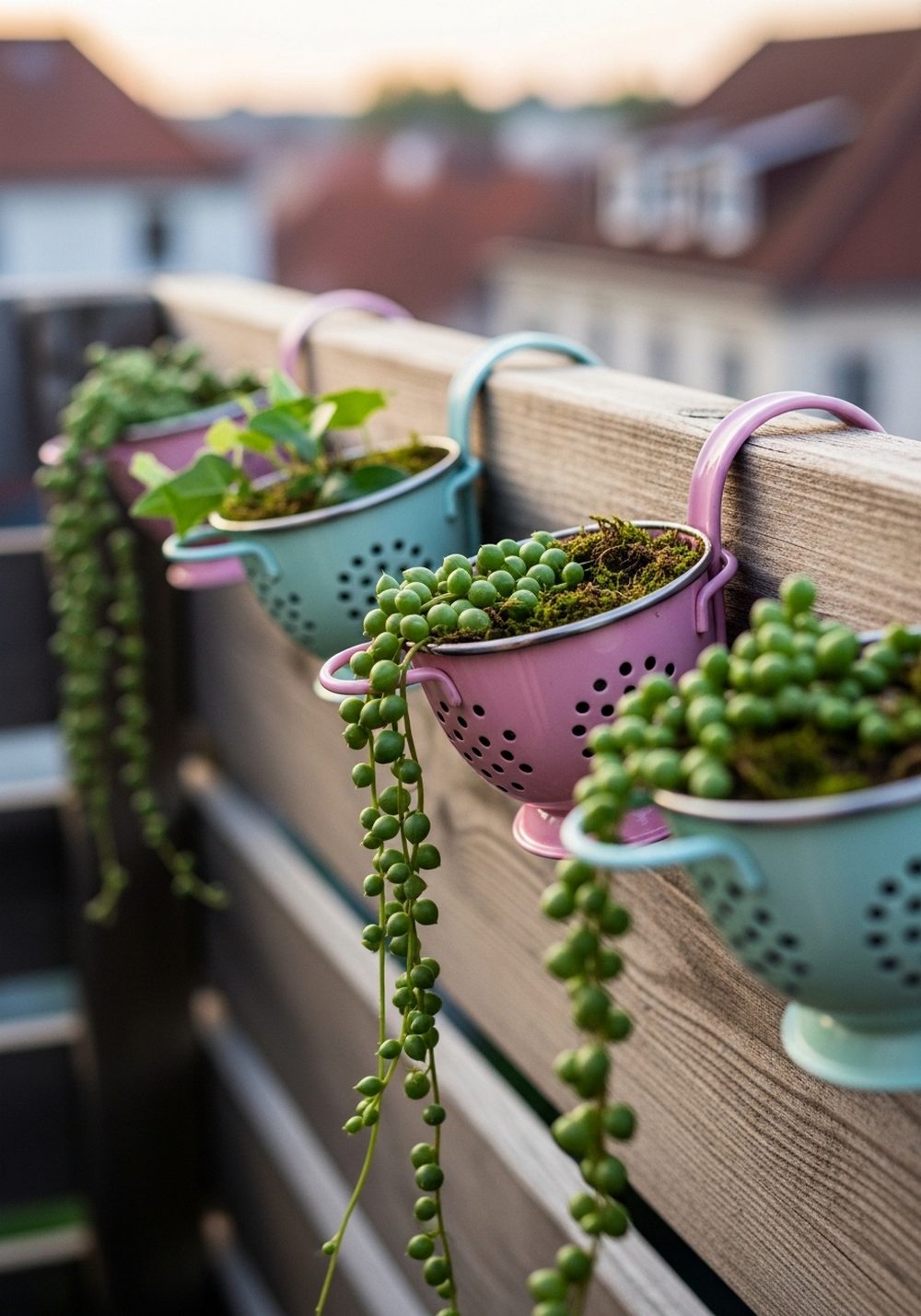
If you only have a balcony or small deck, mini colander planters can add cottage charm without taking up floor space. Use railing clips or sturdy hooks to attach the tiny colanders along the top edge, then plant them with small trailing plants or compact herbs. The repeated curve of the colanders and the gentle spill of foliage soften hard railings and make the space feel more like a little garden than a plain outdoor platform.
- Best For: Apartments, townhouses, and compact decks.
- Budget Tip: Buy inexpensive mini colanders in multipacks or repurpose children’s play colanders.
- Styling Idea: Mix two or three coordinating pastel shades instead of a full rainbow.
- Practical Note: Check local rules about overhanging planters and ensure they’re securely fixed.
- Care & Maintenance: Choose drought-tolerant plants if you don’t want to water daily.
Conclusion
Vintage colanders are one of those simple, charming touches that instantly give your garden or balcony a cottage feel. With their ready-made drainage holes and curved shapes, they’re almost begging to be turned into hanging planters. Start with just one idea—a porch herb colander or a fence full of flowers—and see how it changes the mood of your space. From there, you can slowly add more pieces until your outdoor area feels like your own cozy, storybook retreat.
FAQs
1. Are vintage colander planters safe for plants?
Yes, colanders work well for most plants because they offer excellent drainage. Just remember to line the inside with moss, burlap, or coco liner so soil doesn’t fall out. Choose plants that like good drainage, and water a little more often, as hanging containers can dry out quickly.
2. How can I make colander planters on a small budget?
Look for old colanders at thrift shops, yard sales, or discount bins rather than buying new ones. You can also ask family members if they have spare kitchen pieces. Buy a few healthy plants and divide them between several planters, then add free touches like moss, stones, or twine to finish the look.
3. Are these ideas suitable for renters?
Definitely. Many of these colander planters can hang from removable hooks, tension rods, or over-rail brackets that don’t leave big marks. Focus on options like window colanders, balcony clips, and ladder displays that can be taken down easily when you move, leaving little to no damage behind.
4. What plants work best in colander hanging planters?
Herbs, trailing annuals, strawberries, and small succulents all do well. Look for plants that enjoy good drainage and don’t grow enormous root systems. In sunny spots, try thyme, oregano, petunias, or strawberries. In shadier areas, go for ivy, violas, or shade-tolerant trailing plants.
5. How do I stop metal colanders from rusting too quickly outdoors?
A little patina can add charm, but if you want to slow rust, you can spray the outside of the colander with a clear outdoor sealant before planting. Avoid letting water sit in the bowl and try to hang it in a sheltered spot. If rust appears, brush off loose flakes and let the weathered look become part of the cottage character.
6. Do I need special soil or fertilizer for colander planters?
Use a good-quality container or multipurpose potting mix, as garden soil is usually too heavy for hanging planters. Because colanders drain so well, nutrients can wash out more quickly, so feed your plants with a gentle liquid fertilizer every few weeks during the growing season. This helps keep flowers blooming and foliage lush.


