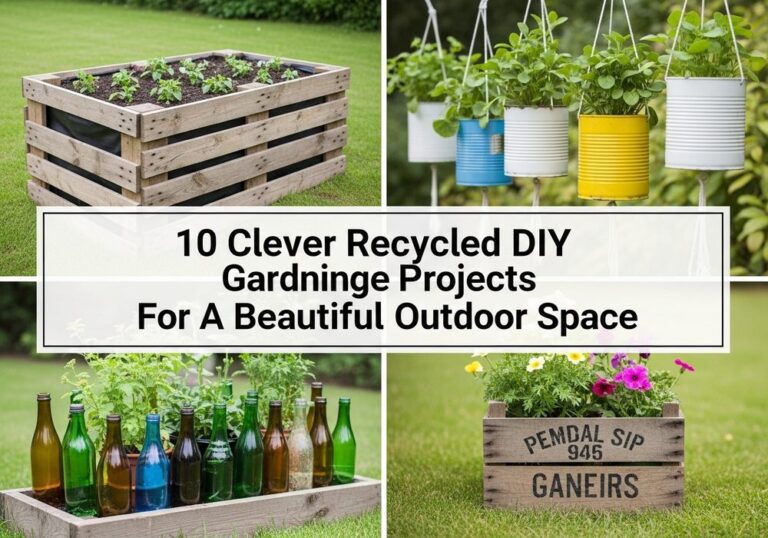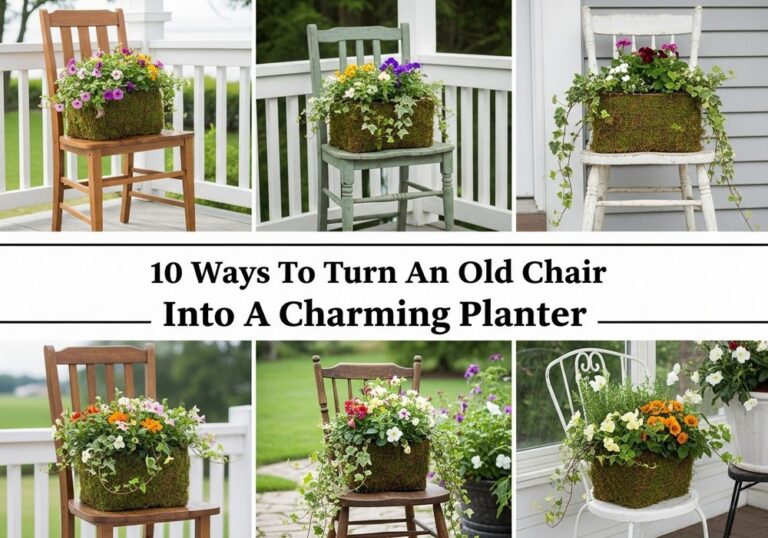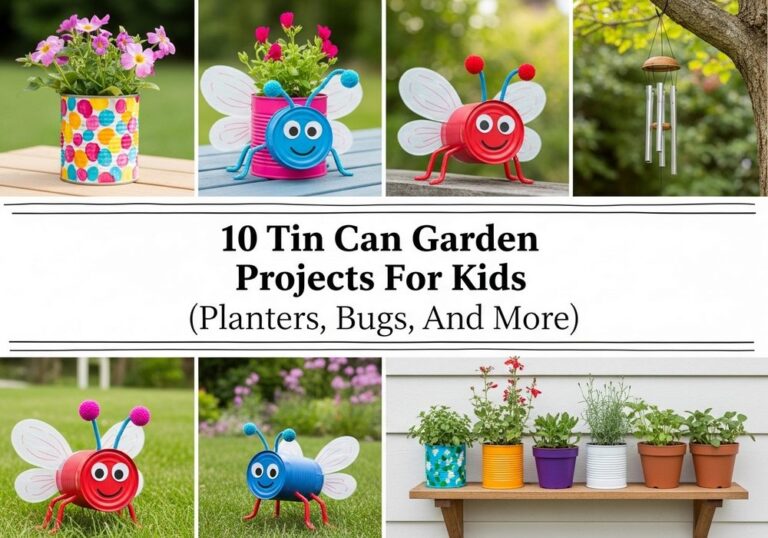
10 Eco-Friendly Planter Ideas You Can Easily Make At Home
If you love plants but hate waste, eco-friendly planters are the perfect place to start. Instead of buying more plastic pots, you can turn everyday objects into beautiful homes for your herbs, flowers, and leafy greens. It’s kinder to the planet and adds loads of personality to your space.
In this guide, we’ll walk through simple ways to reuse jars, cans, bottles, fabric, and more to create unique planters for balconies, patios, windowsills, and small gardens. You’ll get practical tips, budget-friendly ideas, and styling suggestions to help your outdoor (or indoor) corners look greener, cozier, and more “you” without spending a fortune.
Quick List
- Upcycled Tin Can Herb Pots
- Glass Jar Windowsill Planters
- Plastic Bottle Railing Planters
- Wooden Crate Patio Planter
- Broken Terracotta Mosaic Planter
- Coconut Shell Hanging Planters
- Denim Grow Bags From Old Jeans
- Vintage Drawer Box Planter
- Newspaper Seedling Starter Pots
- Reused Food Container Kitchen Planters
1. Upcycled Tin Can Herb Pots
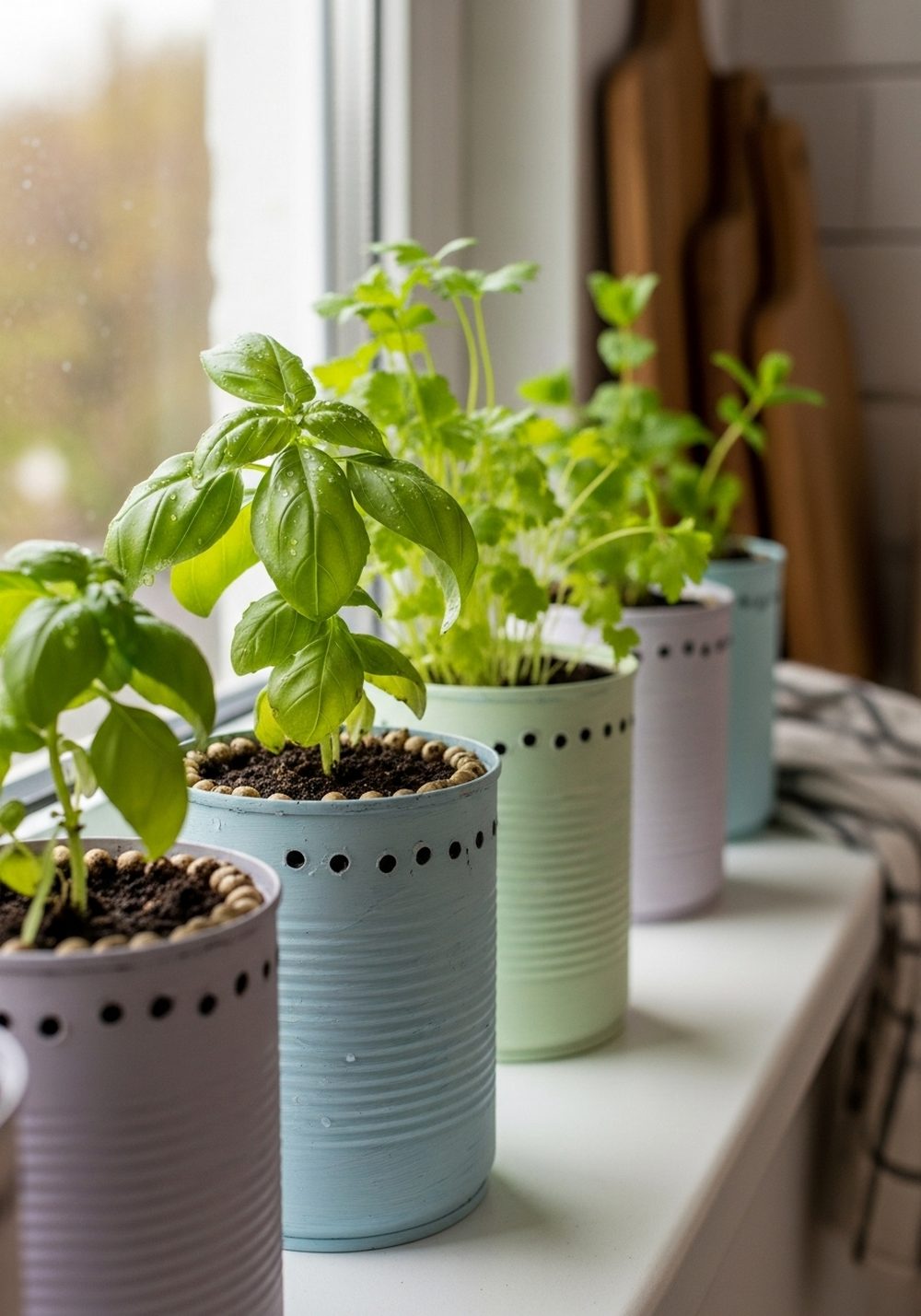
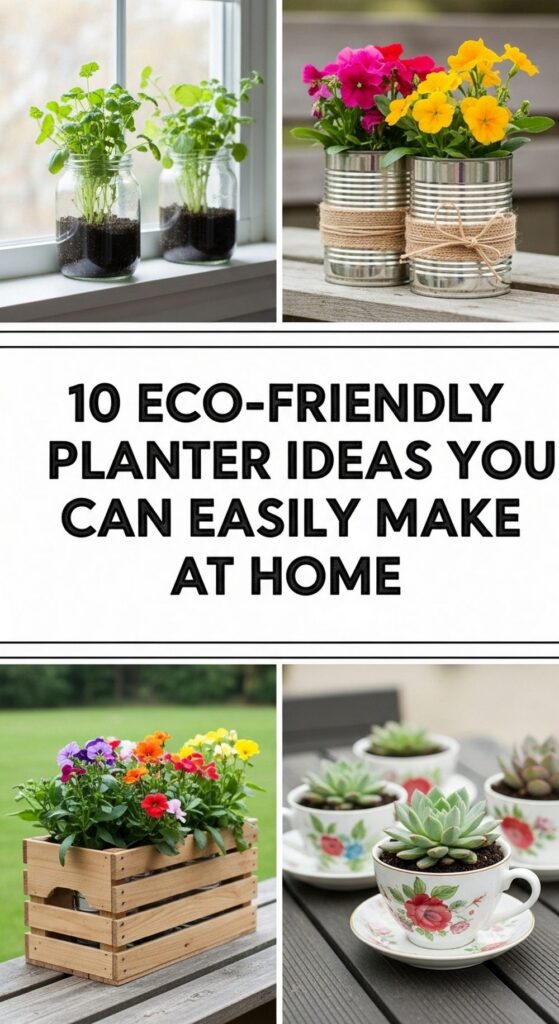
Rinse out your empty food cans and turn them into charming herb pots. Remove labels, sand any sharp edges, and punch a few drainage holes in the base. You can leave the cans metallic for a modern look or paint them with leftover wall paint or sample pots. Line the bottom with small stones, add potting mix, and plant easy herbs like basil, parsley, or mint. Group three to five cans together on a tray for a mini herb garden with a cozy, café-style feel.
- Best For: Small kitchens, windowsills, and tiny balconies.
- Budget Tip: Use free tin cans and leftover paint; buy one packet of mixed herb seeds to fill several pots.
- Styling Idea: Paint all cans one neutral color for a classic look, or mix soft pastels for a playful cottage mood.
- Practical Note: Place cans on a tray or saucer to catch extra water and protect your surfaces.
2. Glass Jar Windowsill Planters
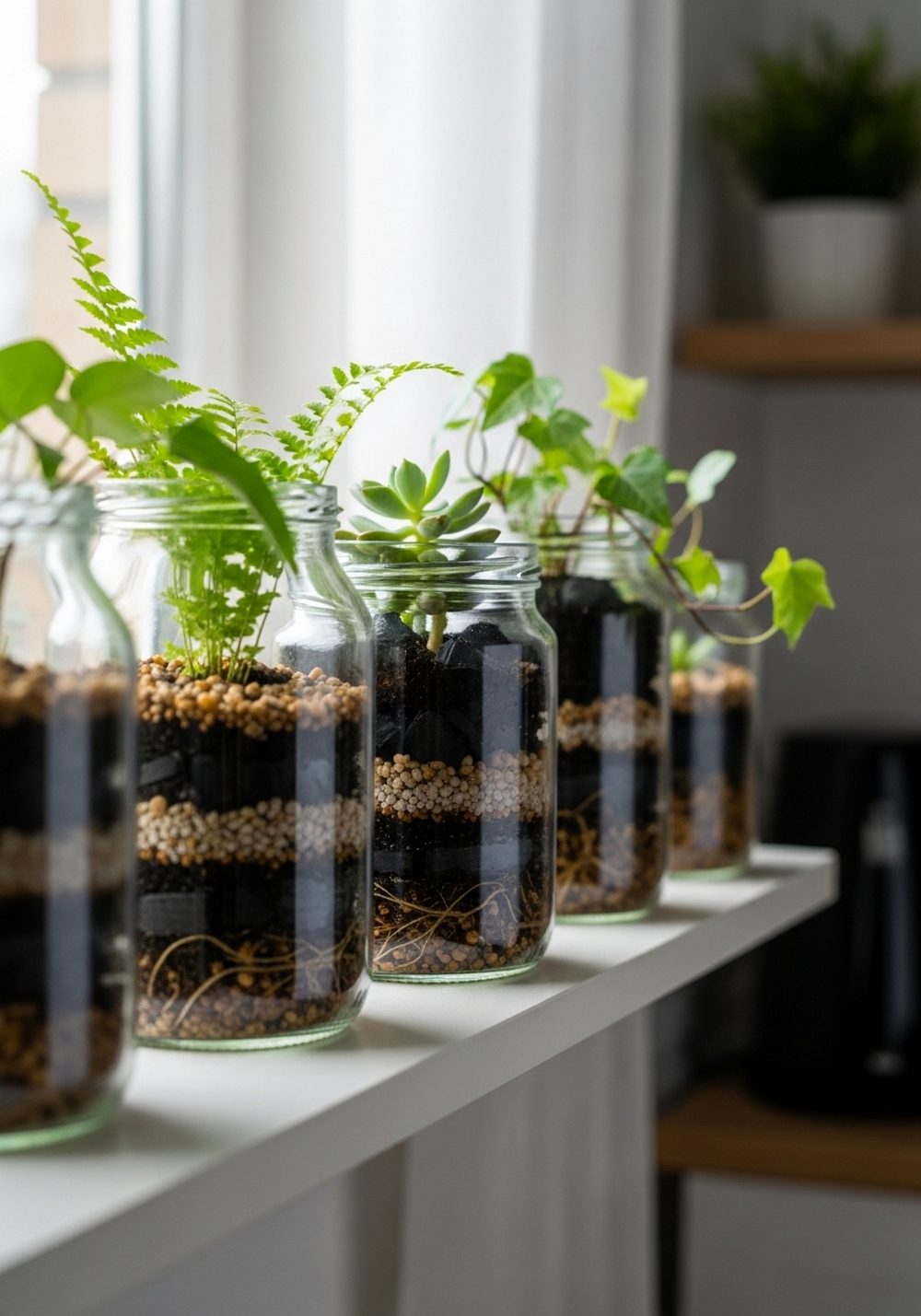
Old jam, sauce, or honey jars can become simple, elegant planters that show off soil layers and roots. Wash them well, remove labels by soaking in warm soapy water, and add a thin layer of pebbles or gravel for drainage. Fill with soil and plant small ferns, succulents, or tiny ivy cuttings. On a windowsill, the light passing through the glass and leaves creates a calm, airy effect that suits modern and minimalist spaces beautifully.
- Best For: Bright indoor sills and shelves where you want a clean, stylish look.
- Budget Tip: Save jars from your kitchen instead of buying decorative containers.
- Styling Idea: Use jars of similar shapes for a neat, uniform row or mix different shapes for a more relaxed, collected-over-time feel.
- Practical Note: Avoid plants that hate “wet feet” unless you water very lightly, since jars don’t have drainage holes.
3. Plastic Bottle Railing Planters
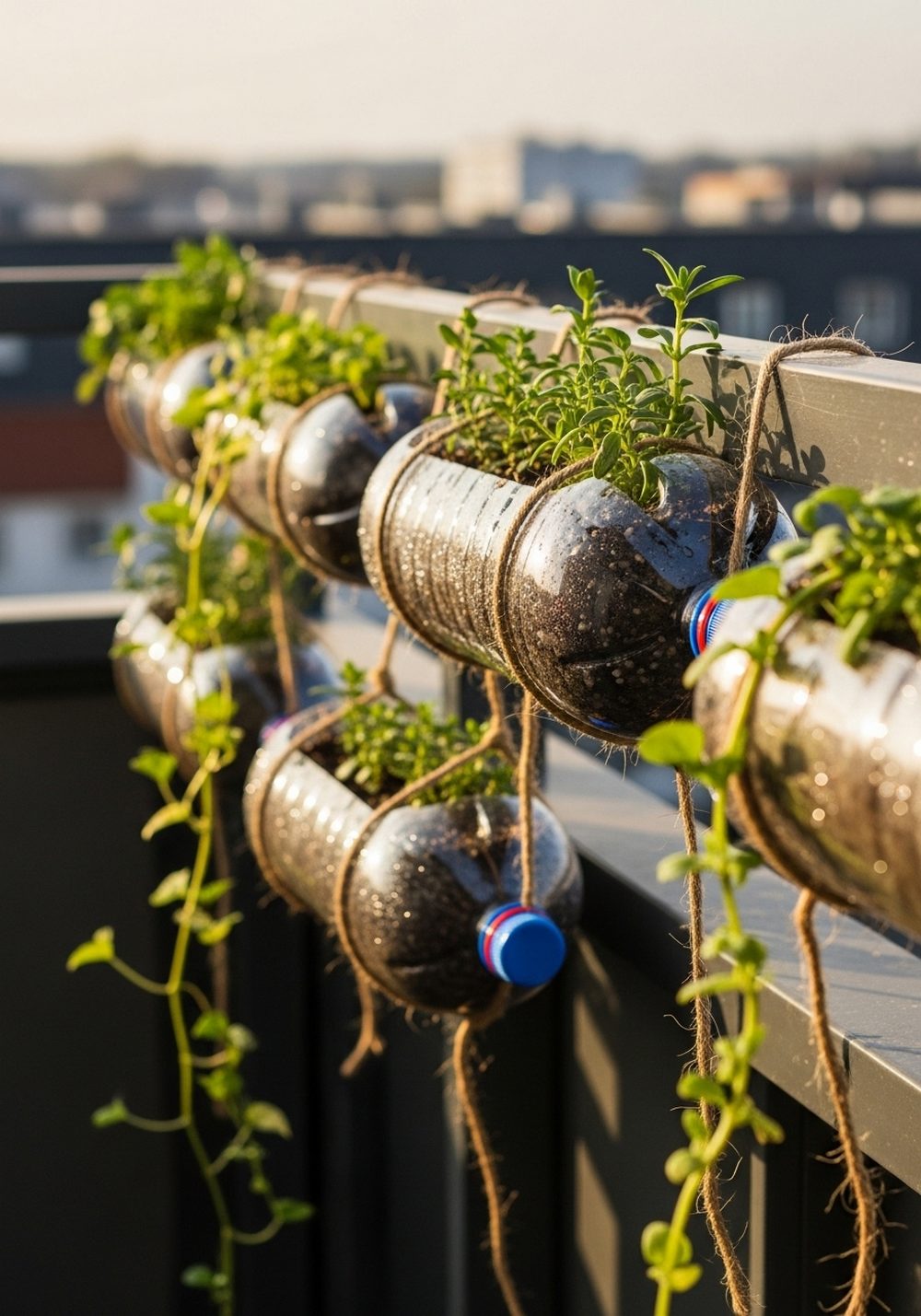
Instead of throwing away plastic bottles, turn them into slim planters that hang neatly from a balcony or terrace railing. Cut an opening along one side, make a few small drainage holes underneath, and smooth any rough edges. Thread sturdy twine or wire through holes at each end and secure to the railing. Fill with lightweight potting mix and plant trailing flowers, herbs, or compact leafy greens. These planters create a cheerful green border without taking up floor space.
- Best For: Renters and small balconies where space is tight.
- Budget Tip: Use bottles you already have; invest only in potting mix and a packet of seeds or cuttings from friends.
- Styling Idea: Choose all-clear bottles for a subtle look or paint the outside with water-based paint for a colorful, upcycled statement.
- Practical Note: Keep the bottles fairly small and light so they don’t strain the railing or supports.
4. Wooden Crate Patio Planter
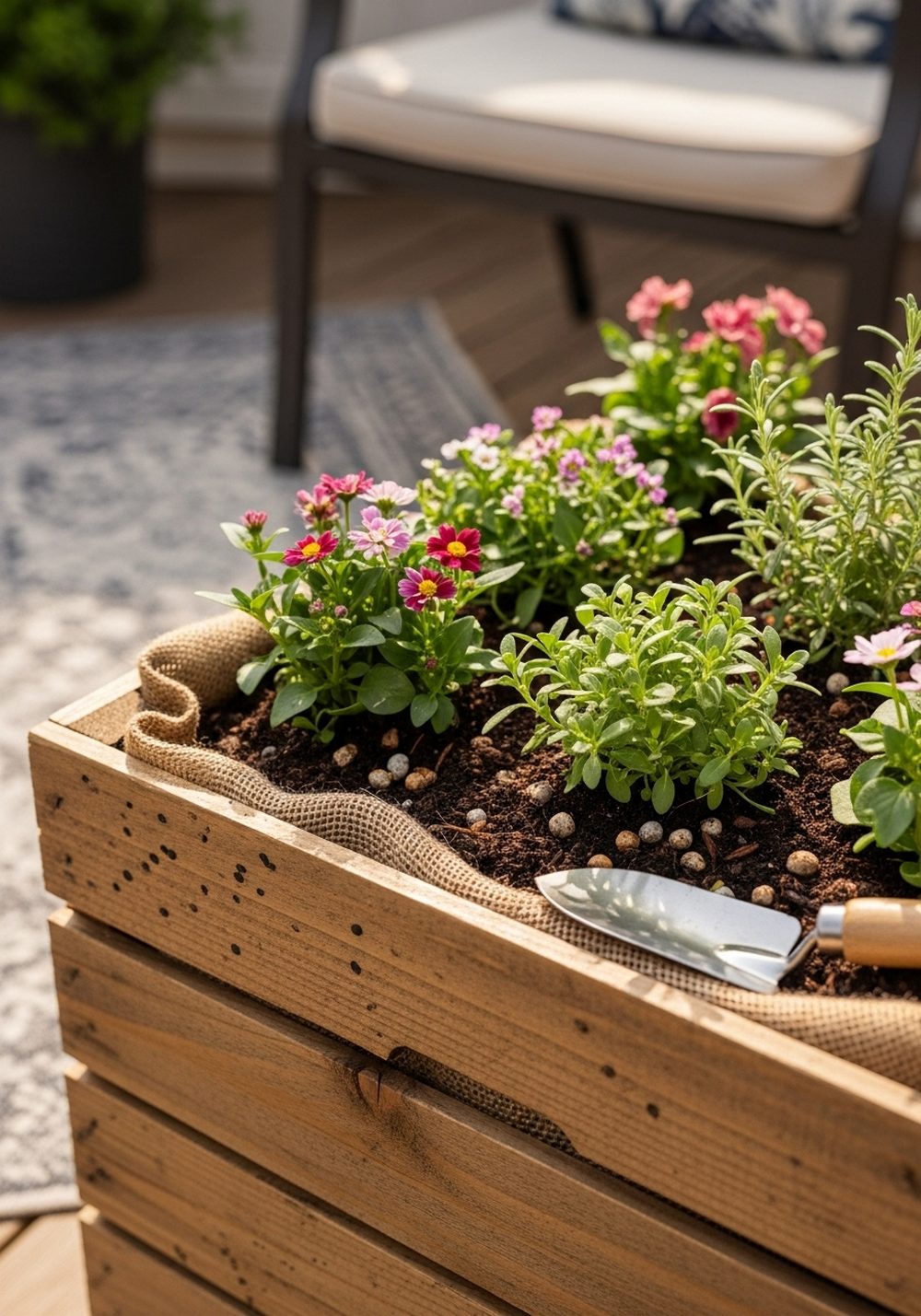
A sturdy wooden crate can quickly become a rustic planter that looks like it belongs in a cozy courtyard. Line the inside with burlap, weed fabric, or even an old cotton pillowcase to keep soil from slipping through the gaps. Fill with potting mix and arrange plants in loose clusters: taller blooms or herbs at the back, tumbling varieties near the edges. Place the crate on bricks or pot feet so excess water can escape and the wood can dry.
- Best For: Patios, porches, and spots where you want a low, boxy planter.
- Budget Tip: Ask local fruit and veg shops for old crates or check second-hand markets.
- Styling Idea: Keep the wood natural for a rustic feel or lightly whitewash it for a soft, shabby-chic look.
- Practical Note: Don’t overload the crate; slightly lighter soil mixes make it easier to move.
5. Broken Terracotta Mosaic Planter
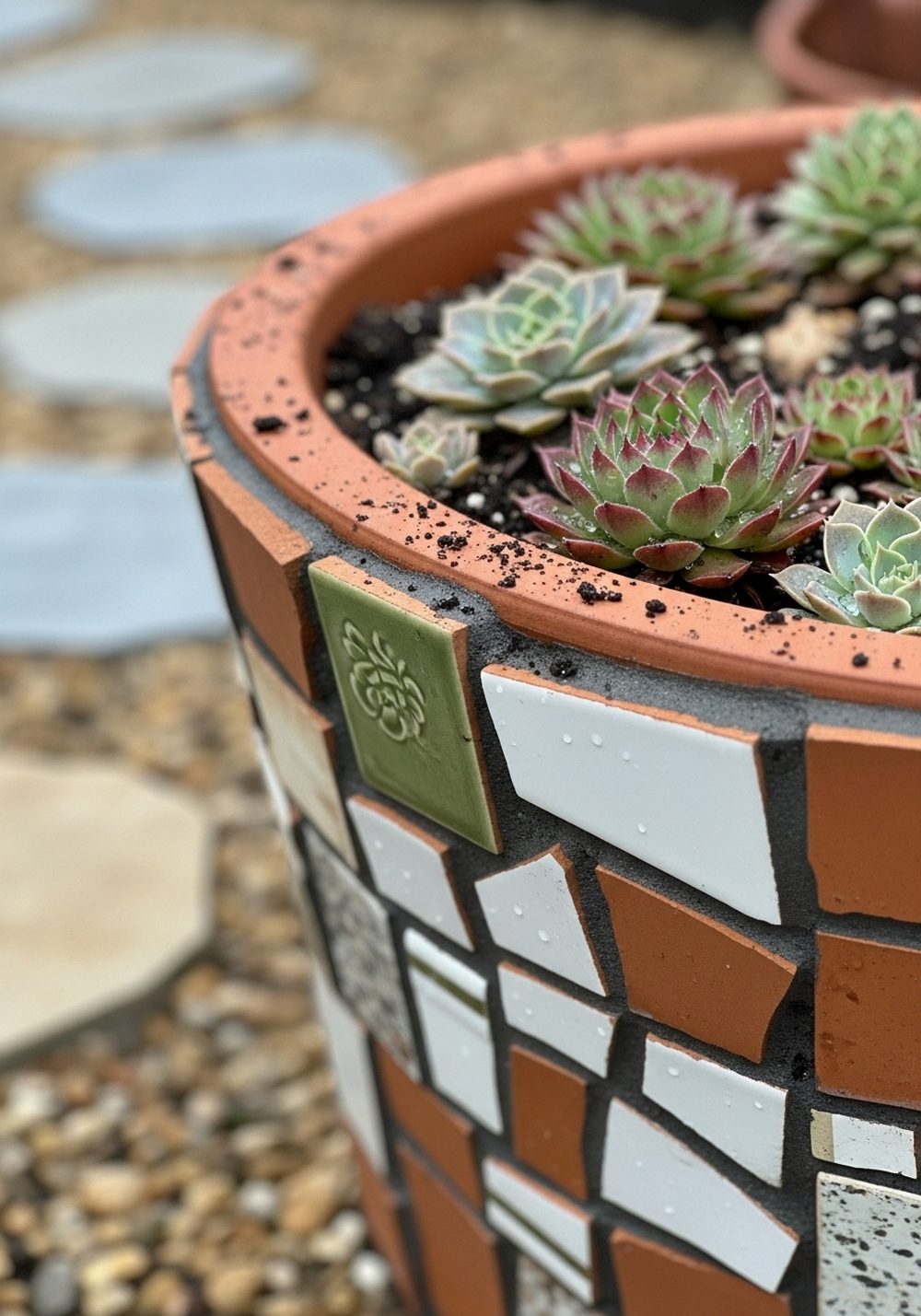
Don’t throw away cracked pots—turn them into art. Collect broken terracotta pieces and old tile fragments, then glue them onto the outside of a plain pot, puzzle-style, to form a mosaic. Once dry and grouted, you’ll have a unique planter with a handmade, Mediterranean feel. Fill it with succulents or drought-tolerant plants that suit the earthy terracotta. The varied textures and colors add instant interest, especially in a simple gravel or stone area.
- Best For: Sunny spots, rock gardens, and statement corners.
- Budget Tip: Use broken pots and leftover tiles instead of buying new decorative containers.
- Styling Idea: Stick to one color family (e.g., blues and whites) for a calm look, or mix random pieces for a boho, artistic mood.
- Practical Note: Wear gloves when handling sharp edges and ensure your mosaic is firmly attached before lifting the pot.
6. Coconut Shell Hanging Planters
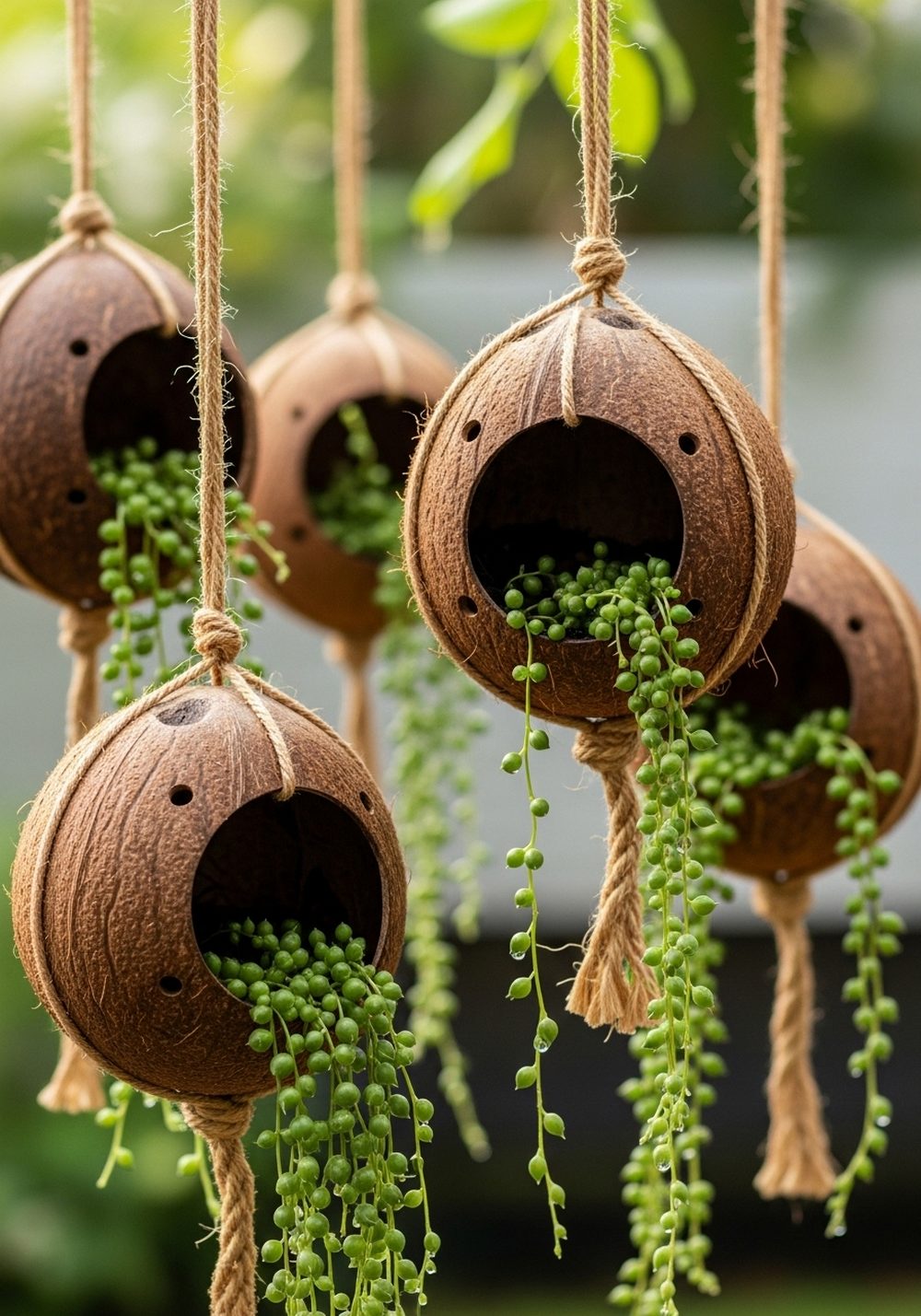
If you have access to whole coconuts, the shells can become beautiful, natural-looking hanging planters. Cut the shell in half, scoop out the flesh, and make small drainage holes in the base. Drill three equidistant holes around the rim and thread through sturdy twine or rope. Fill with free-draining mix and plant trailing ferns, small succulents, or air plants. Hang in a sheltered spot where they can gently sway, adding a relaxed tropical feel to your space.
- Best For: Covered balconies, patios, or under pergolas where they’re sheltered from heavy rain.
- Budget Tip: Use leftover coconut shells from cooking or drinks instead of buying ready-made hanging pots.
- Styling Idea: Combine several at different heights to create a layered, jungle-like feature.
- Care & Maintenance: Check the shells occasionally for rot and replace them when they eventually break down.
7. Denim Grow Bags From Old Jeans
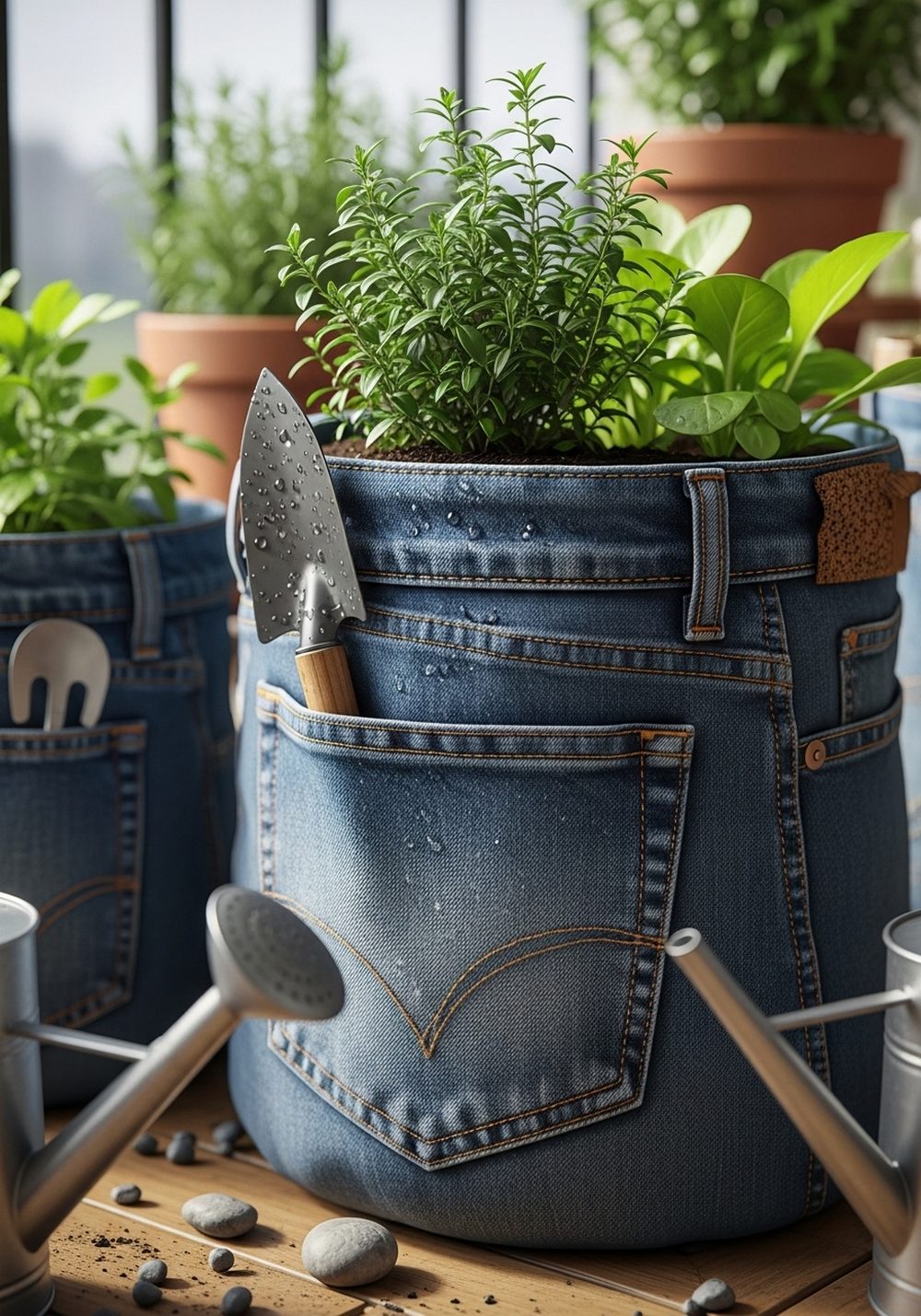
Old jeans are tougher than they look and can be stitched into soft “grow bags” for herbs, salad leaves, or compact veggies. Cut the legs to the height you want, sew or tie up one end, and fold the top edge over for strength. Add drainage holes if needed, then fill with soil and plant. The denim gives a relaxed, country vibe and works especially well in informal gardens or balconies. Over time, the fabric fades and weathers in a very charming way.
- Best For: Balconies, patios, and temporary setups where rigid pots are awkward.
- Budget Tip: Use jeans that are too worn to donate and basic thread; no need for fancy sewing skills.
- Styling Idea: Group different shades of blue denim together for a soft, coordinated look.
- Practical Note: Place the bags on trays or gravel so drainage water doesn’t stain surfaces.
8. Vintage Drawer Box Planter
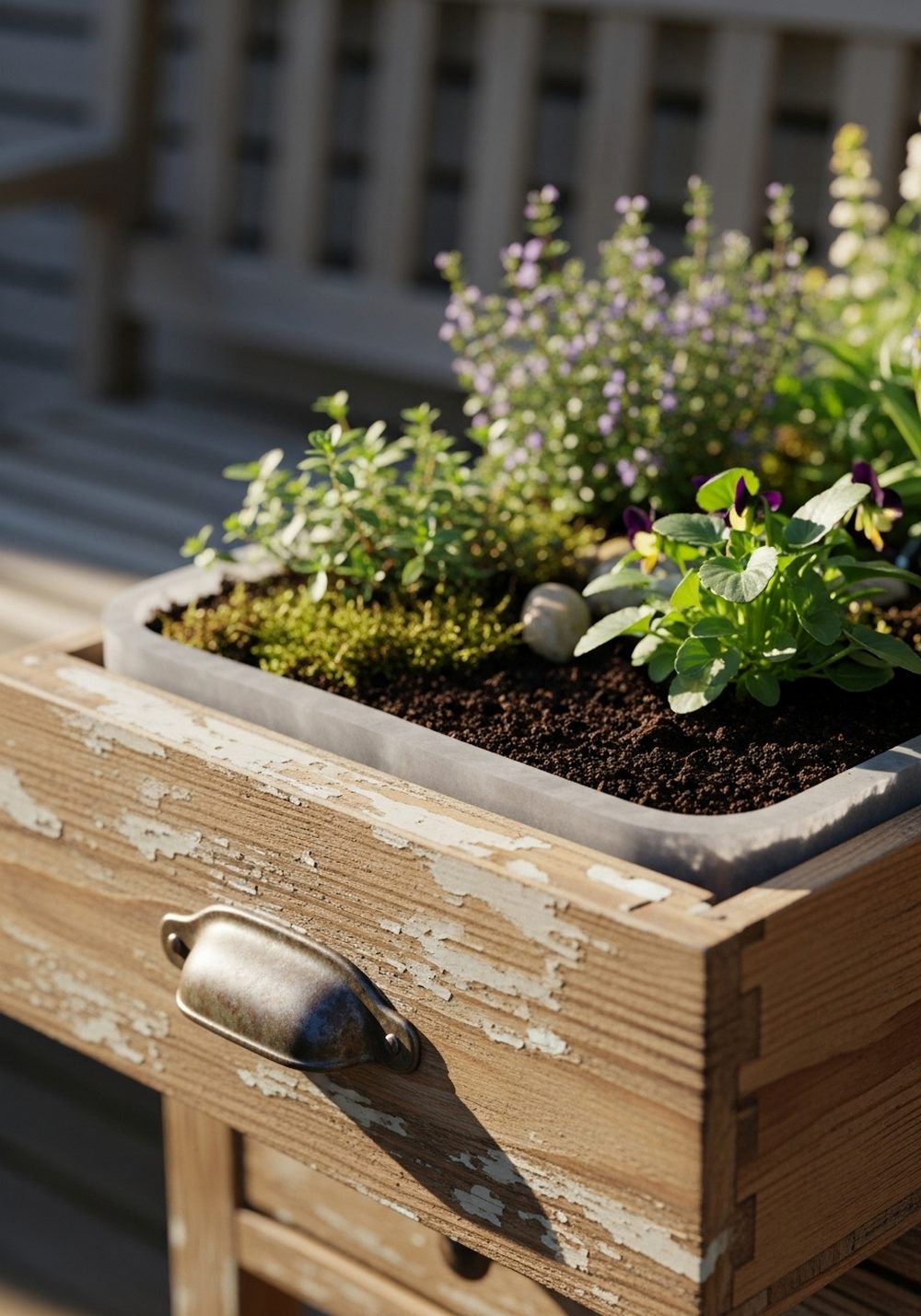
An old drawer from a broken dresser can live a second life as a low planter. Line it with plastic or fabric to protect the wood, poke a few discreet drainage holes, then add soil and plants. The front handle becomes a charming focal point, especially if it’s brass or ceramic. Use the drawer on steps, ledges, or benches, where its rectangular shape defines the space and adds a little “furniture” feel to the garden.
- Best For: Porches, steps, and garden corners that need a focal piece.
- Budget Tip: Look for damaged furniture at thrift stores or use a spare drawer from home.
- Styling Idea: Leave the paint chipped for a vintage feel or give it a fresh coat in a color that matches your door or trim.
- Practical Note: Don’t leave untreated wood sitting in puddles; lift the drawer slightly off the ground.
9. Newspaper Seedling Starter Pots
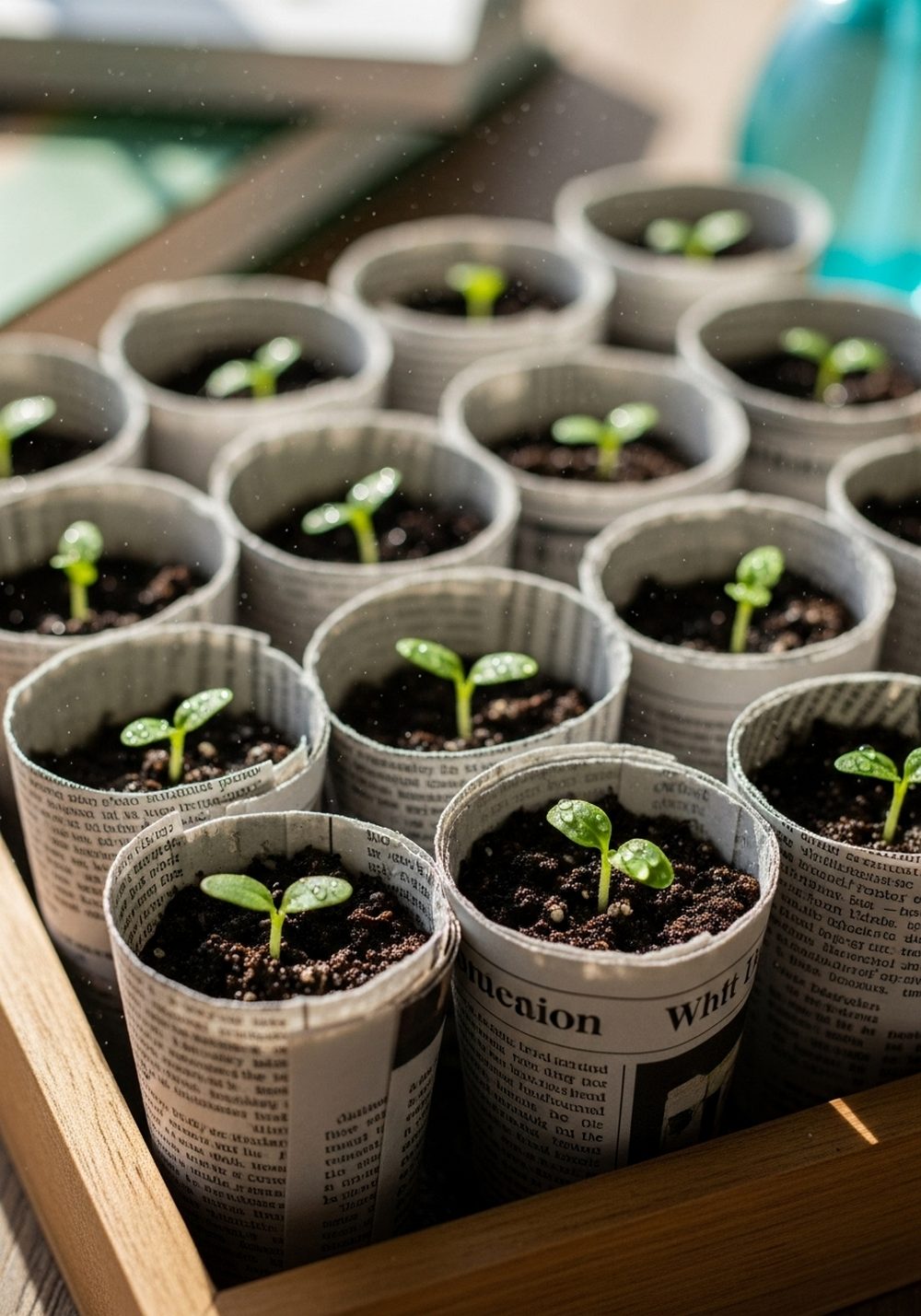
Newspaper makes excellent biodegradable starter pots for seeds. Cut strips, wrap around a small jar or glass, fold the base, and slide off to create a little paper pot. Pop them into a tray, fill with seed compost, and sow seeds. When the seedlings are ready, you can plant the whole thing out; the paper will gradually break down in the soil. On a windowsill or table, a cluster of newspaper pots has a simple, wholesome look.
- Best For: Starting vegetables, herbs, and flowers indoors or in a greenhouse.
- Budget Tip: Use free newspaper or plain newsprint; you only need soil and seeds.
- Styling Idea: Arrange the pots in a wooden crate or shallow box for a tidy, rustic display.
- Care & Maintenance: Keep the pots moist but not soggy so they don’t disintegrate too quickly.
10. Reused Food Container Kitchen Planters
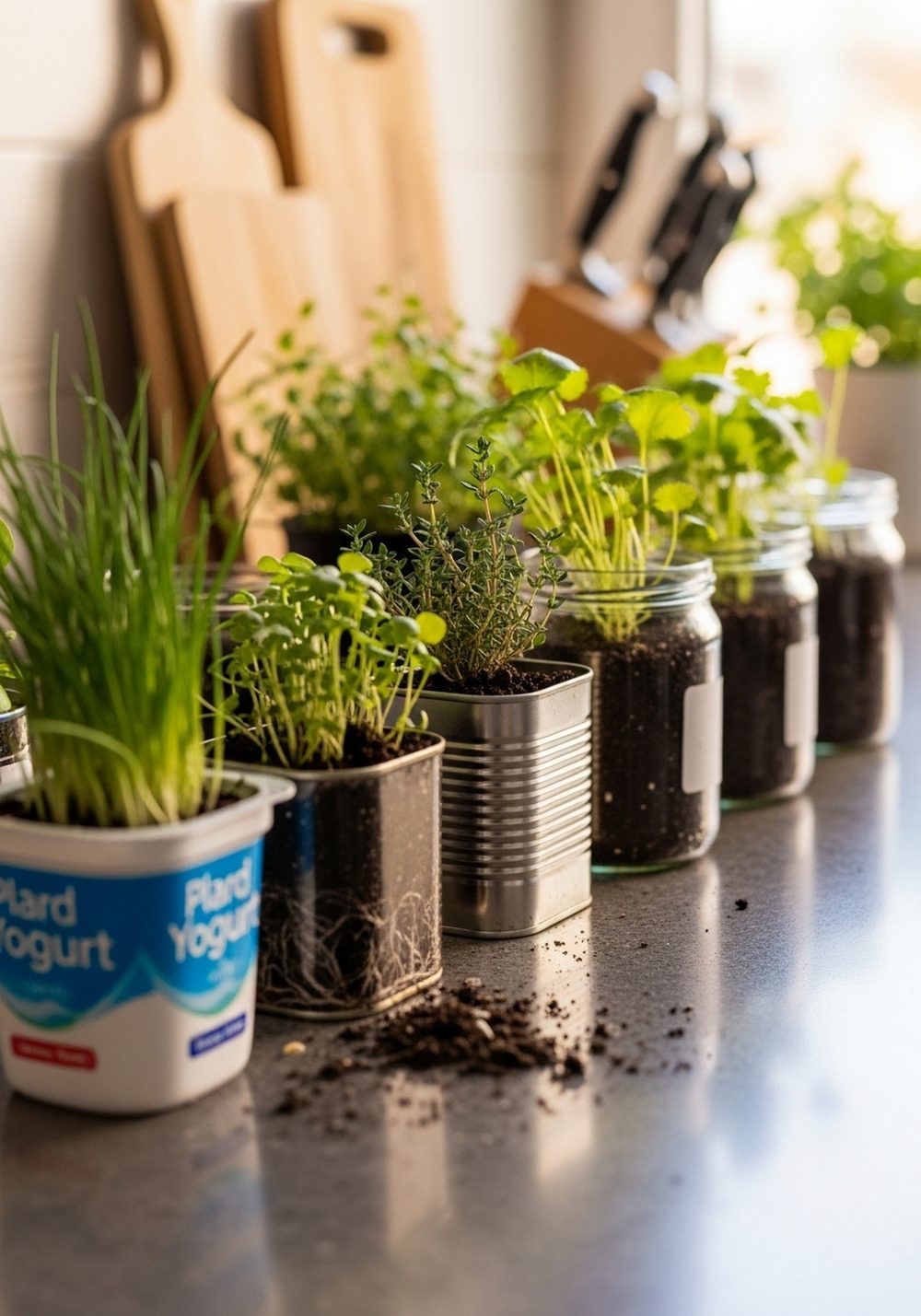
Many everyday food containers are perfectly sized for small kitchen planters. Clean yogurt tubs, metal tins, or plastic boxes thoroughly and, if possible, add a few drainage holes. You can leave them plain for a minimal look or wrap them in jute, fabric, or kraft paper. Fill with potting mix and plant herbs you use often—chives, parsley, coriander, or thyme. Keep them near natural light, and you’ll have fresh flavor within arm’s reach and a cheerful, green accent on your counter.
- Best For: Indoor kitchens and window ledges near your cooking area.
- Budget Tip: Reuse containers you already have and grow herbs from seed or cuttings.
- Styling Idea: Wrap containers in matching fabric or paper to create a coordinated, intentional display.
- Practical Note: Place them on a tray to catch drips and keep surfaces easy to wipe.
Conclusion
Eco-friendly planters show that you don’t need fancy pots to create a beautiful, welcoming garden. By reusing jars, cans, bottles, fabric, and other everyday items, you reduce waste and add character to every corner of your home. Start with one simple project—maybe a tin can herb pot or a few newspaper seedling pots—and build from there. Over time, you’ll grow not just a greener space, but greener habits too.
FAQs
1. How can I make eco-friendly planters on a very small budget?
Focus on what you already have at home: cans, jars, bottles, old fabric, and cardboard. Most of the ideas above only require soil, seeds or cuttings, and maybe some twine or basic tools. Start with simple projects like tin cans or newspaper pots and add more as you collect materials.
2. Are these planters suitable for renters who can’t make permanent changes?
Yes. Almost all of these planters are portable and non-permanent. Crates, drawers, cans, jars, and denim bags can all be moved or taken with you when you leave. Just avoid drilling into walls or railings—use hooks, over-the-rail hangers, or lightweight containers instead.
3. Which eco-friendly planter ideas are best for balconies or very small spaces?
Plastic bottle railing planters, coconut shell hangers, and denim grow bags are ideal for tight spaces because they use vertical space and railings instead of floors. Glass jars and tin cans also fit on narrow sills or shelves, so you can still enjoy greenery without cluttering your balcony.
4. How do I make sure reused containers are safe for plants?
Clean containers thoroughly and avoid anything that held harsh chemicals or non-food products. For metal or painted items, line the inside with fabric, plastic, or a separate nursery pot if you’re unsure. Always add drainage or water carefully so roots don’t sit in soggy soil.
5. What are the lowest-maintenance options for busy people?
Succulents in mosaic terracotta pots, hardy herbs in cans or jars, and sturdy plants in wooden crates are all fairly forgiving. Choose plants suited to your light levels, water deeply but not too often, and use good-quality potting mix so your planters stay healthy with minimal fuss.