10 Upcycling Garden Ideas For A Greener, More Beautiful Space
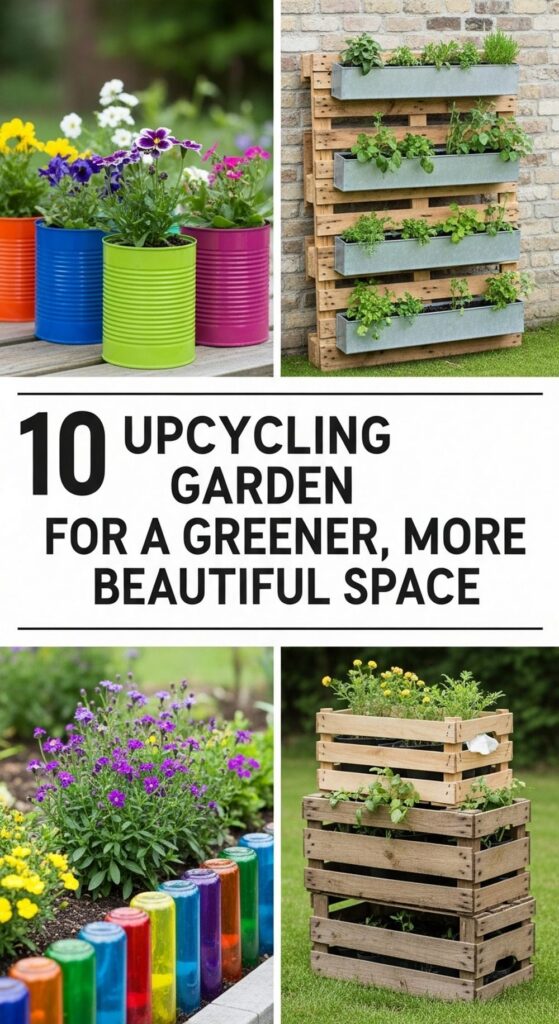
If you want a greener garden without constantly buying new decor, upcycling is your best friend. Instead of throwing things away, you can turn them into useful, beautiful pieces that give your outdoor space real character.
In this guide, you’ll find ten eco-friendly gardening ideas that reuse common items like jars, pallets, cans, and old furniture. Each idea is simple enough for beginners, kind to your budget, and gentle on the planet. With a few creative tweaks, you’ll cut waste, save money, and enjoy a garden that looks thoughtful, personal, and full of charm.
Quick List
- Turn Glass Jars Into Charming Candle Lanterns
- Transform Old Pallets Into Vertical Planters
- Upcycle Tin Cans Into Colorful Herb Pots
- Repurpose Tires As Bold Flower Planters
- Create A Bottle Border For Garden Beds
- Make A Rustic Water Feature From Salvaged Items
- Use Broken Pots For Creative Plant Mosaics
- Build A Potting Bench From Reclaimed Furniture
- Turn Kitchen Scraps Into A Stylish Compost Corner
- Craft Garden Art From Scrap Metal And Wood
1. Turn Glass Jars Into Charming Candle Lanterns

Old jam and sauce jars make lovely lanterns for paths, tables, or hanging from trees. Clean the jars, add a layer of sand or pebbles at the bottom, and pop in a tealight or LED candle. Wrap wire or twine around the neck so you can hang them from hooks or branches. At night, the soft glow through the glass instantly makes the garden feel cozy and welcoming, perfect for dinners, parties, or quiet evenings outdoors.
- Best For: Small patios, balconies, and rental gardens where permanent lighting isn’t possible.
- Budget Tip: Use jars you already have and inexpensive tealights or solar LEDs.
- Styling Idea: Paint the bases in pastel or earthy tones, or frost the glass for a softer glow.
- Practical Note: Use LED candles in windy areas or where real flames might be unsafe.
- Care & Maintenance: Wipe the glass regularly so the light stays bright and clear.
2. Transform Old Pallets Into Vertical Planters

Old shipping pallets can become excellent vertical planters that add height and greenery without taking much floor space. Sand down the roughest parts, staple landscape fabric across the back and bottom of each slat, then fill the gaps with potting mix and plants. Lean the pallet against a wall or secure it to a fence. This works beautifully for herbs, trailing flowers, and small leafy plants, creating a living wall that hides dull surfaces and makes your garden feel lush.
- Best For: Tiny courtyards and balconies where floor space is limited.
- Budget Tip: Source pallets for free or cheap from local shops and use seeds or cuttings.
- Styling Idea: Leave the wood rustic, or stain it in a dark tone for a modern, structured look.
- Practical Note: Water from the top and let it trickle down, and fix the pallet securely so it doesn’t tip.
- Care & Maintenance: Refresh the soil yearly and rotate plants that outgrow the pockets.
3. Upcycle Tin Cans Into Colorful Herb Pots

Tin cans are sturdy, lightweight containers that are perfect for herbs and small flowers. Wash them, remove any sharp edges, and drill a few drainage holes in the base. Then paint them in cheerful colours or wrap them with jute, fabric, or leftover wallpaper. Line them along a windowsill, balcony rail, or fence shelf and plant herbs like basil, mint, and thyme. The mix of colours, textures, and greenery creates a playful, upcycled display.
- Best For: Balconies, kitchen doors, and sunny windows where you cook and cut herbs often.
- Budget Tip: Reuse food cans, leftover paint, and cheap twine rather than buying new pots.
- Styling Idea: Choose a colour palette, such as coastal blues or earthy terracottas, for a pulled-together look.
- Practical Note: Don’t forget drainage holes and a tray or saucer underneath if used indoors.
- Care & Maintenance: Check moisture often—metal containers can dry faster in full sun.
4. Repurpose Tires As Bold Flower Planters
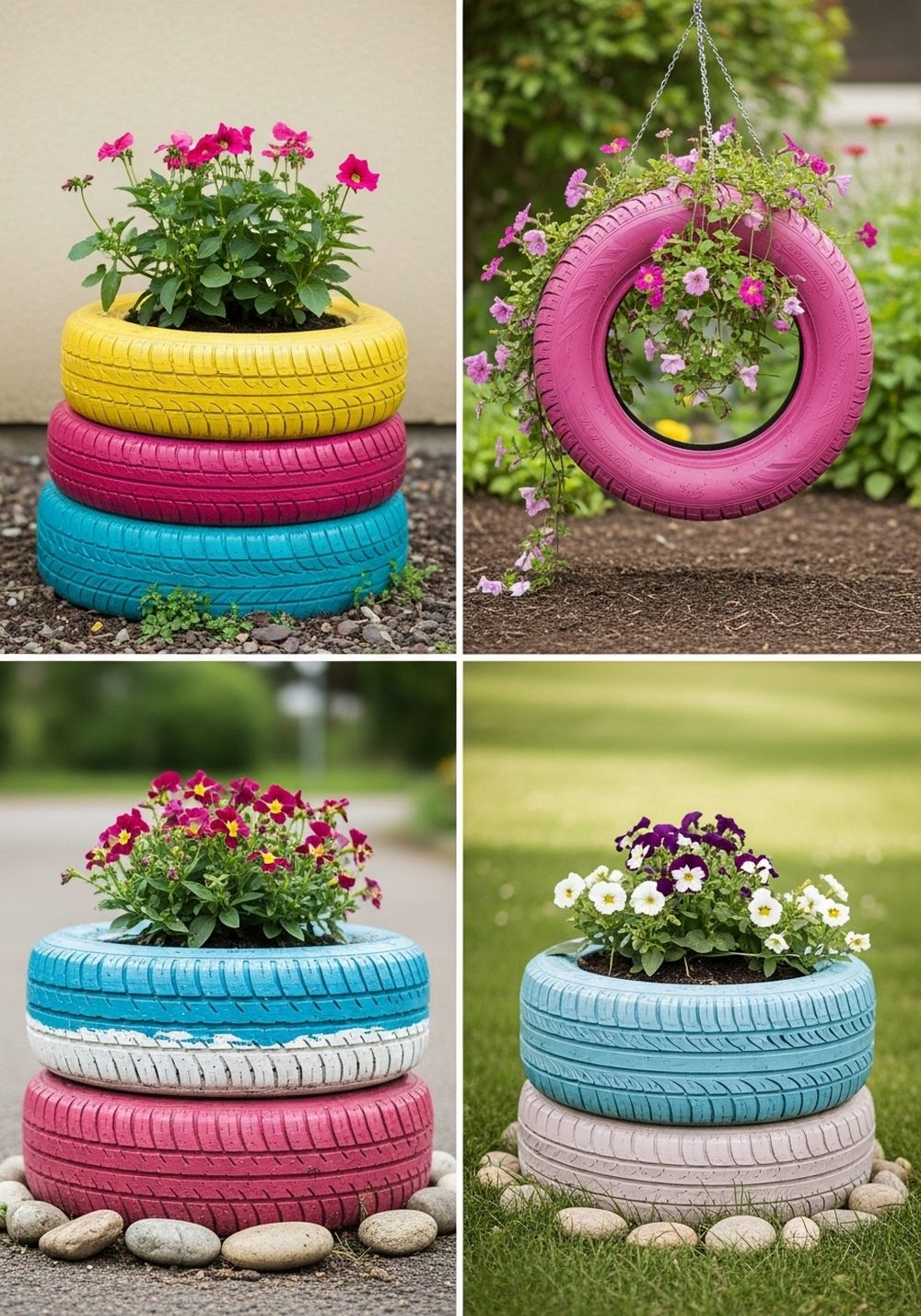
Discarded tires can become striking planters that add shape and height to your garden. Scrub the tire, drill a few drainage holes, and paint it in a bright or muted colour depending on your style. You can lay it flat and fill the centre with soil and flowers, stack two or three for a raised bed, or hang a single tire from a sturdy structure for trailing plants. The round shape frames your plants and adds instant impact.
- Best For: Larger gardens, driveways, and side yards where you want strong focal points.
- Budget Tip: Look for old tires from garages or neighbours who are happy to give them away.
- Styling Idea: Paint in matching or gradient shades, or use patterns like stripes and dots for a playful feel.
- Practical Note: Use thick gloves when drilling, and ensure stacked tires are stable and safe.
- Care & Maintenance: Refresh the paint every couple of years if the colour starts to fade.
5. Create A Bottle Border For Garden Beds

Instead of buying edging, you can use empty glass bottles to create a charming border around beds and paths. Wash the bottles, remove labels, and sink them neck-down into the soil in a neat line or gentle curve. Different colours of glass catch the light and add sparkle, while clear bottles look subtle and elegant. This border helps define planting areas, keeps mulch in place, and makes your garden look thoughtfully designed.
- Best For: Flower beds, vegetable plots, and pathways that need a clear edge.
- Budget Tip: Collect bottles over time or ask friends and neighbours to save theirs for you.
- Styling Idea: Group bottles by colour—greens, ambers, blues—or mix them for a more eclectic look.
- Practical Note: Make sure the bottles are firmly buried so they don’t wobble or become tripping hazards.
- Care & Maintenance: Occasionally wipe the exposed glass to keep it sparkling and free of algae.
6. Make A Rustic Water Feature From Salvaged Items

A small water feature can be made from old watering cans, basins, or half barrels you already have. Stack containers so water gently flows from one to another using a simple solar pump kit, or create a single bubbling pot with stones at the top. The sound of water brings calm and attracts birds and beneficial insects. With the right combination of salvaged pieces, your feature will look like it has always belonged in your garden.
- Best For: Quiet corners where you relax, read, or enjoy a morning coffee.
- Budget Tip: Use existing containers and look for a basic solar pump to avoid wiring costs.
- Styling Idea: Pair galvanized metal with natural stone and ferns for a rustic, cottage feel.
- Practical Note: Place on a level surface and ensure electrical parts are safe and suitable for outdoor use.
- Care & Maintenance: Top up water regularly and clean the pump to prevent blockages.
7. Use Broken Pots For Creative Plant Mosaics
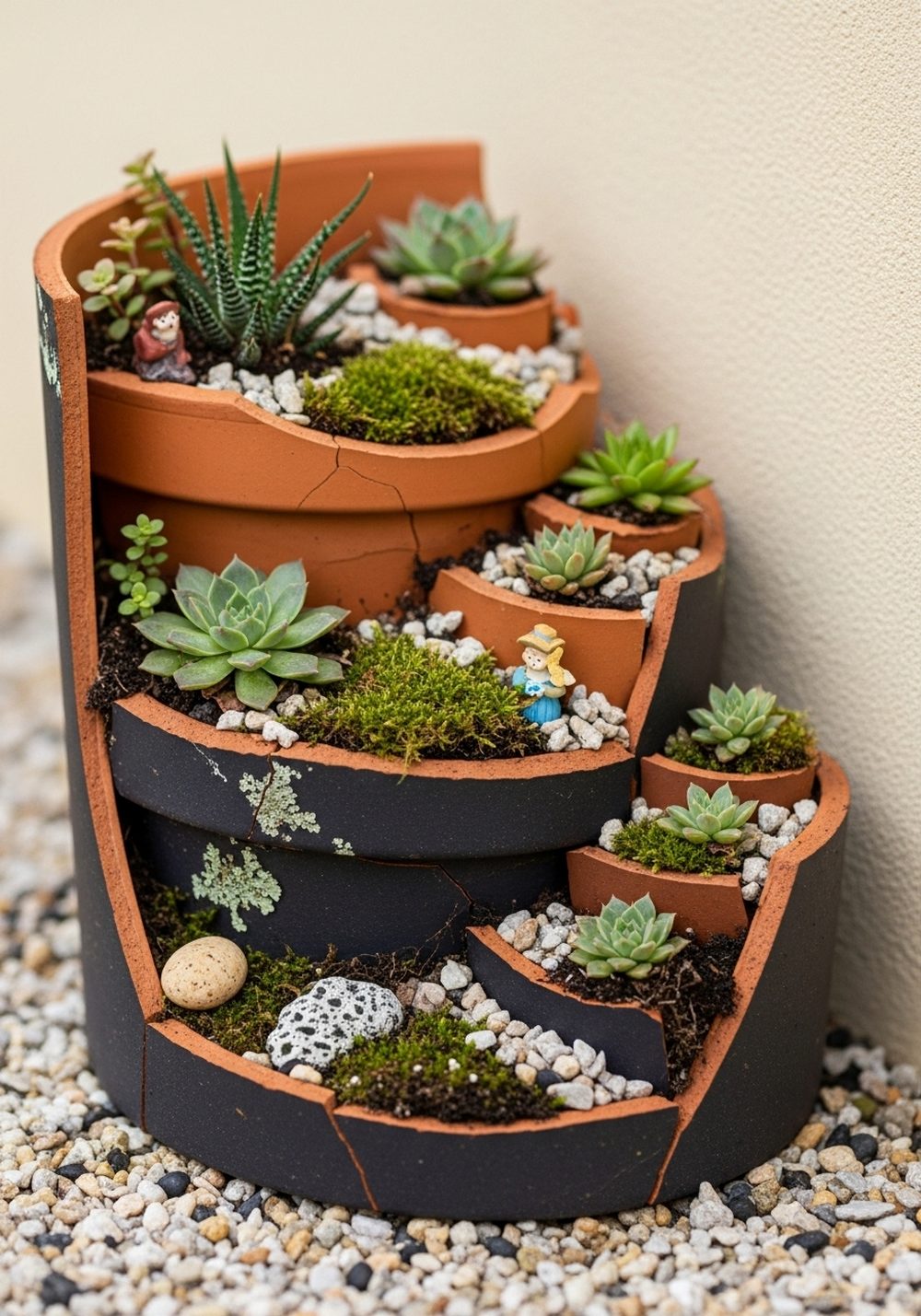
Don’t throw away cracked terracotta pots—turn them into miniature landscapes. Break the pots into large curved pieces and layer them inside a bigger container, creating terraces and pockets. Fill gaps with soil and plant small succulents, mosses, and tiny groundcovers. You can add pebbles, shells, or little figures to create a fairy garden or rocky hillside effect. The broken pieces give texture, while the plants soften the edges and make it look intentional.
- Best For: Tabletops, steps, or spots near a doorway where visitors can see the details.
- Budget Tip: Use damaged pots you already own and small cuttings from existing plants.
- Styling Idea: Keep to a natural palette of terracotta, greens, and greys for a calming, earthy look.
- Practical Note: Ensure there’s good drainage in the base container to prevent waterlogging.
- Care & Maintenance: Choose drought-tolerant plants to keep upkeep low and water sparingly.
8. Build A Potting Bench From Reclaimed Furniture

An old dresser, table, or sideboard can be turned into a practical potting bench with a few tweaks. Remove drawers you don’t need, add hooks for tools, and cover the top with a removable board or metal sheet for easy cleaning. Use shelves and drawers for pots, soil, and seeds. This keeps your gardening things organized, gives you a comfortable working height, and adds a lovely, characterful piece to your garden or shed.
- Best For: Gardeners who enjoy sowing seeds, repotting, and arranging plants regularly.
- Budget Tip: Use a second-hand or unwanted piece of furniture and upgrade it slowly with small changes.
- Styling Idea: Paint it in a soft garden colour like sage, cream, or slate blue and add simple labels.
- Practical Note: Protect it from constant rain with a small roof, cover, or by placing it under shelter.
- Care & Maintenance: Repaint or seal the surface as needed to keep it looking fresh and durable.
9. Turn Kitchen Scraps Into A Stylish Compost Corner
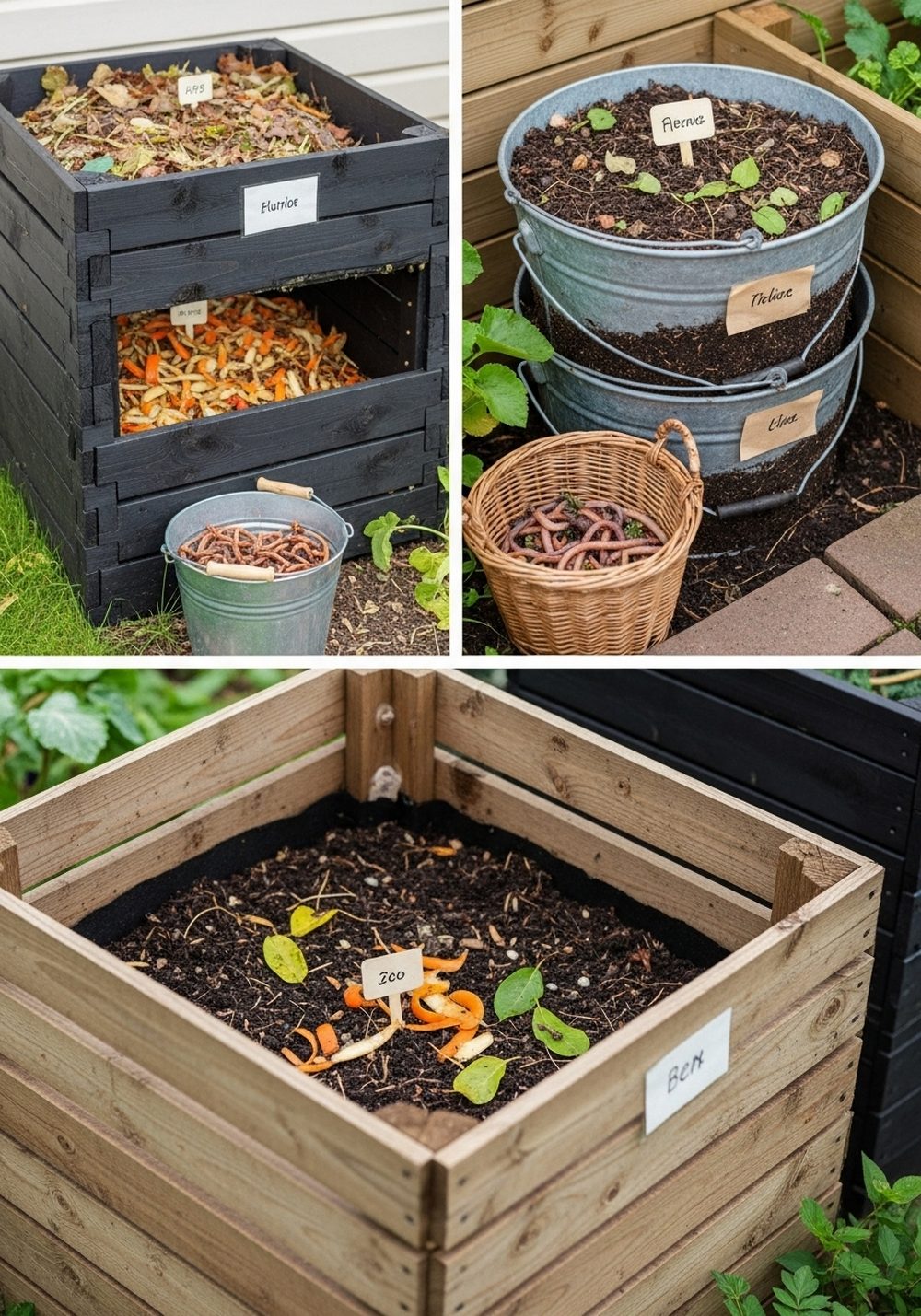
Composting doesn’t have to be messy. Build or repurpose a wooden crate, bin, or lidded container and tuck it into a corner surrounded by plants or a simple screen. Use it for fruit and vegetable scraps, coffee grounds, and garden trimmings. By choosing neat containers and adding a few decorative touches like potted herbs, you turn a practical green habit into an attractive feature. Over time, you’ll create rich compost to feed the rest of your garden.
- Best For: Anyone who cooks at home and wants to reduce food waste.
- Budget Tip: Use old crates, buckets, or barrels instead of buying a new compost bin.
- Styling Idea: Hide the bin behind a trellis, bamboo screen, or row of tall pots for a tidy look.
- Practical Note: Balance “greens” (scraps) with “browns” (dry leaves, cardboard) to avoid smells.
- Care & Maintenance: Turn the compost occasionally and use the finished material on beds and containers.
10. Craft Garden Art From Scrap Metal And Wood
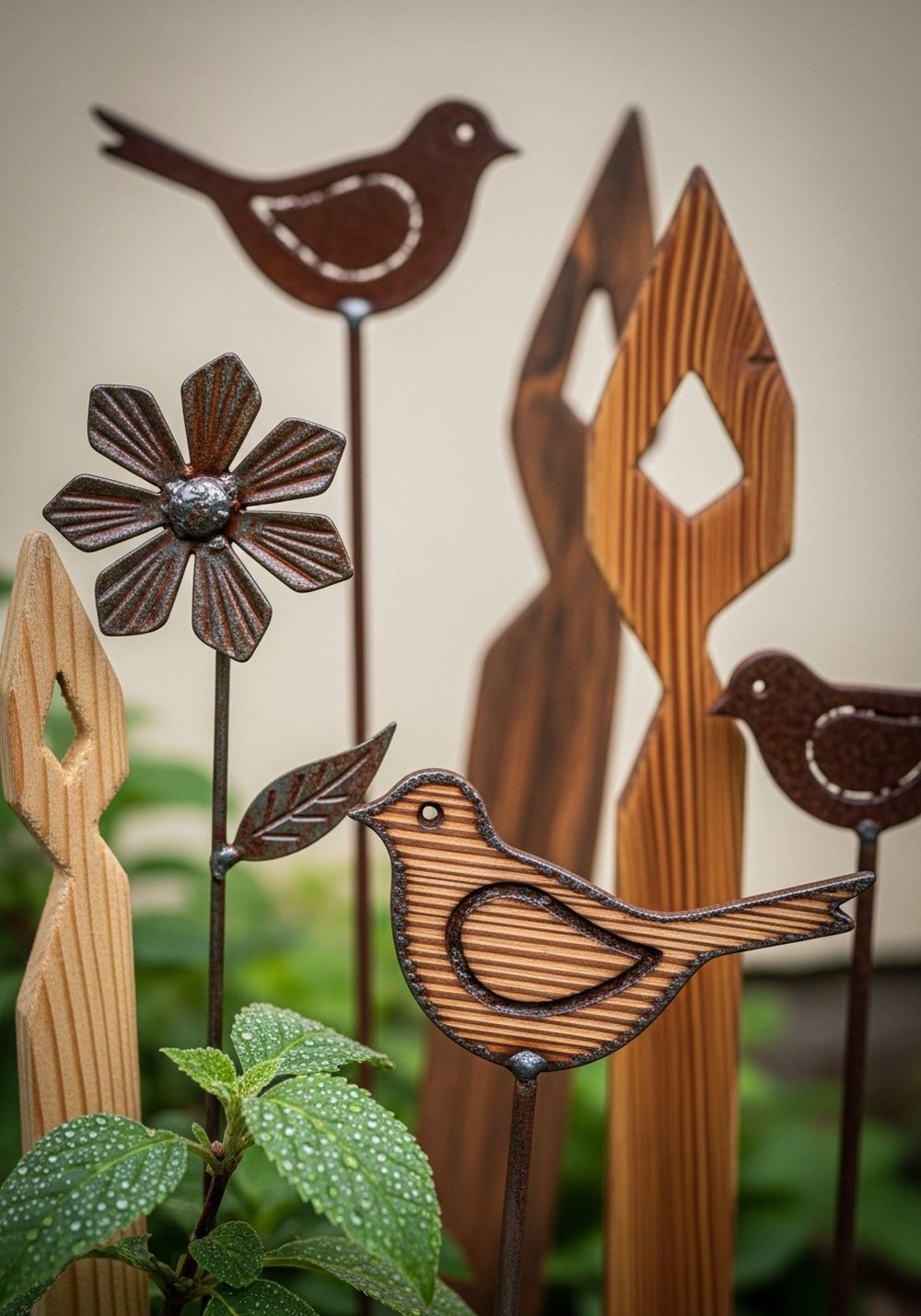
Offcuts of wood, old tools, and bits of metal can become striking garden art. Simple shapes like flowers, birds, or abstract pieces can be made by screwing or wiring pieces together. Attach them to stakes, fences, or walls to add personality and height among plants. Over time, the wood and metal weather naturally, blending into the garden while still standing out as unique, handmade features that tell a story.
- Best For: Gardeners who like a personal, creative touch and have odd materials lying around.
- Budget Tip: Use only found materials and basic screws or wire instead of buying ornaments.
- Styling Idea: Keep to one theme—birds, leaves, or geometric shapes—so the art feels cohesive.
- Practical Note: Sand sharp edges and place pieces where children and pets won’t bump into them.
- Care & Maintenance: Check fixings once or twice a year and leave patina or rust as part of the charm.
Conclusion
Upcycling in the garden is a simple way to decorate more thoughtfully while wasting less and spending less. With jars turned into lanterns, pallets stacked with plants, and old furniture reborn as potting benches, your outdoor space can feel unique, welcoming, and genuinely green. Start with one or two ideas that fit what you already have at home, then slowly build your own collection of eco-friendly creations as your garden grows.
FAQs
1. How can I decorate my garden on a very small budget?
Focus on using what you already have and what friends or neighbours are happy to give away. Jars, cans, pallets, and old furniture can all be turned into planters, benches, or lanterns with a bit of paint and imagination. Start small, choose one corner to improve, and add pieces over time instead of trying to transform everything at once.
2. Are these upcycling ideas suitable for renters?
Yes. Many of these ideas are completely moveable—jar lanterns, tin can herbs, and pallet planters can all be taken with you when you move. Avoid fixing things permanently to walls or fences you don’t own, and instead use freestanding pieces, hooks, or rail hangers that can be removed without damage.
3. What if I only have a tiny balcony or patio?
Prioritise vertical and hanging options. Pallet planters, tin can herb rails, and hanging jar lanterns all make the most of walls and railings. Choose compact plants like herbs, small flowers, and trailing varieties to create a lush feeling without taking much floor space. A single upcycled feature can make even a small balcony feel special.
4. How do I make sure upcycled items are safe and weather-resistant?
Always check for sharp edges, unstable stacks, and peeling finishes before putting anything outside. Sand rough surfaces, add drainage holes, and secure items so they can’t fall in strong wind. For wood, use an outdoor varnish or paint; for metal, accept some rust as character but avoid pieces that are too sharp or fragile.
5. Are these ideas hard for beginners to try?
Most of these projects are very simple and need only basic tools like a drill, sandpaper, and a paintbrush. Start with the easiest, such as turning jars into lanterns or cans into herb pots, then move on to larger projects when you feel more confident. Upcycling is forgiving—imperfections often make the finished pieces more charming and unique.